Complete vs Component Off-Grid Kits
Stepping into the world of off-grid solar can feel incredibly liberating, but often, the first hurdle isn't generating power, it's figuring out how to even get started with all the equipment. Many aspiring off-gridders find themselves torn between the promise of an all-in-one, ready-to-install solar kit and the allure of building a custom system piece by piece. This common dilemma leaves folks wondering which approach is truly best for their unique needs, budget, and long-term goals. This guide is here to untangle that knot, walking you through the ins and outs of both complete off-grid solar kits and component-based systems so you can make an informed decision for your independence.
Understanding Off-Grid Solar Kits
When you first start researching off-grid solar, you'll quickly discover there's a huge spectrum of options, from tiny portable setups to massive whole-home systems. The terminology can be a bit overwhelming, but at its heart, an off-grid solar system is designed to generate, store, and deliver electricity independently of the main utility grid. This means no more electric bills, no more reliance on external infrastructure, and the sweet taste of energy self-sufficiency. But how you acquire these pieces is where the "kit vs. component" discussion truly begins.
What Exactly is an Off-Grid Solar Kit?
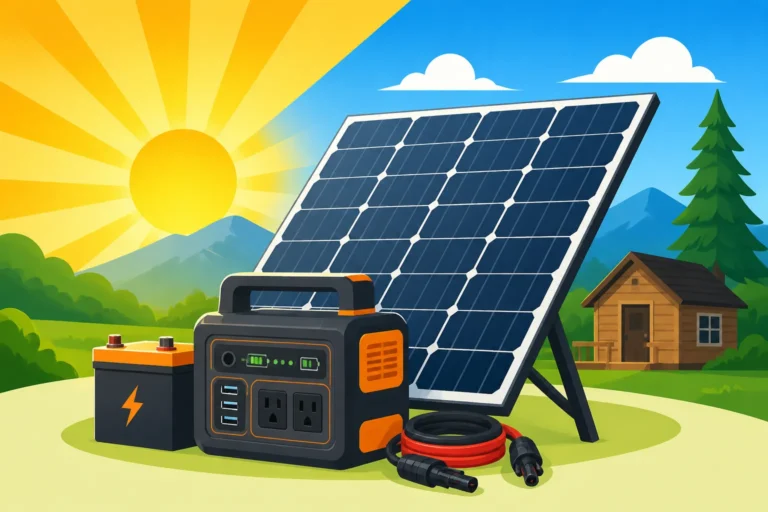
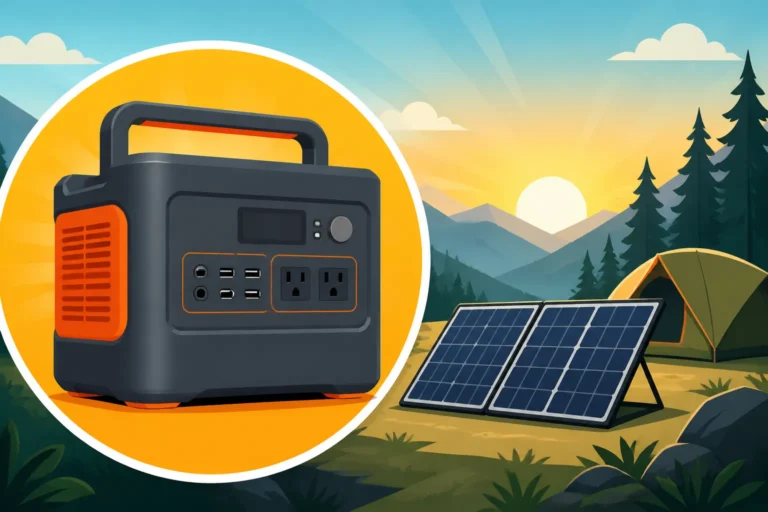
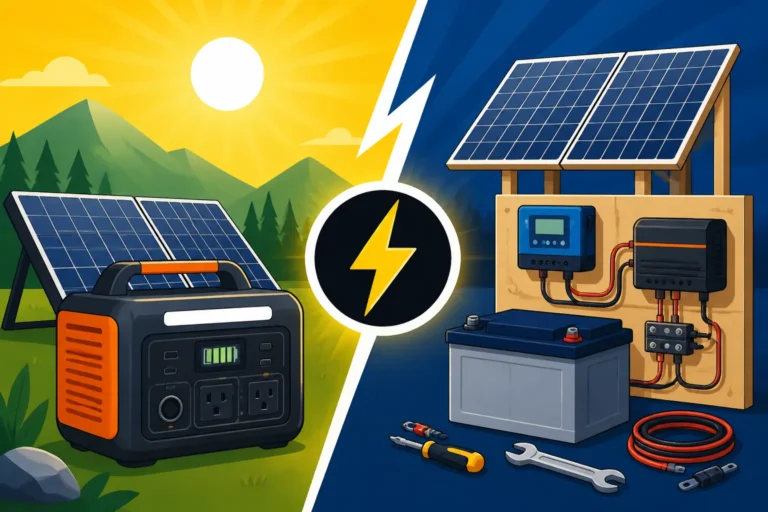
Think of a complete off-grid solar kit as a curated package designed to provide most, if not all, of the essential elements needed for a functional solar power system. These kits typically include solar panels, an inverter, a charge controller, and usually batteries, along with necessary cables, connectors, and mounting hardware. The idea is to simplify the purchasing process, providing a cohesive system that's been designed to work together right out of the box. You might find a small portable option, like a Jackery solar generator paired with portable panels, or a larger, more permanent kit intended for a small cabin or RV. The main selling point is the convenience and the reduced guesswork.
These kits are often sized for specific applications, so you'll see "RV kits," "cabin kits," or "shed kits." They aim to cover a basic power profile for these uses. For instance, a small cabin kit might be designed to run a few lights, charge devices, and power a small water pump, while an RV kit might factor in refrigerator power and an air conditioner for limited use. The manufacturers do a lot of the compatibility homework for you, ensuring that the inverter can handle the battery bank and that the charge controller is appropriately sized for the solar array. This can be a huge relief for newcomers to solar.
Why the Confusion Between Options?
The confusion often stems from the sheer variety and the often-vague marketing. One kit might be "complete" but only offer panels and a charge controller, leaving you to source batteries and an inverter. Another might be genuinely all-inclusive. Then there's the philosophical debate among off-gridders: is it better to have everything pre-selected, or to painstakingly choose each part? The answer, as with most things in life, depends heavily on your specific circumstances, technical comfort level, and the scale of your off-grid dreams.
It's easy to get lost in the sea of specifications – wattages, amp-hours, voltage, pure sine wave versus modified sine wave, MPPT versus PWM charge controllers. When you're trying to figure out How to Size an Off-Grid Solar System, these details can quickly become overwhelming. Complete kits try to simplify this by making those choices for you. However, that simplification can also be their biggest drawback if your needs don't perfectly align with what the kit offers, leading to frustration down the line. We'll explore these nuances to help you decide which path aligns best with your own off-grid adventure.
The All-Inclusive Appeal of Complete Off-Grid Solar Kits
For many folks just starting their off-grid journey, or those looking for a straightforward solution for a specific need, complete off-grid solar kits hold a strong appeal. They promise a "plug-and-play" experience, aiming to get you up and running with minimal fuss. It's like buying a pre-built computer rather than assembling one from individual components – all the parts are there, they're compatible, and they're ready to go.
What Comes in a Complete Kit?
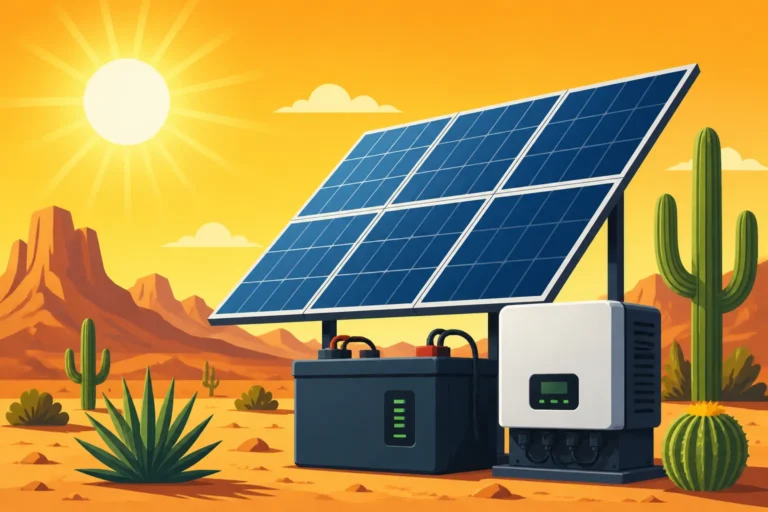
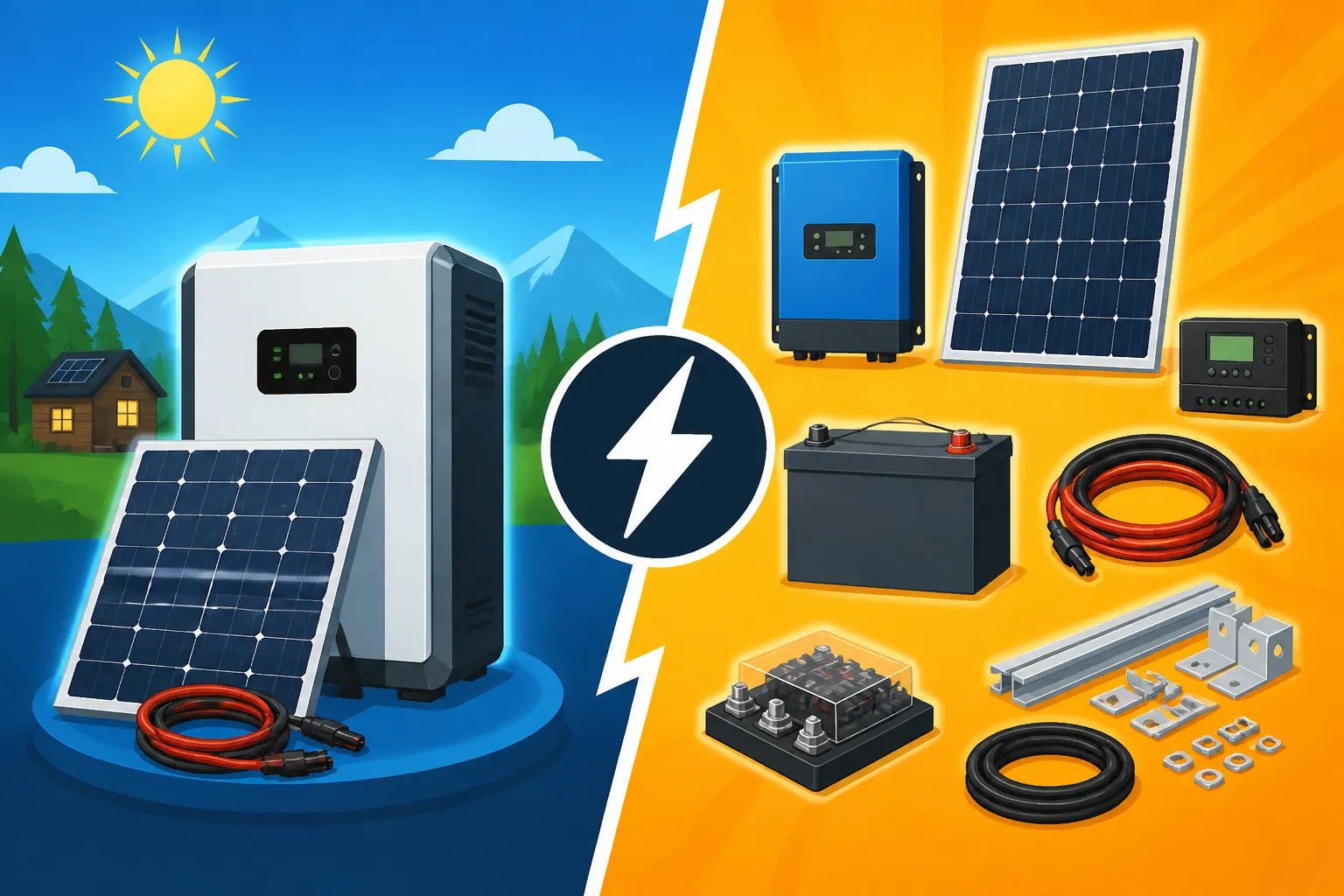
While the exact components can vary, a truly comprehensive off-grid solar kit usually includes:
- Solar Panels: The energy collectors, typically monocrystalline or polycrystalline.
- Charge Controller: Regulates the power flowing from the solar panels to the batteries, protecting them from overcharging. You'll often find MPPT controllers in higher-quality kits for better efficiency.
- Battery Bank: For storing the energy generated by the panels so you can use it when the sun isn't shining. This might be lead-acid (AGM or flooded) or, increasingly, lithium (LiFePO4).
- Inverter: Converts the DC power from your batteries into usable AC power for most household appliances. Often, these are pure sine wave inverters, which are crucial for sensitive electronics.
- Mounting Hardware: Racks or brackets for securing your solar panels to a roof or ground.
- Cables and Connectors: Pre-cut and terminated wires with MC4 connectors for the panels and battery cables for the battery bank.
- Safety Devices: Fuses, breakers, and disconnect switches.
- Monitoring System: Sometimes a simple display, other times more advanced Bluetooth-enabled monitors.
Some manufacturers, like Renogy or BougeRV, offer a wide array of kits, from small portable options to more robust setups for RVs or cabins. These brands aim to make the entry point into solar power as accessible as possible. For instance, a small Jackery power station with a foldable solar panel is essentially a complete, highly portable off-grid kit designed for camping or emergency backup.
Who Benefits Most from a Complete Kit?
Complete kits are a fantastic option for several groups of people. First, newcomers to off-grid solar who might not have a strong electrical background or the confidence to design a system from scratch. The peace of mind that comes from knowing all components are compatible and sized correctly is invaluable. Second, individuals with specific, limited power needs, such as powering a small shed, a camper, or a remote gate opener. These applications often don't require complex calculations or extensive customization.
Third, DIY enthusiasts who prefer simplicity and speed. Even experienced individuals sometimes opt for a kit if they're pressed for time or if the kit perfectly matches their requirements. Think about someone setting up a basic system for a tiny home for seasonal use; they might just want something that works reliably without needing to become an expert on every single component. Finally, those looking for portable or temporary solutions, like camping or tailgating, where a self-contained solar generator and panel combo is ideal.
Real-World Scenarios for Complete Kits
Let's imagine you've just bought a remote hunting cabin upstate, and you want to run a few LED lights, charge your phone, and power a small radio. You're not looking to run a full household of appliances, and you're not an electrician. A complete 400W or 800W solar kit, possibly including a couple of 100Ah lithium batteries, an appropriately sized charge controller, and a 1000W inverter, would be an excellent choice. The manufacturer has already matched the components, provided the wiring diagrams, and ensured everything works together. You might spend a weekend installing it, following clear instructions, and suddenly, you have reliable power. This saves you the headache of researching How to Choose an Off-Grid Battery Bank or trying to understand complex wiring diagrams.
Another scenario could be outfitting your RV for extended boondocking trips. Many RV owners aren't looking to become solar engineers; they just want to know they can power their fridge, lights, and charge their devices without running a noisy generator. A complete RV solar kit, often including flexible panels for roof mounting and a robust battery system, provides a convenient package. These kits are often optimized for space and ease of installation in vehicles, making them a popular choice among the van life and RV communities. The ease of installation, as highlighted in guides like DIY Off-Grid Solar Installation Step by Step, is a major draw.
The Freedom and Customization of Component-Based Systems
While complete kits offer simplicity, building your off-grid solar system from individual components unlocks a world of customization, efficiency, and scalability. This approach is for the designer, the problem-solver, the person who wants to squeeze every watt out of their setup, or who has very specific, perhaps unusual, power demands. It requires more research, more planning, and a deeper understanding of solar electricity, but the payoff can be a system perfectly tailored to your lifestyle.
Building Your System Piece by Piece
Opting for individual components means you select each part of your system independently: panels, charge controller, batteries, inverter, wiring, fuses, and mounting hardware. This might sound daunting, and honestly, it can be. However, it also means you get to handpick the best-in-class components for each function, optimize for your specific climate, energy needs, and budget. Want the most efficient bifacial solar panels? You can get them. Need a super robust low-frequency inverter to handle high surge loads from a well pump? You can choose one.
This approach gives you granular control over every aspect, from the brand of your solar panels (like Canadian Solar or Trina Solar, known for their high efficiency) to the specific chemistry of your battery bank. It's about engineering a system that doesn't just work, but works perfectly for your unique situation. This could involve careful planning outlined in resources like Designing an Off-Grid Solar System Step by Step to ensure every piece fits together seamlessly.
The Advantages of Component Selection
The biggest advantage is optimization. You're not stuck with a "good enough" component if a "best-in-class" alternative exists within your budget. This can lead to:
- Higher Efficiency: You can select the most efficient panels, charge controllers, and inverters, maximizing energy harvest and minimizing waste.
- Better Durability/Reliability: You can choose components known for their longevity and performance, like Victron Energy inverters or Battle Born LiFePO4 batteries, rather than generic options.
- Precise Sizing: Your system will be precisely sized for your Off-Grid Solar Load Calculation Explained, preventing oversizing (which wastes money) or undersizing (which leads to power shortages).
- Scalability: You can design a system with future expansion in mind, easily adding more panels or batteries later without having to replace core components.
- Cost-Effectiveness (in the long run): While the initial outlay might seem higher due to careful component selection, you can often achieve better value and avoid replacing mismatched or underperforming parts down the line. Plus, you can often find better deals on individual components during sales.
For example, if you know you need to run a high-draw appliance like an air conditioner or a well pump, you can specifically choose an inverter with a high surge capacity and robust construction, rather than hoping a kit's generic inverter will suffice. This level of intentional design sets component systems apart.
When Components are the Only Way to Go
There are certain situations where a complete kit simply won't cut it, and a component-based system becomes the only viable option.
- Large-Scale or Whole-Home Systems: For powering an entire off-grid home with multiple occupants and appliances, kits are rarely sufficient. You'll need a much larger solar array, a substantial battery bank, and a powerful inverter capable of handling sustained loads, which necessitates a custom build.
- Unusual or High Power Demands: If you have unique power needs, such as running a professional workshop with heavy machinery, a commercial kitchen in a remote location, or specific medical equipment, you absolutely need to build a system from components to guarantee it meets these critical demands.
- Specific Environmental Conditions: In regions with extreme cold, intense heat, or prolonged cloudy periods, you might need specialized components (e.g., batteries with heating elements, panels designed for low light, or substantial oversizing) that won't be found in generic kits.
- Budgeting in Phases: If your budget is tight, but you have big off-grid dreams, you might want to consider How to Phase an Off-Grid Solar Build to Spread Cost. Building with components allows you to start with essential items and add more panels, batteries, or other elements over time, spreading out the investment without having to scrap an entire kit.
- Integrating with Existing Infrastructure: If you already have some solar panels, a generator, or a specific battery bank, a component system allows you to seamlessly integrate new pieces, whereas a kit would likely force you to discard what you already own. This also ties into considerations around Off-Grid Solar Installation Cost and making the most of your investment.
Pros and Cons: Complete Kits
Let's break down the advantages and disadvantages of opting for an all-in-one solar kit. It's important to weigh these carefully against your personal situation.
The Upsides of Simplicity
One of the most appealing aspects of complete off-grid solar kits is the sheer simplicity they offer.
- Ease of Purchase: Instead of poring over datasheets and compatibility charts, you just pick a kit that aligns with your estimated needs. This dramatically reduces the research time and mental load. Many kits are specifically marketed towards beginners, providing a relatively low barrier to entry for exploring solar power.
- Guaranteed Compatibility: This is a huge one! The manufacturer has done the homework for you, ensuring that the solar panels, charge controller, batteries, and inverter are all designed to work together seamlessly. This eliminates the risk of accidentally buying an inverter that can't handle your battery voltage or a charge controller that's undersized for your panel array, which can lead to inefficient operation or even damage.
- Faster Installation: With pre-selected, often pre-wired components and clear, comprehensive instructions, installation can be significantly quicker and less prone to errors than building from scratch. Imagine getting power to your shed in a single weekend instead of weeks of planning and troubleshooting. Resources like How to Install an Off-Grid Solar System often start with simpler kit setups.
- Predictable Cost: The price you see for a complete kit is usually very close to your final component cost, making budgeting much easier. While you'll still have incidental expenses like conduit or extra wiring, the core system cost is clear from the outset. This contrasts sharply with component builds, where costs can snowball as you discover additional necessary parts.
- Support and Warranty: Buying a complete kit often means a single point of contact for customer support and warranty claims. If something goes wrong, you don't have to troubleshoot which component from which manufacturer is at fault; the kit provider is typically responsible for the whole package.
The Downsides of Rigidity
While simplicity is a virtue, it often comes with trade-offs, and complete kits are no exception.
- Limited Customization: This is the biggest drawback. Kits are designed for general use cases, meaning they might not perfectly match your unique energy consumption patterns or specific appliance requirements. If you have a sensitive medical device, a high-surge tool, or a need for deep customization, a kit might fall short. You might end up with an inverter that's overkill or a battery bank that's slightly too small for those cloudy days.
- Potential for Under or Oversizing: Because kits are standardized, they might not be perfectly sized for your actual needs. An undersized kit could leave you frequently running out of power, especially during peak usage or extended cloudy periods. An oversized kit means you've paid for capacity you don't use, which is inefficient. This highlights why understanding Common Off-Grid Sizing Mistakes is so critical, even with kits.
- Quality Compromises: To keep prices competitive, some complete kits might use lower-quality or generic components. While they might function adequately, they might not offer the same efficiency, longevity, or advanced features as higher-end, individually selected components. This isn't always the case, but it's a risk to be aware of.
- Difficult to Expand: Expanding a complete kit can be tricky. Adding more panels might require a larger charge controller, and adding more batteries might mean ensuring they're compatible with your existing bank and inverter. Sometimes, expanding a kit means essentially replacing significant portions of it, negating the initial simplicity and cost savings.
- Less Educational Value: While convenient, relying solely on a kit means you might not gain a deep understanding of how each component works or interacts. For those genuinely interested in self-sufficiency and mastering their power system, this can be a missed opportunity to learn.
Pros and Cons: Component Systems
Now, let's flip the coin and look at the advantages and challenges of hand-picking every piece of your off-grid solar system.
Unleashing Your Inner Engineer
Choosing individual components allows you to design an off-grid solar system that is truly yours, built to your exact specifications.
- Ultimate Customization: This is where component systems shine. You get to select the precise wattage of your solar panels, the specific type and capacity of your batteries (like LiFePO4 vs Lead-Acid Battery Cost), the features and size of your charge controller, and the power output and waveform of your inverter. This ensures your system is perfectly tailored to your daily energy consumption, peak loads, budget, and future expansion plans. If you need a specific type of mounting for a unique roof angle or ground installation, you'll pick it out.
- Maximized Efficiency and Performance: By selecting high-quality, efficient components from reputable brands, you can build a system that performs optimally. You can choose panels with better low-light performance, charge controllers with advanced MPPT algorithms, and inverters known for their clean power output and reliability, like those from Victron or Sol-Ark. This often leads to greater energy harvest and fewer power interruptions.
- Scalability and Flexibility: Building with components makes it much easier to plan for and execute future upgrades. Need more power in a few years? Just add more panels, ensuring your charge controller and inverter can handle the increased input, or expand your battery bank by adding compatible units. You're not tied to a single kit's limitations. This is a crucial factor for long-term off-grid living, especially as your energy needs might grow over time.
- Greater Longevity and Reliability: Investing in durable, high-quality components often translates to a system that lasts longer and requires less maintenance. For example, using premium marine-grade wiring and connectors might cost more upfront, but it ensures connections remain robust in harsh weather, reducing troubleshooting down the road. This can significantly impact the Lifetime Cost of an Off-Grid Solar System.
- More Cost-Effective (for specific needs): While the initial research and purchasing might feel more complex, a component-based system can be more cost-effective in the long run. By precisely sizing each element, you avoid paying for unnecessary capacity, and by choosing durable parts, you minimize replacement costs. Furthermore, you can shop around for the best deals on individual items, potentially saving money compared to a pre-packaged kit.
The Challenges of Complexity
With great freedom comes great responsibility, and building a component-based system does present its own set of hurdles.
- Increased Research and Planning: You're the designer, which means you need to understand system sizing, electrical principles, component compatibility, and safety protocols. This requires a significant time investment in learning, reading manuals, and potentially consulting with experts. You'll need to know How to Calculate Off-Grid Solar Needs and understand concepts like Watts vs Watt-Hours vs Amp-Hours Explained.
- Higher Risk of Mistakes: Without the manufacturer's pre-engineering, the onus is on you to ensure everything is compatible and correctly sized. Mismatched components, incorrect wiring, or improper fusing can lead to inefficiencies, damage, or even dangerous situations. This is why thorough knowledge of Off-Grid Solar Safety and Grounding is paramount.
- Longer Installation Time: Assembling a system from individual components will almost always take longer than installing a pre-packaged kit. There's more wiring to run, more connections to make, and more troubleshooting if something isn't working as expected. This also means you'll need a broader array of tools and potentially specialized knowledge.
- Multiple Warranties and Support Contacts: If a component fails, you'll need to identify which specific part it is and deal directly with that manufacturer for warranty or support. This can be more cumbersome than having a single point of contact for an entire kit.
- Initial Cost Can Be Higher (Potentially): While long-term value might be better, the upfront cost of high-quality individual components can sometimes exceed that of a comparable entry-level kit. This can be a barrier for those on a very strict initial budget.
Choosing the Right Path for Your Off-Grid Journey
Deciding between a complete off-grid solar kit and a component-based system really boils down to a few key factors about your readiness, resources, and vision for your off-grid lifestyle. There's no single "right" answer; it's about finding the best fit for you.
Assessing Your DIY Skill Level
This is perhaps the most crucial factor. Be honest with yourself about your comfort level with electrical wiring, basic calculations, and troubleshooting.
- For the Beginner/Less Technical: If you're completely new to electrical work, or if the thought of wiring an inverter to a battery bank makes your head spin, a complete off-grid solar kit is likely your best starting point. Many kits come with simplified diagrams and even pre-terminated cables, making the physical installation straightforward. You'll still need to follow instructions carefully, but the heavy lifting of system design is already done. Brands like Renogy and EcoFlow offer user-friendly kits that make it easier for those with limited technical experience.
- For the Experienced DIYer/Electrical Enthusiast: If you're comfortable with tools, understand basic electrical principles, and enjoy the challenge of building something from the ground up, a component-based system offers an incredibly rewarding experience. You'll gain a deeper understanding of your power system, which can be invaluable for maintenance and future upgrades. This path also allows you to implement specific preferences, like a 48V system for greater efficiency in a larger setup, as discussed in 12V vs 24V vs 48V Which to Choose.
Budgeting for Your Off-Grid Investment
Your budget plays a significant role in this decision, both in terms of initial outlay and long-term value.
- Kits and Upfront Costs: Complete kits often have a clear, single price tag, which can be appealing for straightforward budgeting. For smaller setups, a kit might seem more affordable upfront. However, be wary of very cheap kits that might skimp on component quality, leading to higher replacement costs or poorer performance down the road. It's often worth looking at a Best Off-Grid Solar Kit Under $5,000 for a good balance of cost and quality.
- Components and Long-Term Value: Building with components can sometimes have a higher initial cost, especially if you're opting for premium brands and robust sizing. However, this investment often translates into greater efficiency, longer lifespan, and better scalability, potentially leading to lower overall costs over the system's lifetime. You also have the flexibility to shop for deals on individual components, spreading out costs or prioritizing certain high-impact parts. For example, you might prioritize a high-quality inverter, then look for good value on panels. Knowing How to Budget for an Off-Grid Solar System is key here.
Long-Term Goals and Expandability
Consider where you see your off-grid journey taking you in the future.
- Temporary or Limited Use: If you're setting up a system for occasional use, like a weekend cabin or an emergency backup, a complete kit might be perfectly adequate. You don't need significant expandability if your needs are stable and well-defined. A portable unit from Jackery, for example, might perfectly serve your immediate needs for camping or occasional power outages.
- Full-Time Living or Growing Needs: For a permanent off-grid home, a homestead, or an RV that will be your full-time residence, planning for future expansion is critical. Your energy needs might grow as you add appliances, family members, or hobbies. A component-based system allows you to easily add more solar panels, increase battery storage, or upgrade your inverter without having to scrap your initial investment. This flexibility is invaluable for truly sustainable off-grid living. Think about how much capacity you need today versus what you might need in 5 or 10 years, and design a system that can evolve with you, perhaps referencing How to Design an Expandable System.
| Feature | Complete Off-Grid Solar Kit | Component-Based System |
|---|---|---|
| Ease of Purchase | Very easy, one-stop shop | Requires extensive research, multiple vendors |
| Component Compatibility | Guaranteed by manufacturer | Your responsibility to ensure compatibility |
| Installation Time | Generally faster, clearer instructions | Longer, more complex wiring and setup |
| Customization | Limited, pre-configured | Unlimited, tailored to exact needs |
| Efficiency/Quality | Varies; can be basic or mid-range | High potential for maximized efficiency and premium quality |
| Scalability | Often difficult or limited | Easy to expand and upgrade components |
| Initial Cost | Often appears lower for basic setups | Can be higher initially due to premium choices |
| Long-Term Value | Good for simple, stable needs; potential for replacement | Excellent for complex, evolving needs; long lifespan |
| Technical Skills Req. | Low to moderate | High |
| Troubleshooting | Single point of contact (kit manufacturer) | Multiple contacts (individual component manufacturers) |
Key Considerations When Making Your Decision
Beyond the core pros and cons, there are a few other critical aspects to ponder before committing to either a complete kit or a component-based off-grid solar system. These often come up later in the process but are vital to consider upfront.
System Sizing and Future Needs
One of the biggest pitfalls people encounter is misjudging their power needs. It's easy to underestimate how much electricity you actually use, especially if you're transitioning from a grid-tied lifestyle where electricity is simply "always there."
- Accurate Load Analysis: Before buying anything, whether a kit or components, perform a thorough How to Do an Off-Grid Load Analysis. List every appliance, light, and device you plan to use. Note its wattage and how many hours per day you'll run it. This will give you a concrete number of watt-hours (Wh) or kilowatt-hours (kWh) per day your system needs to generate and store. Overestimating is usually safer than underestimating.
- Accounting for Real-World Conditions: Remember that solar panel output isn't always at its peak. Cloud cover, shorter winter days, and even dusty panels can reduce efficiency. Factor in "days of autonomy" – how many days your battery bank can power your home without any sun. For most off-gridders, at least 2-3 days of autonomy is crucial. A kit might not allow you to easily account for these variables, whereas with components, you can deliberately oversize your array or battery bank for peace of mind, as discussed in How to Account for Cloudy Days.
- Planning for Growth: Even if your current needs are modest, consider if they might grow. Will you add a well pump, a larger refrigerator, or perhaps air conditioning in the future? If so, designing a component system that's easy to expand will save you a lot of money and headaches down the road compared to trying to Frankenstein an existing kit.
Brand Compatibility and Support
When you're building an off-grid system, especially with components, you're essentially becoming the system integrator. Understanding brand compatibility and the level of support offered is non-negotiable.
- Ecosystems and Integration: Some premium brands, like Victron Energy or Sol-Ark, offer comprehensive "ecosystems" where all their components are designed to work together seamlessly, often managed by a single monitoring app. While you're still buying individual components, they are part of a larger, integrated family. This can offer the best of both worlds: customization within a guaranteed compatible framework. For example, choosing a Victron MultiPlus inverter charger and pairing it with a Victron MPPT charge controller provides excellent integration and robust performance, allowing you to easily Configure a Victron System.
- Customer Support and Documentation: Regardless of whether you choose a kit or components, research the manufacturer's reputation for customer support and the quality of their documentation. Good manuals, wiring diagrams, and responsive technical support can be invaluable, especially when you're installing or troubleshooting. For component systems, this is even more critical, as you'll be relying on these resources to ensure correct integration of disparate parts.
- Reviews and Community Wisdom: Before investing, tap into the wealth of knowledge from the off-grid community. Forums, YouTube channels, and dedicated off-grid blogs often have real-world reviews and discussions about specific kits and components. Hearing from others about their experiences with particular brands (like "Is Renogy a Good Off-Grid Inverter Brand" or "Battle Born Battery Review for Off-Grid Solar") can help you avoid costly mistakes and choose reliable equipment.
Installation Complexity and Time Commitment
Don't underestimate the time and effort involved in setting up an off-grid solar system, especially if you're doing it yourself.
- Professional Installation: If you're opting for a large, complex system or if you're simply not comfortable with electrical work, hiring a professional installer is always an option. While it adds to the DIY vs Professional Off-Grid Solar Cost, it ensures safety, compliance with codes (if applicable), and professional-grade installation. Even with a kit, some people prefer professional help for peace of mind.
- DIY Time Investment: A small, basic kit might be a weekend project. A full component-based system for a home, however, could take weeks or even months of dedicated effort, especially if you're learning as you go. Factor in time for trenching, mounting, wiring, and testing. It's a marathon, not a sprint, and proper planning, as outlined in How to Plan Your Off-Grid Installation, is essential to avoid burnout and frustration.
- Permitting and Codes: Depending on your location and the scale of your system, you might need permits and inspections, even for off-grid setups. While often less stringent than grid-tied systems, it's crucial to check local regulations. A professional installer can often navigate this bureaucratic maze for you, but if you're going DIY, you'll need to research Off-Grid Solar Permits and Codes thoroughly to ensure your system is safe and legal.
Ultimately, the choice between complete kits and component-based systems is a deeply personal one. It's about aligning your aspirations for off-grid living with your practical capabilities, financial resources, and the vision you have for your energy independence. Take your time, do your research, and don't be afraid to start small and expand.
Disclaimer
The information provided in this guide is for general informational purposes only and does not constitute professional advice. Off-grid solar system design and installation can be complex and involve electrical hazards. Always consult with qualified professionals and adhere to local electrical codes and safety guidelines when planning or installing any solar power system.