How to Design an Expandable System
Many folks jump into off-grid living with a good idea of their immediate power needs, but often overlook the dynamic nature of energy consumption. Life changes, appliances accumulate, and suddenly that perfectly sized initial solar system feels… well, limiting. There's nothing more frustrating than wanting to add a new tool to your workshop or finally get that mini-split AC, only to realize your entire solar setup needs a major overhaul rather than a simple addition. This guide is all about helping you design an off-grid solar system from the ground up with future growth in mind, saving you headaches and significant costs down the line by ensuring your setup can easily expand as your lifestyle evolves.
Why Planning for Future Expansion is Crucial for Off-Grid Living
When you decide to go off-grid, it's easy to get caught up in the excitement of independence and focus solely on what you need right now. But experience has taught me that "right now" rarely stays "right now" for long. Our energy demands have a funny way of growing, whether it's an unexpected new appliance, a growing family, or simply deciding you want more creature comforts than you initially budgeted for. Designing with expansion in mind isn't just about being prepared; it's about smart, long-term investment in your off-grid lifestyle.
Avoiding Costly Redos
Imagine you've installed a 2000-watt inverter, a modestly sized battery bank, and enough panels to cover your basic lights, fridge, and laptop. Two years later, you decide you want to add a high-efficiency washing machine or a small well pump. Suddenly, your 2000-watt inverter isn't cutting it for the surge load, and your battery bank drains too quickly. What happens next? You're faced with potentially scrapping your perfectly good, albeit undersized, inverter and buying a bigger one, or worse, having to completely re-wire sections of your system because the original cabling wasn't robust enough.
This kind of scenario is incredibly common and can quickly double or triple your projected expenses. Instead of just adding components, you're replacing perfectly functional equipment. This isn't just a financial hit; it's a waste of resources, time, and effort. A little foresight in the design phase, like slightly How to Size an Off-Grid Inverter initially or ensuring your wiring can handle more current, can prevent these frustrating and expensive complete overhauls. It's like building a house foundation strong enough for a second story, even if you only plan for one initially – it makes adding on later a breeze, not a demolition project.
Adapting to Evolving Energy Needs
Our lives are not static, and neither are our energy demands. When you first move into a remote cabin or embark on van life, your needs might be minimal. You might be content with basic lighting, charging phones, and running a small refrigerator. But then, you might discover a passion for woodworking and need power for various tools, or perhaps a partner moves in, bringing their own set of electronics. Maybe you eventually want to upgrade to a more powerful internet system or even consider an electric vehicle that needs charging.
An expandable system gives you the flexibility to adapt without feeling constrained by your initial setup. It means that when you decide to transition from a minimalist lifestyle to something more comfortable or resource-intensive, your power system can grow with you. This adaptability is key to long-term satisfaction and sustainability in off-grid living. It's the difference between feeling trapped by your system and feeling empowered by it. Planning for growth offers immense peace of mind, knowing that your path to energy independence is not a dead end but a dynamic journey.
Core Components Designed for Scalability
When you're building an off-grid solar system with an eye towards future expansion, it's paramount to select key components that are inherently scalable. This isn't just about buying a bigger version of something; it's about choosing products and system architectures that are designed to be added to or upgraded seamlessly. Thinking ahead in this area will save you countless headaches and expenses down the road.
Choosing an Expandable Inverter/Charger
The inverter is often the heart of your AC power system, converting the DC power from your batteries into usable household electricity. For expandability, the key is to look for models that offer parallel operation or stacking capabilities. This means you can purchase one inverter now and, if your power demands increase significantly later, you can buy an identical unit and link them together to double (or even triple) your AC output. Brands like Victron Energy and Sol-Ark, for instance, offer robust inverter/charger lines designed specifically for this kind of modular expansion.
Beyond just the wattage, consider the system voltage. While 12V systems are common for smaller setups like RVs or tiny cabins, a 24V or 48V system is generally far more efficient and expandable for larger power needs. Higher voltage systems require less current for the same amount of power, meaning smaller wires, less voltage drop, and often more robust components. If you're pondering 12V vs 24V vs 48V: Which to Choose, always lean towards a higher voltage if there's any chance of significant expansion, as it's much harder to change system voltage later on. A solid inverter choice now can mean the difference between buying an entirely new unit later or simply adding a twin.
Building a Flexible Battery Bank
Your battery bank is where all that precious solar energy is stored, and it's also where you'll likely see one of the biggest needs for expansion as your energy use grows. When planning for flexibility, lithium iron phosphate (LiFePO4) batteries are often the hero. Unlike traditional lead-acid batteries, which prefer to be added in matched sets and can suffer from reduced lifespan when new batteries are mixed with old ones, many LiFePO4 batteries are more forgiving when adding new modules. They typically have a longer cycle life and higher usable depth of discharge, making them a more efficient and durable long-term choice, even if the initial LiFePO4 vs Lead-Acid Battery Cost is higher.
When expanding, it's always best to add batteries of the same chemistry, voltage, and capacity, and ideally from the same manufacturer and production batch. This minimizes imbalances and ensures consistent performance. Look for batteries that have integrated Battery Management Systems (BMS) that can communicate with each other or with a central BMS for larger setups, ensuring safe and balanced charging and discharging. Brands like Battle Born and EG4 offer excellent modular LiFePO4 options that are designed to be scaled up as your energy storage needs evolve. Planning for modularity here means you can simply drop in another battery or two rather than overhauling your entire storage solution.
Over-Sizing Your Charge Controller and Wiring
One of the most common pitfalls when planning for expansion is undersizing the charge controller and the associated wiring. The charge controller manages the power flow from your solar panels to your batteries, and if it's too small, you simply can't add more panels, regardless of how much roof space you have. It's always a wise move to purchase a charge controller with a higher amperage capacity than your initial solar array requires. For example, if your initial 1000W array might produce 20 amps at 48V, consider a controller rated for 40-60 amps. This provides a generous buffer for future panel additions without needing an immediate upgrade. Learning How to Size a Charge Controller correctly for your future vision is a critical step.
Similarly, don't skimp on wire gauge. The wiring from your solar panels to your charge controller, and from your charge controller to your battery bank, needs to be able to safely carry the maximum current your expanded system could generate. Thicker wires (How to Size Wire and Cables) reduce voltage drop, ensuring maximum efficiency and, more importantly, prevent dangerous overheating when you eventually add more panels. While heavier gauge wire costs a bit more upfront, it's a minor investment compared to the cost and labor of having to completely re-run wires later when you decide to boost your solar input. I've seen countless DIYers have to rip out perfectly installed (but undersized) wiring, which is never a fun job.
Initial System Design for Seamless Growth
Designing your initial off-grid solar system isn't just about meeting today's energy demands; it's about laying a robust foundation for tomorrow's expanded needs. A thoughtful upfront design can make the difference between a smooth upgrade process and a complete system overhaul. It's about thinking several steps ahead, envisioning your off-grid future, and building a system that can gracefully grow with you.
Performing a Forward-Looking Load Analysis
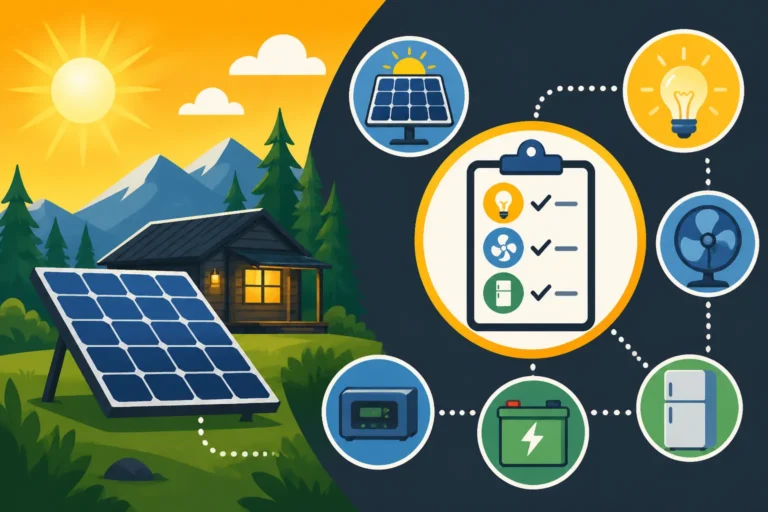
This is perhaps the most critical step in designing an expandable system. Instead of just calculating your current daily energy usage, you need to conduct a comprehensive How to Do an Off-Grid Load Analysis that projects your energy needs into the future. Ask yourself:
- What major appliances might I want to add in the next 1-3 years? (e.g., larger refrigerator, washing machine, a dedicated freezer, a mini-split AC, a well pump).
- Will my family grow, potentially increasing demand for charging devices, lighting, or entertainment?
- Are there any hobbies or future projects that will require significant power (e.g., a welding machine, an electric vehicle charger for an off-grid utility vehicle, extensive workshop tools)?
- How might seasonal changes affect my future demands, especially for heating or cooling?
Once you have a "dream list" of potential future loads, estimate their wattage and daily run-time. This allows you to calculate a "future peak daily energy usage" in watt-hours. Then, you can factor in adequate How Many Batteries for an Off-Grid System for this expanded future, ensuring you have enough "days of autonomy" even with higher consumption. Even if you don't implement all these additions immediately, knowing these numbers allows you to select components (like your inverter and charge controller) that are appropriately sized for that eventual growth, even if you run them at partial capacity for a while.
Panel Layout and Mounting Considerations
The physical space for your solar panels is a finite resource, whether it's roof space on a cabin or the ground next to your RV. When designing for expansion, carefully consider your initial panel layout and mounting. If you're using a roof mount, identify available space for future panels. Think about shading from trees or other structures that might become an issue if you expand in a certain direction. For ground mounts, consider purchasing a larger racking system than you currently need, leaving empty slots for future panels. These can often be found on Amazon with various configurations.
It's also worth thinking about accessibility. Future additions will require wiring and potentially reconfiguring parts of your array. Can you easily access your combiner boxes, wiring runs, and panel connections without dismantling your entire existing setup? Using modular racking systems, such as those offered by Renogy for their various panel sizes, can make adding panels much simpler down the road. Some systems even allow for adjustable tilt angles, which can be optimized seasonally for maximum production, especially when you start adding more panels.
Establishing a Scalable Electrical Hub
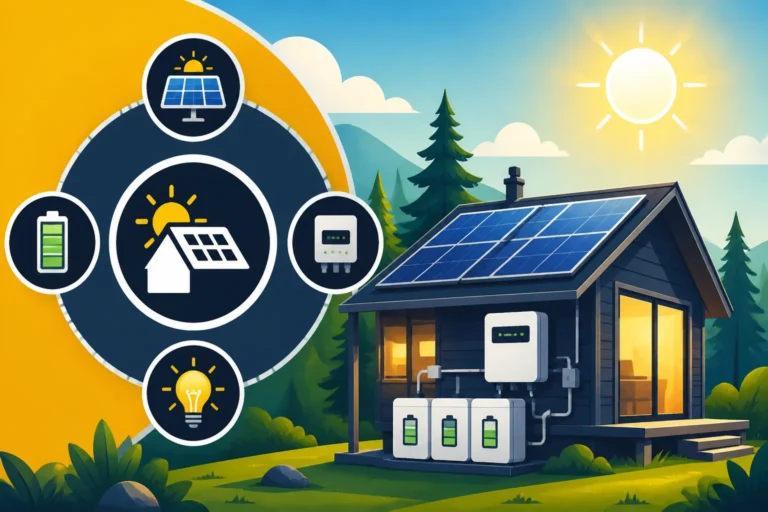
Your electrical hub – the central location where all your major solar components (charge controller, inverter, battery bank, disconnects, breaker panel) are located – needs to be designed with future expansion in mind. This means leaving physical space for additional components and ensuring your busbars and wiring pathways can handle increased loads.
For example, when setting up your DC breaker box, instead of just installing breakers for your current loads, consider adding a few extra blank spaces that can be filled later. For your main DC busbars connecting batteries to the inverter and charge controller, choose busbars that are rated for significantly higher amperage than your initial system requires. This way, when you add more batteries or a second inverter, you won't need to replace the core distribution infrastructure. Running conduit for your wiring, even if it feels like overkill initially, provides a clean and easy path for adding new wiring runs without having to tear into walls or structures later. This foresight in your electrical design truly streamlines any future upgrades.
Strategic Phased Expansion Approaches
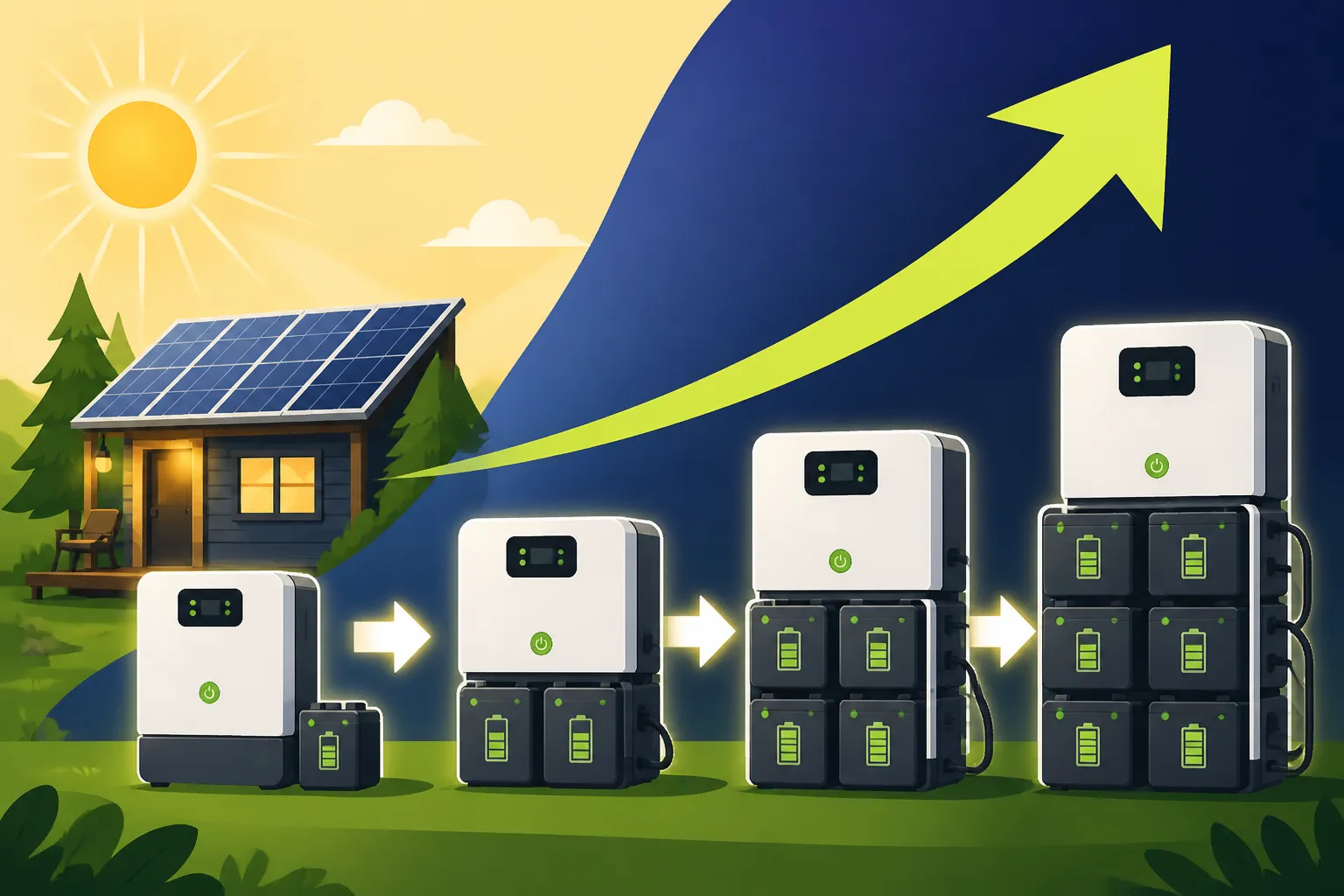
Once you've set up your initial off-grid solar system with expandability in mind, the time will inevitably come when you need to increase your power production or storage. This is where your upfront planning truly pays off, allowing you to add components strategically without disrupting your entire setup. Think of it like building blocks; you're simply adding more pieces to a pre-existing, well-thought-out structure.
Adding More Solar Panels
Expanding your solar array is often the first step when your energy demands grow. If you've prudently oversized your charge controller and main DC wiring, this process can be surprisingly straightforward. The primary considerations are compatibility and wiring configuration. Ideally, you want to add panels that are similar in voltage and wattage to your existing ones. While it's possible to mix panel types, it can sometimes lead to inefficiencies if not done correctly, particularly if different panels have vastly different voltage characteristics.
You'll need to decide whether to wire the new panels in series or parallel with your existing array, or a combination of both, to match your charge controller's optimal voltage input. Wiring panels in series increases voltage, while parallel wiring increases current. Understanding How to Wire Panels in Series vs Parallel is fundamental here. Most modern MPPT charge controllers are quite flexible, but they have voltage and current limits. If your new panels push you over these limits, you might need to add a second charge controller, which is also an option if you left space and capacity in your electrical hub. Remember to always disconnect the solar array from the charge controller and batteries before making any wiring changes to ensure safety.
Expanding Your Battery Storage
When your daily energy consumption increases, or you want more autonomy for cloudy days, adding to your battery bank becomes essential. As discussed, this is where LiFePO4 batteries shine due to their modularity. However, it's crucial to follow best practices. Always try to add batteries of the same chemistry, voltage, and capacity. If possible, purchase new batteries that are from the same manufacturer and even the same production batch as your existing ones. Mixing significantly older batteries with brand-new ones, especially with lead-acid, can lead to uneven charging and discharging, reducing the lifespan of both the old and new batteries.
For LiFePO4 systems, a common strategy is to add identical battery modules in parallel to increase amp-hour capacity. Many modern LiFePO4 batteries are designed for this, featuring robust internal Battery Management Systems (BMS) that can communicate to balance charging. Brands like Renogy offer full battery lines that are designed to integrate seamlessly for expansion. If your initial battery bank was a single large unit, you might consider adding a second, identical unit, connecting them with appropriately sized busbars and ensuring your charge controller and inverter settings are updated for the larger total capacity. Remember to charge all new batteries to the same state of charge before connecting them in parallel to avoid large current surges.
Upgrading Inverter Capacity
Eventually, you might find that your inverter's continuous power rating or surge capacity is no longer sufficient for your expanded needs, especially if you add high-draw appliances like an air conditioner or a powerful microwave. When this happens, you generally have two main options if your initial inverter was chosen with expandability in mind:
- Paralleling: If your inverter supports parallel operation, you can purchase an identical unit and link them together to effectively double your AC output. This is a very elegant solution, as it leverages your existing equipment. Many high-quality inverter/chargers, particularly those designed for whole-home off-grid systems, offer this feature.
- Replacing: If your inverter does not support paralleling, or if you simply want a different brand or feature set, you'll need to replace it with a larger unit. This can be a more costly option as it involves selling or repurposing the old inverter and investing in a completely new one.
When considering an upgrade to your inverter, also reassess the Cost of an Off-Grid Solar Inverter itself and the associated wiring. A larger inverter will draw more current from your batteries and push more current to your AC loads, so ensure your battery cables and AC wiring are adequately sized for the new capacity. This is why having an initial electrical hub with oversized components is so beneficial – it minimizes the secondary upgrades needed when you bump up your inverter size.
Practical Considerations for System Upgrades
Even with the best planning, upgrading an off-grid solar system involves more than just bolting on new parts. There are crucial practical considerations that ensure your expanded system operates safely, efficiently, and within compliance. Overlooking these details can lead to inefficiencies, safety hazards, or even legal issues.
Monitoring and Data Logging
Before you even think about adding components, understanding your current system's performance and your actual usage patterns is invaluable. This is where comprehensive monitoring and data logging come into play. Investing in a good battery monitor (like a Victron SmartShunt) and a system controller that logs power production, consumption, and battery state of charge (like a Victron Cerbo GX or the monitoring features on a Sol-Ark inverter) will give you precise data. You can find many of these sophisticated monitoring tools readily available on Amazon.
This data helps you make informed decisions. For instance, you might think you need more panels because your batteries are often low, but monitoring might reveal that your power consumption has actually spiked due to a new appliance you underestimated. Or, it could show that your existing panels are producing less than expected due to shading or dirt. Accurate data helps you pinpoint exactly what needs upgrading and by how much, preventing unnecessary or inefficient purchases. It ensures you’re not just guessing but making data-driven decisions for your expansion.
Safety and Code Compliance
Any modification to an electrical system, especially a powerful off-grid solar setup, carries inherent risks. Safety must always be your top priority. Before adding or changing any components, ensure all power sources are disconnected – both from the solar array and the battery bank. Always use appropriate personal protective equipment (PPE), such as insulated tools and gloves.
When upgrading, you must also ensure your system remains compliant with electrical codes, even if you’re off-grid. While off-grid systems often have more leniency than grid-tied ones, local jurisdictions may still have requirements, especially for structures intended for habitation. This includes proper grounding, appropriately sized How to Size Fuses and Breakers, and clearly labeled disconnects. If you’re making significant changes, it might be wise to consult with a qualified electrician who understands off-grid systems. They can verify your wiring, confirm safety measures, and ensure your expanded system meets any relevant standards. Don't assume that just because you're off the grid, you're exempt from all rules; safety codes are there for a reason! Additionally, be aware of Off-Grid Solar Permits and Codes in your area, as some expansions may require updated permits.
Budgeting for Future Growth
Let's be real: off-grid solar isn't cheap, and neither is expanding it. However, by planning for expandability upfront, you can spread out the costs and make smarter financial decisions. Instead of facing a massive, unexpected expense years down the line, you can anticipate and budget for phased additions. For example, if your initial load analysis suggested you'd eventually need a second inverter, you can start a "solar expansion fund" or consider purchasing the second inverter when sales happen, even if it sits in storage for a few months.
Think of it as a long-term investment. While the upfront cost of slightly oversizing components like your charge controller or main wiring might seem like an unnecessary expense, it pales in comparison to the cost of replacing those components entirely later. This strategic budgeting also contributes to the overall Off-Grid Solar Return on Investment. By avoiding costly re-dos and making efficient upgrades, you maximize the value of your solar investment over its lifespan. A detailed Off-Grid Solar Cost: Complete Breakdown can help you visualize these expenses.
Common Mistakes to Avoid When Designing an Expandable System
Designing an off-grid solar system to be expandable is a fantastic strategy, but it's not without its potential pitfalls. Making a few common errors in the planning or execution stages can negate all your good intentions, turning what should be a smooth expansion into a frustrating and costly ordeal. Learning from these common mistakes can save you a lot of grief.
Underestimating Future Power Needs
This is arguably the most common mistake, and it's easy to fall into. When first going off-grid, many people are hyper-focused on keeping costs down and only calculate their bare minimum current needs. They think, "I'll just power the essentials for now." However, lifestyles have a way of creeping up on us. That small cabin might eventually get a satellite internet system, a larger freezer, or even a hot tub. The minimalist RV might suddenly need to run a high-draw coffee maker or a small space heater on chilly mornings.
The error isn't just in miscalculating today's needs; it's failing to truly project future desires and potential changes. A good rule of thumb is to add a 15-25% buffer to your calculated future peak needs. This seemingly small buffer can save you from immediate bottlenecks, allowing you to gradually increase usage without immediately needing an upgrade. It's much better to have a slightly oversized initial system that can handle minor unforeseen increases than one that is constantly running at its limit, straining components and signaling an immediate need for more power. This ties directly into How to Calculate Daily Energy Usage with a forward-looking perspective.
Neglecting Component Compatibility
When planning for expansion, it's vital to ensure that any future components will be compatible with your existing setup. This is especially true for batteries and charge controllers. For example, trying to add new lead-acid batteries to an old, heavily cycled lead-acid bank can significantly shorten the life of the new batteries because they will struggle to maintain balance. Even with LiFePO4 batteries, while more forgiving, mixing different brands or generations without careful consideration of their internal Battery Management Systems (BMS) can lead to inefficiencies or even safety issues.
Similarly, when adding solar panels, ensure their voltage and current characteristics are compatible with your existing array and, critically, with your charge controller's input limits. Some charge controllers have a maximum open-circuit voltage (Voc) that cannot be exceeded, regardless of how many panels you add or how you wire them. Always consult the spec sheets for both your existing components and any potential new additions. A little research into the best Off-Grid Solar Equipment Explained and how different brands integrate can prevent expensive mistakes.
Skimping on Infrastructure
The "infrastructure" of your off-grid system includes elements like wiring, fuses, breakers, disconnect switches, and combiner boxes. These components are often overlooked during initial budget crunching because they aren't as "sexy" as panels or batteries. However, skimping on them is a major mistake when planning for expansion. Using undersized wiring, for example, might work for your initial 1000W array, but when you double that to 2000W, those wires become bottlenecks, leading to excessive voltage drop, heat, and potential fire hazards. The Off-Grid Solar Installation Cost can significantly increase if you have to redo infrastructure.
It's much more economical and safer to install slightly oversized wiring, high-quality busbars, and a larger combiner box with extra circuit breaker slots from the beginning. These items are often buried in walls or conduit, making them incredibly difficult and expensive to replace later. Think of it this way: your wires, fuses, and disconnects are the arteries and safety valves of your system. If they're too small, no matter how powerful your heart (inverter) or energy source (panels/batteries), the flow will be restricted and unsafe. Investing in robust infrastructure upfront means your expansion journey will be a simple addition, not a complex re-build.
Here's a quick look at how different components factor into an expandable system:
| Component Type | Key for Expandability | Why it Matters for Growth |
|---|---|---|
| Solar Panels | Ample roof/ground space, modular racking | Allows for physical addition of more panels to increase wattage output. |
| Charge Controller | Higher Amperage Rating than Initial Need (e.g., MPPT) | Can handle increased input current from a larger solar array without needing replacement. Ensure it supports your target system voltage (e.g., 48V if planning big). |
| Batteries | Modular LiFePO4, consistent voltage/chemistry, communication-enabled BMS | LiFePO4 batteries are easier to add in parallel. Consistent characteristics prevent imbalances. A larger initial battery bank or one designed for modular additions can handle more storage capacity for increased usage or autonomy. |
| Inverter/Charger | Parallel stackable units, higher voltage capability (24V/48V), pure sine wave output | Allows you to add identical units for increased AC output without replacing the entire unit. Higher voltage systems are more efficient for larger loads. Pure sine wave ensures compatibility with all appliances. |
| Wiring & Cables | Heavier Gauge (e.g., larger AWG) than initial calculations suggest | Prevents voltage drop and safely carries higher currents when more panels or batteries are added, or when inverter output increases. Avoids dangerous overheating and loss of efficiency. |
| Breakers/Fuses | Higher Amperage Rating for future loads, extra slots in breaker panel | Accommodates increased current flow and new circuits for added appliances. Extra slots allow for adding new loads without having to reconfigure entire panels. How to Size Fuses and Breakers correctly is crucial. |
| Electrical Hub | Oversized busbars, extra space in enclosures, conduit for wiring | Ensures central connection points can handle higher currents and provides physical space and pathways for new components and wiring runs. Reduces need for extensive re-construction. |
By carefully considering each of these components during your initial design phase, you'll set yourself up for a future of seamless, stress-free off-grid expansion, rather than one filled with costly and frustrating overhauls.
Disclaimer
Please note that the information provided in this guide is for educational and informational purposes only. Off-grid solar system design and installation can be complex and involve significant electrical risks. Always consult with certified electricians or solar professionals and ensure all work complies with local codes and regulations. Incorrect installation or sizing can lead to property damage, injury, or fire.