How to Design for Year-Round Off-Grid Power
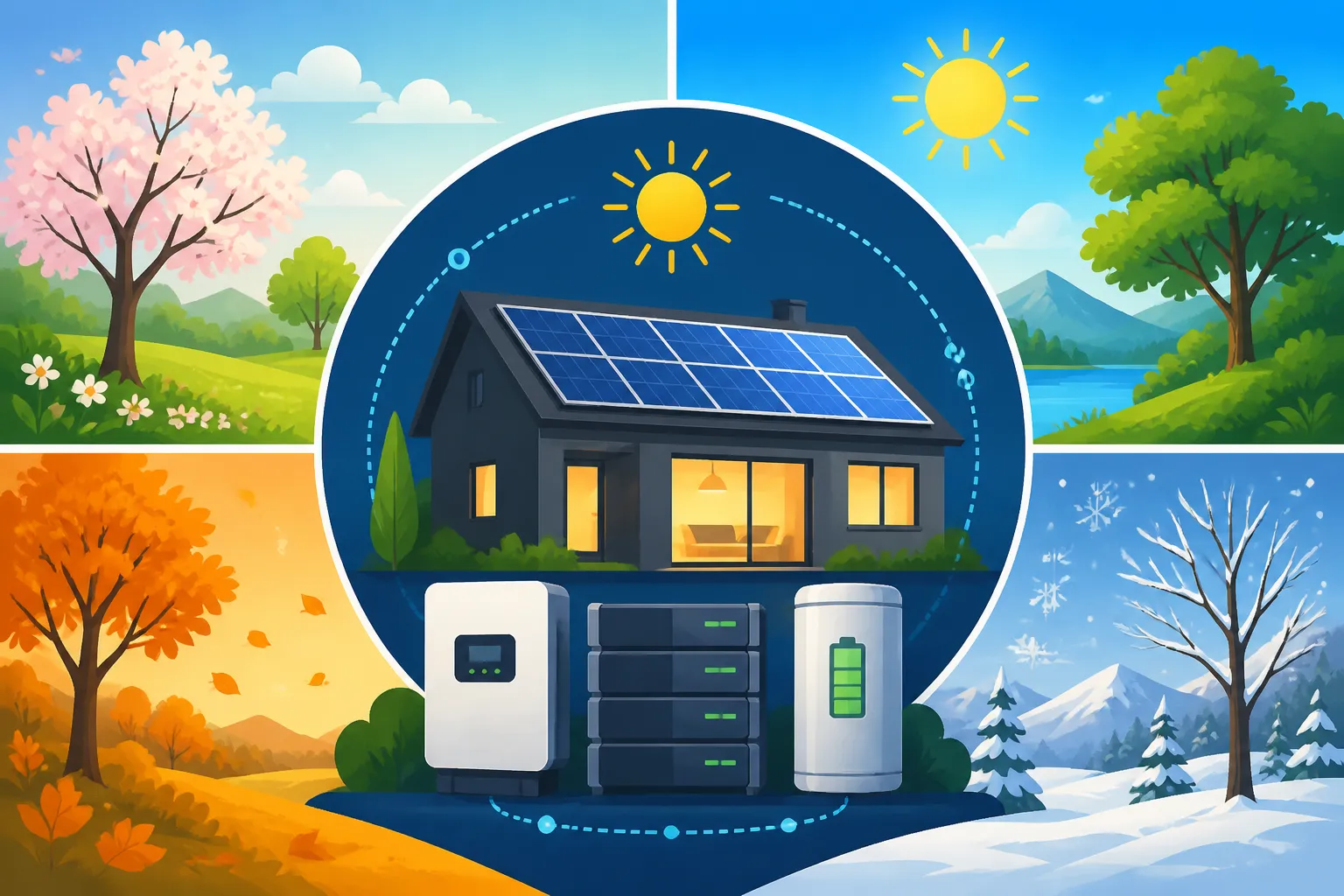
The dream of being completely self-sufficient with off-grid solar power often runs into a harsh reality when the seasons change. Many folks design their systems for the glorious sunshine of summer, only to find themselves utterly short on power during the shorter, cloudier, and colder days of winter. It’s a common frustration, leaving you feeling like you’re constantly chasing the sun. This guide is here to walk you through how to design for year-round off-grid power, ensuring your lights stay on and your essentials run smoothly, no matter what the weather throws at you.
Understanding Your Year-Round Energy Demands
Before you even think about panels or batteries, the absolute first step in designing a reliable year-round off-grid solar system is to intimately understand your energy consumption. It’s not just about what you use today, but what you anticipate using throughout the entire year, especially during those notoriously challenging winter months. This is where many DIYers get tripped up, underestimating how much extra energy heating, lighting, and general comfort demand when the mercury drops.
Seasonal Load Analysis
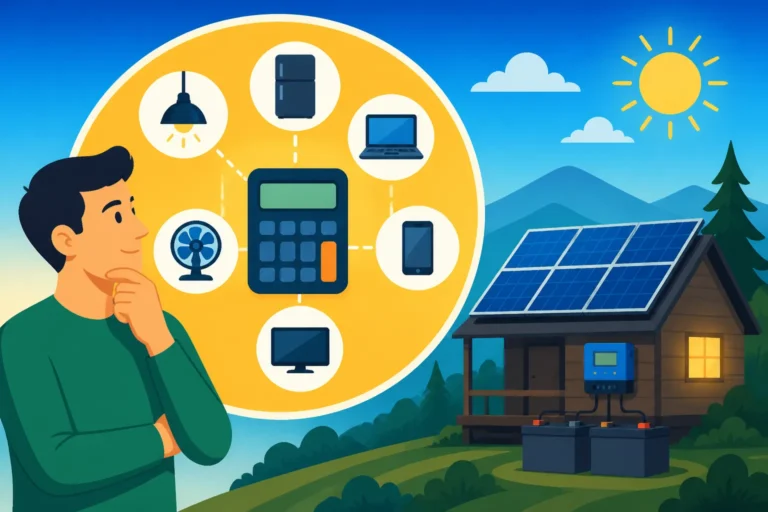
Let's be real: your power needs are rarely constant. Think about your homestead or cabin. In the summer, you might be running a well pump more often for gardening, maybe a small fan, and keeping the fridge humming. But come winter, those loads shift dramatically. You might be relying on electric blankets, using more lights due to shorter daylight hours, perhaps a wood stove fan, or even a small electric heater to take the chill off a room before the main heat kicks in. It’s crucial to sit down and list every single appliance and device you plan to power, then estimate how long you’ll use it per day for each season.
For instance, a standard LED light bulb might be on for 2 hours a day in summer, but 6-8 hours a day in winter. Your refrigerator, which runs more efficiently in cooler ambient temperatures, might actually cycle more often if your living space is warmer and it's constantly being opened for hot cocoa supplies. Don't forget parasitic loads either – those devices that draw a trickle of power even when "off" or on standby, like a TV in standby mode or a continuously charging laptop. This detailed inventory, often called a load analysis, is the bedrock of your entire system. Without it, you’re just guessing, and guessing rarely works out in the long run for off-grid reliability. If you’re not sure how to calculate your daily energy usage, there are many resources that can help break down this critical first step.
Accounting for Peak and Off-Peak Usage
Beyond just how much energy you use, it’s also vital to consider when you use it. This is about understanding your peak demand. Do you typically run your microwave, coffee maker, and hair dryer all within a tight window in the morning? That simultaneous use creates a high surge load that your inverter needs to be able to handle. In a grid-tied home, you never think twice about this, but off-grid, it’s a make-or-break consideration.
During winter, you might find your peak usage times coincide with minimal solar generation. Early mornings before the sun is strong, or evenings after it's set, are often when you need the most light and warmth. This puts immense pressure on your battery bank and inverter. Designing for year-round power means anticipating these concurrent demands and ensuring your system has the capacity to deliver. It’s not just about having enough total watt-hours for the day, but having enough power (watts) available at any given moment. This careful planning ensures that when you flip on that kettle on a chilly winter morning, your system doesn't stutter.
Solar Panel Sizing for the Lowest Sun Months
This is arguably the most critical aspect of year-round off-grid design: sizing your solar array not for your ideal summer conditions, but for the absolute worst-case scenario. That means thinking about those dreary, cloudy, short days of December and January, regardless of where you live. Many people look at how much solar power they need and then simply multiply it by their peak sun hours, often forgetting that "peak" is a fleeting concept in winter.
Calculating Minimum Peak Sun Hours
"Peak sun hours" aren't about how many hours the sun is visible; they represent the equivalent number of hours per day when solar irradiance averages 1,000 watts per square meter. These are your golden hours for generation. The challenge is, these hours fluctuate wildly by season and location. In summer, you might get 5-7 peak sun hours, but in the depths of winter, especially in northern latitudes or notoriously cloudy regions, that number can plummet to 1-2 hours or even less on particularly dark days.
To accurately size your system, you need to research the lowest average peak sun hours for your specific location. Don't just Google "peak sun hours for my state"; dig deeper and find data for your county or a nearby weather station, and specifically look at winter averages. Tools and resources are available that map out average solar insolation values for different months. This minimum figure is the number you'll use in your calculations for how many solar panels for off-grid living you need. It ensures that even on the weakest solar days, your panels are still pulling in enough energy to sustain your loads and recharge your batteries sufficiently.
Panel Orientation and Tilt for Winter Efficiency
Beyond just the number of panels, how they are oriented and tilted has a massive impact on year-round performance. While a due south (in the Northern Hemisphere) orientation is generally ideal, the tilt angle is where you can make significant gains for winter. In summer, a flatter angle might be okay, but in winter, when the sun is low in the sky, you need a steeper tilt to capture those precious rays more directly.
Many off-grid setups opt for a fixed tilt angle optimized for winter, or even better, adjustable mounts. A common recommendation for year-round efficiency is to set your tilt angle equal to your latitude plus 10-15 degrees for winter, and latitude minus 10-15 degrees for summer. For instance, if you live at 40 degrees latitude, you might tilt your panels to 50-55 degrees in winter. This steeper angle helps shed snow more easily and minimizes the amount of direct sunlight reflected away when the sun is low. While it might slightly reduce summer output compared to a flatter angle, the trade-off is often worth it for the consistent winter performance. For more complex setups, consider tracking systems, though they add significant cost and complexity.
Strategies for Oversizing Your Array
When you’re designing for year-round power, especially with those challenging winter conditions in mind, oversizing your solar array is not just a good idea, it's often a necessity. You might think, "I'll just add more batteries," but if your panels aren't generating enough to fill those batteries, you'll still run into shortages. The goal is to maximize your harvest on those limited sun days.
Oversizing means installing more solar panel wattage than your calculated daily average consumption, particularly based on your winter peak sun hours. For example, if your calculations show you need 1000 watts of panels based on winter sun, you might consider installing 1500 or even 2000 watts. This extra capacity serves a few crucial purposes:
- Compensation for Cloudy Days: More panels mean you can capture more diffuse light on overcast days. Even when the sun isn't shining directly, panels can still generate power, albeit at a reduced rate. An oversized array helps you glean every available photon.
- Faster Charging: When the sun does make an appearance after a string of cloudy days, an oversized array will recharge your depleted battery bank much faster, getting you back to full capacity sooner.
- Future Expansion: Life off-grid often means adding new appliances or finding new uses for power. An oversized array gives you a buffer for these future needs without having to completely redesign your system.
- Degradation: Solar panels naturally degrade over time. Building in extra capacity from the start means your system will continue to meet your needs even as its efficiency slowly declines over its 25+ year lifespan.
When considering which panels to use, brands like Renogy offer a wide range of monocrystalline panels that are known for their efficiency and durability, making them a popular choice for serious off-grid applications. You can often find great deals on these panels through online retailers like Amazon, making it easier to acquire the wattage you need to properly oversize your array. Remember, investing a bit more upfront in a larger array can save you a lot of headache and generator fuel down the road. This strategy is key to understanding how winter affects off-grid sizing.
Designing Your Battery Bank for Winter Autonomy
The battery bank is the unsung hero of any off-grid solar system, especially when aiming for year-round reliability. It's the reservoir that stores the sun's energy, allowing you to use power long after the sun has set or during extended periods of cloudy weather. Without a properly sized battery bank, even the largest solar array won't keep your lights on when the sun isn't shining.
Determining Days of Autonomy for Cloudy Periods
"Days of autonomy" refers to how many days your battery bank can power your essential loads without any additional input from your solar panels or other charging sources. This is perhaps the most critical calculation for year-round off-grid living, as winter often brings weeks of overcast skies, snow, or rain where solar production is severely hampered. Many beginners make the mistake of designing for one or two days of autonomy, only to find themselves running a generator constantly during extended poor weather.
For reliable year-round power, especially in regions prone to long stretches of cloudy weather, aiming for 3 to 5 days of autonomy is a strong recommendation. Some even push for 7 days in particularly challenging climates. To calculate this, you need your total daily energy consumption (watt-hours per day) from your load analysis, and the usable capacity of your chosen battery bank. Remember, not all battery types allow you to use 100% of their rated capacity without damaging them. For example, lead-acid batteries should typically only be discharged to 50%, while LiFePO4 (lithium iron phosphate) batteries can safely be discharged to 80-100%. This is a crucial factor when determining how many batteries for an off-grid system you truly need.
Let's say your daily consumption is 5000 Wh, and you want 4 days of autonomy. You'd need a battery bank with a usable capacity of at least 20,000 Wh (5000 Wh/day * 4 days). If you're using lead-acid batteries, their total capacity would need to be double that (40,000 Wh) to ensure you stay within the 50% depth of discharge recommendation. This upfront calculation prevents the stress of running out of power mid-storm.
Choosing the Right Battery Chemistry for Temperature Swings
Battery performance and lifespan are significantly affected by temperature. This is a critical consideration for year-round off-grid systems, as your batteries will experience everything from sweltering summer heat to freezing winter cold.
- Lead-Acid Batteries (Flooded, AGM, Gel):
- Flooded Lead-Acid (FLA): These are often the most economical upfront but require regular maintenance (checking water levels) and emit hydrogen gas, requiring ventilation. Their capacity significantly drops in cold weather, and freezing can cause permanent damage if they are deeply discharged. They perform best in a consistent, moderate temperature range.
- Absorbed Glass Mat (AGM): A step up from FLA, AGMs are sealed, maintenance-free, and more tolerant to vibration. They perform better in colder temperatures than FLAs but still experience capacity loss below freezing. They are less prone to freezing damage when fully charged but should ideally be kept above freezing for optimal performance and lifespan.
- Gel Batteries: Similar to AGM but with a gelled electrolyte, these are also sealed and maintenance-free. They handle deep discharges well but have slower charging rates and are generally more sensitive to high temperatures.
- Lithium Iron Phosphate (LiFePO4) Batteries: These are the superstars of off-grid battery technology for many reasons, especially for year-round use.
- Performance: LiFePO4 batteries offer a much higher usable capacity (80-100% depth of discharge), lighter weight, faster charging, and a significantly longer cycle life (3,000-10,000 cycles vs. 500-1,500 for lead-acid).
- Temperature Tolerance: While LiFePO4 batteries operate effectively across a wide temperature range, their Achilles' heel is charging below freezing (typically 32°F or 0°C). Charging lithium batteries in sub-freezing temperatures can cause "lithium plating," leading to irreversible damage and a shortened lifespan.
- Cold Weather Solutions: Many modern LiFePO4 batteries, like those from Battle Born or EG4, now come with built-in low-temperature cutoff protection that prevents charging when the internal temperature is too low. Even better, some premium batteries include integrated heating elements that draw a small amount of power to warm the cells before allowing charging to begin. If you're using LiFePO4 in a cold climate without a heated battery box, ensure your batteries have this low-temperature charging protection, or consider installing them in a heated indoor space.
For true year-round reliability, especially in regions with significant temperature swings, investing in good quality LiFePO4 batteries with cold-weather features or housing them in a temperature-controlled environment is highly recommended. While the initial cost of Best Off-Grid Solar Batteries is higher, their longevity, performance, and lower maintenance often make them more cost-effective over the system's lifetime.
Battery Management and Longevity in Extreme Conditions
Proper battery management is paramount for ensuring your battery bank lasts as long as possible and performs reliably through all four seasons. This isn't just about how many batteries to run an air conditioner; it's about the daily care and monitoring.
- Battery Monitoring System: A good battery monitor is indispensable. It provides real-time information on your state of charge (SOC), voltage, current draw, and how much energy has gone in and out. For LiFePO4 batteries, which have a very flat discharge curve, a shunt-based monitor that tracks amp-hours is far more accurate than just relying on voltage. This allows you to proactively manage your power consumption and know exactly how much juice you have left.
- Charging Parameters: Ensure your charge controller is properly programmed for your specific battery chemistry. This includes setting the correct bulk, absorption, float (for lead-acid), and equalization (for flooded lead-acid) voltages, as well as low-voltage disconnects. Incorrect settings can severely shorten battery life or even damage them.
- Temperature Control: As mentioned, temperature is a big factor. If your batteries are in an unconditioned space, consider insulation for the battery box. In extremely cold climates, a small, thermostatically controlled heater can keep batteries within their optimal operating range, especially if they are LiFePO4 without internal heating. Conversely, in hot climates, ensuring adequate ventilation can prevent overheating, which also degrades battery life.
- Balancing: For battery banks made up of multiple individual batteries wired together, especially LiFePO4, balancing is crucial. This ensures all cells within the battery or all batteries within the bank are at the same state of charge, preventing individual cells from being overcharged or over-discharged. Many LiFePO4 batteries come with a built-in Battery Management System (BMS) that handles this internally, but for larger DIY banks, external balancers might be needed.
By meticulously managing your battery bank, you’re not just ensuring year-round power; you’re also protecting a significant investment and extending the life of your most critical off-grid component.
Inverter and Charge Controller Selection for Continuous Operation
These two components are the brains and brawn that connect your solar array and battery bank to your actual appliances. Choosing the right inverter and charge controller is vital for ensuring stable, efficient, and continuous power delivery, no matter the season or demand.
Sizing Inverters for Peak Demand and Efficiency
Your inverter's job is to convert the DC power from your batteries into the AC power that most of your household appliances use. When you’re planning for year-round living, you need an inverter that can not only handle your average daily loads but also your peak simultaneous demand.
- Continuous Wattage: This is the maximum wattage the inverter can supply continuously. You should add up the running wattage of all the AC appliances you anticipate using at the same time during your busiest periods (e.g., morning coffee maker, refrigerator, lights, water pump). The inverter's continuous rating should exceed this sum by a comfortable margin, perhaps 20-30%.
- Surge Wattage: Many appliances, especially those with motors like refrigerators, well pumps, or power tools, draw a much higher "starting" or "surge" wattage for a few seconds when they first kick on. Your inverter must be able to handle this momentary surge without tripping or shutting down. Check the surge rating of your inverter and compare it to the highest surge requirement of any single appliance you own.
- Pure Sine Wave: For any sensitive electronics (computers, modern TVs, medical equipment) or motors, a pure sine wave inverter is non-negotiable. Modified sine wave inverters are cheaper but can damage electronics, cause buzzing in audio equipment, and reduce the efficiency or lifespan of motors. For year-round living with a variety of appliances, always opt for pure sine wave.
- Efficiency: Inverters aren't 100% efficient; some energy is always lost in the conversion process. Look for inverters with high efficiency ratings (90% or higher). While this might seem like a small detail, over a year of continuous operation, those percentage points add up to significant energy savings, especially when solar input is limited.
- System Voltage Compatibility: Ensure your inverter is compatible with your battery bank's voltage (e.g., 12V, 24V, or 48V). For larger year-round systems, 24V or ideally 48V systems are far more efficient, allowing for smaller wire gauges and less power loss, making them a popular choice for those aiming to run a whole house off-grid. When selecting an inverter, considering the Best Off-Grid Solar Inverters on the market, such as those from Victron or Sol-Ark, can ensure you get a robust and reliable unit capable of handling your needs.
MPPT Charge Controller Advantages for Seasonal Changes
The charge controller is the crucial intermediary between your solar panels and your battery bank. Its job is to regulate the voltage and current coming from the panels to safely and efficiently charge your batteries. While there are two main types (PWM and MPPT), for year-round off-grid power, a Maximum Power Point Tracking (MPPT) charge controller is almost always the superior choice.
- Maximum Power Point Tracking: MPPT controllers are intelligent devices that continuously track and find the optimal voltage and current point (the "maximum power point") at which your solar panels can produce the most power. This means they can extract significantly more energy from your panels compared to a Pulse Width Modulation (PWM) controller, especially under suboptimal conditions.
- Increased Efficiency in Variable Conditions: This increased efficiency is particularly critical during those challenging winter months or on cloudy days when solar irradiance is low. Where a PWM controller might simply "clip" excess voltage, an MPPT controller intelligently converts that excess voltage into usable amperage, essentially boosting your charging current. This can translate to a 10-30% (or even higher) increase in energy harvest, which is invaluable when every watt counts.
- Voltage Flexibility: MPPT controllers allow you to use higher voltage solar arrays (e.g., 60V panels) to charge lower voltage battery banks (e.g., 12V or 24V). This means you can string more panels in series, reducing wiring costs and voltage drop over longer distances. This flexibility is a huge advantage when you're optimizing panel layout and wiring for a permanent, year-round installation.
- Battery Health: By optimizing the charging process, MPPT controllers also contribute to better battery health and longevity, ensuring your batteries receive the most appropriate charge at all times.
Given the significant benefits, especially in fluctuating seasonal conditions, an MPPT charge controller is a wise investment for any serious year-round off-grid solar system. Brands like Victron Energy and MidNite Solar offer highly regarded Best MPPT Charge Controllers known for their robust performance and advanced features.
| Component | Key Year-Round Considerations | Why it Matters |
|---|---|---|
| Solar Panels | Oversize for winter; optimize tilt; snow shedding | Maximizes generation during low sun, recharges faster |
| Batteries | Sufficient days of autonomy; cold-weather features | Ensures power through extended cloudy/cold periods |
| Inverter | Pure sine wave; high continuous & surge rating | Handles all appliance types; prevents shutdowns from peaks |
| Charge Controller | MPPT technology; proper voltage/current sizing | Optimizes energy harvest, especially in variable sun |
| Backup Generator | Auto-start capability; fuel storage | Essential for long stretches of low sun or high demand |
Integrating Backup and Redundancy for True Year-Round Reliability
Let's be honest, even the most meticulously designed off-grid solar system can hit a snag. Extended periods of extreme weather, equipment malfunctions, or unexpected spikes in energy usage can leave you in the dark. That's why true year-round off-grid reliability isn't just about solar and batteries; it's about having robust backup and redundancy plans in place.
Generator Integration and Auto-Start Options
For many off-gridders, a reliable backup generator is the ultimate peace of mind, particularly during those dark, stormy winter days. A generator provides an alternative source of power to recharge your batteries when solar input is insufficient for prolonged periods.
- Manual vs. Auto-Start: While a manual start generator is better than nothing, an auto-start generator takes your reliability to the next level. These generators are integrated into your off-grid system via your inverter/charger (like a Victron MultiPlus or a Sol-Ark system). You can program your inverter to automatically start the generator when your battery bank reaches a certain low state of charge (e.g., 50% for lead-acid, 20-30% for LiFePO4). The generator will then run until the batteries are recharged to a predetermined level, then automatically shut off. This automation is incredibly liberating, allowing you to go about your day (or night!) without constantly monitoring your battery levels or rushing out in a blizzard to fire up the generator.
- Fuel Type and Storage: Generators typically run on gasoline, diesel, or propane. Consider which fuel is most readily available and easiest to store in your remote location. Propane offers the advantage of not going stale like gasoline and burns cleaner, but it might be less energy-dense for storage. Diesel is often preferred for longer-term storage and reliability. Ensure you have ample fuel stored to cover several days or even weeks of generator runtime, especially in areas prone to road closures due to weather. The Cost of Adding a Generator to Off-Grid Solar is an important factor to consider in your overall budget.
- Sizing Your Generator: Your generator should be sized to comfortably run your largest single load (e.g., a well pump or electric water heater) while simultaneously charging your batteries. It doesn't need to be massive; often, a 3,000-7,000 watt generator is sufficient for most residential off-grid systems. The key is that it can sustain your essential loads and provide enough charging current to your inverter/charger to replenish your battery bank efficiently.
Supplemental Charging Methods
Beyond your primary solar array and a backup generator, having other supplemental charging methods can add another layer of security and flexibility to your year-round off-grid power system.
- Wind Turbines: In locations with consistent, strong winds, a small wind turbine can be an excellent complement to solar, especially since wind often picks up when the sun isn't shining (e.g., during winter storms). However, wind turbines have specific site requirements (unobstructed wind path, local zoning) and can be noisy, so they're not for everyone.
- Micro-Hydro Systems: If you're fortunate enough to have a reliable, year-round flowing water source on your property with sufficient head (vertical drop), a micro-hydro system can provide continuous, 24/7 power. This is often the most consistent and reliable form of off-grid power, but it's highly site-specific and involves significant upfront engineering and installation.
- Portable Solar Panels/Solar Generators: For smaller, emergency situations or specific temporary needs, having a set of portable solar panels or a solar generator (like an EcoFlow or Bluetti unit) can be invaluable. These can be deployed if your main array is covered in snow, or if you need to quickly power a small load away from your main power shed. They won't power your whole house, but they can keep critical communication devices charged or run a few lights during an extended outage. Many off-gridders find these portable units indispensable for their versatility and ease of use in a pinch. You can often find compact portable solar panels from brands like Renogy or through retailers like Amazon that are perfect for this kind of flexible backup.
- Wood Stove Water Heater/Circulation Pumps: While not a power source, thinking creatively about how you meet your energy needs can reduce your electrical load. A wood stove with a water jacket can heat your domestic hot water without relying on electricity, significantly reducing one of the largest electrical loads in many homes.
The goal is to create a multi-faceted energy system that hedges against the weaknesses of any single power source. By combining a generously sized solar array, a robust battery bank, an intelligent inverter/charge controller, and reliable backup options, you can truly achieve consistent, year-round off-grid power, giving you the freedom and peace of mind you sought when you chose this lifestyle.
Disclaimer
Please be aware that the information provided in this guide is for educational and informational purposes only. Designing and installing off-grid solar systems involves electrical work and potential hazards. Always consult with qualified professionals and adhere to all local codes, regulations, and safety guidelines when planning or implementing any solar or electrical project.