How to Add a Generator to Your Design
Living off the grid is an incredible journey towards self-sufficiency, but anyone who’s been through a long stretch of cloudy days or experienced an unexpected appliance failure knows the sinking feeling of a dwindling battery bank. Relying solely on solar power, while the ultimate goal for many, can leave you vulnerable during extended periods of low sunlight or when critical loads demand more power than your system can provide. This guide is all about adding a robust backup generator to your off-grid solar design, ensuring you maintain a reliable power supply no matter what Mother Nature throws your way.
Why a Generator is Essential for Off-Grid Solar Systems
Many folks dream of 100% solar independence, and for good reason—it’s clean, quiet, and truly liberating. However, the reality of off-grid living, especially in varying climates or during unexpected high-demand situations, often calls for a reliable backup. Thinking of a generator not as a failure of your solar design, but as an integral component of a truly resilient system, is key to sustained off-grid comfort and security.
Addressing Solar Limitations
Solar panels are fantastic when the sun is shining brightly, but they don't produce power at night, and their output can drop dramatically on overcast days, during heavy rain, or when covered by snow. These are the moments when your battery bank takes center stage, diligently supplying power. But what happens if those cloudy days stretch into a week, or if you have a sudden, heavy power draw that depletes your batteries faster than anticipated?
Imagine living in a remote cabin in the Pacific Northwest, where winter days are short, and the sky is often a perpetual grey. Your solar array might struggle to fully charge your batteries for days on end. Without a backup generator, you’d be rationing power, turning off essential appliances, and possibly even facing a completely dead battery bank, which can be damaging to certain battery chemistries. A generator steps in precisely during these times, providing the necessary juice to top off your batteries, run demanding loads directly, or simply keep your lights on and your well pump running when your solar array can't. It's about filling those gaps in solar production that are simply unavoidable.
Ensuring Energy Security and Peace of Mind
For many off-gridders, true independence means never having to worry about power. A well-integrated generator offers unparalleled energy security. It's your ultimate insurance policy against the unpredictable. Beyond just cloudy days, think about equipment failures. What if your inverter goes down, or a connection becomes loose? While rare, these things happen. A generator can keep your critical systems operational while you troubleshoot and repair your primary solar components.
Consider a family living in a homestead where a deep well provides all their water, or where a freezer full of food represents a significant investment. Losing power for an extended period isn't just an inconvenience; it can be a crisis. With a generator, you have the peace of mind knowing that even if your solar system is underperforming or temporarily out of commission, you can still pump water, keep food frozen, or power essential medical equipment. It allows you to maintain a normal standard of living without the constant anxiety of monitoring your battery state of charge. This added layer of reliability significantly enhances the quality of off-grid life, moving it from "surviving" to "thriving."
Types of Generators for Off-Grid Solar Systems
When it comes to choosing a generator for your off-grid setup, you'll quickly realize there's a wide world of options. Each type has its own strengths and weaknesses, making the "best" choice highly dependent on your specific needs, budget, and how you plan to integrate it with your existing solar system. It's not a one-size-fits-all situation, so let's break down the main contenders.
Portable versus Standby Generators
The first major distinction you'll encounter is between portable and standby generators. The names pretty much tell the story, but the implications for off-grid living are significant.
-
Portable Generators: These are the most common and often the most budget-friendly option, easily recognizable by their frames and wheels. They come in various sizes, from small units designed for camping or occasional power tools to larger models capable of powering a substantial portion of a small home. Brands like Champion and DuroMax offer a wide range of portable units that can be found readily on platforms like Amazon. The primary advantage of portable generators is their flexibility. You can move them around, use them for different purposes, and store them away when not needed. However, they require manual startup, fuel management, and connection. This means that when your batteries run low, you'll need to physically go out, pull a cord (or push a button if electric start), connect it to your system, and refuel it periodically. For many off-gridders, especially those on a tighter budget or with intermittent backup needs, a robust portable generator can be a perfectly suitable solution. They are excellent for those who only need occasional assistance for their Off-Grid Solar Cost for a Cabin or during an extended cloudy spell.
-
Standby Generators: On the other end of the spectrum are standby generators, often referred to as whole-house or automatic generators. These are permanently installed outside your home, usually on a concrete pad, and are connected directly to your electrical system through an automatic transfer switch. They run on natural gas or propane (or sometimes diesel) and typically kick on automatically the moment your main power source (in this case, your solar inverter/battery bank) falters. This hands-free operation is their biggest selling point. You don't have to brave the elements to start them, nor do you need to manually switch over your loads. For larger off-grid homes or those seeking maximum convenience and uninterrupted power, a standby generator offers a much higher level of automation and security. They are generally more expensive to purchase and install, and require professional installation, but they deliver unparalleled peace of mind. Think of brands like Generac or Kohler, which are leaders in the standby generator market. While the initial investment for a standby generator and its integration into your system might seem daunting, for those designing an off-grid system for full-time living, the long-term convenience and reliability can be well worth the Cost of Adding a Generator to Off-Grid Solar.
Inverter Generators and Conventional Generators
Within both the portable and standby categories, you'll also find a distinction based on how they produce electricity: conventional (or open-frame) generators and inverter generators.
-
Conventional Generators: These have been around for ages and are what most people picture when they think of a generator. They run at a fixed engine speed (typically 3600 RPM) to produce 60 Hz AC power directly. This constant engine speed means they can be quite loud and are not always the most fuel-efficient, especially under light loads. However, they are generally rugged, less complex, and often more affordable per watt of output. For powering tools, large appliances, or anything that isn't highly sensitive to power quality, a conventional generator does the job just fine. They are workhorses, suitable for raw power delivery when your How Many Watts of Solar You Need isn't enough.
-
Inverter Generators: These represent a newer, more refined technology. Instead of producing AC power directly, the engine is connected to an alternator that produces high-frequency AC current, which is then converted to DC, and finally "inverted" back to clean, stable AC power. The key advantage here is that the engine speed can vary based on the load demand. This makes inverter generators significantly quieter, more fuel-efficient, and capable of producing much "cleaner" power (low harmonic distortion), which is crucial for sensitive electronics like laptops, smartphones, and certain sophisticated appliances. They are typically more compact and lighter than conventional generators of comparable wattage. While they often carry a higher price tag, the benefits in terms of noise reduction, fuel savings, and power quality make them an excellent choice for off-grid living where you want to protect your valuable electronics and maintain a more serene environment. Brands like Honda and Yamaha are famous for their quiet and reliable inverter generators, and companies like Renogy even offer integrated solar-and-generator solutions. For many, an inverter generator strikes a fantastic balance between cost and performance for supplementing their Off-Grid Solar System Design Basics.
| Generator Type | Pros | Cons | Ideal Use Case for Off-Grid |
|---|---|---|---|
| Portable | Lower cost, versatile, easy to move. | Manual operation, less quiet, fuel management. | Occasional backup, small to medium loads, budget-conscious. |
| Standby | Automatic operation, permanent, high capacity, weather-resistant. | Higher cost, professional installation, fixed location. | Large off-grid homes, maximum convenience and reliability, critical loads. |
| Conventional | Robust, simpler technology, often cheaper per watt. | Loud, less fuel-efficient, less clean power (higher THD). | Powering tools, resistive loads, less sensitive equipment. |
| Inverter | Quiet, fuel-efficient, clean power (low THD), compact. | Higher initial cost, can be less robust than conventional. | Charging sensitive electronics, quiet operation, smaller loads, primary backup for solar. |
Sizing Your Generator for Off-Grid Backup
Getting the right size generator is absolutely critical for an off-grid solar system. Too small, and it won't be able to handle your essential loads or effectively charge your batteries. Too large, and you're wasting money on unnecessary capacity, consuming more fuel than needed, and potentially running the generator inefficiently. This isn't just about picking a number; it's about understanding your power needs thoroughly.
Calculating Your Load Requirements
The very first step in sizing any off-grid power component, including a backup generator, is to perform a detailed How to Calculate Daily Energy Usage. This means listing every appliance and device you plan to power during a generator run, noting its running wattage and, importantly, its surge or starting wattage.
Let's say your solar batteries are depleted, and it's a dark, stormy night. What absolutely needs to run?
- Lights: A few LED bulbs might consume a total of 50-100 watts.
- Refrigerator: Modern refrigerators might run at 150-200 watts but can surge to 800-1200 watts on startup.
- Well Pump: This is often the biggest offender. A 1/2 HP well pump could run at 1000-1200 watts but might demand 2000-3000 watts for a split second to get going.
- Essential Electronics: Charging phones, running a laptop, a small TV – these add up, maybe 100-300 watts combined.
- Heating/Cooling (if applicable): A small space heater or a mini-split AC unit can be 1000-2000 watts.
Add up all the running watts of everything you might need to power simultaneously. Then, identify the single appliance with the highest surge wattage (usually a motor-driven appliance like a well pump, refrigerator, or air conditioner). Your generator needs to be able to handle that highest surge load, plus the combined running load of everything else. It's crucial not to just think about average daily use, but what happens when everything important kicks on at once. This detailed calculation will help determine the generator's continuous running wattage and its peak surge wattage capacity.
For example, if your simultaneous running load is 2000 watts, and your well pump (2500W surge) is the biggest single surge, your generator should have a continuous rating of at least 2000W and a surge rating of at least 2500W, ideally with a comfortable buffer. Many people find that a 3,000 to 7,000-watt generator (running watts) is a good starting point for a small to medium off-grid cabin. For a full off-grid home with AC and a well, you might be looking at 8,000 to 15,000 watts or even more.
Considering Surge Capacity and Battery Charging
Beyond powering appliances directly, a critical role of your off-grid generator is to charge your battery bank. This process involves an inverter/charger, which draws power from the generator to convert it into DC power for your batteries. When you're trying to quickly replenish a depleted bank of How Many Batteries for an Off-Grid System, this charging load can be substantial.
Your inverter/charger will have a maximum charging rate, often specified in amps or watts. For instance, a 5000W inverter/charger might be capable of charging at 100 amps at 48V, which translates to a significant AC draw from your generator, potentially 5,000-6,000 watts, once conversion losses are factored in. When sizing your generator, you need to consider this charging load in addition to any direct AC loads you plan to run simultaneously.
Let's revisit our example: you need 2000 watts for essential household loads, and you want to charge your batteries with a 5000W inverter/charger. This means your generator needs to supply at least 7000-8000 watts continuously. And don't forget that initial surge! If your well pump also needs to run while the batteries are charging, your generator's surge capacity becomes even more paramount. How to Size an Off-Grid Inverter for its charging capability is also a crucial part of this equation. Undersizing your generator here means either slow charging, inability to charge at all, or overloading and potentially damaging the generator or inverter. This is why having a generator capable of handling that initial jolt of power (the surge capacity) is so vital for motor loads, and why you should always err on the side of slightly larger capacity if your budget allows.
Integrating a Generator into Your Off-Grid System
Once you've sized your generator, the next big step is integrating it seamlessly and safely into your existing off-grid solar power system. This isn't just about plugging it in; it involves careful planning to ensure it works in harmony with your inverter, charge controller, and battery bank, providing power when needed without creating conflicts or hazards. The goal is to make generator use as efficient and automatic as possible.
Manual versus Automatic Transfer Switches
The method by which your generator connects to your home's electrical panel is crucial. This is where transfer switches come into play.
-
Manual Transfer Switches: As the name suggests, these require you to physically switch your home's power source from "solar/inverter" to "generator." You'll typically have a dedicated generator inlet box on the exterior of your home. When the grid (your inverter output) goes down or your batteries are low, you roll out your portable generator, plug it into the inlet, start it up, and then manually flip a switch on your main electrical panel or a subpanel to transfer selected circuits over to generator power. This is the simplest and most cost-effective integration method, often favored for smaller off-grid setups or those using portable generators. It requires user intervention, which means you have to be present and willing to perform the steps. Brands like Generac and Reliance Controls make widely available manual transfer switches and generator inlet boxes. For a smaller cabin or RV, where demands might be lower and owner interaction is expected, this is a practical and safe approach. It's a foundational step for anyone exploring How to Set Up Generator Backup.
-
Automatic Transfer Switches (ATS) and Inverter Chargers: For a truly hands-free experience, an Automatic Transfer Switch (ATS) is the way to go. These switches continuously monitor your primary power source (your inverter's output). The moment it senses a drop or complete loss of power (or if your batteries hit a pre-set low voltage threshold), it automatically starts your standby generator, waits for it to stabilize, and then seamlessly switches your home's electrical load from the inverter to the generator. When the solar system recovers (e.g., batteries are fully charged again), the ATS will shut down the generator and switch the load back to the inverter. Many modern off-grid inverter/chargers, like those from Victron Energy or Sol-Ark, have integrated transfer switch functionality and generator auto-start contacts, making this integration much cleaner. This setup is ideal for larger, more permanent off-grid homes where reliability and convenience are paramount. It ensures that critical systems, like well pumps or essential appliances, are never without power for long, even when you're not home. Integrating an ATS is a significant component when learning How to Connect a Backup Generator in a sophisticated setup.
Wiring Considerations and Safety
Proper wiring is paramount for both safety and efficiency when integrating a generator. This isn't an area to cut corners or guess, as improper wiring can lead to dangerous situations, equipment damage, or even fire.
- Dedicated Generator Circuits: Whether you're using a manual or automatic transfer switch, your generator should connect to a clearly defined and protected part of your electrical system. This usually involves a dedicated circuit breaker in your main panel or a subpanel that feeds specific loads. Never, ever, backfeed power into your home's wiring by plugging a generator directly into a wall outlet, as this bypasses critical safety mechanisms and can be lethal for utility workers if you ever connect to the grid, even temporarily.
- Heavy-Gauge Cabling: Generators, especially larger ones, produce significant current. You'll need appropriate heavy-gauge wiring for the connection from the generator to the transfer switch or inlet box. The length of the run and the generator's amperage output will dictate the required wire gauge. Consult electrical codes and professional guides or electricians to ensure you're using the correct size cables and connectors, such as those that might be available from Renogy for their larger systems.
- Grounding and Bonding: All generators, whether portable or standby, must be properly grounded to prevent electrical shock. This typically involves connecting the generator's frame to an earth ground rod. Your entire off-grid system, including the generator, inverter, and panels, needs a robust grounding and bonding scheme that adheres to the National Electrical Code (NEC) or local regulations. This is a critical safety measure and usually requires knowledge of Off-Grid Solar Safety and Grounding.
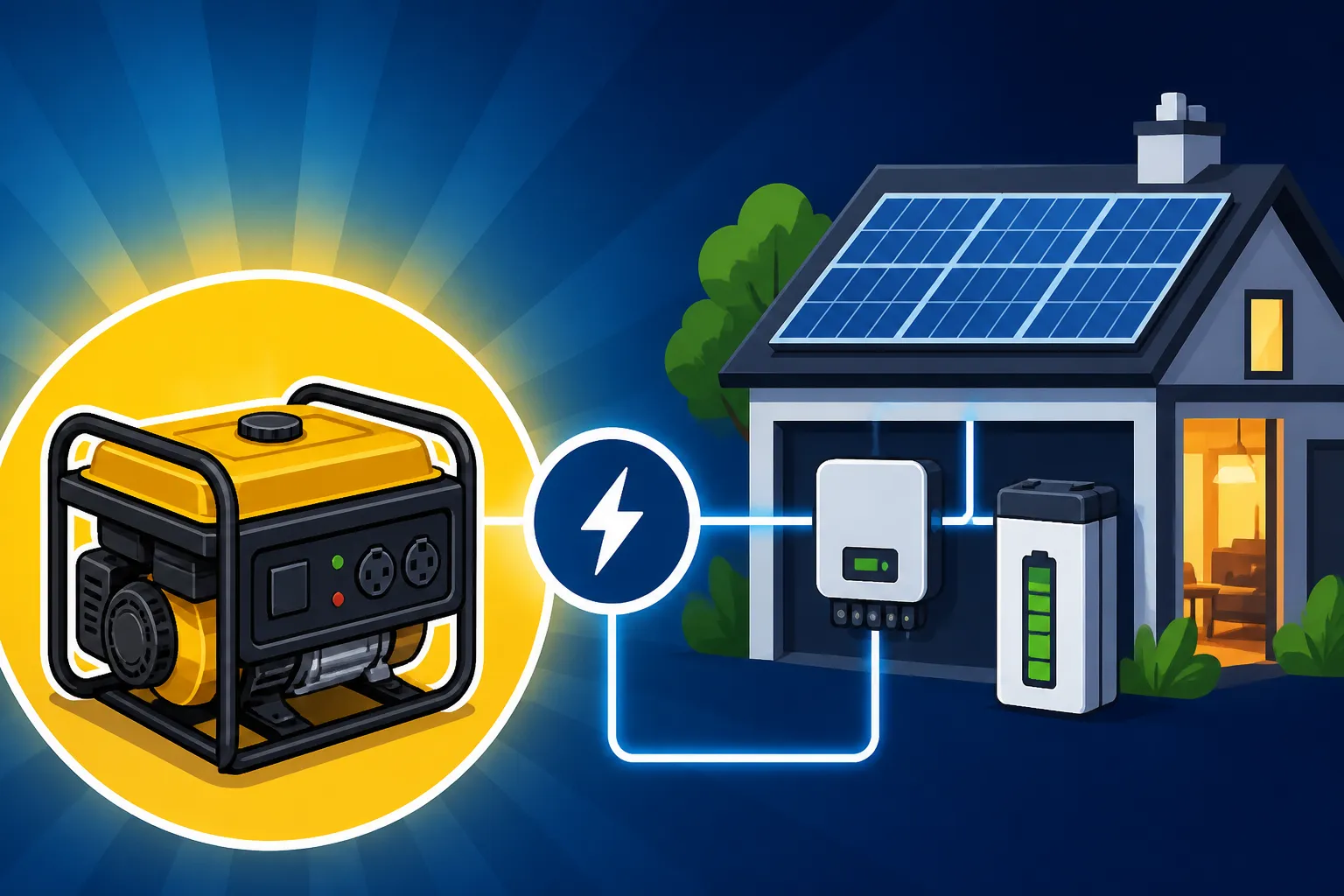
- Inverter/Charger Integration: If your off-grid system uses an inverter/charger, the generator typically feeds AC power into the inverter. The inverter then uses this AC input to power AC loads directly and to charge the battery bank. Many inverters have specific generator input settings that need to be configured, such as maximum AC input current, low battery voltage start/stop points, and specific charging profiles. These settings are crucial for efficient operation and to prevent overloading the generator or damaging your batteries. Understanding How to Wire a Generator to an Inverter Charger is key for optimizing your system's performance.
Choosing the Right Fuel Type and Storage
The type of fuel your generator uses is a major factor in its cost, convenience, and environmental impact. Each fuel source comes with its own set of considerations, especially for long-term off-grid living where fuel resupply might be infrequent.
Gasoline, Propane, and Diesel Options
Generators typically run on one of three main fuel types, though some modern units are "dual-fuel," offering more versatility.
- Gasoline: This is the most common fuel for portable generators due to its widespread availability and ease of purchase. Gasoline generators are generally less expensive to buy initially. However, gasoline has a relatively short shelf life (even with stabilizers, it degrades over time), can be volatile and dangerous to store in large quantities, and produces more emissions than propane. For occasional, short-term backup needs, a gasoline generator might suffice. But for consistent off-grid reliance, especially for larger systems, the logistical challenges of storing enough fresh gasoline can become problematic. For example, if you live in a remote area and rely on periodic trips to town for fuel, hauling dozens of gallons of gasoline can be cumbersome and risky.
- Propane (LPG): Propane is an excellent choice for off-grid generators, particularly standby units. It has a much longer shelf life than gasoline, burns cleaner (producing fewer emissions and less carbon buildup in the engine), and can be stored indefinitely in large tanks. These tanks can often be refilled by local services, or you can swap out smaller cylinders. Many dual-fuel portable generators, often available through retailers like Amazon, offer propane as an option, which is a popular choice among RVers and cabin owners. While propane generators might be slightly less fuel-efficient than gasoline counterparts in terms of BTU per gallon, the benefits of cleaner burn, easier storage, and extended shelf life often outweigh this. The cost of a propane generator can be a bit higher upfront, but the operational advantages often make it a worthwhile investment.
- Diesel: Diesel generators are renowned for their durability, longevity, and fuel efficiency. They typically have lower operating costs over their lifespan and are excellent for heavy, continuous use. Diesel fuel is also safer to store than gasoline due to its lower flammability. However, diesel generators are usually the most expensive to purchase, heavier, and can be louder than comparable gasoline or propane units. They also require more specialized maintenance. They are often chosen for very large off-grid homes, commercial applications, or scenarios where consistent, heavy-duty power is needed for extended periods, and where diesel might already be used for other equipment (like tractors or vehicles). Considering the Off-Grid Solar vs Generator Fuel Cost over the lifespan of the system, diesel can sometimes come out ahead despite the higher initial investment.
Fuel Storage and Safety
Regardless of the fuel type you choose, safe and adequate storage is non-negotiable for off-grid living.
- Ventilation and Location: Store fuel in well-ventilated areas, away from living spaces and heat sources. Never store fuel inside your home or near ignition sources. A dedicated shed or an outdoor, secure storage area is best. For propane, tanks should always be stored outdoors.
- Quantity: Plan for how much fuel you'll need based on your generator's consumption rate and your anticipated usage during solar-deficient periods. It's often recommended to have at least a week or two's worth of fuel on hand, especially in remote locations or areas prone to severe weather that could delay resupply.
- Containers: Use only approved, properly labeled fuel containers. For gasoline, this means red cans designed for fuel. For diesel, yellow cans. Propane needs purpose-built cylinders or bulk tanks. Ensure all containers are in good condition, tightly sealed, and stored upright.
- Security: Keep fuel secure to prevent theft and unauthorized access, especially from children.
- Rotation: For gasoline, practice fuel rotation: use older fuel first and replenish with fresh fuel. Consider adding fuel stabilizers to extend shelf life. This isn't as critical for propane or diesel, which have much longer storage lives.
- Spill Kits: Have a small spill kit (absorbent pads, gloves) readily available near your fuel storage area, particularly if you're frequently refilling.
Proper fuel management is a cornerstone of safe and reliable generator operation. By carefully considering your fuel options and adhering to strict safety protocols, you can ensure your backup power is always ready when you need it, without introducing undue risks to your off-grid lifestyle. This forward-thinking approach is a core tenet of effective Off-Grid Solar System Sizing Guide.
Integrating Generator Auto-Start and Smart Control
For those who desire maximum convenience and true set-it-and-forget-it reliability, integrating generator auto-start functionality with your off-grid solar system is a game-changer. This takes your backup power from a manual chore to an automated process, ensuring your batteries are always charged and your critical loads powered, even when you're not around.
How Generator Auto-Start Systems Work
Generator auto-start is precisely what it sounds like: your generator turns on by itself when certain conditions are met, and then shuts down automatically when no longer needed. This typically involves a communication link between your off-grid inverter/charger and the generator itself.
Modern off-grid inverter/chargers, such as those from Victron Energy, Outback Power, or Sol-Ark, come equipped with programmable auxiliary relays or dedicated generator control ports. These can be configured to send a signal to a compatible generator based on various parameters:
- Low Battery Voltage: This is the most common trigger. When your battery bank's voltage drops below a user-defined threshold (e.g., 48.0V for a 48V system), the inverter sends a signal to start the generator. This ensures your batteries never get dangerously low, preserving their lifespan and maintaining system stability. You can also set a "re-start" voltage if the generator fails to start on the first try.
- High Power Demand: If your instantaneous power draw exceeds the capacity of your inverter or battery bank for a sustained period, the auto-start can be triggered. This prevents overloading the inverter and ensures power continuity.
- Time-Based Schedules: For systems where you might want to run the generator at specific times, regardless of battery state (e.g., to run heavy loads like a washing machine or well pump during the morning when solar production is still ramping up), some systems allow for timed starts.
- Temperature: In some advanced setups, especially with lead-acid batteries, the generator can be triggered if battery temperature drops below a certain point to warm them while charging, enhancing charging efficiency in cold climates.
Once the generator receives the start signal, it fires up, warms up for a short period, and then begins to supply power to the inverter/charger. The inverter then uses this power to both run AC loads and rapidly charge the batteries. Once the batteries reach a pre-set "full" voltage (e.g., 56.0V for a 48V LiFePO4 bank) or a timer expires, the inverter sends a signal to shut down the generator. The system then switches back to solar/battery power.
This automation is particularly valuable for remote properties, vacation homes, or if you simply prefer not to manually manage your backup power. It ensures your power security even when you're away or asleep.
Configuring Your Inverter/Charger for Auto-Start
The configuration process varies depending on your inverter/charger brand and model, but the core steps are generally similar:
- Physical Connection: First, you need to physically connect the generator's auto-start terminals (usually two low-voltage wires) to the auxiliary relay contacts on your inverter/charger. Most modern generators, especially standby and many larger portable inverter generators, will have these terminals. If your generator doesn't have a direct auto-start port, you might need an aftermarket module that can interpret the inverter's signal and operate the generator's starter motor.
- Software Configuration: Access your inverter/charger's settings via its display, a connected computer, or a smartphone app. Here you'll define the parameters for starting and stopping the generator. For a Victron MultiPlus, for instance, you'd dive into the "Assistants" section in VE.Configure and enable the "Generator start/stop" assistant.
- Setting Thresholds: Crucially, you'll set:
- Generator Start Voltage: The battery voltage at which the generator should fire up. This should be low enough to allow significant discharge, but not so low as to damage your batteries.
- Generator Stop Voltage: The battery voltage at which the generator should shut down. This is typically near full charge voltage.
- Minimum Run Time: To prevent short-cycling, you'll often set a minimum run time (e.g., 30 minutes to an hour) to ensure the generator runs long enough to warm up, stabilize, and put a decent charge into the batteries, even if the voltage quickly recovers.
- Delay Times: You might also set start delays (e.g., wait 5 minutes after low voltage before starting) and stop delays to prevent nuisance starts/stops.
- Inverter AC Input Limits: It's vital to configure your inverter's maximum AC input current from the generator. This prevents the inverter from drawing more power than the generator can safely supply, which could overload and damage the generator. This is a crucial element for How to Size a Backup Generator effectively.
When working with reputable brands like Victron or Sol-Ark, their user manuals and online communities offer extensive guidance on these configurations. Don't be afraid to take your time and test your settings thoroughly in a controlled environment before relying on them completely. Proper configuration ensures your generator seamlessly supports your solar system, offering true off-grid independence.
Maintenance and Best Practices for Generator Use
Just like any other piece of critical equipment in your off-grid setup, your backup generator requires consistent care to ensure it's ready to perform when you need it most. Neglecting maintenance can lead to frustrating failures, expensive repairs, and a lack of power when your solar system needs help.
Regular Maintenance Schedule
A proactive maintenance schedule is the backbone of generator reliability. Think of it like taking care of your car – regular check-ups prevent bigger problems down the road.
- Oil Changes: This is arguably the most important maintenance item. The frequency depends on the generator's usage and the oil type, but typically every 50-200 hours of operation, or at least once a year, is a good guideline. Always use the manufacturer-recommended oil viscosity and type. Check the oil level before each use.
- Air Filter Inspection/Replacement: A clean air filter is crucial for engine performance and longevity. Check it frequently, especially if operating in dusty environments. Clean or replace it as per the manufacturer's recommendations. A clogged filter can reduce power and increase fuel consumption.
- Spark Plugs: Inspect and replace spark plugs periodically, usually every 100-300 hours or annually. A fouled or worn spark plug can lead to misfires, hard starting, and reduced efficiency.
- Fuel Filter/Sediment Bowl: If your generator has a fuel filter or sediment bowl, inspect it regularly for contamination. Replace the fuel filter as recommended by the manufacturer to prevent fuel delivery issues.
- Battery Check (for electric start models): If your generator has an electric start, check the starter battery's charge and condition periodically. Keep the terminals clean and free of corrosion.
- General Inspection: Before each use, do a quick visual inspection. Check for loose wires, leaks (fuel, oil), damaged components, or any unusual signs. Ensure cooling fins are clear of debris.
- Winterization/Storage: If you live in a cold climate or plan to store your generator for an extended period, follow the manufacturer's instructions for winterization or long-term storage, which usually involves stabilizing fuel or running the carburetor dry for gasoline models, and ensuring all fluids are topped off.
Maintaining your generator isn't a "nice-to-do" for off-gridders; it's an essential part of keeping your lights on when the sun isn't shining. Platforms like Amazon often carry universal maintenance kits or replacement parts for common generator brands, making it easier to stay on top of this schedule.
Testing and Operation Best Practices
Beyond routine maintenance, how you operate and test your generator greatly impacts its readiness and lifespan.
- Regular Exercise: Even if your solar system is performing flawlessly, it’s vital to "exercise" your generator regularly. Running it under a load (even a small one, like a few lights or a power tool) for 15-30 minutes once a month helps lubricate engine components, keeps the carburetor from gumming up (for gasoline models), and ensures the starter battery stays charged. For automated systems, ensure your inverter/charger is programmed to perform these test runs. This regular exercise is often overlooked but is crucial for reliability.
- Load Management: While your generator has a maximum capacity, it's generally not efficient or healthy for the engine to run at either extreme (too light a load or consistently maxed out). Try to run it at 50-75% of its rated continuous capacity for optimal fuel efficiency and engine life. Avoid sudden, massive load changes where possible. When relying on the generator to charge your batteries, ensure your inverter's charging rate is configured to match the generator's capacity, preventing overload. This directly relates to How to Size an Off-Grid Inverter and its charging capabilities.
- Ventilation and Exhaust: Always operate generators in a well-ventilated outdoor area. Never run a generator indoors, in a garage, or near windows/vents that could allow exhaust fumes (carbon monoxide) to enter living spaces. Carbon monoxide is odorless and deadly. Position the exhaust away from your home and any potential entry points.
- Fuel Levels: Keep an eye on fuel levels. For portable units, don't let them run completely dry repeatedly. For standby units, regularly check the main fuel tank. This is where having sufficient fuel storage, as discussed earlier, becomes critical.
- Shut Down Procedures: Allow the generator to cool down for a few minutes without a heavy load before shutting it off. This helps prevent engine damage and extends its life.
- Troubleshooting Common Issues: Know how to troubleshoot basic problems like "no start" (check fuel, oil, spark plug, battery), "low power output" (check air filter, fuel filter), or "overload" (reduce loads). A basic understanding can save you a service call.
By adhering to a diligent maintenance schedule and following best operational practices, your backup generator will be a reliable workhorse, ready to support your off-grid solar system whenever the need arises, truly embodying the spirit of resilient off-grid living.
Disclaimer
The information provided in this guide is for general informational purposes only and does not constitute professional advice. Off-grid solar system design and generator integration can be complex and involve significant electrical risks. Always consult with qualified and licensed electricians or solar professionals before installing or modifying any electrical system. Adhere strictly to all local and national electrical codes, regulations, and manufacturer instructions for all equipment. Improper installation or maintenance can lead to serious injury, death, or property damage.