How to Choose Between 24V and 48V
One of the trickiest decisions you'll face when designing your off-grid solar system is figuring out the right system voltage. It's a common stumbling block, leaving many folks scratching their heads about whether to go with 24V or 48V. This choice isn't just a technical detail; it profoundly impacts your system's efficiency, cost, component selection, and even future expandability. This guide is here to walk you through everything you need to know, helping you make an informed decision that perfectly suits your power needs and lifestyle.
Understanding Off-Grid System Voltage Basics
Before we dive into the nitty-gritty of 24V versus 48V, let's clarify what system voltage actually means in the context of off-grid solar. It's not just a number; it's a fundamental aspect that dictates how power flows through your setup and interacts with all your components.
What System Voltage Actually Means
When we talk about a 24V or 48V off-grid solar system, we're primarily referring to the nominal voltage of your battery bank. This voltage then influences the voltage of your charge controller and inverter. Think of voltage as the "pressure" that pushes electrical current through your wires. Higher voltage means that for the same amount of power (watts), you'll have lower current (amps). Why does this matter? Well, lower current has some pretty significant benefits in a solar setup. It reduces energy loss due to resistance in wires (which manifests as heat), and it allows you to use thinner, often less expensive, wiring for the same power delivery. This means a more efficient system overall, especially as your power needs grow.
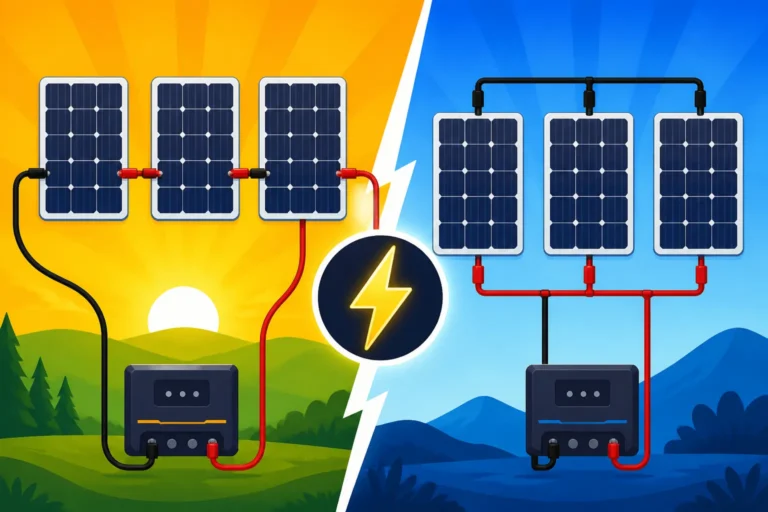
The system voltage also dictates how you connect your solar panels and batteries. Panels are often wired in series to achieve a higher voltage compatible with your charge controller. Batteries are also connected in series or series-parallel to reach the desired system voltage. Getting this foundational understanding down is crucial for everything that follows, from selecting components to laying out your wiring.
The Role of System Voltage in Your Off-Grid Setup
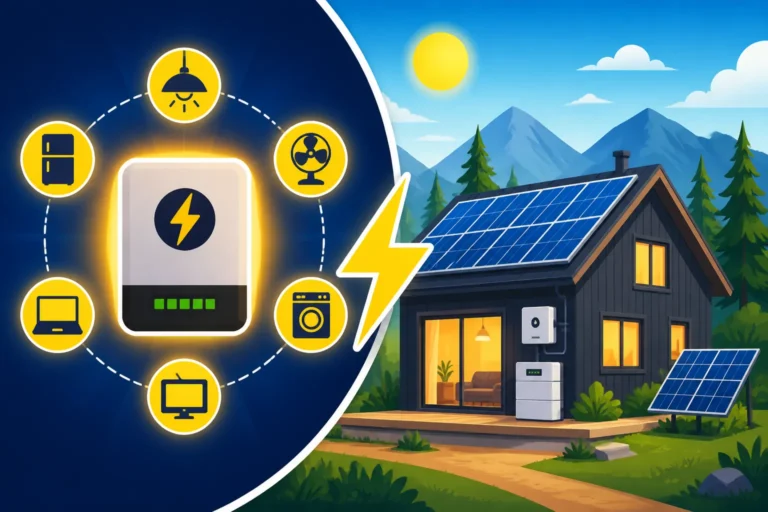
Your chosen system voltage acts as the central hub around which all your other components revolve. The voltage of your solar panel array needs to be compatible with your charge controller, which then charges your battery bank at the selected system voltage. Finally, your inverter takes that battery voltage and converts it into usable AC power for your appliances.
For instance, if you decide on a 48V system, your charge controller will be a 48V unit, and your inverter will be designed to accept a 48V DC input. Similarly, your battery bank will consist of batteries wired together to achieve a nominal 48V. This interconnectedness means that your initial voltage decision has a ripple effect across your entire bill of materials. It impacts the number of batteries you need to wire in series, the type of charge controller that can handle your solar array's voltage, and the size and cost of your inverter. Choosing the right voltage from the start ensures all your components work together harmoniously, maximizing efficiency and minimizing potential headaches down the line. It's all about creating a cohesive, well-matched electrical ecosystem.
Diving Deep into 24V Off-Grid Solar Systems
Many off-grid enthusiasts, especially those just starting or with smaller power demands, often gravitate towards 24V systems. They have some compelling upsides, but also some limitations that are important to understand.
Advantages of a 24V System
One of the biggest draws of a 24V system is its relative simplicity and lower cost for specific applications. For smaller setups, like powering a compact travel trailer or a small cabin, 24V components are often more readily available and can be a bit more budget-friendly initially. Many entry-level solar kits, especially those found on platforms like Amazon or from brands like Renogy, are designed around a 12V or 24V battery bank. This means you might find a wider range of smaller inverters, charge controllers, and even 24V DC appliances directly compatible with your system.
Installation can also feel a little less intimidating for DIYers, as the voltage is lower than 48V, and troubleshooting might be simpler due to fewer series connections in the battery bank compared to a larger 48V setup. For those looking to power basic necessities in an RV or a modest hunting cabin, a 24V system often provides a perfect balance of performance and affordability. Thinking about a smaller setup? You might want to read our guide on the Cost of a 1000W Off-Grid Solar System to get a clearer picture of potential costs.
Disadvantages and Limitations of 24V
While 24V systems shine for smaller applications, they do come with certain limitations, particularly as your power needs grow. The primary drawback of a 24V system, especially for higher power demands, is the increased current. Remember, for the same wattage, lower voltage means higher amperage. Higher amperage requires thicker, more expensive wiring to minimize voltage drop and prevent overheating. If you're running long cable runs or trying to power demanding appliances like a well pump or a mini-split air conditioner, the voltage drop can become a real problem, leading to inefficiency and potential damage to your appliances.
Let's say you're trying to pull 2000 watts from your inverter. On a 24V system, that's roughly 83 amps (2000W / 24V = 83.3A). On a 48V system, it's about 41 amps. That difference in amperage dramatically impacts the wire gauge you need. Thicker wires mean more copper, which means more cost. As your system scales, these wire costs and efficiency losses can quickly add up, diminishing the initial cost advantage. It's really worth diving into how wire gauge can impact your system's performance and cost.
Another limitation is the capacity for expansion. If you start with a 24V system and later decide to add more substantial loads, you might find yourself needing to upgrade significant portions of your system, including your wiring and inverter, which can be more costly than building a 48V system from the outset if you anticipate future growth.
Ideal Scenarios for 24V Systems
So, where does a 24V system truly excel? It's ideal for setups with modest energy consumption and where system footprint or initial budget is a significant factor. Think about a small off-grid cabin where you're primarily running LED lights, charging phones, a laptop, maybe a small DC refrigerator, and occasionally a TV. In these scenarios, a 24V system provides ample power without the added complexity or cost of a larger voltage system.
Consider a small workshop or shed that only needs power for occasional hand tools and lighting. A 24V setup, perhaps with a few hundred watts of solar panels and a couple of 100Ah lithium batteries, would likely be perfectly sufficient. It’s also often the go-to for many RV and van life conversions where space is at a premium and daily energy needs are carefully managed. For a practical example, checking out the Best Off-Grid Solar Kit for a Shed can give you a good idea of what a 24V setup might look like in terms of cost and components. For these types of uses, a 24V system offers a robust and reliable power solution without going overboard.
Exploring 48V Off-Grid Solar Systems
As your power demands increase, or if you're planning for a full-fledged off-grid home, 48V systems become not just a viable option, but often the most practical and efficient choice.
Benefits and Efficiencies of 48V
The main advantage of a 48V system boils down to physics: for a given amount of power, doubling the voltage halves the current. This reduction in current brings a host of benefits. First, and perhaps most importantly, it significantly reduces voltage drop over longer wire runs. This means you can often use thinner, less expensive wiring from your solar panels to your charge controller, and from your battery bank to your inverter, especially if these components are situated a distance apart. Less voltage drop also means more power actually makes it to your appliances, leading to a more efficient system overall.
Higher voltage also often translates to greater efficiency in components like inverters. Larger, high-power inverters, which you'd need for whole-house applications or running substantial loads, are generally more efficient at 48V. This is because they're handling less current. This improved efficiency can mean less wasted energy and ultimately, a more reliable and cost-effective system in the long run. Many homesteaders and those building full-time off-grid homes find that a 48V system provides the necessary robustness and efficiency for their daily demands.
Considerations and Drawbacks of 48V
While 48V systems offer superior efficiency for larger loads, they do come with their own set of considerations. The initial cost for some 48V components, particularly the specialized charge controllers and inverters, can be higher than their 24V counterparts. While the wire savings might offset some of this, it's an important factor in your upfront budget. You'll definitely want to understand the Cost of an Off-Grid Solar Inverter as that component can be a significant part of your overall expense.
Another point to consider is the availability of smaller DC appliances. While 12V and 24V DC appliances (like certain refrigerators, fans, or lighting) are quite common, true 48V DC appliances are much rarer. This means you'll likely be converting most of your power to AC via your inverter, which adds a small layer of inefficiency, though for most larger systems, the overall gains from 48V far outweigh this. The higher voltage itself also demands a greater level of respect and safety during installation and maintenance. While all electrical work requires caution, 48V carries a higher potential for serious shock if handled improperly. It's crucial to follow all safety guidelines and, if you're not confident, consult or hire a qualified electrician.
When a 48V System Shines Brightest
A 48V system is the undeniable champion for powering larger off-grid homes, extensive homesteads, or commercial applications where significant power demands are the norm. If your vision includes running major appliances like a full-size refrigerator, a washing machine, a well pump for water, electric hot water heaters, or air conditioning units, a 48V system is almost always the way to go. The ability to handle these high-surge and continuous loads with greater efficiency and less voltage drop makes it the practical choice.
Imagine a scenario where you're building a remote home in northern Arizona. You need to run a well pump for an hour a day, have a modern refrigerator, and perhaps a small mini-split AC unit for the hottest months. A 48V system would allow you to power that well pump much more efficiently due to the lower current draw from the batteries and inverter. Brands like Victron Energy and Sol-Ark, which specialize in robust off-grid solutions, primarily design their higher-capacity inverter/chargers and charge controllers for 48V systems, recognizing its inherent advantages for substantial power needs. It also provides a much better foundation for future expansion, allowing you to add more solar panels or battery capacity without completely overhauling your initial wiring infrastructure.
Making the Right Choice: Factors to Consider
Deciding between a 24V and 48V system isn't about one being inherently "better" than the other; it's about finding the best fit for your unique situation. Several key factors should weigh heavily in your decision-making process.
Assessing Your Power Needs and Load Profile
This is arguably the most critical step. Before you even think about voltage, you need to conduct a thorough energy audit of all the appliances and devices you plan to power. This involves calculating your daily energy usage in watt-hours (Wh) and identifying your peak instantaneous power draw in watts (W). Understanding How to Calculate Daily Energy Usage is the foundation for any successful off-grid system.
Are you only running a few lights and charging devices in a small cabin, or do you intend to power a full-sized home with a well pump, air conditioning, and a workshop full of power tools? For minimal loads and low daily energy consumption (e.g., under 3-4 kWh per day), a 24V system might be perfectly adequate. However, if your daily consumption creeps up to 5 kWh or more, or if you have several high-draw appliances running simultaneously, a 48V system will almost certainly be more efficient and cost-effective in the long run. Take the time to list every single item, its wattage, and how many hours per day you plan to use it. This exercise will illuminate your true power requirements.
Future Expansion and Scalability
It's easy to focus on your current needs, but a smart off-grid planner always considers the future. Will you be adding more panels down the road? Do you anticipate growing your homestead to include more appliances or a larger living space? If there's any chance you'll want to expand your system significantly in the future, starting with a 48V system can save you a lot of headaches and money.
Upgrading a 24V system to a 48V system is essentially building a new system from scratch, requiring new charge controllers, inverters, and often a complete re-wiring of your battery bank and solar array. By opting for 48V initially, you give yourself a robust platform that can gracefully accommodate additional solar panels, more batteries, or larger loads without needing a complete overhaul.
Component Availability and Budget
While there's often a perception that 24V components are cheaper and more readily available, this isn't always the case, especially as you move into mid-to-large system sizes. For very small systems (under 1000W), 12V or 24V kits are indeed common and often inexpensive, found easily on platforms like Amazon from various sellers. However, for systems aiming for 2000W-3000W or more, the component pricing for 48V often becomes competitive, if not more advantageous, due to better efficiency and reduced wiring costs.
Look at the total cost of panels, charge controllers, inverters, batteries, and especially the wiring. You might find that while a 48V inverter or charge controller has a higher sticker price, the savings on thicker gauge wire, especially for long runs, and the improved efficiency over the lifespan of the system, make the 48V option more economical overall. Don't forget to factor in the potential for higher future costs if you choose to expand a 24V system beyond its practical limits.
Safety and Wiring Complexity
When it comes to safety, both 24V and 48V systems require careful handling, but higher voltages naturally carry a greater potential for serious electrical shock. However, 48V systems also present some advantages in terms of wiring complexity. This can make wiring runs less cumbersome and potentially reduce the chances of accidental short circuits or overheating from undersized wires.
For beginners, the perceived simplicity of 24V might be appealing, but it's crucial not to underestimate the importance of proper wire sizing for safety and efficiency, regardless of voltage. Always follow manufacturer guidelines, use appropriate fuses and breakers, and double-check all connections. If you're undertaking a DIY installation, having a good understanding of electrical principles and safety practices is non-negotiable. For many, the slightly increased "danger" of 48V is mitigated by the benefits of efficiency and scalability, especially when working with reputable brands that provide clear installation instructions and safety protocols.
Here's a quick comparison to help you visualize the differences:
| Feature | 24V System | 48V System |
|---|---|---|
| Ideal Use Case | Small RVs, vans, small cabins, basic power needs | Full-sized homes, large homesteads, heavy appliance use |
| Max Power Output | Generally up to 3000W (practical limit) | Typically 3000W to 15kW+ (much higher) |
| Current (Amps) | Higher for a given wattage | Lower for a given wattage |
| Wire Gauge | Thicker wires needed for equivalent power/distance | Thinner wires possible for equivalent power/distance |
| Voltage Drop | More prone to significant voltage drop | Less prone to voltage drop, more efficient |
| Efficiency | Slightly lower overall, especially for high loads | Higher, especially for high loads and longer runs |
| Component Cost | Often cheaper for smaller setups, wide availability | Higher for some core components (inverter, CC) |
| Scalability | Limited, upgrading might mean full overhaul | Excellent, designed for future expansion |
| DC Appliances | Wider range of compatible 12/24V DC appliances | Fewer compatible 48V DC appliances |
| Safety | Requires caution, lower shock potential than 48V | Requires greater caution, higher shock potential |
| Complexity | Generally simpler for DIY, fewer battery cells in series | More complex initial setup, more battery cells in series |
Ultimately, there's no single "best" choice for everyone. It all comes back to your specific energy needs, your budget, your technical comfort level, and your long-term plans. Taking the time, considering all the variables we've discussed, will lead you to the most effective and satisfying off-grid power solution for you. Don't rush this decision!
Disclaimer
The information provided in this guide is for general informational purposes only and does not constitute professional electrical advice. Off-grid solar system design and installation can be complex and potentially dangerous. Always consult with a qualified electrician or solar professional before installing or modifying any electrical system. Follow all local codes, regulations, and manufacturer instructions. Improper installation can result in property damage, injury, or death.