How Many kWh Does an Off-Grid Home Need
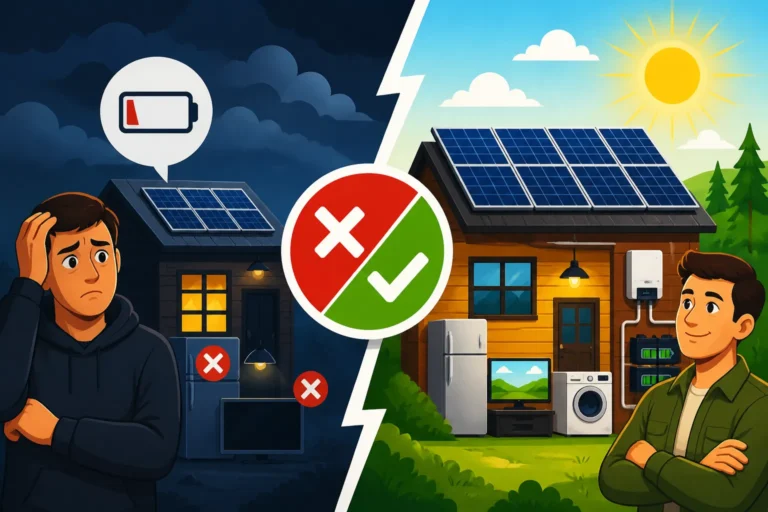
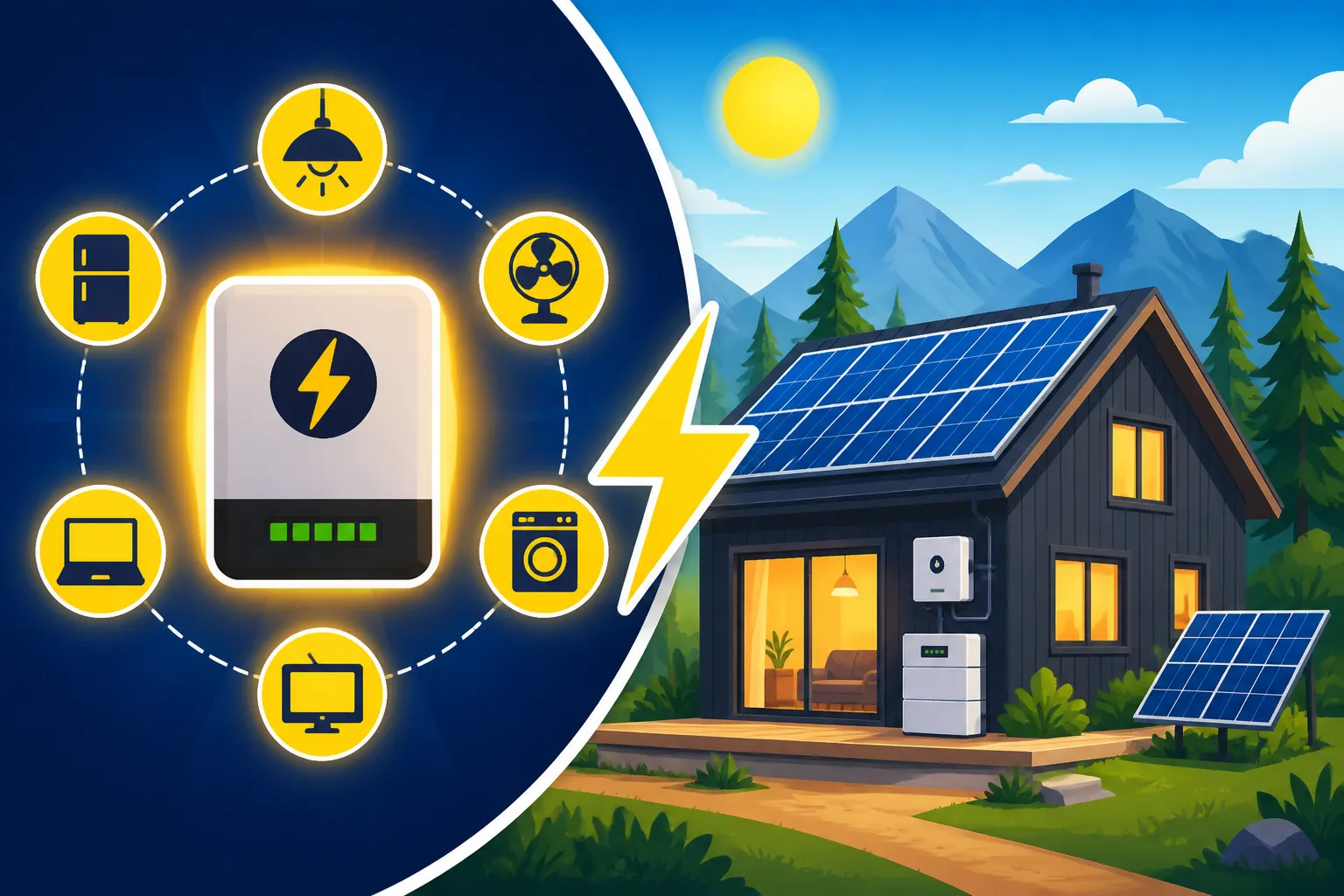
One of the biggest anxieties people face when dreaming of going off-grid, or even just setting up a robust remote system, is figuring out how much power they actually need. It feels like a big, mysterious number, and the fear of not having enough electricity to run your everyday essentials can be paralyzing. You're trying to escape the grid, not live in the dark! This guide is here to demystify the process, helping you understand precisely how many kilowatt-hours (kWh) your off-grid home will require to keep the lights on and the fridge cold, empowering you to design a solar system that truly meets your needs.
Understanding Your Energy Footprint
Before you can even begin to think about solar panels, batteries, or inverters, you need to speak the language of energy consumption. This isn't just about throwing numbers around; it's about getting a realistic picture of your lifestyle and how much electricity it demands. Ignoring this crucial first step is like building a house without a blueprint – you're just asking for trouble, and probably a lot of wasted money.
What is a Kilowatt-Hour kWh Anyway
Let's break it down in simple terms, because "kilowatt-hour" can sound intimidating. A kilowatt-hour (kWh) is simply a unit of energy, representing the amount of energy consumed by a 1,000-watt appliance running for one hour. Think of it like this: if you have a powerful hairdryer that uses 1,500 watts (or 1.5 kilowatts), and you use it for one hour, you've just used 1.5 kWh of electricity. If you use a standard 100-watt LED light bulb for 10 hours, that's 1,000 watt-hours, or 1 kWh.
This unit is the standard measurement you see on your utility bill, and it’s the golden number you need to determine for your off-grid home. When you calculate your daily kWh, you're essentially adding up all the little (and big) energy expenditures in your home over a 24-hour period. It’s what drives the size of your entire off-grid solar system, from the number of panels on your roof to the capacity of your battery bank. Understanding this core concept is fundamental to knowing how to calculate Off-Grid Solar Needs.
The Crucial First Step: Your Load Analysis
This is where the rubber meets the road. A load analysis is essentially an inventory of every single electrical device in your home that will draw power, combined with an estimate of how long each device will run daily. Many people skip this, or just eyeball it, and that's a recipe for disaster. You might think you don't use much, but once you start listing everything – from your coffee maker to your phone charger to your well pump – the numbers can add up surprisingly fast.
To start your load analysis, grab a notebook or a spreadsheet. Walk through your home, room by room, and list every electrical appliance. For each item, you need two pieces of information: its wattage and its estimated daily usage in hours. You can usually find the wattage printed on the appliance label, in the owner's manual, or by doing a quick search online. Don't forget about "phantom loads" – those devices that are always plugged in, even if they're off, like TVs in standby mode or charging bricks. These often contribute to your daily energy usage more than you'd expect. For a deeper dive, check out our guide on how to Do an Off-Grid Load Analysis.
Beyond the Basics: Seasonal and Lifestyle Factors
Your energy needs aren't static; they ebb and flow with the seasons and your daily routines. Someone living in Arizona will have vastly different energy demands in summer (think air conditioning) compared to winter, and the same goes for a cabin in Maine.
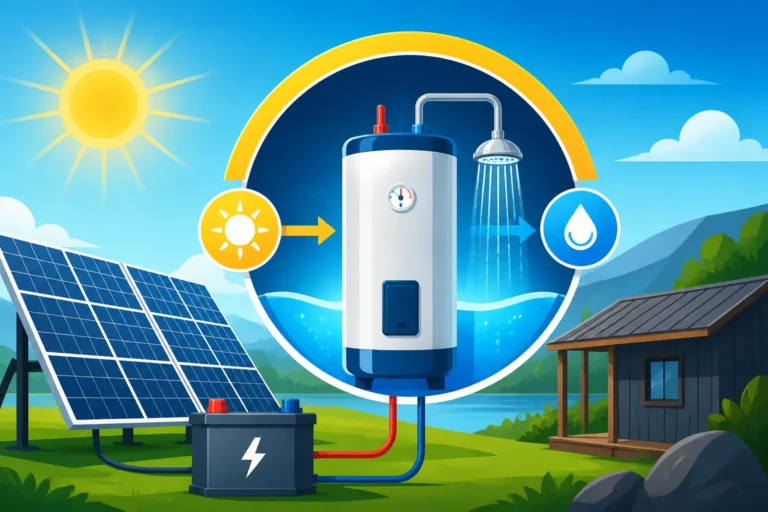
- Seasonal Changes: Winter means shorter daylight hours for solar charging and often more demand for lighting. If you rely on electric heat, your usage will skyrocket. Summer might bring longer days, but also the need for fans or air conditioning, which are significant power consumers. For instance, sizing solar for air conditioning or sizing solar for a water heater can dramatically change your total kWh needs.
- Occupancy and Lifestyle: Is this a full-time residence for a family of four, or a weekend cabin for one? Do you work from home with multiple monitors and a powerful computer, or are you mostly outdoors? Do you entertain frequently, running extra lights and kitchen appliances? Your habits directly impact your daily kWh. A good rule of thumb is to calculate your usage for a "worst-case scenario" (e.g., cloudy winter days with maximum typical usage) to ensure you always have enough power. This also feeds into topics like how to account for cloudy days in your design.
Calculating Daily Energy Usage for Your Off-Grid Home
Now that we understand the 'why,' let's get into the 'how.' This is a step-by-step process, but don't worry, it's more like arithmetic than advanced calculus. The goal here is to come up with a realistic, conservative number for your daily energy consumption in kWh. This figure is the bedrock of your entire off-grid system design.
Identifying Your Appliances and Their Wattage
This is the meticulous part, but it's where accuracy truly pays off. List everything that plugs in or uses electricity. Seriously, everything.
- Lighting: Don't just count "lights." Count each bulb, its wattage (e.g., a 9-watt LED bulb), and how many hours it's on per day.
- Kitchen Appliances: Refrigerator (this is a big one!), microwave, coffee maker, toaster, blender. Pay close attention to starting wattage vs. running wattage for things with motors. For example, knowing how much solar to run a refrigerator is key.
- Entertainment: TV, streaming devices, gaming consoles, sound systems.
- Office/Electronics: Laptops, monitors, printers, phone chargers, Wi-Fi router.
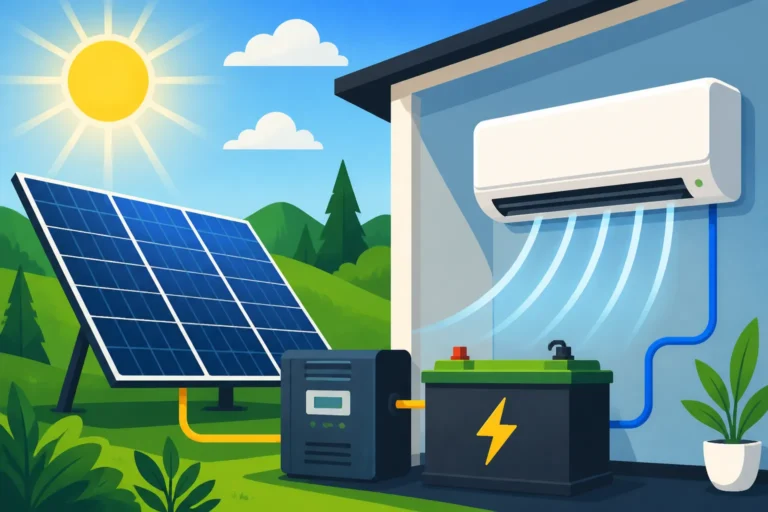
- Heating/Cooling: Fans, space heaters (often very high wattage), mini-split AC units.
- Water Systems: Well pump, water heater circulation pump.
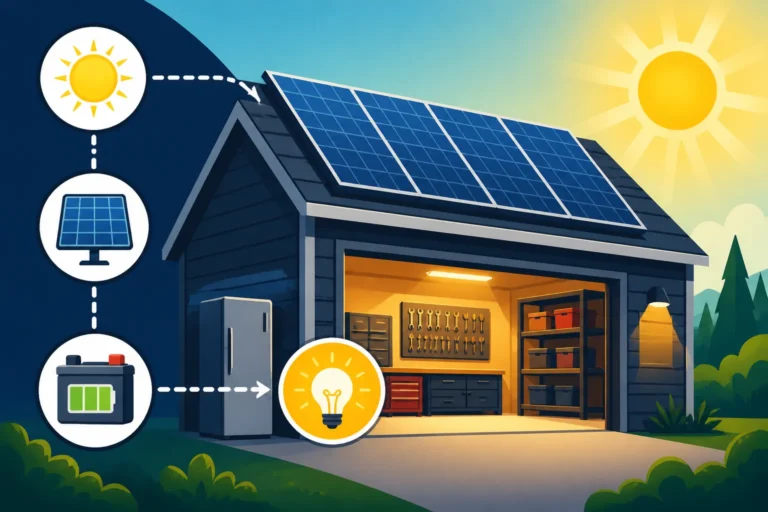
- Workshop/Garage: Power tools (consider peak usage, even if brief).
- Miscellaneous: Hair dryer, electric toothbrushes, vacuum cleaner.
For wattage, always try to find the actual rating on the appliance. If you can't, a quick search on Amazon or Google for the specific model number often yields results. As a last resort, you can use a Kill A Watt meter to directly measure consumption. This little device plugs into any outlet, and you plug your appliance into it, giving you real-time readings of wattage and kWh used over time. It's an invaluable tool for precise load analysis. Many people find the Renogy 500W Monocrystalline Solar Panel a popular choice for their off-grid needs, but its power output is only part of the equation; knowing your consumption is paramount.
Estimating Daily Run Time
Once you have your list of appliances and their wattages, the next step is to estimate how many hours each device will run in a typical 24-hour day. This requires a bit of honest self-reflection and observation.
- Continuous Loads: Refrigerators, freezers, and Wi-Fi routers run 24/7, but they don't draw their full wattage constantly. Refrigerators cycle on and off. For these, it's often more accurate to look up their daily kWh consumption if available, or assume they run a certain percentage of the day (e.g., a fridge might run 8-12 hours out of 24, depending on efficiency and how often it's opened).
- Intermittent Loads: Lights, TVs, laptops. Be realistic. If your living room light is on for 4 hours in the evening, mark it as such. If you use your laptop for 8 hours, note that.
- Peak Loads: Appliances like microwaves, toasters, or blenders have high wattages but run for very short periods. Even a hair dryer might be 1500W, but if you only use it for 10 minutes, that's 0.25 kWh.
- Seasonal Adjustments: Remember those seasonal factors? If you're planning for year-round living, you'll want to do separate calculations for summer and winter, or at least account for the highest-demand season. For instance, calculating how much solar to run an air conditioner is a huge swing.
Summing It All Up: Your Daily kWh Total
Now for the math! For each appliance, multiply its wattage by its estimated daily run time in hours. This gives you its daily watt-hours (Wh).
Formula: Watts (W) x Hours per Day (h) = Watt-hours per Day (Wh/day)
Once you have the daily Wh for every single item, add them all up. This total is your gross daily watt-hour consumption. To convert this into the more manageable kilowatt-hours (kWh) that we're looking for, simply divide by 1,000.
Formula: Total Watt-hours per Day (Wh/day) / 1000 = Total Kilowatt-hours per Day (kWh/day)
Let's do a quick example:
- LED Lights (5 x 9W): 45W total. On for 5 hours/day. -> 45W * 5h = 225 Wh
- Refrigerator (Energy Star rated): Runs ~8 hours at 100W (average cycling). -> 100W * 8h = 800 Wh
- Laptop (60W): On for 6 hours/day. -> 60W * 6h = 360 Wh
- Well Pump (750W): Runs for 30 minutes (0.5 hours)/day. -> 750W * 0.5h = 375 Wh
- Coffee Maker (1200W): On for 10 minutes (0.17 hours)/day. -> 1200W * 0.17h = 204 Wh
- Phone Charger (10W): On for 4 hours/day. -> 10W * 4h = 40 Wh
Total Daily Watt-hours: 225 + 800 + 360 + 375 + 204 + 40 = 2004 Wh
Total Daily Kilowatt-hours: 2004 Wh / 1000 = 2.004 kWh
This number is what you'll use to size your battery bank, your solar array, and your inverter. It's critical for determining how Many Batteries for an Off-Grid System and how Many Solar Panels for Off-Grid Living you'll need.
Here's a simplified table to help you organize your own calculations:
| Appliance | Wattage (W) | Est. Hours/Day | Daily Watt-Hours (Wh) | Notes |
|---|---|---|---|---|
| LED Lighting (total) | 50 | 6 | 300 | All common lights combined |
| Energy-Efficient Refrigerator | 150 | 10 | 1500 | Estimate cycling on/off time |
| Laptop/Monitor (workstation) | 100 | 8 | 800 | |
| Cell Phone Charging (2 devices) | 20 | 4 | 80 | |
| Well Pump (submersible) | 1000 | 0.5 | 500 | 30 minutes of run time |
| TV (50-inch Smart TV) | 80 | 4 | 320 | |
| Microwave (brief use) | 1200 | 0.1 (6 min) | 120 | High wattage, very short run |
| SUBTOTAL (Wh) | 3620 | |||
| TOTAL (kWh) | 3.62 kWh | Divide by 1000 |
This table helps you visualize your energy consumption and easily convert your watt-hours to kilowatt-hours.
Real-World Examples of Off-Grid Home kWh Needs
The beauty of going off-grid is that it forces you to become intimately familiar with your energy consumption. What one person considers a "minimalist" setup, another might call luxurious. These examples highlight the wide range of daily kWh needs you might encounter, depending on lifestyle, location, and priorities. It’s always good to remember that your daily usage will directly impact how much an Off-Grid Solar System Cost.
The Minimalist Off-Grid Cabin
Picture a small, rustic cabin nestled in the woods, used mostly on weekends or for seasonal hunting trips. The owners are mindful of their energy use, prioritizing efficiency and simplicity.
- Appliances: A few LED lights, a small 12V RV-style refrigerator, charging for phones and a laptop, and maybe a small portable fan in summer. Water comes from a hand pump or a small DC pump used sparingly. Cooking is done with propane.
- Daily kWh Estimate: For such a setup, a daily draw might be in the range of 1 to 3 kWh. This covers basic comfort and communication without any major luxuries. You might see a cabin like this powered by a modest system, perhaps with two or three 200-watt solar panels and a single 100Ah lithium battery from a brand like Renogy, often purchased from a marketplace like Amazon. The key here is efficiency and low-power DC appliances wherever possible. Such a setup needs very little to run lights and electronics.
- Lifestyle: Intentionally low consumption, enjoying the quiet. No energy-intensive appliances like hair dryers or microwaves.
The Moderate Family Homestead
Now, imagine a full-time residence for a small family on a homestead, committed to off-grid living but still wanting modern conveniences. They homeschool, grow a garden, and might have some small farm equipment.
- Appliances: Standard energy-efficient refrigerator, LED lighting throughout, a well pump (running daily for water), a washing machine (used a few times a week), laptops for work/school, TV for evening entertainment, and maybe a small chest freezer. Perhaps a small pressure booster pump for water.
- Daily kWh Estimate: This kind of home typically falls into the range of 5 to 10 kWh per day. The well pump and the washing machine are significant additions that push the demand up. If they add an electric oven or a mini-split air conditioner, that number can quickly climb higher, potentially pushing it into the 15+ kWh range. This system would be larger, likely a 48V setup, potentially with 8-12 large solar panels and a robust battery bank that could handle how many batteries to run a washing machine.
- Lifestyle: A balance between self-sufficiency and modern comfort. Energy awareness is still high, but certain conveniences are maintained. This is where How Much Watt-Hours You Use Per Day becomes crucial for accurate planning.
The Full-Comfort Off-Grid Dwelling
This is for those who want to live off-grid but refuse to compromise on modern amenities. Think spacious home, multiple residents, and all the "creature comforts" of grid-tied living.
- Appliances: Large refrigerator/freezer, dishwasher, electric oven/stove, central air conditioning or multiple mini-splits, electric water heater, multiple TVs, powerful computers, hair dryers, and possibly an electric clothes dryer. Hot tub? Electric vehicle charging? All of these are major power hogs.
- Daily kWh Estimate: For a setup like this, you're looking at 15 kWh per day and upwards, potentially reaching 30-50 kWh or even more, especially if electric heating/cooling is heavily used. Running an air conditioner on Off-Grid Solar or a well pump, combined with other high-draw appliances, necessitates a truly massive solar array and battery bank. This kind of system will likely involve multiple inverters, a large ground-mounted solar array with upwards of 20-40 panels, and a substantial lithium battery bank. You might even consider a backup generator for extreme peak loads or extended cloudy periods.
- Lifestyle: Full modern comfort, often requiring significant investment in high-capacity solar equipment and a very detailed energy management plan, including How to Design for Year-Round Off-Grid Power.
These examples illustrate that there's no single answer to "how many kWh does an off-grid home need." It's entirely dependent on your definition of home and your lifestyle. Your Off-Grid Solar System Sizing Guide must begin with a thorough understanding of your personal energy demand.
Planning for Reliability and Growth
Once you've calculated your baseline daily kWh needs, you're not quite done. True off-grid resilience means thinking ahead, anticipating challenges, and leaving room for future expansion. This forward-thinking approach is what separates a frustrating, underpowered system from one that reliably serves you for years to come.
Accounting for Cloudy Days and System Losses
This is probably one of the most overlooked aspects when people first start sizing their off-grid systems. The sun doesn't shine with the same intensity every single day, and your solar panels won't always perform at their theoretical maximum.
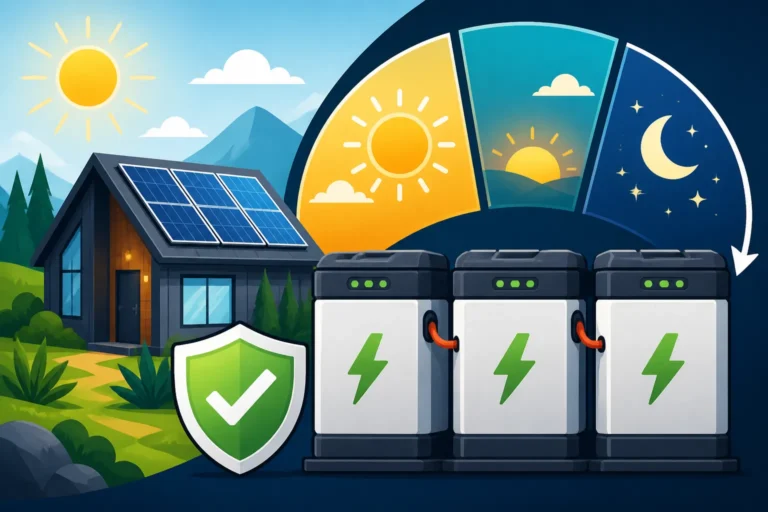
- Days of Autonomy: This refers to how many days your battery bank can power your home without any new solar input. A common recommendation for off-grid homes is to design for 3-5 days of autonomy, especially if you live in an area prone to extended cloudy or stormy weather. If your daily usage is 5 kWh, and you want 3 days of autonomy, your battery bank needs to store at least 15 kWh of usable energy. This is a crucial aspect of How to Size an Off-Grid Battery Bank.
- System Losses: No system is 100% efficient. You'll lose power due to:
- Inverter Efficiency: Inverters convert DC power from your batteries to AC power for your appliances, and they always have some efficiency loss (typically 5-10%).
- Charge Controller Efficiency: MPPT charge controllers are very efficient, but still not 100%.
- Wiring Losses: Longer or thinner wires can lead to voltage drop and power loss.
- Battery Efficiency: Batteries aren't perfectly efficient at charging or discharging.
- Temperature: Solar panels produce less power in very hot weather, and some batteries perform less optimally in extreme cold.
- Dirt/Shading: Even a little bit of dirt or partial shading on your panels can significantly reduce output.
To compensate for these factors, it's generally recommended to add a buffer of 15-30% to your calculated daily kWh needs when sizing your solar array. So, if your home needs 5 kWh per day, you might actually design your solar array to produce 6-6.5 kWh per day to ensure you always have enough power, even on less-than-perfect days. This also directly impacts How Much Solar to Charge Your Batteries Daily.
The Power of Phased Expansion
Let's be realistic: building a massive, all-encompassing off-grid solar system from day one can be incredibly expensive. Many folks choose to start smaller and expand their system over time, which is a very smart way to manage costs and learn as you go.
- Starting Small: You might begin with just enough power for essential loads – lights, refrigerator, phone charging. This allows you to get a feel for off-grid living and accurately measure your actual usage before making larger investments. Many people start with a basic off-grid solar kit for beginners.
- Modular Components: When you're buying components like inverters or charge controllers, consider those that allow for future expansion. Some brands, like Victron Energy or Growatt, offer modular systems where you can add more inverters in parallel or more battery modules as your needs grow. This is where How to Design an Expandable System comes into play.
- Budgeting for Growth: As you learn more about How to Budget for an Off-Grid Solar System, remember that expanding your system means adding more panels, more batteries, and potentially upgrading your inverter or charge controller. Factor this into your long-term financial planning. It’s also wise to consider Cost of Expanding an Off-Grid System down the line.
Why Oversizing Your Solar Array Matters
You might hear conflicting advice about oversizing your system. Some say "only build what you need," but for off-grid living, a little extra capacity in your solar array goes a long way.
- Coping with Bad Weather: As mentioned, extra panels mean you're more likely to fully recharge your batteries even on partially cloudy days or during periods of less optimal sun.
- Faster Recharging: When the sun is shining bright, an oversized array will recharge your batteries much faster, giving you more stored energy for the evening or for subsequent cloudy days. This means less worry about reaching How Many Batteries to Run An Air Conditioner on a hot day, or powering a well pump when water is needed most.
- Future Proofing: Your energy needs might increase over time. You might add a new appliance, have more people living in the home, or simply decide you want more creature comforts. An oversized array provides a buffer for these unforeseen changes without immediate upgrades.
- Battery Health: Constantly drawing your batteries down to very low states of charge and not fully recharging them can shorten their lifespan, especially for lead-acid batteries. An oversized array helps ensure your batteries get a full charge more often, extending their life.
While you don't want to wildly oversize your entire system to an extreme degree, adding a healthy buffer (e.g., aiming for 120-150% of your calculated minimum daily energy production needs from your panels, especially considering winter sun hours) is a smart, conservative strategy for reliable off-grid power.
Disclaimer
The information provided in this guide is for educational and informational purposes only and does not constitute professional advice. Off-grid solar system design and installation involve electrical work and potential hazards. Always consult with qualified professionals and adhere to all local codes and regulations when planning or installing an off-grid solar system.