How to Budget for an Off-Grid Solar System
Thinking about going off-grid can feel exhilarating, but then the cold dread of "how much is this actually going to cost me?" sets in. It's totally overwhelming trying to sort through panels, batteries, inverters, and all the tiny bits and pieces, often making the dream feel out of reach before you even start. This comprehensive guide is here to walk you through how to budget for an off-grid solar system effectively, helping you break down the expenses so you can achieve that sought-after energy independence without breaking the bank or feeling lost.
Understanding the True Cost of Going Off-Grid
When you first start looking into off-grid solar, it's easy to get fixated on the price tags of the big components – the solar panels, the batteries, the inverter. You see a solar panel for a few hundred dollars, a battery for a couple of thousand, and you think, "Okay, I can put this together." But that's often just the tip of the iceberg, and underestimating the full scope of expenses is one of the biggest pitfalls people encounter. The true cost of going off-grid extends far beyond just the core equipment; it involves a myriad of smaller, yet significant, expenditures that can quickly add up if you're not prepared.
Beyond the Sticker Price: Hidden Costs to Consider
It’s tempting to just add up the cost of the main hardware, but trust me, there are always those "oh, right!" moments that sneak up on your wallet. First off, depending on where you're located, permitting and inspection fees can be substantial. Even if you're truly off-grid, some jurisdictions still require permits for structures, electrical work, or even just panel installations for safety reasons. You might need to hire an electrician for a final inspection to ensure everything meets local codes, adding a professional labor cost that wasn't in your initial mental tally. These costs can range from a few hundred dollars to several thousands, so it’s crucial to check with your local authority having jurisdiction (AHJ) early in your planning process.
Then there are the installation materials that aren't typically part of a "kit." Think about all the wiring – heavy gauge battery cables, PV wire from your panels, AC wiring for your home circuits. You’ll need conduit to protect those wires, junction boxes, disconnect switches, fuses, and circuit breakers. Each of these items, while seemingly small, adds to the total. Don't forget the mounting hardware for your solar panels, whether it's a roof mount, a ground mount, or even a pole mount; these systems require specific rails, clamps, and often custom fabrication or heavy-duty anchors. Even simple tools like a good multimeter, wire strippers, crimpers, and safety gear can accumulate quickly if you don't already own them. Site preparation, such as clearing trees for optimal sun exposure or pouring a concrete pad for a ground mount, also falls into this category of often-overlooked expenses that can make or break a budget.
The Spectrum of Off-Grid Solar System Costs
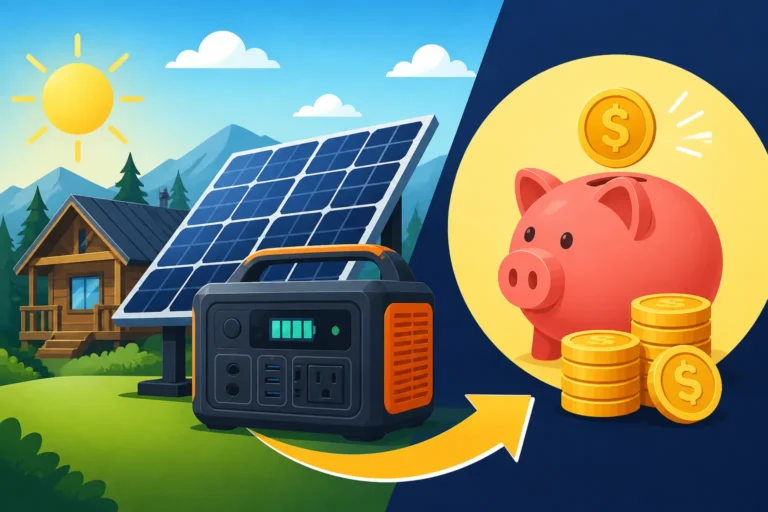
The price tag for an off-grid solar system isn't a one-size-fits-all number; it's a vast spectrum dictated primarily by your energy needs and desired lifestyle. A minimalist setup for a small cabin or an RV, designed to power just lights, a laptop, and maybe a small fridge, will naturally cost significantly less than a system built to run a full-sized family home with air conditioning, a well pump, and all the modern conveniences. For instance, a basic 400-watt portable system with a modest battery bank, perfect for weekend camping trips or a tiny shed, might run you a few hundred to a couple of thousand dollars. You can find robust portable power stations from brands like Jackery that integrate many components into one, making for a simpler, albeit smaller, off-grid solution.
On the other hand, powering an entire house off-grid can easily climb into the tens of thousands, even reaching $50,000 or more for larger, more complex systems designed for year-round reliability and comfort. This is where a detailed understanding of your daily energy consumption becomes paramount. Knowing How Many Watts of Solar You Need and how much battery capacity you need directly translates into system size and, subsequently, cost. A key factor is understanding that the more power you need, the more solar panels, the larger the inverter, and most significantly, the bigger and more expensive your battery bank will need to be. It's not uncommon for the battery bank alone to represent 40-60% of the total system cost for a substantial off-grid home, dwarfing the cost of the panels themselves. You can dive deeper into these variations by exploring articles like Off-Grid Solar Cost by System Size.
Essential Components and Their Budget Impact
Every off-grid solar system is a collection of interconnected parts, each playing a crucial role and contributing to the overall budget. Understanding what each component does and the factors influencing its price will empower you to make informed decisions and allocate your funds wisely.
Solar Panels: Your Energy Harvesters
Solar panels are often the most visible part of your off-grid system, quietly converting sunlight into electricity. When budgeting for panels, you'll encounter a few main types. Monocrystalline panels are generally the most efficient, meaning they generate more power in a smaller footprint, but they also tend to be a bit pricier per watt. Polycrystalline panels are a more budget-friendly option, offering slightly lower efficiency. Then there are flexible panels, popular for RVs or curved surfaces, which are convenient but typically less efficient and more expensive per watt than their rigid counterparts. The cost of individual solar panels depends on their wattage, the brand, and the technology. For instance, a 100-watt panel might range from $80 to $150, while a high-efficiency 400-watt panel could be $300-$500.
The number of panels you need is directly tied to your daily energy consumption and the amount of peak sun hours your location receives. If you live in a perpetually cloudy region or plan on relying heavily on power during winter months with less sunlight, you'll need more panels to compensate, which will naturally drive up your initial cost. While panels have seen significant price drops over the years, they still represent a considerable portion of the upfront investment, though often less than the battery bank for larger systems. It's a long-term investment, as quality panels can last 25 years or more. To get a detailed breakdown, check out Cost of Off-Grid Solar Panels.
Batteries: The Heart of Your Off-Grid System
Without a doubt, your battery bank is the single most expensive component in most off-grid solar systems, and it's also the one that will likely need replacing first down the line. Batteries are what store the energy harvested by your panels, making it available when the sun isn't shining. The choice of battery technology profoundly impacts both your upfront budget and the long-term cost of ownership. The two main contenders are lead-acid and lithium iron phosphate (LiFePO4).
Lead-acid batteries (like flooded lead-acid or sealed AGM) are cheaper upfront. A 100Ah 12V AGM battery might cost $200-$300. However, they have a shorter lifespan (typically 2-5 years), a lower usable depth of discharge (meaning you can only safely use about 50% of their stated capacity without shortening their life), and require more maintenance (especially flooded versions). LiFePO4 batteries, while having a higher initial cost (a 100Ah 12V LiFePO4 battery can easily be $500-$1000 or more), offer a much longer lifespan (10-15 years or more), a much higher usable depth of discharge (often 80-100%), and are virtually maintenance-free. Over the system's lifetime, LiFePO4 often proves to be more cost-effective due to its longevity and efficiency. When you're planning your budget, it's absolutely crucial to calculate your required battery capacity based on your daily energy usage and desired days of autonomy (how many days you want to run purely on batteries without sun). This number, expressed in amp-hours or kilowatt-hours, will guide how many batteries you need and, thus, a huge chunk of your budget. You can get more insights on this in Cost of an Off-Grid Solar Battery Bank and understand How Battery Choice Affects Off-Grid Cost.
Inverters and Charge Controllers: The Brains and Brawn
These two components are the unsung heroes, managing the flow of electricity and transforming it into usable power for your appliances. The charge controller sits between your solar panels and your batteries, regulating the voltage and current from the panels to safely and efficiently charge your battery bank. There are two main types: PWM (Pulse Width Modulation) and MPPT (Maximum Power Point Tracking). PWM controllers are simpler and cheaper, often suitable for smaller systems where the panel voltage closely matches the battery voltage. MPPT controllers are more advanced and significantly more efficient, especially in larger systems or when there's a significant difference between panel and battery voltage, as they can "convert" excess voltage into amperage, maximizing charging power. MPPT controllers typically cost more, ranging from $150 to $1000+, depending on their amperage capacity.
The inverter is what converts the direct current (DC) stored in your batteries into alternating current (AC), which is what most household appliances use. Inverters vary widely in price based on their wattage, surge capacity (how much extra power they can provide for a short burst, like when a motor starts), and waveform quality. A pure sine wave inverter is essential for sensitive electronics and motors, providing clean power similar to what you get from the grid, but they are more expensive. Modified sine wave inverters are cheaper but can damage certain appliances and motors over time. For any serious off-grid setup, a pure sine wave inverter is a non-negotiable expense. A decent 2000-watt pure sine wave inverter can cost anywhere from $300 to $800, while a large 5000-watt or 10000-watt inverter-charger (which combines charging and inverting functions) from brands like Victron Energy or Sol-Ark can easily cost $2,000 to $6,000 or more. Your budget needs to account for an inverter that can handle your largest continuous load and your highest surge load simultaneously. Understanding the Cost of an Off-Grid Solar Inverter and Cost of a Charge Controller will clarify these line items in your budget.
The DIY vs. Professional Installation Dilemma
One of the biggest financial crossroads in your off-grid journey is deciding whether to tackle the installation yourself or hire professionals. Each path has its own set of budgetary implications, trade-offs, and potential headaches or triumphs.
Weighing DIY Savings Against Professional Expertise
The allure of doing it yourself (DIY) is strong, primarily driven by the promise of significant cost savings on labor, which can often represent 10-20% or even more of a professionally installed system's total price. For smaller systems, like those for an RV, a camper, or a small cabin, a DIY approach can be very feasible. If you're handy, enjoy learning new skills, and have a good grasp of electrical basics and safety, going DIY allows you to control the pace, understand every wire, and save a pretty penny. Many people find immense satisfaction in building their own system.
However, the "savings" aren't always straightforward. DIY means you’ll be investing your own time, which has an intrinsic value. You’ll also need to purchase or rent specialized tools—crimpers for large gauge cables, a torque wrench, a proper multimeter, and possibly lifting equipment for heavy panels or batteries. Mistakes in wiring can be costly, leading to damaged components, reduced efficiency, or even dangerous electrical hazards. A wrongly sized wire can cause voltage drop and potential fire risks, while improper battery wiring can lead to a spectacular failure. For more complex systems, the learning curve can be steep, and troubleshooting issues without prior experience can be incredibly frustrating and time-consuming. It’s important to honestly assess your skills and comfort level before committing to a full DIY build. For more detailed comparison, check out DIY vs Professional Off-Grid Solar Cost.
Understanding Professional Installation Costs
Hiring professionals means paying for their expertise, experience, and efficiency. They bring specialized tools, knowledge of electrical codes, and typically offer warranties on their workmanship. For larger, whole-home off-grid systems, or if you're uncomfortable with electrical work, a professional installation is often the safer and more reliable route. Installers typically charge for design, equipment procurement, labor, permitting assistance, and system commissioning. Their costs often include the intricate details of balancing loads, ensuring proper grounding and safety, and optimizing system performance for your specific needs and location.
Professional installation costs can vary widely depending on your location, the complexity of your system, and the installer's reputation. Some may charge a flat fee per project, while others might bill on a per-watt basis, which could range from $1.00 to $3.00+ per watt for installation alone, separate from equipment costs. For example, installing a 5 kW (5000-watt) system might incur $5,000 to $15,000 in labor costs alone. While it's a significant investment, the peace of mind that comes from a properly designed and safely installed system, often backed by guarantees, can be invaluable. It also helps navigate the often-complex world of local building and electrical codes, ensuring your system passes any required inspections.
Strategies for Smart Off-Grid Budgeting
Budgeting for an off-grid solar system isn't just about tallying up expenses; it's also about strategic planning, smart shopping, and leveraging available resources. There are several ways to make your off-grid dream more affordable and less intimidating.
Prioritizing Needs and Phased Expansion
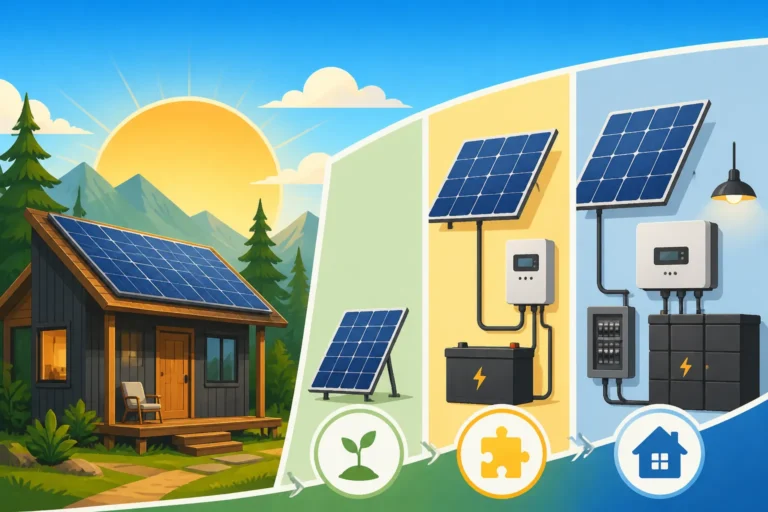
One of the most effective budgeting strategies, especially for those with a tighter initial budget, is to start small and plan for phased expansion. Instead of trying to power your entire dream homestead from day one, identify your absolute essential loads: critical lighting, phone charging, a small refrigerator, or perhaps a vital medical device like a CPAP machine. Build a system that can reliably handle these basics first. For instance, you might begin with a couple of panels, a smaller inverter, and a modest battery bank. This approach significantly reduces your initial outlay, getting you started on your off-grid journey without overwhelming financial commitment.
Once your foundational system is stable and you've lived with it for a while, you'll have a much clearer understanding of your actual energy usage and can make informed decisions about future upgrades. You can then gradually add more panels, expand your battery bank, or upgrade your inverter to accommodate larger loads like a washing machine, a well pump, or air conditioning. When designing your initial system, it's wise to choose components that are easily expandable. For example, select a charge controller that can handle more solar input than you're initially installing, or an inverter with a bit of headroom for future loads. This prevents you from having to replace major components entirely when you decide to grow your system. Thinking about how to spread out your costs over time can be a game-changer, as detailed in How to Phase an Off-Grid Solar Build to Spread Cost.
Leveraging Research and Shopping Smart
In today's market, competition among solar equipment suppliers is fierce, which is great news for your budget! Don't just settle for the first price you see. Take the time to shop around and compare options from various reputable vendors. Online marketplaces like Amazon often carry a wide range of components, from individual solar panels and charge controllers to complete smaller kits. However, it's also important to check specialized solar retailers like Northern Arizona Wind & Sun, AltE Store, or Renogy directly, as they often have specific bundles, expertise, and customer support for off-grid systems. Look for sales events, holiday discounts, and bundle deals, as purchasing multiple components together can sometimes lead to significant savings.
Beyond new equipment, consider the possibility of buying used components. Batteries are generally not recommended to buy used due to their limited lifespan, but quality used solar panels, inverters, or mounting hardware can sometimes be found at a fraction of their original price. Just be sure to thoroughly inspect any used equipment and understand its history before purchasing. Reputable brands like Victron Energy or EG4 for larger components, or Jackery for smaller, portable power solutions, are often worth the investment due to their reliability and support, but there are also many emerging brands offering competitive pricing. Always read reviews and compare specifications carefully. For more on this, check out Buying Used Off-Grid Solar Equipment: Worth It.
Exploring Incentives and Financing Options
While off-grid solar systems don't always qualify for the same incentives as grid-tied systems, there are still opportunities to reduce your overall cost. The most significant is often the federal solar tax credit, officially known as the Investment Tax Credit (ITC). While traditionally aimed at grid-tied systems, certain components of an off-grid system, particularly those used to power a primary residence, may qualify. The ITC offers a substantial tax credit on the cost of your solar energy system, so it’s definitely worth investigating if your system can meet the criteria. Always consult with a tax professional to understand your eligibility. More information can be found in Does the Federal Tax Credit Apply to Off-Grid Solar.
Beyond federal incentives, some states or local municipalities might offer specific rebates or programs for renewable energy systems, even off-grid ones, especially if they promote energy independence or resilience. These are often harder to find and vary widely, so thorough research specific to your location is essential. In terms of financing, traditional loans for off-grid systems can be trickier to secure than for grid-tied installations due to the lack of a utility connection, but home equity loans or personal loans can be options. Some specialized solar equipment retailers might offer their own financing plans, or you might consider a green loan if available in your area. While financing adds interest costs, it can make the upfront investment more manageable, allowing you to get a more robust system sooner.
Creating Your Off-Grid Solar Budget Worksheet
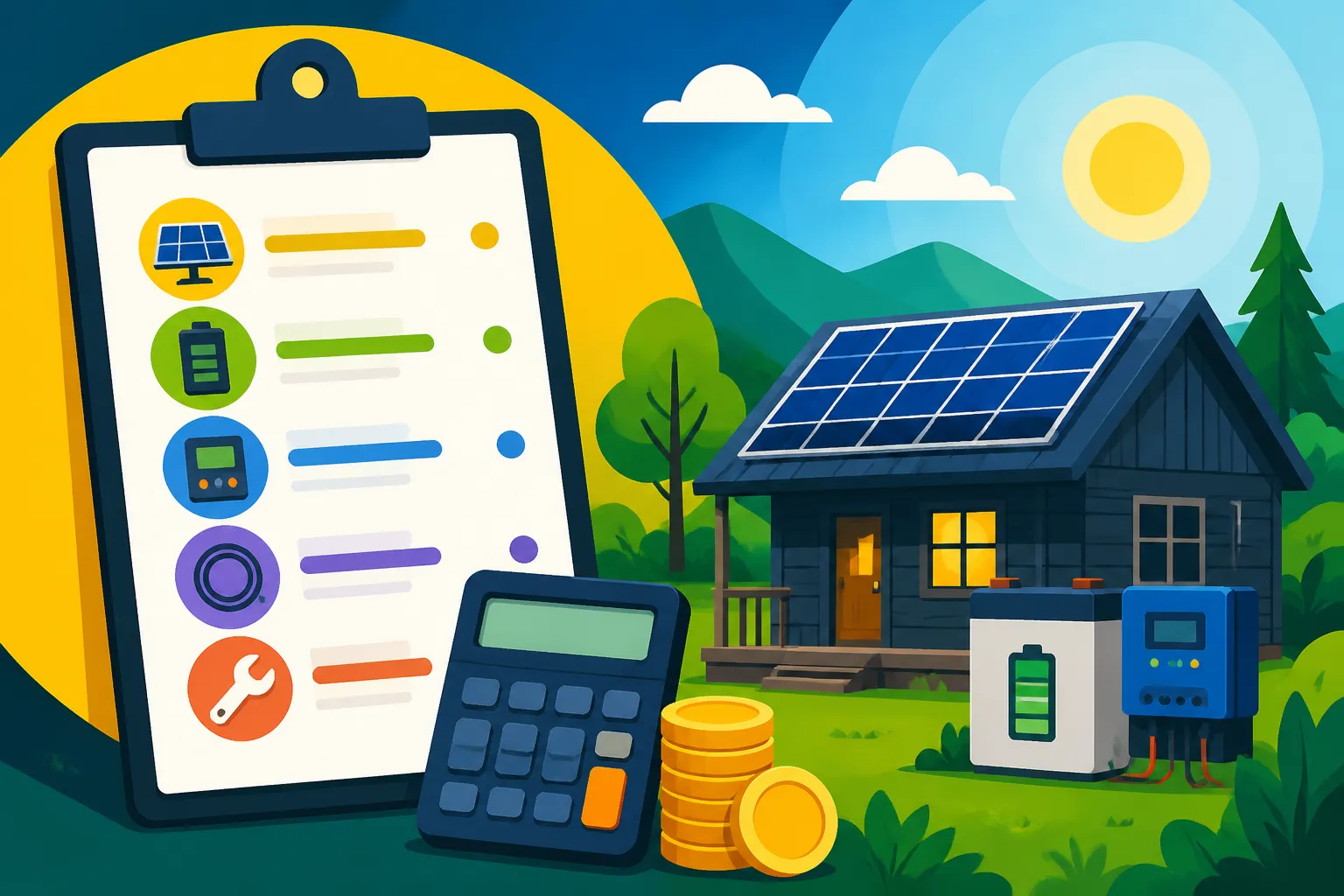
Putting together an off-grid solar system is a significant investment, and the best way to keep your budget on track is with a detailed, realistic worksheet. This isn't just about listing big-ticket items; it's about accounting for every single screw, cable tie, and unexpected hiccup.
Breaking Down Expenses: A Step-by-Step Approach
Before you even start pricing components, the absolute first step is to conduct a thorough load analysis. You need to know exactly what appliances you want to run, how much power they draw (in watts), and for how long each day (in hours). This will give you your total daily watt-hour (Wh) consumption. This crucial step is detailed in How to Do an Off-Grid Load Analysis and forms the backbone of your system sizing, which directly impacts your budget. Once you have your total Wh, you can then accurately size your solar array, battery bank, and inverter.
With your system size in mind, start listing every single potential cost, no matter how small. Think of it like building a house – you wouldn't just budget for the walls and roof, right? Break it down into categories:
- Core Components:
- Solar Panels (cost per panel x quantity)
- Batteries (cost per battery x quantity)
- Inverter(s)
- Charge Controller(s)
- Mounting & Racking:
- Roof mounts, ground mounts, pole mounts
- Hardware (rails, clamps, feet, bolts)
- Any concrete or foundation work
- Wiring & Electrical:
- PV wire (panels to charge controller)
- Battery cables (charge controller to batteries, batteries to inverter)
- AC wiring (inverter to distribution panel/outlets)
- Conduit (for wire protection)
- Fuses, circuit breakers, disconnect switches
- Junction boxes, combiner boxes
- Balance of System (BOS) & Safety:
- Grounding rod and wire
- Surge protectors
- Battery monitoring system (shunt, display)
- System monitoring equipment (optional but highly recommended)
- Transfer switch (if adding a generator)
- Tools & Miscellaneous:
- Multimeter, crimpers, wire strippers, torque wrench (if DIY)
- Safety gear (gloves, eye protection)
- Any permits, inspection fees
- Shipping costs for large items (can be substantial!)
- Professional design consultation (if desired)
Use a spreadsheet for this. It allows you to easily adjust quantities and see the cumulative impact. Here’s a basic template:
| Component/Expense | Estimated Cost | Actual Cost | Notes |
|---|---|---|---|
| Solar Panels (e.g., 8 x 400W) | $3,200 | Renogy, Rich Solar | |
| LiFePO4 Batteries (e.g., 4 x 200Ah) | $4,000 | EG4, Battle Born | |
| Inverter (e.g., 5000W Pure Sine) | $1,500 | Victron, Sol-Ark | |
| MPPT Charge Controller | $700 | Victron, Outback | |
| Panel Mounting Hardware | $600 | Roof mount kit for 8 panels | |
| Heavy Gauge Cables (Battery/PV) | $250 | Copper, proper length/gauge | |
| Fuses, Breakers, Disconnects | $300 | For DC and AC circuits | |
| Conduit & Wiring (AC side) | $150 | For main panel connection | |
| Grounding Equipment | $100 | Rod, clamps, wire | |
| Battery Monitor (e.g., Victron BMV) | $200 | Highly recommended | |
| Tools (DIY specific) | $300 | Crimpers, multimeter, etc. | |
| Permits & Inspection Fees | $500 | Check local AHJ requirements | |
| Subtotal | $12,200 | $0.00 | |
| Contingency (15%) | $1,830 | For unexpected costs | |
| TOTAL ESTIMATE | $14,030 | $0.00 |
The Importance of a Contingency Fund
This is perhaps the most critical, yet often overlooked, part of any budget, especially for a complex project like off-grid solar. Things will go wrong, costs will fluctuate, and you will forget something. Maybe a shipping error sends you the wrong part, and you need to overnight the correct one. Perhaps you discover you need a larger gauge wire than anticipated for a particular run, or a specific permit costs more than you initially researched. What if you decide you really do need that battery monitor, or that extra length of conduit?
Budgeting an extra 10-20% (or even 25% for a very complex or first-time DIY project) as a contingency fund is absolutely essential. This buffer protects you from derailing your entire project due to unforeseen expenses and saves you from the stress of scrambling for extra cash mid-installation. It provides a financial cushion that allows you to absorb unexpected costs without compromising the quality or safety of your system. Think of it as insurance for your budget, ensuring that your journey to energy independence doesn't hit a snag that leaves you powering down before you've even fully powered up. This contingency is often what truly sets a realistic budget apart from an aspirational one.
Long-Term Financial Considerations
While the upfront cost is a major hurdle, a truly comprehensive budget for an off-grid solar system needs to look beyond the initial installation. Off-grid living is a marathon, not a sprint, and there are ongoing costs and long-term savings to consider.
Maintenance and Replacement Costs Over Time
Unlike a grid-tied system that often has minimal homeowner maintenance, off-grid systems require a bit more attention and have specific components with finite lifespans. The most significant recurring expense will undoubtedly be battery replacement. Even the longest-lasting LiFePO4 batteries have a finite number of charge cycles, and while they might last 10-15 years, you'll eventually need to replace them. If you opt for lead-acid batteries, this replacement cycle could be every 3-7 years, making their long-term cost potentially higher despite lower upfront prices. Planning for Cost to Replace Off-Grid Solar Batteries is crucial.
Beyond batteries, solar panels themselves are very durable, often warrantied for 25 years to produce at least 80% of their original output. However, they do require occasional cleaning, especially in dusty areas or if birds decide to make them a perch. Inverters, charge controllers, and other electronic components also have lifespans, typically 5-15 years, and may eventually need repair or replacement. Wires and connections should be inspected periodically for wear, corrosion, or loosening. Regular maintenance, such as checking battery terminals, monitoring system performance, and keeping panels clean, can extend the life of your components and prevent costly issues down the road. Detailed information on these ongoing tasks can be found in Off-Grid Solar Maintenance Costs.
The Payback Period and Long-Term Savings
Despite the substantial upfront investment, off-grid solar can offer significant long-term financial benefits, especially when compared to alternative energy sources or the high cost of extending utility lines to a remote property. The "payback period" is the time it takes for your energy savings to equal your initial investment. For grid-tied systems, this is often calculated by comparing it to your monthly utility bill. For off-grid, it's a bit different.
If you're establishing power where no grid exists, your comparison is against the cost of running a generator (fuel, maintenance, noise, fumes) or paying for a utility line extension, which can easily run into tens of thousands of dollars per mile. In these scenarios, the payback period for off-grid solar can be surprisingly short. Even if you're replacing grid power, the freedom from ever-increasing utility rates and monthly bills provides a consistent saving that accumulates year after year. Once your system is paid off, your "fuel" (sunlight) is free, making your energy costs virtually zero aside from maintenance. Over 20-25 years, the total savings can be substantial, making off-grid solar a sound financial decision for true energy independence. You can delve into the specifics in articles like Off-Grid Solar Payback Period Explained and How Off-Grid Solar Saves Money Long-Term.
Disclaimer
The information provided in this guide is for general informational purposes only and does not constitute professional advice. Off-grid solar system design and installation can be complex and involve significant electrical hazards. Always consult with qualified professionals, including electricians and solar technicians, and check local building codes and permitting requirements before beginning any off-grid solar project.