Off-Grid Solar Cost for a Full-Time RV
The dream of full-time RV living, exploring the open road, often comes with visions of self-sufficiency, but the reality of powering that lifestyle can quickly get overwhelming. Many folks get stuck trying to figure out just how much an off-grid solar setup for their home-on-wheels will truly cost, fearing hidden expenses or underestimating their needs. This guide is here to untangle the financial knots, providing a realistic breakdown of what you can expect to spend to electrify your full-time RV with solar, so you can hit the road with confidence, not sticker shock.
Breaking Down the Core Costs of RV Off-Grid Solar
When you decide to take your RV off the grid, you're essentially building a miniature power plant. This means a few key components are non-negotiable, and their individual price tags will form the bulk of your initial investment. Understanding what these are and why they cost what they do is the first step toward budgeting effectively.
Essential Components and Their Price Tags
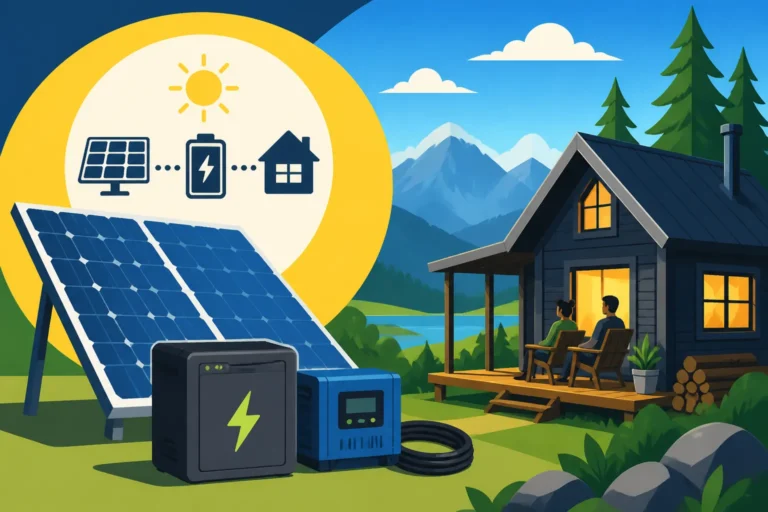
Every off-grid RV solar system relies on four main pillars: solar panels, batteries, a charge controller, and an inverter. The quality, capacity, and brand of each will significantly sway your total expenditure.
Solar panels are where the journey begins. These are what convert sunlight into usable electricity. For RVs, you'll typically see monocrystalline panels, known for their efficiency and space-saving design, though flexible panels are also popular for curved roofs or weight concerns. Panel costs can range anywhere from $100 for a small 100-watt panel to $300-$500 for a larger 200-watt or 300-watt panel. A full-time RV setup often requires several panels to generate enough power for daily use, leading to an array that could easily cost $500 to $2,000 just for the panels themselves. When considering your options, it's helpful to look into different brands and types, as discussed in our guide on the Cost of Off-Grid Solar Panels.
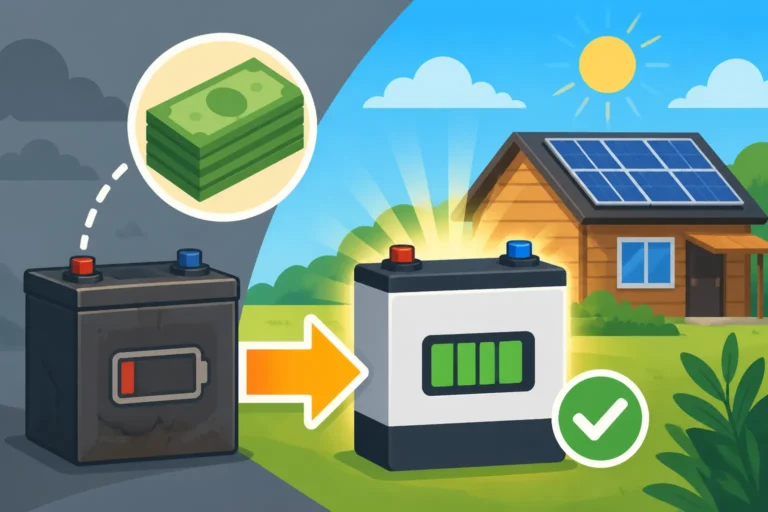
Next up are batteries, which are arguably the most crucial and often the most expensive part of your system. They store the energy generated by your panels for use when the sun isn't shining. For full-time RVers, lithium iron phosphate (LiFePO4) batteries have become the gold standard due to their longer lifespan, lighter weight, and deeper discharge capabilities compared to traditional lead-acid batteries. While a 100Ah LiFePO4 battery might run you anywhere from $300 to $1,000, you'll likely need multiple batteries for full-time living. A robust battery bank for an RV could easily cost $1,500 to $6,000 or even more, depending on your energy demands. It's truly eye-opening to explore the differences in LiFePO4 vs Lead-Acid Battery Cost when you're planning your budget.
Then there's the charge controller, a vital piece of equipment that manages the power flow from your solar panels to your batteries, preventing overcharging and optimizing efficiency. MPPT (Maximum Power Point Tracking) controllers are generally preferred for larger, more efficient systems, offering up to 30% more charging efficiency than their PWM (Pulse Width Modulation) counterparts, especially in varying light conditions. An MPPT charge controller suitable for a full-time RV system can range from $150 to $600.
Finally, the inverter converts the DC (direct current) power from your batteries into AC (alternating current) power, which is what most of your household appliances use. A pure sine wave inverter is essential for sensitive electronics like laptops, medical devices, and even some RV appliances, ensuring clean, stable power. Inverter costs are directly tied to their wattage output; a 2000W inverter might cost $300-$600, while a 3000W or 5000W model, necessary for running an air conditioner or microwave, could be $800 to $2,500. Understanding the nuances of the Cost of an Off-Grid Solar Inverter is critical for a functional and reliable setup.
Factors That Drive Your RV Solar Expenses Up or Down
Beyond the core components, several other factors will influence the final price tag of your RV's off-grid solar system. These are often overlooked but can dramatically change your budget.
Your personal energy needs are the biggest driver of cost. If you're a minimalist RVer who only needs to charge a phone, run a few LED lights, and occasionally use a laptop, your system will be far less expensive than someone who wants to run an induction cooktop, a residential refrigerator, and an air conditioner for hours a day. Before you even start looking at components, it's absolutely crucial to figure out How to Calculate Daily Energy Usage in your RV. This involves listing every appliance you plan to use, its wattage, and how many hours a day you expect to run it. The sum of these will dictate the size of your solar array and, more significantly, the capacity of your battery bank.
Another major factor is how many "days of autonomy" you want your system to provide. This refers to how long your battery bank can power your RV without any solar input – essentially, how many cloudy days you can handle before needing to recharge from another source. If you want to comfortably weather three or four days of overcast skies without worrying about power, you'll need a much larger (and therefore more expensive) battery bank than someone who plans to always chase the sun or has a backup generator. This design choice directly impacts the required battery capacity and thus, your overall How Many Batteries for an Off-Grid System.
The system voltage (12V, 24V, or 48V) also plays a role in overall cost and efficiency. While most smaller RVs start with 12V systems, larger, more power-hungry setups often benefit from 24V or 48V systems. Higher voltages allow for thinner wiring (saving on copper costs and weight) and are more efficient for larger loads, reducing power loss over longer cable runs. This decision affects the choice of your inverter, charge controller, and how your batteries are wired, subtly influencing the final price and performance.
Typical Cost Ranges for RV Off-Grid Solar Systems
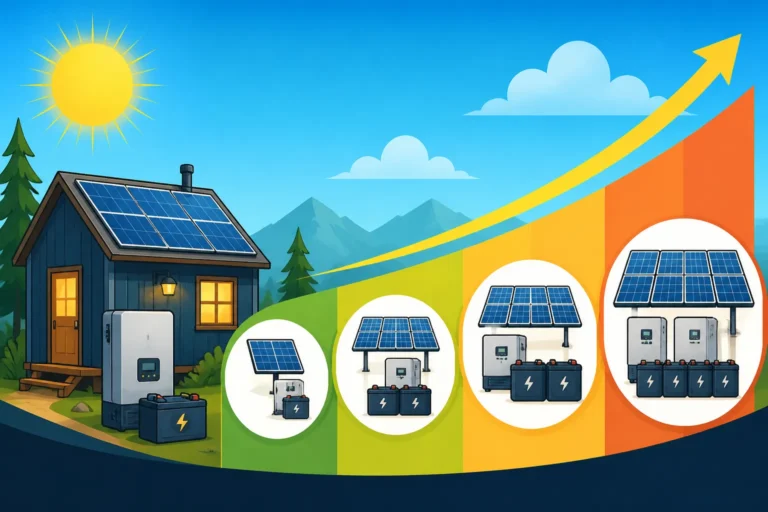
The "how much does it cost?" question is rarely a simple one-size-fits-all answer in the off-grid solar world, especially for RVs. The cost is highly dependent on how much power you actually want and need. Let's break down some common scenarios you might find yourself in, from basic needs to living large.
Small Systems for Basic Needs
For RVers who are primarily looking to cover minimal electrical needs – think charging phones, running a few LED lights, maybe a small fan, and a laptop a couple of times a day – a smaller, more budget-friendly system can be a perfect fit. These setups are often ideal for weekend warriors or those who spend short stints off-grid.
A basic system might include one or two 100-watt to 200-watt solar panels, a single 100Ah LiFePO4 battery, a modest MPPT charge controller, and a 1000W pure sine wave inverter. The total cost for such a system, including basic wiring and mounting hardware, could range from $1,500 to $3,500. You're looking at components like a single Renogy 200W panel, a Battle Born 100Ah battery, and a Victron SmartSolar charge controller. These systems are fantastic for keeping your essential devices powered and enjoying the quiet simplicity of off-grid living without a huge investment. For those really just starting out or needing ultra-portability, something like a Jackery 2000 Plus Review for Off-Grid Use might even be a good stepping stone, though it's more of a solar generator than a permanent installed system.
Medium Systems for Comfortable Living
This category covers the majority of full-time RVers who want to run most of their typical household appliances, albeit carefully. This means powering a residential or RV refrigerator, a microwave for quick meals, a TV, lights, charging all devices, and perhaps even a small coffee maker or hairdryer for short bursts.
To support this level of comfort, you'll likely need a more substantial setup: 400 to 800 watts of solar panels (2-4 panels), a battery bank totaling 200Ah to 400Ah (two to four 100Ah LiFePO4 batteries), a larger MPPT charge controller, and a 2000W to 3000W pure sine wave inverter. This kind of system typically falls in the $4,000 to $10,000 range. This allows for more "days of autonomy" and less worry about cloud cover. You'll find many comprehensive kits on platforms like Amazon that include many of these components, making the selection process a bit easier for DIY enthusiasts. These systems are designed to offer a good balance between cost and capability, making full-time off-grid living genuinely comfortable. If you're looking to understand the full scope, our comprehensive guide on How to Size an Off-Grid Solar System will walk you through the calculations needed for this level of use.
Large Systems for All-Electric RVs
For the RVer who truly wants to replicate a grid-tied home experience – running air conditioning for extended periods, using power tools, an electric water heater, and other high-demand appliances without compromise – a large, robust off-grid solar system is necessary. This is where the investment significantly climbs.
Such a system would typically involve 1000 watts or more of solar panels (4-6+ panels), a substantial battery bank of 400Ah to 800Ah or even more (four to eight 100Ah LiFePO4 batteries), a high-capacity MPPT charge controller, and a powerful 3000W to 5000W (or even higher) inverter, often an inverter-charger combination unit. The price for these premium systems can range from $10,000 to $25,000+, not including installation. At this level, you might be looking at sophisticated all-in-one units like a Sol-Ark inverter, paired with a large bank of server-rack style LiFePO4 batteries. These systems are designed for maximum power and reliability, allowing for nearly unlimited power usage, assuming adequate sun exposure.
Here's a quick overview of typical costs based on system size:
| System Size/Type | Solar Panels (Watts) | Battery Bank (Ah LiFePO4) | Inverter (Watts) | Est. Cost Range (Components Only) | Typical Use Case |
|---|---|---|---|---|---|
| Small/Basic | 100-200W | 100Ah | 1000W | $1,500 – $3,500 | Lights, phone charging, laptop, small fans |
| Medium/Comfortable | 400-800W | 200-400Ah | 2000W-3000W | $4,000 – $10,000 | Fridge, microwave, TV, all charging, light AC use |
| Large/All-Electric | 1000W+ | 400-800Ah+ | 3000W-5000W+ | $10,000 – $25,000+ | Heavy AC, electric cooking, water heater, power tools |
DIY vs. Professional Installation: Weighing the Costs
Once you've got a handle on the cost of components, the next big question for many RVers is: "Should I install this myself or pay someone else?" This decision has significant financial implications and depends heavily on your comfort level with electrical work.
The DIY Advantage and Hidden Challenges
Many RV owners, especially those living full-time on the road, are naturally inclined to be handy and self-sufficient. Tackling your solar installation as a DIY project can save you a substantial amount of money on labor costs, potentially shaving thousands off your total budget. Professional installation for a comprehensive RV system can range from $1,500 to $5,000 or even more, depending on the complexity and the installer's rates. By doing it yourself, that money stays in your pocket, or better yet, can be put towards higher quality components.
However, the DIY route isn't without its challenges. Firstly, there's a steep learning curve. You'll need to understand wiring diagrams, system sizing, proper fusing, and safety protocols to ensure your system is both efficient and safe. Miswiring can not only damage expensive components but also pose a fire hazard. You'll also need to invest in a few specialized tools, such as a crimper for heavy gauge wires, a multimeter for testing, and potentially hole saws for roof penetrations. While these aren't prohibitively expensive, they add to your initial outlay. Furthermore, the time commitment can be considerable, especially if you're learning as you go. What might take a professional a few days could take a DIYer several weeks of dedicated effort. Our guide on DIY vs Professional Off-Grid Solar Cost dives deeper into this decision.
Benefits and Price of Professional Installation
For those who are less confident with electrical systems, or simply prefer to spend their time elsewhere, hiring a professional RV solar installer is a fantastic option. The primary benefit is peace of mind. A reputable installer will ensure the system is correctly sized, safely wired, and optimized for performance. They'll also be familiar with specific RV challenges, such as roof integrity, cable routing, and vibration resistance. Many installers offer warranties on their labor, providing an extra layer of protection.
The price for professional installation varies widely based on location, the complexity of your system, and the installer's reputation. For a medium to large RV solar setup, you can expect installation costs to range from $2,000 to $6,000. This fee typically covers labor, basic consumables like wire, connectors, and mounting hardware, and often includes system testing and a walkthrough. While it's a significant upfront cost, it saves you time, reduces the risk of expensive errors, and ensures a reliable system. For larger, more complex whole-house style RV systems that integrate with the existing electrical panel, an experienced electrician might be necessary, adding to the cost but ensuring adherence to safety standards.
Long-Term Value and Unexpected Expenses
Building an off-grid solar system for your full-time RV isn't just about the initial purchase and installation. Like any major investment, there are ongoing considerations and potential future costs that every RVer should factor into their long-term budget planning. Overlooking these can lead to unpleasant surprises down the road.
Maintenance and Replacement Costs
Even the most robust off-grid solar systems require some degree of maintenance to keep them running efficiently. Solar panels themselves are fairly low maintenance; you'll primarily need to keep them clean from dust, dirt, and bird droppings. Depending on where you travel, this might mean a quick wash every few weeks or months. The mounting hardware should be checked periodically for tightness, especially after traveling on rough roads. These are generally minor costs, primarily involving your time and some cleaning supplies.
The biggest long-term expense will almost certainly be battery replacement. While LiFePO4 batteries boast an impressive lifespan of 10-15 years (or 3,000-5,000 charge cycles), they aren't immortal. When they eventually reach the end of their useful life, replacing them will be a significant investment, comparable to their initial purchase price. For example, if you have a 400Ah LiFePO4 bank that cost you $4,000 initially, you'll need to budget for that replacement cost in about a decade. Lead-acid batteries, while cheaper upfront, need replacement far more frequently (every 2-5 years) and require more diligent maintenance (checking water levels), making their lifetime cost often higher. Your inverter and charge controller generally have longer lifespans, often 10-20 years, but they too may eventually need to be replaced or repaired. Keeping abreast of Off-Grid Solar Maintenance Costs can help you plan.
Upgrades and Expansion Over Time
The beauty of off-grid solar is its modularity; you can often start small and expand as your needs or budget allow. However, expanding your system means additional costs. Many RVers find that their power demands grow over time. Perhaps you initially thought you wouldn't need AC, but after a few sweltering summers in Arizona, you decide it's a necessity. Or maybe you discover a new hobby that requires more power tools.
Adding more solar panels to your array, increasing the capacity of your battery bank, or upgrading to a larger inverter will incur new expenses for components and potentially for installation if you're not doing it yourself. It's smart to design your initial system with future expansion in mind, like choosing an inverter and charge controller that can handle more input than your current array, or leaving space on your roof for additional panels. This foresight, while sometimes adding a slight initial cost, can save you money and headaches down the line when you decide to boost your power capabilities. Thinking ahead about the Cost of Expanding an Off-Grid System can help you avoid having to replace perfectly good components simply because they're undersized for your new needs.
Disclaimer
The information provided in this article is for general informational purposes only and does not constitute professional advice. Off-grid solar system design and installation can be complex and involve electrical hazards. Always consult with qualified professionals or licensed electricians for specific advice related to your RV and local regulations. Prices and availability of components can vary significantly based on market conditions, location, and specific brand choices.