Off-Grid Solar Cost by System Size
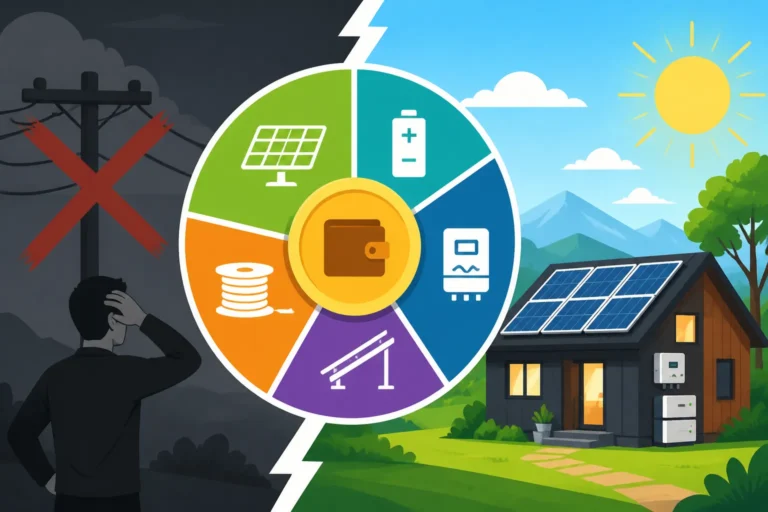
The dream of off-grid living often comes with a big question mark attached: how much is this actually going to cost me? It's a completely valid concern, and honestly, trying to nail down a single price for an off-grid solar system feels like trying to catch smoke. The reality is, the cost varies wildly depending on how much power you need and what kind of lifestyle you're looking to support. This comprehensive guide will meticulously break down the typical costs associated with off-grid solar systems, categorizing them by size, so you can start budgeting with confidence.
Understanding Off-Grid Solar System Components and Their Impact on Cost
Before we dive into specific system sizes and their price tags, it’s crucial to understand what goes into an off-grid solar setup. Unlike grid-tied systems that can simply send excess power back to the utility, off-grid systems must be entirely self-sufficient, meaning they need a way to generate power, store it, and convert it for your appliances. Each of these core functions comes with its own set of equipment, and the quality and capacity of each piece significantly influence the overall expense.
The Core Components of Any Off-Grid Setup
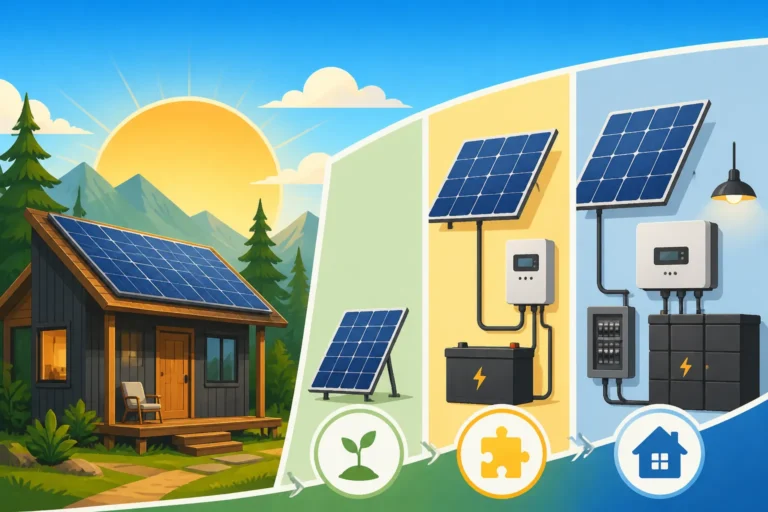
At its heart, any off-grid solar system, big or small, relies on a few fundamental pieces of equipment working in harmony. First, you have the solar panels, which are the power generators, soaking up sunlight and converting it into electricity. The number and type of panels you choose directly dictate how much power your system can produce and, naturally, contribute a significant portion to the initial outlay. Higher wattage, more efficient panels will generally cost more per unit, but can sometimes save on mounting hardware or space.
Next in line are the batteries, the indispensable storage units for your solar-generated power. Without them, you'd only have electricity when the sun is shining, which isn't exactly practical for 24/7 living. The size and chemistry of your battery bank – whether you opt for more traditional lead-acid or modern lithium iron phosphate (LiFePO4) – are often the single biggest cost factor in an off-grid system. A larger, more robust battery bank designed for multiple days of autonomy will undoubtedly be more expensive, but offers greater peace of mind during extended cloudy periods.
Then there's the inverter, which transforms the direct current (DC) electricity produced by your panels and stored in your batteries into the alternating current (AC) that most household appliances use. The inverter's capacity (measured in watts) must be sufficient to handle your peak power demands, including any surge loads from motors or compressors. Finally, a charge controller acts as the brain between your panels and batteries, regulating the flow of power to prevent overcharging and maximize charging efficiency. These four components form the backbone of your system, and understanding their individual roles helps clarify why their collective cost scales with system size.
Why System Size Directly Relates to Component Costs
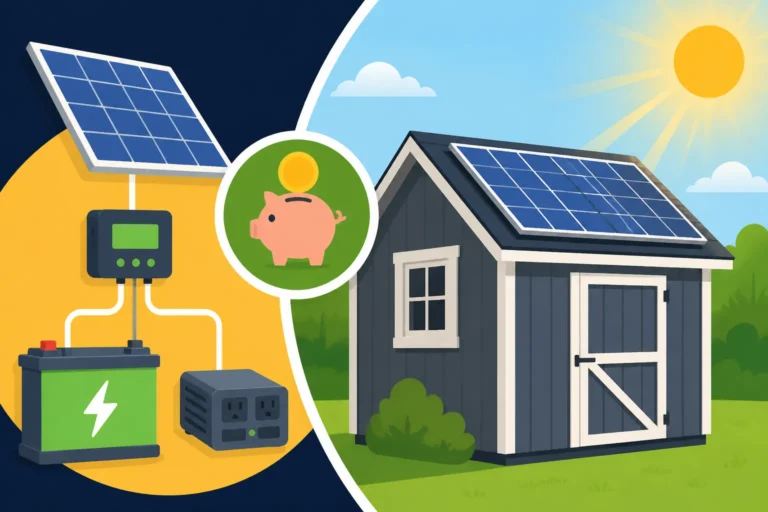
It's a straightforward equation: the more power you need to generate, store, and convert, the larger and more numerous your components will be, and thus, the higher the cost. If you're simply powering a few LED lights and charging a phone in a shed, you'll need a minimal number of small solar panels, a modest 12V battery, and a compact charge controller and inverter. This minimalist approach keeps costs down considerably.
However, if you're aiming to run a full-sized refrigerator, a well pump, and all the conveniences of a modern home, your system requirements multiply. You'll need a much larger array of high-wattage solar panels to capture enough energy, a substantial battery bank to store days' worth of electricity, and a powerful inverter capable of handling high surge loads. Each step up in desired power and autonomy escalates the specifications and, by extension, the price of these critical components. This scaling principle is fundamental when you're working out how to size an off-grid solar system.
Beyond the Basics: Accessories and Installation
While the main components grab most of the attention, a functional and safe off-grid solar system requires a host of additional items often referred to as "balance of system" (BOS) components. These include various wiring, cables, fuses, breakers, disconnect switches, and mounting hardware for your solar panels. For larger systems, you might also need combiner boxes, surge protectors, and sophisticated battery monitoring systems. These smaller items, while individually inexpensive, can quickly add up, especially when proper gauges and safety features are prioritized.
Beyond the hardware, the cost of installation can be a significant factor. While many DIY enthusiasts tackle their own systems, especially smaller ones, larger and more complex setups often benefit from professional installation. This involves labor costs, potential permitting fees, and ensuring everything meets local electrical codes. Understanding these potential hidden costs of going off-grid is essential for a realistic budget. A comprehensive installation guide, such as How to Install an Off-Grid Solar System, can help DIYers understand the scope of work and associated material costs.
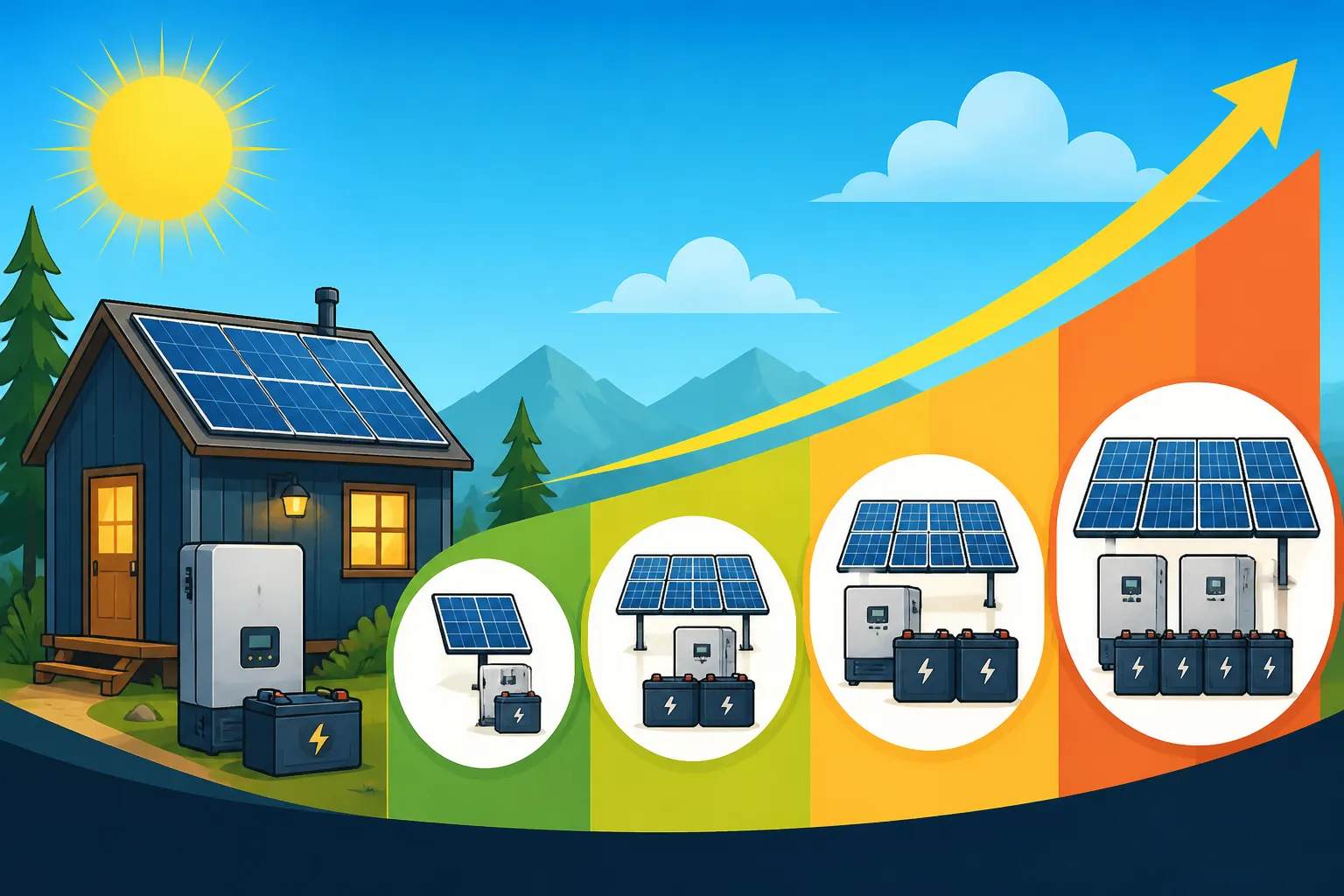
Cost of Small Off-Grid Solar Systems (Under 1000W)
Small off-grid solar systems are the entry point for many, perfect for those dipping their toes into solar independence or powering specific, limited needs. These systems typically range from just 100 watts up to around 800-1000 watts, and their costs reflect this more modest scale.
Entry-Level Systems for Basic Needs (100W-400W)
These are your bare-bones systems, ideal for situations where you need to power a few essential 12V DC loads or charge small electronics. Think of lighting a small shed, keeping your phone charged in a camper van, or running a small fan. For many, this is the realm of a single solar panel, a simple battery, and a very basic charge controller.
A typical 100W system, for instance, might consist of one 100W solar panel, a small 12V 50-100Ah lead-acid or LiFePO4 battery, a basic PWM charge controller, and perhaps a small 150-300W pure sine wave inverter if you need AC power. The cost of a 100W Off-Grid Solar System can range from as little as $300 to $800 for components if you're savvy about sourcing parts online, perhaps from sites like Amazon. A 400W system, which might involve two to four 100W panels or one larger 400W panel, a 12V 100-200Ah battery, and a slightly more robust MPPT charge controller, could run between $800 and $1,500. These smaller systems are often popular as starter kits for RVs, where space and power demands are relatively low, and sometimes even a portable power station like a Jackery can serve as the core. They’re excellent for learning the ropes without a massive upfront investment.
Stepping Up to Moderate Portability (400W-800W)
When you move into the 400W to 800W range, you're looking at powering more than just the absolute essentials. This level of system is popular for larger RVs, travel trailers, small hunting cabins, or a remote workshop where you might want to run power tools intermittently. It allows for longer use of lights, charging laptops, operating a small compressor fridge, or even a modest TV.
For a system in this capacity, you'd likely be looking at a small array of 2-4 solar panels, perhaps totaling 400-800 watts. The battery bank would also need to be more substantial, often a 12V 200-400Ah LiFePO4 battery or a pair of 6V or 12V lead-acid batteries wired for capacity. An MPPT charge controller becomes a much more sensible choice here for its efficiency, and your inverter would typically be in the 1000W-2000W range to handle common appliance startup surges. The cost for components in this range can span from $1,500 to $3,500. It's at this stage that the choice of battery, particularly between LiFePO4 vs Lead-Acid Battery Cost, starts to have a noticeable impact on the overall expense, with lithium options pushing the price higher but offering better performance and longevity.
Real-World Scenarios and Budgeting for Small Systems
Consider a real-world scenario: Sarah wants to power her camper van for weekend trips. Her main loads are an LED lighting strip, charging her phone and laptop, and a small 12V cooler. A 200W system (two 100W panels) feeding into a single 100Ah LiFePO4 battery, managed by a 20A MPPT charge controller and a 500W pure sine inverter, would easily meet her needs. She could find a complete kit on Amazon for around $1,000, or piece together individual components for slightly less. If she adds a portable solar generator like a Jackery that integrates solar charging, she might spend a bit more upfront but gain simplicity and portability.
Another example could be a remote garden shed where you want light, a small fan, and to charge garden tool batteries. A 400W Off-Grid Solar System would be ample. The key to budgeting for these smaller systems is accurately calculating your daily energy usage to avoid overspending on capacity you don't need, or worse, undersizing and constantly running out of power. The beauty of these smaller setups is their relative simplicity, often making them perfect candidates for a DIY Off-Grid Solar Installation Step by Step approach, significantly reducing labor costs.
Mid-Size Off-Grid Solar Systems (1kW-5kW)
Stepping up to mid-size off-grid solar systems, typically ranging from 1 kilowatt (kW) to 5 kW, opens up a world of more comfortable and sustained off-grid living. These systems are designed to support more significant energy demands, moving beyond basic necessities to provide many of the conveniences of a grid-tied home.
Powering Cabins and Tiny Homes (1kW-3kW)
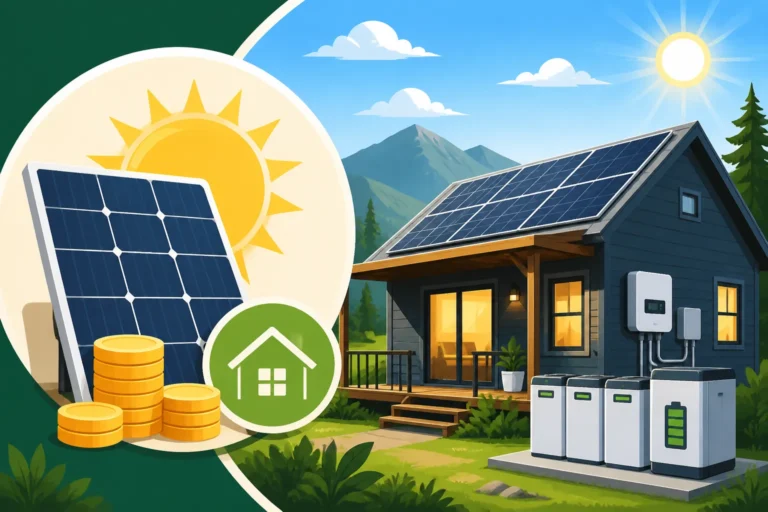
For many folks dreaming of a cozy cabin in the woods or a minimalist tiny home, a 1kW to 3kW off-grid solar system hits the sweet spot. This size range can comfortably power standard household appliances like a refrigerator, lights, computers, entertainment systems, and even intermittent use of a small well pump or a microwave. It’s about creating a truly functional living space that feels less like camping and more like home.
A 1kW system, for instance, might involve four 250W solar panels, a 24V or 48V battery bank (perhaps four 100Ah LiFePO4 batteries), a robust MPPT charge controller, and a 2000W to 3000W pure sine inverter. This setup allows for continuous operation of a typical energy-efficient refrigerator, a few hours of TV, and general lighting and charging. The Cost to Power a Cabin with Solar of this size can range from $4,000 to $10,000 for components. When you push towards 3kW, you’re looking at eight to twelve 250W-300W panels, a larger 48V battery bank (maybe 400-600Ah LiFePO4), and a higher capacity inverter-charger (3000W-5000W). These larger components, especially the battery bank, will naturally increase the investment.
More Substantial Loads and Extended Use (3kW-5kW)
Venturing into the 3kW to 5kW system range means you're serious about your off-grid energy independence. This capacity is suitable for a full-time cabin, a small homestead, or a well-equipped remote workshop that sees regular, heavy use. At this level, you can typically run all the appliances listed for the 1-3kW range, plus potentially a washing machine, a larger well pump, and even a small, efficient air conditioner or mini-split for limited periods. The goal here is comfort and convenience without making extreme sacrifices.
A 5kW system would likely feature an array of fifteen to twenty 300W-350W solar panels, a substantial 48V LiFePO4 battery bank (perhaps 600Ah-800Ah, giving significant days of autonomy), and a high-quality 5000W to 8000W inverter-charger. These systems often integrate with a backup generator for those times of prolonged cloud cover or unusually high demand, ensuring uninterrupted power. The component cost for an Off-Grid Solar Cost for a Tiny Home or cabin aiming for this level of power can typically fall between $10,000 and $25,000. The robust nature of these systems often necessitates more complex wiring and protection, adding to the balance of system costs and potentially requiring professional assistance for installation.
Balancing Cost and Performance for Mid-Sized Systems
When planning a mid-sized system, striking the right balance between initial cost and long-term performance is critical. One of the most impactful decisions is your battery chemistry. While lead-acid batteries offer a lower upfront cost, their shorter lifespan, lower usable capacity (typically 50% depth of discharge), and maintenance requirements often make LiFePO4 batteries a more cost-effective choice in the long run. LiFePO4 batteries, though pricier initially, can offer 80-100% usable capacity and last for thousands of cycles, often making them superior when considering the overall Off-Grid Solar Payback Period Explained.
Furthermore, the quality of your inverter and charge controller becomes increasingly important as your system grows. Investing in reputable brands known for their reliability and efficiency, such as Victron Energy or Sol-Ark, can prevent costly failures down the line. A high-quality inverter-charger offers seamless power management, often integrating generator control and advanced monitoring features. To effectively budget for an off-grid solar system of this scale, you need a detailed load analysis and a clear understanding of your priorities – whether it’s maximum uptime, lowest upfront cost, or a blend of both.
| Component Group | 1kW System Estimate | 3kW System Estimate | 5kW System Estimate |
|---|---|---|---|
| Solar Panels | $800 – $1,500 | $2,500 – $4,500 | $4,500 – $8,000 |
| Batteries (LiFePO4) | $1,500 – $3,000 | $4,000 – $8,000 | $7,000 – $15,000 |
| Inverter/Charger | $1,000 – $2,500 | $2,500 – $5,000 | $4,000 – $8,000 |
| Charge Controller | $200 – $500 | $500 – $1,000 | (Integrated) |
| Mounting Hardware | $200 – $400 | $400 – $800 | $800 – $1,500 |
| Wiring & BOS | $300 – $700 | $700 – $1,500 | $1,500 – $3,000 |
| Total Components (Estimate) | $4,000 – $8,600 | $10,600 – $21,300 | $17,800 – $35,500 |
Note: These are component cost estimates only and do not include installation labor, permits, or potential additional costs for generators or other backup systems.
Large Off-Grid Solar Systems (5kW-10kW+)
For those looking to achieve true energy independence without compromising on modern conveniences, large off-grid solar systems ranging from 5kW to 10kW and beyond are the answer. These substantial setups are designed to power a full-sized family home, a working homestead, or even a small business entirely off the grid, mirroring the power consumption of a typical grid-tied residence.
Full-Time Home and Homestead Power (5kW-8kW)
When you're committing to living off the grid full-time in a family home, or managing a homestead with various energy needs, a 5kW to 8kW system is often necessary. This capacity allows for the comfortable operation of virtually all standard household appliances, including multiple refrigerators, freezers, a well pump, washing machine, dryer, dishwashers, and even moderate heating or cooling solutions. It's about maintaining a high quality of life without being tethered to the utility company.
A robust 5kW system, as discussed earlier, might be the baseline for a smaller off-grid home. However, to truly support a full family and common modern appliance use, moving towards an 8kW system is often more realistic. This would likely require a substantial array of twenty-five to thirty 300W-350W solar panels, generating ample power even on less-than-perfect days. The battery bank for such a system would be a significant investment, often multiple 48V LiFePO4 battery banks (totaling 1000Ah or more) to ensure several days of autonomy during cloudy weather. The inverter-charger would also need to be a high-capacity unit, typically 8000W to 12000W, capable of handling large surge loads like a well pump or a power-hungry appliance starting up. The overall Cost to Go Off-Grid for a Family Home with this scale of system can range significantly, typically from $25,000 to $50,000 for components. Many homeowners also opt to include an automatic transfer switch and a backup generator at this level for ultimate reliability.
High-Demand Living and Commercial Applications (8kW-10kW+)
At the upper echelon of off-grid solar, systems exceeding 8kW to 10kW are designed for truly high-demand living or even light commercial applications. This is where central air conditioning, electric water heaters, multiple outbuildings, extensive workshops with heavy machinery, or even small farms with significant electrical loads become feasible. These systems are about achieving virtually no compromise on energy usage, demanding meticulous planning and considerable investment.
For a 10kW Off-Grid Solar System, you're looking at a massive solar array – thirty to forty or more 300W-350W panels. The battery bank would be colossal, potentially several modular 48V LiFePO4 server-rack batteries or custom-built large capacity banks, offering perhaps 1200Ah or more of storage. The inverter-charger would be a commercial-grade unit, possibly even two or more inverters stacked in parallel to achieve 15kW or more of continuous output, handling huge surge loads. These systems often feature advanced monitoring and control systems to optimize energy flow and ensure grid-like reliability. The cost of components alone for systems of this magnitude can easily stretch from $40,000 to well over $75,000, sometimes even reaching six figures when considering all aspects.
The Complexities and Investment in Large Systems
The sheer scale of these large off-grid solar systems introduces layers of complexity and investment that go beyond just purchasing components. Professional installation is almost always recommended, if not required, due to the high voltages, heavy equipment, and intricate wiring involved. This means factoring in significant labor costs, which can add anywhere from 10% to 30% or more to your total project. Furthermore, Off-Grid Solar Permits and Codes become a critical consideration, as local jurisdictions often have strict requirements for large electrical installations, necessitating engineering plans and inspections.
Beyond the initial setup, the long-term maintenance of such an extensive system is also a factor. While solar panels require minimal upkeep, batteries need occasional monitoring, and inverters and charge controllers should be kept in optimal conditions. Planning for the eventual Cost to Replace Off-Grid Solar Batteries, especially for a large bank, is crucial, as they are the most expensive consumable component. Designing an off-grid solar system step by step for this scale demands not just financial resources, but also a deep understanding of energy needs, system design principles, and a long-term commitment to managing your own power infrastructure. A thorough Off-Grid Solar System Sizing Guide is absolutely non-negotiable for these installations to ensure you don't overspend or undersize.
Key Factors Influencing Off-Grid Solar Costs Beyond System Size
While system size is undeniably the primary driver of off-grid solar costs, it's not the only factor. Several other critical choices and considerations can significantly sway your final expenditure, often leading to unexpected increases or potential savings. Understanding these variables is key to a realistic budget and a system that truly meets your needs.
Battery Technology and Capacity
We've touched on this before, but the choice of battery technology and its capacity is arguably the most impactful decision on your off-grid budget. Historically, flooded lead-acid (FLA) batteries were the go-to, offering the lowest upfront cost. However, they require regular maintenance (watering, equalizing), have a shallower depth of discharge (typically 50% max), and a shorter lifespan (3-7 years). Absorbent Glass Mat (AGM) and Gel batteries are sealed lead-acid options, maintenance-free, but still share similar depth of discharge limitations and generally shorter lifespans than lithium, albeit at a slightly higher cost than FLAs.
Enter Lithium Iron Phosphate (LiFePO4) batteries. While their initial purchase price is significantly higher, often 2-4 times that of comparable lead-acid batteries, their advantages often justify the investment in the long run. LiFePO4 batteries offer a much deeper depth of discharge (80-100% is common), a longer lifespan (10-15+ years or thousands of cycles), faster charging capabilities, and require no maintenance. This means you need less actual capacity in a LiFePO4 bank to achieve the same usable power as a much larger lead-acid bank, and you won't be replacing them nearly as often. This makes a deep dive into LiFePO4 vs Lead-Acid Battery Cost essential for any serious off-grid planner. Over a 20-year system lifespan, lithium often proves to be the cheaper option, despite the higher initial cost, especially for larger systems.
Inverter and Charge Controller Quality
The inverter and charge controller are the workhorses and brains of your system, respectively, and their quality significantly impacts both performance and cost. For charge controllers, you typically choose between PWM (Pulse Width Modulation) and MPPT (Maximum Power Point Tracking). PWM controllers are cheaper and suitable for smaller, simpler 12V systems where cost is the main driver. However, MPPT controllers are far more efficient, especially in varying temperatures or when panel voltage differs significantly from battery voltage, extracting up to 30% more power from your panels. This efficiency gain often makes the higher initial Cost of a Charge Controller for an MPPT unit worthwhile, as it can reduce the number of panels you need.
Similarly, inverters come in various grades. Basic modified sine wave inverters are the cheapest, but they can damage sensitive electronics and run motors inefficiently. Pure sine wave inverters produce clean power, identical to what you get from the grid, making them essential for most modern appliances. Beyond that, you have standard inverters and more advanced inverter-chargers. An inverter-charger combines the inverter, charge controller, and often a transfer switch into one unit, offering sophisticated power management, seamless integration with generators, and robust surge capabilities. Brands like Victron, Sol-Ark, and Outback are known for their high-quality, feature-rich inverter-chargers, which, while expensive, offer unparalleled reliability and functionality, making them a crucial factor in the Cost of an Off-Grid Solar Inverter decision. The investment in these components directly affects your system's efficiency, longevity, and ability to handle your diverse electrical loads.
Installation, Wiring, and Balance of System Components
Often overlooked in initial budgeting, the "balance of system" (BOS) components and installation costs can significantly inflate the total Off-Grid Solar Cost. This category includes everything from the proper gauge wiring and cables that connect your panels to the charge controller, and the charge controller to the batteries, and the batteries to the inverter. It also encompasses critical safety components like fuses, circuit breakers, DC and AC disconnect switches, grounding rods and wires, and combiner boxes for larger arrays. These items ensure the system operates safely and efficiently but can add hundreds or even thousands of dollars depending on the system's size and complexity.
Then there's the actual installation. While the DIY vs Professional Off-Grid Solar Cost debate is fierce, the reality is that the labor involved can be substantial. For small RV or shed systems, a determined DIYer can often manage. However, for whole-house systems, the complexity of wiring, conduit runs, panel mounting, and ensuring compliance with the National Electrical Code (NEC) often warrants hiring a licensed electrician or a specialized solar installer. This can add anywhere from $5,000 to $20,000+ depending on your location, the system's complexity, and site-specific challenges. The Off-Grid Solar Installation Cost is a variable that homeowners must seriously consider, as skimping on proper installation or safety components can lead to dangerous and costly failures down the line.
Estimating Your Off-Grid Solar System Cost: A Step-by-Step Approach
Feeling overwhelmed by all the variables? Don't worry, breaking down the estimation process into manageable steps makes it much clearer. The key is to start with your actual energy needs, not with a desired system size or a budget. This ensures your system is right-sized for your lifestyle and avoids costly mistakes.
Conducting a Detailed Load Analysis
This is arguably the single most important step in estimating your off-grid solar system cost, yet it's often rushed or overlooked. A load analysis is essentially an inventory of every electrical appliance and device you plan to use, how much power they consume (in watts), and how many hours per day you'll use them. This allows you to Calculate Daily Energy Usage in Watt-hours (Wh) or Kilowatt-hours (kWh). Without this crucial information, you're just guessing at what size system you need.
Start by making a comprehensive list, room by room, or by category (e.g., kitchen, living room, office). For each item, find its wattage (usually on a label or in the manual) and estimate its daily run time. Don't forget seasonal items like fans in summer or electric blankets in winter. For appliances with motors (refrigerators, well pumps, power tools), remember they have a much higher "surge" wattage for a brief moment when they start, which your inverter must be able to handle. Here's a quick example:
| Appliance | Wattage (W) | Est. Daily Use (Hrs) | Daily Watt-hours (Wh) |
|---|---|---|---|
| LED Lights (5 total) | 10 W/bulb | 4 hrs | 200 Wh (50W x 4h) |
| Refrigerator (Energy Star) | 100 W | 8 hrs (compressor run time) | 800 Wh |
| Laptop Charger | 60 W | 3 hrs | 180 Wh |
| Well Pump (intermittent) | 1500 W | 0.5 hrs | 750 Wh |
| Microwave | 1200 W | 0.1 hrs (6 min) | 120 Wh |
| Total Daily Usage | 2050 Wh (2.05 kWh) |
Once you have your total daily Watt-hours, add a buffer – 20-30% is a good idea for off-grid systems to account for inefficiencies, varying usage, and future additions. This will give you a solid target for how much energy your system needs to produce and store.
Sizing Panels, Batteries, and Inverter Based on Your Needs
With your total daily energy consumption in hand, you can now start to properly size your system components. For solar panels, you need to consider your "peak sun hours" – the average number of hours per day your location receives intense sunlight. You can find this data for your area through online resources or solar calculators. If your location gets 5 peak sun hours a day, and you need 2050 Wh, you'd need roughly 410W of panels (2050 Wh / 5 hours). However, always factor in inefficiencies, cloudy days, and seasonal variations by oversizing your array by 20-50% for reliable off-grid performance. This will directly impact your Cost of Off-Grid Solar Panels.
Next, size your battery bank. This is where your desired "days of autonomy" comes in – how many days you want your batteries to power your home without any new solar input (e.g., during a week of cloudy weather). If you need 2050 Wh per day and want 3 days of autonomy, you need 6150 Wh of usable battery capacity (2050 Wh/day * 3 days). Remember to factor in the depth of discharge for your chosen battery type. This will give you a clear picture of your Cost of an Off-Grid Solar Battery Bank. Finally, size your inverter based on your highest simultaneous wattage draw (not just average). Look at the "surge" wattage of your largest motor loads (like a well pump or refrigerator compressor) and ensure your inverter's surge rating can handle it, along with your other running appliances. This detailed process is covered extensively in guides like How to Size an Off-Grid Solar System.
Budgeting for the Unexpected and Future Expansion
Even with the most meticulous planning, unexpected costs can arise during an off-grid solar installation. You might encounter unforeseen wiring challenges, discover you need heavier-gauge cables for a longer run, or find that a crucial component is on backorder, forcing you to buy a more expensive alternative. It's wise to set aside an additional 10-20% of your total estimated budget for these contingencies. This buffer can prevent stress and keep your project on track, even if minor setbacks occur.
Beyond the unexpected, consider your future needs. Will you add more appliances in a few years? Do you plan to expand your cabin or workshop? Designing an expandable system from the outset, even if you only install a smaller system initially, can save money and headaches down the road. This might mean installing a charge controller capable of handling more panels than you currently have, or running larger conduit than strictly necessary. While it adds a little to the initial cost, the Cost of Expanding an Off-Grid System later on will be significantly less if you've planned for it. Think about the overall Off-Grid Solar Return on Investment, and how future-proofing contributes to it.
Maximizing Value and Saving Money on Your Off-Grid Solar System
Going off-grid is a significant investment, but there are smart strategies you can employ to maximize value, reduce upfront costs, and ensure your system is as efficient and economical as possible over its lifespan. It's about making informed choices at every stage of the planning and purchasing process.
Strategic Sourcing and DIY Considerations
Where and how you acquire your components can have a substantial impact on your budget. For smaller systems, many off-grid solar kits are available from reputable online retailers like Amazon, or specialized solar suppliers. These kits often bundle panels, a charge controller, an inverter, and some wiring, providing a convenient and often cost-effective solution for beginners. For example, a beginner might find a good 400W Off-Grid Solar Kit on Amazon for a reasonable price. For larger systems, buying individual components from specialized solar distributors might offer more flexibility and potentially better pricing, especially if you're comfortable with extensive research.
The DIY vs. professional installation decision is a huge one for Cost & Savings. If you have electrical aptitude, patience, and a willingness to learn, performing a DIY Off-Grid Solar Build can save you thousands in labor costs. There are countless online resources, forums, and guides to walk you through the process, like How to Wire an Off-Grid Solar System. However, for complex or high-voltage systems, or if you lack confidence, hiring a professional is a safer and often more reliable choice. It's also worth investigating if How Much Cheaper Is DIY Off-Grid Solar for your specific needs; sometimes, the peace of mind and warranty of professional installation outweigh the savings.
Understanding Incentives and Long-Term Savings
While off-grid systems don't typically qualify for the same incentives as grid-tied systems in every state, it's worth exploring the 2026 Solar Tax Credit and Off-Grid Systems. The federal Investment Tax Credit (ITC) generally applies to off-grid solar systems if they provide electricity for a dwelling unit located in the United States and meet other IRS requirements. This can be a substantial savings, often 30% of the total eligible system cost. Beyond federal incentives, some states or local municipalities might offer specific rebates or property tax exemptions for renewable energy installations, so always check with your local energy office.
The most significant long-term saving, of course, comes from eliminating your utility bill. Once your system is paid off, your electricity essentially becomes free. This is a massive financial benefit, especially as grid electricity prices continue to rise. Furthermore, for remote properties, the Off-Grid Solar vs Utility Extension Cost comparison often heavily favors solar; extending power lines for miles can easily cost tens of thousands of dollars, making even a large off-grid solar system a more economical choice from day one. Understanding How Off-Grid Solar Saves Money Long-Term can shift your perspective from just upfront cost to a lifetime of financial independence.
Phased Approaches and Smart Upgrades
If the upfront cost of your ideal off-grid system feels daunting, consider a phased approach. Instead of building your dream system all at once, you can start with a smaller, essential system and expand it over time as your budget allows or as your needs grow. For example, you might initially install enough solar panels and a charge controller to support a larger battery bank in the future, then purchase the additional batteries when funds become available. This can be an effective way to manage the initial financial burden and is detailed in How to Phase an Off-Grid Solar Build to Spread Cost.
Smart upgrades involve making choices that offer the best return on investment. This might mean investing in high-efficiency appliances initially to reduce your overall power needs, allowing for a smaller, less expensive solar array and battery bank. Or, prioritizing the best quality inverter and charge controller you can afford, as these are critical to system stability and efficiency, and can be harder to upgrade later without significant rework. Carefully considering each component's long-term value against its upfront cost will lead to a more sustainable and cost-effective off-grid lifestyle.
Disclaimer
Please remember that the cost estimates provided in this guide are general figures based on current market trends and are subject to change. Actual costs will vary significantly based on your specific location, chosen brands, component availability, installation complexity, and whether you opt for DIY or professional installation. It's always recommended to get multiple quotes and conduct thorough research tailored to your unique needs before making any purchasing decisions.