Off-Grid Solar Cost for a Shed
Dreaming of having power in your backyard shed, but the thought of digging trenches and running expensive utility lines feels like an insurmountable hurdle? You're not alone! Many folks want to turn their shed into a functional space—a workshop, a remote office, or just a place for reliable lighting—without the hassle and cost of connecting to the grid. This comprehensive guide will walk you through the realistic costs involved in setting up an off-grid solar system specifically for a shed, helping you budget wisely and achieve energy independence right in your backyard.
Understanding Your Shed's Power Needs
Before you even think about buying solar panels or batteries, the absolute first step is to figure out what you actually need to power in your shed. This isn't just about throwing money at the problem; it's about being strategic to avoid overspending on a system that's too big, or worse, underspending on one that leaves you in the dark. Skipping this critical step is one of the biggest mistakes aspiring off-gridders make, leading to frustration and wasted funds.
Identifying Essential vs. Non-Essential Loads
Let's be honest, not everything in your house needs to be powered in your shed. You likely have a few must-haves and a few nice-to-haves. Start by making a detailed list of every single electrical device you plan to use in your shed. Don't leave anything out, no matter how small it seems. This could include everything from basic LED lighting to a radio, a laptop, a small fan, power tools, or even a mini-fridge for those workshop refreshments.
Once you have your comprehensive list, go through it and categorize each item. Which items are absolutely essential for the shed to serve its primary purpose? For example, if it's a workshop, task lighting and a few essential power tools (like a drill or a jigsaw) might be critical. If it's a remote office, your laptop, a monitor, and reliable lighting are non-negotiable. Then, consider the "nice-to-haves"—perhaps a Bluetooth speaker, a small space heater for chilly mornings, or a charging station for your phone and other gadgets. Being brutally honest here will save you a lot of headache and expense down the road, as every watt adds to the overall system size and, consequently, the cost.
Calculating Daily Energy Consumption
Now for the fun part: math! But don't worry, it's not as intimidating as it sounds. For each item on your list, you need to find its wattage (how much power it draws) and estimate how many hours per day you'll use it. Most appliances have this information on a label, in the owner's manual, or you can find it with a quick online search. Power tools, for instance, often have both a "running watt" and a "starting watt" (surge) rating; you'll need to account for the higher starting wattage when sizing your inverter.
Multiply the wattage by the estimated hours of use to get watt-hours per day for each item. Then, sum up all these daily watt-hours to get your total daily energy consumption. For example, if you use a 10-watt LED light for 4 hours a day, that's 40 Wh/day. A 50-watt laptop used for 3 hours is 150 Wh/day. A 1000-watt miter saw used for 15 minutes (0.25 hours) is 250 Wh/day. This total daily watt-hour figure is the cornerstone for sizing your entire off-grid solar system. Many people underestimate this, especially with tools or small heaters, and end up with a system that can't keep up. For a deeper dive into this, check out our guide on How to Calculate Daily Energy Usage.
Key Components and Their Costs
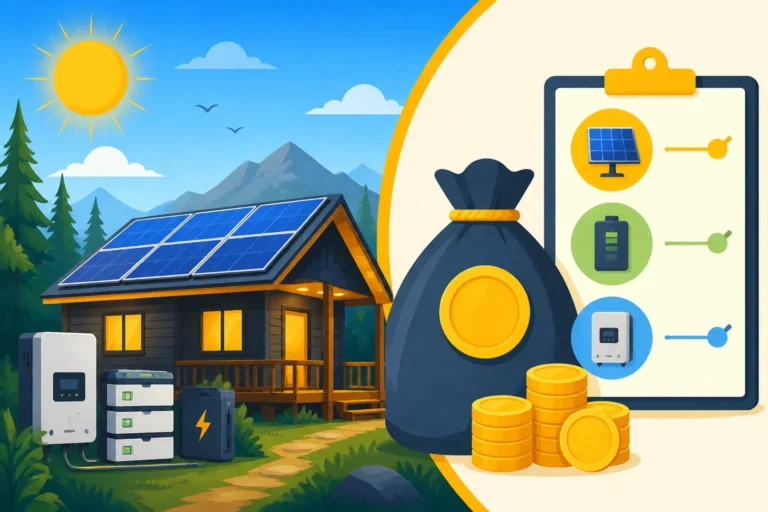
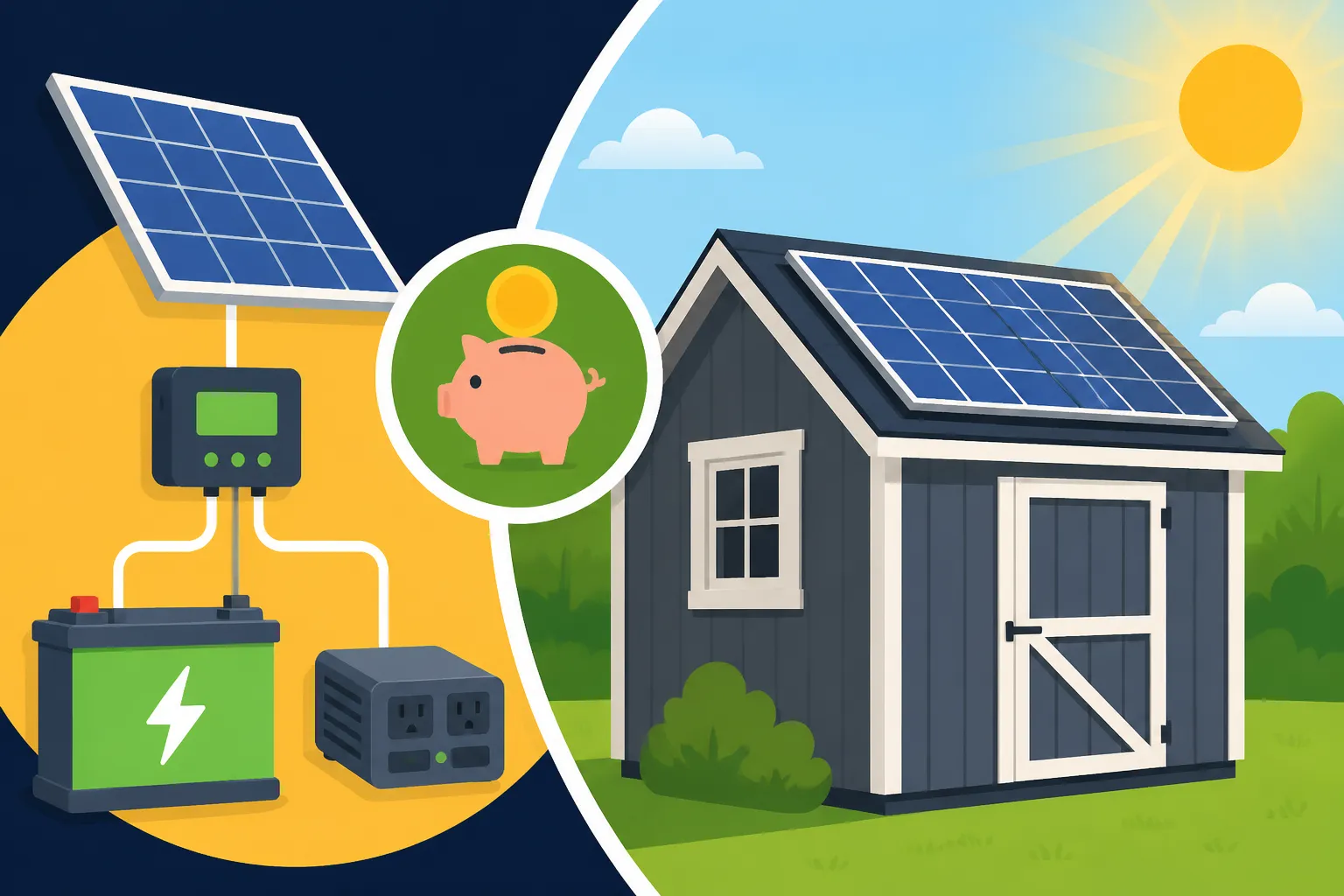
An off-grid solar system for a shed, no matter how simple, is made up of several core components working in harmony. Each piece plays a vital role, and understanding their individual costs is crucial for building a realistic budget. The good news is that for a shed, you can often scale these components down significantly compared to a whole-house system, making it much more affordable.
Solar Panels: Size, Type, and Price Points
The solar panels are the energy collectors, the hardworking individuals soaking up sunshine and converting it into electricity. Their cost is often measured per watt. For a shed, you're likely looking at panels ranging from 100W to 400W each. The price for these can vary from roughly $0.70 to $1.50 per watt, depending on the brand, efficiency, and where you buy them. So, a 100W panel might cost you $70-$150, while a 400W panel could be $280-$600.
You'll find various types, but monocrystalline panels are generally preferred for their efficiency and compact size, which can be important if your shed roof has limited space. Flexible panels are also an option, particularly for smaller sheds or non-traditional surfaces, but they typically come at a higher cost per watt and tend to have a shorter lifespan than rigid panels. You can often find decent deals on solar panels on platforms like Amazon or from specialized solar retailers. The number and size of panels you need will directly correlate to your calculated daily energy consumption and the available peak sun hours in your location. For more detailed information on choosing panels, you might find our article on Cost of Off-Grid Solar Panels helpful.
Batteries: The Heart of Your Off-Grid Shed
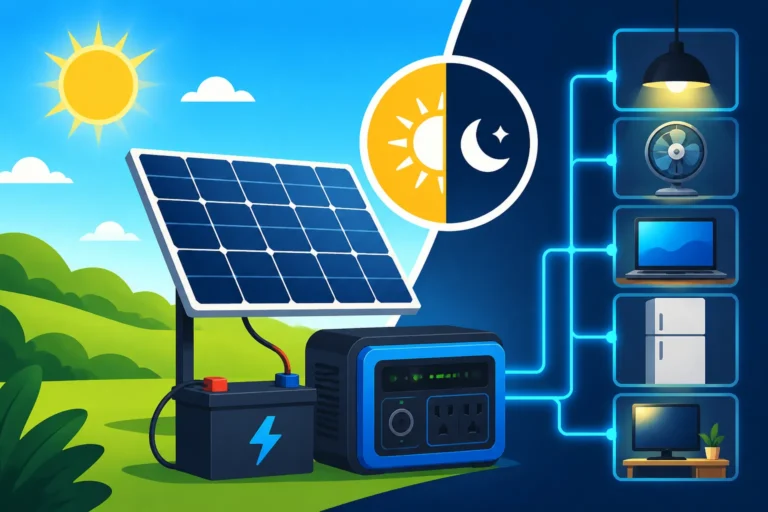
If solar panels are the muscles, batteries are the heart of your off-grid shed system. They store the energy generated by your panels so you can use it when the sun isn't shining—at night or on cloudy days. This is often the single most expensive component, but also the most critical for reliable power.
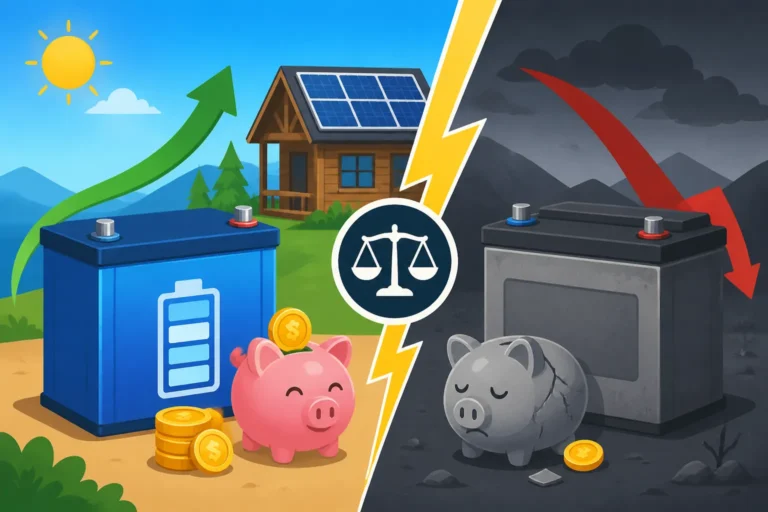
For shed systems, common battery choices include sealed lead-acid (like AGM or Gel) and lithium iron phosphate (LiFePO4). Lead-acid batteries are the budget-friendly entry point, typically costing $150-$300 for a 100Ah (amp-hour) 12V battery. However, they have a shorter lifespan (3-5 years), are heavier, and you can only discharge them to about 50% without damaging them. LiFePO4 batteries, while a larger upfront investment ($300-$1000+ for a 100Ah 12V battery), offer significant long-term value. They last much longer (10-15+ years), are lighter, can be discharged almost completely, and require no maintenance. The price difference between LiFePO4 vs Lead-Acid Battery Cost can be substantial, but so can the performance and longevity. Many DIYers start with a single 100Ah or 200Ah LiFePO4 battery, and then expand as needed. Remember, for a reliable system, you'll need enough battery capacity to cover at least 1-3 days of your calculated energy needs, especially if you anticipate periods of low sunlight.
Charge Controllers and Inverters: Essential Electronics
These are the unsung heroes that manage the flow of electricity in your system. A charge controller protects your batteries from overcharging and over-discharging, which can severely damage them. For smaller shed systems, a PWM (Pulse Width Modulation) charge controller might cost $30-$100. However, if you have more than one panel or want to maximize efficiency, an MPPT (Maximum Power Point Tracking) charge controller is a far better investment, even if it costs more ($80-$300+). MPPT controllers are significantly more efficient, especially in varying weather conditions, and they allow more flexibility in panel wiring.
An inverter converts the DC (direct current) power from your batteries into AC (alternating current) power, which is what most standard household appliances use. The size (wattage) of your inverter needs to be able to handle the combined running watts of all devices you might use simultaneously, plus any surge watts from motor-driven tools. For a basic shed with lights and a laptop, a 500W-1000W pure sine wave inverter might cost $100-$300. For a workshop running power tools, you'd likely need a 2000W-3000W inverter, which could run $300-$800+. Always opt for a "pure sine wave" inverter, as it provides cleaner power that's safe for sensitive electronics. A modified sine wave inverter is cheaper but can damage certain devices and cause buzzing. For understanding these core components, consider reading our Off-Grid Solar Equipment Explained post.
Wiring, Mounting, and Miscellaneous Costs
Don't forget the smaller, yet essential, bits and pieces that connect everything and ensure safety. This category includes:
- Wiring and Cables: You'll need appropriate gauge wiring for your solar panels (PV wire), battery cables, and AC wiring if you're installing outlets. Expect to spend $50-$200, depending on the length and gauge required.
- Mounting Hardware: Brackets for your solar panels, whether on the roof of your shed or a ground mount, are necessary. A basic set of Z-brackets for a few panels might be $20-$50. If you're building a sturdier, adjustable ground mount, this could range from $100-$300 for materials.
- Safety Equipment: Fuses, circuit breakers, and a disconnect switch are non-negotiable for safety and protecting your investment. Budget $50-$150 for these.
- Connectors: MC4 connectors for solar panels, terminal connectors for batteries, and other small electrical bits add up.
- Tools: If you're doing a DIY installation, you might need a wire stripper, crimper, multimeter, and other basic tools, which could be an additional $50-$100 if you don't already own them.
- Permitting (sometimes): While many small shed systems don't require permits, it's always wise to check with your local municipality. While often free for small, temporary structures, some areas might have fees.
These miscellaneous costs can easily add an extra $200-$500 to your total, so it's important not to overlook them.
Typical Off-Grid Solar Shed System Costs
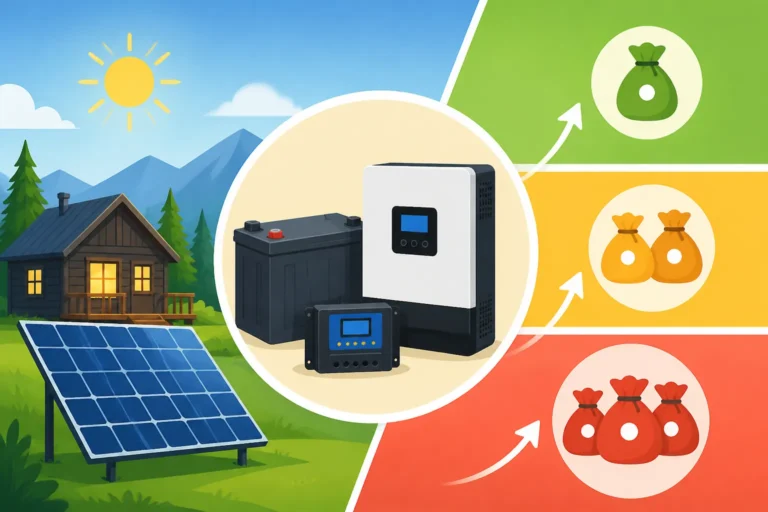
Now that we've broken down the individual components, let's look at what different levels of off-grid solar power for a shed might actually cost you in real-world scenarios. These are estimates, of course, and prices can fluctuate based on sales, brands, and your specific choices.
Small, Basic Shed Systems (e.g., Lights, Phone Charging)
This is the entry-level option, perfect for a garden shed, tool shed, or a tiny space where you just need reliable light, maybe to charge a phone, or run a small radio occasionally. You're looking at a minimal setup that emphasizes simplicity and affordability.
- Solar Panels: One or two 100W panels ($70-$150 each) totaling 100-200W.
- Batteries: A single 100Ah 12V AGM battery ($150-$300) or a 50Ah-100Ah 12V LiFePO4 battery ($150-$500).
- Charge Controller: A basic 20A PWM controller ($30-$50) or a small MPPT ($80-$150).
- Inverter: A small 500W pure sine wave inverter ($100-$150) for basic AC loads.
- Wiring, Mounts, Safety: ~$100-$200.
Estimated Total Cost: $450 – $1,150
This type of system is ideal for someone who just wants to illuminate their shed in the evenings, use a small fan in the summer, or keep their power tool batteries topped up. It's truly a "set it and forget it" kind of setup, often available as a pre-packaged kit from brands like Renogy or BougeRV that you can find on Amazon.
Medium Shed Systems (e.g., Power Tools, Small Fridge)
Stepping up a bit, this system is for those who use their shed as a serious workshop, a dedicated craft space, or a "man cave" with more demanding electrical needs. You'll want to power larger hand tools (like circular saws or sanders, but not heavy-duty 220V equipment), run a small mini-fridge, or perhaps a more robust lighting system.
- Solar Panels: Two to four 200-300W panels ($200-$450 each) totaling 400-1200W.
- Batteries: One or two 100Ah-200Ah 12V LiFePO4 batteries ($300-$1000 each) for better depth of discharge and longer life. You might connect them in parallel for more capacity or in series for a 24V system, which is more efficient for larger loads.
- Charge Controller: A 30A-60A MPPT controller ($150-$300) to efficiently handle more panels and protect your valuable batteries.
- Inverter: A 1500W-2500W pure sine wave inverter ($250-$600) to handle tool surges and a mini-fridge.
- Wiring, Mounts, Safety: ~$200-$400.
Estimated Total Cost: $1,100 – $3,350
This category often involves a bit more planning and potentially a higher voltage system (like 24V) to minimize wire loss and maximize efficiency, especially if you're running longer cable runs. It offers a solid amount of power for intermittent use of moderate appliances and makes a shed genuinely functional for a variety of tasks. For budgeting around this size, our article on Cost of a 1000W Off-Grid Solar System might be a good resource.
Larger, More Robust Shed Systems (e.g., Workshop, Office)
For those who envision their shed as a full-time workshop, a year-round remote office, or even a small guest house, you'll need a more substantial off-grid solar system. This typically means powering larger tools, a small air conditioner or heater, a mini-split, multiple monitors, and ensuring longer "days of autonomy" (how long your system can run without sun).
- Solar Panels: Four to eight 300-400W panels ($280-$600 each) totaling 1200-3200W.
- Batteries: Two to four 100Ah-200Ah LiFePO4 batteries, often configured in a 24V or 48V system ($600-$1000+ each). Brands like Battle Born or EG4 offer excellent modular options for this scale.
- Charge Controller: A high-quality 60A-100A MPPT controller ($300-$700+) with monitoring capabilities.
- Inverter: A 3000W-5000W pure sine wave inverter, potentially an inverter-charger combo ($500-$1,500+). These often integrate seamlessly with a generator backup.
- Wiring, Mounts, Safety: ~$400-$800, potentially including a small DC distribution panel and AC subpanel.
Estimated Total Cost: $3,000 – $8,000+
At this level, you're essentially building a scaled-down version of an off-grid home system. The higher voltage (24V or 48V) becomes almost essential for efficiency and to reduce cable thickness. You might also consider integrating a small backup generator for those long stretches of cloudy weather, especially if you have critical loads. Exploring options like an all-in-one power station from Jackery or Bluetti could also be a consideration for simplified setup at this scale, though they might be less flexible than a component system. For a comprehensive look, see How Much Does an Off-Grid Solar System Cost.
Here's a table summarizing typical cost ranges for different shed system sizes:
| System Size/Use Case | Solar Panels (Watts) | Battery Capacity (Ah @ 12V equivalent) | Estimated Total Cost Range (DIY) | Key Features |
|---|---|---|---|---|
| Small/Basic | 100-200 | 100-150 | $450 – $1,150 | Lights, phone charging, small fan |
| Medium/Workshop | 400-1200 | 200-400 | $1,100 – $3,350 | Hand tools, small fridge, laptop |
| Large/Full-time Office | 1200-3200 | 400-800+ | $3,000 – $8,000+ | Heavy tools, AC/heating, multiple electronics |
Note: These ranges are for DIY installations and can vary widely based on component quality, brand, and regional pricing.
Factors Influencing Your Total Off-Grid Shed Solar Cost
The cost estimates above are a great starting point, but several variables can swing your final budget significantly. Understanding these factors will help you make informed decisions and manage expectations.
DIY vs. Professional Installation
This is often the biggest cost differentiator for any solar project, especially smaller ones like a shed. Doing it yourself can save you a bundle, often 30-50% or more, on labor costs. For a basic shed system, the installation process is fairly straightforward, involving mounting panels, connecting a few wires, and setting up the charge controller and inverter. Many people find the satisfaction of a DIY solar project incredibly rewarding, and there are tons of online resources and kits available to guide you. For example, you can buy complete Off-Grid Solar Kits: What to Buy from retailers, often on Amazon, that include everything you need to get started.
However, DIY isn't for everyone. If you're uncomfortable with electrical wiring, working on roofs, or simply lack the time, hiring a professional is a valid option. While it adds to the upfront cost, it ensures the system is installed correctly, safely, and often comes with warranties. For a more complex, larger shed system—especially one involving a higher voltage or integration with a backup generator—hiring an electrician for at least the final wiring check might be a wise investment, even if you do most of the physical work yourself. Our guide on DIY vs Professional Off-Grid Solar Cost can help you weigh these options.
Brand Choice and Equipment Quality
Just like with anything else, there's a wide spectrum of quality and price when it comes to solar components. You can find budget-friendly panels and inverters from lesser-known brands, or invest in premium equipment from industry leaders like Victron Energy, Renogy, or Outback Power.
High-quality components typically offer better efficiency, longer warranties, superior durability, and often come with advanced features and monitoring capabilities. They might cost more upfront, but they can save you money in the long run by requiring less maintenance and replacement. For a critical application, like a shed that serves as a full-time office, investing in more reliable brands is probably a smart move. For a simple lighting solution, a more budget-conscious approach might be perfectly adequate. Researching Best Off-Grid Solar Brands will give you a good idea of what's out there.
Geographic Location and Sun Exposure
Where your shed is located geographically and how much direct sunlight it receives are massive factors in system sizing and thus, cost. If you live in a sunny state like Arizona or California, you might need fewer solar panels to generate the same amount of power compared to someone in a cloudier region like the Pacific Northwest. Fewer panels mean lower costs.
Furthermore, any shading from trees, adjacent buildings, or your house can significantly impact panel performance. It's crucial to find the optimal placement for your panels, ideally facing true south (in the Northern Hemisphere) with an unobstructed view of the sun throughout the day. If your shed's location is prone to heavy shading, you might need to install additional panels to compensate, which will naturally increase your expenses. You'll also need to consider your climate—do you need to design for Off-Grid Solar Cost in Cold Climates where battery performance might be affected or where snow load on panels needs to be considered?
Long-Term Savings and Maintenance Considerations
While the initial setup cost is a significant hurdle, it's also worth thinking about the long game. Going off-grid with your shed isn't just about the upfront expense; it's about the long-term benefits and the ongoing costs of keeping your system humming.
The Hidden Costs and Lifespan of Components
Once your system is installed, it's generally low maintenance, but "set it and forget it" isn't entirely accurate. Batteries, particularly lead-acid ones, have a limited lifespan and will need to be replaced. LiFePO4 batteries last much longer, but they aren't immortal. Over time, solar panels can degrade slightly in efficiency (though modern panels come with excellent warranties, often guaranteeing 80% output after 25 years). Inverters and charge controllers are generally robust but can fail, especially if exposed to extreme conditions or if they're low-quality units.
Budgeting for future Off-Grid Solar Maintenance Costs and eventual replacements is a smart move. For instance, replacing a 100Ah LiFePO4 battery might cost another $300-$500 down the line. While solar systems drastically reduce or eliminate utility bills for your shed, they aren't entirely free once installed. Understanding the typical lifespan of each component (panels: 20-30 years, LiFePO4 batteries: 10-15+ years, lead-acid batteries: 3-7 years, inverters/charge controllers: 5-15 years) helps you plan for these future expenses.
Maximizing Your Investment and Future Expansion
To truly maximize your off-grid shed solar investment, consider efficiency at every turn. Using LED lighting instead of incandescent bulbs is a no-brainer. Choosing energy-efficient appliances, even for a mini-fridge, will reduce your power consumption and allow for a smaller, more affordable solar system. Think about insulating your shed if you plan to use it year-round for heating or cooling.
Also, think about future needs. What if you decide to add more tools, a larger fridge, or even a different application a few years down the road? Designing your system with expandability in mind can save you money later. This might mean buying a slightly larger charge controller than you currently need, or selecting an inverter that can handle more wattage than your initial loads. Investing in a robust battery bank from the start also provides a solid foundation. While it increases the initial How to Budget for an Off-Grid Solar System slightly, it avoids the costly process of completely re-engineering your system. Planning for expansion can be as simple as leaving space for additional panels on the roof or choosing a battery inverter that allows for more battery modules to be added later, like those offered by reputable brands such as Victron. This foresight helps ensure your off-grid shed continues to meet your power needs without breaking the bank for a complete overhaul.
Disclaimer
Please remember that the information provided in this article is for general guidance only. Off-grid solar system design and installation can be complex and involve electrical hazards. Always consult with qualified professionals and adhere to all local codes and regulations before undertaking any electrical or solar installation project.