Best Off-Grid Solar Brands
Stepping into the world of off-grid solar can feel like diving into a labyrinth of acronyms, technical specifications, and a seemingly endless list of manufacturers. It's truly overwhelming to figure out which brands you can trust with something as critical as your independent power source, especially when the stakes are high for reliable electricity far from the grid. This comprehensive guide is here to shed light on the best off-grid solar brands, helping you navigate the choices and build a reliable, efficient system that meets your unique needs.
Understanding What Makes an Off-Grid Solar Brand "Best"
When you're looking at off-grid solar, "best" isn't a one-size-fits-all trophy. What works perfectly for a remote cabin might be overkill or insufficient for a full-time RV setup. The true measure of a top brand in this space comes down to several critical factors that impact not just the initial purchase, but your long-term satisfaction and system performance. We're talking about things like the actual quality and durability of the components, how well the company stands behind its products, and how easy it is to integrate their offerings into a complete system. It’s about peace of mind, knowing your power won't unexpectedly vanish.
Reliability and Longevity: The Core of Off-Grid Living
Imagine you're miles from civilization, perhaps deep in the woods or out on the open road in your van, and suddenly your power system decides to take a break. That's not just an inconvenience; it can be a serious problem. This is why reliability is paramount for off-grid components. The "best" brands aren't just selling you a product; they're selling you dependable power. This means their equipment is built with high-quality materials, engineered to withstand various environmental conditions—be it extreme heat, freezing temperatures, or persistent humidity—and designed for a long operational lifespan.
A truly reliable brand will have a proven track record, often backed by years, if not decades, of real-world use by countless customers. They'll invest in rigorous testing and quality control, ensuring that their solar panels continue to produce expected wattage, their inverters maintain stable power output without frequent failures, and their batteries hold their charge capacity over many cycles. Longevity is equally important; you don't want to be replacing major components every few years, both for cost reasons and the hassle of installation. When you're assessing a brand, look beyond the initial price tag to consider the total cost of ownership over the expected lifetime of the equipment. A cheaper component upfront might end up costing you more in replacements and headaches down the line. It's often the difference between a system that runs smoothly for 20+ years and one that becomes a constant source of frustration.
Technical Support and Warranty: When Things Go Sideways
Even with the most robust equipment, sometimes things go wrong. Perhaps a component malfunctions, you have a tricky installation question, or you need help troubleshooting an unexpected issue. This is where a brand's technical support and warranty policies truly shine. A "best" brand understands that their relationship with you extends far beyond the point of sale. They'll offer readily accessible, knowledgeable technical support – ideally, people who actually understand off-grid systems and can provide practical advice, not just read from a script. This might mean phone support, comprehensive online FAQs, active user forums, or even dedicated email lines for technical queries.
Equally important is a strong, transparent warranty. Off-grid solar components represent a significant investment, and you need assurance that the manufacturer will stand behind their products if a defect arises. Look for clear warranty periods for different components—solar panels often come with 25-year performance warranties, while inverters and batteries typically have 5-10 year guarantees, or even longer for some high-end lithium batteries. Understanding the terms and conditions is vital: what's covered, what voids the warranty, and what the process is for making a claim. Brands that make this information easily available and have a reputation for honoring their warranties provide immense peace of mind. For example, some brands like Victron Energy are known for their exceptional support community and extensive documentation, which is invaluable when you're troubleshooting on your own.
Product Ecosystem and Integration: Building a Cohesive System
One of the often-overlooked aspects of choosing off-grid solar equipment is how well all the different pieces work together. An off-grid system isn't just a collection of parts; it's an interconnected ecosystem of solar panels, charge controllers, batteries, inverters, and monitoring systems. A truly "best" brand often offers a comprehensive product ecosystem where components are designed to integrate seamlessly, often communicating with each other through proprietary protocols or standardized interfaces. This coherence simplifies installation, configuration, and monitoring.
Think about it: when all your components come from the same family, setting up your system becomes much easier. You’re less likely to run into compatibility issues, and often, you can monitor and control your entire system from a single app or display. This integration is particularly valuable for complex systems or for those who want advanced features like remote monitoring, system diagnostics, and automatic generator starting. While it's certainly possible to mix and match components from different brands – and many DIYers do – opting for a brand with a strong ecosystem can significantly reduce complexity and potential headaches. It's like having all your puzzle pieces designed to fit together perfectly, rather than trying to force mismatched parts. For those looking for simplicity and advanced functionality, exploring brands with a broad range of compatible products can be a game-changer for your overall Off-Grid Solar System Sizing Guide.
Top Tier Off-Grid Solar Brands for Comprehensive Systems
When we talk about the "top tier" in off-grid solar, we're discussing brands that have consistently proven themselves in terms of innovation, reliability, and robust performance. These are the names that often come up in discussions among seasoned off-gridders and professional installers alike, known for their premium quality and comprehensive solutions, even if they come with a higher price tag. They are the workhorses of serious off-grid setups, from remote homesteads to critical backup power systems.
Victron Energy: The Industry Gold Standard
Victron Energy is practically a household name in the serious off-grid and marine solar world, and for good reason. This Dutch company has earned its reputation as the industry gold standard through decades of producing incredibly robust, high-performance, and feature-rich components. Their product line is extensive, covering everything from inverters and inverter/chargers like the renowned MultiPlus and Quattro series, to advanced MPPT solar charge controllers, battery monitors, and a vast array of accessories. What truly sets Victron apart is their commitment to quality engineering and unparalleled system integration.
Their devices are designed to communicate seamlessly with each other through their proprietary VE.Direct, VE.Bus, and VE.Can protocols, all managed and monitored via their powerful GX devices (like the Cerbo GX) and the user-friendly VictronConnect app. This ecosystem allows for incredibly detailed monitoring, remote control, and advanced system automation, making them ideal for complex, critical off-grid setups where reliability and precision are non-negotiable. While the initial investment for Victron components can be higher than other brands, their longevity, efficiency, and the depth of their technical support and community resources often make them a more economical choice in the long run. Many off-gridders consider them indispensable for systems that simply cannot fail, justifying the investment with peace of mind. If you're building a system where you demand the absolute best and want granular control, Victron Energy should be at the top of your list.
Sol-Ark: All-in-One Powerhouses
Sol-Ark is a name that has rapidly gained immense popularity in the off-grid and hybrid solar market, particularly in North America. Their claim to fame is their innovative, all-in-one inverter-chargers that combine multiple critical components into a single, compact unit. A Sol-Ark system typically integrates a powerful pure sine wave inverter, a high-efficiency MPPT solar charge controller, a battery charger, and a system controller into one box. This approach simplifies installation significantly, reduces wiring complexity, and often saves valuable space—a huge benefit for many off-grid installations.
The Sol-Ark 12K and 15K models, for instance, are incredibly versatile, capable of managing both off-grid and grid-tied applications, including battery backup, self-consumption, and grid interaction. They are known for their high surge capability, efficient operation, and user-friendly interface, which often includes a built-in display for easy monitoring. For those looking for a powerful, relatively straightforward solution that handles multiple aspects of their power system with a single piece of equipment, Sol-Ark offers a compelling package. They've become a go-to for many homeowners and small businesses seeking reliable, comprehensive power solutions without needing to integrate separate components from various manufacturers, streamlining the entire process of setting up their off-grid system. You might find that looking at their products helps you better understand How to Size an Off-Grid Inverter.
Outback Power: Time-Tested Robustness
Outback Power has been a cornerstone of the off-grid solar industry for a very long time, earning a reputation for producing incredibly robust and durable equipment built to last in the harshest environments. Based in Washington state, their products are renowned for their heavy-duty construction and ability to reliably perform year after year. While perhaps not as flashy or digitally integrated as some newer brands, Outback's strength lies in its proven track record and bulletproof reliability, especially in remote, demanding applications.
Their flagship products include the VFX and Radian series inverter/chargers, which are celebrated for their high surge ratings and ability to handle large inductive loads, making them perfect for homes with well pumps, power tools, or other demanding appliances. Outback also produces powerful MPPT charge controllers, like the FLEXmax series, which are highly efficient and capable of handling large solar arrays. They also offer a range of system controllers and monitoring solutions. For off-gridders who prioritize raw durability, a proven design, and equipment that's built like a tank to withstand whatever nature throws at it, Outback Power remains a top contender. Their focus is on providing rock-solid performance that endures, offering a reliable backbone for any serious off-grid setup. Many experienced off-gridders swear by Outback for their long-term, no-nonsense power needs.
Excellent Mid-Range Brands for Accessible Off-Grid Solutions
Not everyone needs or can afford the premium price tag of the top-tier brands, especially when starting out or for smaller, less critical applications. The good news is that the mid-range market has exploded with fantastic options that offer an excellent balance of performance, features, and affordability. These brands make off-grid living more accessible without sacrificing too much on quality or reliability. They're perfect for DIY enthusiasts, RVers, cabin owners, and those building their first full-scale off-grid home.
Renogy: A Go-To for DIYers and Smaller Setups
Renogy has carved out a significant niche in the off-grid solar market, particularly among DIYers and those looking for accessible, complete solutions for RVs, vans, tiny homes, and small cabins. They are incredibly popular for their comprehensive kits that bundle solar panels, charge controllers, inverters, and sometimes even batteries, making it much easier for beginners to get started without having to source individual components. This approach significantly lowers the barrier to entry for many who are eager to embrace solar power independence.
What makes Renogy so appealing is their focus on value and user-friendliness. Their product line includes a wide variety of solar panels—from rigid monocrystalline to flexible panels—along with MPPT and PWM charge controllers, pure sine wave inverters, and a growing selection of lithium iron phosphate (LiFePO4) batteries. While some of their products might not boast the advanced features or sheer robustness of a Victron or Sol-Ark, Renogy offers reliable performance for a very competitive price. Their customer support often receives mixed reviews, but their extensive online resources and active community forums help many users through their installations. For someone looking for a cost-effective way to power their remote cabin or weekend camper, a Renogy solar kit can be an excellent starting point, offering a solid foundation to understand the basics of setting up an Off-Grid Solar Installation Guide.
EG4: Value-Driven Performance
EG4 has quickly become a brand to watch, especially for those seeking high-performance components at a significantly more competitive price point than some of the established premium brands. They have gained considerable traction by focusing on providing robust lithium battery solutions and powerful all-in-one inverter-chargers. Their products are often seen as offering "prosumer" grade performance, bridging the gap between entry-level DIY options and high-end industrial systems.
Their lithium iron phosphate (LiFePO4) batteries, often available in stackable server rack designs, are particularly popular. These batteries boast impressive cycle life, deep discharge capabilities, and integrated Battery Management Systems (BMS) for safety and longevity, all while being more affordable than many comparable alternatives. The EG4 inverter-chargers also offer a compelling proposition, integrating a high-efficiency inverter, MPPT charge controller, and battery charger into a single unit, similar to Sol-Ark but often at a lower cost. For those building a substantial off-grid home or a serious backup power system who are keen on maximizing their budget without compromising too much on capacity or efficiency, EG4 presents an incredibly strong value proposition. They are particularly well-regarded for providing excellent performance in the vital category of Best Off-Grid Solar Batteries.
Growatt: Balancing Cost and Features
Growatt is a global player in the solar inverter market, with a strong presence in both grid-tied and off-grid solutions. They've earned a reputation for offering a good balance of features, performance, and affordability, making them a popular choice for budget-conscious off-gridders and those in emerging markets. While not always the most premium in terms of build quality compared to the very top tier, Growatt delivers reliable functionality and a decent feature set for its price.
Their off-grid inverter-chargers, such as the SPF series, often include integrated MPPT charge controllers and offer pure sine wave output, making them suitable for running sensitive electronics. They typically support various battery chemistries and come with monitoring capabilities, often accessible via a smartphone app or web portal. This blend of features makes them attractive for individuals who want a fairly comprehensive solution without breaking the bank. Growatt systems are often found in applications where cost-effectiveness is a primary concern, such as small residential off-grid setups, workshops, or agricultural projects. They offer a stepping stone into off-grid independence for many, proving that reliable solar power doesn't always require a prohibitive investment. Their range of products also means they can be a viable option when considering the Off-Grid Solar Kit Price Ranges.
Specialized Brands for Specific Off-Grid Needs
While some brands aim to provide a full ecosystem, others excel by specializing in specific components, becoming industry leaders in their particular niche. These specialized brands often push the boundaries of technology and reliability for their core products, offering superior performance or unique features that are hard to find elsewhere. Integrating components from these specialists can sometimes enhance your overall system significantly.
Battle Born Batteries: The Lithium-Ion Pioneers
When it comes to high-performance, long-lasting batteries for off-grid applications, Battle Born Batteries has become synonymous with quality and reliability in the lithium iron phosphate (LiFePO4) space. Based in Reno, Nevada, they were among the first to popularize drop-in replacement LiFePO4 batteries for RVs, marine vessels, and various off-grid setups. Their focus is almost exclusively on these powerful, lightweight, and durable batteries, and they have perfected the art.
Battle Born batteries are known for their exceptional cycle life (often 3,000-5,000 cycles at 80% depth of discharge), robust internal Battery Management Systems (BMS) that protect against overcharge, over-discharge, over-current, and temperature extremes, and their ability to provide consistent power throughout their discharge cycle. Unlike traditional lead-acid batteries, they can be discharged much deeper without damage and recharge significantly faster, making them incredibly efficient. While they come with a higher upfront cost compared to lead-acid alternatives, their extended lifespan, efficiency, and maintenance-free nature often result in a much lower Total Cost of Ownership for those comparing LiFePO4 vs Lead-Acid Battery Cost. For serious off-gridders looking for a premium, hassle-free battery bank that will perform reliably for years, Battle Born is a top-tier choice. They are an excellent example of the Best Off-Grid Solar Batteries available.
EcoFlow and Bluetti: Portable Power Stations for Off-Grid Backup
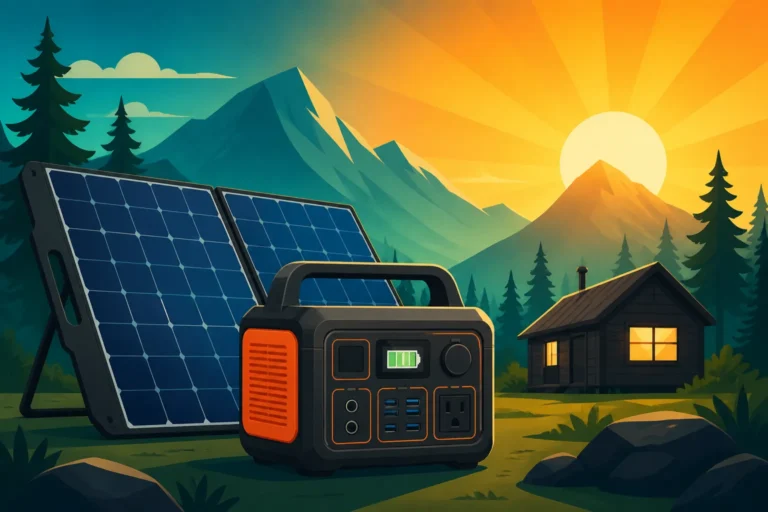
In recent years, portable power stations have exploded in popularity, offering a convenient, all-in-one solution for temporary off-grid needs, emergency backup, or supplementing smaller permanent systems. EcoFlow and Bluetti are two of the leading brands dominating this space, known for their innovative designs, high capacity, and rapid charging capabilities. These "solar generators" integrate a LiFePO4 battery, an inverter, and a charge controller into a single, portable unit that can be easily charged by solar panels, AC outlets, or a car charger.
Brands like EcoFlow (with their Delta and River series) and Bluetti (with their AC series and larger modular systems like the EP500) offer a range of sizes and capacities, from small units suitable for charging laptops and phones to massive systems capable of powering refrigerators, power tools, and even mini-split air conditioners for extended periods. They are incredibly user-friendly, often featuring multiple output ports (AC outlets, USB-A, USB-C, 12V DC) and intuitive LCD screens or smartphone apps for monitoring. While they might not be suitable as the sole power source for a full-time, high-demand off-grid home, they are invaluable for remote workshops, camping, van life, emergency preparedness, or as a reliable backup when your main system needs maintenance or has a temporary shortfall. They represent a significant advancement in making accessible, plug-and-play off-grid power a reality, proving themselves as some of the Best Solar Generators for Off-Grid.
Morningstar: Dedicated Charge Controller Excellence
While many inverter-chargers now integrate charge controllers, for those building custom systems or prioritizing absolute reliability in their charge management, specialized brands like Morningstar remain top contenders. Morningstar Corporation has been a leader in solar charge controllers and inverters since 1993, with a reputation for producing extremely durable, high-efficiency, and highly reliable products. Their focus is squarely on protecting and optimizing your battery bank, which is the heart of any off-grid system.
Morningstar's MPPT (Maximum Power Point Tracking) charge controllers, such as the TriStar MPPT and ProStar MPPT series, are engineered for maximum energy harvest from your solar panels and precise, multi-stage battery charging. They are often found in critical telecommunications sites, remote industrial applications, and serious off-grid homes where battery health and system longevity are paramount. Their controllers are known for their robust build quality, advanced features like remote temperature compensation, data logging, and programmable settings for various battery chemistries. For those who want to ensure their valuable batteries are charged optimally and protected meticulously, investing in a dedicated charge controller from a specialist like Morningstar is often a wise decision. They are often considered among the Best MPPT Charge Controllers available.
How to Evaluate Off-Grid Solar Brands for Your Unique Project
Choosing the "best" off-grid solar brand isn't about finding a universal winner; it's about finding the right winner for your specific situation. Every off-grid project is unique, with its own set of demands, environmental considerations, and financial constraints. To make an informed decision, you need a systematic approach to evaluate brands against your personal criteria, much like a seasoned chef selects ingredients for a gourmet meal – each component must play its part.
Assessing Your Power Demands and Lifestyle
This is the absolute first step in narrowing down your brand choices. Your power needs will dictate the size and type of system you require, which in turn influences which brands will offer suitable solutions. Are you looking to power a small, seasonal hunting cabin with just a few lights and a phone charger, or are you aiming for a full-time family home with a well pump, refrigerator, and air conditioning? The difference in scale is massive.
Start by conducting a thorough load analysis to determine your daily energy usage in watt-hours (Wh) or kilowatt-hours (kWh). Factor in both continuous loads (like a refrigerator) and surge loads (like a microwave or power tools). This initial calculation, which is part of How to Size an Off-Grid Solar System, will give you a clear picture of the inverter size you need, the total wattage of solar panels, and critically, the capacity of your battery bank. Brands like Renogy might be perfect for smaller, more modest requirements, offering cost-effective entry points with their all-in-one kits. However, if you're planning on running a full modern household, you'll likely need to lean towards more robust and scalable solutions from brands like Victron, Sol-Ark, or Outback, which offer larger inverters and greater expandability. Understanding your current and future power needs will quickly eliminate brands that simply don't have the capacity or the product range to support your desired lifestyle.
Considering Climate and Environmental Factors
The environment your off-grid system will operate in plays a huge role in component selection and, consequently, which brands are most suitable. Solar panels, batteries, and electronics perform differently under varying conditions, and some brands engineer their products specifically for resilience in challenging climates. Are you in a sunny desert with extreme heat, a cold northern region with long winters and limited sunlight, or a humid coastal area prone to salt air corrosion?
For example, extreme heat can degrade battery performance and shorten the lifespan of electronics, while freezing temperatures significantly reduce the efficiency and capacity of many battery types, especially lead-acid. If you're in a cold climate, you might need batteries with internal heating elements (common in some LiFePO4 brands) or robust enclosures. Brands that offer panels with excellent temperature coefficients will maintain better output in hot conditions. Similarly, if you're near saltwater, marine-grade components with superior corrosion resistance will be a priority. Look for brands that specifically market their equipment as being "ruggedized" or designed for extreme temperatures, such as Outback Power, which has a strong reputation for durability in harsh environments. Don't forget about potential shading; if you anticipate partial shading on your panels, some brands offer optimizers or micro-inverters that can mitigate the impact, though these are more common in grid-tied systems but can be adapted. Taking these environmental factors into account from the outset can save you a lot of headaches and costly replacements down the line.
Budgeting for Quality vs. Cost Savings
Money is always a factor, and off-grid solar can be a significant investment. However, it's crucial to understand the difference between true cost savings and simply buying the cheapest option. Often, investing a bit more upfront in higher-quality components from reputable brands leads to greater reliability, efficiency, and a longer lifespan, ultimately saving you money over the life of the system. This directly ties into the concept of the Off-Grid Solar Return on Investment.
When you're creating your Budget for an Off-Grid Solar System, consider breaking down the cost by component and looking at the value proposition of different brands. For instance, while LiFePO4 batteries from brands like Battle Born or EG4 have a higher initial price, their vastly superior cycle life, deeper discharge capabilities, and lack of maintenance often make them more economical than cheaper lead-acid batteries over a 10-15 year period. Similarly, a premium inverter from Victron or Sol-Ark might cost more, but its higher efficiency, advanced features, and proven reliability can mean less downtime and more consistent power. On the other hand, if you have a smaller budget or are building a simpler system, brands like Renogy or Growatt offer excellent value and a good starting point. The goal isn't necessarily to buy the most expensive equipment, but to find the best balance of quality, features, and price that aligns with your specific needs and financial comfort level. Sometimes, it makes sense to splurge on critical components like batteries and inverters, while opting for more budget-friendly options for panels or mounting hardware.
The Importance of Component Compatibility and System Integration
Building an off-grid solar system is a bit like assembling a complex Lego set – all the pieces need to fit together perfectly to create a stable and functional structure. This is where component compatibility and system integration become incredibly important. You can have the best individual solar panels, batteries, and inverters, but if they don't play nicely with each other, your system will be inefficient, unreliable, or potentially even unsafe. This consideration is particularly vital when you’re combining elements from different manufacturers.
Mixing and Matching Components: Pros and Cons
Many off-gridders, especially DIY enthusiasts, choose to mix and match components from various brands. This approach can offer several advantages. Firstly, it allows you to pick the "best in class" for each component, potentially optimizing performance or cost. For example, you might opt for highly efficient solar panels from one manufacturer, a robust MPPT charge controller from another (like a Morningstar), and powerful LiFePO4 batteries from a specialist like Battle Born, all tied together by a versatile inverter from a brand like Victron. This gives you maximum flexibility to tailor the system to your exact specifications and budget.
However, mixing and matching also comes with its challenges. The primary hurdle is ensuring compatibility. You need to meticulously check voltage ranges, current ratings, communication protocols, and charging parameters between components. For instance, your charge controller needs to be rated for the voltage and current output of your solar array, and it must be able to properly charge your chosen battery chemistry. Similarly, your inverter needs to be able to accept the input voltage from your battery bank. Monitoring and troubleshooting can also become more complex when you have different interfaces and software from various brands. While a well-researched mixed system can be highly effective, it requires a deeper understanding of solar electrical principles and careful planning to avoid costly mistakes. This is a common topic of discussion when comparing DIY vs Professional Off-Grid Solar Cost, as professionals often stick to integrated systems or carefully vetted combinations.
Understanding Certifications and Standards
Beyond technical compatibility, understanding relevant certifications and industry standards is crucial for both safety and performance. When evaluating brands, look for products that comply with recognized electrical and safety standards. In North America, this often means certification from organizations like UL (Underwriters Laboratories) for electrical safety and reliability. A UL listing indicates that a product has been tested to meet specific safety standards, which can be critical for both your personal safety and potentially for obtaining permits or insurance.
Other important considerations include adherence to national electrical codes (like the National Electrical Code or NEC in the USA) for wiring practices, grounding, and overcurrent protection. While off-grid systems might not always be subject to the same strict permitting requirements as grid-tied installations, following code guidelines ensures a safer and more reliable system. Reputable brands will openly state their certifications and design their products to meet these standards. This not only assures you of a certain level of quality and safety but also simplifies the process of integrating components, as standard-compliant equipment is generally designed to integrate safely with other standard-compliant equipment. When choosing your system, especially your inverter or charge controller, making sure they meet these benchmarks is a non-negotiable step to ensuring a reliable and safe off-grid power solution, as detailed in Off-Grid Solar System Components Explained.
Where to Find and Purchase Reputable Off-Grid Solar Equipment
Once you've done your homework on brands and system design, the next step is actually acquiring the equipment. The market for off-grid solar components has expanded dramatically, offering numerous avenues for purchase. Knowing where to look for reputable sellers and how to ensure you're getting genuine products with proper warranty support is just as important as choosing the right brand.
Online Retailers and Specialized Solar Stores
For many off-gridders, especially those pursuing a DIY approach, online retailers are a primary source for solar equipment. Large e-commerce platforms like Amazon offer a vast selection of solar panels, charge controllers, inverters, and accessories from a multitude of brands. The convenience, competitive pricing, and user reviews can be very appealing. However, when purchasing from general online marketplaces, it’s crucial to exercise caution. Always verify the seller’s reputation, ensure they are an authorized dealer for the brand you're interested in, and double-check warranty policies, as some third-party sellers may not offer full manufacturer support. While Amazon can be a good source for smaller items or even some major components from reputable brands, always prioritize buying directly from the manufacturer or a known authorized dealer for high-value items.
Specialized online solar stores, on the other hand, often offer a more curated selection of trusted brands and components specifically geared towards off-grid applications. These retailers, such as Battle Born Batteries' direct site, Renogy's online store, or larger distributors like Wholesale Solar or Northern Arizona Wind & Sun, typically employ knowledgeable staff who can offer technical advice and support. They often have stronger relationships with manufacturers, ensuring that you receive authentic products and that warranties are fully honored. They might also offer pre-configured Off-Grid Solar Kits: What to Buy that simplify the purchasing process for specific needs like an RV or a cabin. While prices might sometimes be slightly higher than generic marketplaces, the added value of expertise, reliable support, and guaranteed product authenticity often makes them the preferred choice for serious off-grid builders.
Local Distributors and Professional Installers
For larger, more complex off-grid projects, or if you prefer a more hands-on purchasing experience with local support, working with local distributors or professional solar installers can be highly beneficial. Local distributors are often wholesalers who supply equipment to installers and sometimes directly to the public. They typically carry a focused range of high-quality brands and can provide detailed product specifications, availability, and sometimes even competitive bulk pricing. They are an excellent resource for discussing your specific needs face-to-face and getting recommendations tailored to your region.
Engaging with professional solar installers offers the most comprehensive solution. An experienced installer will not only help you design your entire system, including calculating How Many Batteries for an Off-Grid System and the optimal number of panels, but they will also procure all the components, handle the installation, and provide ongoing maintenance and support. While this is generally the most expensive route, it offers the highest level of expertise, peace of mind, and often includes warranties on both the equipment and the installation itself. Installers typically work with specific brands they trust and have established relationships with, ensuring you get proven, reliable components. For those who are less comfortable with DIY electrical work or who are building a permanent off-grid home, this route can save immense time, effort, and potential costly errors. They navigate the complexities, ensuring your system is built to code and operates safely and efficiently from day one.
Disclaimer
The information provided in this guide is for general informational and educational purposes only. While we strive to provide accurate and up-to-date content, off-grid solar technology and regulations are constantly evolving. It is crucial to consult with qualified professionals, electricians, and local authorities to ensure your system design, installation, and components comply with all applicable codes, regulations, and safety standards in your specific location. Always exercise caution and prioritize safety when working with electrical systems. The brands mentioned are examples and not an exhaustive list, nor is this an endorsement or recommendation of any specific product or service. Individual results and experiences may vary.