Best Panels for Limited Roof Space
Trying to set up an off-grid solar system when you're working with a tiny footprint, like the roof of an RV, a cozy cabin, or a compact tiny home, can feel like trying to fit a square peg in a round hole. You know you need reliable power, but every inch of space is precious, and sacrificing efficiency for size just doesn't feel right. This comprehensive guide is here to help you navigate the tricky waters of selecting the absolute best solar panels that maximize energy production even when your roof space is at a premium.
Understanding the Challenges of Limited Roof Space for Solar
When you're dreaming of off-grid living, whether it's full-time or for weekend escapes, the roof real estate often becomes your biggest design constraint. It’s not just about fitting a panel; it’s about fitting the right panel to get enough power without overwhelming your structure or aesthetic.
The Space-Efficiency Dilemma
Every square inch on your small roof counts, and traditional large solar panels just aren't designed with these limitations in mind. Think about it: an RV roof isn't a vast, flat expanse. It's often punctuated by vents, skylights, AC units, and satellite dishes. A tiny home might have a unique roofline, or perhaps you're converting a shed where only a small section gets direct sunlight all day. Trying to cram in standard 300-400W panels means you either compromise on total wattage, deal with awkward gaps, or simply can't fit enough to meet your daily energy needs. This leads to a constant balancing act between the physical footprint of the panels and the power output you desperately need to keep your lights on, your fridge cold, or your laptop charged. It’s a frustrating dance, especially when you feel like you’re giving up valuable power just because of physical constraints. You want to maximize your energy harvest, and for that, you need panels specifically designed to punch above their weight in terms of power per square foot.
Weight and Aesthetics Considerations
It's not just the physical dimensions that pose a challenge; the weight and even the visual impact of your solar array are significant factors for smaller off-grid setups. A traditional rigid solar panel can be quite heavy, and adding several to the roof of a camper van or an older cabin could stress the existing structure. Imagine the impact of several 40-pound panels on an RV roof that wasn't designed for that kind of persistent, distributed load, especially when you factor in wind resistance during travel. For many, especially those embracing van life or tiny home aesthetics, a bulky, visible array of large panels can also detract from the look and feel they're going for. They want a cleaner, more integrated solution that doesn't scream "solar array" from every angle. This pushes us towards solutions that are not only compact but also lightweight and perhaps even blend in more seamlessly with the structure's design, reducing both structural concerns and visual clutter.
Key Panel Characteristics for Small Spaces
When space is at a premium, you can't just pick any solar panel. You need to be smart about what you choose, focusing on panels that deliver the most bang for your buck in terms of power output, flexibility, and footprint.
High Power Density Panels
For limited roof space, the name of the game is high power density. This isn't just a fancy term; it's about getting more watts out of less physical space. Instead of sprawling panels that take up vast areas, you need panels that are engineered to convert sunlight into electricity with exceptional efficiency, even within a smaller frame. This typically means looking at monocrystalline solar panels. These panels are made from a single crystal structure, which allows electrons to move more freely, resulting in higher efficiency rates, often ranging from 17% to over 22%.
What does this mean for you? It means a 100-watt monocrystalline panel will likely have a smaller footprint than a 100-watt polycrystalline panel, or, more importantly, a panel of the same size will produce significantly more power. For instance, if you have a specific area on your roof, say 20 square feet, a high-efficiency monocrystalline panel might give you 300 watts, while a less efficient panel would only give you 250 watts from the same area. Over the course of a sunny day, that difference adds up substantially, helping you keep your batteries topped off without needing to expand your physical array. When you're trying to figure out how many solar panels for off-grid living, especially in a small footprint, always prioritize panels with excellent power density.
Compact and Smaller Form Factor Panels
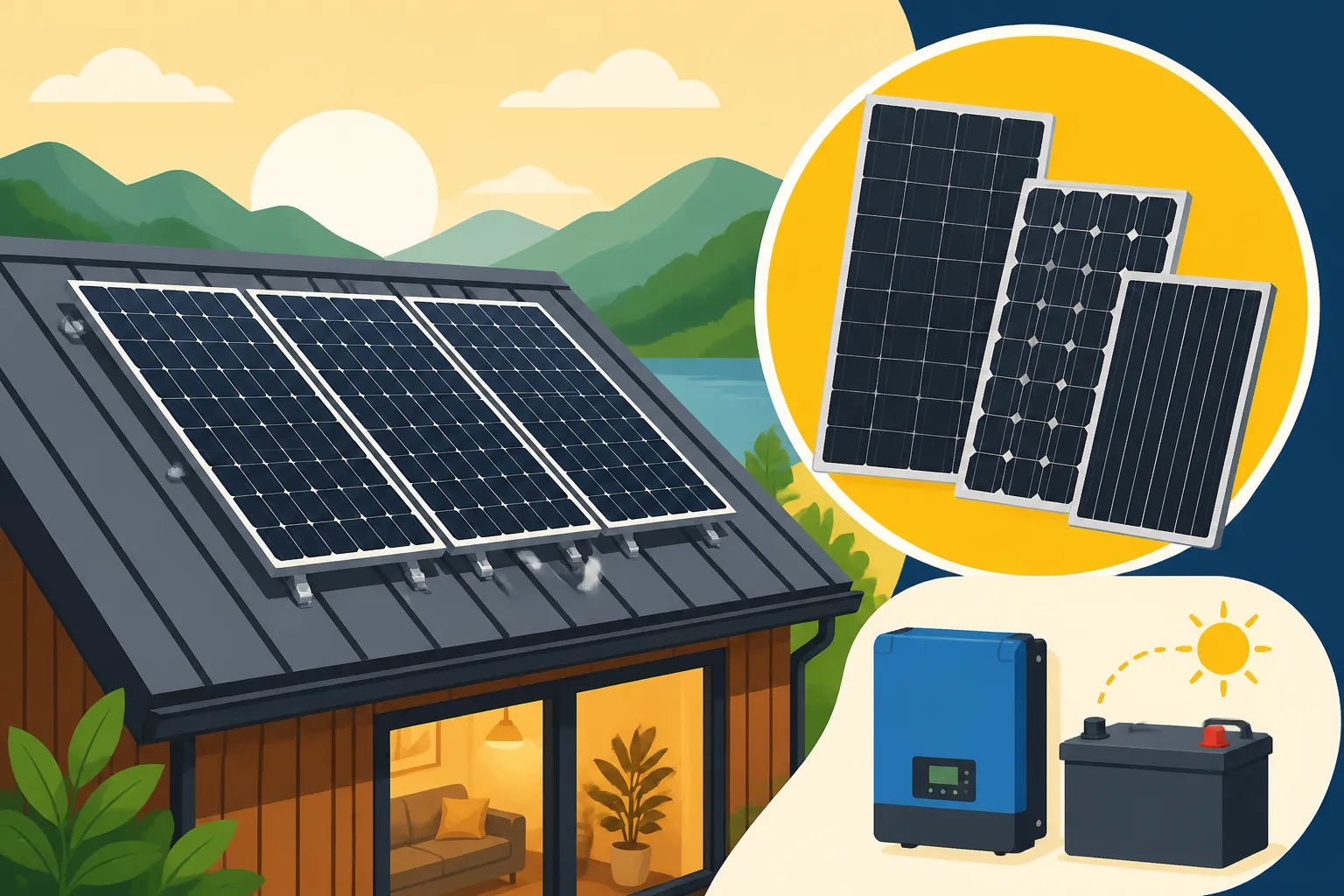
Beyond just efficiency, the actual physical dimensions of the panels play a huge role. Sometimes, it's not about overall square footage, but about fitting panels into oddly shaped nooks and crannies. This is where compact and smaller form factor panels shine. Instead of standard 60-cell or 72-cell residential panels, many off-grid enthusiasts turn to smaller 100W, 150W, or 200W panels. These might seem less powerful individually, but their smaller size offers incredible flexibility in placement.
Imagine the roof of a camper van. You might have a roof fan here, an AC unit there, and a small skylight. Trying to lay down one massive panel would be impossible. However, several smaller panels, perhaps 100-watt units, can be strategically placed around these obstructions, making use of every available sliver of sunlight-exposed space. You can often find compact panels that are just a couple of feet wide and a few feet long, allowing for modular arrangements. This gives you the power to truly customize your array to your unique roof geometry, rather than being forced to work around inflexible, oversized panels. It's like building with LEGOs instead of giant concrete slabs – much more adaptable!
Flexible or Semi-Flexible Panels
When you're dealing with curved surfaces, extremely limited weight capacity, or a desire for a near-invisible solar array, flexible or semi-flexible panels become absolute game-changers. These panels are engineered with a thin, pliable substrate, allowing them to gently curve and conform to the contours of your roof, whether it's the rounded top of a travel trailer, the arched roof of a tiny house, or even the deck of a sailboat.
The primary advantage here is their incredibly low weight and slim profile. Many rigid panels weigh 20-40 pounds each, while a flexible panel of similar wattage might weigh a fraction of that, often just a few pounds. This drastically reduces the load on your roof and can be crucial for vehicles where every pound matters for fuel efficiency and suspension. They also sit flush, which means almost no wind resistance, a huge plus for mobile applications like RVs and vans. Renogy offers a range of popular flexible panels that are a favorite among the van life community for this very reason. While their efficiency might be slightly lower than top-tier rigid monocrystalline panels, and their lifespan can sometimes be shorter due to exposure and heat, the trade-offs in weight, profile, and adaptability are often well worth it for those with strict space and weight constraints. For many, these represent the ultimate solution for stealthy and lightweight power generation. You can learn more about specific flexible panel options in our guide to the Best Flexible Solar Panels.
Top Panel Types and Brands for Limited Roof Space
Choosing the right solar panels for limited roof space means understanding the specific advantages of different types and knowing which brands deliver reliable performance in compact forms.
Monocrystalline Rigid Panels with High Efficiency
Even with limited space, don't rule out rigid monocrystalline panels entirely. While they are, by definition, rigid and generally heavier than their flexible counterparts, many manufacturers produce highly efficient, smaller-sized rigid panels that can be perfect for those awkward gaps or smaller structures. These panels offer excellent durability and a long lifespan, often coming with 20-25 year warranties, making them a solid long-term investment. Brands like Renogy, Rich Solar, and Newpowa are well-regarded in the off-grid community for providing reliable rigid panels in various sizes, including compact 100W and 200W options. These smaller panels are fantastic for piecing together an array on a cabin roof where you might have vents or chimneys to work around, or on an RV where you can line them up perfectly between your AC and other roof fixtures.
For example, a compact 170-watt monocrystalline panel might be around 48 inches long by 26 inches wide. While not tiny, it’s far more manageable than a standard 300-400W panel which can easily be 65+ inches long. You can often fit two or three of these smaller, efficient panels where only one larger, less efficient panel might have squeezed in, ultimately giving you more total watts. The key here is maximizing the Off-Grid Solar Cost Per Watt by choosing panels that offer superior conversion rates even in a smaller footprint. This approach ensures you’re making the most of every sun-kissed inch. When looking for a robust and long-lasting option, don't overlook these smaller, high-efficiency rigid panels. They often strike a great balance between space usage, power output, and system longevity. Take a look at our deeper dive into the Best Off-Grid Solar Panels for more brand-specific recommendations.
Flexible Panels for Curved or Minimalist Setups
When your roof isn't flat, or you absolutely need to keep weight and profile to a minimum, flexible or semi-flexible panels are your best friends. These lightweight, often adhesive-backed panels can conform to slightly curved surfaces and virtually disappear into the roofline, offering an incredibly sleek and aerodynamic solution. They are particularly popular for van conversions, marine applications, and even some tiny homes where a minimalist aesthetic is desired.
The installation process for flexible panels typically involves bonding them directly to the roof surface using a strong adhesive like Sikaflex or VHB tape, often combined with mechanical fasteners for extra security, especially on mobile applications. This eliminates the need for bulky mounting brackets, further reducing weight and height. Brands like Renogy, BougeRV, and HQST offer a variety of flexible panels that are readily available on platforms like Amazon. For example, a 100W flexible Renogy panel can be just a few pounds and less than an inch thick, making it ideal for the limited space and curved roof of a Sprinter van or a modest sailboat. While they are generally less efficient than their rigid counterparts (meaning you need slightly more surface area for the same wattage) and can sometimes be more susceptible to high heat degradation if not properly ventilated, their advantages in weight, profile, and ease of installation on non-flat surfaces are undeniable. If you're building out a mobile setup, especially exploring Off-Grid Solar Cost for a Van or figuring out How to Install Off-Grid Solar on a Van, flexible panels are often the most practical choice.
Portable Solar Panels for Adaptable Power
Sometimes, even with the most space-efficient fixed panels, your roof simply won't yield enough power, or you need supplemental energy for specific tasks. This is where portable solar panels come into their own. These aren't meant to be your primary, fixed array, but they serve as an invaluable addition, offering adaptability and the ability to chase the sun.
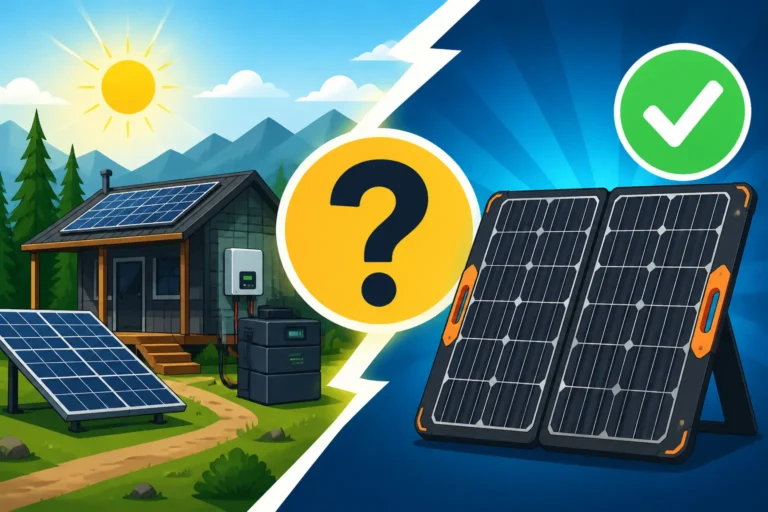
Portable panels come in various forms, from foldable solar suitcases to rollable mats, and they usually connect directly to your charge controller or an all-in-one solar generator. Brands like Jackery, Goal Zero, EcoFlow, and Bluetti offer excellent portable solar panels and accompanying generators that can be easily set up when needed and stowed away when not. The beauty of these panels is their mobility. If your fixed panels are partially shaded by a tree branch or a nearby building in the afternoon, you can simply pull out your portable array, position it in full sun, and continue charging your batteries. This is particularly useful for weekend campers, those with small cabins, or even full-time RVers who might park in shaded spots. They can be invaluable for topping off your battery bank or providing power for specific tasks like charging power tools at a remote workshop. While they require manual setup and aren't a "set and forget" solution, they offer an incredible amount of flexibility and can significantly boost your power output without permanently occupying precious roof space. To find the best options for your needs, consider checking out our guide to the Best Portable Solar Panels and explore options from the Best Solar Generator Brands which often include excellent portable panel bundles.
Practical Considerations When Choosing Panels
Beyond just panel type and brand, a successful off-grid solar setup in limited spaces requires careful consideration of how everything fits together, both physically and electrically.
System Voltage and Wiring
Understanding system voltage and how your panels will be wired is absolutely critical, especially in a compact setup. Off-grid systems typically run on 12V, 24V, or 48V. Your battery bank's voltage will largely dictate the optimal voltage for your solar array. For smaller systems, like those in vans or small cabins, 12V is common, but 24V or 48V systems become more efficient as your power needs grow, allowing for thinner wires and less power loss over distance.
When you're dealing with multiple small panels, you'll need to decide whether to wire them in series, parallel, or a combination (series-parallel). Wiring panels in series increases the total voltage while keeping the amperage the same. Wiring them in parallel increases the total amperage while keeping the voltage the same. For example, if you have four 12V panels and want to charge a 24V battery bank, you might wire two sets of two panels in series, and then wire those two sets in parallel. This combination allows you to match your battery voltage and maximize charging current. Incorrect wiring can lead to inefficiencies, damage to components, or even safety hazards. For those delving into the intricacies, our guide on How to Wire Solar Panels in Series vs Parallel is an invaluable resource. Understanding your system voltage and how it relates to your panel configuration is a fundamental step in sizing your off-grid system effectively and ensuring all your components, including your charge controller and inverter, are compatible. Check out 12V vs 24V vs 48V: Which to Choose to understand the best voltage for your overall system design.
Mounting and Installation
The physical act of mounting and installing your panels on a limited roof space comes with its own set of challenges and considerations. This isn't just about bolting things down; it's about structural integrity, weatherproofing, and optimizing for solar gain. For rigid panels, you'll typically use Z-brackets or other low-profile mounting feet that elevate the panel slightly off the roof. This gap is crucial for airflow, which helps keep the panels cool and maintains their efficiency. On a vehicle like an RV or van, these mounts need to be extremely secure to withstand highway speeds and vibrations. When learning How to Mount Off-Grid Solar Panels, you’ll quickly realize how critical the right hardware is.
For flexible panels, installation usually involves a strong adhesive directly to the roof. This requires meticulous cleaning and preparation of the roof surface to ensure a long-lasting bond. Special attention must be paid to sealing any cable entry points into the vehicle or structure to prevent water leaks. Running cables safely and neatly, often through conduit, is also vital to protect them from UV degradation, physical damage, and potential hazards. Whether you’re adhering flexible panels to a curved surface or securing rigid panels to a flat roof, careful planning of your cable runs and ensuring waterproof seals are paramount for the longevity and safety of your system. You can get more detailed instructions on How to Install Off-Grid Solar Panels in our dedicated guide.
Budget and Long-Term Value
When evaluating panels for limited roof space, it's easy to get caught up in the initial sticker price, but understanding the budget and long-term value is essential for making a wise investment. While flexible panels might sometimes appear cheaper per watt initially, especially those found on Amazon, their durability can be a point of concern compared to rigid panels. Flexible panels are often exposed directly to the elements without a protective glass layer, making them more susceptible to UV degradation, physical abrasion, and heat build-up, which can shorten their lifespan. You might find yourself replacing them more frequently, impacting your Off-Grid Solar Cost: Complete Breakdown over the years.
Conversely, while high-efficiency rigid monocrystalline panels might have a higher upfront cost per watt, their robust construction, tempered glass, and sturdy frames mean they can withstand harsh weather conditions for decades. This longer lifespan often translates to a lower lifetime cost of ownership. When budgeting, consider not just the cost of the panels themselves, but also the mounting hardware, wiring, and any potential future replacement costs. It's often worthwhile to invest a bit more upfront in higher-quality, more durable panels if your budget allows, especially for fixed installations where replacement is more cumbersome. Think about your usage patterns, the expected lifespan of your system, and the overall Off-Grid Solar Return on Investment before making a final decision.
Panel Comparison for Limited Roof Space
Here's a quick look at how different panel types stack up when roof space is tight:
| Panel Type | Pros | Cons | Best Use Cases |
|---|---|---|---|
| High-Efficiency Rigid Mono | Highest power density (watts/sq ft), excellent durability, long lifespan | Heavier, rigid, requires mounting hardware, less aesthetic integration | Small cabins, sheds, ground mounts, RVs/vans with dedicated flat space, where longevity is a priority |
| Flexible/Semi-Flexible | Lightweight, low profile, conforms to curves, easy installation | Lower efficiency than rigid, potential heat issues, shorter lifespan | Van life, RVs with curved roofs, boats, subtle integration, where weight and aerodynamics are critical |
| Portable Foldable Kits | Highly versatile, can chase sun, no fixed roof space needed, easy setup | Manual setup/stowage, potential theft risk, often supplemental power | Camping, backup power, supplementing fixed arrays, very minimal power needs, short-term applications |
Disclaimer
The information provided in this guide is for general informational purposes only and does not constitute professional advice. Off-grid solar system design and installation can be complex and involve electrical hazards. Always consult with qualified professionals and adhere to local codes and regulations before making any purchasing or installation decisions.