Best Bifacial Panels for Off-Grid
The dream of truly embracing off-grid living often comes with the challenge of maximizing every single ray of sunlight your solar panels can capture. Whether you're powering a cozy cabin in the woods or a remote homestead, dealing with less-than-ideal sun angles, seasonal changes, or even reflective surfaces like snow or light-colored gravel can significantly impact your energy independence. This guide will deep dive into bifacial solar panels, exploring how this innovative technology works, its real-world benefits, and how to choose the best ones for your unique off-grid setup, helping you squeeze every last watt out of the sun.
Understanding Bifacial Solar Panels for Off-Grid Living
Stepping into the world of off-grid solar can feel like a deep dive into complex technology, and bifacial panels are one of those innovations that really stand out. They’re not just a minor improvement; they fundamentally change how we think about harvesting solar energy. It's about looking beyond the obvious and realizing that light hits surfaces in more ways than one.
What Makes Bifacial Panels Different?
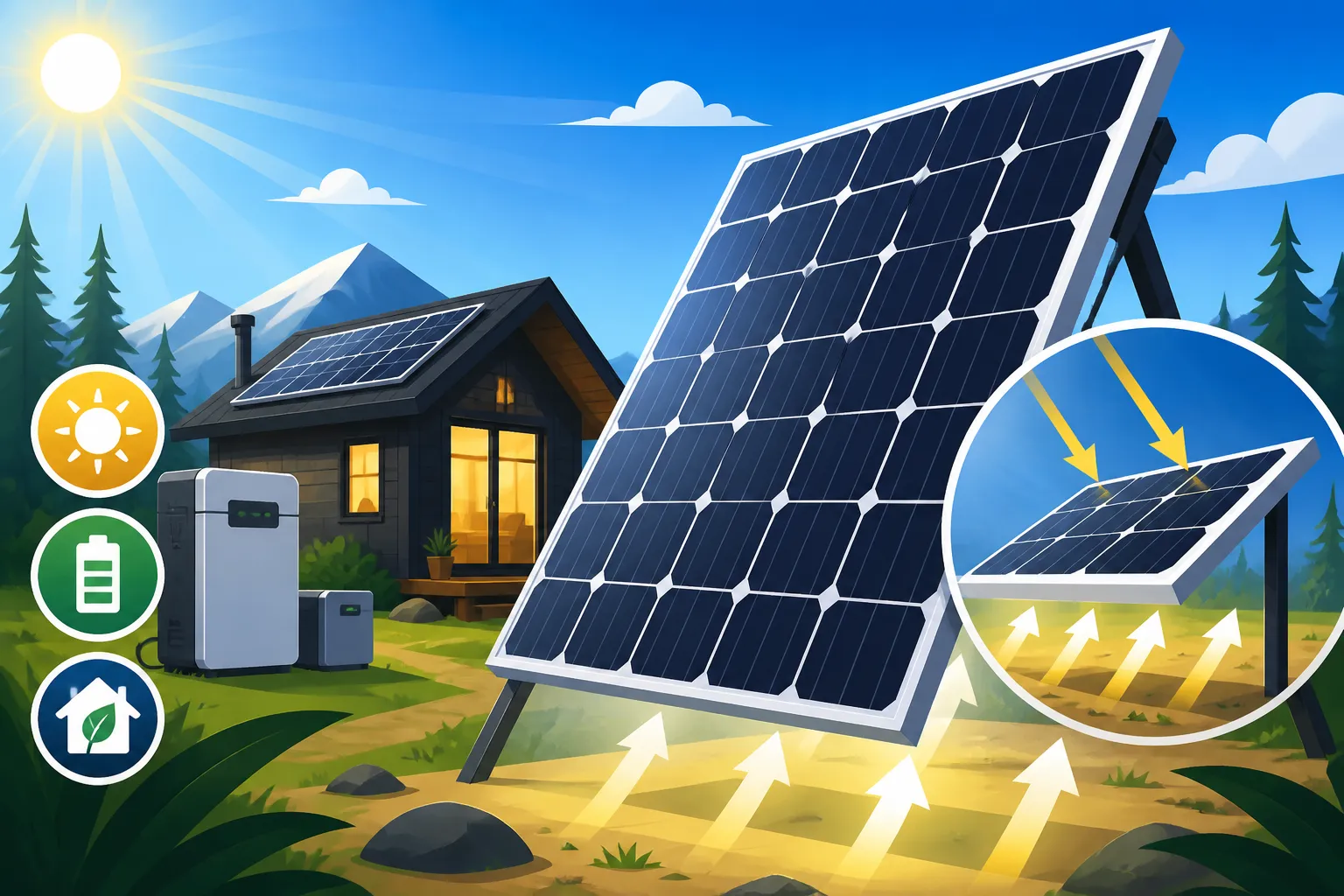
Traditional, or monofacial, solar panels are designed to capture sunlight from their front surface only. They have an opaque backsheet, usually white or black, that simply doesn't contribute to power generation. You mount them, they face the sun, and that's that. Bifacial panels, on the other hand, are engineered with solar cells on both sides of the panel. This means they can convert direct sunlight hitting the front into electricity, just like any other panel, but they can also capture reflected and diffused light that hits their rear side.
Imagine the sun hitting a patch of snow near your cabin or reflecting off a light-colored roof on your RV. A traditional panel would ignore all that reflected light. A bifacial panel, however, is designed to absorb that "extra" light, turning what would normally be wasted energy into usable power for your battery bank. This capability can lead to a significant boost in overall energy production, making your solar array more efficient and productive, which is a game-changer when every watt counts for your off-grid system.
The Science Behind Double-Sided Energy Capture
The magic of bifacial panels isn't just about sticking cells on both sides; it's rooted in the optical phenomenon known as the albedo effect. Albedo refers to the fraction of solar radiation reflected by a surface. Think about how a fresh blanket of snow is blindingly bright – that's high albedo. Grassy fields or dark asphalt have much lower albedo. Bifacial panels capitalize on this by having a transparent backsheet, often made of glass, which allows light to pass through and reach the rear-facing solar cells.
When direct sunlight hits the front, power is generated. But simultaneously, light bounces off the ground, a white roof, or even a nearby wall and hits the back of the panel. The cells on the back absorb this reflected light and generate additional power. The amount of extra power gained depends heavily on the albedo of the surface beneath and around the panels, as well as the panel's height and tilt. For instance, panels mounted higher off the ground, or over highly reflective surfaces, will see greater gains. This dual-sided approach effectively expands the "capture zone" of your solar array, leading to a higher yield compared to a similarly sized monofacial system.
Why Off-Grid Enthusiasts Should Care About Bifacial Technology
For anyone living off the grid, maximizing energy capture is paramount. You don't have the luxury of drawing power from a utility company when your panels aren't producing enough. Every kilowatt-hour you can generate makes your system more reliable and your lifestyle more sustainable. This is where bifacial panels shine, offering a compelling advantage over their traditional counterparts.
One of the most immediate benefits is the potential for increased energy yield without increasing your physical footprint. If you have limited space on your cabin roof or RV, a bifacial panel allows you to generate more power from the same square footage. This means you might need fewer panels overall to meet your energy demands, which can be a huge factor when considering How Many Solar Panels for Off-Grid Living or how to design an efficient system for a small dwelling. Moreover, in areas with significant ground reflection—like snow-covered landscapes in winter or sandy, desert environments—bifacial panels can significantly outperform, extending your usable solar hours and contributing to greater overall system autonomy. They offer a tangible pathway to a more robust and dependable off-grid power supply.
Key Benefits of Using Bifacial Panels in Off-Grid Systems
Switching to bifacial solar panels isn't just a trend; it's a strategic move for off-grid power generation, bringing several advantages that directly address the unique needs and challenges of living independently from the grid. These benefits can translate into a more resilient, cost-effective, and powerful solar setup.
Maximized Energy Harvest in Diverse Conditions
One of the most significant advantages of bifacial solar panels is their ability to capture light from both sides, leading to a higher total energy yield. This isn't just about sunny, perfect days. Think about those overcast mornings or late afternoons when the sun is low on the horizon. While direct sunlight might be diminished, ambient light and reflections can still be substantial. Bifacial panels excel here, drawing in that diffused light that a traditional panel would miss.
Consider a scenario in a northern climate where winter means shorter days and lower sun angles. When snow covers the ground, it acts like a giant reflector, bouncing sunlight back up towards your panels. A monofacial panel would lose much of this potential, but a bifacial panel mounted correctly can absorb that reflected light, giving you a crucial boost in production when you need it most. The same applies to areas with light-colored gravel, concrete, or even bodies of water that can reflect significant amounts of light. This enhanced performance in varied conditions means your battery bank gets topped up more consistently, improving your overall energy security, especially when you're trying to figure out How to Account for Cloudy Days in your system design.
Space Efficiency and System Optimization
For many off-grid homeowners, space is a premium. Whether it's the limited roof area on a tiny home, the precious cargo space on an RV, or the desire to keep your homestead visually unobtrusive, every square foot counts. Bifacial panels offer a way to get more power output from a smaller physical footprint. By generating electricity from both sides, a bifacial panel effectively produces more watts per square meter than a similarly rated monofacial panel.
This increased power density means you might achieve your desired energy output with fewer panels. Fewer panels mean less roof space consumed, less racking material, and a potentially simpler installation, especially if you're tackling the project yourself. For instance, if you're trying to power a remote cabin, and you've determined you need, say, 3,000 watts of solar, you might achieve that with fewer, more powerful bifacial panels compared to standard ones. This optimization is not just about physical space; it also simplifies wiring and component requirements, streamlining your overall Off-Grid Solar System Design Basics and potentially reducing the complexity of your system components.
Enhanced Durability and Longevity
Many bifacial solar panels are constructed with a dual-glass design, meaning they have tempered glass on both the front and back, rather than a glass front and a polymer backsheet. This all-glass construction isn't just for aesthetics or light transmission; it significantly enhances the panel's durability. Glass is far more resistant to microcracks, delamination, and moisture ingress than traditional polymer backsheets, which are common points of failure in standard panels over extended periods in harsh environments.
This robust build means bifacial panels are often more resilient to environmental stressors like high winds, heavy snow loads, and extreme temperature fluctuations, which are common challenges in off-grid locations. The added protection can lead to a longer operational lifespan and slower degradation rates, meaning your panels will continue to perform closer to their rated capacity for more years. While the initial Off-Grid Solar Cost: Complete Breakdown for bifacial panels might be slightly higher due to this premium construction, their extended durability and higher performance over time can lead to a better return on investment and fewer headaches in the long run, minimizing the need for frequent Off-Grid Solar Maintenance Costs.
Important Considerations When Choosing Bifacial Panels for Off-Grid
While the allure of bifacial panels is strong, especially for off-gridders seeking maximum efficiency, it's crucial to understand that they aren't a plug-and-play solution identical to traditional panels. There are specific factors you need to consider to ensure you're getting the most out of this technology in your particular off-grid setup.
Mounting and Installation Requirements
The biggest difference when installing bifacial panels, compared to their monofacial cousins, is the absolute necessity of allowing light to reach the backside. This means you can't just lay them flat on a roof or against a wall. They require specific mounting configurations that create adequate clearance between the panel's rear surface and whatever is beneath it. We're generally talking about a minimum of 12-18 inches of air gap to allow for optimal light reflection and airflow.
This usually translates to ground-mount systems or elevated roof mounts. For instance, a ground-mount system with a reflective surface beneath, like white gravel or even a light-colored tarp, would maximize the bifacial gain. If you're planning a roof installation, you'll need a racking system that elevates the panels higher than standard flush mounts. This elevation might have aesthetic implications or even structural considerations for your building, especially if you're putting solar on a shed or a cabin with older construction. It's a critical aspect to factor into your Off-Grid Solar Installation Guide and budgeting, as specialized racking can add to the overall cost and complexity.
Cost-Benefit Analysis
It’s no secret that cutting-edge technology often comes with a higher price tag. Bifacial panels typically have a higher upfront cost per watt than conventional monofacial panels, largely due to their more complex construction (dual glass, specialized cells). This might make you pause, especially when you're diligently calculating How Much Does an Off-Grid Solar System Cost. However, the cost analysis isn't as simple as comparing the initial sticker price.
The real value of bifacial panels lies in their increased energy yield over their lifespan. If a bifacial panel can produce 10-30% more power than a similarly rated monofacial panel under optimal conditions, you might need fewer panels to meet your energy demands. This can offset some of the higher per-panel cost. Moreover, their enhanced durability and slower degradation rates mean they could potentially last longer and provide consistent output for more years, improving the overall Off-Grid Solar Return on Investment. When you calculate the Off-Grid Solar Cost Per Watt based on actual energy produced over time, rather than just nominal face-plate wattage, bifacial panels often present a compelling long-term value, especially for those committed to reliable, long-term off-grid living.
Performance in Various Off-Grid Environments
The effectiveness of bifacial panels is heavily influenced by their environment. The albedo (reflectivity) of the surface beneath and around them is the primary driver of the "bifacial gain." This means they perform exceptionally well in certain settings but might offer only marginal advantages in others. For example:
- Snowy Regions: Imagine a winter wonderland. Fresh snow can reflect up to 80-90% of sunlight. Panels mounted above this reflective surface will see substantial gains, making bifacial technology a strong contender for Off-Grid Solar Cost in Cold Climates.
- Sandy or Desert Environments: Light-colored sand can also be highly reflective (around 20-40%), providing a good boost to the rear side of bifacial panels.
- White Roofs or Light-Colored Gravel: If your cabin has a white metal roof or you plan to set up ground mounts over light-colored gravel, these surfaces will naturally enhance bifacial performance.
- Darker Surfaces: Conversely, if your panels are mounted over dark asphalt, grass, or dark soil, the bifacial gain will be minimal. In these scenarios, the added cost of bifacial technology might not be justified, and you might find more value in high-efficiency monofacial panels.
Understanding your specific off-grid location's ground cover and potential for reflection is crucial to determining if bifacial panels are the right investment for your energy goals.
Top Bifacial Solar Panels and Brands for Off-Grid Applications
When you're ready to make the leap to bifacial solar for your off-grid sanctuary, knowing where to start looking can feel overwhelming. The market is constantly evolving, but some brands consistently stand out for their quality, performance, and commitment to solar innovation.
Leading Manufacturers and Their Offerings
Many established solar panel manufacturers are now offering robust lines of bifacial modules, often leveraging their expertise in high-efficiency monocrystalline PERC (Passivated Emitter Rear Cell) technology. Companies like LG, Trina Solar, Jinko Solar, and LONGi Solar are prominent players in the bifacial market, known for their high-efficiency panels designed for both utility-scale and residential applications. While some of these might cater more to larger installations, their technology often trickles down to smaller, accessible panels.
For the individual off-grid enthusiast, you might find options from brands like Renogy and similar suppliers that offer complete off-grid kits or individual components suitable for smaller systems. While Renogy is perhaps better known for its comprehensive range of monofacial panels, batteries, and charge controllers for RVs and cabins, some retailers, including large online marketplaces like Amazon, are increasingly carrying a wider variety of specialized panels, including bifacial options from various manufacturers. It's worth researching specific models from these larger brands and then checking availability and pricing through distributors or online. Remember that these larger, often industrial-grade bifacial panels are typically built for high performance and longevity, making them an excellent choice for a permanent off-grid setup.
What to Look for in a Quality Bifacial Panel
Choosing the right bifacial panel goes beyond just finding one that's "two-sided." You need to scrutinize specifications to ensure you're getting a panel that will perform reliably and efficiently in your off-grid system for years to come.
- Efficiency Rating: Look for a high nominal efficiency rating (typically 20% or more for the front side) combined with a good bifaciality factor (how much extra power is generated from the rear). Some panels can achieve up to 30% additional gain from the rear, pushing their effective efficiency much higher.
- Temperature Coefficient: This spec tells you how much power the panel loses for every degree Celsius rise above 25°C. Lower (closer to zero, or more negative) numbers are better, especially in hot climates, as solar panels lose efficiency as they get hotter.
- Durability and Warranty: Since bifacial panels often feature dual-glass construction, they tend to be more durable. Look for panels with strong structural warranties (e.g., 25 years on power output, 10-12 years on materials and workmanship). Companies that stand behind their products give you peace of mind for your significant investment.
- Physical Dimensions and Weight: Bifacial panels can sometimes be slightly heavier and thicker due to their dual-glass design. Ensure these dimensions are compatible with your planned mounting system and the structural capacity of your installation location, whether it's a pole mount for a remote well pump or a ground mount for your main power system.
- Voltage and Amperage: Ensure the panel's electrical characteristics (Voc, Isc, Vmp, Imp) are compatible with your chosen charge controller and system voltage (12V, 24V, or 48V). This is a crucial step when you're learning How to Choose an Off-Grid Solar Panels and matching components.
Sizing Your Bifacial Array for Optimal Performance
Even with the enhanced capabilities of bifacial panels, proper system sizing remains fundamental to a successful off-grid setup. Start by accurately calculating your daily energy usage, which involves listing all your appliances and their wattage, and estimating how many hours a day each will run. This will give you your total Watt-hours per day. You can find more detail on this in our guide on How to Size an Off-Grid Solar System.
Once you have your daily energy needs, you'll need to consider your "peak sun hours" for your location. This is the average number of hours per day when the sun's intensity is equivalent to 1,000 watts per square meter. Knowing this, you can then calculate the total panel wattage required, factoring in your bifacial gain. For example, if your location gets 5 peak sun hours and your bifacial panels offer a 15% gain, you can adjust your calculations to account for this higher effective output. Remember to also build in enough capacity for several days of autonomy, especially for cloudy periods, as detailed in guides like How to Calculate Days of Autonomy. It’s a bit of math, but it ensures your investment in bifacial technology truly pays off by meeting your energy demands consistently.
| Feature | Monofacial Panels | Bifacial Panels |
|---|---|---|
| Energy Capture | Front side only | Front and rear sides |
| Efficiency | Standard efficiency (e.g., 18-22%) | Higher effective efficiency (up to 30% gain) |
| Backsheet | Opaque polymer backsheet | Transparent glass backsheet |
| Durability | Good, but polymer can degrade | Excellent (often dual-glass) |
| Weight | Lighter | Slightly heavier |
| Cost | Lower initial cost per watt | Higher initial cost per watt |
| Mounting | Flexible, including flush mounts | Requires clearance for rear-side light |
| Best Use | Limited reflection scenarios, budget-conscious | High reflection areas, maximum yield needed, space-constrained |
Disclaimer
The information provided in this guide is intended for general informational purposes only. While we strive to offer accurate and up-to-date content, off-grid solar system design and installation can be complex and may require professional expertise. Always consult with qualified solar professionals and adhere to local codes, regulations, and safety standards when planning or installing any solar power system. Off-Grid Solar Lifestyle is not responsible for any actions taken based on the information presented herein.