Best Solar Generator for a Cabin
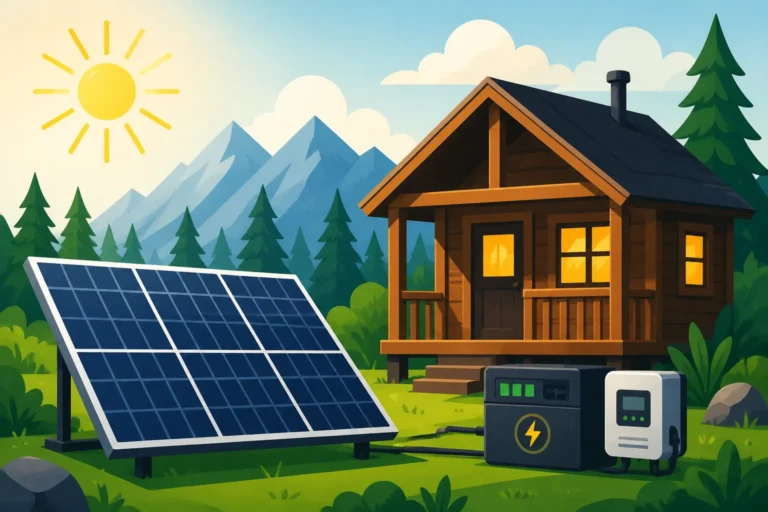
Finding reliable power for your cabin, especially one tucked away from the grid, can feel like a constant battle. You're tired of the incessant drone of a gas generator, the lugging of heavy fuel cans, and the nagging worry about running out of power just when you need it most. This comprehensive guide will walk you through everything you need to know about choosing the best solar generator to power your cabin, bringing peace, quiet, and dependable electricity to your retreat.
Why a Solar Generator is Perfect for Your Cabin
When you envision a cabin, you probably think of tranquility, the sounds of nature, and escaping the hustle and bustle. A noisy, fume-spewing gas generator often shatters that idyllic picture. Solar generators offer a compelling alternative, blending seamlessly into the peaceful environment you've worked so hard to create.
Ditching the Noise and Fumes of Gas Generators
Let's be honest, the roar of a traditional gasoline or diesel generator can really spoil the serene atmosphere of a cabin. Imagine waking up to birdsong instead of an engine sputtering to life, or enjoying a quiet evening without having to shout over mechanical noise. Solar generators operate silently. They convert sunlight into electricity and store it in batteries, producing no fumes, no carbon monoxide, and no mechanical noise during operation. This is not just about comfort; it's about safety too. You can operate a solar generator indoors (with proper ventilation for the inverter, if it runs hot) without the fear of exhaust gases, a major advantage over combustible fuel alternatives.
The Simplicity of Plug-and-Play Power
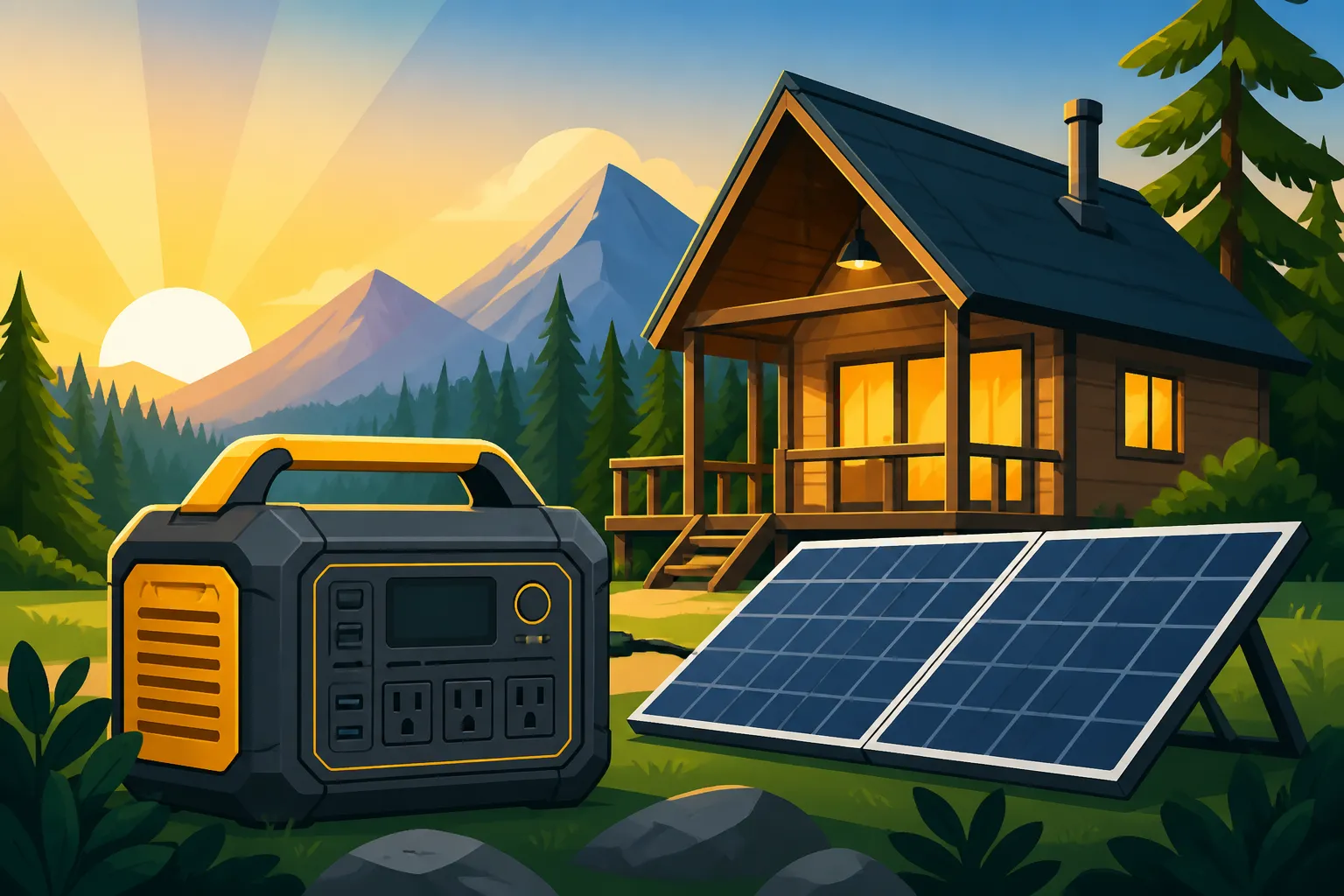
One of the biggest appeals of solar generators for cabin owners is their sheer simplicity. Unlike a complex, custom-built Off-Grid Solar Installation Guide that involves multiple components, wiring, and careful integration, a solar generator is essentially an all-in-one unit. It typically combines solar charge controllers, an inverter, and a battery bank into a single, portable box. You just plug in your solar panels, plug in your appliances, and you're good to go. This "plug-and-play" nature drastically reduces the learning curve and installation headaches, making it an ideal choice for those who want power without becoming an electrical engineer overnight. For anyone looking at Best Off-Grid Solar Kits for Beginners, solar generators are a fantastic entry point.
Scaling Power for Seasonal or Full-Time Use
Cabins come in all shapes and sizes, and so do their power needs. Some are weekend getaways, used only seasonally, while others are full-time residences. Solar generators are incredibly versatile, offering solutions for both. For a small hunting cabin used a few weekends a year, a smaller unit might be perfectly adequate to run some lights, charge phones, and power a small radio. For a larger cabin with more significant energy demands, modern solar generators are often modular and expandable. This means you can start with a base unit and add extra battery packs or additional solar panels as your needs grow, or as you discover exactly How Many Watt-Hours You Use Per Day. This flexibility makes them a wise investment, allowing you to gradually build up your power independence without having to overhaul your entire system.
Key Factors to Consider When Choosing for a Cabin
Choosing the right solar generator for your cabin isn't a one-size-fits-all decision. It requires a bit of homework to match the unit's capabilities with your actual needs. Thinking through these factors will help you narrow down the best choice.
Capacity Needs: Watt-Hours and Wattage Output
This is arguably the most critical aspect. You need to understand both your cabin's continuous power draw and its total daily energy consumption.
- Watt-Hours (Wh) / Kilowatt-Hours (kWh): This tells you how much energy the generator can store in its battery. To figure this out, you'll need to conduct a How to Calculate Daily Energy Usage for your cabin. List all the devices you plan to run, their wattage, and for how long each day. For example, if you want to run a mini-fridge (60W) for 8 hours, some LED lights (20W total) for 5 hours, and charge a laptop (45W) for 2 hours, your daily need would be:
- Fridge: 60W * 8h = 480 Wh
- Lights: 20W * 5h = 100 Wh
- Laptop: 45W * 2h = 90 Wh
- Total: 670 Wh
Aim for a solar generator with a battery capacity significantly higher than your daily needs, ideally 1.5 to 2 times, especially if you anticipate cloudy days. A common frustration is underestimating needs, leading to frequent battery depletion.
- Wattage Output (W): This refers to how much power the inverter can supply at any given moment. Check the starting (surge) wattage of any high-draw appliances like microwaves, power tools, or well pumps. For instance, a coffee maker might run at 1000W, but a well pump might surge to 2000W or more for a few seconds when it starts up. Your solar generator's inverter needs to handle this peak load. Many top brands like EcoFlow and Bluetti offer robust inverters capable of handling significant surge capacities. Remember, if your inverter can only handle 1500W continuous, you can't run a 1500W space heater and a 1000W microwave at the same time.
Rechargeability: Solar Input and AC Charging Speed
Having a large battery is great, but it's useless if you can't recharge it effectively.
- Solar Input Capacity (W): This indicates how quickly the solar generator can recharge from solar panels. Higher wattage input means faster charging, which is crucial for maximizing sunny hours, especially during shorter winter days or if your cabin sees sporadic sun. Look for units that can handle at least 200W-400W of solar input, or even more for larger systems. Many units from Renogy or those found on platforms like Amazon will specify their maximum PV input. Always match your solar panel array's output to the generator's input capacity.
- AC Charging Speed (W): Sometimes, the sun doesn't cooperate, or you need a quick top-off before heading out. The ability to charge rapidly from a standard AC wall outlet (or even a vehicle's 12V port) is a huge convenience. Some modern units can go from 0-80% in under an hour, which can be a lifesaver. This quick charging capability reduces reliance on continuous sunshine, providing a valuable backup option.
Durability and Portability for Cabin Life
Cabin environments can be tough, and portability is often a key consideration.
- Durability: Your solar generator needs to withstand the rigors of cabin life. Look for sturdy construction, good dust and water resistance ratings (IP ratings), and components designed for longevity. If it's going to live outside or in a shed, ensure it can handle temperature fluctuations common in remote settings.
- Portability: While some larger units might be more stationary, many cabin owners appreciate the ability to move their power source around. Perhaps you need power on the porch for an outdoor meal, or out by the workshop for some tools. Consider the weight and whether it has wheels or sturdy handles. Smaller units like the EcoFlow Delta 2 for Off-Grid: Specs and Review or the Bluetti AC200L for Off-Grid: Specs and Review are designed with portability in mind, offering a good balance of power and manageable size.
Expandability and Additional Features
Think about the long game. Will your power needs grow?
- Expandability: For many cabins, initial power needs might be modest, but as you spend more time there, you'll inevitably want to add more appliances or extend your stay. Modular solar generators that allow you to add extra battery packs are a game-changer. This means your initial investment isn't obsolete if you decide to install a Cost to Run A Well Pump on Off-Grid Solar or even a small air conditioner.
- Connectivity and Monitoring: Modern solar generators often come with smart features. Bluetooth or Wi-Fi connectivity allows you to monitor battery status, input/output, and even control settings from your smartphone. This is incredibly useful for remote cabins, letting you check on your power system from afar.
- Output Ports: Ensure the unit has a variety of AC outlets (pure sine wave is essential for sensitive electronics), DC ports (12V car ports, sometimes 12V barrel plugs), and USB-A and USB-C ports for charging all your gadgets.
Top Solar Generators Suited for Cabin Life
With so many options out there, it can feel overwhelming. Let's break down some general categories and popular choices that are well-suited for cabin living. Remember, for a truly comprehensive list, checking out guides like Best Solar Generator Brands is always a good idea.
Mid-Range Options for Lighter Use
For smaller cabins, weekend warriors, or those with modest power needs, a mid-range solar generator offers a fantastic balance of capacity and cost. These units typically range from 1000Wh to 2000Wh in battery capacity and offer continuous output of 1000W to 2000W. They can comfortably run lights, charge devices, power a mini-fridge, and even handle a blender or small microwave for short bursts.
Brands like EcoFlow (e.g., the Delta 2 series) and Bluetti (e.g., the AC200 series) are strong contenders here. They often feature LiFePO4 batteries, which offer excellent longevity and safety compared to older battery chemistries. Many come with fast AC charging and good solar input capabilities, making them versatile. You can find many of these models, along with accompanying solar panels, available for purchase on Amazon.
| Feature | Mid-Range Solar Generator (e.g., EcoFlow Delta 2, Bluetti AC200L) | Heavy-Duty Solar Generator (e.g., EcoFlow Delta Pro, Bluetti EP500) |
|---|---|---|
| Battery Capacity | 1000-2000 Wh | 3600-5000 Wh (often expandable) |
| Continuous Output | 1000-2200 W | 3600-5000 W (often expandable, multi-unit linking for higher) |
| Surge Capacity | 2000-4000 W | 7200-10000 W |
| Solar Input | 400-800 W | 1200-2400 W |
| AC Charging | 1200-1800 W (0-80% in 1-1.5 hours) | 1800-3000 W (0-80% in 1-2 hours, sometimes faster) |
| Weight | 25-60 lbs | 100-170 lbs (often with wheels) |
| Expandability | Some models offer extra battery packs | High expandability with extra batteries, dual unit linking |
| Typical Uses | Lights, phone charging, mini-fridge, small appliances, camping | Whole-cabin backup, running AC/well pump, heavy tools, full-time living |
Heavy-Duty Solutions for Comprehensive Power
If your cabin is more of a permanent residence, or if you have higher power demands like running a well pump, refrigerator, freezer, or even a mini-split air conditioner, you'll need a heavy-duty solar generator. These units boast significantly larger battery capacities, often 3600Wh and up, with robust inverters capable of 3000W to 5000W continuous output, and even higher surge ratings.
The EcoFlow Delta Pro for Off-Grid: Specs and Review and the Bluetti EP500 series are excellent examples of this class. What sets them apart is often their expandability, allowing you to link multiple units together or add external battery packs to achieve truly impressive capacities, rivaling fixed Cost of an Off-Grid Solar Battery Bank systems. These often include more advanced power management features and can integrate seamlessly with larger solar arrays. While these units are heavier, many include built-in wheels for easier maneuvering around the property.
Understanding All-in-One vs. Modular Systems
When looking at solar generators for your cabin, you'll notice two main approaches:
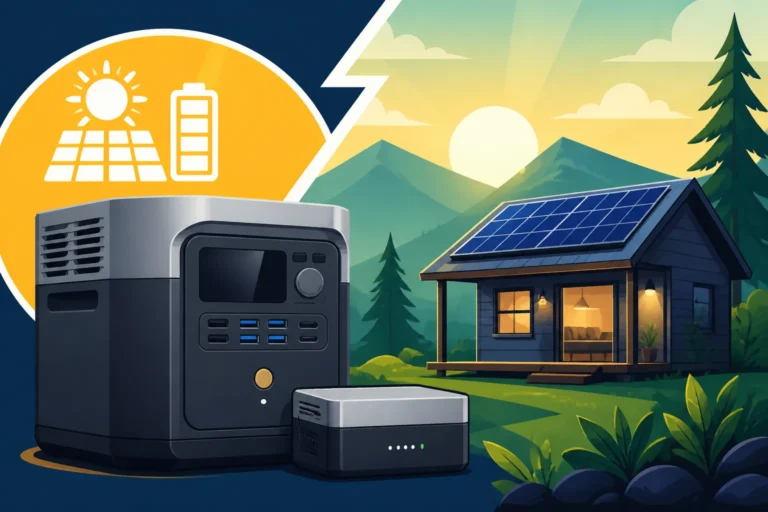
- All-in-One Units: These are completely self-contained, with everything (battery, inverter, charge controller) in one box. They are incredibly convenient and perfect for quick setup. Most mid-range solar generators fall into this category. The benefit is simplicity; the drawback is that if one component fails, the whole unit might need repair.
- Modular Systems (often with "Power Hubs"): Some high-end solar generators are part of a modular ecosystem. Think of systems like the EcoFlow Power Kits or similar offerings from other Best Off-Grid Solar Brands. These often involve a central "Power Hub" or "Smart Home Panel" that integrates with separate battery modules, dedicated solar charge controllers, and inverters. While more complex to set up than a single portable generator, they offer unparalleled flexibility, scalability, and integration options, including the ability to connect directly to your cabin's electrical panel (with professional installation). This is a step closer to a full-blown Off-Grid Solar System Sizing Guide.
For cabin owners who envision gradually increasing their energy independence, a modular system can be a smart long-term investment, allowing you to expand your system rather than replace it as your power needs evolve.
Setting Up and Maximizing Your Cabin Solar Generator
Once you've chosen your solar generator, setting it up correctly and maintaining it are key to ensuring it performs reliably for years to come.
Optimal Placement and Panel Integration
Where you place your solar generator and how you integrate your solar panels can significantly impact its efficiency and lifespan.
- Generator Placement:
- Indoors (Protected): Ideally, keep the solar generator indoors, or at least in a protected shed or lean-to that shields it from direct rain, snow, and extreme temperatures. While many units are somewhat rugged, prolonged exposure to harsh weather can degrade performance and shorten lifespan.
- Ventilation: Even though they don't produce fumes, inverters generate heat. Ensure there's adequate airflow around the unit to prevent overheating, especially during periods of high load or charging.
- Proximity to Loads: Place it as close as reasonably possible to your primary loads (e.g., the cabin's main power strip or appliances) to minimize voltage drop over long extension cords.
- Solar Panel Integration:
- South-Facing (Northern Hemisphere): For maximum sun exposure, your solar panels should ideally face true south (if you're in the Northern Hemisphere). Even a slight deviation can reduce efficiency.
- Unshaded Location: Absolutely critical is a spot free from shade throughout the day. Even partial shading on one panel can significantly reduce the output of an entire string of panels.
- Adjustable Tilt: If your cabin is used year-round, consider adjustable tilt mounts for your panels. This allows you to optimize the angle for seasonal changes in the sun's path – steeper in winter when the sun is lower, shallower in summer when it's higher. For a more detailed look at panels, consider checking out guides on Best Off-Grid Solar Panels.
- Secure Mounting: Whether you choose ground mounts or roof mounts, ensure your panels are securely fastened to withstand wind, snow, and other environmental factors common in remote cabin locations.
Essential Maintenance Tips for Longevity
Taking a little time for maintenance can drastically extend the life of your solar generator system and ensure it's always ready when you need it.
- Keep Panels Clean: Dust, pollen, bird droppings, and leaves can accumulate on your solar panels, reducing their efficiency. Periodically clean them with water and a soft brush or cloth. For a deeper dive into panel care, read about How to Clean Off-Grid Solar Panels.
- Monitor Battery Health: While most modern solar generators use LiFePO4 batteries that require less maintenance than lead-acid, it's still good practice to periodically check the battery status via the unit's display or companion app. Avoid consistently draining the battery to 0% and try to keep it charged, especially if you're leaving the cabin for extended periods. Most systems thrive when kept between 20-80% charge for daily use. If you want to learn more about the batteries themselves, check out LiFePO4 vs Lead-Acid Battery Cost.
- Check Connections: Periodically inspect all cable connections – from the solar panels to the generator, and from the generator to your appliances. Ensure they are clean, tight, and free from corrosion or damage. Loose connections can lead to power loss and even be a fire hazard.
- Software Updates: Many smart solar generators receive firmware updates that can improve performance, add features, or fix bugs. Keep your unit's software up to date through its app.
- Seasonal Checks: Before winter, ensure your system is ready for colder temperatures and potentially less sunlight. Clear any debris that might accumulate due to falling leaves. Before summer, ensure nothing is obstructing ventilation for optimal cooling. This proactive approach ensures your system remains reliable, even in challenging conditions.
By considering these factors and implementing these maintenance practices, your solar generator will be a dependable source of power for your cabin for many years, allowing you to fully enjoy the peace and independence of off-grid living without the old frustrations.
Disclaimer
The information provided in this guide is for general informational purposes only and does not constitute professional electrical or solar engineering advice. Always consult with a qualified electrician or solar professional before installing or modifying any electrical system to ensure safety and compliance with local codes and regulations. Off-grid solar systems involve high voltages and specific safety procedures that must be followed.