Anker SOLIX vs EcoFlow Delta Pro
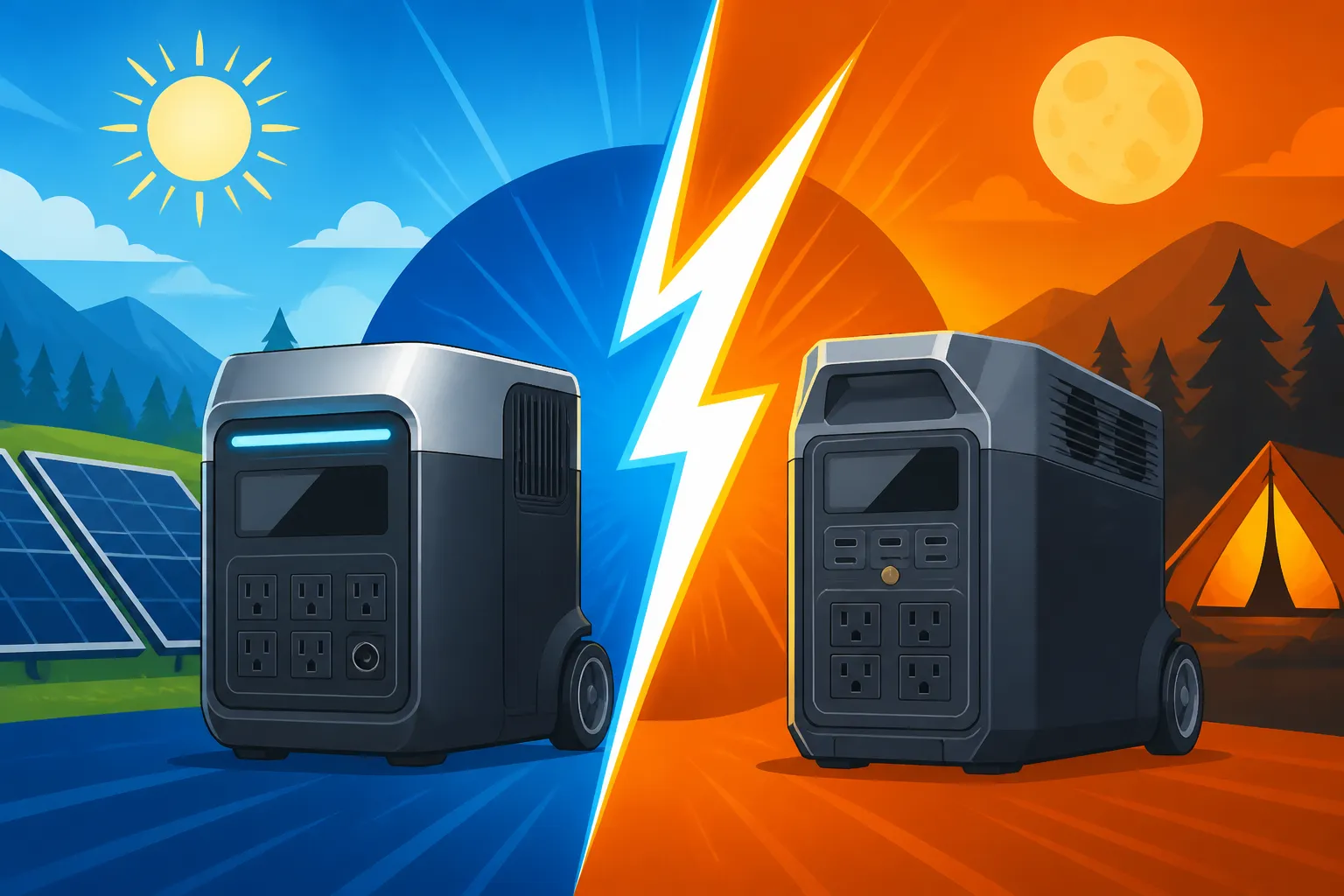
Navigating the world of off-grid living or simply seeking a reliable backup power solution for your homestead can be incredibly daunting. You want to make sure your lights stay on, your fridge keeps humming, and your essential tools or medical devices are always powered, no matter what Mother Nature throws your way. The market is flooded with options, and trying to decipher which portable power station truly meets your demanding off-grid needs can feel like a full-time job. This guide is here to cut through the noise, offering a direct, no-nonsense comparison between two heavy hitters in the portable solar generator arena: the Anker SOLIX F3800 and the EcoFlow Delta Pro.
Understanding Portable Power Stations for Off-Grid Use
When you’re truly living off the grid, or even just embracing van life, RV adventures, or needing robust emergency backup, your power source is your lifeline. Gone are the days when a noisy, gas-guzzling generator was your only real option. Modern portable power stations, often called solar generators, have revolutionized how we access and manage electricity in remote settings. They’re not just fancy battery packs; they’re sophisticated systems designed to harvest solar energy, store it, and deliver it cleanly and efficiently.
Why Solar Generators Are Game-Changers
The appeal of solar generators for off-grid living is undeniable. First and foremost, they operate silently. Imagine waking up in your cabin or RV to the gentle sounds of nature, not the roar of a gasoline engine. This alone is a huge quality-of-life improvement. Beyond the quiet operation, they’re clean. No exhaust fumes, no fossil fuels, just pure, renewable energy. This is not only better for the environment but also eliminates the hassle and cost of constantly buying and storing fuel. They are also remarkably user-friendly; many models are plug-and-play, making them accessible even for those who aren’t electrical engineers. You can explore how to install an off-grid solar system with these types of components.
These systems typically integrate a high-capacity battery, an inverter to convert the stored DC power to usable AC household current, and a charge controller to manage incoming solar power. The best ones offer multiple charging inputs, from wall outlets to solar panels and even car charging, providing incredible versatility. This adaptability is key when you're far from traditional infrastructure, ensuring you always have options to replenish your power supply.
Key Metrics to Consider for Off-Grid Living
When evaluating any portable power station for serious off-grid use, you need to look beyond the flashy marketing. Several core metrics truly dictate a unit’s suitability:
- Capacity (Watt-hours or Kilowatt-hours): This tells you how much energy the battery can store. A higher number means you can power your devices for longer. For substantial off-grid needs, you're looking for units in the multi-kilowatt-hour range. Understanding how many kWh does an off-grid home need is crucial for proper sizing.
- Output Power (Watts): This indicates how much power the inverter can deliver continuously. High-wattage appliances like microwaves, well pumps, or air conditioners demand significant output. The "surge" rating is also important for appliances with high startup loads.
- Charging Options and Speed: How fast can you recharge the unit? Can it accept high wattage solar input? Does it have various input methods like AC wall, car, or EV charging? The more options, and the faster the recharge, the better for consistent off-grid power.
- Expandability: Can you add extra batteries to increase capacity? For a growing off-grid setup, this modularity is incredibly valuable, allowing you to scale your system as your needs evolve.
- Portability: While these are "portable," they can be quite heavy. Consider how easily you can move them, especially if you're taking them on the road in an RV or moving them between a workshop and a cabin.
By focusing on these practical aspects, you can determine if a power station genuinely meets the rigorous demands of living independent of the grid.
Deep Dive into the Anker SOLIX F3800
Anker, a brand long known for its smaller portable chargers and power banks, has made a significant leap into the heavy-duty solar generator market with its SOLIX F3800. This unit is clearly designed with serious power users and off-grid enthusiasts in mind, offering some compelling features that set it apart.
Power Output and Capacity
The Anker SOLIX F3800 comes with a substantial base capacity of **3.84 kilowatt-hours (kWh)**. This alone is enough to run many essential appliances for a day or two, depending on your usage habits. But what truly makes the F3800 stand out is its inverter. It boasts an incredible **6000W of continuous AC output** and an even more impressive 12,000W surge capability. To put that in perspective, a typical residential electric clothes dryer might draw 4000-5000W, and a well pump often has a starting surge of 2000-4000W. This means the F3800 can handle almost any household appliance you throw at it, even heavy-duty tools in a remote workshop or a power-hungry air conditioner in a large RV. It truly redefines expectations for portable power output, offering a robust solution for those asking How much solar to run an air conditioner or How much solar to run a well pump.
For those looking for even more juice, the F3800 is expandable. You can stack up to six additional batteries, pushing the total capacity to a staggering 26.88 kWh. This level of modularity allows you to effectively scale your system from a potent portable unit to a formidable whole-home backup solution for extended outages or long-term off-grid living.
Charging Flexibility and Speed
One of the Anker SOLIX F3800’s most innovative features is its **EV charging compatibility**. Yes, you read that right. You can plug this portable power station directly into an EV charging station, drawing up to 6000W to fully recharge the unit in about 1.7 hours. This is a game-changer for people on the move, especially those with electric vehicles, offering an unprecedented charging speed and convenience for an off-grid device. Imagine stopping at a public EV charger during a long road trip and recharging your entire off-grid system in less than two hours.
Beyond EV charging, it offers rapid AC wall charging at up to 2900W, allowing a full recharge in roughly 2.5 hours. For solar enthusiasts, it can accept up to 2400W of solar input via two MPPT charge controllers, which means you can connect a significant number of solar panels from brands like Renogy or others available on Amazon to quickly replenish its energy stores on sunny days. This blend of ultra-fast EV charging, powerful AC input, and substantial solar capacity makes the F3800 incredibly versatile for various charging scenarios in an off-grid environment.
Unique Features and Design
Anker designed the SOLIX F3800 with practical use in mind. It features a unique **RV-ready 30A TT-30 outlet**, a dedicated port that allows you to directly plug in most RVs without needing adapters or complicated wiring. This is a massive convenience for the RV community, simplifying their power setup significantly. The unit also includes standard 20A AC outlets and a 240V split-phase outlet, making it versatile for various appliances and home applications.
Its robust, wheeled design, complete with an extendable handle, makes it surprisingly manageable despite its weight (around 130 lbs for the base unit). This focus on "grab-and-go" portability for such a powerful unit is a clear differentiator. The stackable battery design for expansion is also quite clever, allowing for a neat, compact system when fully scaled up.
Exploring the EcoFlow Delta Pro
EcoFlow has been a pioneer and a dominant force in the high-capacity portable power station market for years, and the Delta Pro is arguably their flagship product. It’s renowned for its robust power, extensive ecosystem, and innovative integration capabilities, making it a favorite among full-time off-gridders and emergency preparedness enthusiasts.
Power Output and Capacity
The EcoFlow Delta Pro starts with a substantial **3.6 kilowatt-hour (kWh)** capacity. While slightly less than the Anker F3800’s base unit, it’s still a significant amount of stored energy, capable of powering a wide range of devices and appliances for extended periods. Its continuous AC output is rated at **3600W**, with a surge capability of 7200W. This is more than enough to handle most household appliances, including refrigerators, power tools, and even some smaller air conditioning units.
Where the Delta Pro really shines is its X-Boost technology. This proprietary feature allows the unit to power devices requiring up to 4500W by intelligently lowering the voltage and current, effectively "boosting" its output capacity for short durations. While not true 4500W continuous output, it allows you to run more demanding appliances that might otherwise trip a lower-rated inverter. Similar to the F3800, the Delta Pro is highly expandable. You can add up to two Delta Pro Smart Extra Batteries, increasing the total capacity to 10.8 kWh. For even larger setups, two Delta Pro units can be connected via a Smart Home Panel, effectively doubling both output and capacity to a massive 7200W and 7.2 kWh, with the potential for more expansion through additional extra batteries. This modularity is a huge plus for those needing to design an expandable system.
Charging Versatility
EcoFlow has always prided itself on fast and flexible charging, and the Delta Pro is no exception. It features **X-Stream AC charging**, which can deliver up to 1800W from a standard wall outlet, recharging the unit from 0-80% in about 1.8 hours and a full charge in 2.7 hours. This is incredibly fast for a battery of its size.
For solar charging, the Delta Pro can accept a maximum of 1600W of solar input via two MPPT inputs. This is a solid solar charging rate, though a bit less than the Anker F3800. It also supports multi-charging, meaning you can combine AC and solar input simultaneously to achieve even faster recharge times, up to 3000W combined input (though not simultaneously with EV charging). Like the F3800, it also offers car charging. The EcoFlow ecosystem also includes a Smart Home Panel and a Smart Generator, which can automatically kick in to charge the Delta Pro during extended outages, adding another layer of reliability for long-term off-grid scenarios or when dealing with cloudy days.
Modular Design and Ecosystem
The EcoFlow Delta Pro is more than just a power station; it’s the heart of a comprehensive power ecosystem. Its ability to integrate seamlessly with the **EcoFlow Smart Home Panel** is a major selling point. This panel allows you to connect two Delta Pro units to your home’s electrical system, providing whole-home backup for up to 10 circuits, complete with automatic transfer switch capabilities. This makes it an ideal solution for those looking to transition to off-grid independence or secure robust emergency power for their entire residence. You can learn more about how to connect batteries, inverter, and panels in a comprehensive system.
Beyond the Smart Home Panel, EcoFlow offers a range of accessories, including extra batteries, a dedicated Smart Generator (which runs on gasoline or propane and integrates perfectly with the Delta Pro for automatic charging), and various solar panels. This extensive and well-integrated ecosystem provides users with incredible flexibility to customize and scale their power solutions. Many users appreciate being able to buy components from a single trusted brand, ensuring compatibility and ease of use.
Head-to-Head Comparison: Anker SOLIX F3800 vs. EcoFlow Delta Pro
Now, let’s put these two titans side-by-side to highlight their strengths and weaknesses in various off-grid scenarios. Choosing between them often comes down to specific needs and priorities.
Capacity and Continuous Power
On paper, the Anker SOLIX F3800 boasts a higher base capacity at 3.84 kWh compared to the EcoFlow Delta Pro’s 3.6 kWh. This difference is minor but notable. However, the biggest differentiator here is continuous AC output. The Anker F3800’s **6000W continuous output** is significantly higher than the Delta Pro’s 3600W (or 4500W with X-Boost). This means the F3800 can comfortably run more demanding appliances, or multiple appliances simultaneously, without concern for overloading, making it potentially better for full-size home appliances or power tools. The Delta Pro’s X-Boost is clever, but it’s a compromise that lowers voltage, which might not be ideal for all electronics, though it works fine for resistive loads like heaters.
When it comes to expandability, the Anker SOLIX F3800 can reach a staggering 26.88 kWh, while the EcoFlow Delta Pro's maximum capacity via extra batteries is 10.8 kWh (though two Delta Pros with a Smart Home Panel can offer 7.2 kWh of base capacity, expandable to 21.6 kWh with extra batteries for both units). So, Anker has the edge in raw, single-unit expandable capacity.
Charging Speed and Options
This is where the Anker F3800 brings a truly unique offering to the table: **EV charging**. The ability to recharge at up to 6000W from an electric vehicle charging station in under two hours is revolutionary. This is a huge advantage for anyone with access to EV charging infrastructure or who prioritizes ultra-fast off-grid replenishment on the go. Its AC charging is also very fast at 2900W, and solar input is substantial at 2400W.
The EcoFlow Delta Pro is no slouch either, with its 1800W X-Stream AC charging, offering competitive speeds. Its 1600W solar input is good but falls short of the Anker's 2400W. The Delta Pro's strength lies in its dual-charging capabilities (combining AC and solar) and its integration with the Smart Generator, providing a highly automated and reliable charging solution within its ecosystem. For those building a larger off-grid solar system, the maximum solar input will directly affect how quickly you can replenish your batteries. You can find more information about how to choose an off-grid charge controller, which is integrated into both units.
Portability and Build
Both units are hefty, reflecting their significant internal battery capacity and powerful inverters. The Anker SOLIX F3800 weighs around 130 lbs, while the EcoFlow Delta Pro is about 99 lbs. Both feature integrated wheels and extendable handles for easier transport. The F3800’s slightly larger and heavier build is a trade-off for its higher output and larger base capacity. The Delta Pro feels a bit more compact and lighter, making it marginally easier to move around.
In terms of build quality, both brands offer robust, durable designs. Anker has focused on a very clean, modular stackable design for its expansion batteries, while EcoFlow's Delta Pro system also allows for easy battery additions and integration with its Smart Home Panel.
Value and Ecosystem
When considering value, you need to look beyond the initial purchase price to the long-term cost of expanding and maintaining your system. Both units represent a significant investment. The Anker F3800 often commands a slightly higher price point due to its higher output and unique EV charging feature. However, its expansive ecosystem is still evolving.
The EcoFlow Delta Pro benefits from a more mature and comprehensive ecosystem. The availability of the Smart Home Panel, the Smart Generator, and a wide array of accessories offers unparalleled integration for whole-home backup and automated off-grid power management. For someone looking to build a truly integrated and seamless off-grid experience, the EcoFlow ecosystem might offer greater peace of mind and flexibility. You might find great deals on components or even full kits for either of these brands through retailers like Amazon, or direct from the manufacturer.
Here's a quick comparison table:
| Feature | Anker SOLIX F3800 | EcoFlow Delta Pro |
|---|---|---|
| Battery Capacity | 3.84 kWh (Base) / 26.88 kWh (Max w/6 extra) | 3.6 kWh (Base) / 10.8 kWh (Max w/2 extra) / 21.6 kWh (Dual Pro) |
| AC Output | 6000W Continuous / 12000W Surge | 3600W Continuous / 7200W Surge (4500W w/ X-Boost) |
| Solar Input | 2400W Max | 1600W Max |
| AC Charging | 2900W Max | 1800W Max (X-Stream) |
| Unique Charging | 6000W EV Charging | Dual Charging (AC+Solar), Smart Generator |
| RV Specific | 30A TT-30 RV Outlet | Requires adapter |
| Home Integration | Growing ecosystem, less developed | Smart Home Panel integration for whole-home backup |
| Weight (Base) | ~130 lbs | ~99 lbs |
Which One is Right for Your Off-Grid Needs
Ultimately, the “better” choice between the Anker SOLIX F3800 and the EcoFlow Delta Pro depends entirely on your specific off-grid requirements, priorities, and budget. Both are top-tier portable power stations, but they cater to slightly different niches.
When to Choose the Anker SOLIX F3800
The Anker SOLIX F3800 is a fantastic choice if you prioritize raw power output and unique charging flexibility. If your off-grid setup or emergency preparedness plan involves running high-draw appliances like heavy-duty power tools, large electric heaters, or even a full-sized electric oven (briefly), the **6000W continuous output** is a significant advantage. It allows for fewer compromises on the types of appliances you can use.
Furthermore, if you own an electric vehicle or have easy access to EV charging stations, the 6000W EV charging capability is a standout feature. This allows for incredibly fast recharging, minimizing downtime and maximizing your power availability. This could be a game-changer for those doing van life, where you might park overnight at a charging station and top off your entire system. The dedicated 30A TT-30 RV outlet also makes it an ideal, plug-and-play solution for most RV owners, simplifying their power connection significantly. If your goal is to power a small workshop off-grid or provide robust, high-wattage backup for critical loads, the F3800’s raw power and quick recharge options make it a very compelling contender. Many look for the best off-grid solar kits for a cabin, and this unit with its expansion batteries could form the core of such a setup.
When to Choose the EcoFlow Delta Pro
The EcoFlow Delta Pro shines brightest for users looking for a more comprehensive, integrated, and expandable ecosystem, particularly if whole-home backup or seamless automation is a priority. If you envision integrating your portable power station with your home’s electrical system, the **EcoFlow Smart Home Panel** is a massive advantage. This allows for automated power transfer during outages and centralized management, effectively turning your Delta Pro units into a sophisticated home battery backup system. This is a key consideration for anyone pondering Is off-grid solar worth the cost for home backup.
Its established and broad ecosystem, including the Smart Generator and various accessories, offers a more complete solution for long-term off-grid living where reliability and automation are paramount. While its continuous output is lower than the F3800, its X-Boost technology still provides flexibility for many surge-heavy appliances, and its dual-charging capabilities offer versatile replenishment options. For those who value a mature, well-supported product line with a focus on smart home integration and consistent performance, the EcoFlow Delta Pro remains a top-tier choice. It’s also often cited as a strong candidate for the best solar generator for a cabin or for emergency preparedness.
Ultimately, both Anker and EcoFlow deliver exceptional products. Your personal power needs, how you intend to charge and use the system, and your preference for ecosystem integration will guide your decision. Take a good hard look at your daily energy usage – How much Watt-hours you use per day – and match it to what these robust systems can provide.
Disclaimer
As with any electrical system, working with solar power and batteries can be complex and potentially dangerous. Always consult with a qualified electrician or solar professional before installing or modifying an off-grid solar system. This information is for educational purposes only and should not be considered professional advice. Prices and specifications mentioned are subject to change by the manufacturers.