AGM vs Gel Batteries for Off-Grid
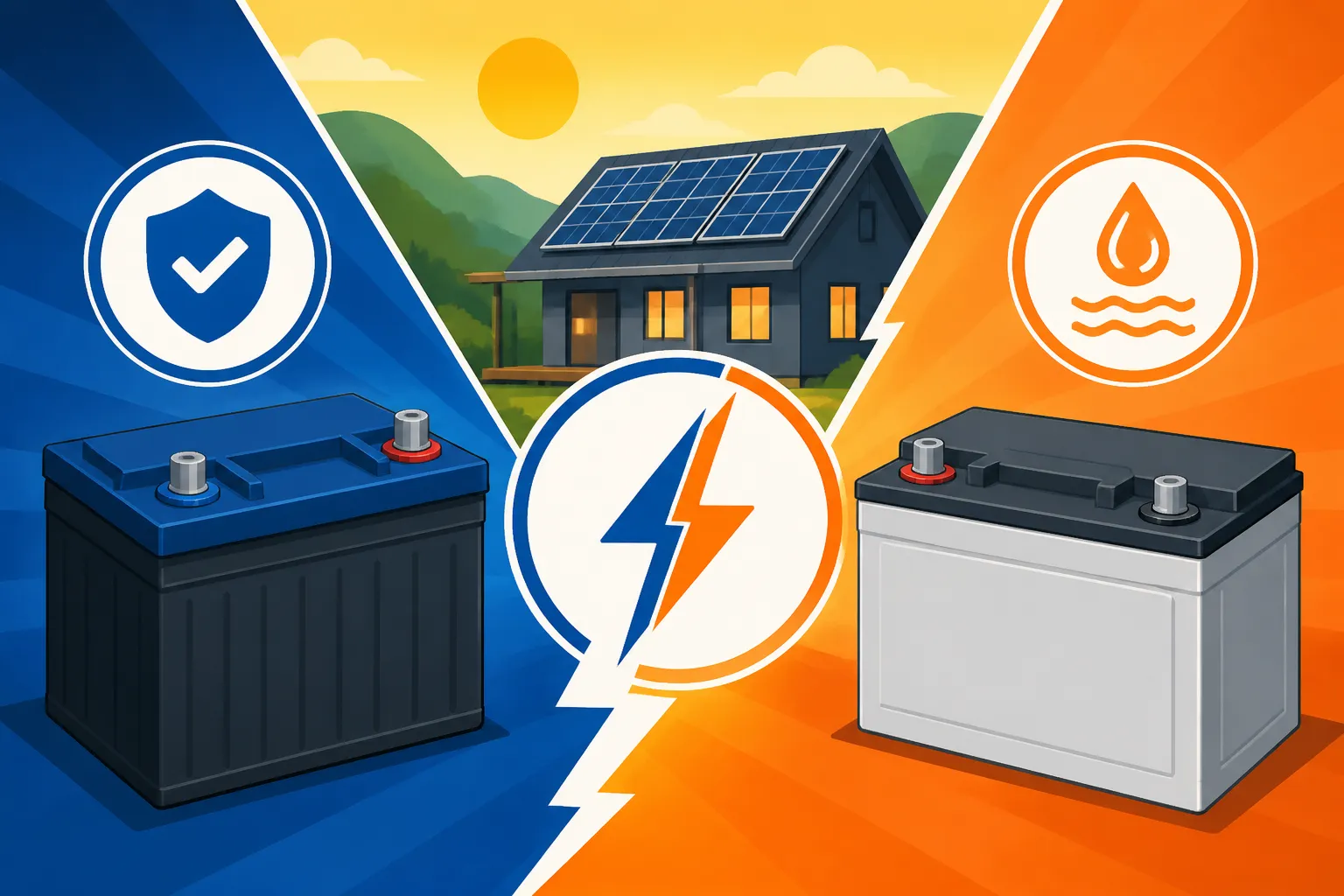
Trying to decide between AGM and Gel batteries for your off-grid solar system can feel like navigating a maze blindfolded. It's a common struggle for folks looking to achieve energy independence, and the wrong choice can lead to frustration, shortened battery life, and unexpected costs down the road. This comprehensive guide is here to shed light on the crucial differences between AGM and Gel battery technologies, helping you understand their pros, cons, and which might be the perfect fit for your specific off-grid lifestyle, whether you're powering a remote cabin or a tiny home on wheels.
Understanding AGM Batteries for Off-Grid Use
Absorbed Glass Mat (AGM) batteries are a popular choice in the off-grid world, and for good reason. They’re a type of Valve Regulated Lead Acid (VRLA) battery, which means they are sealed units that don't require maintenance like adding distilled water. This "set it and forget it" aspect is a huge draw for many who are stepping into off-grid living, but there's a lot more to understand about how they work and where they shine.
The Construction and How AGM Works
At its core, an AGM battery features a fiberglass mat saturated with electrolyte (a mix of sulfuric acid and water) squeezed between lead plates. Instead of the electrolyte freely sloshing around like in a traditional flooded lead-acid battery, it's absorbed and held in place by these extremely fine glass mats. This unique design allows for recombination of oxygen and hydrogen gases within the battery, preventing gas escape and water loss, which is why they're sealed and maintenance-free. It’s a pretty clever piece of engineering that drastically reduces the need for constant monitoring and topping off. Because the electrolyte is absorbed, these batteries are also spill-proof and can be mounted in various orientations without issue, which is a major advantage for mobile applications like RVs or vans.
Key Advantages of AGM Batteries
AGM batteries boast several benefits that make them attractive for many off-grid applications. First off, they generally have a lower self-discharge rate compared to their flooded counterparts, meaning they hold their charge longer when not in use. This can be particularly handy for seasonal use, like a hunting cabin that's only powered up a few times a year, or a vehicle that sits idle for extended periods. Secondly, their internal resistance is quite low, which allows them to deliver high bursts of current when needed – think starting a powerful well pump or running a heavy-duty power tool. This low internal resistance also means they can accept a charge more quickly than traditional flooded batteries, a valuable trait when you're trying to maximize energy harvesting during limited sun hours.
Another huge plus is their durability. The absorbed electrolyte and tightly packed plates make them highly resistant to vibration and shock. This is why you often see them as starting batteries in cars and marine applications, but it also translates well to the bumps and jostles of an RV or trailer rolling down a gravel road. Finally, the sealed nature means no acid fumes, no leaks, and no need for ventilation beyond what's usually required for any battery bank, simplifying installation and improving safety, especially in enclosed spaces. You might find reliable AGM options from reputable brands like Renogy, which often get positive reviews for their durability and performance. Many people also consider the overall cost before committing to a specific technology.
Disadvantages and Limitations of AGMs
While AGMs have a lot going for them, they aren't without their drawbacks. One of the most critical limitations is their sensitivity to overcharging. Pushing too much voltage into an AGM can damage it quickly, leading to premature failure. This means your charge controller settings need to be absolutely dialed in for AGM batteries. They also don't tolerate deep discharges as well as Gel batteries or, more notably, lithium options. Regularly discharging an AGM battery below 50% of its capacity will significantly reduce its overall lifespan, meaning you typically need to size your battery bank larger to ensure you don't overstress them.
Temperature can also be a factor. While they perform reasonably well in a range of temperatures, prolonged exposure to high heat (above 80-90°F or 27-32°C) can accelerate degradation. This is particularly important for those living in warmer climates or where batteries might be stored in a less-than-ideal hot shed or engine compartment. Although they are often seen as "maintenance-free," monitoring your charging parameters and ensuring they stay within their optimal temperature range is crucial for getting the longest life out of them.
Exploring Gel Batteries for Off-Grid Systems
Gel batteries, another type of VRLA battery, offer a different set of characteristics that can be incredibly appealing for certain off-grid setups. While similar in their sealed, maintenance-free nature, the key distinction lies in their electrolyte composition and how they handle deep cycling.
The Unique Chemistry of Gel Batteries
Unlike AGM batteries, where the electrolyte is absorbed into a glass mat, Gel batteries use a thixotropic gel-like substance to suspend the electrolyte. Essentially, silica is added to the sulfuric acid, creating a thick, gelatinous material that prevents the electrolyte from spilling or evaporating. This gelled electrolyte still allows ions to move between the plates, facilitating the chemical reaction that stores and releases energy, but it does so in a more restrained manner. This unique construction is what gives Gel batteries their distinct advantages and disadvantages when compared to other lead-acid chemistries. The absence of free-flowing liquid makes them even more resilient to vibrations and allows for versatile mounting, much like AGMs.
Benefits of Choosing Gel Batteries
Gel batteries truly shine in applications requiring frequent, deep discharges. If your off-grid system involves regularly drawing down a significant portion of your battery capacity, Gel batteries are generally more forgiving than AGMs and will offer a longer cycle life under such demanding conditions. This makes them a strong contender for full-time off-grid homes or cabins where consistent power draw is the norm. Their robust construction also gives them excellent tolerance for extreme temperatures, particularly high heat. The gelled electrolyte helps to dissipate heat more effectively and reduces the risk of thermal runaway, making them a more reliable choice in scorching environments where other battery types might struggle.
Another significant advantage is their exceptionally low self-discharge rate, often even lower than AGMs. This means they can sit for very long periods without losing much charge, making them ideal for systems that experience long periods of inactivity, such as a remote communication outpost or a vacation property. They are also completely sealed and genuinely maintenance-free, with no need for ventilation beyond what's standard for any electrical component, and absolutely no risk of acid spills. This makes maintenance significantly lower over their lifetime.
Drawbacks and Considerations for Gels
Despite their advantages, Gel batteries come with their own set of limitations. Perhaps the most significant is their slower charging rate. The gelled electrolyte doesn't allow for the rapid ion movement needed for fast charging, meaning they can take considerably longer to fully recharge compared to AGMs or flooded batteries. This is a critical factor for off-grid systems where maximizing every ray of sunshine is paramount. If you have a smaller solar array or limited charge time, this slow charging can leave you consistently undercharged.
They are also more sensitive to high charging currents. Attempting to force a charge too quickly can cause the gel to separate from the plates, creating voids that reduce capacity and permanently damage the battery. This means the charge controller settings for Gel batteries are even more critical and often require a lower maximum charge current than AGMs. Furthermore, Gel batteries typically have a higher initial cost than AGMs, which can be a barrier for those on a tight budget trying to understand the cost for their setup. Their peak current delivery is also lower, meaning they might struggle with sudden, high-power demands from appliances with large surge requirements, like certain well pumps or power tools.
Head-to-Head Comparison: AGM vs Gel for Off-Grid Solar
When you lay out the facts, both AGM and Gel batteries present compelling cases for off-grid power storage. However, their nuanced differences mean one might be a significantly better fit for your specific energy needs and environmental conditions than the other. It’s not just about what they can do, but how well they perform in real-world scenarios.
Performance in Different Climates and Discharge Rates
The environment and how you use your power significantly impact battery performance. In colder climates, both AGM and Gel batteries fare better than traditional flooded batteries because their sealed nature protects the electrolyte. However, Gel batteries tend to have a slight edge in extreme heat, as the gelled electrolyte is less prone to evaporation and thermal runaway compared to the absorbed mat in an AGM. If your battery bank will be living in a hot shed in Arizona, a Gel battery might offer a longer, more stable lifespan. Conversely, if your system is exposed to freezing temperatures, both types will experience a temporary reduction in capacity, but their sealed design protects them from freezing solid and cracking, a risk with flooded batteries.
When it comes to discharge rates, AGMs typically handle higher current draws better. Their lower internal resistance allows for quicker energy delivery, making them suitable for systems with occasional high-surge loads. If you need to power a microwave, a coffee maker, or larger power tools intermittently, an AGM might be more responsive. Gel batteries, on the other hand, prefer slower, steadier discharge rates. They are built for consistent, deep cycling over extended periods. Trying to pull a lot of amps quickly from a Gel battery can sometimes lead to what's called "voltage depression" where the voltage drops significantly under load, and it takes longer for them to recover. This is a key differentiator to consider when you're figuring out How Many Batteries for an Off-Grid System you might need.
Cost, Lifespan, and Maintenance Realities
The financial aspect is always a major consideration for any off-grid project. Generally, AGM batteries have a lower upfront cost than Gel batteries. This can make them an attractive entry point for many looking to get started with off-grid solar without breaking the bank. However, the initial price tag doesn't tell the whole story. While Gel batteries typically cost more upfront, their superior deep cycling capabilities and tolerance for frequent, deeper discharges can translate into a longer overall lifespan if properly managed. This means that over the entire lifespan Gel batteries might offer a better return on investment despite the higher initial outlay. This is a big part of why learning about How Battery Choice Affects Off-Grid Cost can be so important for long-term savings.
In terms of maintenance, both types are considered "maintenance-free" in the sense that you don't need to add water or clean up acid spills. However, "maintenance-free" doesn't mean "set and forget entirely." Both battery types require vigilant charging protocols. Incorrect voltage or current settings, especially overcharging, can severely shorten the life of either battery, though AGMs are particularly susceptible to rapid degradation from overcharging. Gel batteries are also very sensitive to being overcharged, which can lead to gas pockets forming in the gel, permanently reducing capacity. So, while you won't be adding distilled water, you'll still need to monitor your charging system to ensure optimal performance and longevity. This attention to detail is crucial for minimizing Cost to Replace Off-Grid Solar Batteries over the years.
| Feature | AGM Batteries | Gel Batteries |
|---|---|---|
| Electrolyte | Absorbed in fiberglass mat | Silica-gelled, thixotropic |
| Deep Cycle Ability | Good, but prefers shallower discharges | Excellent, designed for deep cycling |
| Charge Rate | Faster charge acceptance | Slower charge acceptance |
| Discharge Rate | High current bursts possible | Prefers slow, steady discharge; sensitive to high current |
| Overcharge Sensitivity | High, can damage quickly | High, can create voids in gel |
| Temperature Tolerance (Heat) | Good, but sensitive to prolonged high heat | Excellent, better heat dissipation |
| Temperature Tolerance (Cold) | Good | Good |
| Vibration/Shock | Excellent | Excellent |
| Self-Discharge | Low | Very low |
| Initial Cost | Moderate | Higher |
| Expected Lifespan | 3-7 years (depending on use) | 5-10 years (depending on use) |
| Ventilation Needs | Minimal, just typical battery compartment ventilation | Minimal, less gassing |
Ideal Use Cases for Each Battery Type
So, when should you pick which? AGM batteries are often the go-to for mobile applications like RVs, vans, and boats due to their vibration resistance, faster charging, and ability to handle occasional high-power draws. They are also a solid choice for smaller, part-time cabins or backup power systems where the budget is a bit tighter, and deep cycling isn't an everyday occurrence. If you're running a weekend cabin with a few lights, a water pump, and perhaps a small refrigerator, and you want efficient charging on limited sun, an AGM system might be perfectly adequate. For a wide selection and competitive pricing, many off-gridders turn to online retailers like Amazon to purchase their AGM batteries.
Gel batteries, on the other hand, excel in more demanding, continuous-use off-grid scenarios where reliability and deep cycling are paramount. Think of a full-time off-grid homestead that relies entirely on solar, or a remote research station where consistent power is critical and frequent deep discharges are expected. Their robustness in hot climates also makes them a strong contender for off-grid setups in desert regions. If your priority is maximum cycle life and the ability to consistently use a large portion of your battery's capacity day in and day out, and you have ample solar charging capability to accommodate their slower charge rate, Gel batteries could be your silent workhorses. They are often featured among the Best Off-Grid Solar Batteries due to their longevity.
Making the Right Choice for Your Off-Grid Setup
Choosing the right battery for your off-grid system is one of the most impactful decisions you'll make. It affects everything from your daily power reliability to your long-term budget. There's no one-size-fits-all answer, and what works beautifully for your neighbor's RV might be completely unsuitable for your remote cabin.
Factors to Consider Before Deciding
This will give you a clear picture of your daily energy consumption and peak power demands. Do you plan to run a high-surge appliance like a well pump or a power-hungry air conditioner? An AGM might handle the surges better, but you'll need ample capacity to avoid deep cycling. If you're primarily running low-draw electronics and lights for extended periods, a Gel battery's deep cycle capabilities could be more beneficial.
Next, consider your budget. While Gel batteries have a higher upfront cost, their potentially longer lifespan and better deep cycling performance might offer a lower cost when you factor in replacements. However, if your budget is tight, starting with a well-sized AGM system might be more feasible, perhaps with plans to upgrade later. The environment where your batteries will live is also crucial. Extreme heat can shorten AGM life, while extreme cold impacts all lead-acid batteries, though their sealed nature helps. How much sun exposure you get and how quickly you need to recharge your batteries will also play a role, given Gel batteries' slower charge acceptance.
Finally, think about your willingness for maintenance and future expansion. While both are "maintenance-free," monitoring charge settings and usage habits is always wise. If you envision expanding your system down the line, consider how easy it will be to add more batteries of the chosen chemistry. Consulting resources like How to Choose Off-Grid Battery Chemistry can provide further guidance on matching the battery to your needs.
When to Potentially Consider Other Battery Chemistries
It's also worth noting that the world of off-grid batteries extends beyond just AGM and Gel. For many modern off-grid systems, especially those seeking maximum lifespan, efficiency, and lighter weight, Lithium Iron Phosphate (LiFePO4) batteries have become incredibly popular. While they represent a higher initial investment than either AGM or Gel, LiFePO4 batteries offer significantly more usable capacity (you can regularly discharge them much deeper without harm), a much longer cycle life (often 10+ years), faster charging, and are considerably lighter.
If you're looking to build an off-grid system that you want to essentially forget about for a decade, with top-tier performance and minimal footprint, it's absolutely worth exploring the nuances of LiFePO4 vs Lead-Acid Batteries for Off-Grid. For mobile applications, where weight is a concern and rapid charging from an alternator might be utilized, lithium often outshines lead-acid options. Many people find that even with the higher price, the long-term value, peace of mind, and superior performance make them the ultimate battery choice for serious off-gridders.
Disclaimer
The information provided in this guide is for general informational purposes only and does not constitute professional advice. Off-grid solar system design and installation can be complex and involve electrical hazards. Always consult with a qualified solar professional or electrician before making purchasing decisions or attempting any installation. Battery performance and lifespan can vary significantly based on usage, maintenance, environmental conditions, and manufacturing quality.