Go Power Off-Grid Inverter Review
One of the biggest headaches when building an off-grid solar setup is figuring out which inverter to trust with your hard-earned power. It’s a crucial piece of equipment, and picking the wrong one can lead to frustrating appliance failures, wasted energy, and even system damage. This guide will walk you through everything you need to know about Go Power off-grid inverters, offering a realistic look at their performance, features, and how they stack up against other options, so you can make an informed decision for your unique power needs.
Understanding the Heart of Your Off-Grid System: The Inverter
Let's face it, the world runs on AC power. Your refrigerator, microwave, laptop charger, television—they all expect alternating current from the wall socket. But your solar panels and batteries, the very foundation of your off-grid dreams, produce direct current (DC). This fundamental difference is where the inverter steps in, acting as the translator between your DC power source and your AC appliances. Without a reliable inverter, your dream of living off the grid remains just that—a dream, punctuated by unpowered devices and dark evenings. It’s the unsung hero that takes the raw energy from your solar array and battery bank and transforms it into usable electricity for your daily life.
What an Inverter Actually Does for Your Off-Grid System
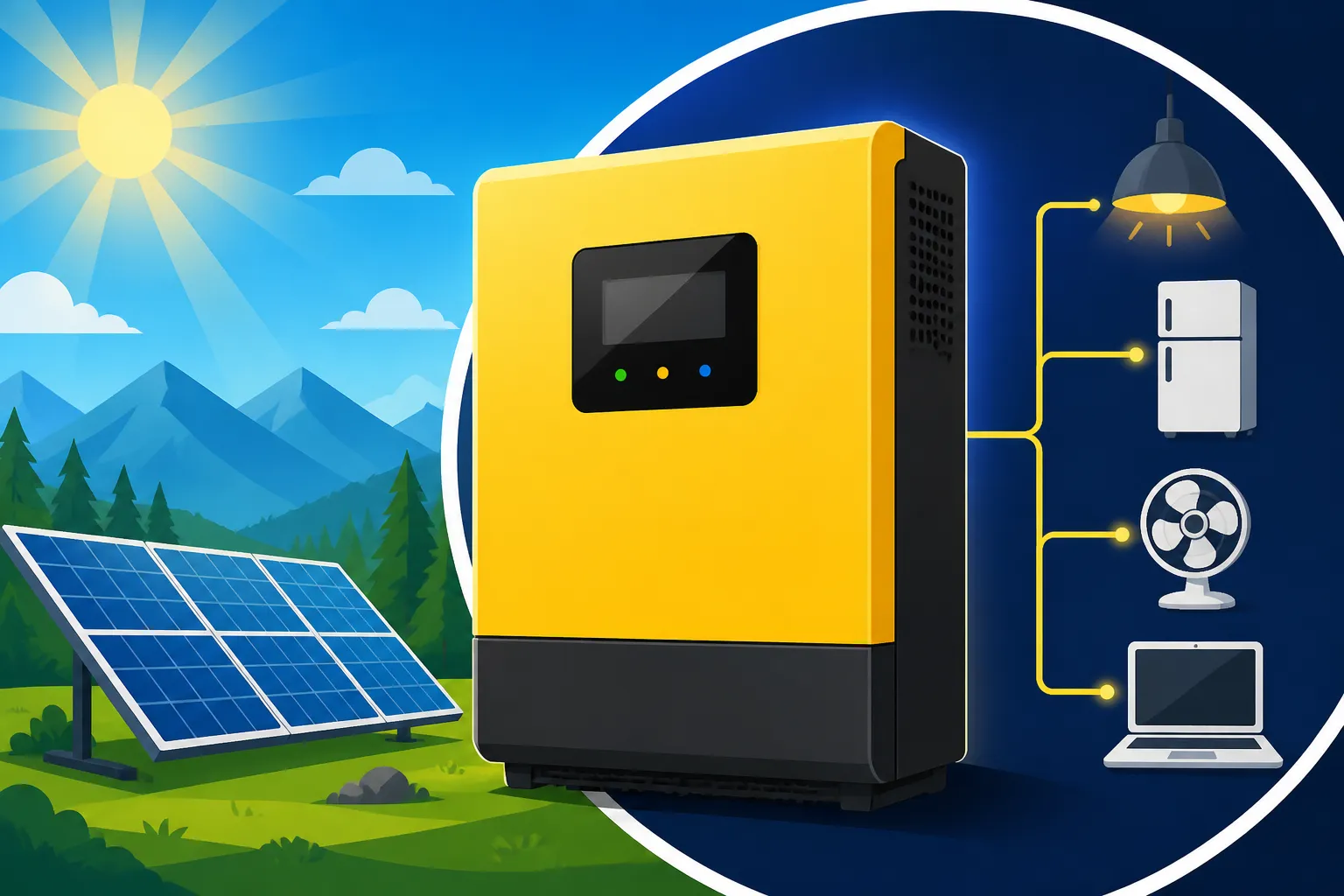
At its core, an inverter's job is to convert the DC electricity stored in your battery bank into standard AC electricity that your household appliances can use. Think of it like a really smart electrical interpreter. Your solar panels, through a charge controller, fill up your batteries with DC power, usually at voltages like 12V, 24V, or 48V. But if you plug in a blender or a coffee maker, they need 120V AC (or 240V AC for larger appliances). The inverter bridges this gap, taking the low-voltage DC and stepping it up and converting it to the higher-voltage AC.
This conversion process isn't just about changing voltage or current type; it's about creating a clean, stable waveform. Most modern electronics are sensitive to the quality of the AC power they receive. A pure sine wave inverter, which is what you typically want for off-grid living, replicates the smooth, consistent waveform you'd get from the utility grid. This protects your sensitive electronics from damage and allows motors in appliances like refrigerators to run more efficiently and quietly. Knowing how to choose an off-grid inverter is vital for the health of your appliances and the efficiency of your system.
Key Features to Look for in Any Off-Grid Inverter
When you're sifting through the myriad of inverter options, it's easy to get overwhelmed by technical jargon. But a few key features should always be at the top of your list. First and foremost, power output is crucial. This is measured in watts (W) and tells you how much electricity the inverter can provide continuously. You need to match this to your maximum anticipated load – think about all the AC appliances you might want to run simultaneously. An inverter might be rated for 2000W continuous, but also specify a surge capacity, which is the higher wattage it can provide for a short burst, usually to start motors in things like refrigerators or well pumps.
Next up is the waveform quality. As mentioned, a pure sine wave inverter is the gold standard for off-grid systems because it produces clean power, preventing issues with sensitive electronics and motor-driven appliances. You'll also need to consider the input DC voltage (12V, 24V, 48V) to match your battery bank and the output AC voltage (120V or 240V) to match your home's wiring. Finally, look at features like efficiency (how much power is lost during conversion), built-in battery charging (if it's an inverter-charger hybrid), and remote monitoring capabilities. Understanding these basics is essential to avoid common off-grid sizing mistakes.
A Deep Dive into Go Power Off-Grid Inverters
Go Power! is a well-known name in the mobile and off-grid power world, particularly popular among RVers, van lifers, and cabin owners. They offer a range of products designed to make independent power accessible, and their inverters are a significant part of that lineup. People are often drawn to Go Power! because they strike a balance between features, reliability, and price, often making them an appealing choice for those who are serious about their off-grid endeavors but might not need the absolute top-tier industrial-grade equipment. Their focus tends to be on practical, user-friendly solutions that can handle the rigors of life on the road or in remote locations.
Go Power's Product Range and Common Models
Go Power! offers a solid selection of inverters, primarily focusing on pure sine wave models which is great news for protecting your electronics. Their most popular lines include the GP-SW series (Pure Sine Wave Inverters) and the GP-ISW series (Inverter Chargers). The GP-SW series comes in various sizes, from smaller 300-watt units perfect for a simple van setup to robust 3000-watt models that can handle most household appliances in a larger RV or a small cabin. These standalone inverters are straightforward: they take DC from your batteries and output AC power. They're praised for their relatively compact size and ease of installation, making them a favorite for DIY enthusiasts.
The GP-ISW series, on the other hand, integrates an inverter and a battery charger into one unit. This is incredibly convenient for systems that might occasionally be plugged into shore power or a generator. For instance, if you're taking your RV to a campground with electrical hookups, the inverter charger can automatically switch to charging your batteries from the grid, saving your solar array for when you're truly off-grid. Models like the Go Power! GP-IC-2000-12 are quite popular, offering 2000 watts of continuous power and a powerful multi-stage battery charger, making them versatile for many off-grid applications. You can often find a good selection of these on platforms like Amazon.
Real-World Performance and Reliability
In the wild world of off-grid living, how do Go Power! inverters really perform? Generally, users report positive experiences, especially considering their price point. Their pure sine wave output is consistently clean, ensuring that sensitive electronics like laptops, medical devices (such as CPAP machines), and high-efficiency refrigerators run without a hitch. The surge capacity on many of their models is also respectable, allowing them to handle the initial power draw of motor-driven appliances fairly well. For example, a GP-SW3000 can typically start a standard residential refrigerator without issue, which is a common concern for off-gridders.
However, it's important to set realistic expectations. While reliable, Go Power! inverters generally aren't built to the same heavy-duty standards as some of the more premium brands like Victron or Outback Power. Some users in very demanding, continuous full-load scenarios have reported shorter lifespans than expected, though this is often balanced by their more accessible price. For casual to moderate full-time use in RVs or seasonal cabins, they offer a solid performance-to-cost ratio. Feedback often highlights their solid construction and relative ease of use straight out of the box, making them appealing for those who value simplicity and functionality.
Installation and Integration Considerations
One of the big draws of Go Power! inverters, particularly for the DIY crowd, is their relatively straightforward installation process. They typically come with clear instructions, and many models are designed for easy mounting in RV compartments, cabins, or utility sheds. For the GP-SW series, it's primarily a matter of connecting the DC input cables to your battery bank (making sure to use appropriately sized cables and fuses, of course) and then wiring your AC loads to the inverter's output terminals or plugging them directly into its outlets if it has them.
The GP-ISW inverter-charger models involve a bit more wiring, as they need to integrate with both your battery bank and a potential AC input source (like a shore power connection or a generator) while also providing AC output to your loads. However, Go Power! does a decent job of simplifying this process with well-labeled terminals and comprehensive manuals. It's crucial to correctly size wire and cables to prevent voltage drop and ensure safety. Compatibility with different battery chemistries (like LiFePO4 vs Lead-Acid Battery Cost) is usually good, but always double-check the specifications for charge voltages if you're using an inverter-charger with lithium batteries.
Comparing Go Power to Other Off-Grid Inverter Options
When you're looking at off-grid inverters, Go Power! isn't the only player in the game, and it’s important to understand where it fits in the broader market. The landscape is vast, ranging from budget-friendly options to premium, high-end systems designed for whole-home solutions. Understanding these differences can significantly impact your budget and long-term system performance. It's not just about raw power; it's about reliability, advanced features, customer support, and how well the inverter integrates with the rest of your off-grid components.
Go Power vs. Other Popular Brands
Let's put Go Power! up against some of its contemporaries. When compared to brands like Renogy, for example, both offer a range of pure sine wave inverters that are popular for smaller to medium-sized off-grid setups like RVs and vans. Renogy also provides comprehensive kits, making it a common choice for beginners. Go Power! often comes across as a slightly more established brand in the mobile power niche, sometimes offering a perception of greater durability or more specialized features for RV applications, such as transfer switch functionality in their inverter-chargers. However, Renogy is constantly innovating and offers competitive pricing, especially on platforms like Amazon.
Moving up the ladder, brands like Victron Energy or Sol-Ark represent the higher end of the spectrum. Victron MultiPlus inverter-chargers are renowned for their robust build quality, advanced features, remote monitoring capabilities, and seamless integration with other Victron components for truly sophisticated systems. Sol-Ark inverters are hybrid powerhouses often favored for whole-home off-grid solutions due to their ability to manage multiple power inputs (solar, grid, generator) and provide extensive monitoring. Go Power! inverters typically don't offer the same level of advanced programmability or long-term heavy-duty performance as these premium brands, but they also come at a significantly lower price point, making them a more accessible entry into reliable off-grid power for many. For those building large, complex systems, it might be worth investigating if a Sol-Ark 15K review fits their needs more closely.
Where to Find Go Power Inverters and What to Expect
Go Power! products are quite accessible, which is another point in their favor. You can typically find their inverters through a variety of channels. Online retailers like Amazon are a very common place to purchase them, often with competitive pricing and the convenience of home delivery. Many RV and marine supply stores, both physical and online, also stock Go Power! inverters and other solar components, as their product line is particularly geared towards these applications. Specialized off-grid solar suppliers might also carry them, sometimes offering more in-depth technical support.
When purchasing, always check the warranty information. Go Power! generally offers decent warranties, but understanding the terms and conditions is important. Prices will vary depending on the model, wattage, and whether it's an inverter or an inverter-charger. For example, a basic 1500-watt pure sine wave inverter might range from $300-$500, while a 3000-watt inverter-charger could be anywhere from $800-$1500 or more, depending on the specific features and retailer. Always read recent customer reviews on sites like Amazon to get a sense of current user experiences regarding product performance and customer service.
| Feature | Go Power! GP-SW1500 | Go Power! GP-SW3000 | Go Power! GP-IC-2000-12 | Renogy 2000W Pure Sine | Victron MultiPlus 3000VA |
|---|---|---|---|---|---|
| Type | Inverter | Inverter | Inverter/Charger | Inverter | Inverter/Charger |
| Continuous Power | 1500W | 3000W | 2000W | 2000W | 2400W (3000VA) |
| Surge Power (20ms) | 3000W | 6000W | 4000W | 4000W | 6000W |
| Input Voltage | 12V DC | 12V DC | 12V DC | 12V DC | 12V/24V/48V DC (model dep.) |
| Output Voltage | 120V AC | 120V AC | 120V AC | 120V AC | 120V/230V AC (model dep.) |
| Waveform | Pure Sine Wave | Pure Sine Wave | Pure Sine Wave | Pure Sine Wave | Pure Sine Wave |
| Charger (A) | N/A | N/A | 100A | N/A | 120A (12V model) |
| Transfer Switch | No | No | Yes | No | Yes |
| Approx. Price | $300 – $400 | $600 – $800 | $800 – $1000 | $400 – $500 | $1200 – $1800 |
| Ideal Use | Small RV/Cabin | Mid-size RV/Cabin | RV/Cabin with Shore | Mid-size RV/Van | Advanced RV/Home |
Note: Prices are approximate and subject to change based on retailer and promotions.
Making the Right Inverter Choice for Your Setup
Choosing an inverter can feel like a high-stakes poker game – you want to get it right the first time, or you're stuck with an expensive piece of equipment that doesn't quite meet your needs. The truth is, there's no single "best" inverter for everyone, and Go Power! might be the perfect fit for some, while others will benefit from a different brand or type of system. It really boils down to understanding your specific power demands, your budget, and your long-term off-grid goals. Don't rush into it; take the time to calculate your energy needs carefully.
Sizing Your Inverter for Your Needs
This is arguably the most critical step in choosing an inverter. You absolutely must perform an accurate load analysis to determine your maximum instantaneous power draw (the sum of all AC appliances running at once) and your daily energy consumption. Don't forget those pesky surge loads from motor-driven devices like refrigerators, microwaves, and power tools. If your inverter can't handle the surge, those appliances simply won't start. For a typical RV or small cabin, you might find that a 2000W to 3000W pure sine wave inverter is sufficient to run most common appliances, including a microwave or a small air conditioner.
Remember, it's often better to slightly oversize your inverter than to undersize it. An inverter that's constantly operating at its maximum capacity will run hotter, be less efficient, and likely have a shorter lifespan. Plus, oversizing gives you a little buffer for future additions to your system or unexpected power needs. This is a fundamental step in how to size an off-grid solar system. If you're planning to run an air conditioner, for example, you'll need to know what size inverter to run an air conditioner before committing. Consider using a tool or method for how to do an off-grid load analysis to make sure your calculations are precise.
Longevity and Warranty Information
When investing in an off-grid inverter, you're buying into the expectation of years of reliable service. Go Power! generally offers a decent warranty, typically ranging from 1 to 2 years on their inverters, though this can vary by model. While this is standard for many mid-range electronics, it's often shorter than the 5-year or even 10-year warranties you might find on higher-end components from brands like Victron. This is a trade-off you need to consider: the lower upfront cost often means a shorter warranty period.
Beyond the warranty, consider the potential for repairs and replacement parts. Reputable brands often have readily available parts and good customer support networks. Reading reviews about customer service experiences is crucial, as dealing with warranty claims can be a headache if the manufacturer isn't responsive. For those looking to minimize future costs, it's important to think about the Lifetime Cost of an Off-Grid Solar System, which includes potential replacement costs down the line. Investing a bit more upfront in a brand with a strong reputation for durability and extended warranty can sometimes save you money and headaches in the long run, even if it feels like a pinch on the initial budget.
Disclaimer
The information provided in this article is for general informational purposes only and does not constitute professional advice. Off-grid solar system design and installation can be complex and dangerous if not performed correctly. Always consult with qualified professionals and adhere to all local electrical codes and safety regulations.