Lithium Battery Brands Worth Buying
Navigating the world of off-grid solar can feel like a labyrinth, especially when you get to the heart of your power storage: batteries. With so many options out there, choosing the right lithium battery brand feels overwhelming, leaving many wondering where to even start. This comprehensive guide will cut through the noise, explaining exactly why lithium is king and spotlighting the most reliable battery brands worth investing in for your off-grid adventure.
Why Lithium Batteries Are the Gold Standard for Off-Grid Living
When you're committing to an off-grid lifestyle, whether it's powering a remote cabin, a full-time RV, or a small homestead, your battery bank is truly the backbone of your entire system. For years, lead-acid batteries were the only practical option, but oh, how times have changed! Lithium iron phosphate (LiFePO4) batteries have emerged as the undisputed champions, making off-grid living significantly more efficient, reliable, and, frankly, less of a headache.
The Undeniable Advantages of LiFePO4
Let's be real, no one wants to deal with constant battery maintenance, limited power, or frequent replacements. That's where LiFePO4 batteries truly shine. Their longevity is astounding; you can expect 10-15 years, sometimes even more, out of a good LiFePO4 battery, especially when compared to the typical 3-5 years of a lead-acid counterpart. This isn't just a number; it translates directly into fewer replacements and a more stable, predictable power supply for your precious appliances.
Beyond their lifespan, LiFePO4 batteries offer a remarkable depth of discharge (DoD). While lead-acid batteries prefer to only be discharged to about 50% to maximize their life, LiFePO4 can safely be discharged to 80-100% without significant degradation. This means a 100 Ah LiFePO4 battery gives you nearly double the usable energy of a 100 Ah lead-acid battery, essentially allowing you to achieve the same usable capacity with a smaller, lighter battery bank. When you’re thinking about the upfront investment, understanding the LiFePO4 vs Lead-Acid Battery Cost is crucial, as the long-term value of lithium often outweighs the initial sticker shock.
Their lighter weight and compact size are also huge benefits, particularly for mobile applications like RVs, vans, and boats where every pound and cubic inch counts. Imagine shaving hundreds of pounds off your vehicle's weight and freeing up valuable storage space – that's the power of lithium. Plus, they maintain a consistent voltage output throughout their discharge cycle, meaning your appliances run more efficiently without experiencing the voltage sag common with lead-acid batteries as they deplete. This stable power delivery is a game-changer for sensitive electronics and motors.
Dispelling Common Myths and Misconceptions
When people first look at lithium batteries, their eyes often widen at the initial cost. Yes, the upfront price tag for a quality LiFePO4 battery is higher than a comparable lead-acid battery. However, this is one of those situations where looking at the "cost per usable cycle" or the "lifetime cost" tells a much different story. Because LiFePO4 batteries last so much longer and offer more usable capacity, their total cost of ownership often ends up being lower than lead-acid over the lifespan of an off-grid system. It’s important to consider the Cost of an Off-Grid Solar Battery Bank in this context, understanding that the investment pays off in durability and performance.
Another common concern revolves around cold weather performance. Older lithium chemistries had issues, but modern LiFePO4 batteries, especially those from reputable brands, come equipped with sophisticated Battery Management Systems (BMS) that often include low-temperature cut-off protection. This prevents charging when temperatures drop too low, which can damage the cells. Some premium batteries even feature self-heating functions, allowing them to charge safely in freezing conditions. So, if you live in a colder climate, don't write off lithium; just choose a brand with advanced thermal management.
Finally, safety is paramount. The term "lithium battery" sometimes conjures images of overheating phones or laptop battery recalls. However, LiFePO4 is a very stable and safe lithium chemistry. It's much less prone to thermal runaway than other lithium-ion variants. Coupled with a robust BMS, LiFePO4 batteries are incredibly safe for off-grid applications, making them a worry-free choice for your power needs.
Key Factors to Consider When Choosing a Lithium Battery Brand
So you’re convinced lithium is the way to go. Great! But with countless brands flooding the market, how do you sort the wheat from the chaff? It's not just about capacity; it’s about the whole package.
Battery Management System (BMS) Quality and Features
Think of the Battery Management System as the brain of your lithium battery. It's absolutely critical for the safety, performance, and longevity of your investment. A high-quality BMS protects the battery from a multitude of potential issues: overcharging, over-discharging, over-current, and short circuits. Without a proper BMS, a lithium battery can be easily damaged, or worse, become a safety hazard. This is why you should always ask about the BMS features when looking at Best Off-Grid Solar Batteries.
Beyond basic protection, advanced BMS systems offer critical features like cell balancing, ensuring that all individual cells within the battery pack discharge and charge evenly. This prolongs the overall life of the battery and maximizes its usable capacity. Some BMS units also include low-temperature charging cut-offs, preventing irreversible damage when temperatures dip below freezing. If you're planning on using your off-grid system in variable climates, this feature is non-negotiable. Look for brands that highlight their BMS capabilities and clearly explain what protections are in place.
Warranty, Customer Support, and Reputation
Let's face it, even the best equipment can have an issue. That's why a strong warranty and responsive customer support are incredibly important. A reputable brand stands behind its products. Look for warranties that offer at least 5-10 years, which reflects the manufacturer's confidence in their battery's longevity. Remember, a warranty is only as good as the company offering it, so research their track record for honoring claims.
Customer support is also a huge consideration. When you're off-grid and suddenly have a technical question or an issue, you don't want to be left hanging. Read reviews and forum discussions to gauge how accessible and helpful a brand's support team is. Do they respond quickly? Are their technicians knowledgeable? A brand like Renogy, for instance, has a fairly extensive support network and community, which can be invaluable when you're troubleshooting. Their products are also widely available, often making them easy to purchase on platforms like Amazon with reliable shipping.
Finally, consider the brand's overall reputation within the off-grid and solar community. Ask fellow off-gridders, read independent reviews, and check out community forums. Brands that consistently receive positive feedback for reliability, performance, and customer service are usually a safe bet. This collective experience can provide insights that go beyond spec sheets alone.
Real-World Performance and Durability
While specifications look great on paper, how a battery performs in the real world is what truly matters. This isn't just about output; it's about how the battery handles the rigors of off-grid life. For instance, if you're outfitting a rugged overland vehicle, you need batteries that can withstand vibrations, extreme temperatures, and dusty conditions. A battery that performs flawlessly in a stationary cabin might struggle in a demanding mobile environment.
Consider the application: for a full-time RV, continuous cycling and varied charging sources are common, so you'd want a battery with a high cycle life and robust charging capabilities. For a seasonal hunting cabin, deep discharge resilience and minimal self-discharge during storage are key. Look for brands that have a proven track record in scenarios similar to your own. Durability also extends to the physical construction of the battery case and terminals. Are they robust? Can they handle occasional bumps and scrapes? These seemingly small details contribute significantly to the overall lifespan and peace of mind when you're relying on them for your power. When you're looking at Best Lithium Batteries for Off-Grid, keep these real-world scenarios in mind.
Top Lithium Battery Brands You Can Trust for Off-Grid Solar
Alright, let's talk names. The market is full of choices, but a few brands consistently rise to the top for their quality, reliability, and commitment to the off-grid community.
Established Leaders with Proven Track Records
When it comes to top-tier off-grid lithium batteries, certain names have become synonymous with quality.
Battle Born Batteries are often cited as the gold standard in the RV and marine communities. They might have a higher price point, but their robust construction, advanced internal BMS, and impressive 10-year warranty make them a favorite for those seeking ultimate reliability. Their batteries are assembled in the USA and are known for their exceptional performance in demanding conditions. Many off-gridders swear by their consistency and the peace of mind they offer.
Victron Energy is another powerhouse, known more for their entire ecosystem of off-grid components – inverters, charge controllers, and battery monitors – but their lithium batteries are also top-notch. While often requiring an external BMS (or integrating seamlessly with their system-wide controls), Victron batteries offer incredible customization and monitoring capabilities, making them ideal for complex, high-performance systems. If you're building a comprehensive system and value deep control and data, Victron is a serious contender.
EG4 has gained significant traction for offering high-performance, often server-rack style, LiFePO4 batteries that provide excellent capacity and robust BMS features at a more competitive price point than some premium brands. They are a popular choice for larger home systems and those looking to build substantial battery banks without breaking the bank. Their focus on high energy density and smart features makes them a strong player in the market.
For those getting started or on a slightly tighter budget, Renogy offers a wide range of reliable LiFePO4 batteries, often available on Amazon or through their own online store. Renogy is a solid entry point for many off-gridders, providing dependable performance and good customer support for their price. While perhaps not always featuring the absolute bleeding-edge tech of a Victron or Battle Born, their batteries are well-suited for many RV, van, and cabin setups and represent a fantastic value.
Value-Oriented Brands Delivering Quality
Not everyone needs a top-dollar, industrial-grade battery, especially for smaller systems or when working with a more constrained budget. Thankfully, several brands offer excellent value without sacrificing essential quality or safety.
Ampere Time has become a very popular choice among DIY off-gridders. They deliver solid LiFePO4 batteries with integrated BMS at highly competitive prices. Their batteries often boast impressive cycle life ratings and come with reasonable warranties. Many users report positive experiences with their customer service, which is a big plus for a value-oriented brand. They are frequently found on online marketplaces, including Amazon, making them accessible to a broad audience.
Similarly, LiTime (formerly known as Time USB) has built a strong reputation for offering reliable and affordable LiFePO4 batteries. They focus on providing essential features, good performance, and a decent warranty, making them a go-to for those who want to build a functional off-grid system without excessive expense. Their presence and reviews on Amazon often highlight their commitment to customer satisfaction and product quality for their price segment.
Redodo is another brand that has emerged as a strong contender in the value-for-money category. They offer a range of LiFePO4 batteries, including those with low-temperature protection, making them suitable for a wider variety of climates. Users often praise Redodo for their balance of features, performance, and affordability, proving that you don't always have to pay top dollar for a dependable power source. When you are assessing How to Choose an Off-Grid Battery Bank, these brands provide excellent options for practical, everyday use.
Emerging Innovators and All-in-One Solutions
The off-grid power landscape is constantly evolving, with new players bringing innovative approaches to energy storage. While not always traditional "battery brands," these companies offer integrated solutions that house excellent lithium battery technology.
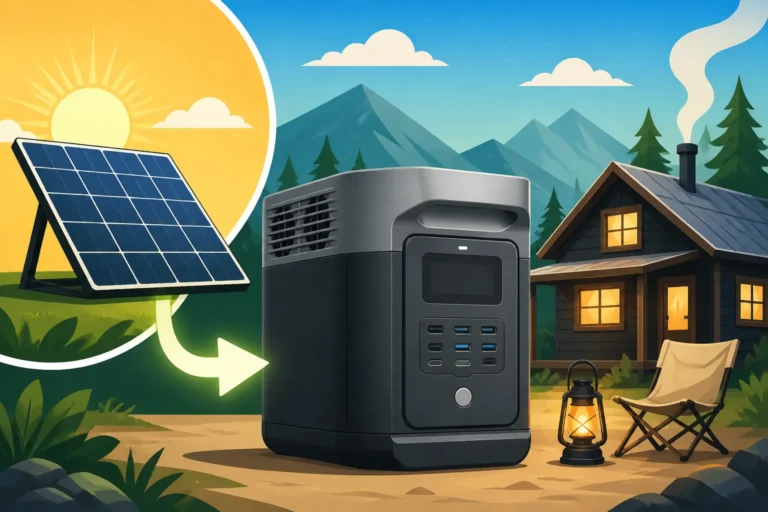
EcoFlow and Bluetti are prime examples of this trend, offering powerful portable power stations and modular home backup systems that utilize high-quality LiFePO4 batteries. While their "solar generators" might be seen as complete systems rather than just batteries, they are an increasingly popular choice for cabins, RVs, and emergency backup, providing a compact, plug-and-play lithium energy storage solution. Their portability and ease of setup can be a huge advantage for certain off-grid applications. You can often find a variety of EcoFlow or Bluetti products available on platforms like Amazon, offering convenient purchasing options.
These companies often bundle their battery tech with advanced inverters, charge controllers, and monitoring systems into a single unit, simplifying the setup process for many users. While they might not be suitable for massive, custom-built homestead systems, they represent a fantastic option for those seeking convenience, portability, and reliable lithium power in a more integrated package.
Decoding Battery Specifications and What They Mean for Your System
Understanding the numbers behind your battery is crucial for making an informed decision. These aren't just arbitrary figures; they tell you exactly what the battery can do for your off-grid setup.
Understanding Capacity (Ah) and Voltage (V)
The two most fundamental specifications are capacity, usually measured in Amp-hours (Ah), and voltage, measured in Volts (V). These two numbers dictate how much energy your battery can actually store. For instance, a common LiFePO4 battery might be rated at 100Ah and 12V. To find its total energy in Watt-hours (Wh), you simply multiply these two values: 100Ah * 12V = 1200Wh. To get kilowatt-hours (kWh), divide by 1000, so 1.2 kWh.
Why is this important? Because your appliances draw power in Watts, and your daily energy consumption is measured in Watt-hours or kilowatt-hours. Knowing your battery's total energy capacity allows you to match it to your How to Calculate Daily Energy Usage and determine How Much Battery Capacity You Need. For a typical off-grid home, you might aim for several kilowatt-hours of usable battery capacity, which often means combining multiple 12V, 24V, or 48V batteries in series or parallel. For example, a 48V system is generally more efficient for larger power demands, as it allows for thinner wiring and less power loss.
Max Discharge Current and Charge Current
These specifications are often overlooked but are incredibly important for the health and performance of your system. The max continuous discharge current tells you the maximum amount of amperage the battery can safely supply continuously without overheating or damaging the internal components, especially the BMS. If your inverter draws more current than your battery bank can safely provide, you'll experience voltage sag, system shutdowns, or even battery damage. For example, if you have a 3000W 12V inverter, it can draw up to 250 amps (3000W / 12V = 250A). You'd need a battery bank capable of consistently supplying at least that much current, and often more for surge loads. This is a key consideration when planning your Battery Bank Wiring Configurations and choosing your inverter.
The max charge current indicates the highest amperage the battery can accept during charging. Exceeding this limit can damage the battery. This spec is crucial for sizing your solar charge controller and ensuring your solar array doesn't overwhelm your batteries. For instance, if you have a 100Ah LiFePO4 battery with a maximum charge current of 50A, your charge controller should be configured not to exceed this. Having enough solar to fully charge your batteries daily, but not so much that it overpowers them, is a delicate balance. It also directly impacts your Cost of an Off-Grid Solar Battery Bank as larger charge controllers and heavier gauge wiring might be needed for higher currents.
Here’s a quick comparison of some popular LiFePO4 battery options, keeping in mind that actual prices and features can vary:
| Feature/Brand | Battle Born (100Ah 12V) | EG4 (100Ah 48V Server Rack) | Renogy (100Ah 12V) | Ampere Time (100Ah 12V) |
|---|---|---|---|---|
| Capacity | 100 Ah (1200 Wh) | 100 Ah (4800 Wh) | 100 Ah (1280 Wh) | 100 Ah (1280 Wh) |
| Voltage | 12V | 48V | 12.8V | 12.8V |
| Cycle Life | 3,000-5,000+ cycles | 6,000+ cycles | 2,000-4,000 cycles | 4,000-8,000 cycles |
| DoD | 100% | 100% | 100% | 100% |
| Warranty | 10 Years | 10 Years | 5 Years | 5-10 Years |
| BMS Features | Advanced internal | Advanced internal, Bluetooth | Internal, Low Temp Cut-off | Internal, Low Temp Cut-off |
| Special Features | Self-heating available | Rack mountable, comms port | Bluetooth monitoring | Great value |
Note: Specifications are typical and subject to change by manufacturers. Always check the latest datasheets.
Making Your Final Decision: Tips for Smart Buying
Choosing the right lithium battery isn't just about picking a brand; it's about making an informed decision that aligns with your specific off-grid needs and budget.
Matching Batteries to Your Off-Grid Needs
Before you even look at specific brands, you need to conduct a thorough energy audit of your anticipated loads. Are you powering a tiny cabin for weekend use or a full-sized home year-round? Will you be running high-draw appliances like air conditioners or well pumps? This will dictate the total How Much Solar to Run A Refrigerator or How Much Solar to Run An Air Conditioner and, therefore, your required battery capacity and inverter size. For larger systems, connecting batteries in series to achieve 24V or 48V is often more efficient than a 12V system, as it reduces amperage and allows for thinner, less expensive wiring. You’ll want to carefully calculate How to Calculate Battery Amp-Hours Needed based on your daily energy consumption and desired days of autonomy (how long your system can run without sun).
Consider your climate. If you're in a freezing environment, a battery with a built-in self-heating feature or a low-temperature charging cut-off is essential to prevent damage. If you're planning on expanding your system in the future, choose a brand and battery model that is known for its expandability and compatibility. Sometimes, spending a little more upfront for a quality battery that lasts longer and performs better will actually save you money in the long run, considering the Off-Grid Solar Battery Replacement Cost Over Time. Take a deep dive into How to Choose Off-Grid Battery Chemistry to truly understand which type best fits your lifestyle.
Where to Purchase and What to Look Out For
When it comes to buying your lithium batteries, you have several avenues. Purchasing directly from the manufacturer's website can sometimes offer the best prices or access to bundles. Dedicated solar equipment suppliers often have knowledgeable staff who can help you choose the right system components and offer technical support. For many, online marketplaces like Amazon are incredibly convenient, offering competitive pricing, customer reviews, and often faster shipping, especially from brands like Renogy, Ampere Time, and LiTime.
No matter where you buy, always look for authentic products from authorized dealers. Be wary of deals that seem too good to be true, as counterfeit batteries can be dangerous and unreliable. Read product descriptions carefully, check the warranty information, and compare specifications against other reputable brands. Customer reviews can also provide invaluable real-world feedback on a battery's performance and the seller's reliability. Don't forget to factor in shipping costs, especially for heavy items like batteries. Ultimately, a well-chosen lithium battery bank is a cornerstone of a reliable off-grid system, and understanding How Batteries Drive Off-Grid Solar Cost will help you budget effectively for this crucial component.
Disclaimer
The information provided in this guide is for general informational purposes only and does not constitute professional advice. Off-grid solar system design and installation can be complex and involve electrical hazards. Always consult with qualified professionals and adhere to local codes and regulations when planning or installing your system. Battery technology and pricing can change rapidly; always verify current specifications and warranty details with manufacturers or reputable suppliers before making a purchase.