Renogy vs Rich Solar Panels
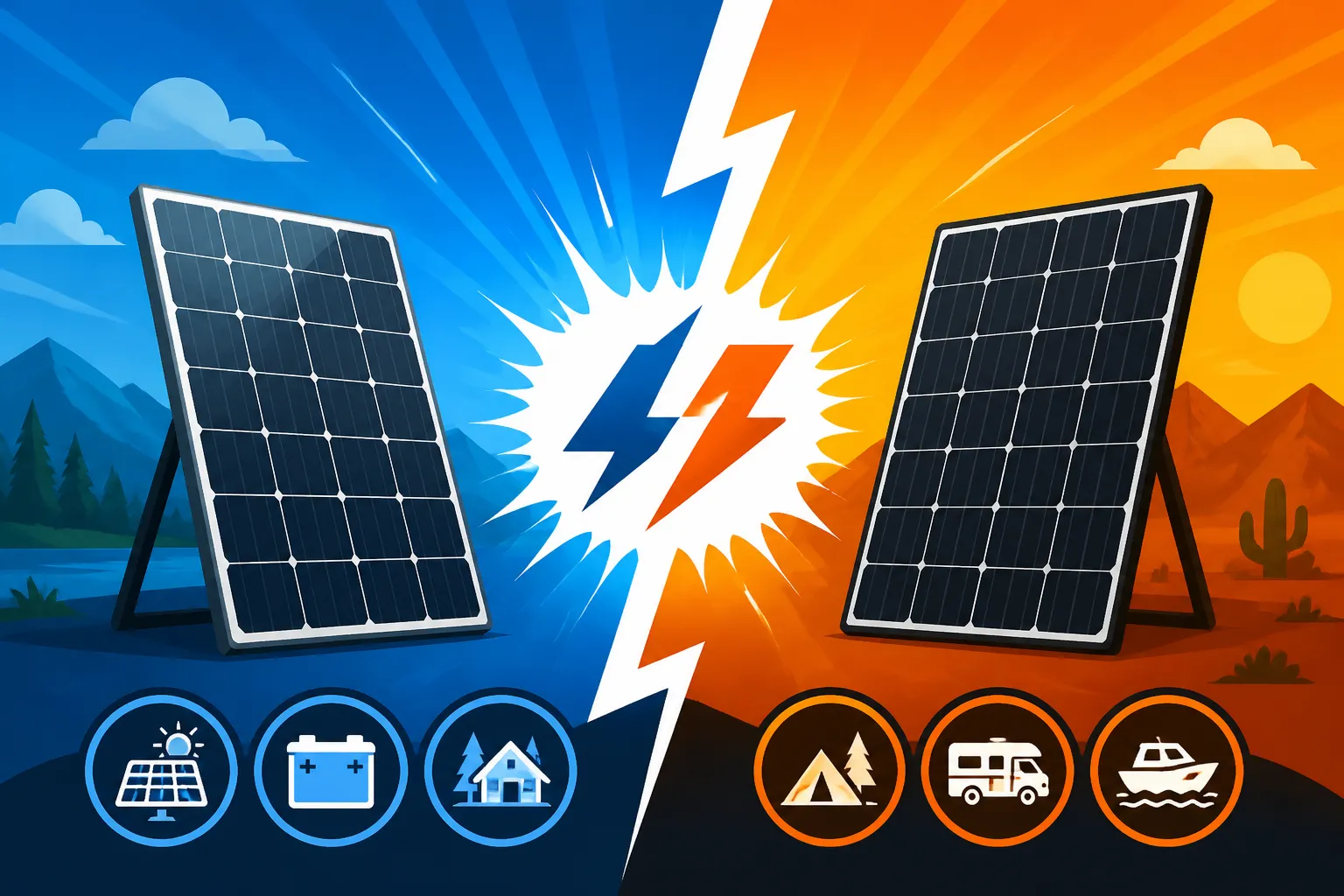
Deciding on the right solar panels for your off-grid system can feel like navigating a maze. With so many brands and specifications out there, it's easy to get bogged down in technical jargon and conflicting advice, leaving you wondering if you're truly making the best investment for your hard-earned money and energy independence goals. This comprehensive guide is designed to cut through the noise, offering a detailed comparison between two popular choices in the off-grid community: Renogy and Rich Solar panels, helping you make an informed decision for your unique setup.
The Core Elements of Off-Grid Solar and Why Panel Selection Matters
Venturing into off-grid living is a dream for many, offering unparalleled freedom and resilience. But making that dream a reality hinges entirely on a reliable power source, and for most, that means solar. The solar panels themselves are often the most visible component of your system, the silent workhorses converting sunlight into the electricity that powers your life. Choosing them wisely isn't just about grabbing the cheapest option; it's about investing in the heart of your power system.
The Foundational Role of Solar Panels in Power Independence
Imagine waking up in your remote cabin or RV, far from the hum of city life, and realizing you've got no power for your morning coffee or to charge your essential devices. This scenario is exactly what well-chosen solar panels are meant to prevent. They are the frontline energy collectors, crucial for maintaining your battery bank's charge and providing direct power during peak sun hours. The efficiency, durability, and output stability of your panels directly translate into how much power you generate, how consistently, and how long your system will reliably serve you. Without panels tailored to your specific needs and environment, even the best batteries and inverters will struggle to keep up.
This isn't just about keeping the lights on; it's about peace of mind. Knowing your panels are robust enough to withstand local weather, efficient enough to generate sufficient power even on less-than-perfect days, and reliable enough to last for decades, forms the bedrock of true energy independence. When considering your solar array, it’s vital to think about the long-term picture. An investment in quality panels now can save you significant headaches and costs down the road in terms of maintenance and replacement. Understanding how to choose an off-grid solar panels is the first critical step.
Understanding Your System's Needs Before You Buy
Before you even start comparing brands, the most important step is to understand your own energy consumption. How much power do you actually need? This isn't a simple question, as it involves cataloging every appliance, every light, and every device you plan to run, noting its wattage and how many hours per day you'll use it. This process, often called a load analysis, determines the total watt-hours or kilowatt-hours your system must generate daily. You can learn more about this crucial calculation in our guide on How to Calculate Off-Grid Solar Needs This essential groundwork will inform the size of your solar array, the capacity of your battery bank, and the power rating of your inverter.
Beyond your daily energy usage, consider your lifestyle and location. Will you be using your system year-round, or seasonally? Do you live in an area with abundant sunshine, or do you frequently experience cloudy days or heavy snowfall? These environmental factors play a huge role in how many solar panels for off-grid living you'll ultimately require. Panels perform differently in various temperatures and light conditions, so understanding their specifications in relation to your climate is paramount. It’s not just about peak output, but consistent, reliable generation day in and day out.
A Closer Look at Renogy Solar Panels
Renogy has become a household name in the off-grid solar world, especially among DIY enthusiasts and those setting up power systems for RVs, vans, and cabins. They've built a reputation for offering a wide range of accessible, reasonably priced components, and their solar panels are often a go-to for those starting their off-grid journey.
Renogy's Product Spectrum and Target Audience
Renogy's philosophy seems centered around making solar power approachable for everyone. They offer an incredibly diverse product line, from small, portable suitcase-style panels perfect for weekend camping to larger rigid panels designed for permanent installations on roofs or ground mounts. Their comprehensive selection means you can often find every piece of an off-grid solar system, from panels to batteries, charge controllers, and inverters, all from a single brand. This makes it particularly appealing for beginners or those who prefer the convenience of compatible components.
Their target audience is quite broad, encompassing RVers and van dwellers who need flexible and portable solar solutions, tiny home owners looking for compact yet powerful arrays, and cabin owners seeking robust panels for more permanent setups. They also cater to DIY homeowners interested in supplementary power or smaller off-grid sheds and workshops. Renogy frequently bundles their panels into convenient kits, which include most of the major components, simplifying the purchasing process for many. You can explore some of these options in our review of Best Off-Grid Solar Kits for Beginners. This wide accessibility, often found through retailers like Amazon, makes Renogy a popular starting point for many.
Performance Characteristics and Construction Quality of Renogy Panels
Renogy panels typically feature monocrystalline cells, known for their higher efficiency compared to polycrystalline counterparts. This means that for a given footprint, a Renogy monocrystalline panel will generally produce more power. Their panels usually come with an efficiency rating in the range of 18-22%, which is standard for good quality monocrystalline panels. These panels are engineered to perform well even in lower light conditions, though, like all solar panels, their output will significantly decrease on heavily overcast days.
In terms of construction, Renogy's rigid panels usually boast sturdy aluminum frames designed to withstand various weather conditions, and they are typically backed by tempered glass, offering decent protection against impacts and harsh elements like hail. Many of their panels are rated for extreme temperatures, ensuring they continue to function across different climates. For their flexible panels, Renogy often utilizes thin-film technology with a durable ETFE (Ethylene Tetrafluoroethylene) coating, making them lightweight, resistant to saltwater spray, and ideal for curved surfaces like RV roofs. While generally reliable, some users occasionally report minor variances in performance or durability compared to premium, high-end brands. However, for the price point, Renogy often delivers excellent value and a reasonable lifespan, typically offering a 25-year power output warranty.
Delving into Rich Solar Panels
Rich Solar, while perhaps not as universally recognized as Renogy in some circles, has steadily gained a loyal following, particularly among those who prioritize high efficiency and robust performance without breaking the bank. They often position themselves as a value-driven option, providing strong contenders for serious off-grid applications.
Rich Solar's Offerings and Market Niche
Rich Solar has carved out a distinct niche by focusing heavily on high-wattage, high-efficiency panels, making them a strong choice for systems where space might be limited but power demand is high. While they offer a range of sizes, their reputation often stems from their larger, more powerful rigid monocrystalline panels. This makes them particularly attractive for larger off-grid homes, substantial cabin setups, or commercial applications where maximizing energy harvest per square foot is critical.
Their product catalog, while perhaps not as sprawling as Renogy's across every off-grid component, is robust when it comes to panels and associated core solar equipment like inverters and charge controllers. They tend to attract experienced DIYers and those looking to build more permanent, powerful systems rather than small, portable setups. Their panels are frequently chosen for ground-mount arrays or large roof installations where performance and long-term reliability are paramount. If you're building a system for a full-time residence or a significant remote workshop, Rich Solar often comes up in discussions for its balance of cost and capability.
Power Output, Efficiency, and Build of Rich Solar Panels
Rich Solar panels are primarily monocrystalline, and they are known for pushing the boundaries of efficiency within their price segment. Many of their panels often feature efficiency ratings that can climb into the 20-22.5% range, which can be a significant advantage when you're trying to squeeze every last watt out of your available space. This higher efficiency translates directly into more power generated from fewer panels, which can be a game-changer for systems like a Cost to Power a Cabin with Solar, where roof space or ground footprint might be a limiting factor.
The construction of Rich Solar panels is generally regarded as very solid. They utilize heavy-duty anodized aluminum frames and highly transparent tempered glass, designed to withstand substantial snow loads and high wind pressures, making them suitable for harsh environments. They often emphasize their panels' performance in low-light conditions and temperature stability, which means they maintain a higher percentage of their rated power output when temperatures rise, a common issue for many panels. This attention to robust construction and stable performance contributes to their reputation for reliability and often comes with a similar industry-standard 25-year power output warranty, alongside a shorter 10-12 year material and workmanship warranty.
Head-to-Head Comparison: Performance, Durability, and Value
When you're trying to decide between two strong contenders like Renogy and Rich Solar, it helps to put them side-by-side on the metrics that truly matter for an off-grid setup. This isn't just about who has the higher number, but about which brand's overall package aligns best with your specific project and budget.
Comparing Electrical Specifications and Real-World Output
On paper, both Renogy and Rich Solar offer monocrystalline panels with competitive efficiency ratings. Renogy typically ranges from 18-22%, while Rich Solar often pushes a bit higher, frequently found in the 20-22.5% range. What does this slight difference mean in the real world? For a single panel, it might be a matter of a few extra watts. For a large array of 10 or 20 panels, those few extra watts per panel can add up to significantly more daily kilowatt-hours. This means that with Rich Solar, you might be able to achieve your desired power output with slightly fewer panels, potentially saving on mounting hardware and installation time, especially if you're dealing with limited space, like on an RV or tiny home.
Another critical specification to consider is the temperature coefficient. This figure tells you how much a panel's output will decrease for every degree Celsius rise above 25°C (77°F). Both brands offer panels with good temperature coefficients, usually around -0.38% to -0.42% per degree Celsius. A slightly lower (closer to zero) negative number is better. For example, if a panel has a -0.40% coefficient and the temperature rises by 10°C, its output will drop by 4%. While both perform adequately, paying close attention to these details can ensure your system performs optimally in your local climate. It's also wise to consider How Winter Affects Off-Grid Sizing, as cold temperatures can actually boost panel efficiency, but reduced daylight hours negate this advantage.
Assessing Longevity, Warranties, and Manufacturing Standards
Both Renogy and Rich Solar offer similar warranty structures, which is a good sign of industry confidence in their products. Typically, you'll find a 25-year power output warranty, guaranteeing that the panels will still produce a certain percentage (e.g., 80% or 85%) of their rated power after two and a half decades. They also usually provide a 10-12 year warranty on materials and workmanship, covering defects in manufacturing. These warranties are standard for quality solar panels and provide reassurance that your investment is protected.
When it comes to manufacturing standards, both brands adhere to international certifications (like IEC, CE, and UL listings) that ensure safety and performance. Renogy often uses automated manufacturing processes and has a significant global presence, which allows for consistent quality control. Rich Solar, while perhaps operating on a slightly smaller scale, focuses on maintaining high standards for the components they use, from the silicon cells to the backsheets and junction boxes. The robust aluminum frames and tempered glass on both brands' rigid panels are built to endure, but Rich Solar's panels sometimes feel slightly more substantial in their frame construction, which can be reassuring for permanent installations in areas prone to harsh weather. Regular Off-Grid Solar Maintenance Guide, including cleaning your panels, will also contribute significantly to their longevity and consistent output.
Cost-Benefit Analysis and Accessibility
Price is almost always a major factor for off-grid enthusiasts, as every dollar counts when building a self-sufficient system. Generally speaking, both Renogy and Rich Solar offer competitive pricing, often falling into the mid-range category compared to super-budget options or ultra-premium panels. However, there can be subtle differences. Rich Solar sometimes offers a slightly better price-per-watt for their higher-wattage panels, making them very attractive for larger projects where the overall panel count is higher. For example, if you're looking at a 400W Off-Grid System, Rich Solar might offer a more cost-effective path to that power rating.
Renogy, on the other hand, excels in accessibility and package deals. Their extensive availability on platforms like Amazon and their frequent bundling of panels with other components into kits can often make the initial purchase feel more manageable and cost-effective, especially for those new to solar or building smaller systems. Their flexible and portable panel options, while sometimes having a higher price-per-watt, offer specialized benefits that Rich Solar doesn't always match. The key is to look at the total "Cost of Off-Grid Solar Panels" for your entire required array, not just the price of a single panel, and factor in potential savings on mounting hardware if Rich Solar's higher efficiency means fewer panels are needed.
| Feature | Renogy Solar Panels | Rich Solar Panels |
|---|---|---|
| Typical Efficiency | 18-22% (Monocrystalline) | 20-22.5% (Monocrystalline) |
| Product Range | Rigid, Flexible, Portable, Kits, All-in-one solutions | Primarily Rigid, high-wattage panels |
| Target Audience | DIYers, RV/Van life, Small cabins, Beginners | Experienced DIYers, Larger cabins, Homes, Workshops |
| Frame Durability | Sturdy aluminum, good for general use | Heavy-duty anodized aluminum, robust for harsh conditions |
| Warranty (Power) | 25-year linear power output | 25-year linear power output |
| Warranty (Materials) | 10-12 years materials & workmanship | 10-12 years materials & workmanship |
| Price Point | Mid-range, competitive, good value in kits | Mid-range, often better price/watt for high wattage |
| Accessibility | Widely available (Amazon, direct), good support | Good availability (direct, some retailers), growing support |
Beyond the Brand Name: Crucial Considerations for Your Off-Grid Setup
While comparing brands is important, the panels themselves are just one piece of a complex puzzle. A truly successful off-grid system hinges on a holistic understanding of your needs, your environment, and how all the components work together seamlessly. Don't let brand loyalty blind you to the bigger picture of system design.
Matching Panels to Your Energy Load and Location
The most powerful and efficient panel in the world is useless if it doesn't meet your specific energy demands or perform well in your geographical location. We touched on load analysis earlier, but it bears repeating: meticulously calculating your How Much Watt-Hours You Use Per Day, including peak loads from appliances like well pumps or microwaves, is non-negotiable. This calculation is the foundation upon which your entire system is built. It dictates not just the total wattage of your solar array, but also the size of your battery bank to store that energy for nighttime or cloudy days.
Your location's "peak sun hours" also dictates how many panels you need. Peak sun hours refer to the equivalent number of hours per day when solar irradiance averages 1,000 watts per square meter. A sunny desert might have 6-7 peak sun hours, while a cloudy Pacific Northwest location might only have 3-4. If you're in an area with fewer peak sun hours, you'll simply need more panels to generate the same amount of daily energy. Furthermore, temperature affects panel output; colder temperatures actually increase efficiency, while extreme heat decreases it. If you're in a hot climate, a panel with a better temperature coefficient will be a more important consideration. Conversely, if you're in a cold climate, ensuring your battery bank is protected is critical, as discussed in Off-Grid Solar Cost in Cold Climates.
Installation Flexibility and System Expandability
Consider where and how you plan to install your panels. Are you mounting them on a stationary roof, a ground mount, or perhaps on a moving vehicle like an RV or boat? Renogy, with its broader range, often offers more flexible solutions, including lightweight flexible panels that can conform to curved surfaces and portable suitcase kits that are easy to move and store. These options are perfect for temporary setups or when you need to chase the sun. Rich Solar, focusing more on rigid, high-output panels, might be better suited for permanent installations where maximizing power from a fixed footprint is the goal, offering robust frames suitable for various racking systems. You might compare Rigid vs Flexible Solar Panels.
Thinking about the future is also essential. Many off-grid systems start small and grow over time as energy needs increase or budgets allow. Designing an expandable system means choosing components that can easily integrate additional panels, batteries, or even an extra inverter down the line. Both Renogy and Rich Solar panels are standard in their connections (MC4 connectors), making them compatible with most charge controllers and inverters. However, consider the voltage of your system (12V, 24V, or 48V) and how additional panels might be wired, whether in series or parallel, to maintain optimal voltage for your charge controller. Planning for future expansion can save significant costs and headaches compared to completely overhauling your system later.
Making Your Decision: Which Brand is Right for Your Off-Grid Adventure?
Choosing between Renogy and Rich Solar isn't about one being definitively "better" than the other across the board. It's about finding the brand that aligns best with your specific off-grid vision, technical comfort level, and budget. Both are solid contenders, but they cater to slightly different needs and preferences.
Identifying When Renogy is the Right Fit
Renogy often shines as the ideal choice for several types of off-grid projects and individuals. If you're new to solar power and feeling a bit overwhelmed, Renogy's extensive range of all-in-one kits and comprehensive selection of compatible components can provide a streamlined entry point. Their reputation for user-friendly equipment and abundant online resources (including their own excellent support and a vast community of users) makes them very appealing for DIYers. You can often find a complete Best Off-Grid Solar Kit for an RV, a camper, or a small cabin directly from them or through major retailers like Amazon.
Furthermore, if your setup requires flexibility, literally, Renogy's flexible and portable panels are often superior. For van life enthusiasts, RVers, or those needing temporary power solutions for camping or emergencies, these lighter, more adaptable panels are invaluable. They're also a strong contender if you're building a smaller system where space is at an absolute premium, and you appreciate the convenience of sourcing almost all your solar components from a single brand. Their slightly lower cost per panel on certain models might also appeal to budget-conscious builders.
Recognizing When Rich Solar Shines Brighter
Rich Solar tends to be the preferred choice for those who prioritize maximum power output per square foot and robust, long-term performance for more permanent and demanding applications. If you're building a substantial off-grid home, a large workshop, or a remote homestead where consistent, high-capacity power generation is critical, Rich Solar's higher efficiency panels can be a significant advantage. Their panels are often praised for their excellent build quality, making them a durable choice for areas that experience challenging weather conditions, heavy snow loads, or high winds.
For experienced off-grid system designers and installers, Rich Solar offers great value, particularly when buying in bulk for larger arrays. Their focus on the core panel product means they might not have the same breadth of complementary accessories as Renogy, but their panels themselves often deliver a slightly superior performance profile. If your goal is to minimize the number of panels required to meet a large load, or if you're looking for panels that are known for their consistent output over many years in a fixed, exposed installation, then Rich Solar could very well be your champion.
Considering Hybrid Approaches or Other Options
It's also worth remembering that you don't have to stick to just one brand for your entire off-grid system. Many savvy off-gridders mix and match components to get the best of all worlds. For instance, you might choose high-efficiency Rich Solar panels for your primary array, but supplement it with a portable Renogy suitcase panel for additional charging when parked in the shade or for specific temporary needs. Or, you could use panels from either brand and pair them with a top-tier inverter charger like a Victron MultiPlus Review, or a robust battery bank from brands like Battle Born Battery Review for Off-Grid Solar.
Ultimately, the "best" off-grid solar panels are the ones that meet your specific power needs, fit your budget, and are appropriate for your installation environment. Both Renogy and Rich Solar offer excellent quality and value in their respective niches. By carefully considering your energy demands, installation constraints, and long-term goals, you can confidently choose the brand that will power your off-grid dreams for years to come. Don't forget to consider all the variables in the Off-Grid Solar Cost: Complete Breakdown.
Disclaimer
The information provided in this guide is for general informational purposes only and does not constitute professional advice. While we strive to provide accurate and up-to-date information, off-grid solar system design and installation can be complex and involve electrical hazards. Always consult with qualified professionals and adhere to local codes and regulations before making any purchasing decisions or attempting any installation.