Renogy Product Lineup for Off-Grid
Trying to figure out which off-grid solar components you need can feel like learning a whole new language, especially when so many brands are out there, each with its own vast array of products. It’s easy to get overwhelmed by the sheer volume of choices, making it tough to know where to even start building a reliable power system. This guide is dedicated to breaking down the popular Renogy product lineup, helping you understand their offerings and how they fit into a practical off-grid setup.
Why Renogy is a Popular Choice for Off-Grid Living
When you dip your toes into the world of off-grid solar, you'll quickly hear the name Renogy. They've really carved out a niche for themselves, becoming a go-to brand for countless folks who are looking to power their cabins, RVs, vans, or even full-time homesteads away from the grid. What makes them so popular isn't just one thing, but a combination of factors that resonate with the independent spirit of off-gridders. They offer a comprehensive suite of products that are often more accessible and user-friendly for DIY enthusiasts compared to some of the highly specialized, industrial-grade equipment out there.
Accessibility and DIY-Friendliness
One of the biggest hurdles for anyone venturing into off-grid solar is the perceived complexity. Many people feel intimidated by electrical diagrams, component matching, and the sheer technical jargon. This is where Renogy shines. They've made a concerted effort to create products that are not only relatively straightforward to install but also come with ample documentation and support for the do-it-yourself crowd. You can often find their components and even complete kits readily available on platforms like Amazon, making them easy to acquire without needing a specialized distributor. This accessibility lowers the barrier to entry, empowering more individuals to take control of their power needs. For those just starting out, understanding how to install an off-grid solar system can be daunting, and Renogy's approach simplifies much of that initial learning curve.
Their product range often follows a modular design, meaning you can start with a basic setup and expand it over time as your needs grow or your budget allows. This phased approach is a huge relief for many, as the upfront cost of a full off-grid system can be substantial. Instead of needing to buy everything at once, you can begin with a smaller solar array and battery bank, then gradually add more panels or batteries. This flexibility is a key reason why so many people recommend Renogy for those embarking on their off-grid journey.
Reputation and Support in the Off-Grid Community
Beyond just the ease of installation, Renogy has built a solid reputation within the off-grid and DIY communities. They're known for producing reliable equipment that, while not always top-tier commercial grade, offers excellent value for the price. Many experienced off-gridders, from van lifers to cabin owners, have shared positive experiences with Renogy products, often citing their durability and performance in real-world conditions. When you're dealing with something as crucial as your power supply, trust in the brand matters.
Furthermore, Renogy typically provides robust customer support and educational resources. They have an active online presence and often provide detailed manuals and guides to help users troubleshoot issues or optimize their systems. This level of support is invaluable for those who might not have an electrician on speed dial but are determined to maintain their own power system. It fosters a sense of community where users can share tips and tricks, further cementing Renogy's place as a trusted name in independent power solutions. They understand that while you might be off-grid, you're not necessarily on your own when it comes to getting help with your solar setup.
Decoding Renogy's Core Off-Grid Product Categories
To truly understand what Renogy brings to the off-grid table, it's essential to look at their main product categories. Each component plays a vital role in harvesting, storing, and delivering power, and Renogy offers a variety of options within each to suit different needs and budgets.
Solar Panels: From Flexible to Monocrystalline
The solar panels are, quite literally, the face of your off-grid system, capturing sunlight and converting it into usable electricity. Renogy offers a diverse range, catering to various applications and mounting preferences.
Rigid Solar Panels
Their rigid solar panels are perhaps the most common type you'll encounter. These are built with sturdy aluminum frames and tempered glass, designed for durability and long-term performance. You'll find these in various wattages, from smaller 100W panels perfect for a simple RV setup to larger 300W or 400W panels for more substantial cabin or home systems. These panels are excellent for fixed installations, like on a roof mount or a ground mount, where they're exposed to the elements for years. They're built to withstand wind, snow, and hail, ensuring a consistent energy harvest. When considering how to choose an off-grid solar panels, rigid options from Renogy offer a great balance of cost, efficiency, and longevity.
Flexible and Portable Solar Panels
For those with unique space constraints or mobile setups, Renogy's flexible and portable solar panels are game-changers. Flexible panels are lightweight and can conform to curved surfaces, making them ideal for RVs, vans, or boat decks where traditional rigid panels might be difficult to install. They are incredibly thin, minimizing wind resistance and maintaining a low profile. While generally slightly less efficient than their rigid counterparts, their versatility often outweighs this for specific applications.
Portable solar panels, on the other hand, are designed for grab-and-go convenience. These often come as fold-out "suitcases" with built-in charge controllers, making them perfect for camping, tailgating, or adding a temporary boost to an existing system. They're great for situations where you need power on the move or when you want to chase the sun throughout the day. For an in-depth comparison, you might want to read up on Monocrystalline vs Polycrystalline for Off-Grid, as Renogy offers both in various forms.
Charge Controllers: MPPT and PWM Options
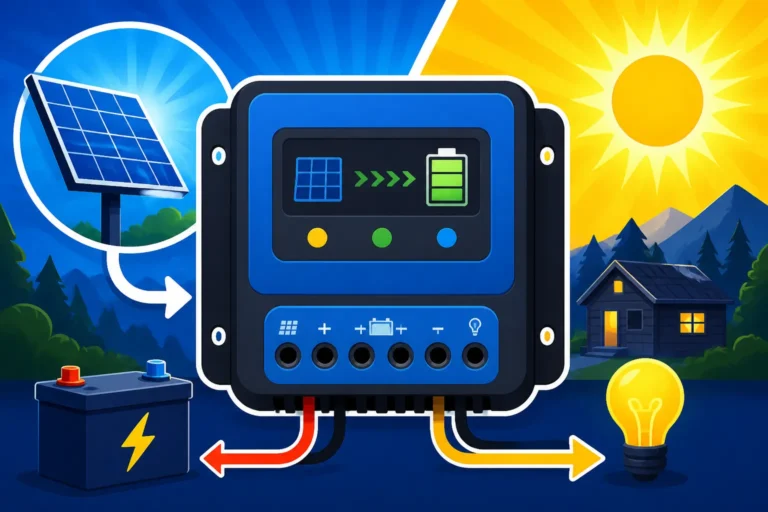
The charge controller is the unsung hero of your off-grid system. It acts as the brain between your solar panels and your batteries, regulating the voltage and current coming from the panels to prevent overcharging and maximize charging efficiency. Renogy provides both Maximum Power Point Tracking (MPPT) and Pulse Width Modulation (PWM) charge controllers.
MPPT Charge Controllers
Renogy's MPPT charge controllers are the more advanced and efficient option. They can track the maximum power point of the solar array, essentially optimizing the voltage and current to get the most power out of your panels, especially in varying weather conditions or when panel voltage is higher than battery voltage. This is particularly crucial for larger systems or when you want to squeeze every last watt out of your panels on a cloudy day. For anyone serious about maximizing their energy harvest and extending battery life, an MPPT controller is usually the preferred choice. For larger off-grid solar systems, knowing how to choose an off-grid charge controller, specifically an MPPT, is key to efficiency.
PWM Charge Controllers
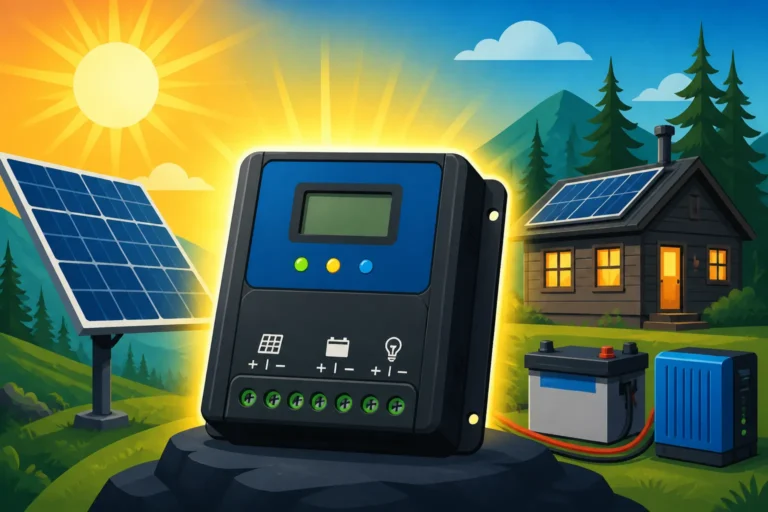
PWM charge controllers are simpler and more budget-friendly. They work by slowly reducing the power to the batteries as they approach full charge, preventing overcharging. While less efficient than MPPT controllers, especially in situations where panel voltage significantly exceeds battery voltage, they are perfectly adequate for smaller systems, like a basic setup for a shed or a small RV. They are robust, reliable, and require less complex wiring, making them a good entry-level option. If you're pondering the differences, our article on MPPT vs PWM Charge Controllers provides a more comprehensive breakdown.
Inverters: Powering Your AC Appliances
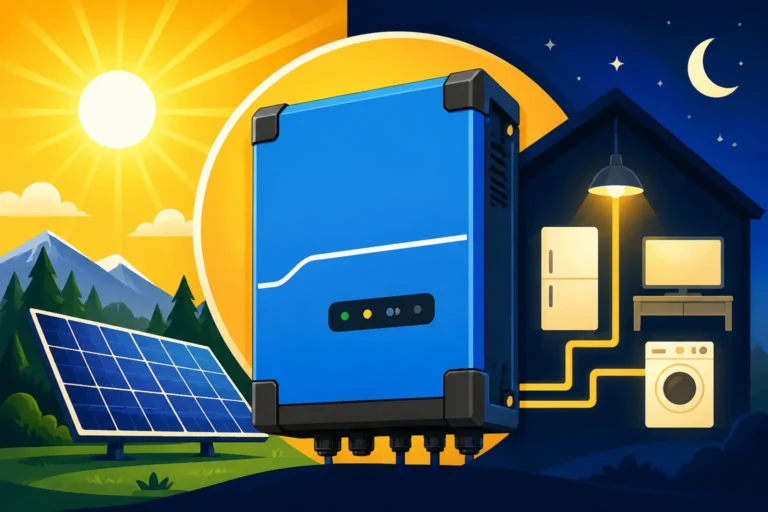
Unless all your appliances run on DC power (which is rare for most modern living), you'll need an inverter to convert the DC power stored in your batteries into usable AC power for your household devices. Renogy offers a variety of inverters designed for different power needs.
Pure Sine Wave Inverters
Renogy primarily focuses on pure sine wave inverters, and for good reason. These inverters produce a clean, smooth waveform that mimics the power supplied by the utility grid. This is crucial for sensitive electronics like laptops, medical devices (like CPAP machines), and appliances with motors, ensuring they run efficiently and without damage. Using a pure sine wave inverter protects your valuable equipment and provides reliable power that's virtually indistinguishable from grid power. When you're learning how to choose an off-grid inverter, a pure sine wave model is almost always the recommendation for quality and safety.
Inverter-Chargers
For more integrated systems, Renogy also offers inverter-chargers. These units combine the functions of an inverter and a battery charger into a single device. This is incredibly handy, especially if you plan to incorporate a generator or shore power (for RVs) into your off-grid setup. The inverter-charger can seamlessly switch between powering your AC loads from batteries (inverter mode) and charging your batteries from an external AC source (charger mode), often with an automatic transfer switch built-in. This streamlined approach makes system management much simpler and more efficient.
Batteries: The Heart of Your Off-Grid System
The battery bank is arguably the most critical component of any off-grid solar system, as it stores the energy harvested by your panels for use when the sun isn't shining. Renogy offers several battery chemistries, each with its own advantages.
Lithium Iron Phosphate (LiFePO4) Batteries
Renogy has heavily invested in LiFePO4 batteries, and they are quickly becoming the gold standard for off-grid applications. These batteries offer a significantly longer lifespan, deeper discharge cycles, and a lighter weight compared to traditional lead-acid batteries. They also boast a higher usable capacity, meaning you can typically draw more energy from them without damaging the battery. While the upfront cost is higher, their longevity and performance often result in a lower lifetime cost. Many serious off-gridders find the investment in Renogy's LiFePO4 batteries, like their Smart Lithium series, to be well worth it for their reliability and minimal maintenance. For a deeper dive, check out our comparison on LiFePO4 vs Lead-Acid Batteries for Off-Grid.
Sealed Lead-Acid (AGM and Gel) Batteries
For those on a tighter budget or with less demanding power needs, Renogy still offers sealed lead-acid batteries, primarily in Absorbent Glass Mat (AGM) and Gel variants. These are maintenance-free versions of traditional lead-acid batteries, meaning you don't need to check water levels. AGM batteries are a popular choice for RVs and smaller cabins due to their decent performance, relatively lower cost, and ability to handle moderate discharge cycles. Gel batteries offer even better deep-cycle performance and a longer lifespan than AGMs but often come with a higher price tag and require slower charging. While these batteries require more careful management regarding discharge depths to prolong their life, they remain a viable and affordable option for many. Knowing how to choose an off-grid battery bank often boils down to balancing cost, performance, and longevity.
All-in-One Solutions and Kits for Simplicity
For many, the idea of piecing together an entire solar system from scratch feels overwhelming. Renogy understands this and offers a range of all-in-one solutions and pre-designed kits that simplify the process considerably.
Comprehensive Solar Kits
Renogy's solar kits are incredibly popular, especially for beginners or those with specific applications in mind, like powering an RV, a cabin, or a small shed. These kits typically include all the major components you need: solar panels, a charge controller, mounting hardware, and necessary cabling. Some larger kits even come with an inverter and batteries, providing a nearly complete power system in a single package. For example, their Starter Kits are fantastic for getting a basic system up and running quickly. They take the guesswork out of component matching, ensuring that all parts are compatible and correctly sized for a functional setup. If you’re looking for the best off-grid solar kits for beginners, Renogy’s offerings are a strong contender.
These kits are tailored for various power demands. You can find everything from small 100W kits perfect for charging phones and running a few lights in a camper, to much larger 1000W or even 2000W kits designed to handle more significant loads in a remote cabin. They often come with clear instructions and wiring diagrams, making the DIY installation process much more manageable. Our guide on the Best Off-Grid Solar Kit for an RV, for instance, often highlights Renogy's suitability in this area.
Portable Power Stations and Solar Generators
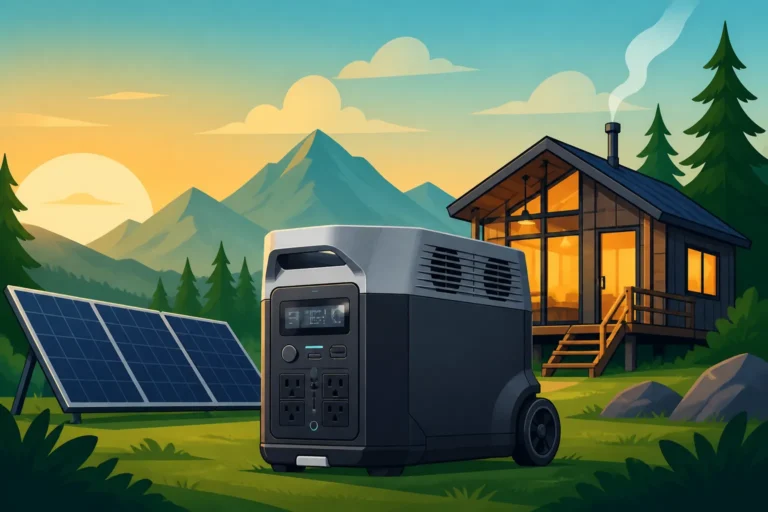
Beyond traditional component-based systems, Renogy also offers portable power stations, often referred to as "solar generators." These are compact, all-in-one units that integrate a battery, an inverter, and a charge controller into a single, portable box. They're designed for ultimate convenience and portability, making them perfect for camping trips, emergency backup power, or powering tools on a remote job site.
Products like Renogy's Lycan Power Box are excellent examples. These units can be charged via solar panels, AC wall outlets, or even a car's 12V adapter. They provide both AC and DC outputs, allowing you to power a wide array of devices. While they might not replace a full-scale home off-grid system, they offer incredible flexibility and immediate power without complex installation. They're a fantastic stepping stone for those curious about solar or needing reliable power on the go.
Essential Accessories and System Components
While the main components like panels, batteries, and inverters get most of the attention, a functional and safe off-grid solar system relies heavily on a multitude of smaller, yet equally critical, accessories. Renogy doesn't just stop at the big-ticket items; they also provide many of the supporting components you'll need.
Wiring, Connectors, and Monitoring Tools
No solar system can function without the proper electrical connections. Renogy offers a comprehensive range of wiring, from heavy-gauge battery cables to UV-resistant solar panel extension cables, ensuring safe and efficient power transfer throughout your system. They also provide essential connectors, like MC4 connectors, which are standard for solar panel wiring and ensure waterproof, secure connections. Fuses and breakers are also crucial for protecting your system from overcurrents and short circuits, and Renogy offers various options to meet different system voltage and amperage requirements. These small but mighty components are vital for both the performance and safety of your setup. Learning how to wire an off-grid solar system correctly is just as important as choosing the right panels.
Beyond physical connections, monitoring your system's performance is key to understanding its health and optimizing your power usage. Renogy offers battery monitors that give you real-time data on your battery's state of charge, voltage, current, and even remaining run-time. These monitors often come with a shunt, which is a small device that measures the current flowing in and out of your battery bank. Having this visibility allows you to make informed decisions about your power consumption and ensure your batteries are being charged properly, extending their lifespan.
Mounting Hardware and Racking Solutions
Once you have your panels, you need a way to securely mount them, whether it's on a roof, on the ground, or on the side of a vehicle. Renogy offers a variety of mounting hardware and racking solutions designed for different applications. For RVs and flat surfaces, Z-brackets are popular for their simplicity and low profile. For residential roofs, they offer adjustable tilt mounts that allow you to optimize the panel angle for seasonal sun paths, maximizing energy production throughout the year.
For larger installations, like a cabin or a full home off-grid setup, they also provide robust ground mount options. These structures are designed to hold multiple panels securely, typically at an optimal angle for maximum sun exposure. Having reliable mounting hardware is not just about efficiency; it's about ensuring your investment is safe from high winds and other environmental factors. Proper installation, even down to the mounting, is a key part of your overall Off-Grid Solar Equipment Explained experience.
Renogy's Role in a Cohesive Off-Grid System
One of the greatest advantages of diving into Renogy's product lineup is the opportunity to build a relatively cohesive system using components designed to work well together. While you can certainly mix and match brands (and many off-gridders do!), sticking with a single brand like Renogy for your core components can simplify wiring, troubleshooting, and compatibility issues. Their range covers everything from energy generation to storage and conversion, allowing you to source most, if not all, of your system's major parts from a single vendor.
For instance, pairing Renogy solar panels with a Renogy MPPT charge controller and a Renogy LiFePO4 battery creates a highly efficient charging circuit that's often easier to configure due to shared communication protocols or consistent user interfaces. This integrated approach can be particularly beneficial for those who are still learning the ropes of off-grid living and want to minimize potential headaches during installation and setup. The comprehensive nature of their offerings allows you to design an off-grid solar system step by step with confidence, knowing that the components are intended to operate in harmony.
| Component Category | Key Renogy Offerings | Best Suited For | Key Advantages |
|---|---|---|---|
| Solar Panels | Rigid Monocrystalline, Flexible, Portable Suitcase | Fixed installations (roof/ground), RVs, vans, camping | Versatility, range of power outputs, durability |
| Charge Controllers | MPPT Controllers, PWM Controllers | Large/efficient systems, small/budget systems | Optimized charging, battery protection |
| Inverters | Pure Sine Wave Inverters, Inverter-Chargers | Sensitive electronics, AC appliance power, generator integration | Clean power, combined functionality |
| Batteries | LiFePO4 (Lithium), AGM (Lead-Acid) | Long-term performance, budget-conscious setups | High cycle life, lower maintenance (LiFePO4); affordability (AGM) |
| Kits | Starter Kits, RV Kits, Cabin Kits | Beginners, specific applications, ease of installation | Pre-matched components, reduced guesswork |
| Accessories | Cables, Connectors, Fuses, Battery Monitors | System safety, monitoring, complete installations | Essential for functionality and safety |
Ultimately, Renogy positions itself as a practical and reliable solution for a wide spectrum of off-grid applications. Whether you're planning a minimalist van conversion or a robust power system for a remote cabin, their product lineup provides accessible and dependable options that help make the dream of energy independence a tangible reality.
Disclaimer
The information provided in this guide is for general informational and educational purposes only. While we strive to offer accurate and up-to-date advice, off-grid solar system design and installation can be complex. Always consult with qualified professionals and adhere to local electrical codes and safety regulations before installing or modifying any electrical system.