Rigid vs Flexible Solar Panels
Deciding between rigid and flexible solar panels is one of those classic off-grid dilemmas that can really stump folks. It feels like a big decision because your power system hinges on it, and you're constantly worried about making the wrong choice and ending up with underperforming panels or something that just doesn't fit your lifestyle. This guide is here to cut through the confusion and help you confidently choose the right solar panel type for your unique off-grid adventure.
Understanding Rigid Solar Panels
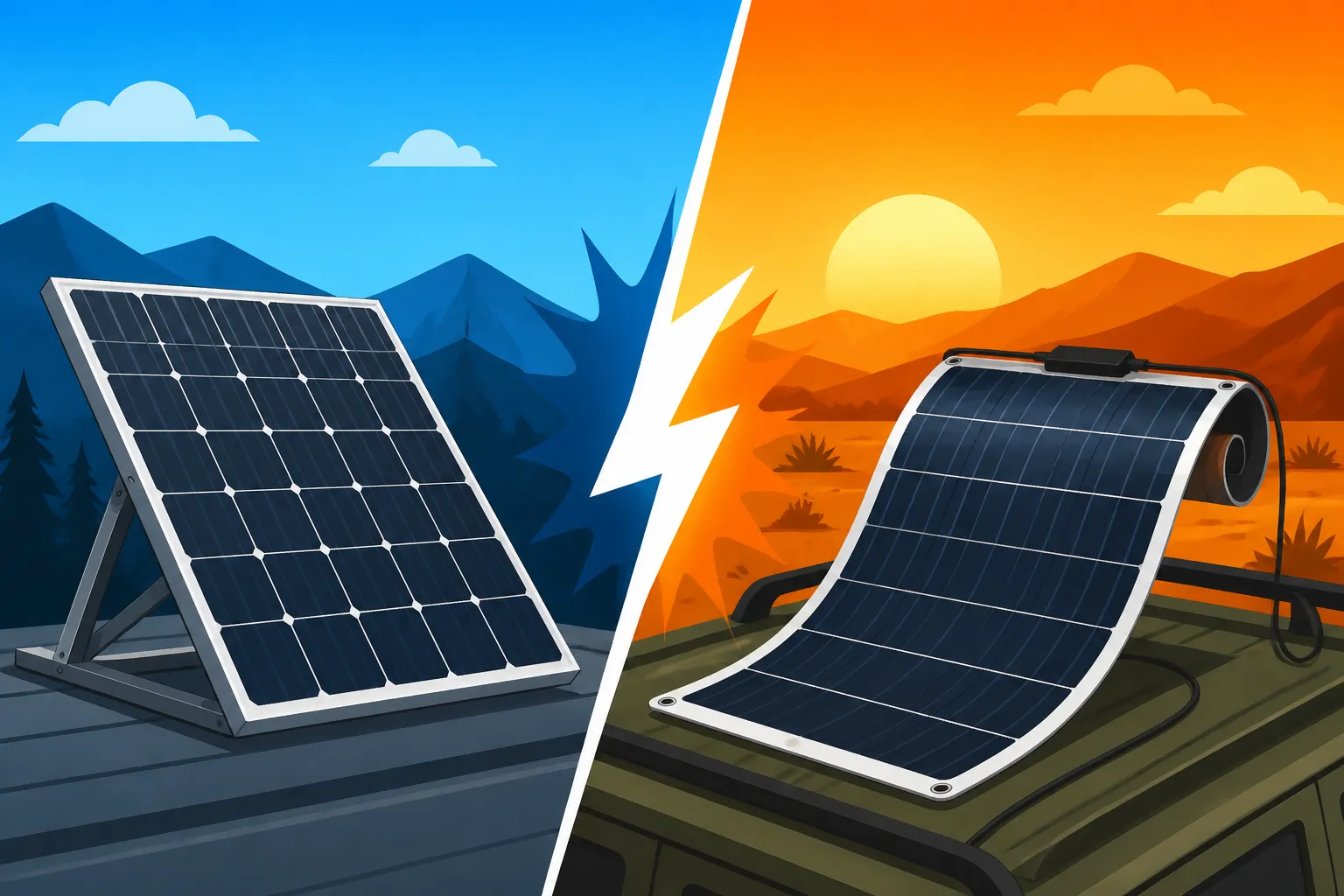
Rigid solar panels are what most people picture when they think of solar power. They're the workhorses of the solar world, known for their robust construction and long-standing presence in the industry. These panels are built to last, often seen on rooftops, ground mounts, and even larger off-grid homesteads.
Construction and Materials
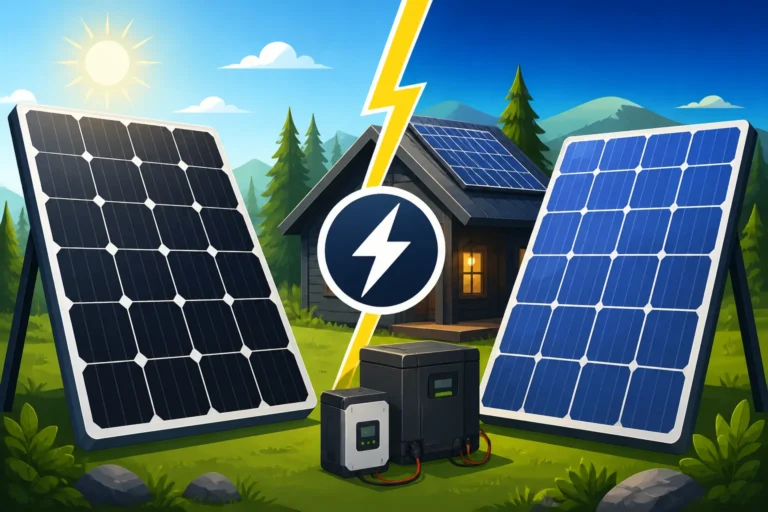
When you look at a rigid solar panel, you're seeing a carefully engineered sandwich of materials designed for maximum power production and protection. At their core are the photovoltaic (PV) cells, typically made from crystalline silicon – either monocrystalline or polycrystalline. Monocrystalline cells, recognizable by their uniform dark color, are cut from a single silicon crystal, making them generally more efficient. Polycrystalline cells, with their mottled blue appearance, are made from multiple silicon fragments melted together, which makes them a bit less efficient but often more cost-effective to produce.
These delicate PV cells are encapsulated between layers of EVA (Ethylene Vinyl Acetate) film. This film serves as a crucial protective buffer, shielding the cells from moisture, dirt, and physical shock while allowing sunlight to pass through efficiently. On the front, a layer of tempered glass, usually 3.2mm or 4mm thick, provides robust protection against hail, branches, and other environmental hazards. This glass is incredibly durable and designed to withstand significant impact. On the back, a tough, weather-resistant polymer sheet, often called a backsheet, seals everything in and prevents moisture ingress. Finally, the entire assembly is encased within a sturdy aluminum frame, which adds structural integrity, protects the edges, and provides convenient mounting points. This frame is key to their rigidity and ability to withstand mechanical stress.
Typical Applications
Rigid solar panels excel in applications where durability, long-term performance, and a fixed installation are priorities. Think of them as the steadfast foundation of many off-grid power systems. They are the go-to choice for permanent structures like off-grid homes, cabins, and remote workshops. For anyone designing an off-grid solar system for year-round living, rigid panels are usually at the top of the list because of their proven reliability and efficiency over decades.
You'll also see them frequently on larger RVs or travel trailers where roof space allows for secure, long-term mounting. In these scenarios, the added weight isn't usually a deal-breaker, and the robust nature of the panels means they can handle highway speeds and varying weather conditions. Furthermore, utility-scale solar farms and commercial installations almost exclusively use rigid panels due to their superior efficiency per square foot and their ability to be installed in large arrays. If you're building a system where maximizing power output from a given footprint is critical, and you have a solid, stable surface to mount them on, rigid panels are often the superior choice. Many people looking into how to size an off-grid system for a cabin or a whole house lean heavily on rigid panels for their primary power generation.
Diving into Flexible Solar Panels
Flexible solar panels, often called "flex panels" or "thin-film panels," represent a newer, more adaptable side of solar technology. They've gained popularity with a different crowd of off-gridders, particularly those in the mobile living community, because they solve specific challenges that traditional rigid panels simply can't.
Construction and Materials
Unlike their rigid counterparts, flexible solar panels swap the heavy glass and aluminum frame for lighter, more pliable materials. The core PV cells themselves can vary. Some flexible panels still use monocrystalline or polycrystalline silicon cells, but these are sliced much thinner and embedded in a flexible substrate. Others utilize thin-film technologies, like amorphous silicon (a-Si), Copper Indium Gallium Selenide (CIGS), or Cadmium Telluride (CdTe). These thin-film cells are deposited in incredibly thin layers onto a flexible backing, giving them their characteristic bendability.
Instead of tempered glass, flexible panels typically feature a durable, weather-resistant plastic polymer on the front, such as ETFE (Ethylene Tetrafluoroethylene) or PET (Polyethylene Terephthalate). These materials are much lighter and allow the panel to bend without breaking the cells. The backsheet is also a flexible polymer, and the entire assembly is laminated together, creating a sealed, robust, yet pliable unit. Because they lack a heavy glass layer and aluminum frame, flexible panels are significantly lighter and thinner, making them easier to handle and less conspicuous. This construction allows them to conform to curved surfaces, which is a game-changer for many unique off-grid setups.
Typical Applications
The true beauty of flexible solar panels lies in their adaptability to unique and challenging mounting situations. Their lightweight nature and ability to bend make them ideal for mobile applications where weight is a critical factor, or where surfaces aren't perfectly flat. For example, flexible panels are incredibly popular for van life, RVs, and campers, especially those with curved roofs or limited structural support. You can often adhere them directly to the roof using strong adhesive tapes, eliminating the need for heavy mounting brackets and reducing the overall height of the vehicle.
Boats and sailboats are another prime application, where flexible panels can be mounted on biminis, dodgers, or even directly on the deck, conforming to the contours and minimizing wind resistance. Portable power setups, like those for camping, backpacking, or temporary job sites, also benefit from flexible panels that can be rolled up or folded when not in use. Some people even use them on sheds or tiny homes where they want a less obtrusive look or have weight restrictions. When considering an off-grid solar cost for an RV or van, flexible panels often present a compelling option due to their ease of installation and reduced impact on vehicle dynamics.
Key Differences and Comparison Factors
When you're trying to make a choice between rigid and flexible panels, it's not just about what they're made of; it's about how those differences translate to real-world performance, durability, and cost. Let's break down the main factors you'll want to consider.
Durability and Longevity
This is often where the most significant trade-offs occur. Rigid panels, with their tempered glass and robust aluminum frames, are designed to withstand harsh weather conditions, including heavy snow loads, strong winds, and hail. They're built to be tough and have a long lifespan, typically backed by 25-year performance warranties. It's not uncommon for them to still be producing significant power well beyond that timeframe. The glass surface is scratch-resistant and easy to clean, contributing to their long-term performance.
Flexible panels, while durable in their own right for their specific applications, face different challenges. The polymer surface, while flexible, can be more susceptible to scratching, abrasion, and punctures compared to tempered glass. This means they can degrade faster in high-traffic areas or environments with a lot of debris. Their bending capability is fantastic, but repeated extreme bending or improper installation can stress the internal connections. While many flexible panels offer 5-10 year warranties, their overall lifespan is generally shorter than rigid panels. They might not hold up as well to constant direct foot traffic or continuous exposure to harsh, unshaded UV rays in extreme climates over many years.
Efficiency and Performance
Generally speaking, rigid monocrystalline panels boast higher efficiency rates than most flexible panels. What does that mean for you? It means they can convert a larger percentage of the sunlight hitting them into usable electricity. If you have limited roof space, like on a small cabin or an RV, a rigid panel will often give you more watts per square foot. This is crucial when you're trying to maximize your power output in a constrained area. For example, a 100W rigid panel from a brand like Renogy might take up less space than a 100W flexible panel while still delivering reliable power output.
Flexible panels, particularly those made with thin-film technology, often have lower efficiency ratings. This means you might need more square footage of flexible panels to achieve the same wattage output as rigid panels. However, some newer flexible panels, especially those using high-quality monocrystalline cells, are catching up in efficiency. It's also worth noting that flexible panels can sometimes handle partial shading better than rigid panels, depending on their internal cell layout, though this varies greatly by specific panel design. The key takeaway here is to always check the wattage and physical dimensions to understand the real-world power density you're getting.
Installation and Mounting
This is a major differentiator. Rigid panels require a mounting system, whether it's roof rails, ground mounts, or pole mounts. This adds to the overall cost, weight, and complexity of the installation. However, these mounting systems elevate the panels, allowing for airflow underneath, which helps with cooling (solar panels lose efficiency when they get too hot). Proper mounting also ensures optimal tilt and angle for sun exposure, a critical factor for maximizing generation, especially if you're exploring how to design an off-grid solar system for winter. Installing rigid panels often involves drilling and specialized hardware to ensure they're securely fastened and meet local building codes.
Flexible panels, on the other hand, offer unparalleled ease of installation in many scenarios. They can often be directly adhered to a surface using industrial-strength adhesive, like VHB tape, or by using grommets to screw or zip-tie them down. This eliminates the need for bulky racking, reduces weight, and can create a very low-profile, aerodynamic installation. This is a huge advantage for vehicles where minimizing wind resistance and overall height is important. The downside is that direct adhesion can limit airflow, potentially leading to higher operating temperatures and slightly reduced efficiency. However, for a quick and less invasive setup, flexible panels are hard to beat, particularly for installations like how to install off-grid solar on an RV.
Cost Considerations
When you compare panels strictly by their wattage, flexible panels often appear more expensive per watt than rigid panels. This is largely due to the specialized materials and manufacturing processes involved in making them durable and flexible. However, the initial panel price isn't the whole story.
For rigid panels, you need to factor in the cost of mounting hardware, which can add a significant amount to your overall budget. If you're paying for professional installation, the labor involved in setting up rigid panel racking can also be higher. For those looking into a DIY off-grid solar build, the cost of an off-grid solar panel component is just one part of the puzzle.
Flexible panels might have a higher upfront cost per watt, but they can save you money on mounting hardware and potentially installation labor if you're hiring someone, as the process is generally simpler. So, while the panels themselves might be more, the total installed cost could sometimes be comparable or even lower for smaller systems. It's crucial to look at the "total cost of ownership" rather than just the price tag of the panel itself.
| Feature | Rigid Solar Panels | Flexible Solar Panels |
|---|---|---|
| Construction | Tempered glass, aluminum frame, crystalline cells | Polymer front sheet, flexible substrate, thin-film/thin-crystalline cells |
| Weight | Heavier (e.g., 100W panel ~15-20 lbs) | Much Lighter (e.g., 100W panel ~4-6 lbs) |
| Durability | Very high, excellent against impact/weather | Good, but more prone to scratches/abrasion; less impact resistant |
| Longevity | 20-25+ years (common warranties) | 5-10+ years (common warranties) |
| Efficiency | Generally higher (18-22%+) | Generally lower (10-18%, but improving) |
| Installation | Requires mounting structure, elevated for airflow | Can be adhered directly, conforms to curves |
| Aesthetics | More visible, traditional look | Low-profile, blends in better |
| Cost per Watt | Generally lower | Generally higher |
| Applications | Homes, cabins, ground mounts, larger RVs | RVs, vans, boats, portable setups, curved surfaces |
Aesthetics and Weight
The visual impact of your solar setup can be important, especially for recreational vehicles or architectural considerations. Rigid panels are more prominent due to their thickness and mounting structures. They stand proud of the surface, creating a more industrial or traditional solar aesthetic. This might be fine for a ground mount array, but perhaps less appealing on the roof of a sleek adventure van.
Flexible panels offer a much more stealthy and integrated look. Because they can be directly adhered to a surface, they have a very low profile, often adding only a few millimeters of height. This is a huge benefit for van lifers or RVers who are concerned about vehicle clearance, aerodynamics, or simply prefer a less noticeable solar array. The reduced weight is also a massive advantage for mobile applications. Removing the heavy glass and aluminum significantly decreases the load on your vehicle's roof, which can improve fuel efficiency and maintain stability, especially critical for smaller vehicles or boats. If you're setting up for van life, minimizing the overall weight and height of your system, which includes components like the cost of an off-grid solar battery bank, is often a top priority.
When to Choose Rigid Panels
Making the right choice for your off-grid system depends heavily on your specific needs, location, and long-term goals. Rigid panels shine in certain scenarios where their inherent strengths truly come to the fore.
Stationary Setups and Homes
If your off-grid dream involves a fixed location, like a cabin in the woods, a full-time homestead, or a remote workshop, rigid panels are almost always the superior choice. These structures typically offer ample, stable roof space or ground area for mounting. The added weight of rigid panels and their mounting hardware isn't a concern here, as the foundation is permanent. Their superior durability means they can withstand years, even decades, of exposure to the elements without significant degradation. Imagine a harsh Vermont winter with heavy snowfall or a scorching Arizona summer—rigid panels are built to endure these conditions year after year.
Furthermore, stationary installations allow for optimal panel placement. You can carefully design your array to face true south (in the Northern Hemisphere) and set the perfect tilt angle, which can even be seasonally adjusted for maximum sun exposure throughout the year. This optimization directly translates to higher energy production and a more reliable system, helping you understand how to size an off-grid solar system for a whole house. For a permanent residence, investing in the longevity and proven performance of rigid panels makes sound financial and practical sense.
Budget-Conscious Builds
While the upfront cost per watt of the panel itself can sometimes be lower for rigid panels, the "budget-conscious" aspect here really comes down to long-term value and total installed cost for specific project types. For larger systems, rigid panels often prove to be more cost-effective over their lifespan due to their higher efficiency, longer warranties, and greater resistance to degradation. When you're building a substantial system, the cumulative effect of slightly lower efficiency or shorter lifespan from flexible panels can add up.
If you're planning a DIY installation on a ground mount, for example, the materials for the mounting structure can be sourced relatively inexpensively (e.g., treated lumber or steel pipe), offsetting some of the rigid panel's weight and complexity. The widespread availability of rigid panels and competitive pricing, often found on platforms like Amazon or from specialized solar distributors, makes them an accessible choice for many. Many individuals diving into how to budget for an off-grid solar system find that rigid panels offer the best balance of initial cost and long-term return on investment, especially when considering the significant costs associated with other core components like an off-grid solar inverter or a robust battery bank.
When to Opt for Flexible Panels
Flexible solar panels truly come into their own when rigidity is a hindrance rather than a benefit. Their unique characteristics make them indispensable for specific types of off-grid setups.
Mobile and Space-Constrained Applications
This is where flexible panels really shine. If you're living the #vanlife, cruising in an RV, or exploring the open water on a sailboat, flexible panels offer an unbeatable solution. Their lightweight design is paramount for vehicles where every pound counts and excessive roof weight can impact handling, suspension, and fuel efficiency. Imagine trying to mount heavy glass panels on the curved roof of a Sprinter van or a boat's canvas bimini—it's simply impractical or even impossible with rigid panels.
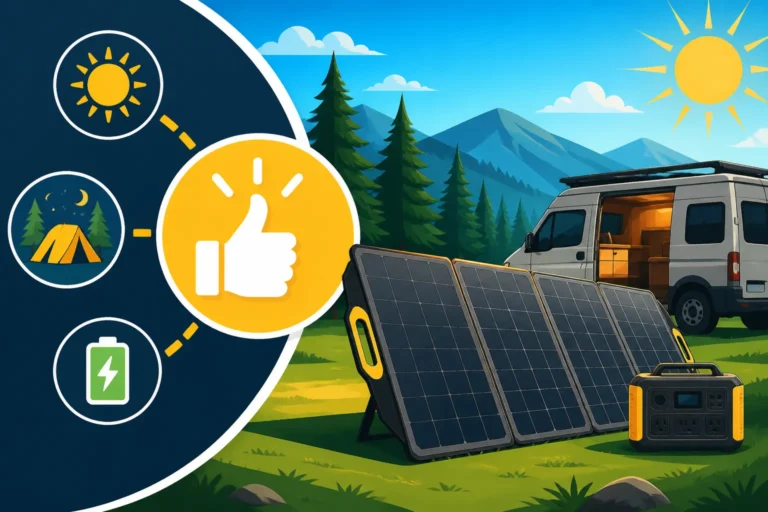
Flexible panels can adhere directly to curved surfaces, blending seamlessly with the vehicle's profile. This not only looks cleaner but also significantly reduces wind resistance, which is a major factor for fuel consumption on the highway. For smaller campers or pop-up trailers, where deploying and stowing panels quickly is a must, rollable or foldable flexible panels are incredibly convenient. They can be easily packed away when moving and deployed when parked, offering a portable solar solution that rigid panels just can't match. When you're exploring off-grid solar cost for an RV or trying to decide on the best solar setup for van life, flexible panels become a very attractive option.
Unique Mounting Challenges
Beyond mobile setups, flexible panels are fantastic for stationary applications that present unusual mounting constraints. Perhaps you have an oddly shaped shed roof, a custom-built tiny home with unconventional angles, or a remote hunting cabin where you want to keep the aesthetic as natural as possible without bulky racking visible. In these scenarios, the ability of flexible panels to conform to uneven surfaces or be discreetly installed can be a huge advantage.
They can be directly applied to less sturdy surfaces that might not support the weight of traditional panels and their mounting hardware. This also makes them ideal for temporary installations or areas where drilling into the structure is undesirable or impossible. For instance, if you're outfitting a remote research station or a temporary emergency shelter, the ease of deployment and minimal structural requirements of flexible panels can save significant time and effort. While less common, some innovative applications even see flexible panels integrated into awnings or fabric structures, turning otherwise unused surfaces into power generators.
Hybrid Approaches and Future Trends
The world of off-grid solar isn't always about choosing one path exclusively. Often, the best solution is a combination, and innovation continues to push the boundaries of what's possible.
Combining Both Panel Types
Many experienced off-gridders find that a hybrid approach, leveraging the strengths of both rigid and flexible panels, offers the most robust and versatile power system. For instance, an RV owner might install a few rigid panels on a sturdy, flat section of their roof for primary, high-efficiency power generation. Then, to supplement that, they might add a few flexible panels on a curved section, or use portable flexible panels that can be laid out on the ground when parked in a sunny spot. This combination allows for maximum power capture while also maintaining the advantages of lightweight, low-profile flexible options.
Another scenario could be a small cabin that relies mainly on a ground-mounted array of highly efficient rigid panels for its base load. However, for a small, shaded porch or an auxiliary structure like a pump house, a few flexible panels might be ideal for running specific, smaller loads without needing to extend the main wiring or install complex mounting. This approach highlights how to design an expandable system, allowing you to gradually add different types of panels as your needs or budget evolve.
Emerging Technologies
The solar industry is constantly evolving, with new technologies promising even greater efficiency, flexibility, and durability. Researchers are exploring next-generation thin-film materials that could drastically increase the efficiency of flexible panels, making them competitive with traditional rigid ones in terms of power output per square foot. Perovskite solar cells, for example, are showing incredible promise in labs, potentially offering high efficiency at a much lower cost and with even greater flexibility than current technologies. Imagine solar panels that are truly "paint-on" or seamlessly integrated into building materials!
Another area of development is transparent solar cells, which could turn windows and skylights into power generators. While these technologies are still in their early stages for widespread off-grid use, they hint at a future where solar power is even more integrated, adaptable, and less constrained by traditional panel forms. As these innovations mature, the lines between "rigid" and "flexible" will likely blur further, offering even more tailored solutions for every imaginable off-grid scenario. Staying informed on Best Off-Grid Solar Panels and what's on the horizon is always a good idea for any serious off-grid enthusiast.
Disclaimer
The information provided in this guide is for general informational purposes only and does not constitute professional advice. Off-grid solar system design and installation can be complex and should always be undertaken with appropriate safety precautions and, where necessary, the guidance of qualified professionals. Always consult local codes and regulations.