Cost to Power a Cabin with Solar
Dreaming of a peaceful cabin retreat, powered entirely by the sun, is a vision many of us share. But then reality hits: how much does it actually cost to make that dream a reality? Figuring out the true expense of powering a cabin with off-grid solar can feel like trying to solve a puzzle with half the pieces missing, leaving you wondering if it's even achievable. This comprehensive guide will walk you through every aspect of off-grid solar costs for a cabin, helping you understand the investment and plan your journey to energy independence.
Understanding the Unique Power Needs of a Cabin
Before you can even begin to tally costs, you've got to understand what your cabin truly needs from a power perspective. It's not just about flipping a switch; it's about matching your lifestyle and expectations with a functional, reliable solar system. Every cabin is different, and what works for a weekend warrior might not cut it for a full-time resident.
Assessing Your Cabin's Energy Profile
The first step in sizing your off-grid solar system is to take a hard look at how you plan to use your cabin. Is it a rustic escape where you'll mostly read by lamplight and cook on a propane stove, or are you envisioning all the modern comforts, like a refrigerator, microwave, and maybe even a mini-split air conditioner? The difference in energy demand between these two scenarios is astronomical and will directly dictate the size and, therefore, the cost of your system.
Consider how often you'll be there. A cabin used only on summer weekends has vastly different requirements than one intended for year-round living, especially if you're battling long, dark winters in, say, the mountains of Montana. Write down every electrical item you plan to use, from the tiniest phone charger to the biggest well pump. Think about how many hours a day each item will run. This detailed inventory is crucial. If you underestimate your needs, you'll end up with a system that constantly leaves you in the dark, and nobody wants that kind of "off-grid" experience.
Calculating Daily Watt-Hour Requirements
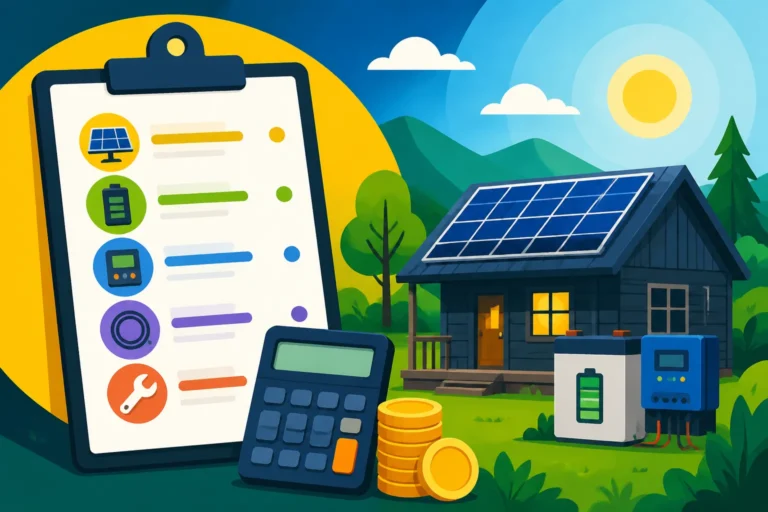
Once you have your list of appliances, it's time to crunch some numbers. This is where many folks get a little intimidated, but it's really just basic math. For each appliance, you need to find its wattage (how much power it draws) and estimate how many hours per day you'll use it. Multiply the watts by the hours to get daily watt-hours (Wh). For example, a 100-watt light bulb used for 5 hours a day consumes 500 Wh. A small energy-efficient refrigerator might draw 50-75 watts when its compressor is running, but it cycles on and off throughout the day. For appliances that cycle, you'll need to estimate their total run time over 24 hours.
Don't forget the "phantom loads" – those devices that draw power even when turned off, like a television in standby mode or a charging adapter. While seemingly small, these can add up over 24 hours. Summing up all your individual appliance watt-hours gives you your total daily energy consumption. This magical number, expressed in watt-hours per day (Wh/day), is the foundation upon which your entire off-grid solar system will be built. Getting this right is paramount, as an undersized system means constant frustration and potential damage to batteries, while an oversized system means you’ve simply spent more money than you needed to. You can find more detailed guidance on How to Calculate Daily Energy Usage to make sure you don't miss anything.
Breaking Down the Components and Their Costs
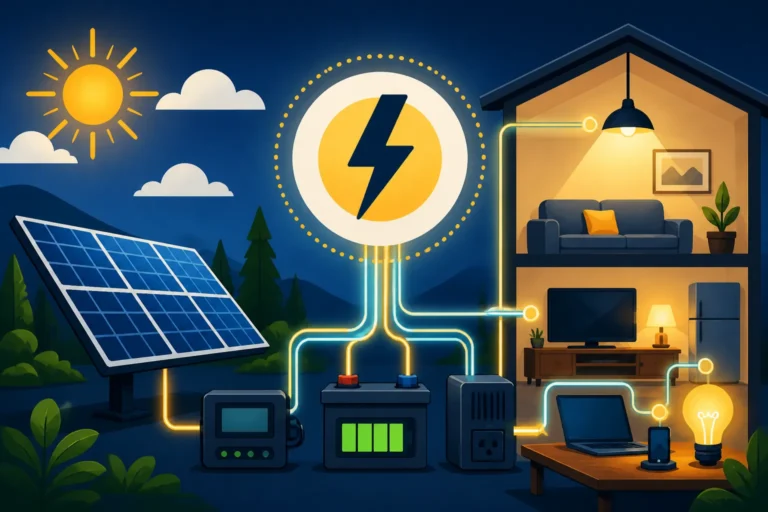
An off-grid solar system isn't just a bunch of panels; it's an intricate dance of several key components, each with its own vital role and, of course, its own price tag. Understanding these individual costs helps you see the bigger picture and where your money is really going.
Solar Panels
The most iconic part of any solar system, panels are what convert sunlight into usable electricity. Their cost can vary significantly based on wattage, efficiency, brand, and type. For a typical cabin, you'll likely be looking at rigid monocrystalline panels, known for their efficiency and durability. You might see panels ranging from 100 watts to over 400 watts each. The price per watt has come down considerably over the years, often sitting between $0.50 and $1.50 per watt, depending on quality and bulk purchases. So, a 300-watt panel might cost anywhere from $150 to $450.
For a modest cabin with essential needs, you might require 1,000 to 2,000 watts of solar panels, costing roughly $1,000 to $3,000. If your cabin is larger or used year-round with higher energy demands, you could easily need 3,000 to 6,000 watts, pushing the panel cost to $3,000-$9,000 or more. Remember that the "rated" wattage is under ideal conditions, so you'll always want a bit of an buffer to account for less-than-perfect sun. For more on the specifics, check out our guide on the Cost of Off-Grid Solar Panels.
Battery Bank
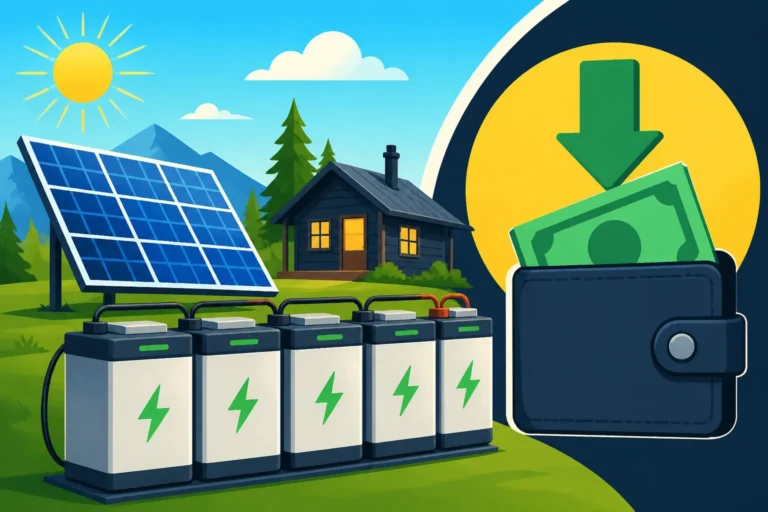
This is often the most expensive single component of an off-grid system, and for good reason: it's where you store all that precious solar energy for use when the sun isn't shining. The type and capacity of your batteries dramatically impact both cost and system performance. Lead-acid batteries (like flooded lead-acid or AGM) are generally cheaper upfront but have a shorter lifespan and require more maintenance. Lithium Iron Phosphate (LiFePO4) batteries are more expensive initially, but they offer significantly longer lifespans, deeper discharge capabilities, and require virtually no maintenance, often making them more cost-effective over the long run.
For a small cabin, a basic lead-acid bank might run $1,000 to $3,000. A comparable LiFePO4 bank could be $2,000 to $6,000. For larger, year-round cabins needing substantial storage, a robust LiFePO4 battery bank could easily reach $10,000 to $20,000 or more. This investment is crucial because it determines your "days of autonomy" – how long your cabin can run on stored power without any new solar input. We've got a detailed comparison on LiFePO4 vs Lead-Acid Battery Cost if you want to dive deeper into that decision.
Inverter and Charge Controller
These are the brains of your solar system. The charge controller manages the power coming from your solar panels, ensuring your batteries are charged efficiently and not overcharged. MPPT (Maximum Power Point Tracking) charge controllers are generally more efficient, especially in varying light conditions, and are recommended for most systems, though they cost more than PWM (Pulse Width Modulation) controllers. Expect an MPPT controller to range from $150 for smaller systems to $1,000+ for larger ones.
The inverter takes the DC power from your batteries and converts it into usable AC power for most household appliances. You'll almost always want a pure sine wave inverter for sensitive electronics, which costs more than a modified sine wave inverter. Inverter sizes range from small 1000-watt units to powerful 6000-watt (or larger) units. A decent quality, pure sine wave inverter will likely cost between $500 and $3,000. Many modern systems use "inverter chargers" which combine the functions of an inverter and a battery charger (handy if you have a backup generator), adding convenience but also to the overall Cost of an Off-Grid Solar Inverter.
Mounting Hardware, Wiring, and Balance of System (BOS)
Don't forget the "little" things that add up! The Balance of System (BOS) includes all the necessary but less glamorous parts: mounting racks for your panels (roof mounts or ground mounts), all the wiring and cables (PV wire, battery cables, AC wiring), circuit breakers, fuses, disconnect switches, combiner boxes, and possibly a grounding rod. These items are critical for safety and system functionality.
Mounting hardware can range from a few hundred dollars for a simple roof mount to over $1,500 for a robust, adjustable ground mount for multiple panels. Quality copper wiring can be surprisingly expensive, especially for longer runs and higher amperage circuits. Fuses, breakers, and disconnects are essential safety components that might collectively cost a few hundred dollars. While individually less costly than panels or batteries, these BOS components can easily add another $1,000 to $3,000+ to your total cost, depending on the complexity and scale of your cabin system. Always err on the side of quality and safety for these items.
Factors That Significantly Impact Your Cabin Solar Cost
The baseline costs for solar components are just the beginning. Several external and internal factors can dramatically swing the total price tag of your off-grid cabin solar system. Understanding these variables early on can save you a lot of headache and unexpected expenses down the line.
Cabin Usage Frequency and Duration
This is perhaps the biggest cost driver. A cabin primarily used for occasional weekend getaways will require a much smaller and less expensive system than a cabin intended for full-time residence or even extended seasonal use. For a weekend cabin, you might only need to power lights, charge devices, and run a small water pump or refrigerator occasionally. This could mean a 1,000-watt panel array and a modest battery bank.
Contrast that with a full-time cabin where you're running all the usual household appliances – a larger refrigerator, freezer, microwave, washing machine, maybe a TV, computer, and even heating/cooling. This requires a significantly larger solar array (often 4,000-8,000 watts or more) and a much bigger, more robust battery bank to handle consistent daily demands and provide ample storage for cloudy days. The cost difference between these two scenarios can be tens of thousands of dollars. Be honest with yourself about your planned usage; it's better to build a system that meets your true needs than to constantly feel constrained.
Appliance Load and Energy Consumption Habits
The type and number of appliances you want to run are directly proportional to your system's required size and cost. Energy-hogging appliances like electric water heaters, electric stoves, and standard air conditioners can quickly make an off-grid solar system prohibitively expensive. If you can, opt for propane or wood-burning alternatives for heating and cooking. When it comes to refrigeration, look for highly efficient DC refrigerators or AC models with excellent energy ratings. For instance, a small chest freezer might use less power than an upright model, even if it's slightly less convenient.
Even seemingly small habits matter. Leaving lights on in unoccupied rooms, charging multiple devices simultaneously, or ignoring "phantom drain" from electronics can add up. Being mindful of your energy consumption, opting for LED lighting, and unplugging devices when not in use can significantly reduce your overall daily watt-hour demand, allowing for a smaller, more affordable system. Thinking critically about How to Estimate Appliance Power Draw can reveal areas for significant savings.
Geographic Location and Sun Exposure
Where your cabin is located profoundly affects how much solar power you can generate. Regions with abundant sunshine and clear skies year-round, like Arizona or Southern California, will require fewer solar panels to meet a given energy demand compared to areas with frequent cloudy weather, dense tree cover, or short winter days, such as the Pacific Northwest or parts of the Northeast. The concept of "peak sun hours" is vital here – it's the equivalent number of hours per day when the sun's intensity averages 1,000 watts per square meter.
A cabin in an area with 5 peak sun hours will generate twice as much energy from the same solar array as a cabin in an area with only 2.5 peak sun hours. This directly translates to needing more panels (and therefore higher costs) in less sunny locations to achieve the same daily energy production. Additionally, extreme weather conditions like heavy snow loads or high winds might necessitate more robust (and thus more expensive) mounting hardware. You should also consider how Off-Grid Solar Cost in Cold Climates can be affected by factors like snow and reduced daylight.
Desired Days of Autonomy and System Redundancy
Days of autonomy refers to how many days your fully charged battery bank can power your cabin without any additional solar input. For critical systems or full-time living, you might want 3-5 days of autonomy to weather extended cloudy spells. This requires a much larger and more expensive battery bank. A weekend cabin might get by with 1-2 days. The more autonomy you desire, the higher your battery costs will be.
System redundancy also impacts cost. Are you comfortable with just solar and batteries, or do you want a backup generator for emergencies or prolonged low-sun periods? Integrating a generator adds to the upfront cost (the generator itself, transfer switch, wiring, and potentially an auto-start feature), but it can also allow you to slightly downsize your battery bank, as the generator can pick up the slack. This is a crucial trade-off between upfront investment and peace of mind. For many off-gridders, a generator is a non-negotiable part of their power plan. This can impact your overall Off-Grid Solar Cost: Complete Breakdown.
DIY vs Professional Installation: Cost Implications
One of the biggest decisions you'll face when planning your cabin's off-grid solar system is whether to tackle the installation yourself or hire professionals. This choice has substantial financial implications, impacting not just the upfront cost but also potential long-term reliability and safety.
The Appeal and Challenges of a DIY Approach
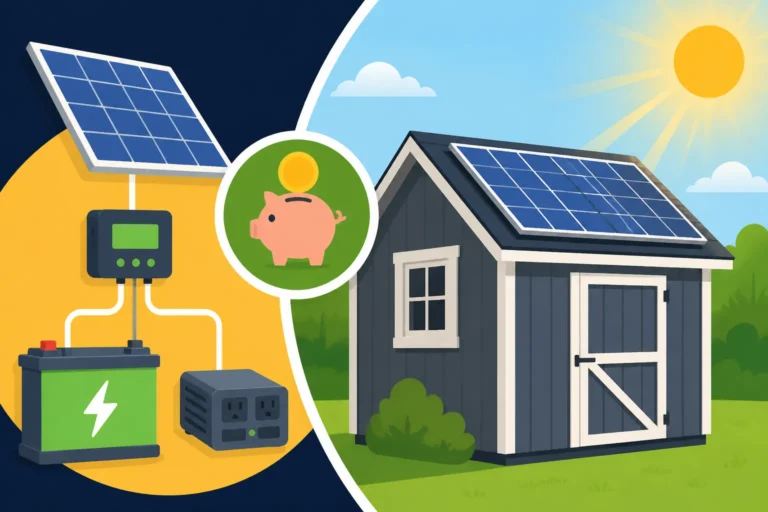
For many cabin owners, the idea of a DIY solar installation is incredibly appealing. It taps into that self-sufficiency spirit that often draws people to off-grid living in the first place. The most significant advantage, of course, is the cost savings on labor. Professional installation can add anywhere from 10% to 30% (or more) to the total system cost, depending on complexity and location. By doing it yourself, you can save thousands of dollars, making your off-grid dream more attainable. We have a great resource on How Much Cheaper Is DIY Off-Grid Solar if you're leaning this way.
However, a DIY approach comes with considerable challenges. You need to have a solid understanding of electrical systems, wiring, and safety protocols. This isn't just hooking up a few wires; it involves high-voltage DC circuits, powerful inverters, and heavy batteries. Incorrect wiring can lead to system failure, equipment damage, or, worst of all, fire hazards and serious injury. You'll need to invest in some specialized tools, and the learning curve can be steep. You'll also be responsible for sourcing all components, which can be time-consuming. While guides are plentiful, and companies like Renogy or even larger online retailers like Amazon offer complete solar kits, integrating all the components correctly still requires a significant amount of research and careful execution. If you're not confident in your electrical skills, the potential risks might outweigh the cost savings.
When to Call in the Pros
There are definite situations where hiring a professional installer is not just advisable, but practically essential. If your cabin is in an area with strict permitting and inspection requirements (which is becoming more common even for off-grid systems), professionals can navigate the bureaucracy and ensure your system meets all local codes. This alone can save you immense frustration. If your system design is complex – perhaps involving multiple battery banks, a substantial generator integration, or a complicated panel mounting scenario – a pro's expertise is invaluable.
Moreover, a professional installation typically comes with warranties on both the equipment and the workmanship. If something goes wrong, you have someone to call. For larger systems, or if you simply lack the time, tools, or confidence to do it yourself, the peace of mind offered by professional installation is well worth the extra investment. While it adds to your upfront Off-Grid Solar Installation Cost, it can prevent costly mistakes and provide long-term reliability. A good installer will also optimize your system for your specific site conditions, ensuring maximum efficiency and output.
Comparing Labor and Material Costs
When you're evaluating the DIY vs. professional route, it's helpful to break down where the money goes.
DIY Costs:
- Components: This will be the bulk of your expense.
- Tools: Multimeter, wire strippers, crimpers, wrenches, safety gear, perhaps a specialized battery lifting strap, etc.
- Time: Your time spent researching, sourcing, planning, and physically installing. This is often underestimated.
- Permit Fees: If applicable in your area.
- Learning Curve: Potential for mistakes, needing to buy replacement parts.
Professional Installation Costs:
- Components: Often purchased in bulk, sometimes at a slight discount, but generally similar to retail.
- Labor: This is the added cost, typically calculated by the hour or as a percentage of the total project. This covers design, procurement, installation, and commissioning.
- Permit Fees: Handled by the installer.
- Expertise & Warranty: Assurance that the system is correctly designed and safely installed, with ongoing support.
A small, simple cabin system might be feasible for a DIYer with some electrical background, keeping the total cost perhaps in the $5,000-$10,000 range. A larger, more complex system for year-round living could easily see professional installation costs pushing the total project into the $25,000-$50,000+ range. The decision hinges on your skills, time availability, budget, and comfort level with electrical work.
Long-Term Costs and Savings of Off-Grid Cabin Solar
While the upfront cost of an off-grid solar system for your cabin might seem daunting, it's crucial to look at the bigger financial picture over the lifespan of the system. Off-grid solar is an investment that, like any other, has ongoing costs but also offers significant long-term savings and benefits.
Maintenance and Replacement Costs
No system is truly "install and forget." Off-grid solar systems, while generally robust, do require some periodic maintenance and eventual component replacement. The good news is that solar panels themselves are incredibly durable and typically come with warranties of 25 years or more, promising to still produce at least 80% of their rated power after that time. Cleaning them occasionally, especially after heavy snow or dust, is usually the extent of their maintenance.
The real long-term cost driver is the battery bank. Lead-acid batteries generally need to be replaced every 3-7 years, depending on their type, usage, and maintenance. LiFePO4 batteries, while more expensive initially, can last 10-20 years or even longer, significantly reducing your long-term replacement costs. An inverter might need replacing every 10-15 years. Charge controllers are generally reliable but can fail. Budgeting for these replacements is essential. For example, a full battery bank replacement could cost anywhere from $2,000 to $10,000+ depending on the size and chemistry. Understanding these Off-Grid Solar Maintenance Costs and planning for them will prevent future financial surprises.
Fuel Savings and Grid Independence
This is where the financial benefits truly shine. If your alternative to off-grid solar is running a noisy, fuel-guzzling generator, the savings quickly add up. Gasoline or propane costs for a generator can run into hundreds, if not thousands, of dollars annually, depending on your power needs. With solar, your "fuel" is free sunlight. Over the 20-30 year lifespan of a solar system, these fuel savings alone can easily offset a significant portion of your initial investment. Think about it: every time you fire up an appliance, you're not paying a utility bill or filling up a gas can.
Furthermore, off-grid solar offers true energy independence. You're no longer subject to rising utility rates, power outages, or the hassle of dealing with a power company. This freedom has an inherent value that's hard to put a price on. If your cabin is in a remote location, the alternative of extending utility power lines could cost tens of thousands of dollars per mile, making off-grid solar not just cheaper, but often the only financially viable option. Our article on Off-Grid Solar vs Generator Fuel Cost breaks down these comparisons in detail.
Potential Property Value Increase
While harder to quantify, installing a well-designed and reliable off-grid solar system can increase the value and marketability of your cabin property. Many people are increasingly interested in sustainable living and energy independence. A fully functional solar setup means a buyer doesn't have to factor in the cost and complexity of bringing in grid power or installing a system themselves. It positions your cabin as a modern, self-sufficient retreat, which can be a significant draw for potential buyers.
This isn't just about financial return; it's about the lifestyle premium. A cabin with a reliable power system is simply more desirable and functional than one without. It makes the property usable year-round, expanding its appeal. While the exact increase in property value will depend on your local real estate market and the quality of your system, it's a definite positive factor that contributes to the long-term return on your off-grid investment.
Budgeting Strategies and Ways to Save Money
Navigating the costs of off-grid cabin solar can feel like a high-stakes balancing act. You want a reliable system without breaking the bank. Thankfully, there are smart strategies you can employ to make your off-grid dream more affordable and manageable.
Phasing Your Build
One of the most effective ways to manage the upfront cost of an off-grid solar system for your cabin is to build it in phases. Instead of trying to install a massive, full-coverage system all at once, start with a smaller, more essential setup that covers your basic needs. This might mean starting with enough panels and batteries to run lights, charge phones, and power a small water pump or an efficient DC refrigerator.
As your budget allows and your needs evolve, you can gradually expand your system. Add more panels for increased charging capability, expand your battery bank for greater autonomy, or upgrade your inverter to handle larger appliances. This approach breaks down a large, daunting expense into more manageable chunks. For instance, you could begin with a 12V system for minimal loads and later upgrade to a 24V or 48V system as you add major appliances like a well pump or mini-split AC. Planning for expansion from the outset, like installing a slightly oversized charge controller, can make these future upgrades smoother. Our guide on How to Phase an Off-Grid Solar Build to Spread Cost offers excellent practical advice on this.
Choosing the Right Components
Not all solar components are created equal, and price often reflects quality, efficiency, and longevity. However, "most expensive" doesn't always mean "best value." Your goal should be to find the sweet spot between cost and reliability. For example, while top-tier solar panels from brands like REC Solar or LG are highly efficient, slightly less efficient panels from reputable brands like Renogy or Rich Solar might offer a better price-per-watt for a cabin where roof space isn't extremely limited.
When it comes to batteries, carefully consider the long-term cost. As discussed, while LiFePO4 batteries have a higher upfront cost, their significantly longer lifespan and deeper discharge capabilities often make them cheaper per cycle than lead-acid batteries over 10-20 years. Don't cheap out on critical components like your inverter; a reliable pure sine wave inverter from a trusted brand (like Victron Energy or Outback Power) is worth the investment to protect your appliances and ensure consistent power. Buying components from reputable sources, even online retailers like Amazon, can provide competitive pricing and decent return policies.
Exploring Incentives and Financing
While off-grid solar systems generally don't qualify for the federal solar tax credit (the Investment Tax Credit, or ITC), there are specific circumstances and components that might be eligible, especially if the cabin is your primary residence or if the system serves specific qualifying purposes. It's always worth consulting with a tax professional to see if any part of your system could qualify. For instance, sometimes battery storage components might be eligible even if the panels aren't directly connected to a grid.
Beyond federal incentives, some states or local municipalities offer their own rebates, grants, or property tax exemptions for renewable energy installations, regardless of grid connection. Do thorough research into state incentives for off-grid solar in your area. If you need financing, look into personal loans or home equity loans. While traditional solar financing often targets grid-tied systems, some lenders might offer specific options for off-grid applications. Even if no direct solar incentives apply, the long-term savings on energy costs should be factored into your financial planning, making your cabin solar a wise investment. You can learn more about specific eligibility in Does the Federal Tax Credit Apply to Off-Grid Solar.
Real-World Cost Examples for Different Cabin Scenarios
To help bring these numbers to life, let's explore a few hypothetical cabin scenarios, illustrating how different needs and uses translate into varying off-grid solar system costs. Keep in mind these are estimates, and actual costs will vary based on component choices, location, and installation method.
A Basic Weekend Cabin Setup
Imagine a small, rustic cabin, maybe 300-500 square feet, used primarily on summer weekends. The owners want basic comforts: LED lighting, charging phones/laptops, a small water pump for a sink, and an efficient chest refrigerator. They're okay with a portable propane stove for cooking and a wood stove for heat.
- Solar Panels: 800-1,000 watts (e.g., 2-3 x 400W panels). Estimated cost: $800 – $1,500.
- Battery Bank: 200-400 Ah (12V) LiFePO4 battery (or equivalent lead-acid). Estimated cost: $1,000 – $2,500.
- Inverter/Charge Controller: 1000-watt pure sine wave inverter and 40-60 amp MPPT charge controller (could be a small all-in-one unit). Estimated cost: $600 – $1,200.
- Balance of System (BOS): Mounting hardware, wiring, fuses, disconnects. Estimated cost: $500 – $1,000.
- Installation: DIY.
Total Estimated DIY Cost for a Basic Weekend Cabin: $2,900 – $6,200
This setup provides enough power for essential loads, but careful energy management is still key. It's perfect for those looking for a relatively inexpensive entry into off-grid cabin living.
A Medium-Sized Seasonal Cabin
Consider a 700-1,200 square foot cabin used for several weeks or months out of the year, including some cooler months. This cabin has more amenities: a full-size energy-efficient refrigerator, microwave, small TV, internet router, a more powerful well pump, and perhaps a few small baseboard heaters for supplemental warmth, or a mini-split AC.
- Solar Panels: 2,000-3,000 watts (e.g., 5-8 x 400W panels). Estimated cost: $2,000 – $4,500.
- Battery Bank: 400-800 Ah (24V or 48V) LiFePO4 bank. Estimated cost: $4,000 – $8,000.
- Inverter/Charge Controller: 3000-5000 watt pure sine wave inverter (possibly an inverter charger combo) and 60-80 amp MPPT charge controller. Estimated cost: $1,500 – $3,000.
- Balance of System (BOS): Ground mount racking, heavier gauge wiring, safety components. Estimated cost: $1,000 – $2,500.
- Backup Generator: A mid-sized portable generator for cloudy periods. Estimated cost: $800 – $2,000.
- Installation: DIY with electrician consultation, or professional.
Total Estimated DIY Cost (excluding professional labor): $9,300 – $20,000
Total Estimated Professional Install Cost: Add 20-30% for labor and permitting, roughly $11,160 – $26,000+
This system offers significantly more comfort and resilience, suitable for longer stays and more demanding appliances.
A Full-Time Off-Grid Homestead Cabin
Picture a larger 1,500-2,500 square foot cabin, serving as a primary residence year-round. This home needs to power all typical household appliances: a large refrigerator and freezer, washing machine, dishwasher, multiple TVs/computers, efficient electric hot water heater, a robust well pump, and a primary heating/cooling system (e.g., a mini-split heat pump or radiant floor heating). Reliability and substantial autonomy are paramount. For more on this, you might explore the Cost to Go Off-Grid for a Family Home.
- Solar Panels: 5,000-8,000 watts (e.g., 12-20 x 400W panels). Estimated cost: $5,000 – $12,000.
- Battery Bank: 1,000-2,000 Ah (48V) LiFePO4 server rack batteries or similar robust solution. Estimated cost: $10,000 – $25,000+.
- Inverter/Charge Controller: 6000-12000 watt pure sine wave inverter charger and 100+ amp MPPT charge controllers (potentially multiple units, or a hybrid all-in-one inverter like a Sol-Ark or Victron MultiPlus). Estimated cost: $3,000 – $8,000.
- Balance of System (BOS): Commercial-grade ground mount, extensive wiring, combiner boxes, advanced safety features, possibly smart monitoring system. Estimated cost: $2,000 – $5,000.
- Backup Generator: Large, perhaps auto-start propane or diesel generator. Estimated cost: $3,000 – $8,000.
- Installation: Professional installation highly recommended.
Total Estimated Professional Install Cost: $23,000 – $58,000+ (excluding land, dwelling, septic, etc. – just power system)
This level of system provides true grid-like comfort and reliability for full-time off-grid living, but it comes with a significant investment. It's about designing a system that can handle continuous heavy loads and ensure consistent power even during extended periods of low sun.
Here's a summary table to help visualize these scenarios:
| Cabin Scenario | Usage | Key Appliances | Solar Panels (Watts) | Battery Bank (LiFePO4 Wh) | Est. Component Cost (DIY) | Est. Professional Install Cost |
|---|---|---|---|---|---|---|
| Basic Weekend Cabin | Occasional weekends | LED lights, phone charging, small fridge, pump | 800-1,000 | 2,500-5,000 | $2,900 – $6,200 | N/A (DIY usually) |
| Medium Seasonal Cabin | Weeks/months | Full fridge, microwave, TV, well pump, AC/heat | 2,000-3,000 | 10,000-20,000 | $9,300 – $20,000 | $11,160 – $26,000+ |
| Full-Time Homestead | Year-round living | All modern appliances, full heating/cooling | 5,000-8,000 | 25,000-50,000+ | N/A (Pro recommended) | $23,000 – $58,000+ |
These examples highlight the wide range of costs involved. Your perfect cabin solar system will fall somewhere along this spectrum, tailored precisely to your energy needs, location, and budget. The key is thorough planning and a realistic assessment of what you truly require.
Disclaimer
The information provided in this guide is for general informational purposes only and does not constitute professional advice. Off-grid solar system design and installation can be complex and involve significant electrical hazards. Always consult with qualified professionals and adhere to all local codes and regulations before undertaking any solar project. Prices and product availability are subject to change.