Cost to Go Off-Grid for a Family Home
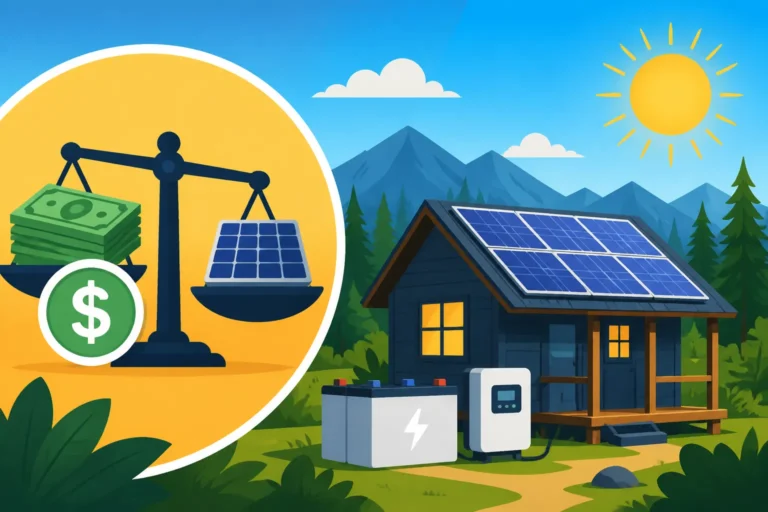
The dream of energy independence, of saying goodbye to that monthly utility bill, is incredibly appealing for many families. But let's be honest, the thought of powering an entire home completely off-grid often brings with it a whole lot of questions and, let's face it, some serious sticker shock potential. It's a massive undertaking, and understanding the true financial commitment is the crucial first step. This detailed guide will meticulously unpack the costs associated with transitioning a typical family home to a self-sufficient off-grid solar system, providing realistic expectations and helping you budget for this significant lifestyle change.
The Core Components and Their Associated Costs
When you're looking at going off-grid with a family home, you're building a complete power plant right on your property. This isn't just a few panels; it's a sophisticated system made up of several key components, each with its own price tag.
Solar Panels The Power Harvesters
The solar panels are your primary energy source, converting sunlight into electricity. For a family home, you'll need a substantial array, much more than you'd see on an RV or a tiny shed. The cost is primarily driven by the panel's wattage, efficiency, and brand. Typically, you can expect to pay anywhere from $0.70 to $1.50 per watt for the panels themselves.
A typical family home, depending on its energy demands, might require anywhere from 5 kilowatts (kW) to 15 kW (5,000 to 15,000 watts) of solar capacity, or even more if you're not planning to drastically reduce your consumption. This means the panels alone could set you back between $3,500 and $22,500. High-efficiency monocrystalline panels tend to be on the higher end of this range, but they offer better performance in a smaller footprint, which can be a real advantage if your roof space is limited or you're aiming for a compact ground mount. Polycrystalline panels are generally more budget-friendly. It’s important to understand that the Cost of Off-Grid Solar Panels is a foundational expense in your overall system.
The exact number of panels you'll need directly correlates with your family's energy usage and the average "peak sun hours" in your location. A household that uses a lot of power for cooking, laundry, air conditioning, and multiple electronics will naturally require a much larger and more expensive array than one focused on minimalist, energy-conscious living.
Batteries The Heart of Your Off-Grid System
This is often the single most expensive component in an off-grid solar setup, and for very good reason: batteries store the energy generated by your panels for use at night or on cloudy days. Without a robust and reliable battery bank, true off-grid living is simply not feasible. You need enough storage to comfortably cover your family's needs even when the sun isn't cooperating.
For a family home, you'll primarily be choosing between lead-acid batteries (like sealed AGM or flooded lead-acid) or lithium iron phosphate (LiFePO4) batteries. Lead-acid options are cheaper upfront, typically ranging from $100-$400 per 100Ah 12V battery, but they have a shorter lifespan, are heavier, and often require more maintenance. LiFePO4 batteries represent a significantly larger initial investment, often $500-$1,200+ per 100Ah 12V battery, but they offer a much longer lifespan (often 10-15+ years), deeper discharge capabilities without damage, and are virtually maintenance-free. The total Cost of an Off-Grid Solar Battery Bank can easily swing from $5,000 for a modest lead-acid bank to upwards of $30,000, or even $60,000+ for a comprehensive LiFePO4 system designed to power a whole house with several days of autonomy.
To accurately gauge your battery needs, you must first calculate your daily energy consumption and then decide how many days of "autonomy" (the ability to power your home without any solar input) you want. For a family home, especially in areas with unpredictable weather, aiming for at least 3-5 days of autonomy is a prudent choice to ensure consistent power supply.
Inverters and Charge Controllers The Brains of the Operation
These are the intelligent components that manage and transform the electricity within your system. The inverter is responsible for converting the DC (direct current) power stored in your batteries into the AC (alternating current) power that standard household appliances, from your refrigerator to your television, rely on. For a family home, you’ll absolutely need a high-quality, pure sine wave inverter, likely part of a 24V or 48V system, with sufficient surge capacity to handle the brief but intense power demands of motors starting up (like those in well pumps or air conditioners). A robust Cost of an Off-Grid Solar Inverter for a whole home can range from $1,500 to $10,000 or even more, depending on its wattage capacity, features (such as being an inverter-charger hybrid), and brand reputation. Brands like Victron Energy or Sol-Ark are popular for their reliability and advanced features in larger home systems.
The charge controller, on the other hand, acts as the gatekeeper for power flowing from your solar panels to your batteries. It optimizes the charging process, preventing overcharging which can severely damage your battery bank and extending its lifespan. MPPT (Maximum Power Point Tracking) controllers are highly recommended for larger off-grid systems due to their superior efficiency, especially when solar panel output varies due to weather or shading. A suitable MPPT charge controller for a family home's system can run from $300 to $2,000+.
These components are absolutely critical for the safe, efficient, and reliable operation of your entire off-grid system. Trying to cut corners with undersized or low-quality inverters and charge controllers can lead to frustrating inefficiencies, dramatically shorten battery life, or even catastrophic system failure. This is one area where investing in quality truly pays off.
Mounting Hardware, Wiring, and Balance of System Components
This category encompasses all the essential, but often overlooked, elements that tie your solar system together. This includes the racking structure for your solar panels (whether it's mounted on your roof or a ground array), all the necessary DC and AC wiring, fuses, circuit breakers, disconnect switches, a combiner box for your solar array, and potentially a new electrical subpanel if you're integrating with existing home wiring.
The costs here can be surprisingly variable but are frequently underestimated in initial budget planning. Quality racking can range from $500 to $5,000+, depending on the size of your array and the complexity of the mounting (e.g., adjustable tilt mounts will cost more than fixed mounts). High-quality, properly sized copper wiring, along with the necessary fuses, breakers, and disconnects, can easily add another $1,000 to $3,000+ to your budget. Don't forget conduit to protect exterior wiring from the elements and pests.
These "balance of system" (BOS) components are absolutely vital for both safety and compliance with electrical codes. Attempting to save money by using undersized wiring or cheap, unrated disconnects isn't just an efficiency killer; it poses a serious fire hazard. Investing in robust, code-compliant BOS components from reputable suppliers is non-negotiable for a safe, durable, and reliable off-grid system.
Key Factors That Drive Off-Grid Costs for a Family Home
The sticker price of an off-grid system for a family home isn't just a summation of component costs. There are several significant variables that can dramatically swing the final investment figure. Understanding these factors upfront is crucial for accurate budgeting and planning.
Your Family's Energy Consumption Habits
This is, without a doubt, the single biggest factor influencing the size and thus the cost of your off-grid system. A family of four running multiple refrigerators, a dedicated freezer, a well pump for water, an electric water heater, air conditioning for several months out of the year, and all the usual modern electronics will have vastly different energy requirements than a family committed to extreme energy efficiency and minimalist appliance use.
Before you even think about buying any components, you absolutely must conduct a thorough energy audit and load analysis. This involves meticulously listing every single appliance and device you plan to use, determining its wattage, and estimating how many hours per day you'll run it. This detailed calculation will give you your daily watt-hour (Wh) or kilowatt-hour (kWh) consumption. A "typical" American family home might consume anywhere from 10 kWh to 30 kWh per day, but off-grid living often encourages (and sometimes necessitates) a significant reduction in this figure. For more on this, check out our guide on How to Calculate Off-Grid Solar Needs.
The smartest and most cost-effective move you can make is to drastically reduce your energy footprint before you install a single solar panel. Switching to LED lighting throughout your home, investing in highly energy-efficient appliances (especially refrigerators and freezers), upgrading your home's insulation, and adopting new daily habits like line-drying clothes can drastically reduce the required size of your solar array and battery bank, directly shrinking your upfront investment. Every watt-hour you don't consume is a watt-hour you don't need to generate, store, or pay for in the long run. This directly impacts the How Much Does an Off-Grid Solar System Cost.
Desired Days of Autonomy and Climate Considerations
"Days of autonomy" refers to the number of days your battery bank can power your home without any new charge coming in from your solar panels. For a family home, especially in an off-grid setting, aiming for 2-5 days of autonomy is a common and wise target. The more days of autonomy you desire, the larger (and more expensive) your battery bank will need to be. If you live in a region known for long, cloudy winters or frequent extended periods of inclement weather, you’ll need significantly more battery storage and possibly a larger solar array to compensate for reduced sunlight, thereby driving up your Off-Grid Solar Cost: Complete Breakdown.
Climate also plays a crucial role in system design and component choice. Extreme heat can slightly reduce the efficiency of solar panels, while freezing temperatures can impact certain battery chemistries (though many modern LiFePO4 batteries come with built-in low-temperature cut-offs to protect them). If your home is in a snowy region, you might need to invest in more robust, adjustable panel mounts or plan for manual snow removal to keep your panels producing.
It’s critical to design your system for your worst-case weather scenarios, not just average sunny days. A home in a consistently sunny, desert climate will require a different sizing approach than a cabin in the Pacific Northwest, which might experience weeks of overcast skies. This isn't just about comfort; it's about ensuring your system's reliability and avoiding frustrating and potentially costly power outages.
DIY Installation Versus Professional Services
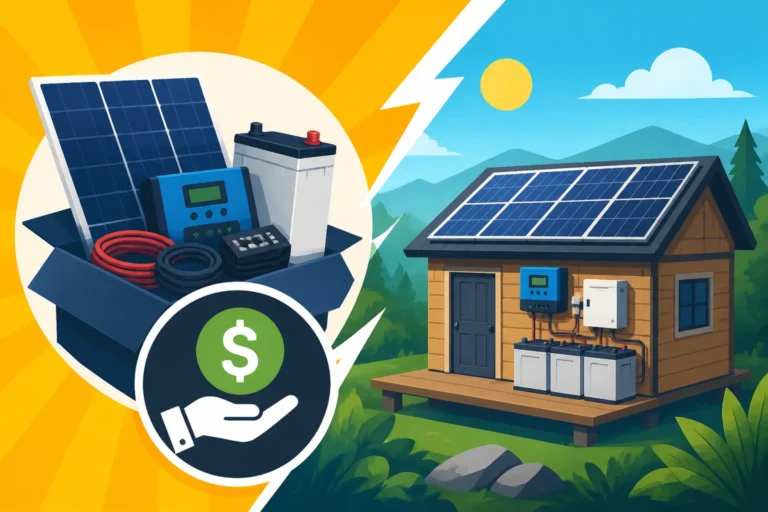
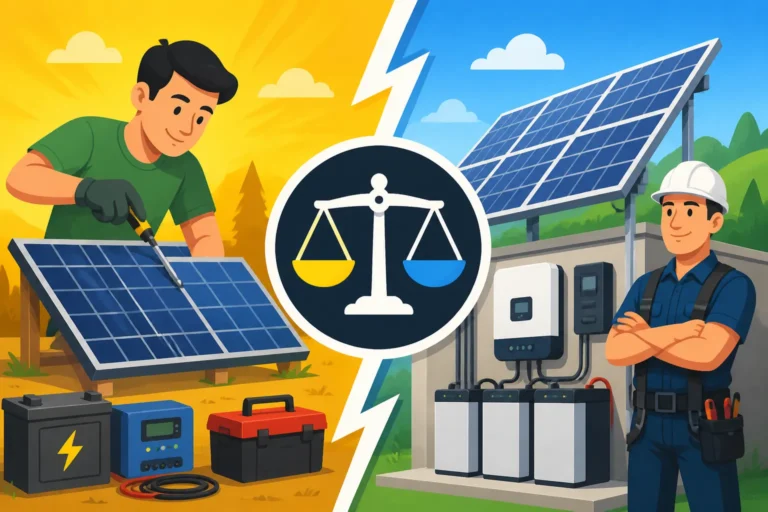
This is one of the most significant cost differentiators when planning your off-grid family home system. Opting for a DIY installation can save you anywhere from 10% to 30% or even more on the overall project cost because you're eliminating professional labor expenses. Many dedicated homesteaders, van-lifers, and off-grid enthusiasts choose this path, leveraging vast amounts of information from online resources and communities. However, it demands a considerable investment of your time, extensive research, a solid understanding of electrical principles, and often significant physical labor. Critical mistakes during installation can be incredibly costly, dangerous, or both. For a more in-depth comparison, consider reading our guide on DIY vs Professional Off-Grid Solar Cost.
Conversely, hiring a professional solar installer, while more expensive upfront, provides invaluable benefits. It ensures that your system is correctly sized, safely installed, and typically comes with warranties on both components and labor. For a family home, particularly if you lack extensive electrical experience, this can be a very wise investment for peace of mind and to ensure compliance with local electrical codes and permitting requirements. Professional installation costs can range from $1.50 to $3.50 per watt of solar, adding thousands or tens of thousands to your total budget.
Many people find a hybrid approach to be the sweet spot: they purchase the major components themselves (often sourcing good deals from online retailers like Amazon or specialty solar suppliers) and then hire a licensed electrician for the final critical connections or to perform a thorough inspection to ensure safety and compliance. This strategy can help balance cost savings with the assurance of professional expertise and safety.
Budgeting and Smart Spending for Your Off-Grid Family Home
Making the dream of an off-grid family home a reality isn't just about buying parts; it's about smart financial planning and strategic decision-making.
Prioritizing Energy Efficiency and Load Reduction
Before you even consider purchasing a single solar panel or battery, the absolute best investment you can make is in making your existing home as energy-efficient as possible. This means tackling things like upgrading your insulation, meticulously sealing any drafts, installing energy-efficient windows, and systematically replacing old, power-hungry appliances with new, high-efficiency models. Every kilowatt-hour you prevent your home from using is a kilowatt-hour you don't need to generate, store, or pay for. This directly reduces the necessary size—and therefore the cost—of your entire off-grid solar system.
Think critically about your major energy loads. For heating and hot water, for instance, relying on propane, wood, or a high-efficiency on-demand propane water heater is almost always far more cost-effective for off-grid living than trying to generate massive amounts of electricity for resistive heating elements. Similarly, a propane range for cooking typically draws less power than an electric one.
Even seemingly small changes can add up to significant savings. Switching all your incandescent or even CFL light bulbs to modern, ultra-efficient LEDs can dramatically reduce your lighting load. Opting to line-dry laundry instead of using an electric dryer, or powering down electronics when not in use, makes a noticeable difference in your overall energy budget. This proactive approach to energy conservation is the cornerstone of effectively creating a How to Budget for an Off-Grid Solar System.
Phased Installation and Component Selection
If the upfront cost of a complete, full-scale off-grid system for your family home feels overwhelming, don't despair. A phased approach can be a fantastic way to spread the investment over time. You could start with a smaller system designed to power only your essential loads—things like critical lighting, a refrigerator, and perhaps a charging station for electronics. Then, as your budget allows and your needs evolve, you can gradually expand your solar array and battery bank. Many modern off-grid components, especially from reputable brands like Victron or EG4, are designed with modularity in mind, making future expansion relatively straightforward.
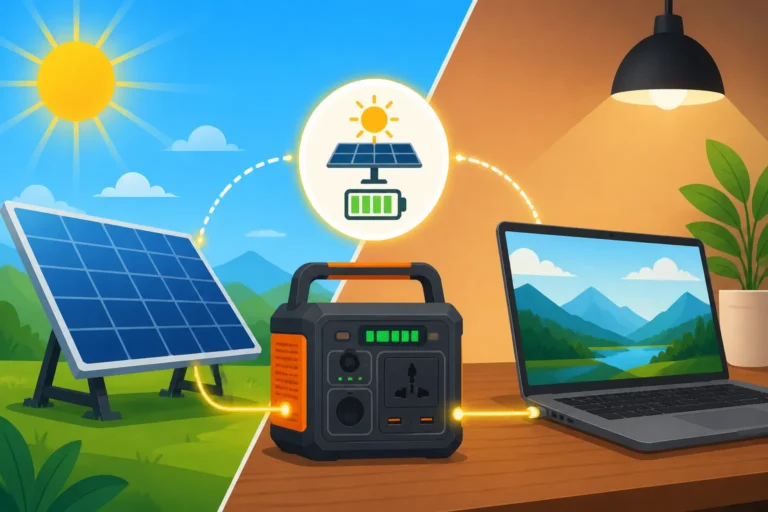
Careful component selection also presents opportunities for cost savings. While premium brands often offer top-tier performance, reliability, and advanced features, there are also many quality, more budget-friendly options available that still provide excellent performance. For instance, for smaller backup needs or temporary power solutions, portable solar generators from brands like Jackery can provide valuable supplemental power without the complexity and cost of a full hardwired system. You can often find competitive prices on components and portable solutions during sales events on platforms like Amazon.
Always research and compare prices extensively. Don't simply jump on the first deal you encounter. Look at product reviews, understand the warranties offered, and consider the long-term reliability of components. Sometimes, a slightly more expensive component with a longer warranty and better performance will prove to be the more economical choice in the long run, especially when you factor in potential Off-Grid Solar Maintenance Costs and replacement cycles.
Exploring Incentives and Long-Term Savings
While federal tax credits, such as the Investment Tax Credit (ITC), are primarily geared towards grid-tied solar systems, it's always worth researching what might be available in your specific state or local municipality. Some regions do offer incentives, grants, or rebates that extend to off-grid systems, particularly if they are serving as the primary power source for a permanent residence. These incentives, if available, can help significantly offset a portion of your initial investment.
Crucially, remember that going off-grid entirely eliminates your monthly utility bill. Over decades, these savings can be substantial, making the Off-Grid Solar Return on Investment incredibly appealing. While the upfront capital outlay is significant, the long-term financial independence from rising energy prices and unpredictable utility company policies can represent an immense value proposition.
Beyond direct monetary savings, there's the undeniable value of resilience and self-sufficiency. Owning your power production means you're largely insulated from grid outages, natural disasters, or fluctuations in energy markets. This peace of mind, the assurance that your family home will have power regardless of external circumstances, is a significant, albeit intangible, return on your investment that many off-gridders find priceless.
Realistic Cost Estimates and What to Expect
Let's get down to some concrete numbers for what a family home might expect to spend to comfortably go off-grid. These figures are estimates and can vary widely based on your specific choices, location, and commitment to energy reduction.
Small to Medium Off-Grid Family Home Systems (5-10 kWh/day)
For a family home that has been consciously designed or retrofitted with energy efficiency in mind, consuming approximately 5-10 kWh of electricity per day, you could be looking at a system requiring roughly 3,000-6,000 watts (3-6 kW) of solar panels and a battery bank providing 20-40 kWh of usable storage. This size is typical for what many consider an Off-Grid Solar Cost for a Whole House.
Estimated Cost Breakdown:
-
Solar Panels (3-6 kW): $2,100 – $9,000
-
Batteries (20-40 kWh LiFePO4 usable): $10,000 – $30,000
-
Inverter/Charge Controller: $3,000 – $8,000
-
Mounting Hardware, Wiring, BOS: $2,000 – $6,000
-
Professional Installation (if chosen): Add $4,500 – $18,000
-
Total DIY Installation Range: $17,100 – $53,000
-
Total Professionally Installed Range: $21,600 – $71,000
This range accounts for variables such as component quality (e.g., premium panels vs. standard), battery chemistry (LiFePO4 is generally higher), and regional pricing differences. A system of this size would typically be able to power essential appliances, lighting, entertainment systems, and perhaps a small well pump or occasional use of a mini-split air conditioner.
Large or High-Consumption Off-Grid Family Home Systems (10-25+ kWh/day)
If your family home has higher energy demands, perhaps because you haven't significantly downsized your appliance use, have continuous air conditioning, use electric heating elements (even for supplementary heat), or have a large well pump, you'll need a substantially larger system. Here, we're talking about 6,000-15,000+ watts (6-15+ kW) of solar panels and a hefty 40-100 kWh+ of usable battery storage. This is a robust system designed for modern comfort.
Estimated Cost Breakdown:
-
Solar Panels (6-15+ kW): $4,200 – $22,500
-
Batteries (40-100+ kWh LiFePO4 usable): $20,000 – $60,000+
-
Inverter/Charge Controller: $5,000 – $12,000+
-
Mounting Hardware, Wiring, BOS: $4,000 – $10,000+
-
Professional Installation (if chosen): Add $9,000 – $45,000+
-
Total DIY Installation Range: $33,200 – $104,500+
-
Total Professionally Installed Range: $42,200 – $149,500+
These figures can certainly look intimidating, but they represent the full transition to energy independence for a family that wants to maintain a more modern, power-intensive lifestyle off-grid. It's incredibly important to remember that these are broad estimates. A precise How to Size an Off-Grid Solar System based on your family's actual energy usage and specific location will yield much more accurate figures for your unique situation.
| System Size (Daily Use) | Solar Array (kW) | Usable Battery Storage (kWh) | DIY Installation Cost Range | Professional Installation Cost Range | Key Considerations |
|---|---|---|---|---|---|
| Small (5-10 kWh/day) | 3-6 | 20-40 | $17,100 – $53,000 | $21,600 – $71,000 | Energy-efficient home, basic loads, careful usage |
| Medium (10-15 kWh/day) | 6-10 | 40-60 | $25,000 – $75,000 | $34,000 – $105,000 | Moderate appliance use, some AC/heating |
| Large (15-25+ kWh/day) | 10-15+ | 60-100+ | $33,200 – $104,500+ | $42,200 – $149,500+ | High consumption, multiple heavy loads, less efficiency focus |
Note: All costs are estimates and can vary significantly based on location, component brands, market fluctuations, and specific energy habits. These figures do not include costs for land, home construction, or other off-grid infrastructure like water or septic.
Disclaimer
The information provided in this guide is for general informational purposes only and does not constitute professional advice. Off-grid solar system design and installation can be complex and involve electrical hazards. Always consult with qualified professionals and adhere to all local codes and regulations.