Off-Grid Solar Cost in Cold Climates
Thinking about going off-grid in a place where winter bites hard? It's a dream many of us share—that self-sufficient life, free from the grid. But let's be real, the thought of powering your home or cabin when temperatures plummet and daylight hours shrink can bring a whole new level of anxiety, especially when you start wondering about the price tag. You're not alone if you've ever felt overwhelmed by the sheer complexity and potential expense. This guide is here to break down the specific cost considerations for setting up and maintaining an off-grid solar system in those truly unforgiving cold climates, helping you understand where your money will really go.
The Unique Financial Landscape of Off-Grid Solar in Cold Regions
When you imagine off-grid solar, you often picture sunny California or Arizona, right? But the reality is, many of us are drawn to remote homesteads or cozy cabins in places like the snowy mountains of Colorado, the deep woods of Maine, or even the vastness of Alaska. These beautiful, cold climates present a unique set of challenges that directly impact the overall cost of your off-grid solar system. It’s not just about more insulation on your pipes; it’s about a fundamentally different approach to power generation and storage.
Accounting for Reduced Solar Harvest
One of the biggest eye-openers for folks planning cold-climate off-grid setups is the drastically reduced solar insolation during winter months. Not only are the days shorter, but the sun sits lower in the sky, and you're often battling cloudy conditions, heavy snowfall, or even ice accumulation on your panels. This isn't just a minor inconvenience; it means your panels will produce significantly less electricity than they would in summer or in sunnier, warmer locales.
To compensate for this, you have two primary choices, both of which add to your overall cost. You can either install a much larger solar array—meaning more panels, more mounting hardware, and more wiring—to try and capture enough energy during the limited sunlight hours. This significantly increases your initial investment. Alternatively, you might decide to install an array that's "just enough" for the summer and supplement heavily with a generator during the winter, which then adds the ongoing costs of fuel, maintenance, and the initial purchase of a reliable generator. The balancing act between these two options is a crucial part of your overall Off-Grid Solar Cost: Complete Breakdown analysis.
The Impact of Extreme Temperatures on Equipment
Cold weather isn't just uncomfortable for humans; it's a harsh environment for sensitive electronics and batteries. Components designed for milder climates simply won't cut it when temperatures regularly dip below freezing, let alone into sub-zero territory. This necessitates specialized, often more expensive, equipment.
For example, standard charge controllers might struggle in extreme cold, requiring models with wider operating temperature ranges or those specifically rated for cold-weather performance. Inverters, too, need to be robust enough to handle internal temperature fluctuations. Perhaps the most significant impact is on batteries. While lithium iron phosphate (LiFePO4) batteries generally perform better than lead-acid in cold, they still need protection from freezing to prevent permanent damage and ensure optimal performance. This brings us to the crucial consideration of thermal management, which inevitably adds to your budget.
Key Components That Drive Up Costs in Freezing Conditions
Understanding which parts of your off-grid solar system are most affected by cold weather helps you budget more accurately. It's not just the sum of the parts, but the type of parts you need that makes the difference.
Battery Bank Considerations for Cold Weather
The battery bank is often the single most expensive component in an off-grid solar system, and this cost is magnified in cold climates. Lead-acid batteries lose a significant amount of their usable capacity in freezing temperatures, sometimes as much as 50% below 32°F (0°C). This means you'd need a physically larger and more expensive lead-acid bank to deliver the same usable power as a smaller bank in warmer conditions. Furthermore, lead-acid batteries cannot be charged when frozen, risking permanent damage. This often leads people to choose higher-performing but also higher-cost options.
Lithium iron phosphate (LiFePO4) batteries, like those from brands such as Battle Born or SOK, are a popular choice for off-grid applications due to their higher energy density, longer lifespan, and better cold-weather performance. However, even these typically require protection from freezing temperatures, especially during charging. Most LiFePO4 batteries cannot be charged below 32°F (0°C) without internal damage, though many modern versions come with internal heating elements. These "low-temperature" or "cold weather" lithium batteries use a small amount of their own stored energy to warm themselves before allowing a charge, which is fantastic for reliability but adds to the upfront cost. If your chosen batteries don't have internal heating, you'll need an insulated battery box and an external heating solution, like a dedicated battery heater or even a small radiant heater, which demands additional power and installation effort. This all contributes to the higher Cost of an Off-Grid Solar Battery Bank.
Solar Panels and Mounting in Snowy Environments
While solar panels themselves are generally quite resilient to cold, heavy snow and ice present significant challenges. Snow accumulation can completely block sunlight, rendering your panels useless until cleared. This leads to the need for more robust mounting systems that can withstand heavy snow loads and allow for easy snow removal.
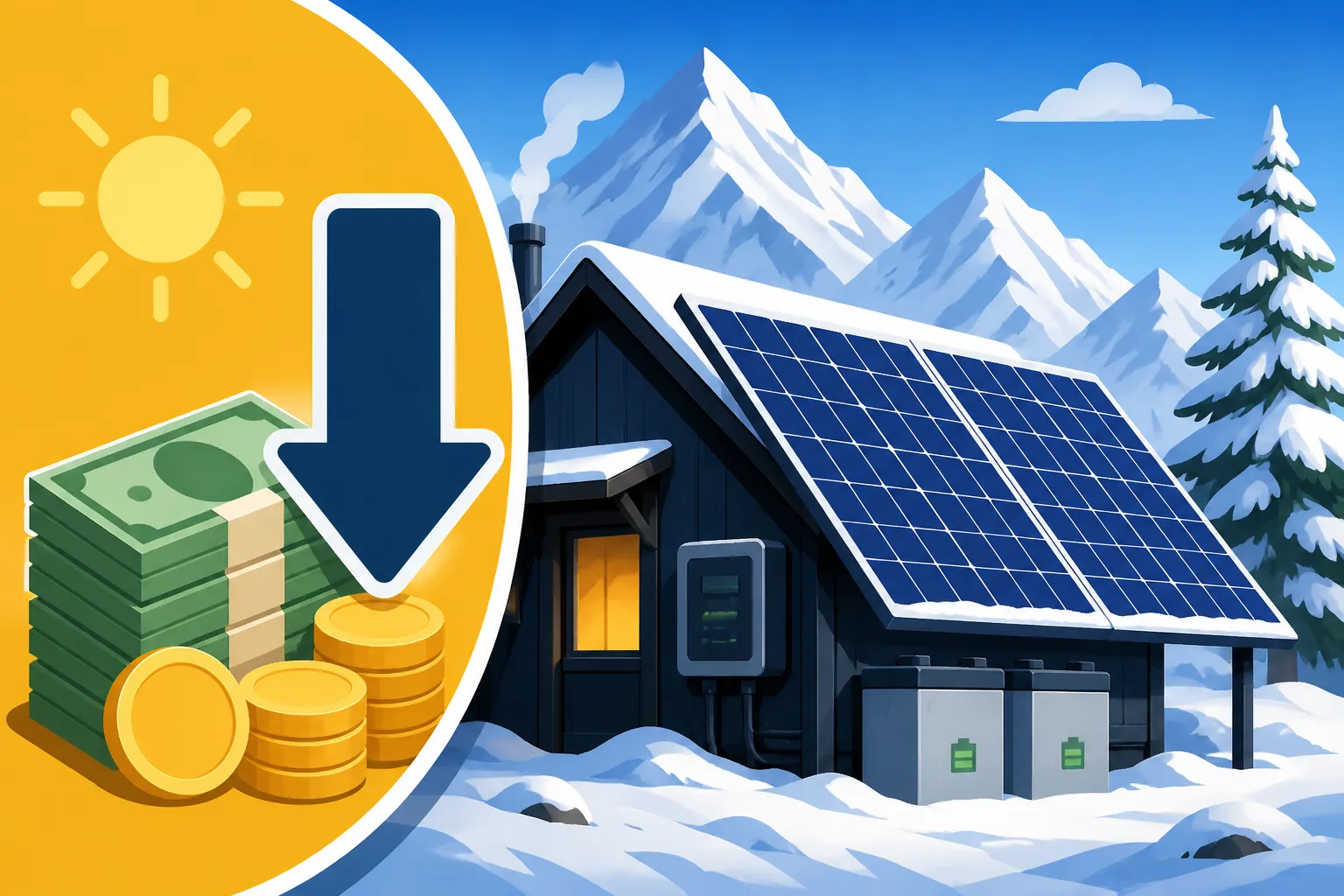
Many off-grid users in cold regions opt for ground-mounted arrays with adjustable tilt angles. This allows them to adjust the panels to a steeper angle in winter to help snow slide off naturally and to capture more of the low-angle winter sun. However, ground mounts typically cost more than roof mounts due to the need for concrete footings, more extensive racking, and potentially longer cable runs. For roof-mounted systems, you might consider snow guards or specialized racking that creates enough space for snow to shed. The labor involved in frequently clearing snow, or the cost of automated snow-melting systems (which consume power), must also be factored into the operational expenses. You really need to consider How Winter Affects Off-Grid Sizing from the very beginning of your design phase.
Inverters, Charge Controllers, and Wiring
The core electronics of your system—the inverter and charge controller—also need to be robust. While many quality units are rated for a wide temperature range, extreme cold can still stress components. Housing these components in a heated space, like inside your cabin, is usually the best practice. However, this may require longer, thicker (and thus more expensive) wiring runs to connect them to your outdoor panels and battery bank.
When considering wiring, colder temperatures actually improve wire conductivity, but the rigidity of cables in extreme cold can make installation difficult and increases the risk of cracking insulation if not handled carefully. You'll need to select high-quality, cold-weather-rated cables that remain flexible in low temperatures. Furthermore, longer cable runs, especially between the panels and charge controller, can lead to voltage drop, necessitating thicker gauge wire to compensate, which further increases costs. It's a delicate balance to ensure efficiency and safety in your Off-Grid Solar Wiring Diagram Explained.
| Component | Cold Climate Cost Impact | Typical Solution | Additional Cost Factor |
|---|---|---|---|
| Solar Panels | Reduced winter production, snow/ice accumulation. | Larger array; adjustable ground mounts; snow clearing tools. | More panels, specialized racking, labor for clearing, or generator backup. |
| Batteries | Capacity loss, inability to charge when frozen, reduced lifespan. | LiFePO4 with internal heaters; insulated battery boxes; external heating elements. | Higher battery cost, enclosure, heating system, energy for heating. |
| Charge Controller | Needs wider operating temperature range, robust electronics. | Cold-weather rated MPPT controllers, installed indoors. | Potentially higher unit cost, longer cable runs if installed remotely. |
| Inverter | Needs wider operating temperature range, robust electronics. | High-quality, cold-weather rated inverter, installed indoors. | Potentially higher unit cost, longer cable runs if installed remotely. |
| Mounting Hardware | Must withstand heavy snow/ice loads, facilitate snow shedding. | Heavy-duty, adjustable tilt ground mounts; robust roof racking. | Increased material cost, more complex installation, potential concrete work. |
| Wiring | Becomes brittle, voltage drop over longer runs to indoor components. | Cold-weather rated, thicker gauge cables, proper conduit. | Higher material cost for specialized, thicker cables and conduit. |
| Backup Generator | Essential due to low solar harvest, battery limitations. | High-quality propane/diesel generator, fuel storage. | Purchase price, fuel costs, maintenance, potential auto-start module. |
Strategies to Mitigate Off-Grid Solar Costs in Winter Environments
While the challenges of off-grid solar in cold climates are real, there are proactive strategies you can employ to manage and even reduce overall costs without sacrificing reliability. It's all about smart planning and making informed choices upfront.
Smart System Sizing and Energy Efficiency
The absolute best way to manage costs in any off-grid system, especially in cold climates, is to minimize your energy consumption. Every watt-hour you don't use is a watt-hour you don't have to generate or store, saving you money on panels, batteries, and even generator run-time. This starts with a thorough Off-Grid Solar Load Calculation Explained.
Invest in highly efficient appliances right from the start. Look for DC-powered appliances where possible, as they avoid inverter losses. LED lighting, Energy Star rated refrigerators, and efficient well pumps make a huge difference. Consider propane or wood for heating and cooking instead of electricity, as these are typically far more cost-effective for high heat loads in cold regions. For instance, relying on an electric water heater in an off-grid cold climate home would necessitate an enormous and costly solar array and battery bank compared to a propane tankless water heater. By diligently reducing your overall energy footprint, you can often size down your solar array and battery bank, leading to substantial savings.
Prioritizing Thermal Management for Batteries
Protecting your batteries from the cold is non-negotiable, and doing it efficiently can save you money in the long run. If you're using LiFePO4 batteries without internal heaters, an insulated battery box is crucial. You can build one yourself from materials like rigid foam insulation and plywood, or purchase pre-made enclosures. For additional warmth, consider using passive methods first, like locating the battery box inside a conditioned living space or partially burying it underground where temperatures are more stable.
If active heating is required, look for low-power heating pads or elements specifically designed for battery compartments. Connecting these through a thermostat ensures they only activate when necessary, conserving precious battery power. Some advanced battery management systems (BMS) in LiFePO4 batteries can even control external heating elements, ensuring optimal conditions. Products like some Renogy batteries offer internal heating, simplifying this aspect of your build and providing peace of mind, though it usually comes at a slightly higher initial cost.
Incorporating a Reliable Backup Generator
In cold climates, a backup generator isn't a luxury; it's a necessity. Even with a well-sized solar array and battery bank, extended periods of cloudy weather or heavy snow can deplete your batteries faster than they can recharge. Having a reliable generator ensures you can keep your essential systems running, charge your batteries, and maintain comfort.
While a generator adds to your overall Cost of Adding a Generator to Off-Grid Solar, it can sometimes allow you to size your solar array and battery bank a bit smaller, knowing you have a fallback. This can result in a net savings over trying to build a solar-only system that can handle every possible winter scenario. When choosing a generator, prioritize reliability and fuel efficiency. Propane generators offer cleaner burning fuel and easier cold-weather starting compared to gasoline. Consider generators from reputable brands like Generac or Honda, which offer excellent cold-weather performance.
Sourcing Equipment Smartly
While the specialized nature of cold-climate equipment might limit some budget options, smart sourcing can still yield savings. For common components like panels and wiring, consider buying in bulk directly from manufacturers or large distributors. Websites like Amazon can be excellent for finding smaller components, tools, and even some budget-friendly charge controllers or portable power solutions like a Jackery Explorer for temporary needs or small loads.
Keep an eye out for sales and end-of-season discounts. Sometimes, local solar installers might have overstock on certain components. Don't be afraid to compare prices from multiple vendors before committing. For more complex and critical components like inverters and charge controllers, it often pays to invest in higher-quality, reputable brands that offer warranties and support, as their longevity and reliability will save you money on replacements and repairs down the line.
Long-Term Value and Unexpected Expenses in Cold Climate Off-Grid Systems
Going off-grid in a cold climate is a marathon, not a sprint. The initial investment is significant, but understanding the long-term value and anticipating potential ongoing costs is key to a truly sustainable and budget-friendly setup.
Maintenance and Operational Costs
Even the most robust off-grid solar system requires ongoing maintenance, and cold climates can introduce unique challenges and costs. Regularly checking battery electrolyte levels (for lead-acid), cleaning battery terminals, and inspecting wiring for rodent damage or cold-induced brittleness are all part of the routine. You'll also need to consider snow removal from your panels, which can be a manual, labor-intensive task or, if you opt for automated systems, an additional power draw.
Generator maintenance is another significant operational cost, including fuel, oil changes, filter replacements, and periodic tune-ups. Propane costs, while often more stable than gasoline, still fluctuate, and you'll need to factor in regular deliveries or trips to refill tanks. Don't forget the costs associated with monitoring your system—battery monitors, charge controller displays, and remote monitoring apps often require their own small power draw and may have associated subscription fees if you opt for advanced features. These are all part of your Off-Grid Solar Maintenance Costs.
Protecting Against Extreme Weather Events
Cold climates often go hand-in-hand with severe weather events: blizzards, ice storms, and high winds. These events can put your off-grid system to the ultimate test and potentially lead to costly repairs. Heavy ice accumulation can damage panels or mounting structures if they're not rated for extreme loads. High winds can tear panels from their mounts or damage wiring.
Investing in over-engineered mounting hardware, strategically placed windbreaks, and secure component enclosures can help mitigate these risks, but they do add to your upfront expenses. Having a contingency fund for unexpected repairs or replacements, especially for critical components like inverters or batteries, is a wise move. Consider getting comprehensive insurance coverage for your off-grid property, which may specifically cover damage to your solar infrastructure. This might not directly lower your How Much Does an Off-Grid Solar System Cost upfront, but it prevents potentially catastrophic financial setbacks.
Considering Expansion and Future Needs
As your energy needs evolve, or as new, more efficient appliances become available, you might consider expanding or upgrading your system. For example, if you initially designed your system for seasonal use but then transition to Off-Grid Solar for Year-Round Living, you'll almost certainly need to add more panels and battery capacity.
Designing your system with future expansion in mind can save you money down the line. This means oversizing conduit, leaving space for additional panels on your racking, and choosing an inverter and charge controller that can handle a larger array or battery bank than your current needs. While it might seem like a slightly higher initial cost, it can prevent a complete system overhaul later. Thinking about How to Budget for an Off-Grid Solar System means looking beyond day one.
Ultimately, going off-grid in a cold climate is an investment in self-reliance and resilience. While the costs can be higher due to the specific demands of the environment, a well-planned, efficiently designed, and robustly built system will provide dependable power for decades, often proving to be a wise decision in the long run.
Disclaimer
Please remember that the information provided in this guide is for general educational purposes only and should not be considered professional financial, electrical, or engineering advice. Always consult with qualified professionals for specific guidance tailored to your unique situation and local regulations. Off-grid solar systems involve high voltages and specific safety protocols that must be followed.