Off-Grid Solar vs Utility Extension Cost
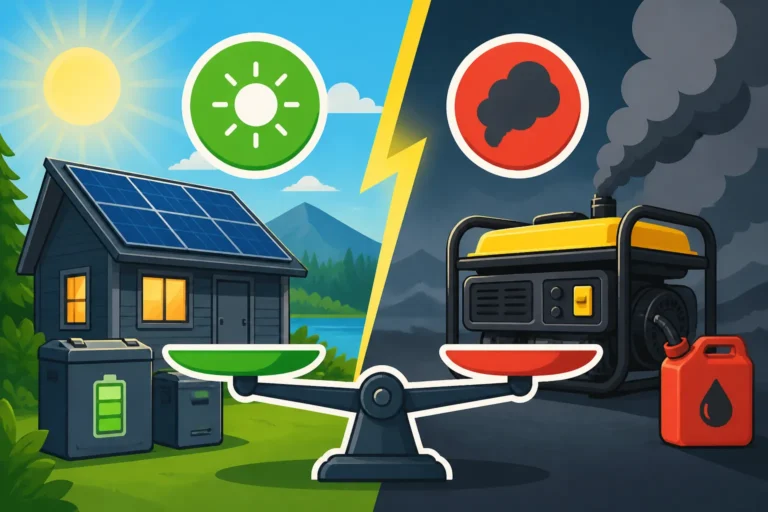
Oh, the age-old dilemma when you're dreaming of that perfect plot of land, that remote cabin, or even just building a workshop far from the city lights: how do you get power there? For many, the first thought is always, "Can I just get the utility company to extend their lines?" But then the quotes start rolling in, and suddenly, the idea of going off-grid with solar doesn't seem quite so outlandish. It’s a huge decision, often fraught with sticker shock on both sides, and it’s completely understandable to feel overwhelmed by the numbers. This guide is here to walk you through the nitty-gritty of comparing the costs of extending the utility grid versus embracing the freedom of an off-grid solar setup, so you can make a truly informed choice.
Understanding Utility Extension Costs
Let’s face it, when you think of electricity, you probably think of a wire coming right to your house from a pole down the road. That’s how most of us get our power. But when your dream spot isn't conveniently located next to an existing power line, that "convenience" comes with a hefty price tag. Utility companies aren't just going to string miles of wire for free; they pass those costs directly onto you, and often with a significant markup. It’s not just the wire itself, either; there's a whole infrastructure that needs to be built and maintained.
Factors Influencing Grid Extension Expenses
The cost to extend utility lines to a new property can vary wildly, often ranging from a few thousand dollars for a short hop to tens or even hundreds of thousands for truly remote locations. One of the biggest factors, as you might guess, is distance. Every foot of new power line requires poles, wires, transformers, and the labor to install them. If your property is half a mile from the nearest pole, you're looking at a completely different ballgame than if it’s five miles away. Imagine digging trenches through rocky terrain or dense forest versus clear, flat pastureland; the complexity of the landscape also plays a huge role in labor costs.
Beyond just the distance and terrain, the type of service you need can impact the price. Do you need single-phase or three-phase power? For most residential setups, single-phase is sufficient, but if you're planning a large workshop with heavy machinery or a commercial operation, three-phase power gets significantly more expensive due to the additional wires and equipment required. The local utility company's specific policies and regulations are also critical. Some utilities might offer certain incentives or have limits on how much they'll charge per foot, while others might charge you for every single component, from the easements needed to the final meter hookup. It's a maze of variables that often feels like you're trying to hit a moving target.
Hidden Fees and Long-Term Commitments
It's easy to focus on the initial quote, but often, the true cost of utility extension goes much deeper than just the per-foot charge. You might encounter easement fees if the lines need to cross private property other than your own. There could be significant permitting costs from local municipalities, not to mention environmental impact assessments, especially if the extension traverses wetlands or protected areas. And let’s not forget the potential for rock excavation or tree removal fees if the path for the lines isn't perfectly clear. These are the kinds of surprises that can quickly balloon an already substantial initial estimate.
Then there's the long-term commitment. While you might be relieved to finally have grid power, you'll be tied to monthly utility bills for the life of your property. These bills are subject to rate increases, fuel surcharges, and other fluctuating costs outside of your control. You’re also reliant on the grid's stability, which, let's be honest, can be an issue in rural areas prone to outages from storms or even just a squirrel on a transformer. There's a certain feeling of vulnerability that comes with complete dependence on a centralized system, something that many off-grid enthusiasts are keen to avoid. This long-term financial drain and lack of control are precisely why many people start seriously considering alternatives like off-grid solar. You might also want to look into Off-Grid Solar vs Utility Extension Cost for more detailed information.
The Financial Reality of Off-Grid Solar
Now, shifting gears to off-grid solar, it’s important to acknowledge that it's not "free" either. Setting up a robust off-grid system involves a substantial upfront investment in specialized equipment. However, the nature of this investment is fundamentally different from grid extension. With off-grid solar, you’re investing in assets you own, control, and that produce your own energy, insulating you from rising utility rates and grid instability. It’s an investment in independence.
Breaking Down Off-Grid Solar Components
A complete off-grid solar system isn't just a panel and a battery; it's a carefully orchestrated symphony of components, each with its own cost and function.
First, you have the solar panels themselves. The number and type of panels you need will depend heavily on your energy consumption and the amount of sunlight your location receives. Prices for panels have come down significantly over the years, making them more accessible. You can often find good deals on high-wattage monocrystalline panels from various retailers, even major online platforms like Amazon. For a deeper dive into the overall expenses, check out Off-Grid Solar Cost: Complete Breakdown.
Next up are the batteries, which are arguably the most critical and often the most expensive part of an off-grid system. Batteries store the energy captured by your panels, allowing you to use power at night or during cloudy days. Lithium iron phosphate (LiFePO4) batteries have become incredibly popular due to their long lifespan, deep discharge capabilities, and efficiency, but they come with a higher upfront cost than traditional lead-acid batteries. If you’re curious about specific battery costs, you might want to read our guide on the Cost of an Off-Grid Solar Battery Bank. Then there's the inverter, which converts the DC (direct current) power from your batteries into AC (alternating current) power that your household appliances use. A quality pure sine wave inverter is essential for sensitive electronics and can represent a significant portion of your budget. Finally, a charge controller manages the power flow from your solar panels to your batteries, protecting them from overcharging and optimizing efficiency. Other necessary components include wiring, mounting hardware, safety disconnects, and potentially a generator for backup power during extended periods of low sun.
DIY vs Professional Installation Costs
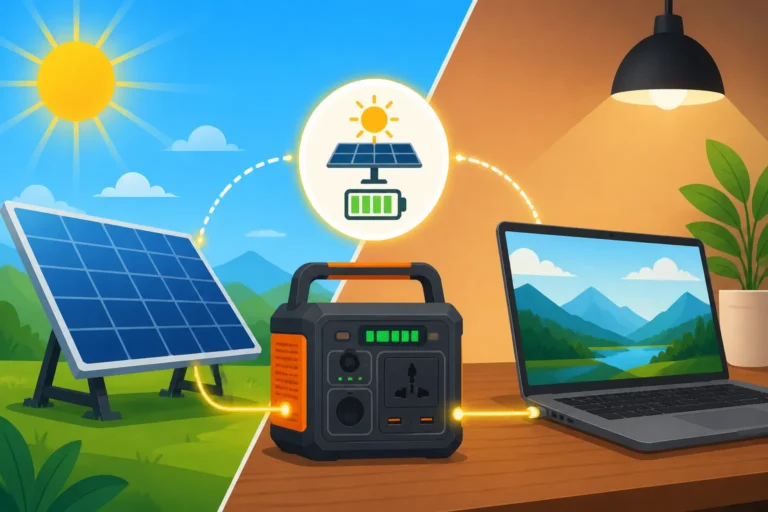
One of the beautiful things about off-grid solar is the flexibility it offers in terms of installation. This is where you can really impact your budget. Opting for a DIY off-grid solar build can significantly reduce your overall expenses. If you're handy, have a good understanding of electrical systems, and are willing to put in the time and effort, you can save thousands of dollars on labor costs. Many people start small, perhaps with a portable power station like a Jackery, to get a feel for solar before diving into a full home system. You can source individual components, learn the wiring, and assemble the system yourself. However, it's crucial to understand the complexities involved, especially regarding safety and adherence to electrical codes, even for off-grid systems. Making mistakes in wiring can be dangerous and costly.
On the other hand, hiring a professional off-grid solar installer offers peace of mind. While the upfront cost will be higher due to labor and markup on components, you benefit from their expertise, experience, and often, warranties on both equipment and installation. They handle everything from system design to permitting (where required, though permits for off-grid are less common than grid-tied) and commissioning. This is a great option for those who aren't comfortable with electrical work or simply don't have the time to dedicate to a DIY project. The decision between DIY and professional installation is a major one and can dramatically affect your Off-Grid Solar Installation Cost. Consider your skills, time commitment, and budget carefully before deciding which route to take.
Direct Cost Comparison: Grid Extension vs. Off-Grid Solar
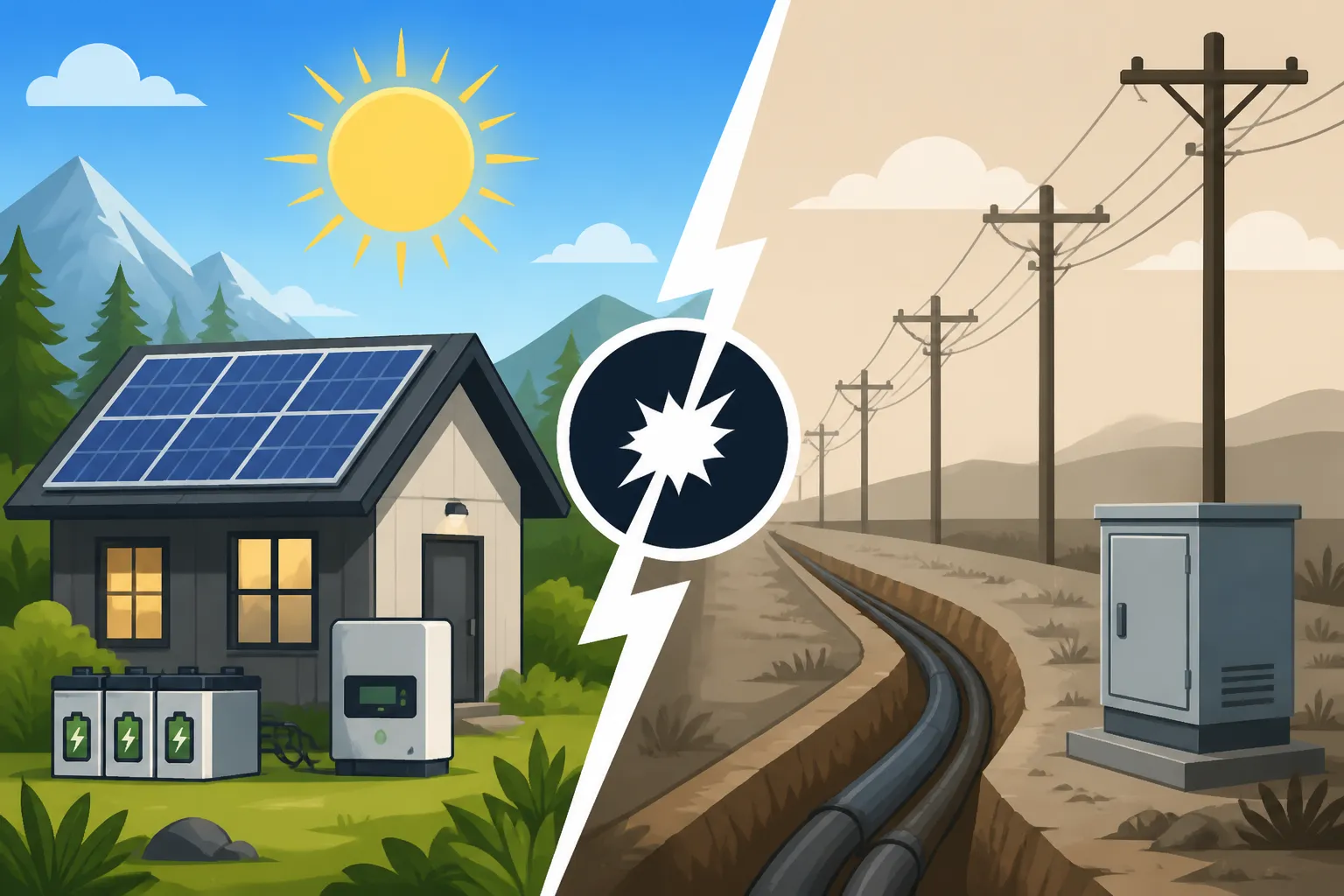
When it comes down to brass tacks, we're talking about two very different financial models. One is often a single, massive upfront payment that ties you to recurring bills and external control. The other is a significant upfront investment in a system you own, with minimal to no recurring energy costs and complete autonomy. Let’s break down the initial outlay and the long-term picture.
Initial Outlay: What You Pay Upfront
The initial costs are where the starkest differences often lie. For utility extension, as discussed, you could be looking at anything from a few thousand dollars for a very short, simple extension to upwards of $50,000, $75,000, or even $100,000+ for projects requiring miles of new line, multiple transformers, significant terrain work, or crossing difficult easements. This cost is usually a one-time charge from the utility company, paid before they even begin work, and it doesn't even factor in what you'll pay after you get hooked up.
For off-grid solar, the initial investment can range dramatically based on your energy needs and chosen components. A small, basic system for a tiny home or a cabin that only sees weekend use might cost anywhere from $5,000 to $15,000. This could involve a modest solar array, a couple of good LiFePO4 batteries, and a decent inverter. For a larger, full-time off-grid home with modern amenities, you're looking at a range of $20,000 to $60,000 or more, especially if you opt for high-capacity batteries, a substantial solar array, and professional installation. While these numbers can seem high, it's important to remember that this includes the infrastructure that will generate your power for decades. You'll find a more comprehensive breakdown in our article How Much Does an Off-Grid Solar System Cost.
Here's a simplified comparison table to give you a clearer picture:
| Cost Factor | Utility Grid Extension | Off-Grid Solar System |
|---|---|---|
| Initial Cost Range | $5,000 – $100,000+ (highly variable by distance/terrain) | $5,000 – $60,000+ (variable by system size/components) |
| Components | Poles, wires, transformers, labor, permits, easements | Solar panels, batteries, inverter, charge controller, wiring, mounts, labor (if professional) |
| Recurring Costs | Monthly utility bills, potential rate increases | Battery replacement (every 10-20 years for LiFePO4), occasional maintenance, potential backup fuel |
| Control | Limited, subject to utility company | Full control over energy production and consumption |
| Timeframe | Weeks to months (or even longer) for installation | Weeks to months for design and installation |
Long-Term Ownership: Maintenance and Longevity
The true value of an off-grid solar system becomes incredibly apparent when you consider the long-term. With utility grid extension, your initial cost is a sunk expense, and you then enter a lifetime of monthly utility bills. These bills, as anyone living on the grid knows, are subject to fluctuations, rate hikes, and demand charges. Over 20-30 years, the cumulative cost of these bills can easily surpass the initial extension cost by several times. You're effectively renting your power forever.
With off-grid solar, once your system is installed, your ongoing energy costs are dramatically reduced, often to near zero. Your main long-term expense will be battery replacement. High-quality LiFePO4 batteries can last 10-15 years, sometimes even 20 years, before needing replacement, and their costs are steadily decreasing. Solar panels themselves are incredibly durable and typically come with 25-year warranties, often still producing 80% or more of their rated power after that time. Inverters and charge controllers also have significant lifespans, often 10+ years. When you factor in the avoided utility bills over several decades, an off-grid solar system often "pays for itself" and then some, offering significant savings over its lifespan. For more information on this, take a look at our article on Off-Grid Solar Payback Period Explained. You'll find that while the initial outlay might be comparable or even higher for off-grid, the long-term financial picture often heavily favors energy independence. This is a crucial aspect to consider when debating Is Off-Grid Solar Worth the Cost.
Beyond the Dollar: Intangible Benefits and Drawbacks
While the financial comparison is often the primary driver, there are significant non-monetary factors that heavily influence the decision between grid extension and off-grid solar. These are the things that don't show up on a spreadsheet but weigh heavily on your quality of life and peace of mind.
Reliability and Energy Independence
For many considering remote living, energy independence is a huge draw. With off-grid solar, you are your own utility company. You control your power generation, storage, and consumption. This means freedom from power outages that affect the grid, whether caused by storms, natural disasters, or infrastructure failures. Imagine your neighbors down the road losing power for days after a heavy snowfall, while your off-grid home, humming along with its battery bank, remains warm and lit. That feeling of self-reliance is incredibly valuable. You’re not beholden to corporate rate increases or the political whims that affect energy markets.
However, this independence also comes with responsibility. You need to monitor your system, understand its limitations, and be prepared for maintenance. You might need to be more mindful of your energy consumption, especially during periods of extended cloud cover. This is a lifestyle choice that requires a different mindset than simply flipping a switch and expecting power. With utility power, reliability is generally high, but when it fails, you're often left waiting for someone else to fix it. The trade-off is often control versus convenience.
Environmental Impact and Future Value
Choosing off-grid solar also carries a significant environmental benefit. You're generating clean, renewable energy directly from the sun, reducing your carbon footprint and reliance on fossil fuels. This aligns with a growing global consciousness about sustainable living and can be a source of great personal satisfaction. It's a tangible step towards a greener future, setting an example for others and living in harmony with your chosen environment. This aspect is often a primary motivator for people looking to go off-grid, beyond just the financial equation.
From a future value perspective, an off-grid solar system can enhance the appeal and resale value of a property, especially in remote areas where grid access is expensive or impossible. As energy costs continue to rise and climate concerns become more pressing, a fully functioning, well-maintained off-grid system could become a highly desirable feature. It's an investment that could appreciate, unlike the expense of grid extension, which simply provides access to a recurring cost. Furthermore, incentives like the federal solar tax credit (which can apply to off-grid systems if they provide 100% of a home's power) can further sweeten the deal, making the initial investment more manageable. You can learn more about this by researching Does the Federal Tax Credit Apply to Off-Grid Solar.
Real-World Scenarios and Decision-Making
Making the final decision boils down to carefully evaluating your specific situation, your property, and your priorities. There's no universal "better" option; it's all about what makes the most sense for you. Let's look at when each path truly shines.
When Utility Extension Makes Sense
There are definitely scenarios where extending the utility grid is the more practical and cost-effective choice. If your property is only a short distance from existing power lines – say, a few hundred feet – the cost of extension might be surprisingly affordable, perhaps even less than a comprehensive off-grid solar system for a full-sized home. In such cases, the convenience and consistent power of the grid, combined with a relatively low upfront extension cost, can be very appealing. It simplifies things greatly, as you won't need to manage batteries, monitor solar production, or worry about system sizing.
Another key factor is your expected energy consumption. If you anticipate extremely high electricity usage – perhaps you run a large commercial operation, have multiple electric vehicles, or plan to power several electric heat pumps and a massive workshop year-round – a large off-grid system capable of meeting those demands could become incredibly expensive, potentially pushing into the $70,000 to $100,000+ range. In these high-demand scenarios, even a costly grid extension might present a lower overall lifetime cost and certainly less day-to-day management. If you plan to heavily rely on power-hungry appliances, then Off-Grid Solar Cost for Heating or Off-Grid Solar Cost for Air Conditioning might be higher than you anticipate for a solar-only solution. It’s a matter of scale and how much convenience you value over self-sufficiency.
When Off-Grid Solar Shines Brightest
Off-grid solar truly becomes the undeniable champion in specific situations. The most obvious is when your property is remote, located miles from the nearest utility pole. This is where grid extension costs skyrocket, easily reaching six figures. When faced with a quote for $75,000 to string power lines for five miles, a $30,000-$50,000 off-grid solar system suddenly looks like an absolute bargain. The further you are from the grid, the more compelling off-grid solar becomes from a purely financial standpoint. This is often the case for secluded cabins, hunting lodges, or homesteads deeply nestled in nature.
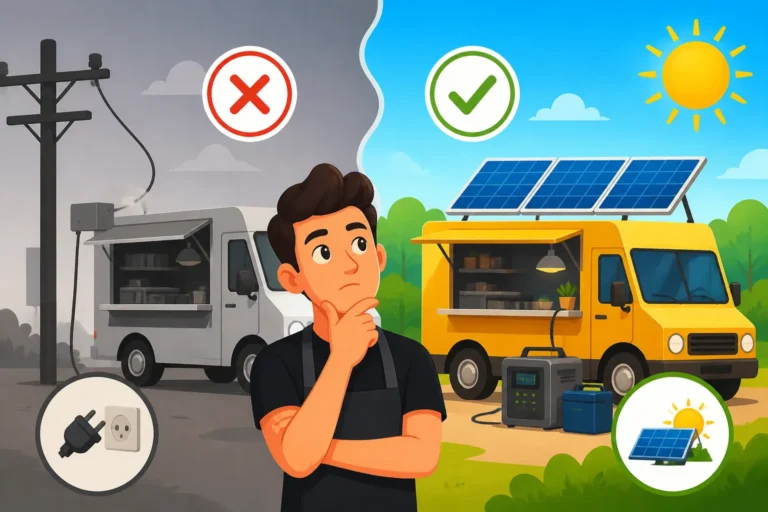
Beyond distance, off-grid solar is perfect for those who prioritize energy independence, self-sufficiency, and a reduced environmental footprint. If the idea of generating your own power and being free from monthly bills resonates deeply with you, then the initial investment in solar feels less like an expense and more like an empowerment. It's also an excellent choice for smaller applications, like a shed, workshop, or tiny home, where energy demands are manageable and a modest off-grid system can provide ample power without breaking the bank. For example, the Cost to Power a Cabin with Solar is often far more reasonable than running power lines through miles of forest. Similarly, for mobile applications like an RV or van life, off-grid solar is practically the only viable long-term power solution, making the comparison irrelevant. Understanding How to Budget for an Off-Grid Solar System can help you plan for this independence effectively.
Ultimately, the choice hinges on your specific needs, geographic location, and philosophical outlook on energy. Take the time to get actual quotes for both options, perform a thorough load analysis for your off-grid needs, and consider both the immediate financial impact and the long-term implications for your wallet and your lifestyle.
Disclaimer
Please remember that the information provided in this article is for general guidance and informational purposes only. Costs for off-grid solar systems and utility extensions can vary significantly based on location, specific utility policies, equipment choices, and installation complexity. It is always recommended to consult with local utility companies, qualified solar professionals, and electricians to obtain accurate quotes and design a system that meets your specific needs and complies with all applicable codes and regulations.