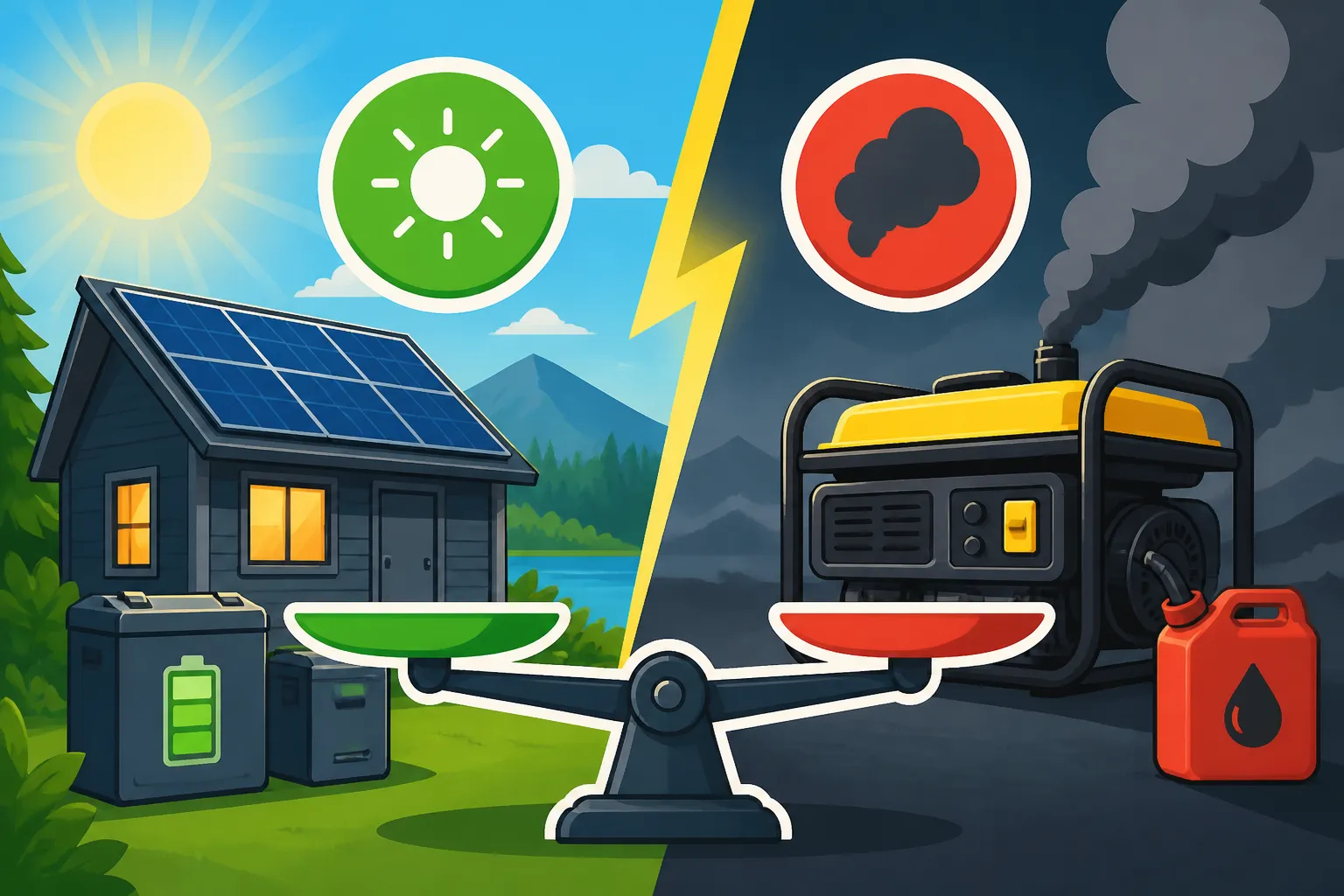
Off-Grid Solar Payback vs a Gas Generator
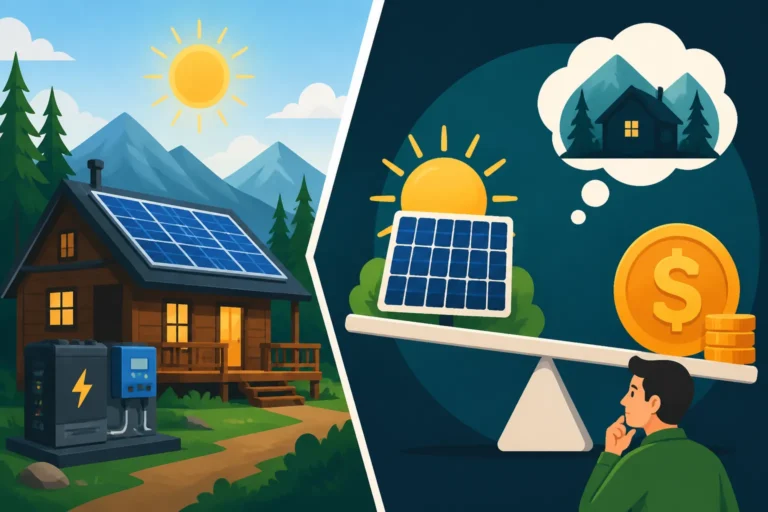
For anyone living off-grid, or even just thinking about it, the rumble of a gas generator is a familiar sound. It’s the sound of power, yes, but also the constant reminder of fuel runs, oil changes, and that nagging feeling in your gut about how much money you're pouring into its tank. It's a never-ending cycle of expenses and maintenance that can really eat into your budget and peace of mind. This guide is all about looking at the real, long-term financial picture, comparing the ongoing costs of a gas generator to the initial investment and eventual payback of an off-grid solar system.
The Hidden Costs of Relying on a Gas Generator
When you think about a gas generator, your mind probably jumps straight to the initial purchase price, maybe a few hundred to a couple of thousand dollars depending on its size and features. But that sticker price is just the tip of the iceberg, my friend. The true cost of relying on a gas generator for your primary power source, especially in an off-grid setup, quickly adds up in ways many people don't fully anticipate.
Fuel Consumption and Volatile Prices
Let's be honest, the biggest and most obvious recurring cost for a gas generator is the fuel itself. Whether you're running on gasoline or propane, you're constantly feeding the beast. A typical 3,000-watt generator, for instance, might burn through half a gallon of gasoline an hour at a 50% load. If you're running it for 8 hours a day, that's 4 gallons daily! Multiply that by current fuel prices in your area – which, as we all know, can fluctuate wildly and unexpectedly – and you're looking at a significant chunk of your budget disappearing into the exhaust.
Imagine living remotely, maybe in a cabin deep in the woods or a tiny home far from the nearest town. Not only are you paying for the fuel, but you're also expending time and effort to transport it. That could mean regular trips to the gas station, filling up multiple jerry cans, and hauling them back. This logistical challenge, especially during bad weather or if your vehicle isn't running, is a real headache. Plus, storing large quantities of fuel safely presents its own set of concerns, from fire hazards to degradation over time. This constant expenditure makes it tough to really understand your Off-Grid Solar Cost: Complete Breakdown.
Maintenance and Shorter Lifespan
Generators, being internal combustion engines, require regular, diligent maintenance. We're talking oil changes every 50-100 hours of operation, spark plug replacements, air filter cleanings, and fuel filter changes. Neglect these tasks, and you're looking at premature wear and tear, reduced efficiency, and potentially costly repairs. A well-maintained generator might last you a few thousand hours, but even then, it's typically a fraction of the lifespan of solar equipment.
Compare that to, say, a quality solar panel, which is often warrantied for 25 years or more and requires little more than an occasional cleaning. The parts inside a generator are constantly moving, rubbing, and getting hot, leading to inevitable wear. You'll likely face rebuilds or replacements of carburetors, alternators, or even the entire engine much sooner than you'd replace a major component in your solar setup. These repair costs and the eventual need to replace the entire unit become part of the hidden, long-term expense.
Noise, Emissions, and Convenience Drawbacks
Beyond the purely financial, there are quality-of-life costs associated with generators. The noise, for starters, can be a real nuisance. If you're trying to enjoy the tranquility of your off-grid property, the constant thrumming of a generator can really detract from the experience. It's not just annoying; it can disrupt wildlife, bother neighbors (if you have them), and make it difficult to relax or work outdoors.
Then there are the emissions. Generators produce carbon monoxide and other pollutants. While you'd always operate them in a well-ventilated area, the fumes can still be an issue, and they certainly aren't doing the air quality any favors. For many off-gridders, environmental responsibility is a core value, and generators directly conflict with that. Finally, there's the sheer inconvenience. Having to go out in the rain or cold to start the generator, fill it with fuel, or check the oil isn't anyone's idea of a good time. It’s not "set it and forget it" power; it demands your attention regularly.
The Upfront Investment of an Off-Grid Solar System
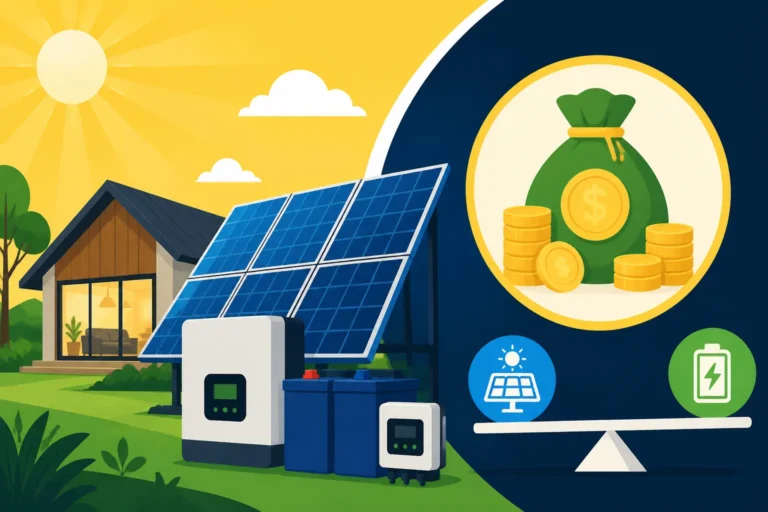
Transitioning to off-grid solar represents a significant upfront investment, there's no denying that. Unlike the recurring, smaller expenses of a generator, solar requires a larger initial capital outlay. However, understanding what goes into that initial cost can help you appreciate the long-term value and the ultimate Off-Grid Solar Payback Period Explained.
Components and Initial Setup Costs
When you embark on building an off-grid solar system, you're investing in several key components, each playing a vital role. First, you have the solar panels themselves. The number and wattage of panels you need will depend on your energy consumption and the amount of sunlight your location receives. You might start with a smaller array, maybe a few 100-watt panels, or go big with multiple 400-watt panels for a whole-house system.
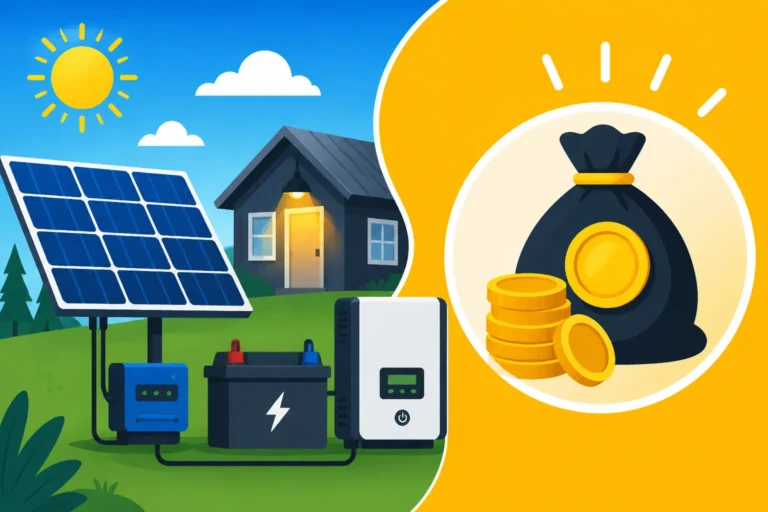
Next, and often the most expensive single component, are the batteries. This is where you store the energy captured by your panels. Lithium iron phosphate (LiFePO4) batteries are incredibly popular for their longevity and deep discharge capabilities, though lead-acid options are still around for those on a tighter budget. A robust battery bank is crucial for ensuring you have power through the night or during cloudy days. Then there's the inverter, which converts the DC power from your batteries into the AC power your household appliances use. You'll also need a charge controller to regulate the flow of power from your panels to your batteries, protecting them from overcharging. Don't forget the mounting hardware, wiring, fuses, breakers, and disconnects – all essential for a safe and functional system.
For instance, a basic system for a small cabin might involve a few solar panels, a charge controller, a 12V LiFePO4 battery, and a small inverter. Larger setups for a full-time off-grid home could include several kilowatts of panels, a large 48V battery bank (perhaps from brands like EG4 or Battle Born), a powerful inverter, and all the associated safety gear. While these costs can seem daunting at first, remember that these are largely one-time purchases designed for years, if not decades, of service. This contrasts sharply with the perpetual cycle of buying fuel and replacement parts for a generator.
Installation Considerations
The cost of setting up your off-grid solar system also includes installation. This can vary widely depending on whether you decide to go the DIY route or hire a professional. Many folks, especially those with some electrical know-how, choose to do it themselves to save money. There are tons of resources available, like guides on How to Wire an Off-Grid Solar System and comprehensive DIY Off-Grid Solar Installation Step by Step tutorials. If you're comfortable with tools and wiring, this can significantly reduce your overall outlay.
However, if you're not confident in your abilities or if your system is particularly complex, hiring a licensed electrician or a solar installer is a smart move. Professional installation ensures that your system is wired correctly, safely, and up to local codes, which can save you headaches and potential hazards down the line. Naturally, this adds to the upfront cost. Whether DIY or professional, factor in the time and effort required, as well as any necessary permits or inspections, which also contribute to the initial investment. You can always start small and expand your system over time to manage the initial financial burden.
Calculating the Payback Period for Off-Grid Solar
The idea of "payback period" for off-grid solar is all about figuring out when your cumulative savings from not buying fuel (or paying utility bills) will equal your initial investment in the solar system. It’s a powerful concept because it shows you exactly when your solar setup starts paying you back.
Defining "Payback Period"
In the context of off-grid solar versus a gas generator, the payback period is essentially the amount of time it takes for the money you save by not having to purchase and maintain a gas generator (especially fuel, oil, spark plugs, and eventual replacement) to equal the initial cost of your off-grid solar system. It’s not just about energy, it's about financial freedom from the pump. Once you hit that point, every dollar you would have spent on generator fuel or maintenance is pure savings in your pocket. This calculation helps answer the question, Is Off-Grid Solar Worth the Cost?
Factors Influencing Solar Payback
Several key factors play into how quickly your off-grid solar system pays for itself:
- Your Energy Needs: The more power you consume daily, the larger the generator you'd need, and the more fuel it would burn. Conversely, a larger solar system to meet those demands would have a higher upfront cost but also displace more generator fuel. Higher consumption often leads to a faster payback because the savings against the generator are greater.
- System Size and Cost: Naturally, a more powerful solar array and a larger battery bank cost more initially. However, if this larger system completely eliminates your generator usage, the savings can be substantial. Understanding Off-Grid Solar Cost by System Size is crucial here.
- Sun Exposure in Your Location: Areas with more "peak sun hours" (the equivalent hours per day when solar irradiance averages 1,000 watts per square meter) will allow your solar panels to generate more electricity, more consistently. This means your batteries stay topped up, and you rely less on a backup generator, accelerating your payback.
- Fuel Prices: This is a huge variable. If gasoline or propane prices are consistently high, your savings from not buying fuel will be greater, leading to a faster payback. Conversely, if fuel prices drop (which is rare these days!), the payback period would extend.
Step-by-Step Calculation Example
Let's walk through a simplified hypothetical scenario to illustrate how you might calculate this.
Scenario: You live in a remote cabin and currently rely on a 3,000-watt gas generator for all your power needs, running it 6 hours a day.
Gas Generator Costs:
- Fuel Consumption: 0.4 gallons/hour (at your average load).
- Daily Fuel: 0.4 gallons/hour * 6 hours = 2.4 gallons.
- Average Gas Price: $4.00/gallon.
- Daily Fuel Cost: 2.4 gallons * $4.00/gallon = $9.60.
- Monthly Fuel Cost: $9.60 * 30 days = $288.00.
- Annual Fuel Cost: $288.00 * 12 months = $3,456.00.
- Annual Maintenance (oil, filters, spark plugs, etc.): Let's estimate $150.00.
- Annual Generator Depreciation/Replacement Fund (generators often last 3-5 years of heavy use): Say $500.00/year.
- Total Annual Generator Operational Cost: $3,456 (fuel) + $150 (maintenance) + $500 (replacement) = $4,106.00.
Off-Grid Solar System Investment:
You decide to install a 2,000-watt (2kW) off-grid solar system with a 5kWh LiFePO4 battery bank, an inverter, and all necessary components.
- Solar Panels (2,000W @ $1/watt): $2,000
- Batteries (5kWh LiFePO4): $3,000
- Inverter/Charge Controller: $1,500
- Wiring, Mounting, BOS: $1,000
- Installation (DIY with some contractor help): $1,500
- Total Initial Solar System Cost: $9,000.00.
Calculating Payback:
- Annual Savings from not using generator: $4,106.00 (Generator Annual Operational Cost).
- Payback Period: Total Initial Solar System Cost / Annual Savings
- Payback Period: $9,000 / $4,106 ≈ 2.19 years.
In this example, your off-grid solar system would effectively pay for itself in just over 2 years! After that, your power is essentially "free" (minus very minimal maintenance for solar, which is negligible compared to a generator). This makes it clear that while the initial lump sum for solar is higher, the long-term financial benefits can be incredibly compelling, especially when considering the Cost to Power a Cabin with Solar.
Long-Term Savings and Benefits of Off-Grid Solar
Once you've made the switch to off-grid solar, the financial and lifestyle benefits really start to shine, far outweighing the initial investment and the recurring nightmare of a gas generator.
Eliminating Fuel Costs
This is the most obvious and perhaps most satisfying long-term saving. After your solar system is installed and operational, your "fuel" is free sunshine. You are no longer beholden to fluctuating gasoline or propane prices, which can dramatically impact your monthly budget. Imagine the peace of mind knowing that even if gas prices soar to record highs, your lights will still turn on, your fridge will stay cold, and your devices will charge without an extra penny out of your pocket. Over years, this adds up to tens of thousands of dollars in savings that would have otherwise been spent on fuel alone. This freedom from ongoing operational costs is a core reason why many choose to invest in off-grid power, recognizing the significant Off-Grid Solar Return on Investment.
Think about a full-time off-grid homesteader, for example, who might have spent $300-$500 a month on generator fuel. Over a decade, that's $36,000 to $60,000 saved, easily covering the cost of a substantial solar system and then some. This long-term cost avoidance is the true financial superpower of solar.
Minimal Maintenance and Longer Lifespan
Another huge win for off-grid solar is its drastically lower maintenance requirements and significantly longer lifespan compared to a gas generator. Solar panels, being solid-state devices with no moving parts, are incredibly durable. Many come with performance warranties guaranteeing 80% or more of their original output after 25 years. Beyond an occasional cleaning to remove dust or snow, they demand very little from you.
Batteries, especially modern LiFePO4 batteries, are designed for thousands of charge cycles and can easily last 10-15 years, sometimes even longer, with proper care. Inverters and charge controllers are also robust, often lasting 10+ years. This means less time spent tinkering, repairing, or replacing components, and more time enjoying your off-grid lifestyle. The contrast with generators, which demand constant attention and have a significantly shorter operational life, couldn't be starker. Over the decades, these minimal maintenance needs translate into substantial savings on labor, parts, and the frustration of equipment breakdowns. This drastically reduces your Off-Grid Solar Maintenance Costs.
Environmental and Lifestyle Advantages
Beyond the monetary savings, off-grid solar offers profound environmental and lifestyle benefits. Environmentally, you're embracing a clean, renewable energy source. No carbon emissions, no harmful pollutants, and a significantly reduced carbon footprint. For many, this aligns perfectly with the ethos of living off-grid and minimizing impact on the planet. Choosing solar is an investment in a sustainable future.
From a lifestyle perspective, the quiet operation of solar power is a game-changer. Imagine waking up to the sounds of birds and nature, not the roar of an engine. Enjoying a quiet evening on your porch without intrusive noise. This improved quality of life is invaluable. Furthermore, off-grid solar provides true energy independence. You're no longer reliant on external fuel sources or centralized utility grids. This self-sufficiency brings a profound sense of security and resilience, knowing you control your power supply. It means you can set up your home or cabin virtually anywhere the sun shines, without worrying about utility hookups or fuel deliveries. This sense of independence is a major driver for those exploring Total Cost of Off-Grid Independence.
When a Gas Generator Still Makes Sense
While off-grid solar offers incredible long-term advantages, it's also important to be realistic. There are still scenarios where a gas generator plays a valuable role, often not as a primary power source, but as a strategic backup or complement to a solar system.
Emergency Backup and Peak Load Support
No matter how well-designed your off-grid solar system is, there will be times when the sun just isn't cooperating. Extended periods of cloudy or stormy weather, heavy snowfall covering your panels, or unexpected system malfunctions can lead to a dip in your available power. This is where a gas generator truly shines as an emergency backup. It’s there to kick in when your solar array can't keep up or your battery bank is running low, ensuring you never run completely out of power when you need it most.
Moreover, generators are excellent for handling sudden, high-demand peak loads that your solar inverter might struggle with, or that would rapidly deplete your batteries. Think about running heavy-duty power tools in your workshop, welding equipment, or starting up a large well pump. These appliances often have significant "surge" requirements that can temporarily exceed what your solar system is designed to handle efficiently on a regular basis. Having a generator on standby for these specific, short-duration tasks can save you from oversizing your entire solar system just for a few hours of use each month, which can reduce your Off-Grid Solar Cost Per Watt. A portable generator, like a Jackery or a quiet inverter generator from Amazon brands, can be a lifesaver in these situations.
Integrating a Generator with Off-Grid Solar
The best of both worlds often lies in a hybrid system where a gas generator works in conjunction with your off-grid solar setup. This allows you to leverage the cost-free, clean energy of solar for your day-to-day needs, while still having the robust, on-demand power of a generator for those occasional demanding tasks or during extended solar droughts.
Many modern off-grid inverters (often called inverter-chargers) are designed to seamlessly integrate with a generator. When your batteries get low, the inverter can automatically start the generator, use its power to run your household loads, and simultaneously recharge your battery bank. Once the batteries are full, the generator shuts off, and your solar system takes over again. This intelligent management optimizes fuel consumption, drastically reducing how often your generator runs, thus minimizing its operational costs, noise, and emissions. It effectively turns the generator into a smart backup, preserving it for when it's truly needed and extending its overall lifespan. You might be interested in knowing the Cost of Adding a Generator to Off-Grid Solar.
A well-designed hybrid system maximizes your energy independence and reliability without the constant expense and hassle of generator-only power. It's a pragmatic approach for many off-gridders seeking both sustainability and unwavering power security.
Cost Comparison: Off-Grid Solar vs. Gas Generator
To really put things into perspective, let's look at a straightforward comparison of the key cost factors and benefits. This table helps to visualize where each option excels and where it falls short over the long run.
| Feature | Off-Grid Solar System | Gas Generator (Primary Power) |
|---|---|---|
| Initial Cost | High (typically $5,000 – $30,000+ for a full system) | Low to Moderate (typically $500 – $5,000) |
| Ongoing Fuel Cost | Zero | High and continuous (can be $3,000 – $6,000+ per year) |
| Maintenance | Minimal (cleaning panels, battery checks) | High and regular (oil changes, filters, spark plugs) |
| Lifespan | Long (panels 25+ years, LiFePO4 batteries 10-15+ years) | Short (1,000 – 5,000 operating hours, 3-7 years of heavy use) |
| Noise | Silent operation | Loud and intrusive |
| Emissions | Zero operating emissions | Significant carbon monoxide & other pollutants |
| Reliability | High, dependent on weather; excellent with sufficient battery storage and proper sizing | High, as long as fueled and maintained; prone to mechanical issues over time |
| Convenience | Set-and-forget; automatic power delivery | Requires manual fueling, starting, and maintenance |
| Environmental Impact | Very low | High |
| Energy Independence | Full independence | Dependent on fuel availability and supply chain |
| Payback Period | Typically 2-7 years (based on displaced fuel/utility costs) | No true payback; ongoing cost center |
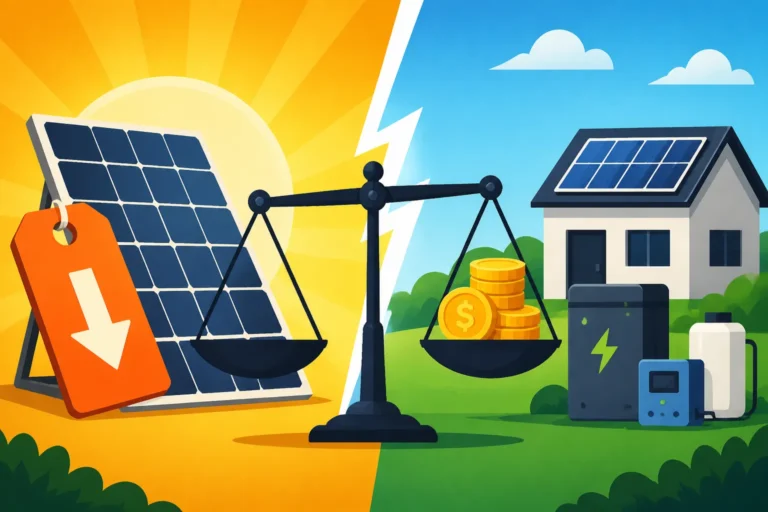
This table clearly illustrates that while the entry barrier for off-grid solar is higher, its long-term economic and environmental benefits quickly outpace those of relying solely on a gas generator for primary power. It's truly a comparison of a depreciating, consumable asset versus a long-term investment that generates its own "fuel."
Disclaimer
Please remember that the information provided in this article is for general guidance and informational purposes only. Off-grid solar system design, costs, and installation can vary significantly based on your specific energy needs, location, equipment choices, and local regulations. Always consult with qualified professionals for personalized advice and ensure all installations comply with applicable electrical codes and safety standards.