Off-Grid Solar Cost for a Barn
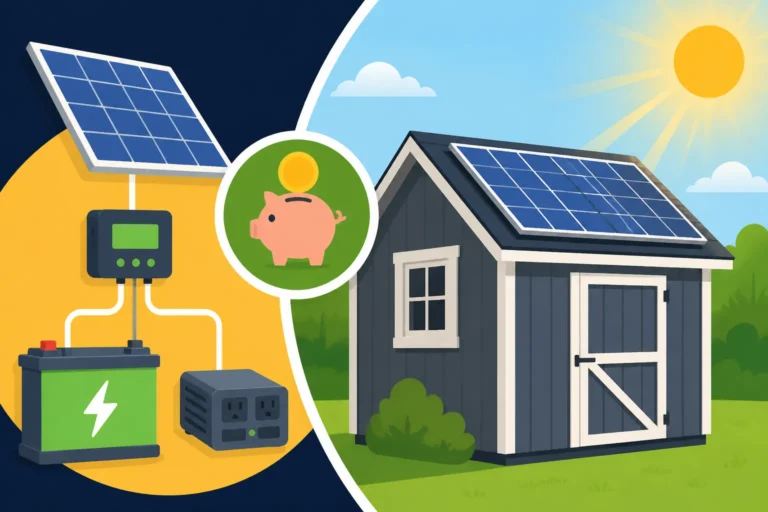
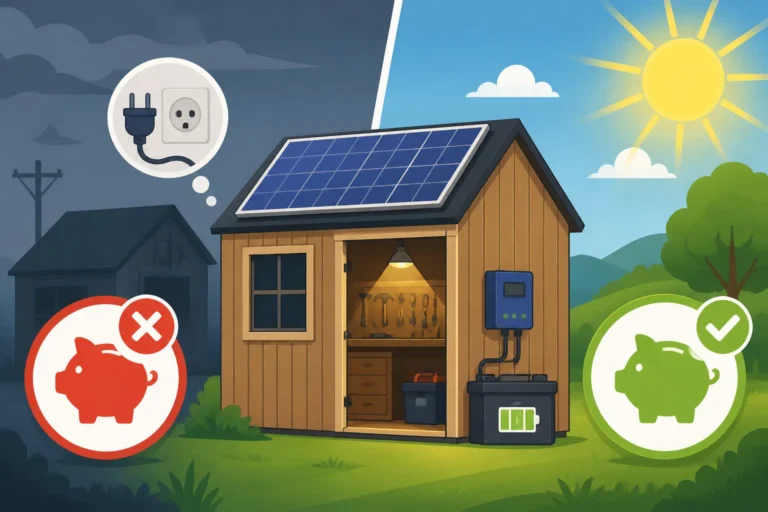
You’ve got a barn, and it’s a fantastic asset, whether it's a bustling workshop, a quiet haven for livestock, or just a really cool storage space. But let’s be real, running power to these outbuildings can be a monumental headache, especially if you’re far from the main grid. Digging trenches for utility lines can cost a small fortune, and relying on noisy, fuel-guzzling generators isn’t exactly a sustainable or peaceful solution. This guide is here to shed some light on what it truly costs to power your barn with an off-grid solar system, breaking down the expenses so you can plan effectively and achieve energy independence.
Understanding Your Barn's Energy Needs for Off-Grid Solar
Before you can even begin to dream about panel placement or battery banks, you need to get a firm grasp on what you're actually trying to power. This isn't just about throwing some solar panels on the roof; it's about understanding your barn's unique energy footprint. Skipping this crucial step is a surefire way to end up with a system that’s either woefully inadequate or unnecessarily expensive.
Assessing Your Appliance Load
Think about everything you currently use in your barn, or everything you want to use. This isn't just the big stuff; every lightbulb, every charger, every fan contributes to your overall demand. For instance, do you have a few LED lights for evening chores, or are you running bright shop lights for hours every day? Are you using hand tools occasionally, or do you have a full woodshop with a table saw, miter saw, and dust collector all drawing power?
Make a list of every electrical appliance and tool, and try to find their wattage. This is usually printed on the device or in its manual. Then, estimate how many hours per day you'll be using each item. Multiply the wattage by the hours to get your daily Watt-hour (Wh) consumption for each item. For example, a 100-watt lightbulb used for 4 hours a day consumes 400 Wh. A drill used intermittently might only run for 15 minutes a day, but at 500 watts, that's still 125 Wh. Don't forget parasitic loads like security cameras, gate openers, or even a small radio, which draw power continuously. This detailed inventory helps you understand How to Calculate Daily Energy Usage for your barn.
Considering Seasonal Usage and Future Expansion
Your barn's energy needs might fluctuate dramatically throughout the year. If it’s primarily a summer workshop, your winter power demands will likely be lower. However, if you rely on it for year-round animal care or a heated workspace, your winter needs, coupled with shorter daylight hours, will significantly impact your system design. You might need more panels to compensate for less sun or a larger battery bank to store more energy for those long, dark nights. This is where understanding How Winter Affects Off-Grid Sizing becomes incredibly important.
It's also wise to think about the future. Are you planning to add more tools, convert a section into a small office, or perhaps install an electric water heater for animal washing? Designing an expandable system from the start, even if it costs a little more upfront, can save you a huge headache and significant expense down the line. You don't want to perfectly size your system for today only to find it inadequate next year. Consider building in a bit of headroom, maybe 10-20% extra capacity, to accommodate unforeseen needs or minor additions without a complete overhaul.
Breaking Down the Components and Their Costs
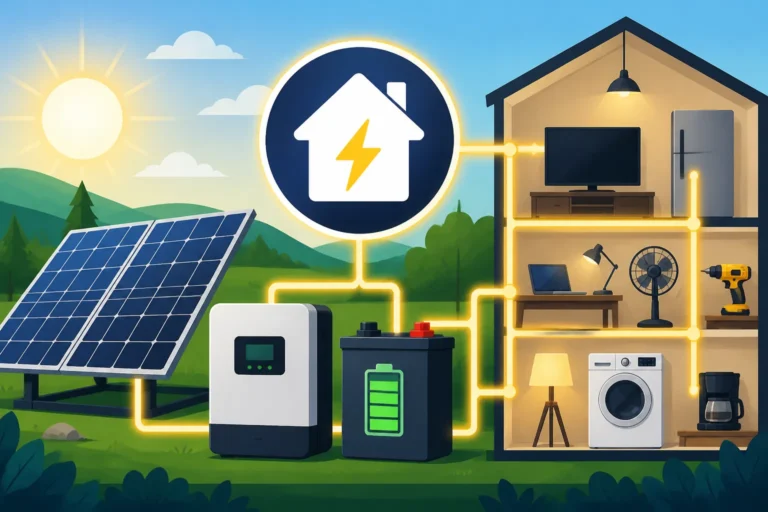
An off-grid solar system for your barn isn't just a collection of panels; it's an interconnected ecosystem of specialized equipment, each with its own role and cost. Understanding these core components is key to figuring out your overall budget. For a truly comprehensive breakdown of the entire system, you might find our guide on Off-Grid Solar Cost: Complete Breakdown useful.
Solar Panels: The Sun Catchers
These are the most visible part of your system, the hardworking surfaces that convert sunlight into electricity. The market offers a variety of choices, primarily monocrystalline and polycrystalline panels. Monocrystalline panels are generally more efficient and perform better in low light or hot conditions, but they tend to be a bit pricier. Polycrystalline panels are a more budget-friendly option, offering decent performance, though they typically require more space to generate the same amount of power.
The cost of solar panels has steadily decreased over the years, making them more accessible than ever. You’ll typically look at costs ranging from $0.70 to $1.50 per watt, depending on the brand, efficiency, and panel type. For a barn, rigid panels are usually the go-to due to their durability and efficiency, especially if you're mounting them on a roof or a ground array. Flexible panels exist but are generally less efficient and more expensive per watt, usually reserved for RVs or boats where weight and form factor are critical. Remember, the goal here is to collect enough power to meet your daily needs and charge your batteries adequately. Learn more about the specific expenses in our article on the Cost of Off-Grid Solar Panels.
Batteries: Your Off-Grid Power Bank
Ah, the batteries – often the most expensive single component in an off-grid system, and for good reason! They are the heart of your system, storing the energy generated by your panels so you have power when the sun isn't shining. Without them, your barn would only have electricity during daylight hours, which isn't practical for most uses.
You'll primarily choose between two main chemistries: lead-acid and lithium iron phosphate (LiFePO4).
- Lead-Acid Batteries: These are the traditional choice, including flooded lead-acid (FLA) and sealed options like Absorbent Glass Mat (AGM) and Gel batteries. They are generally cheaper upfront, with costs ranging from $150-$400 per 100 Ah (amp-hour) for a 12V battery. However, they have a shorter lifespan (2-7 years), can only be safely discharged to about 50% without damaging them, and require more maintenance (especially FLAs). They also perform less efficiently in colder temperatures. For a basic, low-budget setup, they can work, but for sustained use in a barn, their limitations quickly become apparent.
- LiFePO4 Batteries: These are the modern champions of off-grid storage. While their upfront cost is significantly higher, often $500-$1,200+ per 100 Ah (12V), their long-term value is unparalleled. They offer a much longer lifespan (10-15+ years), can be discharged to 80-100% without harm, are maintenance-free, lighter, and perform much better across a wider temperature range. For a barn that you plan to use consistently for years, the investment in LiFePO4 batteries almost always pays off. Brands like Battle Born and EG4 are popular choices for their robust performance and reliability. You can dive deeper into the specifics of battery costs and choices by checking out our guides on the Cost of an Off-Grid Solar Battery Bank and LiFePO4 vs Lead-Acid Battery Cost.
Inverters and Charge Controllers: The Brains of the Operation
These two components are the unsung heroes, managing the flow of power and converting it into usable electricity for your appliances.
- Charge Controller: This device sits between your solar panels and your battery bank. Its job is to regulate the voltage and current coming from the panels to safely charge your batteries, preventing overcharging and extending battery life. There are two main types:
- PWM (Pulse Width Modulation): Simpler and more affordable, best for smaller systems where the panel voltage closely matches the battery bank voltage. Costs typically range from $30 to $150.
- MPPT (Maximum Power Point Tracking): More advanced and efficient, MPPT controllers optimize the power harvest from your panels, especially beneficial in varying light conditions or when your panel voltage is much higher than your battery bank voltage. They can boost efficiency by 10-30% compared to PWM. These usually cost $100 to $600+, depending on size and features. For most barn systems, especially anything beyond basic lighting, an MPPT controller is the recommended choice for its efficiency and capability to handle different panel configurations. Explore more about these costs in Cost of a Charge Controller.
- Inverter: Your inverter takes the DC (direct current) electricity stored in your batteries and converts it into AC (alternating current) electricity, which is what most standard household and barn appliances use.
- Pure Sine Wave Inverters: This is the gold standard. They produce clean, stable AC power, just like the grid, making them safe for sensitive electronics, motors, and power tools. They cost more, typically ranging from $200 for smaller units to $2,000+ for large, high-wattage inverter-chargers capable of handling major loads.
- Modified Sine Wave Inverters: A cheaper alternative ($50-$300), but they produce a "choppier" waveform that can damage sensitive electronics, reduce the lifespan of motors, and cause buzzing in audio equipment. For a barn running power tools, a pure sine wave inverter is almost always a necessity to protect your investments. You can find out more about what goes into the Cost of an Off-Grid Solar Inverter. High-quality brands like Victron Energy or Growatt offer reliable and feature-rich options that are well worth the investment for a barn system.
Balance of System Components
These are all the "little things" that add up quickly but are absolutely critical for a safe, functional, and durable system. We're talking about:
- Wiring and Cables: High-quality, appropriately sized copper wiring is essential to prevent voltage drop and ensure safety. This includes heavy-gauge battery cables, solar panel wiring, and household-type wiring for your barn's AC loads.
- Fuses and Breakers: Crucial safety devices that protect your equipment and prevent fires in case of a short circuit or overload.
- Mounting Hardware: Racks and brackets to secure your solar panels. This could be roof mounts, ground mounts, or pole mounts. The type you choose will depend on your barn structure and sun exposure.
- Conduit and Junction Boxes: To protect wiring from weather, pests, and physical damage.
- Disconnect Switches: Manual switches for safely isolating components for maintenance or emergencies.
- Battery Enclosure/Ventilation: Especially important for lead-acid batteries, which can off-gas hydrogen. LiFePO4 batteries are safer but still benefit from protection from the elements.
These components can easily add another 10-20% to your total budget, but they are non-negotiable for safety and longevity. For a deeper dive into the overall cost implications, refer to our article on Off-Grid Solar Installation Cost.
Estimating Total Off-Grid Solar Cost for a Barn
Now that we’ve broken down the individual pieces, let’s talk real numbers. The total cost of an off-grid solar system for a barn can vary widely, from a few hundred dollars for a very basic setup to tens of thousands for a fully powered, year-round operation. It all comes back to your energy needs. Generally speaking, a system for a barn might fall into three broad categories: small, medium, or large. This perspective on costs, broken down by system size, is also covered in Off-Grid Solar Cost by System Size.
Small Barn Basic Setup (Lights & Chargers)
This type of system is perfect for a small shed or a barn used primarily for storage, occasional lighting, and charging small devices. Think: a few LED lights, charging power tool batteries, maybe a small fan for ventilation, and keeping your phone topped up.
- Energy Needs: Roughly 100-400 Watt-hours per day.
- Solar Panels: 100-200 watts. This could be one or two small panels.
- Batteries: A single 100 Ah (12V) LiFePO4 battery, or perhaps a pair of 100Ah AGM batteries.
- Inverter: A small 500W-1000W pure sine wave inverter.
- Charge Controller: A 20A MPPT charge controller.
- Estimated Component Cost Range: $800 – $2,500.
For this kind of setup, many folks might even consider an all-in-one portable power station or a solar generator. Companies like Jackery offer integrated solutions that include the battery, inverter, and charge controller in one compact unit, which can be easily paired with a couple of portable solar panels. You can find many of these components and pre-built kits on Amazon, which can simplify the purchasing process for smaller systems. A system of this size, like a Cost of a 400W Off-Grid Solar System, is fantastic for occasional use and basic power needs.
Medium Barn Moderate Usage (Tools, Small Appliances)
This category suits a working barn or a larger outbuilding where you're running more significant loads. This could include power tools for projects, a small refrigerator for drinks or animal medications, multiple lights, and perhaps a small well pump for watering livestock.
- Energy Needs: Roughly 1,000-3,000 Watt-hours per day.
- Solar Panels: 500-1,500 watts. This would typically involve 2-6 larger panels.
- Batteries: 200-400 Ah (12V) or 100-200 Ah (24V) LiFePO4 battery bank. Alternatively, 4-8 100Ah AGM batteries (remembering the 50% discharge limit).
- Inverter: A 2,000W-3,000W pure sine wave inverter to handle tool startup surges.
- Charge Controller: A 40-60A MPPT charge controller.
- Estimated Component Cost Range: $3,000 – $8,000.
At this level, you’re looking at a more dedicated system, often with components chosen for reliability and efficiency. This is where the long-term benefits of LiFePO4 batteries really start to shine, justifying their higher upfront cost. Our guide on the Cost of a 3000W Off-Grid Solar System details what to expect for this tier of power.
Large Barn or Heavily Used Workshop (Heavy Tools, Heating/Cooling)
If your barn is essentially a second home—a fully-equipped workshop, a livable space, or an intensive agricultural operation requiring consistent power for heating, cooling, or heavy machinery—you’re in this category.
- Energy Needs: 5,000-10,000+ Watt-hours per day.
- Solar Panels: 2,000-5,000+ watts. This means 8-20+ larger panels, possibly requiring a ground mount for sufficient space.
- Batteries: 400-800+ Ah (24V or 48V) LiFePO4 battery bank for substantial storage and longevity. This often involves multiple batteries wired in series/parallel.
- Inverter: A 4,000W-8,000W+ pure sine wave inverter, potentially an inverter-charger for generator integration.
- Charge Controller: An 80-100A+ MPPT charge controller, or multiple smaller MPPTs.
- Estimated Component Cost Range: $10,000 – $30,000+.
These larger systems are substantial investments, providing true energy independence and the ability to run almost anything you would in a conventional home. The higher voltage systems (24V or 48V) become more efficient for these larger loads. The Cost of a 5000W Off-Grid Solar System explores these larger setups.
Here's a quick overview of estimated component costs for different barn types:
| Component | Small Barn (100-400 Wh/day) | Medium Barn (1-3 kWh/day) | Large Barn (5-10+ kWh/day) |
|---|---|---|---|
| Solar Panels | $150 – $300 (100-200W) | $700 – $2,250 (500-1500W) | $3,500 – $7,500+ (2.5-5kW+) |
| Batteries (LiFePO4) | $500 – $900 (100Ah 12V) | $1,500 – $3,600 (200-400Ah) | $5,000 – $12,000+ (400-800Ah+) |
| Charge Controller | $50 – $100 (20A PWM/MPPT) | $150 – $400 (40-60A MPPT) | $300 – $800+ (80-100A+ MPPT) |
| Inverter | $100 – $300 (500-1000W PSW) | $400 – $1,000 (2000-3000W PSW) | $1,500 – $5,000+ (4000-8000W+ PSW) |
| Balance of System | $100 – $200 | $300 – $800 | $800 – $2,000+ |
| Total Components | $900 – $1,800 | $3,050 – $8,050 | $11,100 – $27,300+ |
Note: These are estimated component costs and do not include installation labor or potential hidden costs.
DIY vs Professional Installation and Hidden Costs
Once you have your shopping list, the next big decision is who puts it all together. This choice significantly impacts your final cost and the overall reliability of your system.
The DIY Path: Savings and Challenges
For many barn owners, especially those with smaller systems or a good degree of electrical knowledge, the idea of a DIY off-grid solar installation is incredibly appealing. The most obvious benefit is the significant cost savings on labor, which can often be 10-30% of the total project cost. Plus, there's a huge sense of accomplishment in building something yourself, and you'll gain an intimate understanding of your system, making troubleshooting and maintenance easier. Many aspiring off-gridders source their components from online retailers like Amazon, piecing together a custom system. For simple setups, even portable solar generators from brands like Jackery can be a great starting point for DIY enthusiasts.
However, the DIY route isn't without its challenges. It demands a considerable amount of time for research, planning, sourcing, and actual installation. You need a solid understanding of electrical principles, wiring safety, and component compatibility. Mistakes can be costly, leading to damaged equipment, inefficient operation, or, worse, safety hazards like electrical fires. If you're not confident in your abilities, or if your system is particularly large or complex, the risks might outweigh the savings. Our article on DIY vs Professional Off-Grid Solar Cost offers a deeper comparison.
Professional Installation: Peace of Mind
Hiring a professional solar installer or a licensed electrician might increase your upfront costs, but it often buys you invaluable peace of mind. Professionals bring expertise, experience, and the right tools to the table. They can ensure your system is properly sized, safely installed, compliant with local codes, and optimized for performance. They also typically offer warranties on their labor and often on the entire system, providing a safety net if something goes wrong.
When is professional help necessary? For large, complex systems with high voltage components, or if you're not comfortable with electrical wiring, it's often the smartest choice. They can also help navigate permitting requirements, which can be a labyrinth on its own. While it’s an added expense, the expertise ensures safety and efficiency, ultimately saving you from potential headaches and costly repairs down the road.
Don't Forget the "Hidden" Costs
Beyond the major components and labor, there are several "hidden" costs that many people overlook when budgeting for their off-grid solar barn system. These can quietly inflate your total expenses if you don't account for them early on. Our guide on Hidden Costs of Going Off-Grid delves into these in more detail, but here are some key ones:
- Permitting and Inspections: Depending on your local jurisdiction and the size of your system, you might need to obtain electrical permits and have your installation inspected. These fees can range from a few hundred to over a thousand dollars. Skipping permits can lead to fines or force you to dismantle your system later. You can learn more about this in our discussion on Off-Grid Solar Permitting Costs.
- Site Preparation: Do you need to clear trees for optimal sun exposure? Grade the land for a ground mount? Reinforce your barn roof? These preparations aren't always cheap.
- Shipping Costs: Heavy components like solar panels and batteries can incur significant shipping fees, especially if you live in a remote area. Always factor this into your budget.
- Tools and Supplies: If you're going the DIY route, you might need specialized tools like a crimper for MC4 connectors, a multimeter, or heavy-duty wire cutters. Even basic supplies like cable ties, mounting screws, and sealant add up.
- System Monitoring: While not strictly "hidden," a good battery monitor (like a Victron SmartShunt) is an incredibly valuable tool for understanding your system's performance and battery state of charge, but it's an additional cost ($150-$300).
- Maintenance and Replacements: While solar panels last for 25+ years, batteries have a finite lifespan. Lead-acid batteries might need replacing every 2-7 years, while LiFePO4 batteries could last 10-15 years or more. This is an ongoing cost to factor into your long-term ownership. Our article on Off-Grid Solar Maintenance Costs provides a deeper look into these considerations. Don't forget occasional panel cleaning, especially in dusty environments.
By meticulously planning and accounting for all these potential expenses, both upfront and long-term, you can create a realistic budget for your off-grid barn solar system and avoid any unpleasant surprises.
Disclaimer
The information provided in this guide is for general informational purposes only and does not constitute professional advice. Off-grid solar system design and installation can be complex and should ideally be undertaken by or with the consultation of qualified professionals. Always adhere to local electrical codes, safety regulations, and manufacturer instructions. Individual costs will vary based on location, specific energy needs, equipment choices, and market fluctuations.