Is Off-Grid Solar Cost-Effective for a Shed
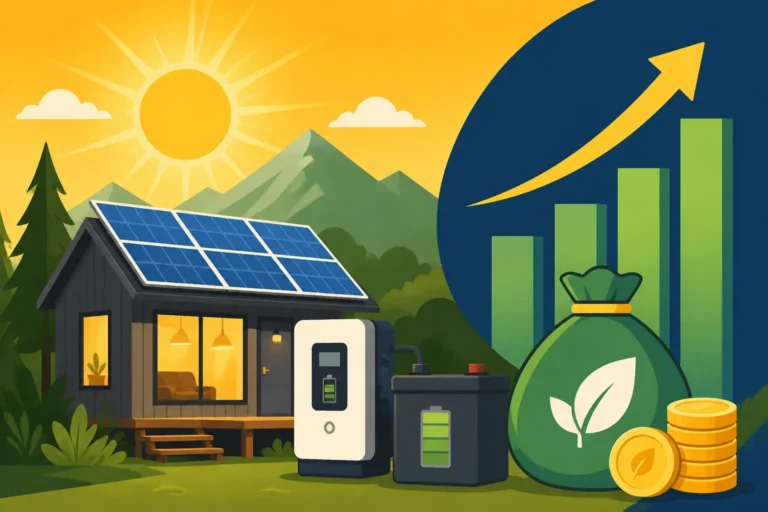
It's a familiar scenario for many of us: you've got a shed, maybe it's for tools, a workshop, a quiet office space, or even just extra storage, and you desperately need power out there. Running an extension cord across the yard is a trip hazard and just inconvenient, and the thought of trenching in expensive utility lines often makes your wallet weep. This guide is here to walk you through the real costs and benefits of going off-grid with solar for your shed, helping you decide if it's truly a cost-effective solution for your unique needs.
Why Power Your Shed with Off-Grid Solar?
The desire for power in a shed isn't just about convenience; it often stems from a practical need to enhance usability, security, or even comfort. But how you get that power makes all the difference, and traditional methods often come with their own set of headaches.
Beyond the Extension Cord: The Limitations of Traditional Power
Let's be honest, that bright orange extension cord snaking across your lawn looks less like a power solution and more like an accident waiting to happen. Not only is it a tripping hazard, but most residential extension cords aren't designed for continuous outdoor use, making them susceptible to damage from weather, lawnmowers, or even curious critters. They can also suffer from voltage drop over longer distances, meaning your tools or lights might not get the full power they need, leading to inefficiency or even damage.
Then there's the generator option. Sure, it provides power, but at what cost? We're talking about constantly buying fuel, the never-ending hum or roar that breaks the peace of your backyard, and the fumes that can make working in your shed unpleasant, if not unhealthy. Not to mention the regular maintenance that generators require, like oil changes and spark plug replacements. For many, a generator is a temporary fix, not a sustainable power solution for a dedicated shed space. Running an extension cord to power, say, a small mini-fridge or a charging station can work in a pinch, but for anything more substantial or permanent, you quickly hit a wall of practical limitations and frustrations.
The Freedom and Flexibility of Solar for Remote Spaces
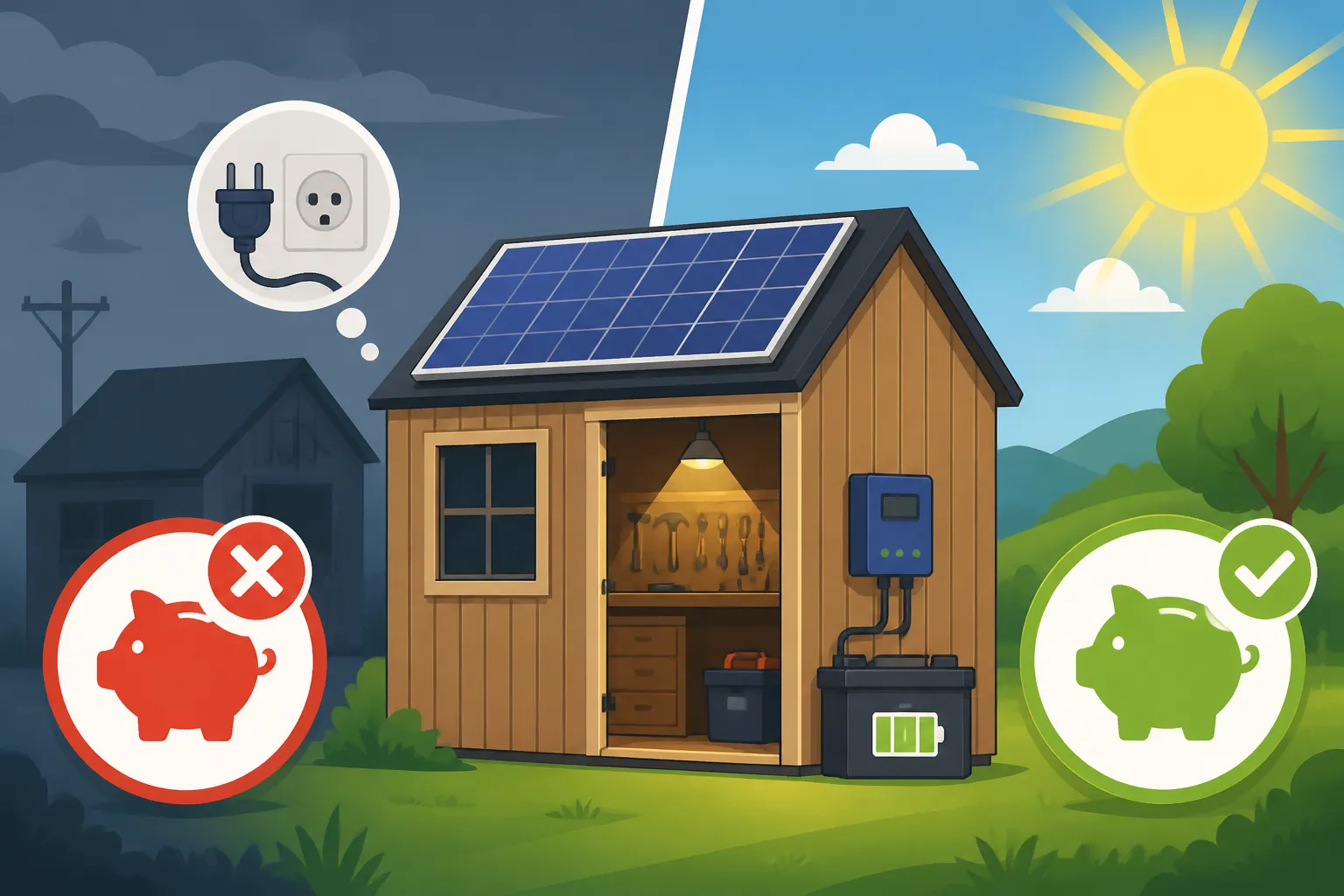
This is where off-grid solar truly shines for a shed. Imagine having reliable power without any ongoing utility bills, without the noise and hassle of a generator, and without tearing up your yard to bury electrical conduit. With solar, your shed becomes a truly independent outpost, capable of supporting a range of activities.
For a workshop, this means you can run power tools like drills, saws, and sanders without a second thought. For a gardening shed, it might mean powering grow lights, a small water pump, or even an automatic watering system. If your shed is a retreat or a remote office, you could easily charge laptops, run a fan, keep a mini-fridge cold, and ensure your Wi-Fi router (if you have one) stays powered. Off-grid solar gives you the flexibility to locate your shed wherever it makes the most sense on your property, regardless of its proximity to your main house's electrical grid. It's about empowering your space, no matter how far afield it might be, and providing the reliable electricity you need to make it truly functional.
Deconstructing the Cost of Off-Grid Solar for a Shed
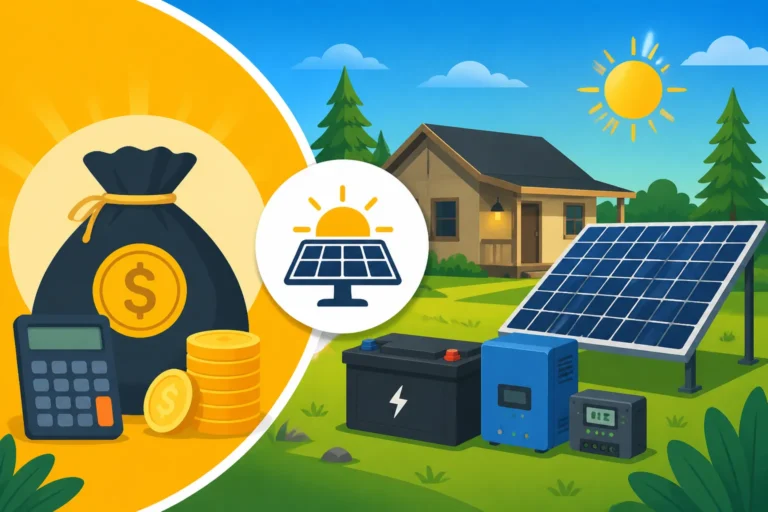
When you start looking into solar for your shed, the first thing that probably comes to mind is the upfront cost. It’s a valid concern, and it’s important to understand what components contribute to that total figure. This isn't just about buying a panel; it's about building a miniature power plant tailored to your needs.
Core Components and Their Price Tags
An off-grid solar system for a shed, no matter how small, typically consists of several key components:
- Solar Panels: These are the workhorses, converting sunlight into electricity. For a shed, you might need anywhere from a single 100-watt panel for basic lighting and phone charging to several 200-watt or 300-watt panels for a workshop running power tools. The price per panel can vary significantly based on wattage, efficiency, and brand, but expect to pay anywhere from $80 to $300+ per panel.
- Charge Controller: This vital piece regulates the power flowing from your solar panels to your batteries, preventing overcharging and extending battery life. There are two main types: PWM (Pulse Width Modulation), which is more affordable but less efficient, and MPPT (Maximum Power Point Tracking), which is more expensive but significantly more efficient, especially in varying light conditions. Prices range from $30 for a basic PWM to $200+ for a good MPPT controller.
- Batteries: This is often the most expensive component of any off-grid system, and for good reason—they store the energy generated by your panels so you have power at night or on cloudy days. You'll primarily choose between lead-acid (cheaper upfront, shorter lifespan, less usable capacity) and lithium-ion (more expensive upfront, longer lifespan, deeper discharge cycles, lighter). For a shed, common options are 100Ah to 200Ah 12V batteries. A single 100Ah deep cycle lead-acid battery might cost $200-$400, while a comparable LiFePO4 battery could be $600-$1000+. To understand this better, check out our guide on How Much to Budget for Off-Grid Batteries.
- Inverter: If you want to power standard AC (alternating current) appliances like power tools, lights, or chargers, you'll need an inverter to convert the DC (direct current) power from your batteries into usable AC power. The size (wattage) of the inverter depends on the total wattage of the appliances you plan to run simultaneously. A small 500-watt inverter might cost $50-$150, while a 2000-watt inverter suitable for larger tools could be $200-$500+.
- Wiring, Fuses, and Mounting Hardware: Don't forget these essential safety and structural components. Wires, connectors, fuses, and breakers are crucial for a safe and functional system. Mounting brackets for your panels (roof or ground mount) also add to the cost. This often adds another $100-$300 to your total, depending on system size and complexity. Many individual components, especially for smaller setups, can be conveniently purchased through online retailers like Amazon.
You can learn more about the specific costs of different components in our article on How Much Does an Off-Grid Solar System Cost.
DIY vs. Professional Installation Savings
One of the biggest variables in the total cost is whether you opt for a DIY installation or hire a professional.
- DIY Installation: For a shed, especially smaller systems, a DIY approach can save you a significant amount on labor costs. Many people find the process of installing a basic shed solar system quite manageable with a bit of research and basic electrical knowledge. There are countless tutorials and kits available that simplify the process. If you’re comfortable with tools and following instructions, you could potentially save thousands compared to professional installation. This is particularly true for smaller setups that might just involve a couple of panels and a portable power station like a Jackery, which integrates many components into one easy-to-use unit. However, safety is paramount, and ensuring proper wiring and grounding is critical. You might find our DIY vs Professional Off-Grid Solar Cost article insightful.
- Professional Installation: For larger or more complex shed systems, or if you're simply not comfortable with electrical work, hiring a professional might be the safer and more reliable option. An electrician or solar installer will ensure the system is correctly sized, safely wired, and meets any local codes (though permits are rarely required for small, standalone shed systems). The downside is the labor cost, which can easily add 30-50% or more to your total project budget. For a simple shed setup, this might not be the most cost-effective route unless you're planning a full-blown detached workshop that requires significant power.
Sizing Your System to Your Needs
The cost of your off-grid solar system for a shed is directly tied to your power demands. This is where understanding How to Size an Off-Grid Solar System becomes crucial.
- Basic Lighting and Charging: If your shed primarily needs a few LED lights and a spot to charge your phone or a cordless tool battery, you're looking at a very small and inexpensive system. A single 100W solar panel, a small charge controller, a 50Ah lead-acid battery, and perhaps a small 300W inverter (or even just 12V direct current for lights) might cost you in the range of $400-$800.
- Small Workshop/Garden Shed: For running occasional power tools (drills, saws for short periods), a small fan, and more robust lighting, you'll need a larger system. Think 200-400W of solar panels, a 100-200Ah lithium battery, an MPPT charge controller, and a 1000-1500W pure sine wave inverter. This kind of setup could range from $1,500-$3,000+.
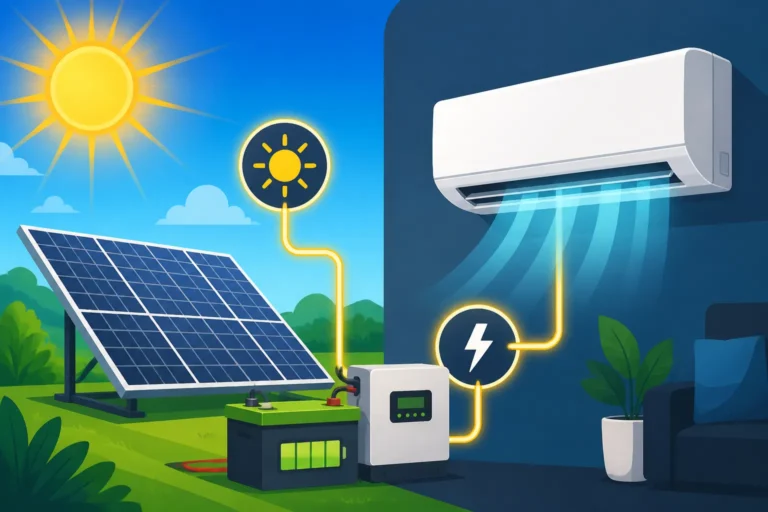
- Dedicated Office/Heated Workshop: If your shed is a year-round workspace with a mini-fridge, heater/AC (even a mini-split), multiple tools, and electronics, you're looking at a more substantial investment. This might involve 600-1000W+ of solar panels, 200-400Ah+ of lithium batteries (or multiple lead-acid), a powerful MPPT controller, and a 2000-3000W+ inverter. Costs for such a system could easily climb to $3,500-$7,000+.
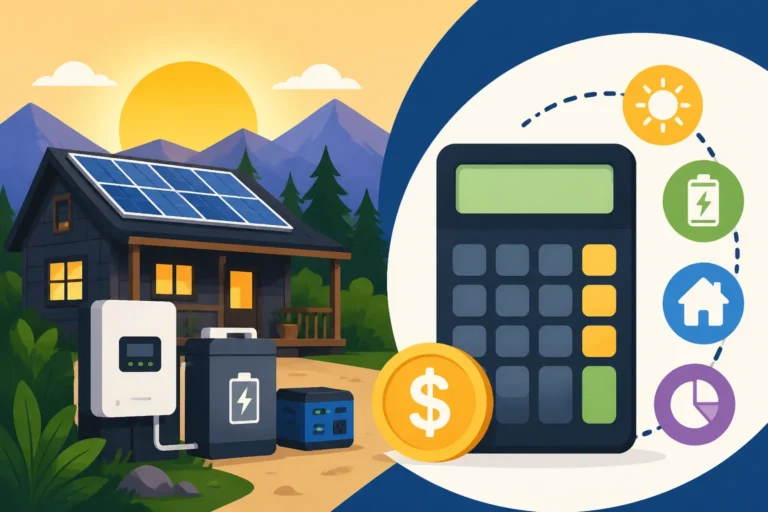
The key is to accurately calculate your daily energy usage for the shed. We have a detailed guide on How to Calculate Daily Energy Usage that can help you with this critical first step. Without a clear understanding of your specific power needs, you risk either overspending on an oversized system or constantly running out of power with an undersized one.
Assessing True Cost-Effectiveness for Your Shed
Determining if off-grid solar for a shed is "cost-effective" isn't just about comparing the sticker price to an extension cord. It involves looking at the long-term savings, the benefits of independence, and comparing it against other, often more expensive, alternatives.
Comparing Alternatives: Generator vs. Utility Extension
When considering power for a shed, your primary alternatives to solar are often a portable generator or extending utility power from your main home. Let's stack them up:
- Portable Generator: As mentioned, generators are noisy, smelly, and require constant fueling. The cost of gasoline adds up quickly, especially if you're running it frequently. A typical 5,000-watt generator might consume 0.5 to 1 gallon of gas per hour under load. If you use your shed workshop for 4 hours a day, 3 days a week, at $3.50/gallon, you're looking at $21-$42 a week in fuel alone, which is $1,000-$2,000+ per year! Add to that the cost of oil changes, spark plugs, and air filters, and suddenly that "cheap" generator isn't so cheap over time. Not to mention the environmental impact and the constant chore of refueling.
- Utility Extension: This often seems like the most straightforward option, but it can quickly become prohibitively expensive, especially for sheds located far from the main house. Trenching a new electrical line, purchasing conduit and wiring, hiring an electrician for proper installation, and getting necessary permits can easily run into thousands, or even tens of thousands, of dollars. For instance, trenching alone can cost $5 to $20 per foot, and that's before adding wiring, breakers, and labor for connections. If your shed is 100 feet from your house, you're already looking at $500-$2000 just for the trench, plus materials and professional labor. Many people are shocked by the Off-Grid Solar Cost vs Utility Extension Cost when they get an estimate. For many remote sheds, extending the grid is simply not economically feasible.
In this context, while off-grid solar has an upfront cost, it eliminates recurring fuel bills and the often-exorbitant price of utility trenching, making it a very attractive long-term investment.
The Long-Term Value Proposition
The cost-effectiveness of off-grid solar for a shed truly shines when you consider the long-term benefits and savings.
- Zero Electricity Bills: Once your system is installed, your power is essentially free. This is a significant advantage over a generator that constantly demands fuel. Over the lifespan of your solar panels (20-25 years) and batteries (5-15 years for lithium), these savings compound.
- Increased Property Value: A shed with integrated, reliable solar power is a more functional and appealing asset, potentially increasing your property's value. It transforms a basic storage unit into a versatile, self-sufficient space.
- Environmental Benefits: For those who prioritize sustainability, solar power offers a clean energy solution, reducing your carbon footprint compared to fossil-fuel-powered generators.
- Peace of Mind and Convenience: The ability to flip a switch and have power, whenever you need it, without noise or fumes, is an invaluable convenience. It's about true energy independence for that specific structure. You can leave lights on for security, charge tools overnight, or keep a small heater running to prevent pipes from freezing, all without worrying about a rising utility bill or a generator running out of gas. This convenience, though hard to put a price tag on, adds immense value to your shed's functionality and your overall lifestyle. Thinking about the long game, our guide on the Off-Grid Solar Payback Period Explained can help put these investments into perspective.
Specific Use Cases and Return on Investment
The return on investment (ROI) for off-grid solar in a shed largely depends on its intended use and how often you'll be drawing power.
- Weekend Workshop: If you're only using the shed sporadically, say a few hours on weekends, a smaller, less expensive system might be all you need. The ROI might be slower in terms of pure monetary savings, but the convenience and freedom from extension cords or generators will quickly make it feel worthwhile. For example, if you just need to run basic lights and a radio, the Cost to Run Lights And Electronics on Off-Grid Solar is relatively low, making a small system highly cost-effective.
- Dedicated Home Office/Studio: For someone using their shed daily as a workspace, the ROI becomes much clearer. The cost of running lights, a laptop, monitor, and potentially heating/cooling appliances for 8+ hours a day adds up quickly with alternative methods. Solar offers consistent, free power, turning your shed into a fully functional and comfortable workspace without impacting your main home's utility bill or dealing with generator noise.
- Remote Storage with Security: Even for a shed primarily used for storage, solar can be cost-effective for security lighting, motion sensors, or even a small security camera system, especially if the shed is in a less visible part of your property. The ability to autonomously power these features, protecting valuable equipment, can prevent losses that far outweigh the solar system's cost.
- Year-Round Agricultural Shed: For uses like a greenhouse shed needing ventilation fans, small heaters, or automatic watering, or a chicken coop needing automated doors and lighting, solar provides the consistent, reliable power necessary for the health and productivity of your plants or animals.
The more you use your shed and the more power-hungry your activities within it, the faster and more significant the financial return on your off-grid solar investment will be.
Practical Steps for Your Shed Solar Journey
Ready to dive into setting up solar for your shed? Great! Here are some actionable steps to ensure your project is a success, from planning to installation and beyond.
Calculating Your Shed's Power Needs
Before you buy a single panel or battery, the most crucial step is to figure out exactly how much power you'll need. This is called a load analysis.
- List All Appliances: Write down every electrical item you plan to use in your shed. This might include LED lights, power tools (drill, saw, sander), a mini-fridge, phone chargers, a laptop, a radio, a fan, or even a small coffee maker.
- Find Wattage (W) and Daily Run Time (Hours): For each item, look for its wattage rating (usually on a label or in the manual). If it's not listed, you can often estimate it or use a kill-a-watt meter. Then, estimate how many hours per day you plan to use each item.
- Calculate Watt-Hours (Wh) Per Day: Multiply the wattage by the hours of daily use for each item. Sum these up to get your total daily watt-hour consumption. For example, a 10W LED light used for 4 hours = 40Wh. A 1200W circular saw used for 15 minutes (0.25 hours) = 300Wh.
- Add a Buffer: It's always a good idea to add a 20-30% buffer to your total daily watt-hours to account for unforeseen usage, cloudy days, or less-than-optimal solar production.
This total daily watt-hour figure is the foundation upon which you'll build your system, guiding your panel, battery, and inverter sizing. Without this, you're just guessing, and that's a recipe for frustration.
Selecting the Right Equipment
Once you know your power needs, choosing the right components becomes much clearer.
- Solar Panels: Consider monocrystalline panels for their efficiency, especially if you have limited roof space on your shed. The number and wattage will depend directly on your daily energy needs and the peak sun hours in your location. Look into Best Off-Grid Solar Panels for insights on durable and efficient options.
- Batteries: For a shed that gets regular use or needs power for critical items, lithium iron phosphate (LiFePO4) batteries are often the best investment due to their long lifespan, deep discharge capability, and lack of maintenance. While more expensive upfront, their total cost of ownership is often lower than lead-acid batteries. Our guide on Best Off-Grid Solar Batteries delves into the different options. For lighter, more portable needs, integrated solar generators from brands like Jackery can be an excellent all-in-one choice, combining battery, inverter, and charge controller into a single unit.
- Charge Controller: Always opt for an MPPT charge controller if your budget allows. Its superior efficiency means you'll capture more power from your panels, especially during less-than-ideal sun conditions, which is crucial for maximizing your investment.
- Inverter: Choose a pure sine wave inverter to ensure clean power that's safe for all your electronics and power tools. Match the inverter's continuous wattage to the highest simultaneous load you anticipate. Don't forget to factor in "surge wattage" for tools with motors (like saws), which briefly draw much more power when they start up.
- Wiring and Safety: Don't skimp on wire gauge! Undersized wires can lead to voltage drop and present a fire hazard. Use appropriately sized fuses and circuit breakers to protect your system components and, most importantly, yourself. Many reputable solar component providers available on platforms like Amazon offer excellent quality wiring and safety devices.
Installation and Maintenance Considerations
Installing off-grid solar for a shed can often be a manageable DIY project, but certain aspects deserve careful attention.
- Mounting: For a shed, simple roof mounts or even ground mounts are common. Ensure your mounting hardware is robust and securely attached to withstand local wind and weather conditions. Proper panel angle and orientation (typically south-facing in the Northern Hemisphere) are key to maximizing energy harvest.
- Wiring: Follow clear wiring diagrams (many kits come with them, or you can find them online). Double-check all connections for tightness and polarity. If you're unsure about any aspect of the electrical work, it's always wise to consult a qualified electrician. Even a small system needs to be done right for safety. For a step-by-step approach, our DIY Off-Grid Solar Installation Step by Step guide can be invaluable.
- Safety: Always disconnect power sources before working on components. Wear appropriate personal protective equipment. Grounding your system properly is essential for safety, protecting both your equipment and anyone interacting with it from electrical surges or faults.
- Maintenance: Off-grid solar systems are relatively low-maintenance, but not maintenance-free. Keep your panels clean from dirt, leaves, and snow to ensure optimal performance. Periodically check battery terminals for corrosion (if using lead-acid) and ensure all wiring connections remain secure. For lithium batteries, maintenance is minimal, usually just monitoring their state of charge. Understanding Off-Grid Solar Maintenance Costs will help you factor these small, ongoing tasks into your long-term plan.
Expanding Your Shed's Solar System
One of the beautiful things about off-grid solar is its expandability. If you start with a small system for lights and decide later you need to run a full workshop, you can often add more panels and batteries.
- Modular Design: Many off-grid components are designed to be modular. You can add more solar panels in parallel to increase your charging capacity, or add more batteries (ensuring they are the same voltage and chemistry, and ideally from the same batch) to boost your storage.
- Planning for Growth: When you first design your system, consider if you might want to expand in the future. For instance, choosing an MPPT charge controller that has headroom for more panels than you initially install, or an inverter that can handle a slightly larger load, can save you from replacing components entirely down the line. Our article on the Cost of Expanding an Off-Grid System offers detailed insights into planning for future needs. This forethought ensures your initial investment isn't wasted if your power needs grow, making your shed solar setup a truly flexible and long-lasting solution.
Disclaimer
Please note that the information provided in this guide is for general informational purposes only and does not constitute professional advice. Off-grid solar system design and installation can be complex and involve electrical hazards. Always consult with qualified professionals and adhere to local codes and regulations before installing any solar power system.