What a 2000W Off-Grid System Can Power and Cost
Trying to figure out if an off-grid solar system with a 2000W capacity is enough to power your remote cabin, RV, or simply provide reliable backup can be really confusing. You look at all those numbers – watts, watt-hours, amp-hours – and it’s hard to visualize what that actually means for your daily life. This guide is here to cut through the jargon, break down what a typical 2000W off-grid solar setup can realistically handle, and give you a clear idea of the costs involved so you can plan your path to energy independence.
Decoding the 2000W Off-Grid Solar System: What Does It Really Mean?
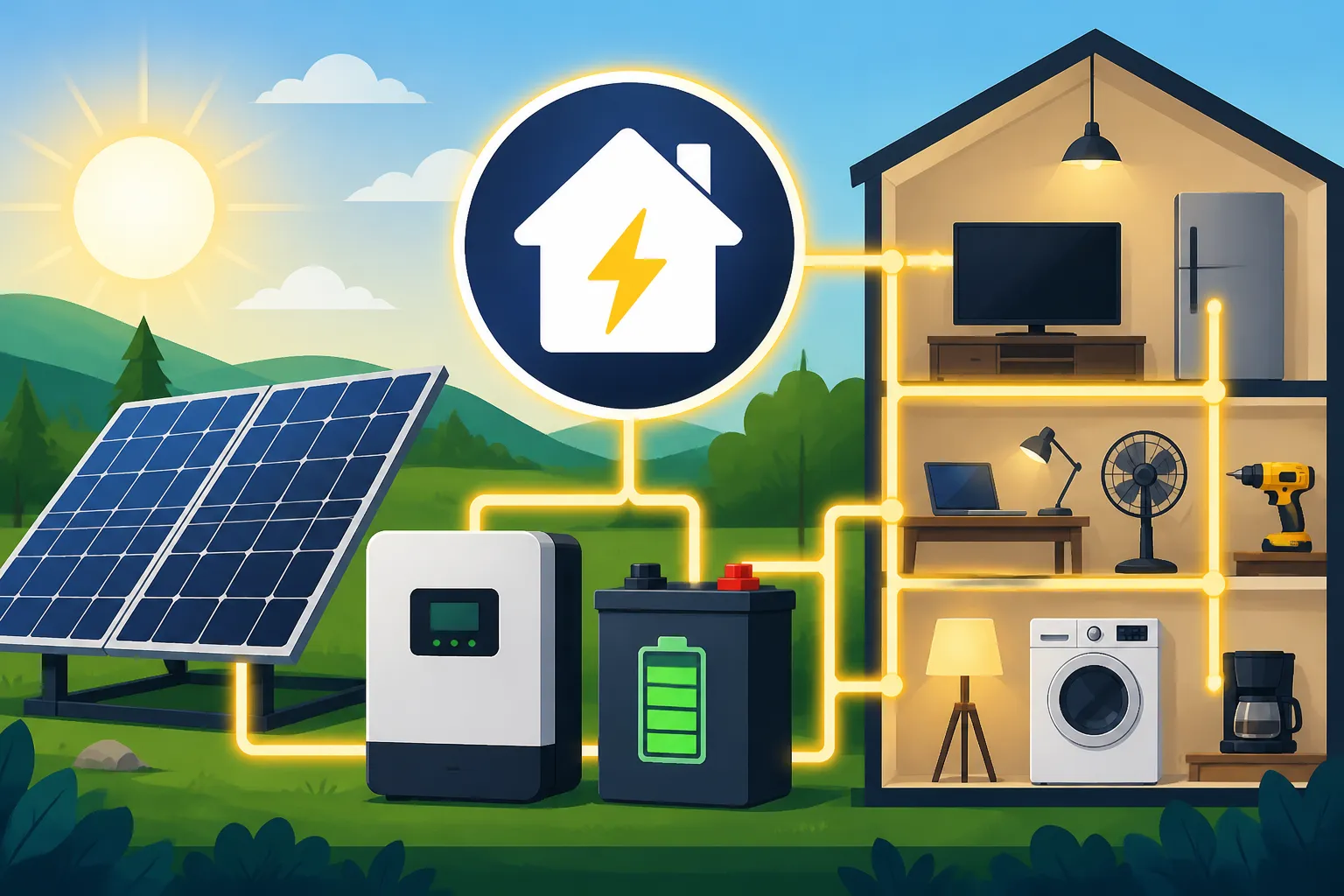
When we talk about a "2000W off-grid solar system," it's easy to get caught up in the number and think it means you'll have 2000 watts available at all times, or that your solar panels total exactly 2000 watts. But the truth is, this figure usually refers to the continuous output capability of your inverter. The inverter is the heart of your AC electrical system, converting the DC power from your batteries into usable AC power for your household appliances. A 2000W inverter means it can continuously supply up to 2000 watts of power to your devices simultaneously. However, what it can actually power, and for how long, depends on a few other critical components: your solar panel array size and your battery bank capacity.
The Role of Your Inverter in Powering Your Life
Your inverter is the gatekeeper for all your AC appliances. If you plug in a microwave that draws 1500 watts and a coffee maker that pulls 800 watts, your total simultaneous draw would be 2300 watts. In this scenario, a 2000W inverter would likely trip or simply not run both appliances because it can't handle the combined load. This is why understanding the continuous rating versus surge rating is important. Many inverters can handle a higher "surge" of power for a very short period (like when a refrigerator compressor kicks on), but the continuous rating is what truly matters for sustained use. For anyone looking to live comfortably off-grid, selecting the right inverter is a crucial step in the overall system design. To learn more about selecting the right size, you might find our guide on How to Size an Off-Grid Inverter] incredibly helpful.
Beyond the Inverter: Panels and Batteries
A 2000W inverter is powerful, but it's only useful if you have enough solar panels to generate the electricity and a large enough battery bank to store it. Think of your solar panels as your income and your batteries as your savings account. If you have a 2000W inverter but only a tiny solar array and small battery bank, you might be able to run that microwave for a few minutes, but your batteries will quickly drain, and you won't be able to recharge them efficiently on cloudy days or even after a full day of use.
For a robust system designed to truly support a 2000W continuous load over time, you'd typically look at a solar array in the range of 1000W to 3000W (or more, depending on your sun hours and desired days of autonomy) and a substantial battery bank, often several hundred amp-hours at a suitable system voltage like 12V, 24V, or 48V. For instance, a common setup might include a 2000W pure sine wave inverter paired with perhaps 1500W to 2000W of solar panels and a 200Ah 24V or 100Ah 48V lithium battery bank, which gives you a good amount of stored energy. This synergy between components is what makes an off-grid system truly functional and reliable. If you're pondering how much energy you'll really need, check out our insights on How to Calculate Daily Energy Usage].
What a 2000W Off-Grid System Can Power
Alright, let's get down to brass tacks: what can you actually run with a system built around a 2000W inverter, backed by a reasonably sized solar array and battery bank? This isn't just about instantaneous power; it's about sustained usage and your total daily energy consumption. Remember, the key is balancing your power draw (watts) with your energy storage (watt-hours) and charging capability.
Essential Appliances for Smaller Living Spaces
A well-designed 2000W system can comfortably handle the essential needs for a small off-grid cabin, an RV, or even a tiny home. We're talking about the appliances that make daily life comfortable without being energy hogs.
- Refrigerator: A modern, energy-efficient refrigerator (especially a 12V DC model or an AC model with good Energy Star ratings) typically uses about 60-120 watts when running. It cycles on and off, so while its instantaneous draw might be low, its cumulative daily watt-hours can add up. A 2000W inverter can easily handle the surge when it kicks on and keep it running. For a deeper dive into powering your fridge, you might want to read Cost to Run A Refrigerator on Off-Grid Solar].
- Lights: LED lighting is incredibly efficient. A few dozen LED bulbs across your living space might only draw 50-100 watts total when all are on. You can run these for hours without significantly impacting your battery bank.
- Electronics Charging: Laptops, phones, tablets, and small entertainment systems (like a smart TV drawing 50-150 watts) are well within the capabilities of a 2000W system. You can easily charge multiple devices and enjoy your digital life without worry.
- Small Kitchen Appliances: A blender (300-600W), toaster (800-1200W), or microwave (600-1500W for cooking) can be run. The trick here is that while the inverter can handle their peak wattage, you generally wouldn't run them all at once. You'd use them for short bursts, one at a time, to avoid overtaxing the system.
Imagine being in your remote cabin in Bend, Oregon. With a 2000W system, you could have your mini-fridge humming along, a couple of LED lights on, your laptop charging, and then brew your morning coffee with a 800W drip maker. You might even fire up a small electric kettle for tea, as long as you're mindful of other high-draw appliances.
Occasional Higher-Draw Items
While it's best to avoid running multiple high-wattage appliances simultaneously on a 2000W inverter, you can definitely use them individually for short periods.
- Hair Dryer/Curling Iron: Many hair care tools can draw 1000-1800W. You can absolutely use one, but it's a dedicated task – don't try to run it while microwaving dinner.
- Vacuum Cleaner: A typical household vacuum might draw 800-1400W. You can do your weekly clean without issue, but again, it's a primary load for the duration of its use.
- Power Tools: For DIY enthusiasts in a workshop or garage, a 2000W system can power many common corded tools like drills (400-800W), circular saws (1000-1500W), or grinders (600-1200W). Cordless tools are even better, as you only use the system to charge their batteries, which is a much lower and more consistent draw. If you're planning a workshop setup, considering Off-Grid Solar Cost for a Workshop] could provide more tailored information.
- Small Well Pump: Depending on the depth and type, a small submersible well pump might draw 750-1500W. These often have a significant surge when starting, so ensuring your inverter has a good surge capacity is critical. Running a well pump daily will also require substantial battery and solar input to replenish the energy used.
What you're really looking at is a system that supports a moderate lifestyle with careful power management. It's not going to run a central air conditioner, an electric clothes dryer, or an electric water heater without significant upgrades to the entire system – those types of appliances demand much larger inverters, massive battery banks, and huge solar arrays.
What it Can't Power Easily (or For Long)
It's important to be realistic. A 2000W system is fantastic for many things, but it has its limits, especially when it comes to long-term, continuous operation of extremely high-draw appliances.
- Electric Water Heaters: These are typically 3000-4500W or more. Trying to run one on a 2000W inverter is a non-starter. You'll need propane or an on-demand system for hot water in an off-grid scenario with this size system.
- Central Air Conditioning or Large Mini-Splits: Even the smallest mini-split AC units usually require a minimum of 1000-1500W continuous but have higher starting surges and run for extended periods. While you could potentially run a very small, highly efficient portable AC unit (500-1000W) for a few hours, it would rapidly deplete your batteries and require massive solar input to recharge. For reliable air conditioning, you'd be looking at a much larger and more expensive system. Our guide on Sizing Solar for Air Conditioning] explores this in depth.
- Electric Ranges/Ovens: Like water heaters, these are huge power draws (2000-5000W per burner/element) and are completely impractical for a 2000W off-grid solar system. Propane is the off-grid cooking fuel of choice.
Estimating the Cost of a 2000W Off-Grid System
Now for the part that everyone wants to know: how much is this going to set you back? The cost of an off-grid solar system, even one built around a 2000W inverter, can vary wildly. It's not a one-size-fits-all price tag because it depends on the quality of components, whether you DIY or hire professionals, your location, and most importantly, your chosen battery chemistry and overall system design. Generally, for a system capable of sustainably supporting a 2000W inverter, you're probably looking at a range of $3,000 to $10,000+ for components alone, with installation adding another layer of expense.
Core Component Breakdown
Let's break down the main elements and their approximate cost ranges for a system that would realistically leverage a 2000W inverter. These prices are estimates and can fluctuate based on market conditions, brand, and features. Many DIYers source components from online retailers like Amazon, or specialized solar suppliers.
- Solar Panels: To support a 2000W inverter and charge your battery bank effectively, especially for daily usage, you'd likely want a solar array between 1000W and 3000W (or more). Panels typically cost $0.70 to $1.20 per watt.
- Estimated Cost for 1500W-2000W of Panels: $1,050 – $2,400
- Batteries: This is often the most expensive component, and the most critical for off-grid reliability. For a 2000W inverter system, you'd want significant storage.
- Lead-Acid (e.g., AGM): Cheaper upfront, but heavier, shorter lifespan, and less usable capacity. A 200Ah 24V (4.8kWh) AGM bank could run around $800 – $1,500, but you'd need multiple strings for decent capacity, and you can only use 50% of the capacity.
- Lithium Iron Phosphate (LiFePO4): Higher upfront cost, but longer lifespan, lighter, and 80-100% usable capacity. A 200Ah 24V (4.8kWh) LiFePO4 battery could be $1,500 – $3,000+ for quality units, but offers better value long-term. Many people opt for several smaller batteries wired in series or parallel to achieve the desired capacity and voltage. Read more about Cost of an Off-Grid Solar Battery Bank] to understand this better.
- Inverter: A good quality, pure sine wave 2000W inverter is essential. Prices vary widely based on features (e.g., built-in charge controller, grid-tie capability for hybrid systems, specific brand).
- Estimated Cost: $300 – $1,200 (e.g., Renogy, Victron, AIMS Power offer various options)
- Charge Controller: This regulates the power from your solar panels to your batteries. For a 1500W-2000W array, an MPPT (Maximum Power Point Tracking) charge controller is highly recommended for efficiency.
- Estimated Cost: $200 – $600 (e.g., Victron, Outback, Renogy are popular brands)
- Mounting Hardware: Roof mounts, ground mounts, tilt kits – these depend on your installation type.
- Estimated Cost: $200 – $800
- Wiring, Fuses, Breakers, Disconnects: Don't skimp on safety! These are crucial for a reliable and safe system.
- Estimated Cost: $300 – $700
- Balance of System (BOS) Components: This includes things like combiner boxes, conduit, monitoring equipment (like a battery monitor or shunt), and various connectors.
- Estimated Cost: $200 – $600
Here's a simplified table illustrating potential component costs for a typical 2000W off-grid system, focusing on a balance of performance and budget for a DIY setup:
| Component | Low-End Estimate (DIY-friendly, Lead-Acid) | High-End Estimate (Quality Components, LiFePO4) |
|---|---|---|
| 1500W Solar Panels | $1,050 | $1,800 |
| Battery Bank (4.8kWh usable) | $800 (AGM, multiple units) | $2,500 (LiFePO4, single or multiple units) |
| 2000W Pure Sine Inverter | $300 | $900 |
| MPPT Charge Controller | $200 | $500 |
| Mounting Hardware | $200 | $500 |
| Wiring, Fuses, Breakers | $300 | $600 |
| Other BOS Components | $200 | $500 |
| Total Components Cost | $3,050 | $7,300 |
Keep in mind, these are component costs. If you opt for a pre-packaged kit from a brand like Renogy, or even a portable power station like a Jackery 2000 Plus (which, while powerful, is more for portable backup than a true whole-system solution), the total cost might look different. However, for a fully integrated, permanent off-grid setup, you're usually buying components individually or as a more robust "kit" from a specialized vendor. For a deeper breakdown of costs, check out Off-Grid Solar Cost: Complete Breakdown].
Installation Costs: DIY vs. Professional
Many people who build 2000W off-grid systems are DIY enthusiasts. If you're comfortable with electrical work and following diagrams, you can save substantially on labor costs. However, even for DIY, there might be hidden costs like specialized tools you need to buy or a professional electrician you consult for specific wiring or permitting requirements. If you hire a professional, installation costs can add anywhere from $1,000 to $3,000 or more, depending on the complexity of your setup and local labor rates. Permitting and inspection fees, while not always required for true off-grid systems in very remote areas, can also add to the overall expense, particularly if you're in a developed location that still has building codes. This can be a significant chunk, so exploring DIY vs Professional Off-Grid Solar Cost] is a smart move.
Essential Considerations for Building Your 2000W System
Building any off-grid solar system, especially one designed to reliably power your needs with a 2000W inverter, requires careful planning. It’s not just about buying parts; it’s about creating a cohesive, efficient, and safe power ecosystem.
Energy Audit and System Sizing Accuracy
Before you even start pricing components, you absolutely need to conduct a thorough energy audit. This means listing every appliance you plan to use, its wattage, and how many hours per day you'll run it. This calculation will give you your total daily watt-hour consumption. A 2000W inverter is a big part of the picture, but if your daily consumption is, say, 5000 Wh, you need enough solar panels to generate that energy (plus some buffer for cloudy days) and enough battery capacity to store it. Many people underestimate their energy needs, especially for items that cycle on and off like refrigerators or pumps.
For example, if your target daily consumption is 5 kWh (5000 Wh), and you live in an area with 5 peak sun hours per day, you’d need at least 1000W of solar panels (5000 Wh / 5 hours = 1000W) – and that's before accounting for system losses from conversion, wiring, and temperature. Realistically, you'd likely aim for 1500W to 2000W of panels for a 5 kWh daily load to ensure consistent charging, especially when factors like panel angle, shading, and weather come into play. A detailed guide on How to Size an Off-Grid Solar System] can walk you through this critical step.
Location, Weather, and Seasonal Variations
Where you live dramatically impacts your solar system's performance and thus your sizing needs. Someone in sunny Arizona will get far more energy from the same solar array than someone in a heavily forested region of the Pacific Northwest or a snowy climate like upstate New York. Winter months, with their shorter daylight hours and lower sun angles, are particularly challenging. If you plan to live off-grid year-round, you must size your system for your worst-case scenario – typically the shortest, cloudiest days of winter. This often means oversizing your solar array and battery bank compared to what you’d need in summer.
Consider a cabin in the mountains of Colorado. In summer, your 1500W solar array might easily produce 6-8 kWh per day. In winter, with less direct sun and snow accumulation on panels, that same array might only produce 1-2 kWh. This dramatic swing requires robust battery storage to bridge those low production days, perhaps even incorporating a backup generator. When you're planning for year-round reliability, delving into how many batteries you need for an off-grid system will be invaluable.
Scalability and Future Needs
One of the biggest regrets off-grid homesteaders often share is not planning for scalability. You start with essentials, but then realize you want to add a washing machine, expand your workshop, or run a small chest freezer. Designing your initial 2000W system with expansion in mind can save you a lot of headaches and money down the road. This might mean installing a larger conduit than immediately necessary, choosing an inverter that can be paralleled with another for increased capacity, or selecting a charge controller that can handle more solar input than your initial array provides. Thinking ahead for an Expandable Off-Grid Solar System] will serve you well.
For instance, if you anticipate needing 4000W of inverter capacity in the future, you could start with a 2000W inverter that's part of a modular system, like some offerings from Victron Energy, allowing you to add a second 2000W inverter later. Similarly, leaving space on your roof or for a ground mount for additional solar panels is a smart move. It's much easier to add panels and batteries to an existing well-designed infrastructure than to overhaul everything.
Disclaimer
Please remember that the information provided in this guide is for general informational purposes only and does not constitute professional advice. Off-grid solar system design and installation involve electrical work that can be dangerous if not performed correctly. Always consult with qualified professionals, adhere to local building codes and regulations, and prioritize safety when working with electricity and solar equipment.