Cost of a Charge Controller
When you're diving into the world of off-grid solar, it's easy to get caught up thinking about the big, shiny solar panels or the impressive battery banks. But there's a quiet hero in every off-grid system that often gets overlooked, and whose cost can sometimes be a bit of a mystery: the charge controller. It’s a crucial component that protects your investment, and understanding its cost is key to budgeting your off-grid dreams. This guide is here to demystify the cost of charge controllers, break down what influences their price, and help you make an informed decision without feeling overwhelmed.
Understanding the Heart of Your Off-Grid System: The Charge Controller
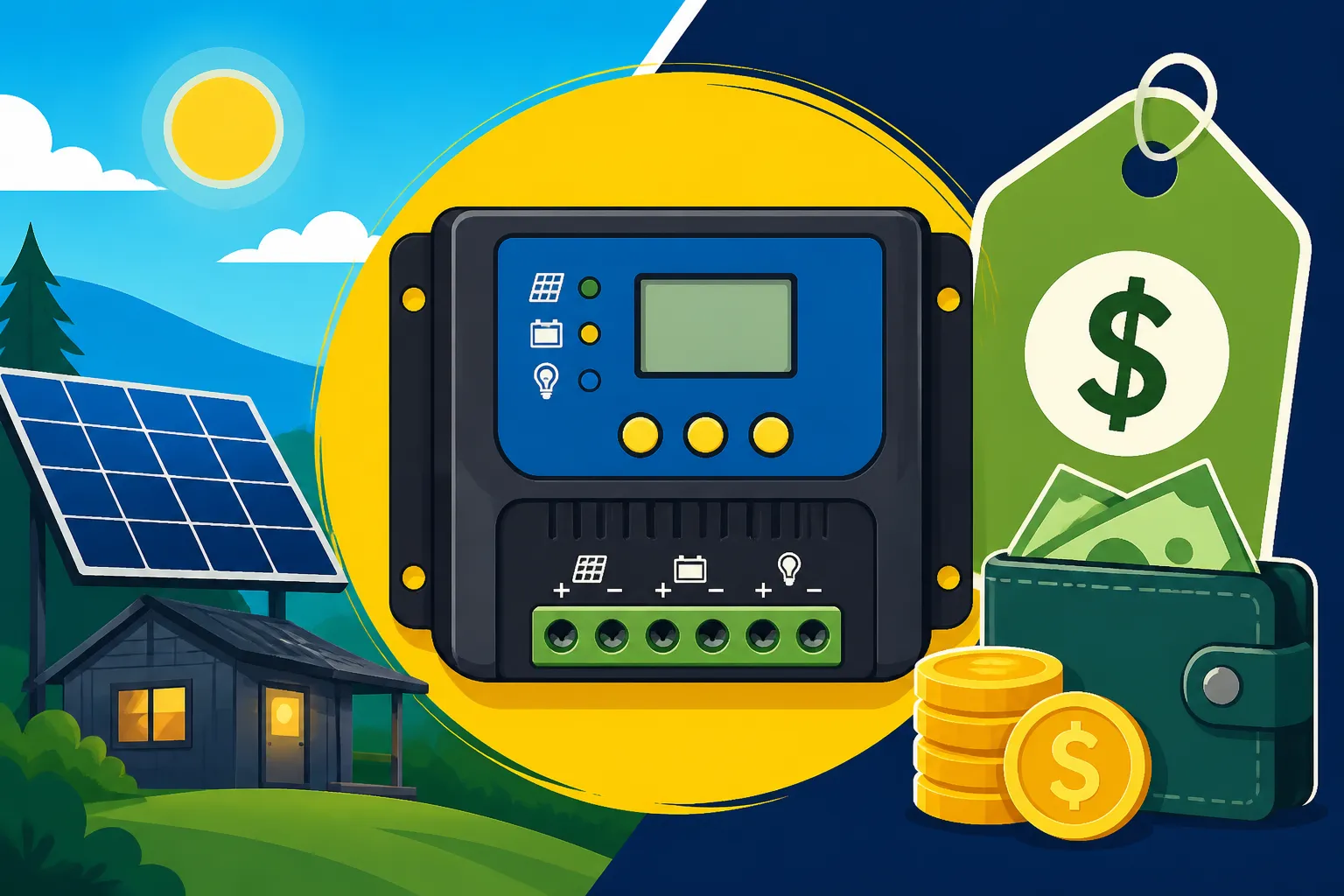
It might not be the most glamorous piece of equipment, but the charge controller is absolutely essential. Think of it as the brain or the financial manager of your solar power setup. Without a properly functioning charge controller, you're not just risking inefficiency; you're risking significant damage to your expensive batteries, which are often the most costly part of an off-grid system. This humble box ensures that the power flowing from your solar panels to your batteries is regulated and safe, preventing overcharging and optimizing the charging process.
What Exactly Does a Charge Controller Do?
At its core, a charge controller has one main job: to manage the flow of electricity from your solar panels to your battery bank. Solar panels, bless their sunny hearts, will keep pumping out power as long as there’s sunlight. If that unregulated power goes straight into your batteries, it could overcharge them, leading to reduced lifespan, decreased performance, and in severe cases, even battery failure or a safety hazard. Lead-acid batteries can boil over, and even lithium batteries, while more resilient, don't appreciate being consistently pushed past their safe voltage limits.
Beyond preventing overcharging, many modern charge controllers also prevent over-discharging by disconnecting loads when battery voltage drops too low. This feature is vital because deeply discharging batteries, especially lead-acid ones, can cause irreversible damage. Some controllers also offer temperature compensation, adjusting charging voltages based on battery temperature, which is a lifesaver for battery longevity, particularly in extreme climates. Essentially, it acts as a gatekeeper, ensuring your batteries are charged safely and efficiently, extracting the maximum possible power from your solar array and preventing costly mistakes.
Why You Can't Skimp on This Component
It’s tempting to look for areas to cut costs when you're building an off-grid system, and sometimes the charge controller seems like an easy target because it's not as "exciting" as a huge bank of Best Off-Grid Solar Panels or a massive inverter. However, skimping on your charge controller is a classic "penny wise, pound foolish" move. Your batteries are the energy reservoir, and they need to be treated with care if you want them to last. A cheap, unreliable charge controller can drastically shorten the lifespan of your battery bank, potentially turning what you thought was a savings into a much larger replacement cost down the line.
Imagine investing thousands in high-quality Cost of an Off-Grid Solar Battery Bank only for them to fail prematurely because a subpar charge controller couldn't regulate voltage properly or lacked essential protections. It's a frustrating scenario many off-gridders have faced. A quality charge controller ensures your batteries are always charged optimally, extending their life and giving you consistent, reliable power. This component is literally guarding the longevity and performance of your entire off-grid system, making it an investment that truly pays off in the long run.
Types of Charge Controllers and Their Price Tags
When you start shopping, you’ll quickly encounter two main types of charge controllers: PWM and MPPT. Each serves the same basic function but uses different technology, leading to vastly different efficiency levels and, consequently, price points. Understanding these differences is crucial for making the right choice for your specific off-grid setup and budget.
PWM Pulse Width Modulation Controllers: The Budget-Friendly Option
PWM, or Pulse Width Modulation, charge controllers are often the entry-level option in the off-grid solar world. They work by connecting the solar array to the battery, allowing current to flow until the battery reaches a certain voltage. Once that voltage is hit, the PWM controller rapidly switches the connection on and off (hence "pulse width modulation") to maintain the battery at a safe, full charge. It's a straightforward technology that's been around for a long time, and it's generally very reliable for what it does.
Pros:
- Affordability: This is their biggest selling point. You can often find small PWM controllers for as little as $20-$50, while larger ones might range from $100-$250.
- Simplicity: They're relatively simple to install and operate, making them popular for beginners or smaller systems.
- Durability: Fewer complex components often mean a more robust device, less prone to certain types of electronic failures.
Cons:
- Lower Efficiency: This is their main drawback. PWM controllers essentially force the solar panel voltage down to match the battery voltage. If your 18V solar panel is charging a 12V battery, any extra voltage is essentially wasted as heat. This can mean 10-30% of your potential solar power isn't being converted into usable energy for your batteries.
- Limited Applications: They are best suited for smaller systems where the solar panel voltage closely matches the battery bank voltage (e.g., a 12V panel for a 12V battery). They're great for charging a single battery or for small, intermittent loads like a shed light or a trickle charger for an RV.
- No Maximum Power Point Tracking: As the name implies, they don't have the "Maximum Power Point Tracking" capability of MPPT controllers, meaning they can't optimize the power harvest from your panels under varying conditions.
For a small, basic setup, like charging a few lights in a remote shed or keeping an RV battery topped off during infrequent use, a PWM controller can be a very cost-effective solution. You might find a decent Renogy 30A PWM controller on Amazon for around $60-$80, perfect for a couple of panels and a small 12V battery.
MPPT Maximum Power Point Tracking Controllers: The Efficiency Powerhouse
MPPT, or Maximum Power Point Tracking, charge controllers are the more advanced and, frankly, more efficient option. They are designed to find and utilize the "sweet spot" (the maximum power point) of your solar panels, regardless of the battery voltage. They convert the excess voltage from the solar panels into additional amperage, which means more power is actually delivered to your batteries. This intelligent conversion process can significantly increase the amount of energy you harvest from your solar array, especially in fluctuating conditions like partial shading or varying temperatures.
Pros:
- Higher Efficiency: This is their main advantage. MPPT controllers can be 10-30% more efficient than PWM controllers, especially in colder weather or when panel voltage is significantly higher than battery voltage. This means you get more usable power from your existing solar panels.
- Flexibility: They allow you to use higher voltage solar panels (like those designed for grid-tied systems) with lower voltage battery banks (e.g., 60V panels charging a 12V battery). This gives you more options for Cost of Off-Grid Solar Panels and often simplifies wiring.
- Better Performance in Low Light/Cold Weather: MPPT controllers excel in conditions that aren't perfectly sunny, converting even diffused light more effectively.
- Advanced Features: Most MPPT controllers come with advanced monitoring, data logging, and communication capabilities (like Bluetooth connectivity), allowing you to keep a close eye on your system's performance via a smartphone app or computer.
Cons:
- Higher Cost: This is the trade-off. MPPT controllers generally cost significantly more than PWM controllers. Smaller 20A MPPT controllers might start around $100-$200, while larger, more robust units for whole-house systems can easily run $500-$1500 or even more for high-amperage units from premium brands like Victron Energy or MidNite Solar.
- Complexity: While not overly complicated for DIYers, they do involve more sophisticated electronics.
For any serious off-grid application, from a full-time RV setup to a remote cabin or a permanent residence, an MPPT controller is almost always the recommended choice. The increased efficiency often offsets the higher upfront Cost of a Charge Controller over the lifespan of the system by harvesting more energy and extending battery life. When considering how to size a charge controller, remember that MPPTs offer much more bang for your buck in terms of energy harvest.
Hybrid Inverter-Chargers with Built-in Controllers
Sometimes, especially in larger or more integrated systems, you won't buy a standalone charge controller. Instead, you might opt for a hybrid inverter-charger that has an MPPT solar charge controller built right into it. These all-in-one units are powerhouses that combine the functions of a solar inverter (converting DC battery power to AC household power), a battery charger (if you have a generator or shore power backup), and a solar charge controller.
Brands like Sol-Ark, Victron MultiPlus, and Growatt are well-known for their integrated units. For instance, a Victron MultiPlus-II or a Sol-Ark 12K can handle all these functions in one elegant package. The convenience of a single unit, simplified wiring, and comprehensive system management can be very appealing, especially for complete off-grid homes. However, this convenience comes at a premium. The cost of these integrated units can range from $2,000 for a smaller system to $10,000+ for high-capacity, feature-rich models capable of running an entire home.
While the upfront cost is significantly higher than buying individual components, the total Off-Grid Solar Installation Cost might be comparable, or even slightly lower, due to reduced wiring complexity and fewer individual boxes to mount. Plus, the integrated monitoring and seamless interaction between components can make daily living much smoother. For those building a more permanent, robust off-grid home, these integrated systems are certainly worth considering.
Key Factors Driving Charge Controller Costs
Just like buying a car, the base model is one price, but adding features, opting for a more powerful engine, or choosing a luxury brand will quickly drive the price up. Charge controllers are no different. Several factors play a significant role in determining how much you’ll ultimately pay. Understanding these will help you prioritize what's important for your system and avoid unnecessary expenses.
Amperage Rating and System Voltage
The most direct correlation to a charge controller's price is its amperage rating. Simply put, the higher the amperage, the more power (current) it can handle coming in from your solar panels and going out to your batteries. A small, 10-amp charge controller suitable for a single 100W panel might cost you under $50, whereas a 60-amp or 80-amp controller designed to handle thousands of watts from a large solar array could easily run $400-$800, or even more.
System voltage also plays a role, though it’s often tied to the amperage. Controllers are typically designed for 12V, 24V, or 48V battery banks. While a 12V system might seem cheaper initially, larger systems often benefit from higher voltages (24V or 48V) because they allow for thinner wiring and reduced power loss over distance. A 48V system requires less current (amps) to deliver the same amount of power (watts) compared to a 12V system, meaning you might need a charge controller with a lower amperage rating, but it needs to handle higher voltage input from the solar array. The internal components required to safely handle higher voltages and currents are more robust and therefore more expensive. So, while a 48V system can be more efficient overall, the charge controller itself, capable of managing those higher voltages and potentially high amperages, will command a higher price.
Brand Reputation and Features
Just like any electronics, brand reputation carries a significant weight in pricing. Established brands known for their reliability, excellent customer support, and robust engineering tend to have higher prices. Companies like Victron Energy, Outback Power, and MidNite Solar are considered premium brands in the off-grid space. Their products, while expensive, are often known for their longevity, superior performance, and advanced features. For instance, a Victron SmartSolar MPPT charge controller offers Bluetooth connectivity, remote monitoring, and exceptional build quality, justifying its higher price tag for many serious off-gridders.
On the other hand, brands like Renogy, EPEVER, and BougeRV offer more budget-friendly options, often found readily available on platforms like Amazon. These can be perfectly adequate for many small to mid-sized systems, especially for DIY enthusiasts or those building on a tighter budget. However, they might not offer the same level of granular control, long-term durability, or advanced diagnostics as their premium counterparts. When choosing between brands, consider the warranty, the availability of technical support, and user reviews regarding long-term reliability. A longer warranty period, like 5-10 years, can offer significant peace of mind for a critical component.
Advanced Features and Connectivity
The cost of a charge controller also escalates with the inclusion of advanced features and smart connectivity. Basic PWM controllers might only have a few indicator lights, while high-end MPPT units are packed with technology.
- Bluetooth and App Integration: Many modern MPPT controllers, like those from Victron or Renogy's higher-end offerings, come with built-in Bluetooth modules. This allows you to monitor your system's performance, adjust settings, and view historical data directly from your smartphone or tablet. This convenience is incredibly valuable for troubleshooting and optimizing your system, and it certainly adds to the cost.
- Data Logging: The ability to log charging history, battery voltage trends, and power harvested over days, weeks, or months provides invaluable insights into your system's health and performance. This data can help you understand your energy consumption patterns and make informed decisions about expanding your system or optimizing usage.
- Remote Monitoring: For those with remote cabins or systems that aren't regularly attended, the ability to monitor your charge controller's status via a web portal or cloud service (often requiring an additional communication gateway) can be a game-changer. This ensures you're always aware of your system's performance, even when you're miles away.
- Temperature Compensation: While some basic controllers offer it, advanced controllers provide more precise temperature sensing and adjustment of charging profiles, crucial for extending battery life in fluctuating temperatures.
- Programmable Settings: Higher-end controllers allow you to fine-tune charging parameters for different battery chemistries (LiFePO4, AGM, Gel, Flooded Lead-Acid), ensuring optimal charging regardless of your battery type.
These "smart" features are not just luxuries; they can genuinely enhance the user experience, improve system efficiency, and help prolong the life of your expensive batteries. However, they invariably drive up the initial purchase price, so you'll need to decide which features are truly essential for your specific off-grid lifestyle and budget. You can find more details on these considerations in our guide on How to Choose an Off-Grid Charge Controller.
Comparing Charge Controller Costs: Real-World Scenarios
The "cost of a charge controller" isn't a single number; it's a spectrum, heavily influenced by the scale and complexity of your off-grid dreams. What works for a small, weekend setup won't cut it for a full-time homestead, and their respective charge controller costs will reflect that difference. Let's look at a few common scenarios to give you a clearer picture.
Small Portable Setups
Imagine you're setting up a small solar system for a van life adventure, a weekend camping trip, or to power some basic lights and tools in a remote garden shed. Your power needs are minimal – maybe a few LED lights, charging phones, and a small fan. In these scenarios, you're likely looking at a small solar array, perhaps one or two 100W-200W panels, and a modest 12V battery bank (maybe 50Ah-100Ah).
For these small applications, a PWM charge controller often makes the most financial sense. You can find robust 10A-30A PWM controllers for as little as $20-$70. For example, a basic Renogy PWM controller or a similar model from HQST is widely available on Amazon. These units are simple, reliable, and get the job done without breaking the bank. If you're building a truly portable setup and perhaps using a solar generator like a Jackery, you might not even need a separate charge controller, as these often have one built-in, though typically less configurable. The overall Off-Grid Solar Cost for a Van or a Off-Grid Solar Cost for a Shed will be kept lower by opting for these more basic controllers.
Even for small setups, if you want a bit more efficiency and smart features, a smaller MPPT controller is an option. A 10A-20A MPPT controller from brands like EPEVER or Victron (their smaller SmartSolar models) could range from $100-$250. This investment might be worthwhile if you want to maximize every bit of power from a limited number of panels or if you value the ability to monitor your system via an app.
Mid-Sized Cabin or RV Systems
Stepping up in size, a mid-sized cabin or a full-time RV requires a more substantial power system. You're probably running a refrigerator, a few lights, maybe a small TV, and charging laptops and other devices. This would typically involve 400W-1000W of solar panels and a larger 200Ah-400Ah (or more) 12V or 24V battery bank.
For these systems, an MPPT charge controller becomes the clear winner due to its superior efficiency. You'll likely be looking at a 30A-60A MPPT controller. Popular options include units from Renogy, Victron, and Outback Power. A 40A-60A MPPT controller from a reputable brand like Renogy might cost you in the range of $200-$500. For example, a Victron SmartSolar MPPT 100/50 (meaning 100V max PV input, 50A max charge current) might cost around $350-$450. These controllers offer the efficiency needed to keep your larger battery bank charged, especially on cloudy days, and often come with valuable monitoring features.
The increased efficiency of an MPPT controller means you might even be able to get away with fewer solar panels for the same energy harvest compared to a PWM, which can offset some of the controller's higher upfront cost. When considering the Off-Grid Solar Cost for an RV or a remote cabin, the charge controller is a critical component that directly impacts daily power availability.
Full-Time Off-Grid Home Systems
For those living completely off the grid in a permanent home, the power demands are similar to a grid-tied home, though often with a focus on energy efficiency. You'll have multiple appliances, heating/cooling systems, well pumps, and a significant battery bank (often 48V and several hundred amp-hours, or even multiple large battery banks). This requires a robust solar array, potentially 3kW-10kW or more.
In a full-time off-grid home, you'll almost certainly use MPPT charge controllers, and often multiple of them, or large integrated inverter-chargers. For example, a home might use two or three 80A-100A MPPT charge controllers, with each costing $500-$1500 individually. Brands like MidNite Solar, Outback Power, and Victron Energy are top choices for these high-capacity, mission-critical applications. For instance, an Outback FLEXmax 80 MPPT controller, a workhorse in many off-grid homes, could cost around $600-$800. If you go the integrated route, as discussed earlier, the combined inverter-charger-controller could easily be $2,000-$10,000+.
The justification for these higher costs lies in the sheer scale and reliability requirements. These controllers are managing thousands of watts of solar input, protecting very large and expensive battery banks, and are expected to perform flawlessly for years, if not decades. The cost is a direct reflection of their capacity, advanced features, build quality, and the critical role they play in maintaining continuous power for your entire household. Understanding how to budget for an off-grid solar system needs to heavily factor in these core components.
Finding the Right Balance: Cost vs. Performance and Longevity
It’s easy to get fixated on the initial sticker price, but in the world of off-grid solar, looking at the long-term value is paramount. The charge controller is not a place where you want to cut corners and regret it later. Striking the right balance between what you spend upfront and what you gain in performance and durability over time is crucial for a successful and frustration-free off-grid experience.
The Hidden Costs of Cheap Controllers
While a low price tag on a charge controller might seem appealing at first, it often comes with hidden costs that can far outweigh the initial savings. Think of it like this: your charge controller is directly responsible for the health and longevity of your batteries, which are arguably the most expensive single component in your entire off-grid system. A substandard or poorly performing charge controller can quietly erode your investment.
One of the most common issues with cheap charge controllers, particularly some lesser-known brands found readily on marketplaces, is inaccurate voltage regulation. This can lead to your batteries being consistently undercharged or, even worse, overcharged. Chronic undercharging reduces the usable capacity of your batteries and can lead to sulfation in lead-acid batteries, permanently diminishing their capacity. Overcharging, on the other hand, can cause gassing, electrolyte loss (for flooded batteries), and internal damage, drastically shortening battery life and posing a safety risk. Even for LiFePO4 batteries, which are more robust, continuous charging at incorrect voltages can lead to cell imbalance and premature degradation.
Furthermore, cheaper controllers often have less robust internal components, making them more susceptible to failure from temperature fluctuations, power surges, or general wear and tear. Imagine your charge controller failing in the middle of a cold winter night, leaving you with no way to charge your batteries and potentially frozen pipes if your heating system relies on that power. The cost of replacing a damaged battery bank, or dealing with an emergency power outage, will quickly dwarf any savings you made on a cheap controller. These are the kinds of hidden costs and stresses that truly impact the long-term viability and enjoyment of your off-grid lifestyle.
When to Invest More
There are several compelling reasons why investing in a higher-quality, more feature-rich charge controller, particularly an MPPT model, is almost always the smarter long-term decision. This is especially true for any system beyond the most basic, intermittent use cases.
Firstly, efficiency matters immensely when you're off-grid. Every watt-hour you can harvest from your solar panels is precious. A high-quality MPPT controller can extract 10-30% more power from your array compared to a PWM controller, especially under less-than-ideal conditions (like partial shade, cloudy days, or cold weather). Over the years, that increased energy harvest adds up significantly, potentially reducing the need for additional solar panels or generator run-time. Our guide on MPPT vs PWM Charge Controllers delves deeper into this.
Secondly, battery longevity is directly linked to charging quality. Premium charge controllers offer more sophisticated charging algorithms, temperature compensation, and precise voltage regulation. These features ensure your expensive batteries are charged optimally, significantly extending their lifespan. Given that replacing off-grid batteries can be one of the most substantial ongoing costs (see Cost to Replace Off-Grid Solar Batteries), investing in a controller that protects them is a sound financial decision.
Finally, reliability and peace of mind are invaluable. A high-quality charge controller from a reputable brand like Victron or Outback is built to last. They often come with better warranties, robust enclosures, and superior internal components designed for continuous, demanding operation. Features like advanced monitoring (via Bluetooth apps or remote portals) allow you to keep a close eye on your system's performance, catch potential issues early, and make informed adjustments, preventing small problems from becoming catastrophic failures. For a system that provides your daily power, knowing that its "brain" is dependable is priceless. Consider the overall How Much Does an Off-Grid Solar System Cost when making this decision, as the charge controller is a central piece of that puzzle.
Where to Buy and How to Save Carefully
Once you have a good grasp of the different types of charge controllers and what factors influence their cost, the next step is knowing where to find them and how to make a smart purchase. While price is always a consideration, remember that reliability and suitability for your system should be top priorities.
Online Retailers and Specialty Shops
The digital marketplace has made it easier than ever to purchase off-grid solar components, and charge controllers are no exception. For smaller, more budget-friendly PWM controllers or even entry-level MPPT units, large online retailers like Amazon are incredibly convenient. You'll find a wide selection from brands like Renogy, EPEVER, and BougeRV, often with quick shipping and customer reviews that can help guide your decision. For those just starting out with a small project like a Cost of a 100W Off-Grid Solar System or a simple battery maintainer, Amazon can be a great resource.
However, for larger, more complex off-grid systems or when you're looking for premium brands and expert advice, dedicated solar equipment suppliers are usually a better bet. Companies like Northern Arizona Wind & Sun, AltE Store, and Wholesale Solar specialize in off-grid systems and stock higher-end charge controllers from brands like Victron Energy, Outback Power, MidNite Solar, and Schneider Electric. These retailers often have knowledgeable staff who can help you size your charge controller correctly (refer to How to Size a Charge Controller) and ensure it's compatible with the rest of your system components. While their prices might be slightly higher than a generic Amazon listing, the expertise and post-purchase support can be invaluable.
When shopping, always compare not just the price, but also the warranty, return policy, and the reputation of the seller. Sometimes, a slightly higher price from a reputable solar supplier includes better support and a more reliable product, which can save you headaches down the line.
The DIY Factor and Kits
Many aspiring off-gridders choose the DIY route to save on labor costs and gain a deeper understanding of their system. Building your own off-grid solar setup can indeed significantly reduce the total DIY vs Professional Off-Grid Solar Cost, including the cost of a charge controller. When you purchase components individually, you have more control over brand choices and features, allowing you to tailor your system exactly to your needs and budget. This is where researching "best charge controller for off-grid" and similar queries really pays off.
Another option for saving money is to consider an all-in-one solar kit. Many manufacturers, including Renogy and EcoFlow, offer comprehensive Off-Grid Solar Kit Price Ranges that include panels, batteries, an inverter, and often a charge controller. These kits are designed for ease of installation and compatibility, and sometimes the bundled price can be more economical than buying each component separately. For example, a basic Renogy 400W kit might include a 30A MPPT charge controller that would cost more if purchased standalone.
However, be cautious with kits. Ensure the charge controller included is appropriately sized for the panels and batteries in the kit, and that its features meet your requirements. Some entry-level kits might include a basic PWM controller where an MPPT would be more beneficial for your long-term needs. While convenient, kits might not offer the same level of customization or premium component quality as a system built from individually selected parts. Always do your homework and calculate the cost of a charge controller as part of the total system cost, whether you're building it piece by piece or opting for a complete package.
| Charge Controller Type | Typical Price Range (USD) | Efficiency | Ideal Use Cases | Key Features |
|---|---|---|---|---|
| PWM (Pulse Width Modulation) | $20 – $250 | 70-80% | Small RVs, Sheds, Battery maintainers, Basic lighting | Simple, Durable, Low cost |
| MPPT (Maximum Power Point Tracking) | $100 – $1500+ | 90-99% | Mid-to-Large RVs, Cabins, Full off-grid homes, Complex systems | High efficiency, Flexible panel configurations, Advanced monitoring, Programmable settings |
| Integrated Inverter-Charger (with MPPT) | $2,000 – $10,000+ | 90-99% | Whole-house off-grid systems, Backup power systems | All-in-one AC/DC conversion, Battery charging, Solar control, Grid-tie options, Comprehensive monitoring |
The table above provides a general overview, but remember that specific models, brand reputations, and advanced features can cause prices to fluctuate significantly within these ranges. Always cross-reference your system's needs with the specifications of the controller you're considering.
Disclaimer
Please note that the information provided in this article is for general guidance only. Off-grid solar system design and installation can be complex and involve electrical hazards. Always consult with a qualified solar professional or electrician when planning and installing your system to ensure safety and compliance with all applicable codes and regulations. Prices mentioned are estimates and can vary based on market conditions, brand, features, and retailer.