Off-Grid Solar Cost vs Grid Connection Fees
Deciding how to power a remote cabin, a new off-grid homestead, or even just a backyard shed far from existing infrastructure can feel like you're staring down a bottomless pit of expenses. Many dream of energy independence, but the immediate question always arises: is it really more affordable to pay for the utility company to extend power lines, or to invest in a standalone off-grid solar system? The truth is, the cost comparison isn't always straightforward, and understanding the hidden fees and long-term implications of both options is absolutely critical to making the right decision for your unique situation. This guide will meticulously break down the often-surprising costs associated with grid connection fees versus the upfront investment in an off-grid solar setup, helping you navigate this complex financial landscape and choose the most cost-effective path to power.
Understanding the True Cost of Grid Connection
When you envision electricity, you probably think about plugging something into an outlet, and boom—power. But getting that power to a remote property, far from existing utility poles, is a whole different ballgame. It’s not just about flipping a switch; it's about significant infrastructure costs that often catch people completely off guard.
The Initial Shock of Utility Extension Fees
Let's be real, the utility company isn't going to extend power lines to your dream property out of the goodness of their hearts. They’re running a business, and that means you, the customer, are going to foot the bill for bringing their infrastructure to your doorstep. This isn't just about the wires; it’s a full-blown construction project, and the costs can escalate quickly depending on how far you are from the nearest existing power pole.
Consider the typical scenario: your property is a quarter-mile (about 1,320 feet) down a dirt road from the last utility pole. The cost isn't just a simple calculation of wire length. You'll likely encounter charges for surveying, engineering plans, tree clearing, digging trenches, installing new poles, adding transformers, and even upgraded infrastructure at the substation if your demand requires it. Depending on the terrain and the specific utility company, you could be looking at anywhere from $10 to $50 per foot, or even more for difficult terrain or longer distances. For that quarter-mile stretch, you could easily be staring down a bill for $13,000 to $66,000, and that's just a starting estimate. We've heard stories of people needing to extend lines for a mile or more, with quotes soaring into the six figures—sometimes well over $100,000. It's enough to make anyone pause and wonder if there's a better way. This initial investment often dwarfs what many people assume it would be, making the idea of going off-grid look surprisingly competitive right from the start.
Ongoing Charges and Hidden Fees
Once you’ve paid the hefty sum to get the grid connected, you might think you're done with the major expenses, but that’s not always the case. With grid power, you're not just paying for the electricity you consume. There are a host of ongoing charges that chip away at your wallet every single month, whether you use a lot of power or a little.
Most utility companies have a base service charge or minimum monthly fee. Even if your remote cabin is only used on weekends and you barely consume any electricity, you're still on the hook for this fixed cost. Then there are the fluctuating rates for electricity itself, which are subject to fuel costs, infrastructure upgrades, and regulatory changes. These rates can, and often do, increase over time, meaning your energy costs are never truly stable or predictable. Beyond that, you might encounter demand charges if your property has significant peak usage, or various taxes and surcharges that are tacked onto your bill. While individually these might seem small, they add up over months and years. These costs make it clear that the expense of grid power isn't a one-time thing; it's a perpetual commitment that often leaves you feeling like you have little control. When you're thinking about the long-term, consider checking out our article on Off-Grid Solar vs Utility Extension Cost for a deeper dive into these comparisons.
The Long-Term Vulnerability of Grid Dependence
Beyond the financial aspect, relying on the grid comes with an inherent vulnerability that many off-gridders seek to avoid: dependence. When you're connected to the grid, your power supply is only as reliable as the vast, complex, and sometimes fragile infrastructure that serves your area.
Think about it: a powerful storm knocks out power to thousands, or a wildfire triggers planned outages to prevent further damage. These scenarios, which are becoming more frequent, mean you’re left in the dark, potentially for days or even weeks, just like everyone else. For folks living in rural areas, utility crews often prioritize more densely populated zones, meaning repairs to remote lines can take longer. Furthermore, you're subject to the whims of the utility company and energy markets. Price spikes, brownouts, and even major grid failures are always a possibility, and you have no direct control over them. This lack of resilience is a significant factor for many choosing to invest in their own independent power system, highlighting that the long-term "cost" of grid power isn't just monetary, but also about peace of mind and self-sufficiency.
The Investment in Off-Grid Solar Freedom
Shifting gears to off-grid solar, it's important to frame this not just as an expense, but as a long-term investment in energy independence, self-reliance, and predictable costs. While the upfront cost can feel significant, it’s a one-time major outlay that frees you from monthly bills and the uncertainties of grid pricing.
Breaking Down the Components of an Off-Grid System
An off-grid solar system isn't just solar panels slapped on a roof. It's a carefully orchestrated symphony of components, each playing a vital role in harvesting, storing, and delivering power to your home or structure. Understanding these pieces is key to grasping the total investment required.
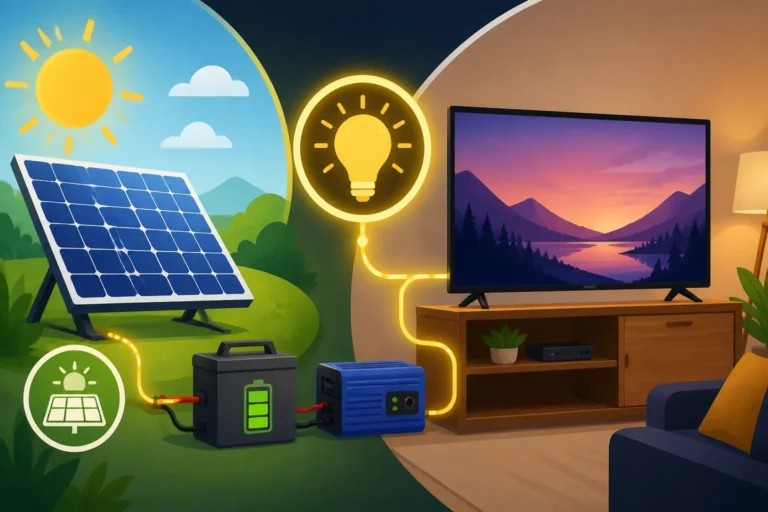
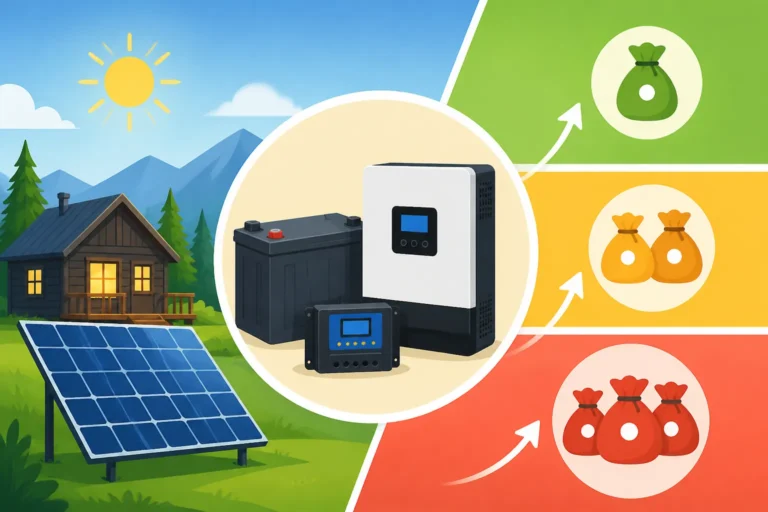
At the heart of it all are the solar panels themselves. These are what convert sunlight into usable electricity. Their cost varies based on wattage, efficiency, and brand, but they've become increasingly affordable over the years. Next, you have the charge controller, which regulates the power flowing from the panels to your battery bank, protecting them from overcharging. Then comes the battery bank, arguably the most expensive single component in many off-grid systems. This is where your power is stored for use when the sun isn't shining. The type of battery (like LiFePO4 vs. lead-acid) and its capacity heavily influence the Cost of an Off-Grid Solar Battery Bank. Finally, the inverter takes the DC power from your batteries and converts it into the AC power that most household appliances use. The size and quality of your inverter will also impact the Cost of an Off-Grid Solar Inverter. Beyond these core components, you'll also need wiring, mounting hardware for your panels, safety disconnects, fuses, and possibly a system monitor to keep tabs on your energy flow. For smaller, portable needs, you might start with something like a Jackery portable power station and a few solar panels, which offer a great entry point into solar without the full complexity of a whole-home setup.
Different System Sizes and Their Associated Costs
Just like you wouldn't buy a sedan to haul a ton of gravel, you wouldn't install a massive solar array just to power a few LED lights. The cost of an off-grid solar system is directly tied to your energy needs. It's not a one-size-fits-all solution, and understanding how different scales impact cost is crucial.
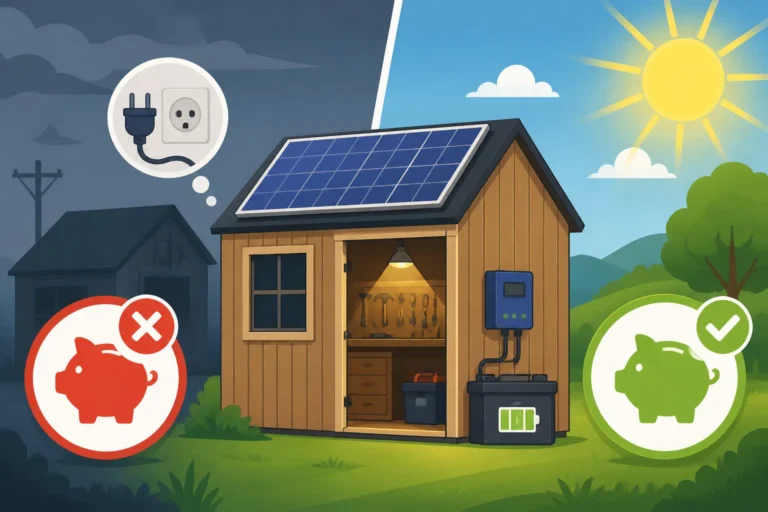
For a very basic setup, say powering a small shed or providing backup power for a few devices during outages, you might look at a 100-watt to 400-watt system. This could involve a couple of smaller panels, a simple charge controller, a small battery, and a modest inverter. Such a system, perhaps using components you can find on Amazon, might cost anywhere from $500 to $2,000 for DIY components. This is perfect for occasional use, charging phones, or running a few lights.
Moving up, for a tiny home or a small cabin used seasonally, you might need a 1,000-watt (1kW) to 3,000-watt (3kW) system. This would involve multiple panels, a larger battery bank, and a more robust inverter. Here, costs can range from $5,000 to $20,000, depending on battery chemistry and component quality. This scale allows you to run a refrigerator, lights, and some small appliances.
For full-time off-grid living in a larger home, supporting essential appliances, heating/cooling, and more, you're likely looking at a 5,000-watt (5kW) to 10,000-watt (10kW) system, or even larger. These comprehensive setups require significant battery storage, high-capacity inverters, and many panels. The investment for such a system could easily be $25,000 to $70,000+, or even more for truly luxurious off-grid living. This is where understanding How to Size an Off-Grid Solar System becomes absolutely paramount. Every watt of generation and every amp-hour of storage adds to the bill, so carefully calculating your needs is the first step to managing costs.
DIY vs. Professional Installation Costs
One of the biggest variables in the total cost of an off-grid solar system is whether you tackle the installation yourself or hire professionals. This decision significantly impacts your budget, offering different trade-offs between cost savings and expertise.
DIY Installation: If you're handy, comfortable with electrical work, and enjoy learning new skills, a DIY approach can save you a substantial amount of money. Labor costs for professional installation can account for 20% to 50% of the total project cost. By doing it yourself, you effectively pocket those savings. There's a huge satisfaction in building your own power system, and countless resources, from online forums to detailed guides, are available to help. However, DIY isn't just about saving money; it demands a significant investment of your time, effort, and a keen eye for detail and safety. Incorrect wiring or improper sizing can be dangerous and costly in the long run. Many choose to build their own systems by sourcing components directly from online retailers or specialty solar suppliers. For a deeper look, check out our guide on DIY vs Professional Off-Grid Solar Cost.
Professional Installation: Hiring a certified solar installer ensures the job is done correctly, safely, and often more quickly than a DIY project. Professionals bring expertise, specialized tools, and knowledge of local codes and permitting requirements, which can be particularly complex for off-grid systems. They can also offer warranties on their workmanship and often help with system design optimization. While this route involves a higher upfront cost, it provides peace of mind, potentially avoids costly mistakes, and ensures your system is compliant and efficient. For larger, whole-home systems, especially if you're not an experienced electrician, a professional install is often the recommended path due to the complexities and safety considerations involved.
Head-to-Head Comparison: Off-Grid Solar vs. Grid Connection Fees
Now that we've laid out the individual costs and considerations for both grid connection and off-grid solar, let's put them side-by-side to understand when one option truly shines over the other. This isn't just about the dollar amount today, but the financial journey over the lifespan of your power system.
Analyzing Upfront Costs: When Off-Grid Shines
For many remote properties, the upfront costs are where off-grid solar often becomes the clear winner. If your property is more than a few hundred feet from the nearest utility pole, the cost of extending grid power can quickly skyrocket, making a solar installation look comparatively affordable.
Imagine you've found your perfect plot of land, but it's 1,500 feet from the grid. At an average extension cost of, say, $30 per foot, you're looking at $45,000 just to bring power to your property line, not including any trenching, easements, or internal wiring for your home. For that same $45,000, you could install a substantial 5kW to 7kW off-grid solar system, complete with a robust battery bank (likely LiFePO4 for longevity) and a quality inverter. This system would be capable of powering a comfortable full-time residence. In this scenario, the initial outlay for off-grid solar is either comparable to, or even significantly less than, the utility extension fees alone. This is particularly true in areas with difficult terrain or where the utility company faces significant infrastructure challenges. It’s also why many people looking to escape the hustle and bustle find off-grid solar to be the most viable path to powering their remote dreams. Our comprehensive guide on How Much Does an Off-Grid Solar System Cost provides further detail on these initial investments.
Long-Term Savings and Return on Investment
While the upfront cost is a significant hurdle for both options, the long-term financial picture is where off-grid solar truly differentiates itself, offering a compelling return on investment (ROI). With grid power, you're looking at perpetual monthly utility bills, which are subject to inflation, rate hikes, and various service charges that offer no end in sight.
With an off-grid solar system, once your initial investment is made, your "fuel" (sunlight) is absolutely free. You eliminate those monthly bills entirely. Over the lifespan of your system—which can be 25+ years for panels and 10-15+ years for quality lithium batteries—those avoided utility payments add up to massive savings. Think about the average monthly utility bill, let's say $150. Over 25 years, that's $45,000 in payments you won't be making. This doesn't even account for the inevitable rate increases. Furthermore, with an off-grid system, you own your power source. You're not leasing it; you're building equity in an asset that provides a tangible benefit: electricity. While there are Off-Grid Solar Maintenance Costs for batteries and other components over time, these are generally predictable and manageable compared to the unpredictable nature of utility bills. Many people find that their off-grid system pays for itself over time through these avoided costs, and then continues to generate free electricity for decades.
Beyond the Money: The Value of Energy Independence
While the financial comparison is often the driving factor, it’s crucial to acknowledge the intangible benefits that off-grid solar provides, benefits that money can't always fully quantify. For many, the true value lies in energy independence and resilience.
Living off-grid means you're no longer tethered to a centralized power grid that is susceptible to outages, natural disasters, or even cyberattacks. You have control over your power supply. When a major storm rolls through and the entire region goes dark, your lights stay on, your refrigerator keeps humming, and your well pump continues to draw water. This kind of self-reliance fosters a profound sense of security and peace of mind. It’s about building a robust, reliable system that stands strong when external infrastructure falters. This intrinsic value, the freedom from utility bills, and the certainty of your power supply, is a powerful motivator for many to choose the off-grid path, even when the initial financial investment might seem daunting. The ability to dictate your own energy future, rather than being dictated to, is a priceless commodity in today's increasingly uncertain world. This commitment to self-sufficiency is a core principle of off-grid living and speaks volumes about why more individuals are considering making the switch.
Here’s a comparison table to help visualize potential costs:
| Scenario | Grid Connection Cost Estimate | Off-Grid Solar System Cost Estimate (Comparable Capacity) | Key Consideration |
|---|---|---|---|
| Small Shed / Workshop (500 ft from grid) | $5,000 – $25,000 (Line extension, minimum service) | $1,500 – $5,000 (1kW-2kW system, small battery) | Off-grid is often much cheaper for simple, remote power needs where grid extension is expensive. Grid still incurs monthly fees. |
| Remote Cabin / Tiny Home (1,000 ft from grid) | $10,000 – $50,000 (Line extension, transformer, permits) | $7,000 – $25,000 (2kW-4kW system, adequate battery bank) | Off-grid becomes highly competitive, often cheaper upfront, and offers long-term savings from no utility bills. |
| Full-Time Home (2,500 ft from grid) | $25,000 – $125,000+ (Significant line extension, multiple poles, complex permits) | $30,000 – $70,000+ (5kW-10kW system, large LiFePO4 battery, quality inverter) | Off-grid is almost certainly the more cost-effective choice upfront and offers complete energy independence. |
| Any Distance with High Monthly Utility Bills | Ongoing high costs + potential for future rate hikes | Initial investment pays off quicker, then free energy for decades | Off-grid offers predictable long-term costs and immunity from energy market fluctuations. |
Disclaimer
The information provided in this guide is for general informational purposes only and does not constitute professional financial, electrical, or engineering advice. Off-grid solar system costs and utility connection fees can vary significantly based on location, specific utility companies, local regulations, system complexity, and component choices. It is highly recommended to consult with local utility providers, certified electricians, and experienced solar professionals for accurate quotes and system design tailored to your specific needs and location before making any financial decisions.