Off-Grid Solar Cost for a Off-Grid Home
Deciding to power your home completely off-grid is an incredible journey, but let's be honest, the big question mark hanging over everyone's head is always, "How much is this actually going to cost?" It's a daunting prospect, balancing the dream of self-sufficiency with the reality of your bank account. This guide is here to cut through the confusion and give you a realistic, comprehensive breakdown of what to expect when budgeting for an off-grid solar system for your home, validating those financial worries and helping you plan with confidence.
Understanding Your Off-Grid Home’s Energy Demands
Before you can even begin to think about specific solar panels or batteries, the absolute first step in figuring out your off-grid solar cost for a home is to intimately understand your energy consumption. This isn't just a casual glance at your utility bill (which you won't have off-grid anyway!); it's a deep dive into every single appliance, light, and electronic device you plan to use, how often, and for how long. Skipping this crucial step is one of the biggest and most expensive mistakes an aspiring off-gridder can make.
Calculating Your Daily Watt-Hour Usage
Think of your daily energy usage in terms of Watt-hours (Wh). This is the sum total of all the power your devices consume over a 24-hour period. It’s like mapping out your entire electrical day. You'll need to list everything from your refrigerator and well pump to your coffee maker, laptop, and even your phone charger. For each item, you need its wattage (how much power it draws) and how many hours per day you'll operate it. For instance, a 100-watt light bulb running for 5 hours uses 500 Wh (100W x 5h). A refrigerator might draw 150 watts but cycle on and off, so you'd look for its daily energy consumption in kWh (kilowatt-hours) on its Energy Star label, then convert that to Wh (1 kWh = 1000 Wh).
It's a painstaking process, but absolutely vital. Don't forget those "phantom loads" – devices that are plugged in and drawing a small amount of power even when turned off. These sneaky little energy vampires can add up over time. Many people find it helpful to perform an in-depth How to Do an Off-Grid Load Analysis before making any purchase decisions. This exercise often reveals where you can cut down on consumption, perhaps by swapping out an old, inefficient appliance for a newer, energy-efficient model, or by simply being more mindful of your usage habits.
Accounting for Seasonal Variations and Days of Autonomy
Your energy needs aren't static; they fluctuate dramatically with the seasons. In winter, you might need more lighting, run pumps for longer, or use electric heaters (a huge energy drain!), while your solar panels produce less power due to shorter days and lower sun angles. In summer, air conditioning or fans become essential. You also need to factor in "days of autonomy," which is how many days your battery bank can power your home without any new solar input, like during prolonged cloudy weather or snow cover. A good rule of thumb for a full-time off-grid home is to aim for 2-5 days of autonomy, depending on your climate and risk tolerance.
This means your battery bank needs to be sized significantly larger than your average daily consumption, and your solar array must be able to replenish that larger bank, even on less-than-ideal days. This planning dramatically impacts the amount of solar needed to run a house off-grid and the overall cost. For example, a home in sunny Arizona might get by with fewer panels and batteries than an identical home in the cloudy Pacific Northwest, simply because of the difference in available peak sun hours throughout the year.
Core Components and Their Expected Costs
Once you have a solid grasp of your energy demands, you can start looking at the actual hardware. An off-grid solar system isn't just solar panels; it's a whole orchestra of components working in harmony. Each piece has its own cost, and quality and capacity play a huge role in the final price tag.
Solar Panels: The Energy Harvesters
Solar panels are the workhorses of your system, capturing sunlight and converting it into electricity. Their cost depends on factors like wattage, brand, and type (monocrystalline, polycrystalline, thin-film). Monocrystalline panels are generally more efficient and slightly more expensive per watt but perform better in low light and take up less space. For a typical off-grid home that aims for full self-sufficiency, you're usually looking at a substantial array.
A single 400-watt solar panel might cost anywhere from $200 to $400. To power a moderately sized off-grid home (say, 10-20 kWh per day), you might need anywhere from 3,000 to 8,000 watts of solar generation capacity, or even more, especially if you're planning for winter or have significant heating/cooling needs. This means you could be looking at a panel array costing between $1,500 and $8,000 or more, not including mounting hardware. For those just dipping their toes or looking for supplementary power for a small shed or workshop, individual panels can be found on marketplaces like Amazon at competitive prices, but a full home system usually involves larger bulk purchases from specialized suppliers. We have a detailed breakdown on the Cost of Off-Grid Solar Panels if you want to dive deeper into panel pricing.
Battery Bank: The Heart of Your System
The battery bank is arguably the most critical and often the most expensive component of an off-grid system. Without it, your power stops as soon as the sun goes down or hides behind clouds. The choice of battery technology significantly impacts both cost and lifespan.
- Lead-Acid Batteries (Flooded or AGM): These are the traditional, more budget-friendly option upfront. Flooded lead-acid batteries require regular maintenance (checking water levels, equalizing charges), while AGM (Absorbed Glass Mat) batteries are sealed and maintenance-free. Both are heavier and have a shorter cycle life compared to lithium, typically lasting 3-7 years. The cost can range from $150-$400 per 100Ah 12V battery, depending on the type.
- Lithium Iron Phosphate (LiFePO4) Batteries: These are the modern gold standard. While they have a higher upfront cost (often $600-$1,200+ per 100Ah 12V battery), they offer significant advantages: much longer cycle life (10-20+ years), lighter weight, higher usable capacity (you can discharge them deeper without damage), and no maintenance. For serious off-grid living, LiFePO4 batteries almost always offer a better long-term return on investment, which you can explore further in our guide on LiFePO4 vs Lead-Acid Battery Cost.
For a typical off-grid home, you're looking at a substantial battery bank. To store, say, 10-20 kWh of usable energy, you might need several large LiFePO4 batteries or many more lead-acid batteries. The total Cost of an Off-Grid Solar Battery Bank can easily range from $5,000 to $20,000 or even more, depending on your chosen chemistry and required capacity.
Inverter and Charge Controller: The Brains
These two components are indispensable for managing the flow of electricity.
- Charge Controller: This device regulates the voltage and current coming from your solar panels to your batteries, preventing overcharging and optimizing the charging process. MPPT (Maximum Power Point Tracking) controllers are more efficient, especially in varying light conditions, and are highly recommended for larger systems, costing anywhere from $200 to $1,500+. PWM (Pulse Width Modulation) controllers are simpler and cheaper ($50-$300) but less efficient, usually only suitable for small, basic setups. You can learn more about the Cost of a Charge Controller in a dedicated article.
- Inverter: This component converts the DC (direct current) electricity stored in your batteries into AC (alternating current) electricity, which is what most household appliances use. For a home, you'll need a pure sine wave inverter to ensure sensitive electronics operate correctly. The size (wattage capacity) and features (like surge capacity, pass-through, and grid-tie capability if you're thinking hybrid) determine the cost. A good quality, adequately sized inverter for a home might run from $800 to $5,000 or more. High-end, all-in-one inverter-chargers from brands like Victron or Sol-Ark can cost even more, but they integrate multiple functions, simplifying your system. Understanding the Cost of an Off-Grid Solar Inverter is crucial for budgeting.
Mounting Hardware, Wiring, and Safety Gear
Don't forget the nuts and bolts – literally! This category includes the racking system for your solar panels (roof mounts, ground mounts, pole mounts), heavy-gauge copper wiring, fuses, circuit breakers, disconnect switches, and proper grounding equipment. While these items might seem minor individually, they quickly add up.
- Mounting hardware can range from a few hundred dollars for a basic roof mount to over $2,000 for a sturdy ground mount that allows for seasonal tilt adjustments.
- Wiring, fuses, and breakers for a complete home system can easily add another $500 to $1,500, depending on the length of cable runs and the complexity of your electrical setup. Skimping on these safety components is never an option; proper sizing and quality are paramount.
Installation and Hidden Costs to Consider
Beyond the main components, there are several other financial considerations that often get overlooked, especially for first-time off-gridders. These can significantly impact the final "off-grid solar cost for an off-grid home" figure.
DIY Versus Professional Installation
The decision between a DIY approach and hiring professionals has a massive impact on your budget.
- DIY Installation: If you're handy with tools, comfortable with electrical work, and have a good understanding of solar system design, a DIY installation can save you a significant amount on labor costs. You're still paying for all the components, but you avoid professional fees. However, it requires a substantial time commitment, meticulous research to ensure safety and compliance, and the purchase of specialized tools. You also bear the full responsibility for troubleshooting and potential mistakes. For someone willing to learn, sourcing components from various suppliers, even smaller items like charge controllers or fuses from a vendor like Amazon, can be very cost-effective.
- Professional Installation: Hiring a certified solar installer ensures your system is designed, installed, and commissioned safely and efficiently. They handle permitting, code compliance, and often offer warranties on their work. The downside is the cost: professional labor can add anywhere from $5,000 to $20,000+ to your total, depending on the complexity and size of your system. For a comprehensive overview, check out our article on DIY vs Professional Off-Grid Solar Cost.
Many folks choose a hybrid approach, handling some aspects themselves (like mounting panels) but bringing in a licensed electrician for critical wiring connections to ensure code compliance and safety.
Permits, Inspections, and Local Regulations
This is a big one that catches many off-gridders by surprise. Even if you're going "off-grid," most counties and states still require permits for electrical installations, especially if the system is connected to a dwelling. These permits ensure your system meets safety codes and structural requirements. Permit fees vary widely, from a few hundred dollars to several thousand, depending on your location and the scope of your project.
You might also need engineering stamps for your panel racking design, especially for ground mounts, and definitely electrical inspections. Failing to get proper permits can lead to fines, forced system removal, or difficulties with insurance or selling your property down the line. Always check with your local authority having jurisdiction (AHJ) before you start your build. Don't underestimate these "soft costs," as they can easily add 5-10% to your overall budget.
Backup Generator and Maintenance Costs
While solar is fantastic, even the most robust off-grid solar system benefits from a backup power source, typically a generator. This isn't usually for daily use but for emergencies, extended periods of bad weather, or when you need to run high-surge appliances that your inverter can't handle.
- Generator Cost: A good quality propane or diesel generator suitable for a home backup can cost from $800 for a portable unit to $5,000+ for a larger, automatic-start whole-house generator. This adds another layer of cost, not just for the generator itself, but for fuel and maintenance. Even a small portable power station, such as a Jackery Explorer series, can serve as an excellent temporary backup for essential electronics or during system maintenance.
- Maintenance and Replacements: Off-grid systems aren't "install and forget." Solar panels need occasional cleaning, wiring should be inspected, and batteries require monitoring. Lead-acid batteries need more regular maintenance and will need replacing sooner than LiFePO4 batteries. Even LiFePO4 batteries, with their long lifespans, will eventually need replacement. Budgeting for Off-Grid Solar Maintenance Costs and potential Cost to Replace Off-Grid Solar Batteries over the system's lifetime is critical for long-term financial planning.
Real-World Cost Ranges for an Off-Grid Home
Now that we've broken down the components and additional considerations, let's look at some realistic overall cost ranges for an off-grid home, understanding that these are broad estimates. The true How Much Does an Off-Grid Solar System Cost depends entirely on your specific energy needs, chosen components, and whether you DIY or hire help.
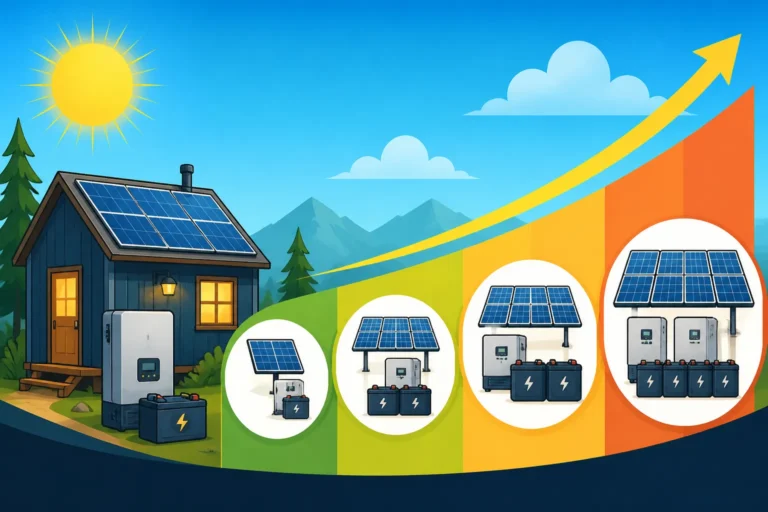
Small to Moderate Off-Grid Home (5-10 kWh/day usage)
This might be a smaller family home, a cabin, or a tiny home with conscious energy consumption. You'll likely run essential appliances, lighting, and electronics, but probably avoid heavy power users like electric heat or continuous air conditioning.
- Components: 2-4 kW solar array, 10-20 kWh LiFePO4 battery storage, 3-5 kW inverter/charge controller, MPPT charge controller.
- Estimated Cost (DIY): $12,000 – $25,000
- Estimated Cost (Professionally Installed): $25,000 – $45,000
Medium to Large Off-Grid Home (10-20+ kWh/day usage)
This typically includes a larger family home with more appliances, possibly a well pump, and seasonal use of air conditioning or supplemental heating. You'll need a robust system with ample storage.
- Components: 4-8 kW solar array, 20-40 kWh LiFePO4 battery storage, 5-8 kW inverter/charge controller, advanced MPPT charge controller.
- Estimated Cost (DIY): $25,000 – $50,000
- Estimated Cost (Professionally Installed): $45,000 – $80,000
Heavy-Use Off-Grid Home or Homestead (20+ kWh/day usage)
For those with large homes, workshops, electric vehicle charging, or significant heating/cooling loads, your system will need to be very substantial.
- Components: 8-15+ kW solar array, 40-80+ kWh LiFePO4 battery storage, 8-15 kW multi-inverter system, multiple MPPT charge controllers.
- Estimated Cost (DIY): $50,000 – $100,000+
- Estimated Cost (Professionally Installed): $80,000 – $150,000+
These figures are a general guide, but they show the significant investment required. It's often helpful to refer to a Off-Grid Solar Cost: Complete Breakdown to see how each component scales with your needs.
Here’s a simplified breakdown of typical cost ranges for essential components for a medium-sized off-grid home:
| Component | DIY Estimated Cost Range (USD) | Professionally Installed Estimated Cost Range (USD) |
|---|---|---|
| Solar Panels | $3,000 – $8,000 | $4,000 – $10,000 |
| Battery Bank | $8,000 – $25,000 | $10,000 – $30,000 |
| Inverter/Charger | $2,000 – $7,000 | $2,500 – $8,500 |
| Charge Controller | $500 – $1,500 | $700 – $2,000 |
| Mounting Hardware | $800 – $2,500 | $1,000 – $3,500 |
| Wiring & Safety | $500 – $1,500 | $700 – $2,000 |
| Backup Generator | $800 – $5,000 | $1,000 – $6,000 |
| Permits/Fees | $500 – $2,000 | $1,000 – $3,000 |
| Installation Labor | $0 (your time/effort) | $10,000 – $30,000+ |
| Total Estimated Cost | $16,100 – $53,000 | $30,900 – $95,000+ |
Note: These ranges are illustrative and can vary based on brand, quality, location, and specific system design. Always get multiple quotes and do thorough research.
Financial Incentives and Long-Term Savings
While the upfront cost of going off-grid can feel overwhelming, it's important to look at the bigger picture and consider potential financial incentives and the significant long-term savings.
Exploring Tax Credits and Rebates
One of the biggest financial boosts for solar installations in the United States is the federal solar tax credit, officially known as the Investment Tax Credit (ITC). This credit currently allows you to deduct a percentage of the cost of installing a solar energy system from your federal taxes. The good news is that typically, off-grid systems do qualify for this credit, as long as your home is your primary residence. It's important to consult with a tax professional to understand the specifics of the 2026 Solar Tax Credit and Off-Grid Systems and ensure your system meets all eligibility requirements.
Beyond federal incentives, some states and local municipalities offer their own rebates or incentives for renewable energy systems. These can range from property tax exemptions to performance-based incentives. It's worth researching State Incentives for Off-Grid Solar in your area, as these can help offset some of the initial investment.
The Value of Energy Independence and Long-Term Savings
The most significant long-term financial benefit of an off-grid solar system is the elimination of your electricity bill. No more fluctuating rates, no more charges for transmission or distribution, and no more worries about utility company outages. Over the lifespan of your system, which can be 20-30 years for panels and 10-20 years for quality lithium batteries, these savings can be substantial.
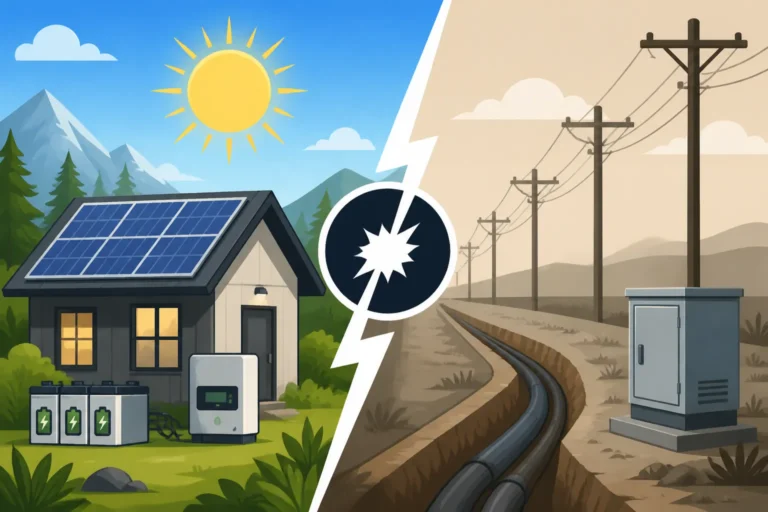
Think about it: the grid isn't getting any cheaper. With an off-grid system, you lock in your energy costs largely to the initial investment and ongoing maintenance. This provides tremendous peace of mind and financial predictability. For properties in remote areas, where extending power lines can cost tens of thousands, or even hundreds of thousands of dollars, an off-grid solar system often proves to be the Off-Grid Solar vs Utility Extension Cost more economical choice right from the start.
Ultimately, while the initial sticker shock for an off-grid home solar system can be significant, ranging from $15,000 for a modest DIY setup to well over $100,000 for a large, professionally installed system, the long-term benefits of energy independence, coupled with potential tax credits and eliminated utility bills, often make it a worthwhile investment for those committed to self-sufficiency. Carefully budgeting for an off-grid system, starting with your actual energy needs and accounting for all components and hidden costs, is the first step toward achieving that dream.
Disclaimer
Please remember that the information provided in this guide is for general informational purposes only and does not constitute professional financial, electrical, or engineering advice. Off-grid solar system design and installation can be complex and should always be undertaken with proper research, planning, and adherence to all local codes and safety regulations. We strongly recommend consulting with qualified professionals for specific system design, installation, and financial planning tailored to your unique situation.