Off-Grid Solar Cost for a Hunting Cabin
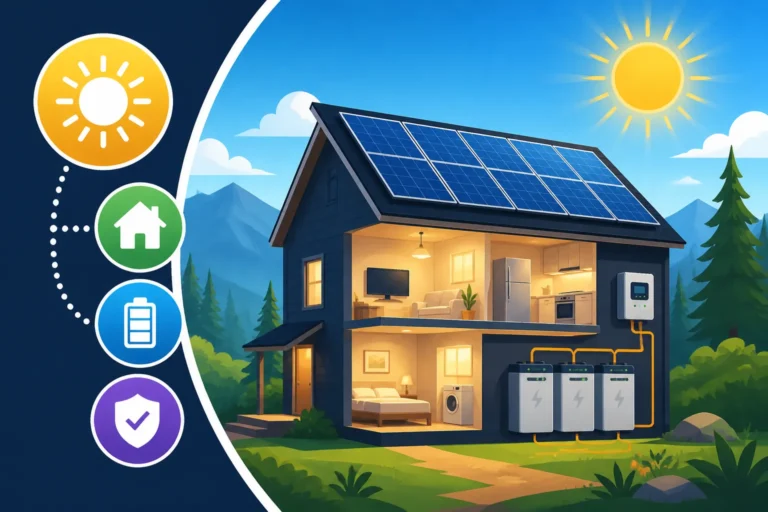
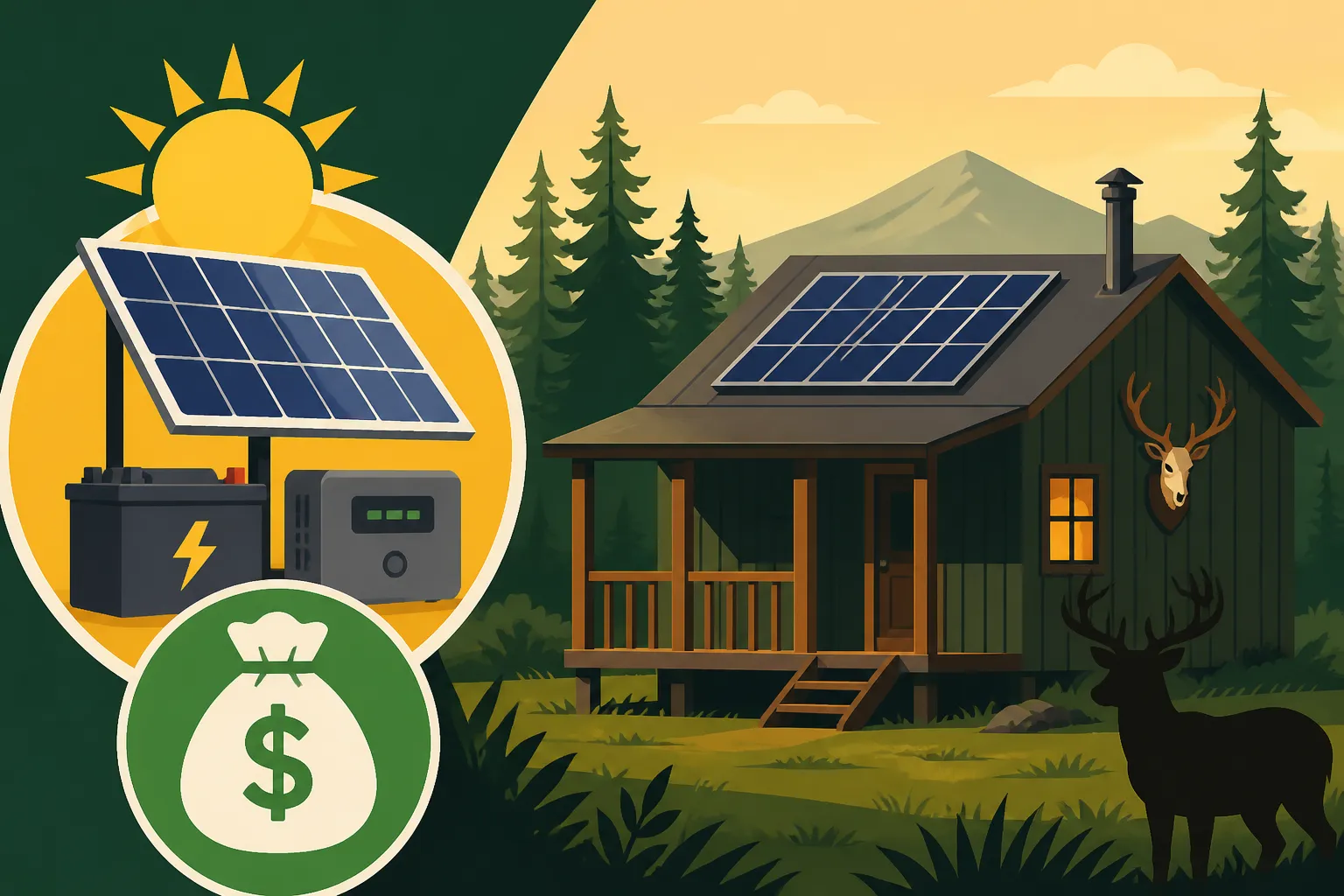
Dreaming of that quiet retreat, nestled deep in the woods or high in the mountains, where you can truly unplug and enjoy nature? A hunting cabin is the epitome of this vision, but often, these idyllic spots come without the convenience of grid power. Figuring out how to keep the lights on, run a small fridge, or charge your essentials without a utility pole nearby can feel overwhelming. This guide is here to demystify the off-grid solar cost for a hunting cabin, breaking down everything you need to know to budget for your own independent power setup.
Understanding Your Cabin's Energy Appetite
Before you even think about specific solar panels or battery banks, the very first step, and honestly, the most crucial one, is to get a handle on your cabin's energy needs. This isn't just about what you want to power, but what you realistically need to power, and for how long. Overestimating can lead to unnecessary expenses, while underestimating leaves you in the dark.
Pinpointing Your Essential Appliances
Let's face it, a hunting cabin isn't typically a full-time residence with all the bells and whistles. You're probably looking at a much more modest power consumption profile. Think about what truly matters for your visits. Is it just a few LED lights, a phone charger, maybe a small radio? Or do you envision a mini-fridge for your beverages and food, a microwave for quick meals, or a TV to catch the game after a long day?
Start by listing every single electrical item you plan to use. For each item, try to find its wattage (often listed on a sticker on the appliance or in its manual) and estimate how many hours per day you'll actually use it. This might seem tedious, but it's the bedrock of a successful off-grid system. For example, a modern LED light might only draw 10 watts, while an older mini-fridge could pull 80-100 watts when running, though it cycles on and off. A small microwave might briefly hit 1000-1500 watts. This exercise is essentially performing an off-grid solar load calculation, which is vital for proper system design.
Seasonal Use Versus Year-Round Living
The usage pattern of your hunting cabin dramatically impacts the size and thus the cost of your off-grid solar system. Is this a weekend warrior setup, only used a few times a month during hunting season? Or do you spend extended periods there, perhaps even year-round?
- Seasonal Use (Weekends/Occasional): If your cabin is primarily a weekend escape, your daily energy needs will be much lower. You won't need to power a fridge continuously for weeks, nor will you be running lights for 12 hours straight. This allows for a smaller, more budget-friendly system. You might only need enough power to cover a couple of days of autonomy, meaning the battery bank can sustain your loads even if the sun isn't shining for a day or two.
- Extended or Year-Round Use: For those who spend weeks or months at a time in their cabin, or even live there full-time, the system needs to be robust. You'll require a larger battery bank to store more energy and a bigger solar array to replenish that energy daily, especially considering shorter daylight hours and potential cloudy weather in winter. Planning for year-round off-grid power means accounting for greater demand and less consistent solar input. This is where a more comprehensive approach to how to calculate daily energy usage comes into play, factoring in longer run times and higher daily totals.
The Core Components and Their Individual Costs
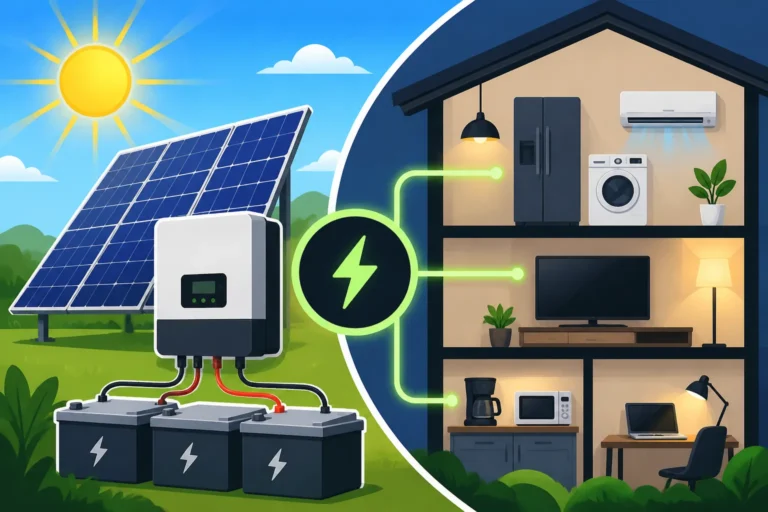
Once you have a clear picture of your energy needs, you can start looking at the hardware. An off-grid solar system for a hunting cabin is made up of several key components, each with its own cost considerations.
Solar Panels The Power Generators
Solar panels are the heart of your system, converting sunlight into electricity. The cost of off-grid solar panels has come down significantly over the years, making solar power more accessible than ever.
- Types and Wattage: You'll typically find monocrystalline or polycrystalline panels. Monocrystalline are generally more efficient and perform better in low-light conditions, but can be pricier. For a hunting cabin, you might be looking at panels ranging from 100 watts to 400 watts each. A small, seasonal cabin might only need two to four 200-watt panels, while a larger, more active cabin could require eight or more. The more panels you need to meet your daily energy demands and compensate for cloudy days, the higher your overall solar panel cost for a cabin will be.
- Cost Range: Individual panels can range from $80 for a 100-watt panel to $300-$500 for a high-efficiency 400-watt panel. This means your total panel array could cost anywhere from a few hundred dollars to several thousand, depending on how many solar panels for off-grid living you ultimately decide you need. When sourcing, reputable brands like Renogy or Rich Solar offer various options, and you can often find good deals on platforms like Amazon.
Batteries The Energy Storage Heart
The battery bank is arguably the most critical and often the most expensive component of an off-grid system, especially for a hunting cabin where you might not have constant sun. This is where you store the energy generated by your panels for use when the sun isn't shining.
- LiFePO4 vs. Lead-Acid:
- Lead-Acid Batteries (AGM/Gel): These are the traditional choice and often have a lower upfront cost. They require more maintenance (especially flooded lead-acid, though AGM/Gel are sealed) and have a shorter lifespan (3-7 years) and lower usable capacity (typically 50% depth of discharge recommended). A 100Ah 12V AGM battery might cost $200-$300. You'll need more of them to achieve the same usable power as lithium.
- LiFePO4 (Lithium Iron Phosphate) Batteries: While more expensive upfront, these batteries offer significantly longer lifespans (10-15+ years or more), higher usable capacity (80-100% depth of discharge), are lighter, and require virtually no maintenance. A 100Ah 12V LiFePO4 battery can cost $300-$600 or more. For a hunting cabin, the benefits of less maintenance and longer life often outweigh the higher initial cost, making them a popular choice for how battery choice affects off-grid cost in the long run. Brands like Battle Born and EG4 are highly regarded for their robust LiFePO4 offerings.
- Capacity and Quantity: The size of your battery bank depends on your daily energy consumption and how many "days of autonomy" you want – how long your system can power your cabin without any sun. For a simple seasonal cabin, one or two 100Ah 12V LiFePO4 batteries might suffice. For a more comfortable, extended-stay cabin, you might be looking at 400Ah to 800Ah or more, possibly configured in a 24V or 48V system for greater efficiency. Your total battery bank cost for a cabin could range from $500 to $4,000+, depending on chemistry, capacity, and system voltage. Check out guides on how many batteries for an off-grid system to understand your specific needs.
Inverter and Charge Controller The Brains of the Operation
These two components manage the flow of electricity, but they often come in combined "inverter-charger" units for off-grid systems, simplifying wiring and installation.
- Charge Controller: This device regulates the voltage and current from your solar panels to your battery bank, preventing overcharging and optimizing battery life.
- PWM (Pulse Width Modulation): Simpler and less expensive, but less efficient, especially in varying temperatures. Good for small, basic systems.
- MPPT (Maximum Power Point Tracking): More sophisticated and efficient, especially for larger systems or when panel voltage is significantly higher than battery voltage. They can boost power harvest by 10-30% compared to PWM.
- Cost for a charge controller can range from $50 (small PWM) to $300-$600+ (high-end MPPT).
- Inverter: This converts the DC (Direct Current) electricity from your batteries into AC (Alternating Current) electricity, which is what most standard household appliances use.
- Pure Sine Wave Inverters: Essential for sensitive electronics (laptops, TVs, modern appliances) as they produce clean, consistent power. These are highly recommended for any cabin that uses more than just basic lights.
- Modified Sine Wave Inverters: Cheaper, but can damage sensitive electronics and run motors inefficiently. Best avoided unless you only power simple resistive loads.
- The size of your inverter (measured in watts) needs to handle the total peak wattage of all AC appliances you might run simultaneously. If you plan to run a microwave (1500W peak) and a coffee maker (800W peak) at the same time, you'd need an inverter capable of at least 2300W, plus a buffer for starting surges. A 2000W pure sine wave inverter might cost $300-$700, while a larger 3000W-5000W unit could be $800-$2,000+.
- Inverter-Charger Combos: Many off-grid cabin setups opt for an all-in-one inverter-charger, like those from Victron Energy or Sol-Ark, which integrates these functions, often with advanced monitoring. These robust units can range from $1,500 to $5,000+, depending on power output and features.
Balance of System (BOS) Costs The Hidden Essentials
Don't forget the smaller, yet equally critical, components that tie everything together and ensure safety. These are often overlooked in initial budgeting.
- Wiring and Cabling: You'll need appropriate gauge wiring for both DC (panels to charge controller, charge controller to batteries) and AC (inverter to outlets/breaker panel) runs. The longer the run and higher the current, the thicker the wire needed to prevent voltage drop and overheating. Costs can vary based on distance and gauge, but budget a few hundred dollars.
- Mounting Hardware: Whether your panels go on the cabin roof or on a ground mount, you'll need racking and mounting hardware. Roof mounts are usually cheaper and simpler, while ground mounts offer adjustable tilt for seasonal optimization but cost more in materials and labor. Budget $100-$500 for mounts.
- Fuses, Breakers, Disconnects: Safety first! These protect your system from electrical faults. DC circuit breakers, AC breakers, and main disconnect switches are non-negotiable. Plan for $100-$300 here.
- Conduit and Junction Boxes: To protect wiring from the elements and critters, conduit and junction boxes are essential, especially outdoors.
- Monitoring System: A battery monitor (like a Victron BMV-712) helps you keep track of your battery's state of charge, voltage, and current, which is invaluable for longevity. Expect to pay $150-$300.
DIY Installation Versus Professional Services
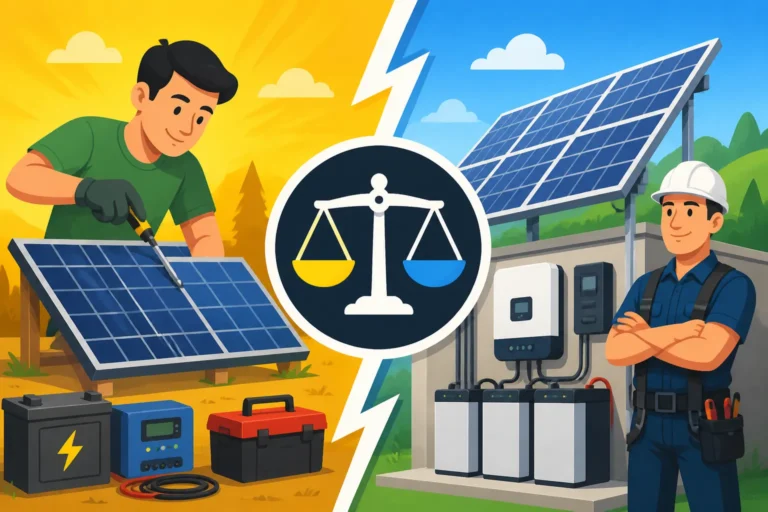
One of the biggest variables in the off-grid solar cost for a hunting cabin is whether you tackle the installation yourself or hire a professional. Both routes have distinct pros and cons. You can learn more about DIY vs professional off-grid solar cost in detail.
The Do-It-Yourself (DIY) Adventure
For many hunting cabin owners, the DIY approach aligns perfectly with the spirit of self-sufficiency. It can significantly reduce upfront costs, as you're saving on labor, which often accounts for 10-20% or more of a professional installation.
- Pros:
- Cost Savings: This is the primary driver. You only pay for materials and any tools you might need to buy (multimeter, wire strippers, crimpers, etc.).
- Learning and Empowerment: You gain a deep understanding of your system, which can be invaluable for troubleshooting and maintenance down the road.
- Customization: You have full control over component choices and system design.
- Cons:
- Time Commitment: Planning, sourcing parts, and actual installation take considerable time and effort.
- Skill and Knowledge Required: You need to be comfortable with electrical wiring, safety protocols, and potentially some basic construction for mounting. Mistakes can be dangerous and costly.
- Permitting and Code Compliance: While many remote cabins might fly under the radar for permitting, if your local jurisdiction requires permits, meeting electrical codes can be challenging without professional experience. This can impact the overall cost of a DIY off-grid solar build if you need to hire an electrician for inspections.
- Warranty Issues: Some manufacturers might void warranties if equipment isn't installed by a certified professional.
If you're considering DIY, there are many resources available, and you can often find comprehensive off-grid solar kits that include all major components, simplifying the sourcing process. However, carefully review what's included and ensure it meets your specific needs. Platforms like Amazon offer a wide range of individual components, making it easier to assemble a custom system, but also requiring more research on your part.
Bringing in the Professionals
Hiring an experienced solar installer takes the guesswork and heavy lifting out of the equation.
- Pros:
- Expertise and Safety: Professionals ensure your system is safely and correctly installed, adhering to all electrical codes and best practices.
- Peace of Mind: You know the job is done right, reducing the risk of costly mistakes or safety hazards.
- Warranties and Support: Professional installations typically come with workmanship warranties, and installers can assist with manufacturer warranties if issues arise.
- Permitting: They handle all necessary permits and inspections, alleviating a major headache.
- Cons:
- Higher Upfront Cost: Labor costs add significantly to the overall price. For a hunting cabin system, installation could add $1,500 to $5,000 or more, depending on complexity and location.
- Less Control: You might have less say in specific component brands unless you're very clear in your contract.
For a hunting cabin, especially one located in a remote area, finding local professionals experienced in off-grid solar can sometimes be a challenge. Be prepared to potentially pay for travel time if the nearest installer is a considerable distance away.
Real-World Cost Estimates for Hunting Cabins
Now, let's put some numbers to these components and scenarios. Remember, these are estimates, and your final off-grid solar cost for a hunting cabin will depend on your specific needs, location, and component choices.
Scenario 1: The Basic Seasonal Retreat (Minimalist Power)
This is for the hunter who just needs lights, to charge a phone or flashlight, and maybe run a small fan on warm nights. Usage is typically weekends only, a few times a month.
- Energy Needs: 500-1000 Watt-hours per day (Wh/day).
- Components:
- Solar Panels: 2 x 200W panels (400W total) – $300-$500
- Battery Bank: 1 x 100Ah 12V LiFePO4 battery – $300-$500
- Charge Controller: 1 x 30A MPPT controller – $150-$250
- Inverter: 1 x 1000W Pure Sine Wave Inverter – $150-$300
- BOS (wiring, mounts, fuses): $200-$400
- Total DIY Cost: $1,100 – $1,950
- Total Professional Install Cost: Add $1,000 – $2,000 for labor and expertise: $2,100 – $3,950
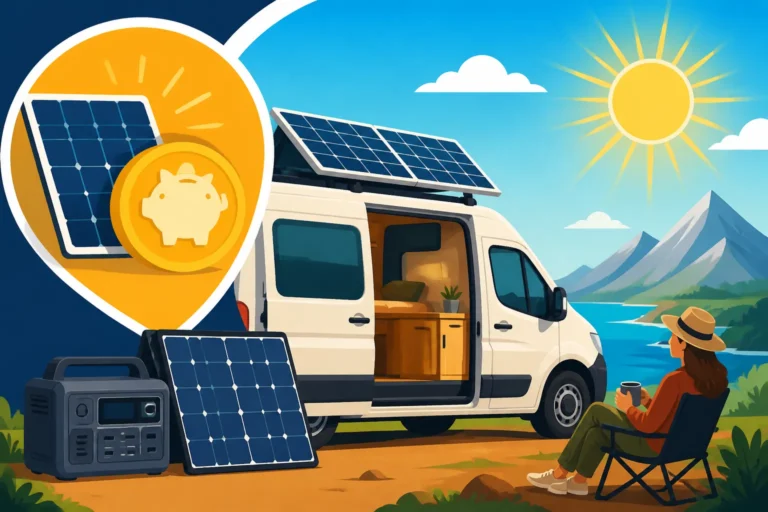
For such a basic setup, a portable solar generator like a Jackery Explorer 1000 paired with a couple of portable solar panels could also be a viable, plug-and-play solution, costing around $1,000-$1,500. This might be a good starting point for those who want to dip their toes into off-grid power without a full system commitment.
Scenario 2: The Comfortable Extended-Stay Cabin (Moderate Power)
This setup is for those who spend longer periods at the cabin, want a mini-fridge, microwave, TV, some power tools, and good lighting. Perhaps even running a well pump for a short duration.
- Energy Needs: 2,000-5,000 Wh/day.
- Components:
- Solar Panels: 4-8 x 300W panels (1200W-2400W total) – $1,000-$2,500
- Battery Bank: 2-4 x 200Ah 12V LiFePO4 batteries (or 2 x 100Ah 48V if configured) – $1,200-$2,800
- Inverter-Charger: 1 x 3000W-5000W Pure Sine Wave Inverter-Charger (e.g., from Victron or Growatt) – $1,500-$3,500
- BOS (heavy gauge wiring, robust mounts, extensive safety gear, monitoring): $500-$1,000
- Total DIY Cost: $4,200 – $9,800
- Total Professional Install Cost: Add $2,000 – $4,000 for labor: $6,200 – $13,800
Here's a quick comparison table to summarize typical costs for key components:
| Component | Basic Seasonal Cabin (Approx. Cost) | Comfortable Extended-Stay Cabin (Approx. Cost) |
|---|---|---|
| Solar Panels | $300 – $500 (400W) | $1,000 – $2,500 (1200W-2400W) |
| Battery Bank | $300 – $500 (100Ah 12V LiFePO4) | $1,200 – $2,800 (400-800Ah 12V LiFePO4) |
| Charge Controller | $150 – $250 (30A MPPT) | (Integrated into Inverter-Charger) |
| Inverter | $150 – $300 (1000W Pure Sine) | (Integrated into Inverter-Charger) |
| Inverter-Charger Combo | N/A | $1,500 – $3,500 (3000W-5000W) |
| BOS (Wiring, Mounts, etc.) | $200 – $400 | $500 – $1,000 |
| DIY System Total | $1,100 – $1,950 | $4,200 – $9,800 |
| Professional Install Total | $2,100 – $3,950 | $6,200 – $13,800 |
Factors That Will Influence Your Final Price Tag
Several other elements can push your budget up or down, even for a hunting cabin.
- Location, Location, Location: The amount of available sunlight (peak sun hours) in your specific cabin's location will dictate how many panels you need. A cabin in sunny Arizona will require fewer panels than one in cloudy coastal Washington for the same energy output. Remote locations can also incur higher shipping costs for components.
- System Expandability: If you think you might want to add more appliances or increase your usage in the future, designing an expandable system from the start can save money down the line. This means choosing an inverter and charge controller that can handle more input/output, and selecting a battery bank that allows for easy expansion. Thinking about how to budget for an off-grid solar system with future growth in mind is smart.
- Backup Generator: While the goal is solar independence, many off-grid cabin owners choose to include a small backup generator (gasoline or propane) for extended cloudy periods or unexpected high loads. The cost of adding a generator to off-grid solar can range from a few hundred dollars for a small portable unit to a couple of thousand for a larger, quieter inverter generator. This provides an excellent safety net and helps ensure you always have power, no matter what mother nature throws your way.
- Efficiency of Appliances: Using energy-efficient DC appliances (if you can find them) or modern AC appliances with low power draw can significantly reduce your overall system size and cost. Upgrading an old, inefficient fridge to a new Energy Star model, for instance, can make a huge difference in your daily energy consumption and, by extension, the size and cost of your battery bank and solar array.
- Local Incentives: While off-grid systems typically don't qualify for the same federal tax credits as grid-tied residential systems (unless it's part of a primary residence), it's always worth checking for state and local off-grid solar rebates or incentives that might apply to your specific situation.
Ultimately, powering your hunting cabin with off-grid solar is a fantastic investment in independence and comfort. By carefully assessing your needs, understanding the components, and weighing your installation options, you can build a reliable and cost-effective system that brings power to your perfect wilderness retreat.
Disclaimer
Please remember that the information provided in this article is for general guidance only and does not constitute professional advice. Off-grid solar system design and installation can be complex and should always prioritize safety. Consult with certified electricians or solar professionals to ensure your system meets all local codes and requirements.