How Many Panels to Run a House Off-Grid
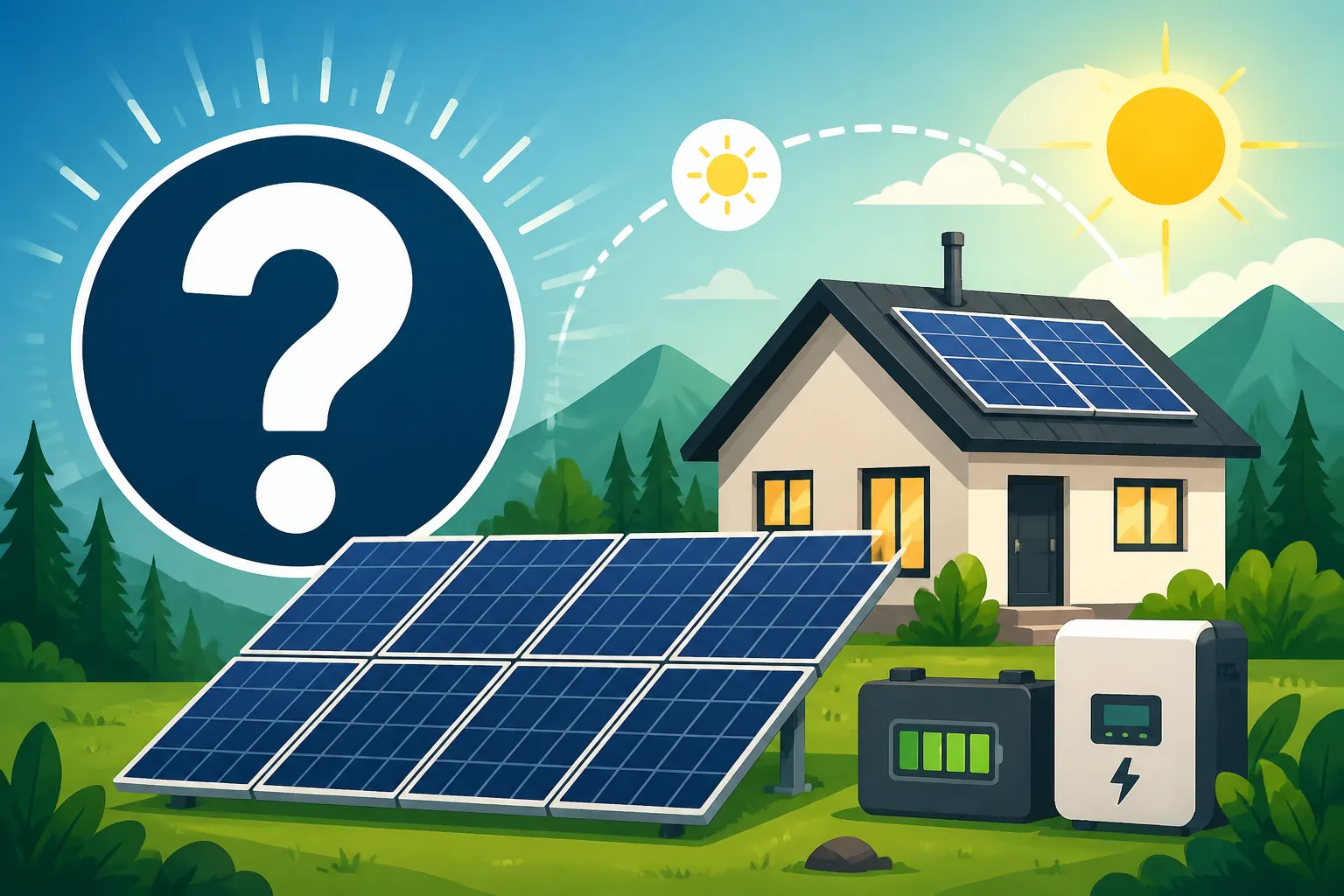
Trying to figure out how many solar panels you actually need to power an entire off-grid home can feel like staring at a complex puzzle with missing pieces. It's incredibly daunting to think about all your appliances, the sun's unpredictable nature, and the sheer number of components involved. This comprehensive guide will meticulously walk you through the exact steps to calculate your home's energy needs and determine precisely how many solar panels are necessary to keep your off-grid dreams brightly lit, no matter the season.
The First Step: Unpacking Your Home's Energy Needs
Before you even begin looking at solar panels, the absolute first and most crucial step is to understand what you're trying to power. Many folks jump straight to "I need x number of panels" without truly grasping their daily energy consumption, and that's where costly mistakes are made. Your entire off-grid system hinges on this initial assessment.
Conducting a Thorough Load Analysis
A load analysis is essentially an inventory of every single electrical device in your home that you plan to power with solar, along with how much energy each one consumes and for how long. Think of it like a budget, but for electricity. This isn't just about big items like refrigerators; it includes everything from your phone charger to your coffee maker. To effectively complete this step, you'll want to list out each appliance, its wattage (often found on a label on the device or in its manual), and the estimated number of hours you'll use it per day.
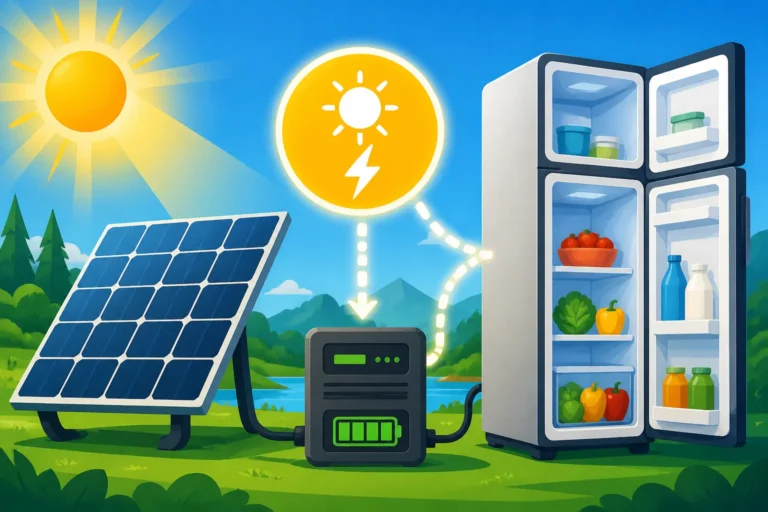
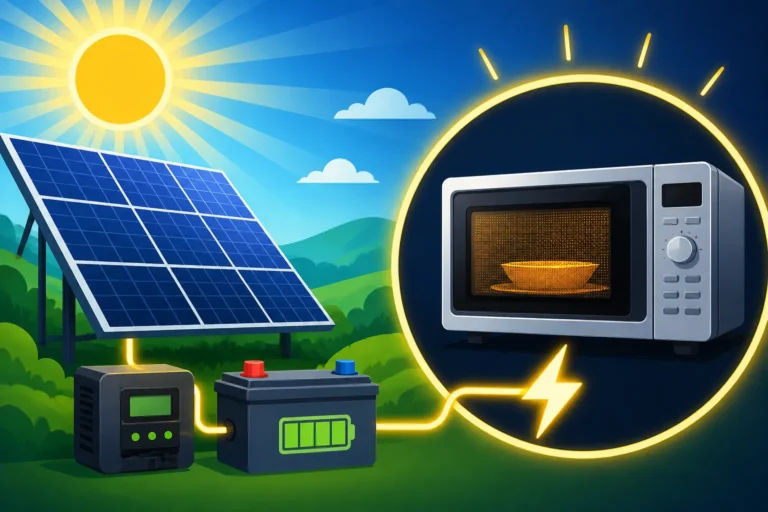
For instance, consider your kitchen. Your refrigerator might run 8 hours a day, cycling on and off, but it pulls, say, 150 watts when it's actively cooling. Your microwave might only be on for 10 minutes a day, but it could draw 1200 watts during that short burst. A critical part of this process is to be realistic about your usage. Don't underestimate, especially if you're transitioning from a grid-tied lifestyle where electricity felt limitless. For a deep dive, check out our guide on how to calculate daily energy usage, and for more advanced techniques, our article on how to do an off-grid load analysis can provide additional insights.
Understanding Different Appliance Loads
Not all watts are created equal in the world of off-grid solar. You'll encounter two main types of power draw: continuous loads and surge loads. Continuous loads are things that run for extended periods, like your refrigerator, lights, or a ceiling fan. These are relatively straightforward to calculate into your daily energy budget. However, surge loads are the silent energy guzzlers that can wreak havoc on an undersized system. These are the momentary power spikes that occur when certain appliances, especially those with motors, first turn on.
Take a well pump, for example. It might only draw 1000 watts while running, but its starting surge could easily hit 3000-5000 watts for a split second. If your inverter isn't sized to handle that surge, the pump simply won't start, or your system could trip. This is why knowing both the running watts and the starting (or surge) watts for your appliances, particularly power tools, well pumps, and large refrigeration units, is absolutely vital. You're not just adding up daily watt-hours; you're also ensuring your inverter, and by extension your entire system, can handle those brief, intense demands.
Planning for Future and Seasonal Use
Your off-grid energy needs aren't static; they fluctuate with the seasons and your lifestyle. A cabin used only in the summer will have vastly different requirements than a full-time off-grid homestead. In winter, you might run more lights, a fan for a wood stove, or charge more devices as you spend more time indoors. Air conditioning, a common summer splurge, can dramatically increase your daily energy draw. If you're planning to expand your family, add a new workshop, or even just buy a new energy-intensive appliance like an instant pot, these changes need to be factored in.
It's always wise to build in a little wiggle room, or "headroom," into your system design. Many seasoned off-gridders recommend oversizing your initial system by 10-20% if your budget allows. This accommodates unforeseen appliance purchases, minor increases in usage, and the natural degradation of solar panels over their lifespan. Consider what your "worst-case" scenario looks like for energy use throughout the year, and design your system to meet that, rather than just an average day.
The Crucial Environmental Variables
Once you have a solid grasp of your home's energy demands, the next step involves looking up, quite literally, at the sun. The amount of sunlight your location receives is just as critical as your energy usage when determining how many solar panels you'll need. Ignoring these environmental factors is akin to planning a garden without knowing your soil type or local climate.
Harnessing Your Local Peak Sun Hours
"Peak sun hours" is a term you'll hear constantly in the solar world, and it's a critical concept. It doesn't mean the total number of hours the sun is visible in the sky. Instead, it represents the equivalent number of hours per day when sunlight intensity averages 1,000 watts per square meter. This standardized measurement helps solar designers compare solar potential across different locations and times of year. For example, a sunny desert region like Phoenix, Arizona, might boast 6-7 peak sun hours per day on average, while a cloudy region like Seattle, Washington, might average 3-4.
You can find peak sun hour data for your specific location from various renewable energy resources, often provided by government agencies or solar mapping tools. It's vital to use the lowest average peak sun hours for the time of year you need the most power, usually winter, especially if you plan on year-round off-grid living. Designing your system based on summer's abundant sunshine will leave you in the dark during winter. Understanding peak sun hours explained in detail will help solidify this concept, ensuring your calculations are accurate.
Accounting for Real-World Panel Performance
Solar panels are rated under Standard Test Conditions (STC), which are ideal laboratory settings that rarely reflect real-world conditions. In reality, several factors reduce a panel's output:
- Temperature: Solar panels actually become less efficient as their temperature increases. On a scorching summer day, a panel might perform slightly below its rated capacity even under full sun.
- Shading: Even partial shading from a tree branch, a chimney, or a buildup of snow or dirt can drastically reduce a panel's output, especially if panels are wired in series. Modern panels with bypass diodes and optimized layouts can mitigate this, but it's still a significant factor.
- Tilt and Orientation: For optimal year-round performance, panels should be oriented towards the equator (south in the Northern Hemisphere) and tilted at an angle that maximizes sun exposure, often adjusted seasonally.
- Degradation: All solar panels slowly lose efficiency over time, typically about 0.5% to 1% per year. Most manufacturers guarantee 80-85% of original output after 25 years, but it's something to factor in for long-term planning.
Because of these real-world losses, it's common practice to add a system loss factor into your calculations, often around 15-25%. This accounts for inefficiencies in wiring, inverters, and environmental conditions. When you're looking to purchase, popular brands like Renogy offer a range of panels that are well-regarded for their reliability in various conditions. To maximize your investment, it's helpful to consider the best off-grid solar panels for your specific environment and review the cost of off-grid solar panels to find the best value.
Doing the Math: Calculating Your Panel Array
Now that you've got your energy needs cataloged and the environmental variables understood, it's time to crunch some numbers. This is where you translate all that data into a concrete number of solar panels. Don't worry, it's not rocket science, but it does require attention to detail.
Step-by-Step Panel Sizing Calculation
Let's walk through a simplified example to illustrate the process of determining your solar panel array size.
-
Calculate Your Total Daily Watt-Hours (Wh): From your load analysis, add up the daily watt-hours for all your appliances. Let's say your off-grid home uses an average of 5,000 Wh (5 kWh) per day.
-
Account for System Losses: As mentioned, not all power generated by the panels will reach your batteries and appliances. We need to factor in inefficiencies from the inverter, charge controller, and wiring, plus environmental factors. A typical loss factor is 15-25%. Let's use 20% for this example.
- Required Watt-Hours from Panels = Daily Home Watt-Hours / (1 – System Loss Factor)
- Required Wh from Panels = 5,000 Wh / (1 – 0.20) = 5,000 Wh / 0.80 = 6,250 Wh per day
-
Determine Your Location's Average Peak Sun Hours: Let's say, for your location and the lowest sunlight month, you have 4.5 average peak sun hours per day.
-
Calculate the Total Watts Your Solar Array Needs to Produce:
- Total Panel Watts (Wp) = Required Watt-Hours from Panels / Peak Sun Hours
- Total Panel Watts = 6,250 Wh / 4.5 hours = 1,388.89 Wp (round up to 1,390 Wp for simplicity)
-
Determine the Number of Panels: Now, divide your total required panel wattage by the wattage of the individual solar panels you plan to use. Most standard panels for home use range from 300W to 450W these days. Let's assume you're considering 400-watt panels.
- Number of Panels = Total Panel Watts / Individual Panel Wattage
- Number of Panels = 1,390 Wp / 400 Wp = 3.475 panels.
Since you can't buy a fraction of a panel, you'd round up to 4 panels. So, for this hypothetical scenario, you'd need at least four 400-watt solar panels to reliably power your off-grid home, assuming 4.5 peak sun hours and a 20% system loss. This systematic approach forms the backbone of any reliable off-grid solar system sizing guide.
Adding a Buffer for Reliability and Growth
While the calculation above gives you a solid baseline, it's often prudent to add an extra layer of protection, especially for off-grid living where grid backup isn't an option. This extra buffer addresses unexpected consumption spikes, extended periods of cloudy weather, or even the inevitable minor technical glitches.
One common way to add a buffer is to simply oversize your calculated panel array by another 10-20%. In our example, needing 4 panels, you might consider going with 5 panels (2000W total) to provide extra charging power. This additional capacity means your batteries will charge faster on good days, giving you more reserve power for cloudy days. For detailed strategies on dealing with less-than-ideal weather, refer to our article on how to account for cloudy days. Many off-gridders also plan for future expansion; what if you want to add an electric vehicle charging station or a greenhouse with automated systems down the line? Building a modular system allows for easier additions later on. Thinking ahead to expand your solar array, even a small amount, can prevent having to completely overhaul your system components later, potentially saving you significant time and money.
Choosing the Right Panel Count and Wattage
The calculation provides you with a total wattage, but how you achieve that total can vary. You could use many lower-wattage panels or fewer high-wattage panels. The choice often comes down to available roof or ground space, budget, and system voltage.
For example, to get our hypothetical 1,600W (four 400W panels), you could also use five 320W panels (1,600W total) or six 270W panels (1,620W total). Higher wattage panels (e.g., 450W-550W) are generally more space-efficient and can simplify wiring by reducing the number of panels needed. Lower wattage panels, on the other hand, might be easier to handle during installation and offer more flexibility if you have fragmented roof space. When you're ready to buy, marketplaces like Amazon can offer a wide selection of different panel wattages and brands to fit your specific needs. It’s important to research how to choose an off-grid solar panel that suits your climate and space requirements.
Beyond the Panels: Completing Your Off-Grid Power System
While panels are the stars of the show, they're just one part of the complex ecosystem that is an off-grid solar system. To truly power your home, you need a robust support cast of components working seamlessly together.
Integrating Batteries and Inverters
Your solar panels only produce power when the sun shines. To have electricity around the clock, you absolutely need a reliable battery bank to store that energy. The size of your battery bank directly influences how many days you can run your home without any sunshine (known as "days of autonomy"). For most full-time off-grid homes, aiming for 3-5 days of autonomy is a common goal, providing a healthy buffer against extended periods of inclement weather. The choice between LiFePO4 (lithium iron phosphate) and lead-acid batteries will significantly impact your cost, lifespan, and maintenance, but for off-grid living, lithium is increasingly popular due to its deeper discharge cycles and longer life. Our guide on how many batteries for an off-grid system dives deep into this crucial component.
Next up is the inverter. This critical device takes the direct current (DC) power from your batteries and converts it into alternating current (AC) power, which is what most of your household appliances use. When choosing an inverter, you need to consider its continuous power rating (how much power it can supply consistently) and its surge rating (how much it can momentarily supply for those starting loads we discussed). An undersized inverter can be a major bottleneck in your system, failing to start high-demand appliances even if your panels and batteries are sufficient. It’s paramount to understand how to size an off-grid inverter correctly to prevent system failures and ensure all your appliances run smoothly.
Charge Controllers and System Voltage
A charge controller is like the brain of your charging system. It regulates the voltage and current coming from your solar panels, preventing overcharging of your batteries, which can severely shorten their lifespan. There are two main types: PWM (Pulse Width Modulation) and MPPT (Maximum Power Point Tracking). MPPT controllers are generally more efficient, especially in cooler conditions or when your panel voltage significantly differs from your battery bank voltage, extracting up to 10-30% more power from your panels compared to PWM controllers. They are a popular choice for larger, more complex off-grid systems. Learning how to size a charge controller is key to protecting your expensive battery bank and maximizing your solar harvest.
Finally, you need to consider your system voltage (12V, 24V, or 48V). While smaller systems like those for RVs or tiny homes might run on 12V, larger off-grid homes typically benefit from 24V or, more commonly, 48V systems. Higher voltage systems require less current to deliver the same amount of power, meaning you can use smaller, less expensive wiring, and experience less power loss over longer cable runs. This translates to a more efficient and cost-effective system in the long run for a full-sized house.
Wiring, Mounting, and Maintenance Considerations
Once all your components are selected and sized, the physical installation and ongoing maintenance become paramount. Proper wiring is not just about functionality; it's about safety. Undersized wires can overheat, causing fire hazards, and improper grounding can be dangerous. Following electrical codes (even if not strictly enforced for off-grid, they are best practices) and using appropriate fuses and breakers are non-negotiable.
Mounting your panels securely is another vital step. Whether on a roof, a ground mount, or a pole mount, they need to withstand local wind loads and be positioned for optimal sun exposure. Consider using adjustable tilt mounts if you're in a region with significant seasonal sun angle changes. Finally, an off-grid system isn't a "set it and forget it" solution. Regular maintenance, such as cleaning your panels, checking battery terminals, and monitoring system performance, will ensure longevity and efficiency. For those undertaking a DIY approach, a detailed off-grid solar installation guide can be an invaluable resource. Knowing how to design an off-grid solar system step by step will equip you with the knowledge needed to oversee the entire project, whether you do it yourself or hire a professional.
Disclaimer
The information provided in this guide is for general informational and educational purposes only and is not a substitute for professional advice. Off-grid solar system design and installation can be complex and involve electrical hazards. Always consult with a qualified solar professional or licensed electrician to ensure your system is safely and correctly designed and installed according to local codes and regulations.