How to Design a Reliable Off-Grid System
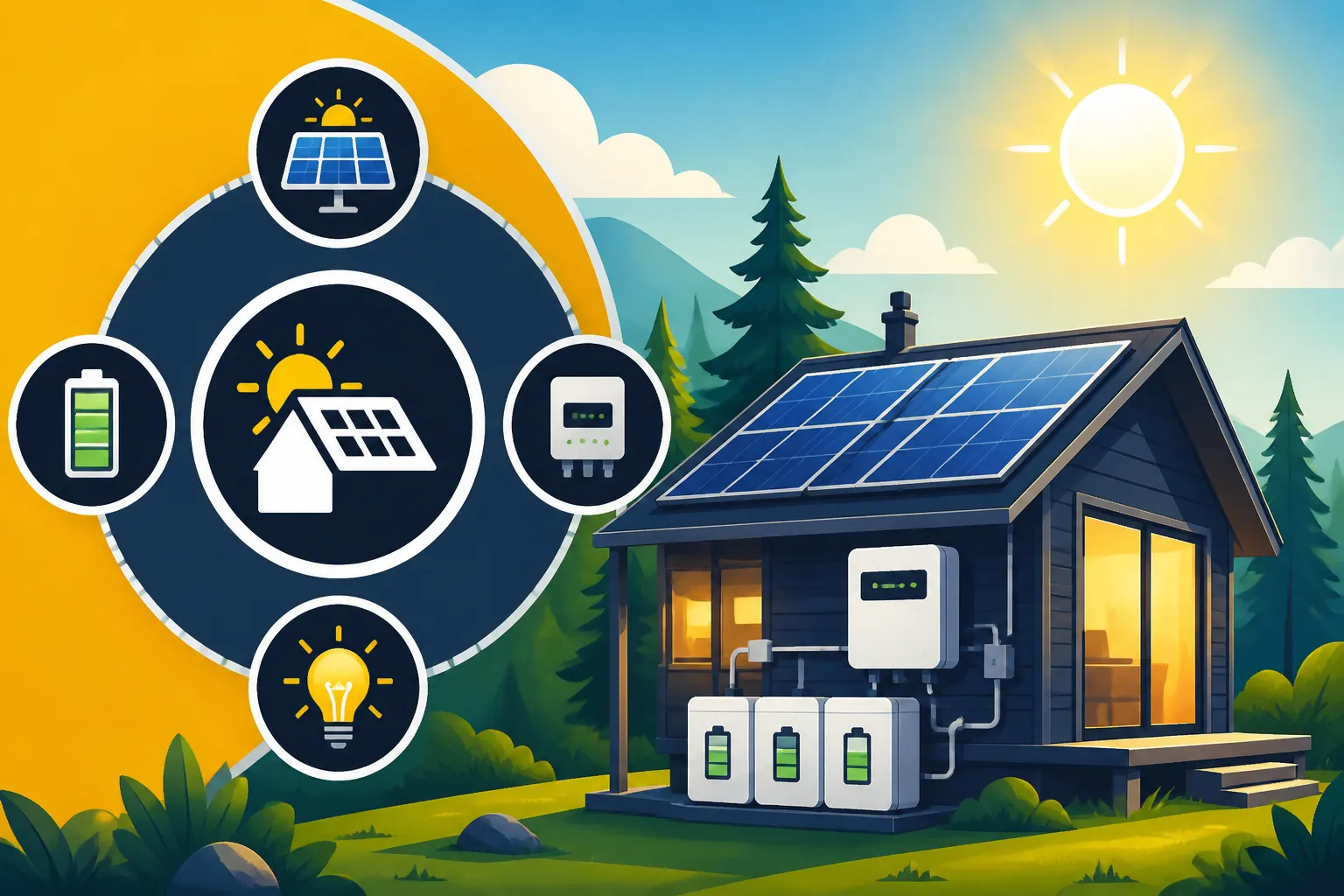
Stepping into the world of off-grid solar can feel like a colossal undertaking, a thrilling adventure mixed with a good dose of trepidation. You dream of energy independence, a quiet hum of power without the ever-increasing utility bill or the fear of widespread outages, but the thought of designing a system that actually works when you need it most? That's where a lot of folks get stuck, worried about making a costly mistake or being left in the dark. This guide is here to walk you through the essential steps to design a truly reliable off-grid solar system, ensuring your journey to self-sufficiency is powered, not panicked.
Understanding Your Daily Energy Appetite
Before you even think about buying solar panels or batteries, the absolute first step is to get a handle on what you're actually trying to power. It’s like planning a grocery run without knowing what you want to cook – you’ll end up with a cart full of random stuff, half of which you won’t use, and still no dinner. Undersizing your system is the quickest way to frustration and costly upgrades down the line.
Conducting a Detailed Load Analysis
This isn't just about listing your appliances; it's about getting granular. Think about everything that draws power in your home, cabin, RV, or tiny house. From your morning coffee maker to your evening reading lamp, every single device matters. You’ll want to identify two key things for each item: its wattage (how much power it uses at any given moment) and its estimated daily run time (how long it's actually turned on each day).
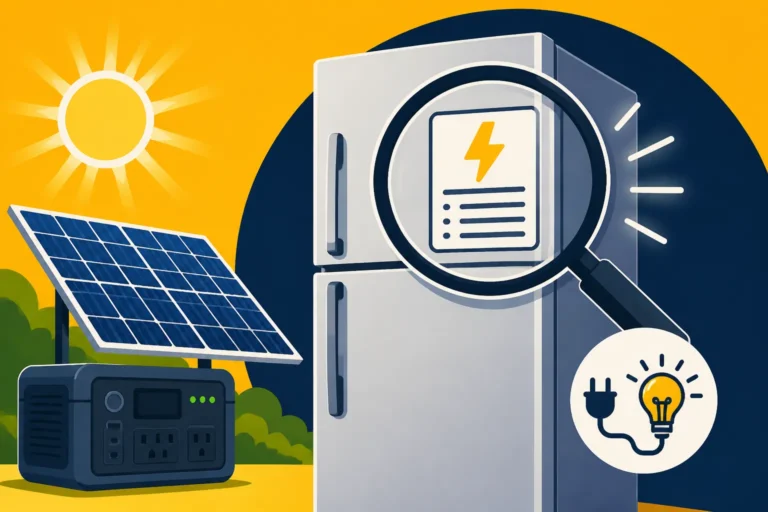
Let's break it down: grab a notepad or a spreadsheet and go room by room, or area by area if you're in an RV or a smaller space. For instance, in a cabin, you might list a refrigerator, lights, a well pump, a laptop, and a fan. For each, you'll need to find its wattage. This is usually listed on a sticker on the appliance itself, in the user manual, or you can use a kill-a-watt meter to measure actual draw. If you’re like most of us, you can also do a quick online search for typical wattage of common appliances. For example, a modern, energy-efficient refrigerator might draw 80-150 watts, but only cycle on for 8-10 hours a day. Your laptop charger might be 60 watts for 4 hours. Don't forget those phantom loads either – things that are always plugged in, even if they aren't actively on, like your TV on standby or your microwave clock. They add up!
Calculating Daily Watt-Hours and Surge Requirements
Once you have your list of appliances, their wattages, and their daily run times, it's time to do some math to figure out your total daily energy consumption in watt-hours (Wh). This is simply (Wattage) x (Hours per day). For example, a 100-watt light bulb on for 5 hours a day consumes 500 Wh (100W * 5h). Add up all these individual watt-hour totals, and you’ll have your estimated total daily energy usage. This number is absolutely crucial for sizing your batteries and solar array. You can learn more about this foundational step in our guide on How to Calculate Daily Energy Usage.
Beyond the average daily usage, you also need to consider surge power. Many appliances, especially those with motors like refrigerators, well pumps, or power tools, draw a much higher burst of power for a few seconds when they first start up. This is called their "starting wattage" or "surge wattage," and it can be two to seven times their "running wattage." Your inverter needs to be able to handle this momentary surge, otherwise, it will trip or fail to start the appliance. Make a separate list of your highest surge appliances and note their starting watts. This will directly impact your inverter choice, which we’ll discuss soon. Understanding both your continuous and surge power needs is vital for a truly robust system, and you can delve deeper into this with our article on How to Do an Off-Grid Load Analysis.
| Appliance (Example) | Running Wattage (W) | Est. Daily Run Time (Hours) | Daily Watt-Hours (Wh) | Surge Wattage (W) (if applicable) |
|---|---|---|---|---|
| LED Lights (total) | 50 | 6 | 300 | N/A |
| Refrigerator | 100 | 10 (cycling) | 1000 | 600-1000 |
| Laptop Charging | 60 | 4 | 240 | N/A |
| Water Pump (small) | 400 | 0.5 (intermittent) | 200 | 1000-1500 |
| TV (LED) | 80 | 3 | 240 | N/A |
| Microwave (brief) | 1000 | 0.1 (6 minutes) | 100 | N/A |
| Total Daily Est. | – | – | 2080 | 1500 (max single surge) |
Note: These are example values; always check your specific appliance ratings.
Sizing Your Core Components for Dependable Power
Now that you have a clear picture of your energy needs, it’s time to match those needs with the right equipment. This is where your system truly starts to take shape, and selecting appropriately sized, quality components is key to long-term reliability.
Designing for Solar Panel Production
Your solar array is the heart of your off-grid system, soaking up the sun's rays to generate electricity. Sizing it correctly means considering not just your daily watt-hour needs, but also your geographic location and the time of year. Solar panel output isn't constant; it varies greatly with sunlight intensity, temperature, and shading.
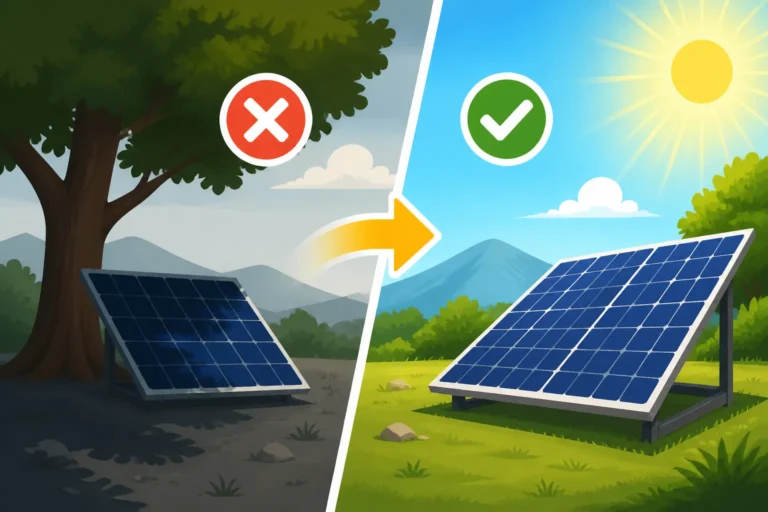
When designing your array, you’ll need to factor in "peak sun hours" for your area. This isn't literal hours of sun; it's the equivalent number of hours per day when the sun's intensity averages 1,000 watts per square meter. For example, a region might get 5 peak sun hours in the summer but only 2-3 in the winter. This significantly impacts how many panels you need to produce enough power year-round. You'll typically want to size your array based on the lowest peak sun hours you anticipate (e.g., winter months) to ensure reliability. You can use online calculators or local meteorological data to find this information. Moreover, consider the tilt angle and orientation of your panels. In the northern hemisphere, panels generally face south for maximum year-round production, with a tilt angle optimized for winter sun if you plan to live off-grid full-time. Even a small amount of shading from trees, buildings, or even dirt on the panels can dramatically reduce output, so clear, unobstructed placement is paramount. We have a detailed guide on How Many Solar Panels for Off-Grid Living that dives deeper into this calculation, as well as an article specifically on How to Account for Cloudy Days to ensure you're prepared for less-than-ideal weather.
Building a Robust Battery Bank
The battery bank is your energy reservoir, storing the power generated by your panels for use when the sun isn't shining. This is arguably the most critical component for system reliability. A common mistake is undersizing the battery bank, leading to frequent deep discharges that shorten battery life and leave you without power.
To size your battery bank, you need to determine your desired "days of autonomy" – how many days your system can power your loads without any solar input. For most full-time off-gridders, 3 to 5 days of autonomy is a common goal, especially if you live in an area prone to extended cloudy weather. Multiply your total daily watt-hour usage by your desired days of autonomy. For instance, if you use 2000 Wh per day and want 3 days of autonomy, you need at least 6000 Wh of usable battery capacity.
Then, consider battery chemistry. Lithium Iron Phosphate (LiFePO4) batteries, like those offered by Renogy or Battle Born Batteries, are becoming the gold standard for off-grid systems due to their high usable capacity (often 80-100% depth of discharge, or DoD), long cycle life (thousands of cycles), and relatively maintenance-free operation. Lead-acid batteries (like AGM or flooded lead-acid) are cheaper upfront but offer lower usable capacity (typically 50% DoD to maximize lifespan) and require more maintenance, making them less ideal for true off-grid reliability in the long run. We explore these differences in depth in How Many Batteries for an Off-Grid System. Don't forget system voltage – 12V is common for small RV systems, but 24V or 48V systems are far more efficient and often recommended for larger homes or cabins, reducing cable thickness and power losses. Our guide on How to Calculate Battery Amp-Hours Needed offers a comprehensive breakdown of the calculations involved.
Choosing the Right Inverter and Charge Controller
These two components are the brains and brawn of your electrical system, managing the flow of power.
The inverter converts the DC (direct current) power from your batteries into usable AC (alternating current) power for your household appliances. Remember that surge power we talked about? Your inverter needs to be capable of handling the highest simultaneous surge from your appliances, not just their running watts. If your refrigerator (1000W surge) and well pump (1500W surge) might kick on at roughly the same time, your inverter needs to handle a combined surge of at least 2500W, plus some headroom. Always opt for a pure sine wave inverter, as modified sine wave inverters can damage sensitive electronics and run inductive loads less efficiently. For a truly reliable system, look for an inverter with high surge capacity, good efficiency, and built-in protections. Some excellent brands known for their reliability inverters include Victron, Sol-Ark, and Schneider Electric. Check out How to Size an Off-Grid Inverter for a complete guide.
The charge controller regulates the voltage and current coming from your solar panels to charge your battery bank safely and efficiently. There are two main types: PWM (Pulse Width Modulation) and MPPT (Maximum Power Point Tracking). For serious off-grid systems, MPPT controllers are almost always the better choice, even if they cost more upfront. MPPT controllers are significantly more efficient (10-30% more power harvest, especially in colder weather or low-light conditions) because they can optimize the voltage and current from the panels to match the battery bank's needs. PWM controllers are simpler and cheaper but lose efficiency as temperatures drop or if there's a significant voltage mismatch. For a reliable, high-performing system, an MPPT controller is non-negotiable. Learn more about making this crucial choice in How to Size a Charge Controller.
Incorporating Redundancy and Future-Proofing
A reliable off-grid system isn't just about getting the initial design right; it's about building in safeguards and the flexibility to grow and adapt.
Backup Power Strategies
Even with a perfectly sized solar array and battery bank, mother nature can throw curveballs. Extended periods of cloudy or snowy weather, or even an unexpected increase in your power consumption, can drain your batteries faster than your panels can replenish them. This is where backup power comes in.
Many off-grid setups incorporate a backup generator. This could be a gasoline, propane, or diesel generator that automatically kicks on when battery voltage drops below a certain threshold, charging your batteries until solar production resumes or they reach a safe level. This provides a crucial safety net and significantly boosts system reliability, giving you peace of mind during prolonged bad weather. You can read up on the specifics of How to Add a Generator to Your Design to see if it's right for your setup. For smaller systems or occasional emergencies, a portable solar generator like those from EcoFlow or Bluetti can also serve as a useful backup, providing an extra power source for critical loads. Another option is a wood stove or propane heater for heating, reducing the electrical load on your system during winter.
Planning for Expansion and Maintenance
Life changes, and so might your energy needs. Perhaps you'll add a new appliance, expand your living space, or simply want more comfort. Designing an expandable system from the outset can save you significant headaches and costs later on. This means choosing an inverter that can accommodate additional panels or a larger battery bank, having extra space on your charge controller for more solar input, and ensuring your wiring infrastructure can handle increased loads. Think about a modular design where components can be easily added or upgraded. Our guide on How to Design an Expandable System offers excellent insights into planning for tomorrow's needs today.
Maintenance, though often overlooked, is paramount for reliability. Regular checks of battery terminals for corrosion, cleaning solar panels, and monitoring system performance through an inverter display or a dedicated battery monitor can prevent small issues from becoming major failures. Having readily accessible components and clear labeling of your wiring makes troubleshooting and maintenance far easier. Consider investing in a good battery monitor that tracks state of charge, voltage, current, and historical data, giving you a clear picture of your system's health. For a full breakdown of essential upkeep, refer to our Off-Grid Solar Maintenance Guide.
Real-World Considerations and Common Pitfalls
Designing a reliable off-grid system isn't just theory; it's deeply practical. Ignoring real-world factors or falling prey to common mistakes can undermine even the best intentions.
Site-Specific Factors
Every off-grid location is unique, and its specific characteristics will heavily influence your design.
- Climate: If you're in a cold climate, like the mountains of Montana, you'll need to consider how winter impacts your solar production (shorter days, lower sun angle, snow cover) and how to protect your batteries from freezing temperatures. Lithium batteries, for instance, cannot be charged below freezing without damage, so a heated battery enclosure becomes essential. Our article on Off-Grid Solar Cost in Cold Climates touches on these important considerations. Conversely, in hot desert climates, heat can reduce solar panel efficiency and stress electronic components, requiring good ventilation and perhaps even active cooling.
- Physical Layout: Where will your panels go? Do you have ample south-facing space free from shade? Is it a ground mount that you can adjust seasonally, or a fixed roof mount? How will cables be routed securely and protected from the elements and pests? Think about ease of access for maintenance and safety.
- Regulations and Permits: While you're off-grid, some jurisdictions still have regulations regarding electrical systems and even placement of structures. While not always directly tied to reliability, adhering to local codes ensures safety and avoids potential legal headaches down the line. It's always wise to check with your local authority.
Avoiding Common Design Mistakes
Many aspiring off-gridders make similar errors that compromise their system's reliability. Being aware of them can help you steer clear.
- Undersizing: As mentioned, this is the most common mistake. People often underestimate their energy consumption, especially when transitioning from grid-tied living. Always add a buffer, typically 20-30% above your calculated daily needs, to account for inefficiencies, unexpected loads, and future expansion. It's far better to slightly oversize than to be consistently short on power. Don't skip our discussion on Common Off-Grid Sizing Mistakes.
- Cheap Components: While it's tempting to save money, going for the cheapest solar panels, batteries, or inverter often leads to premature failure and costly replacements. Invest in quality components from reputable manufacturers. Brands like Victron, Sol-Ark, EG4, and Renogy generally offer robust and reliable equipment that stands the test of time. While you can find great deals on platforms like Amazon, always do your research and check reviews for reliability, not just price.
- Ignoring Safety: Electrical systems, especially high-voltage DC systems, can be dangerous if not properly installed. Always include appropriate fuses and breakers for overcurrent protection, use correctly sized wiring to prevent overheating and voltage drop, and ensure proper grounding. If you're not confident in your electrical skills, hire a qualified electrician for critical wiring stages. Safety is paramount for a reliable system that won't put you or your property at risk.
- Lack of Monitoring: Without a good monitoring system, you're flying blind. You won't know if your panels are underperforming, if a battery cell is failing, or if your consumption habits are outstripping your production. Real-time data and historical logs are essential tools for maintaining system health and reliability.
Designing a reliable off-grid solar system is a journey of careful planning, smart component selection, and a touch of foresight. It’s about building a system that not only meets your needs today but also gracefully handles the challenges of tomorrow, keeping your lights on and your life powered, independently.
Disclaimer
Please remember that this guide provides general information and recommendations for designing an off-grid solar system. Every installation is unique, and specific conditions, local codes, and personal energy requirements will vary. It is always recommended to consult with qualified solar professionals or electricians for personalized advice and to ensure safe and compliant installation. Working with electricity can be dangerous if proper precautions are not followed.