Common Off-Grid Sizing Mistakes
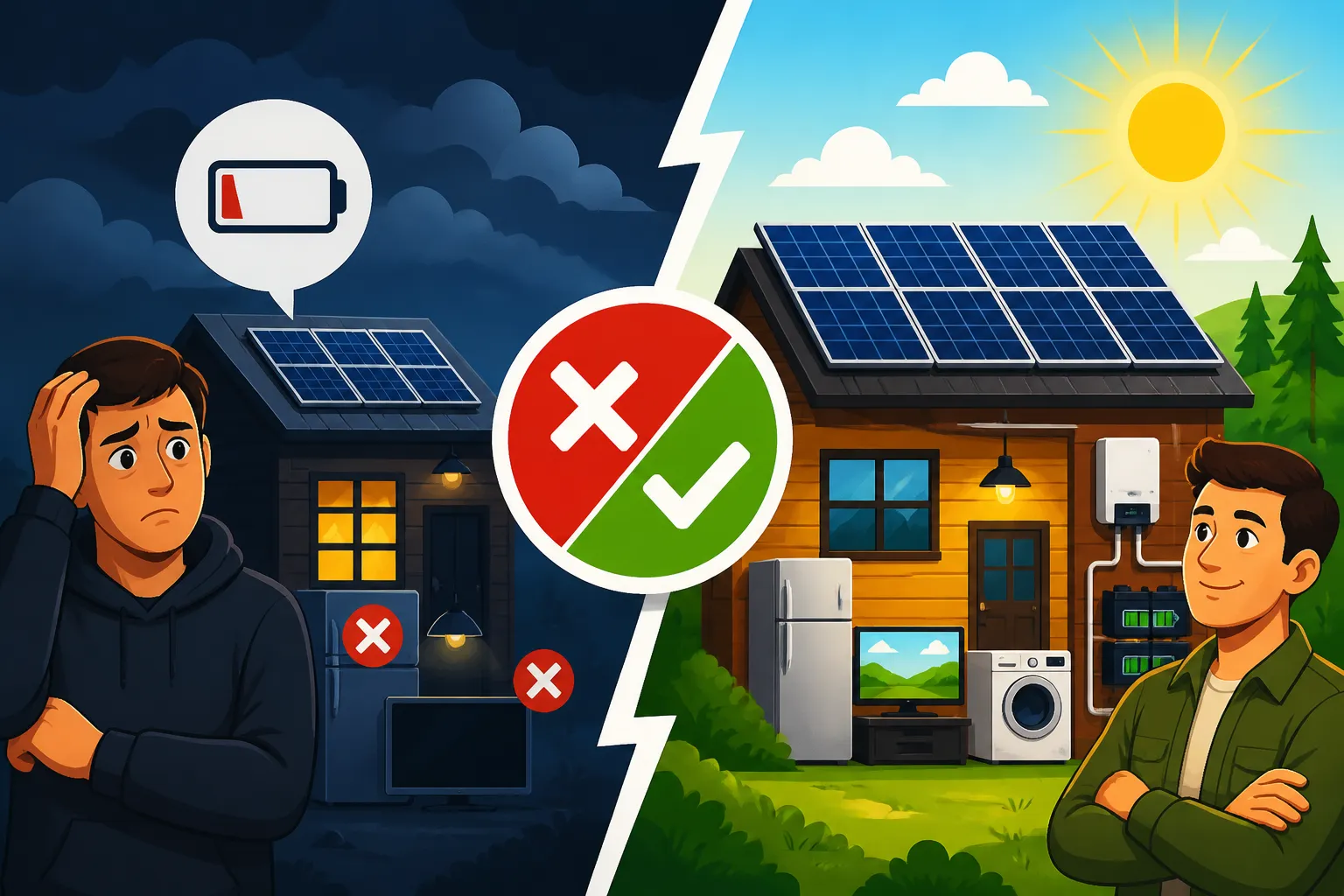
There’s nothing quite as frustrating as pouring your heart, soul, and hard-earned cash into building your dream off-grid solar system, only to discover it doesn't quite live up to your expectations. Many aspiring off-gridders make easily avoidable mistakes during the sizing and design phase, leading to underpowered systems, wasted money, and endless headaches. This guide will walk you through the most common off-grid solar sizing pitfalls, helping you sidestep these frustrations and build a robust, reliable power system that truly supports your independent lifestyle.
Underestimating Your Energy Needs: The Silent Power Drain
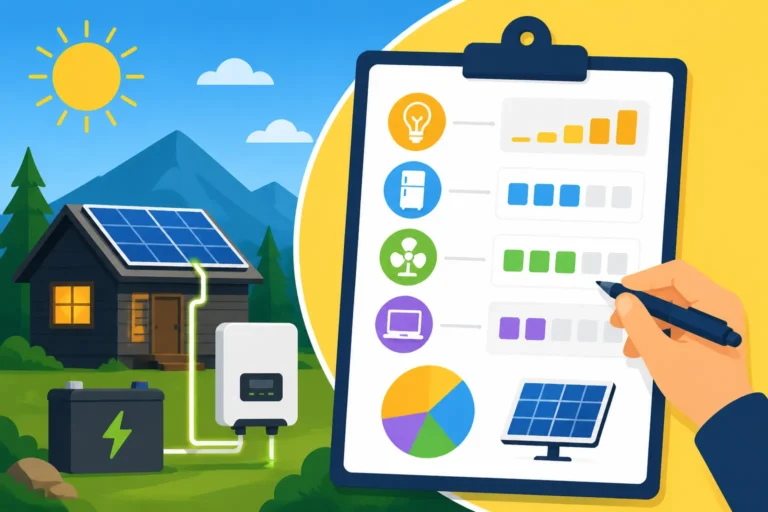
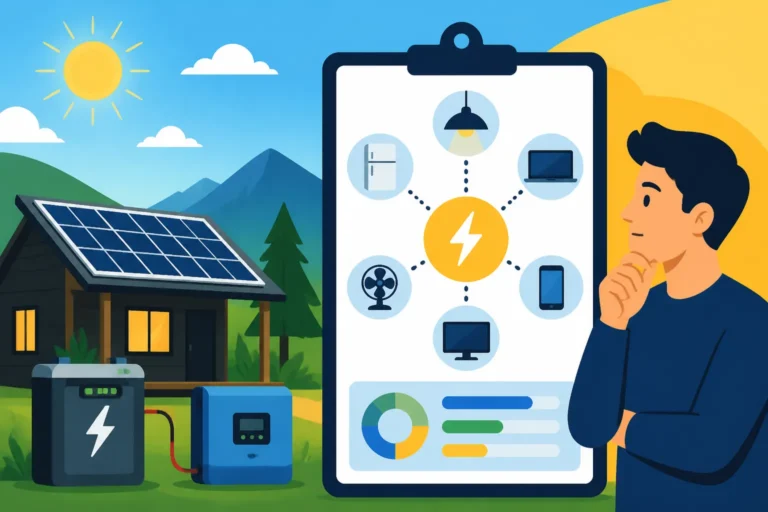
One of the biggest blunders people make when planning an off-grid solar system is simply not getting a true handle on their daily energy consumption. It’s easy to think, "Oh, I'm just running a few lights and a fridge," but the reality of modern electrical demand can be a sneaky beast. Failing to accurately account for every watt-hour your devices gobble up can leave you constantly short on power, especially on cloudy days or during peak usage.
Ignoring Phantom Loads and Standby Power
We've all heard of phantom loads, right? Those devices that seem to be "off" but are still quietly drawing power from your outlets. In a grid-tied home, a few watts here and there might not seem like a big deal, but in an off-grid system, every single watt counts, especially when you're relying on a finite battery bank. Think about your TV that's plugged in but off, your coffee maker with its digital clock, cell phone chargers not currently charging anything, or even your inverter itself, which draws a small amount of power just to be on and ready.
These seemingly insignificant draws accumulate over 24 hours, often adding up to a surprising chunk of your daily energy budget. For instance, a small entertainment system might draw 10-20 watts in standby mode. Over 24 hours, that's 240-480 watt-hours—enough to power an LED light bulb for an entire day! Imagine having several such devices. Suddenly, your carefully calculated 2 kWh daily budget is unknowingly being eaten away by things you thought were dormant. This is why a thorough energy audit, logging everything that pulls power, is absolutely non-negotiable for off-grid success.
Overlooking Seasonal and Peak Demands
Your energy needs aren't static; they fluctuate wildly depending on the time of year and even the time of day. This is a critical factor often overlooked during initial sizing. For example, if you live in a region with hot summers, air conditioning might become a significant load. Conversely, winter months bring shorter daylight hours, more reliance on indoor lighting, and potentially electric heating needs, all while your solar panels are producing less power. Trying to run an electric blanket and all your usual evening appliances when your solar array is only getting a few hours of weak sun is a recipe for frustration.
Beyond seasonal shifts, there are also peak demand periods. Think about your morning routine: coffee maker, toaster, microwave, maybe a hair dryer. All these high-wattage appliances running simultaneously can create a massive surge in demand that your inverter and battery bank need to handle. Similarly, evening cooking, lights, and entertainment can create another peak. Not factoring these surges and sustained higher usage periods into your calculations means your system might be fine most of the time, but will buckle precisely when you need it most. To avoid these common pitfalls, a deep dive into "How to Calculate Daily Energy Usage" and learning "How to Do an Off-Grid Load Analysis" are essential first steps in your planning journey.
Miscalculating Solar Array Size: Too Little Sun, Too Many Expectations
Once you have a solid grasp of your energy consumption, the next hurdle is designing a solar array that can consistently meet those needs. Many folks fall into the trap of looking at a panel's nameplate wattage (e.g., "300W panel") and assuming that's what they'll get all day, every day. Unfortunately, the real world of solar production is far more nuanced, and several factors can significantly diminish your actual energy harvest.
Forgetting About Peak Sun Hours and Shading
Solar panels are rated under ideal laboratory conditions, which rarely match real-world scenarios. The most critical factor often underestimated is "peak sun hours." This isn't just how many hours the sun is above the horizon; it's the equivalent number of hours per day when sunlight intensity averages 1,000 watts per square meter. A location might have 12 hours of daylight, but only 4-5 peak sun hours. This average varies dramatically by geography, season, and local weather patterns. Relying solely on a panel's wattage without considering your specific location's average peak sun hours will almost certainly lead to an undersized array. You can learn more about this crucial metric in our guide, "Peak Sun Hours Explained".
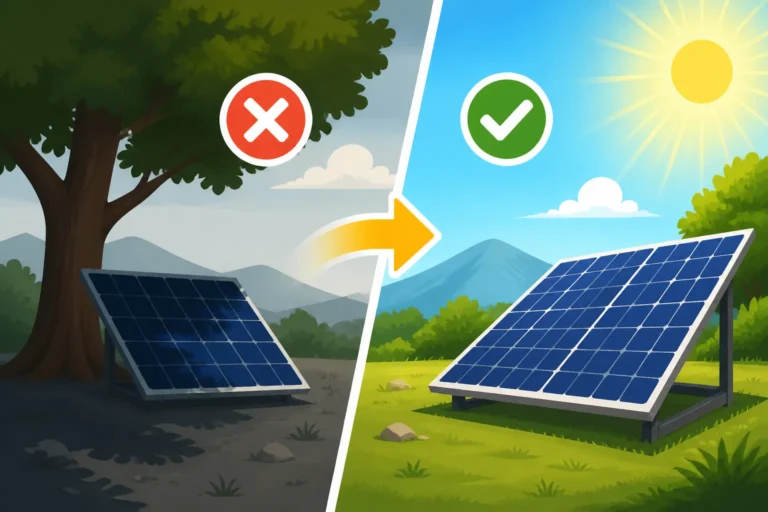
Furthermore, shading is the arch-nemesis of solar efficiency. Even a small shadow from a chimney, a tree branch, or a utility pole can drastically reduce the output of an entire string of panels, especially with older panel technologies. Modern panels often have bypass diodes to mitigate this, but significant shading will still severely hamper production. Before you even think about buying panels, spend time observing your property throughout the day, across different seasons, to identify any potential shading issues. Designing around shading, or strategically placing panels where shadows won't hit, is paramount. Remember, on those inevitable "How to Account for Cloudy Days", your production will already be lower, and shading will only exacerbate the problem.
Neglecting Temperature and Weather Derating
Solar panels love sunlight, but they don't love extreme heat. This might sound counterintuitive, but solar panel efficiency actually decreases as their temperature rises above 25°C (77°F). Most panels have a "temperature coefficient" listed in their specs, indicating how much power output drops per degree Celsius increase. In scorching summer climates, a 300W panel might only produce 250W or even less during peak heat. Conversely, cold, sunny days are often ideal for solar production, as the cold increases efficiency.
Beyond temperature, weather plays a huge role. Dust, dirt, snow, or even heavy pollen can accumulate on panels, blocking sunlight and reducing output. Rain helps to wash them off, but if you're in a dry, dusty area, regular cleaning is a must. Most importantly, consistently cloudy or stormy weather can severely impact your daily energy harvest. Many off-gridders size their system for average sunny days, but neglect to plan for prolonged periods of low light. This is a common mistake that leads to draining batteries too quickly. Always consider worst-case scenarios, especially during the darker, colder months. For specific considerations, check out our article on "How Winter Affects Off-Grid Sizing".
Inadequate Battery Bank Sizing: The Achilles' Heel of Off-Grid Systems
If solar panels are the heart of your off-grid system, then your battery bank is undeniably the lungs, storing and delivering the energy that keeps everything running when the sun isn't shining. Making mistakes here can lead to a system that collapses overnight, expensive battery replacements, or even system damage.
Not Planning for Days of Autonomy
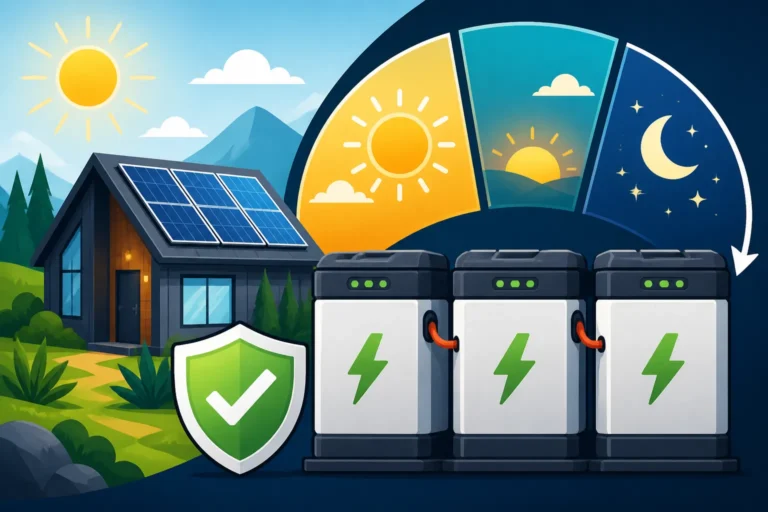
One of the most frequent and impactful mistakes is underestimating the required "days of autonomy" for your battery bank. This refers to how many days your batteries can power your home without any new charge from the solar panels. Many people aim for just one day, thinking, "The sun will be back tomorrow." But what if it isn't? What if a major storm rolls through, bringing several consecutive days of heavy clouds, rain, or even snow? If your battery bank can only sustain you for one day, you'll be without power until the sun reappears, which can be incredibly inconvenient and even dangerous.
A well-designed off-grid system typically aims for at least 2-5 days of autonomy, depending on your location's weather patterns and your personal comfort level. This gives you a buffer against extended periods of low solar production and provides peace of mind. Skimping on battery capacity is a short-term saving that almost always leads to long-term regret and potential damage to your expensive batteries due to deep cycling. To get a handle on your needs, refer to our comprehensive guides: "How Many Batteries for an Off-Grid System" and "How to Calculate Days of Autonomy".
Choosing the Wrong Battery Chemistry or Depth of Discharge
Not all batteries are created equal, and selecting the wrong type or misunderstanding its limitations can quickly derail your off-grid dreams. Historically, lead-acid batteries (like flooded or AGM) were the go-to, but they come with significant caveats. They generally shouldn't be discharged beyond 50% Depth of Discharge (DoD) if you want them to last a reasonable number of cycles. Continually discharging them deeper will drastically shorten their lifespan, turning a supposed 5-7 year battery into a 2-3 year battery. This means you need double the usable capacity compared to lithium to achieve the same amount of power.
On the other hand, modern lithium iron phosphate (LiFePO4) batteries, such as those from brands like Battle Born or EG4, have revolutionized off-grid storage. They can be safely discharged to 80-100% DoD without significant impact on their incredibly long cycle life (often 10+ years). While their upfront cost is higher, their vastly superior usable capacity, lighter weight, lack of maintenance, and extended lifespan often make them a more cost-effective choice in the long run. Many installers recommend them even for smaller systems. Understanding these differences, as detailed in our "LiFePO4 vs Lead-Acid Battery Cost" article, and how "How Battery Choice Affects Off-Grid Cost" is crucial for making an informed decision that suits your budget and energy needs.
Overlooking Inverter and Charge Controller Capacities: Bottlenecks in Your System
The inverter and charge controller are the brains and brawn of your off-grid system, translating the raw solar power into usable electricity and protecting your batteries. Underestimating their capabilities or failing to match them correctly to your other components can create frustrating bottlenecks and even dangerous conditions.
Undersizing the Inverter for Surge Loads
Your inverter is responsible for converting the DC power from your batteries into the AC power that most of your household appliances use. A common mistake is sizing the inverter based solely on your average continuous load, neglecting the high "surge" currents many appliances draw when they first start up. Motors, compressors (found in refrigerators, freezers, and air conditioners), and power tools often demand 2-7 times their running wattage for a brief moment at startup.
If your inverter isn't capable of handling these surges, it will simply trip, shut down, or worse, be damaged. Imagine plugging in your well pump to fill your water tank, and your whole system goes dark because the inverter couldn't handle the initial kick. It's crucial to identify all surge-prone appliances in your load analysis and ensure your inverter's surge rating can comfortably accommodate the highest single surge load. Our article, "How to Size an Off-Grid Inverter", provides detailed calculations, and you might also want to explore "What Size Inverter to Run A Refrigerator" for specific appliance considerations.
Incorrectly Sizing the Charge Controller
The charge controller is the unsung hero of your solar system. Its job is to regulate the voltage and current coming from your solar panels, preventing your batteries from being overcharged and protecting them from damage. Sizing it incorrectly, either too small or too large, can lead to inefficiencies or even serious safety issues.
An undersized charge controller won't be able to handle the full output of your solar array, effectively throttling your power production. You might have 1000 watts of panels, but if your charge controller is only rated for 600 watts, you're leaving a lot of valuable energy on the table. On the flip side, an oversized controller won't harm anything, but it's an unnecessary expense. It's critical to calculate the maximum voltage and current output of your solar array (considering cold weather voltage spikes) and select a charge controller that exceeds these values by a comfortable margin. Typically, MPPT (Maximum Power Point Tracking) controllers are preferred for larger, more complex systems due to their efficiency in varying light conditions, while PWM (Pulse Width Modulation) controllers are more budget-friendly for smaller setups. Understanding "How to Size a Charge Controller" and the differences between "MPPT vs PWM Charge Controllers" is vital for optimal battery charging and system health. Renogy, for example, offers a range of MPPT and PWM charge controllers that are popular among DIY off-gridders, often found on Amazon.
Neglecting Wiring and Safety Components: The Unseen Weak Links
It’s easy to get excited about big panels and powerful batteries, but the often-overlooked details of wiring, fuses, and grounding are absolutely critical for both efficiency and safety. Skimping on these components isn't just a potential financial mistake; it can be a genuine fire hazard.
Using Inadequate Wire Gauge or Fusing
Imagine a superhighway where all the lanes suddenly merge into a tiny country road. That's what happens when you use wire that's too thin for the current it needs to carry. Undersized wiring creates "voltage drop," which means power is lost as heat in the wires instead of reaching your appliances or batteries. This directly reduces your system's efficiency, making your panels and batteries work harder than they should. In a low-voltage DC system (like 12V or 24V), voltage drop can be significant even over short distances, causing issues like slow charging or dimming lights.
Even more critically, undersized wiring can overheat, melt insulation, and cause fires. Proper fusing and circuit breakers are your system's essential safety nets. They are designed to "break" the circuit if an overcurrent situation occurs (e.g., a short circuit), preventing damage to components and, more importantly, protecting your property and loved ones. Don't guess when it comes to wire size or fuse ratings. Always use appropriate tables and calculations to determine the correct gauge for your current and distance, and install fuses and breakers where required by code and best practice. Our detailed guides on "How to Size Wire and Cables" and "How to Size Fuses and Breakers" will help you navigate these critical aspects.
Skipping Proper Grounding and Overcurrent Protection
When building an off-grid system, safety is paramount. One of the most dangerous mistakes is neglecting proper grounding for all components. Grounding provides a safe path for electricity to dissipate in the event of a fault, such as a short circuit or a lightning strike, preventing electrocution and equipment damage. All metal components, including solar panel frames, mounting racks, and inverter enclosures, should be properly bonded and connected to an earth ground. This is not an optional step; it's a non-negotiable safety requirement.
Beyond grounding, robust overcurrent protection is a must for every major circuit within your system. This includes breakers or fuses on the solar array string level, between the charge controller and batteries, and between the battery bank and the inverter. DC-rated breakers or fuses are essential for the DC side of your system, while AC breakers protect your inverter's output. These devices act as sentinels, standing guard against unforeseen electrical faults and ensuring that if something goes wrong, the system can shut down safely without catastrophic failure. Ignoring these safety measures not only puts your investment at risk but, more importantly, can have severe consequences for anyone interacting with your system. For a deep dive into safety, explore "Off-Grid Solar Safety and Grounding".
Not Planning for Expandability or Future Needs: The Short-Sighted Approach
Going off-grid is a journey, not a destination. Your needs and circumstances are likely to evolve, and failing to design your system with future expansion in mind can lead to expensive overhauls down the road. It’s a common scenario to start small and then realize you need more power as you get comfortable with off-grid living or add new appliances.
Building a System with No Headroom
Many DIYers calculate their immediate energy needs precisely and size their system to meet just those requirements. While admirable for efficiency, this approach leaves no "headroom" for growth or unexpected changes. What if you decide to add a small freezer next year, or switch to an electric water pump from a hand pump? What if a family member moves in, increasing overall consumption? Suddenly, your perfectly sized system becomes inadequate, forcing you to either constantly conserve power or undertake costly upgrades.
A smart approach is to design your system with at least 10-20% extra capacity in mind from the outset, particularly in your solar array and battery bank. This buffer can absorb small increases in demand without immediately requiring new components. Even if you don't use it immediately, having that extra capacity can be a lifesaver during prolonged cloudy spells or when you want to run an occasional high-draw tool. Thinking ahead about "How to Design an Expandable System" will save you significant headaches and expenses in the long run.
Ignoring Maintenance and Replacement Cycles
An off-grid solar system isn't a "set it and forget it" solution. Like any complex infrastructure, it requires ongoing maintenance and, eventually, component replacement. Neglecting to factor these realities into your long-term planning is a significant oversight. Batteries, in particular, have a finite lifespan. While LiFePO4 batteries offer excellent longevity (often 10-15 years), lead-acid batteries may only last 3-7 years, depending on usage and maintenance. Solar panels themselves are very durable but can degrade slightly over decades.
Not budgeting for these inevitable replacements means you could face a substantial unexpected expense in a few years, potentially disrupting your off-grid lifestyle. Furthermore, regular checks, cleaning, and occasional troubleshooting are part of the deal. Wiring connections can loosen, dust can accumulate on panels, and monitoring equipment might need calibration. Thinking about "Off-Grid Solar Maintenance Costs" and planning for the "Cost to Replace Off-Grid Solar Batteries" will help ensure the long-term viability and affordability of your independent power source. For finding quality components or replacement parts, Amazon can be a good starting point for competitive prices on items like fuses, cables, or even smaller Renogy panels for an expansion.
Common Off-Grid Sizing Mistakes at a Glance
To summarize some of the most critical oversights and how to address them, here’s a handy table:
| Mistake Category | Specific Mistake | Symptoms | Solution |
|---|---|---|---|
| Energy Needs | Underestimating Daily Watt-Hours | Frequent low battery warnings, system shutdowns | Conduct thorough load analysis, include phantom loads, plan for peak usage, factor in seasonal changes. |
| Solar Array | Ignoring Peak Sun Hours/Shading | Batteries never fully charge, insufficient daily power | Research local peak sun hours, conduct shade analysis, optimize panel placement/angle. |
| Not Accounting for Weather Derating | Power shortages on cloudy/cold days | Design for worst-case sun conditions (e.g., winter), oversize array by 15-20%. | |
| Battery Bank | Insufficient Days of Autonomy | Power loss during multi-day cloudy periods | Aim for 2-5 days of autonomy based on location, calculate usable capacity, not just nominal. |
| Wrong Battery Type/DoD | Premature battery failure, high replacement costs | Choose LiFePO4 for deep cycling/longevity, or oversize lead-acid batteries to respect 50% DoD limit. | |
| Inverter/Controller | Undersizing Inverter for Surge Loads | Inverter trips/shuts down when high-draw appliances start | Calculate startup/surge watts for all motor loads, select inverter with adequate surge rating. |
| Incorrect Charge Controller Sizing | Slow charging, lost solar production, battery damage | Match controller max voltage/current to array specs, consider MPPT for efficiency. | |
| Wiring/Safety | Inadequate Wire Gauge/Fusing | Voltage drop, hot wires, fire risk, component damage | Use wire gauge appropriate for current and distance, install properly rated DC/AC fuses and breakers. |
| Skipping Grounding/Overcurrent Protection | Electrocution risk, system damage, fire hazard | Ground all metallic components to earth, install disconnects, follow electrical codes. | |
| Future Planning | No Room for Expansion | System becomes obsolete quickly, costly upgrades | Design with 10-20% extra capacity, consider modular components. |
| Ignoring Maintenance/Replacement Costs | Unexpected major expenses | Budget for battery replacement (every 3-15 years), panel cleaning, and periodic system checks. |
Disclaimer
The information provided in this guide is intended for educational and informational purposes only and should not be construed as professional electrical engineering or financial advice. Off-grid solar system design and installation can be complex and potentially dangerous. Always consult with qualified professionals and ensure all installations comply with local electrical codes and safety regulations. We are not responsible for any actions taken based on the information presented herein.