Total Cost of Off-Grid Independence
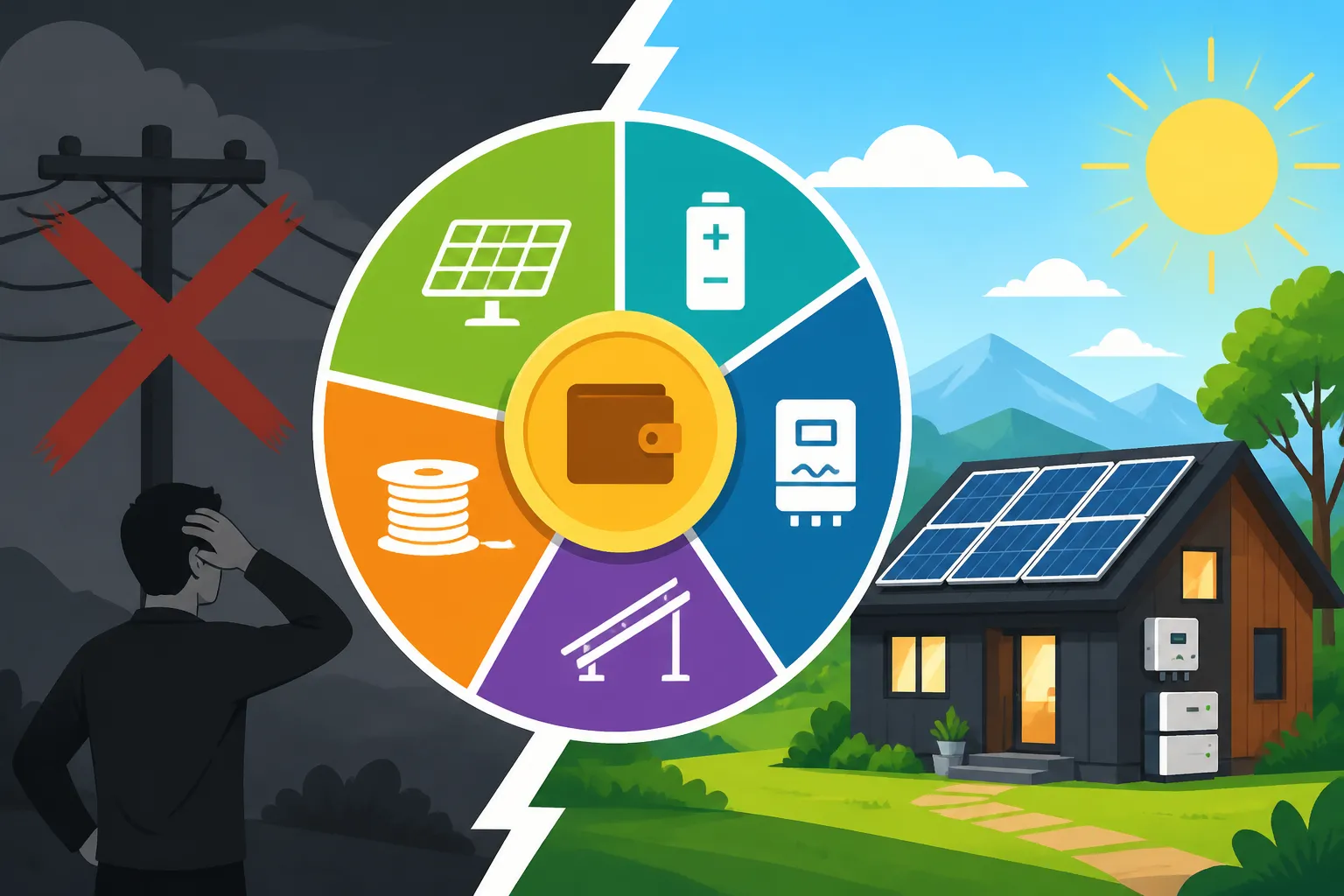
The dream of casting off the shackles of monthly utility bills and living truly self-sufficiently is a powerful one, but for many, it quickly bumps up against the daunting question: "What's this going to actually cost me?" It's easy to feel overwhelmed by all the components and variables involved. This guide is here to unravel the total financial picture of embracing off-grid independence, breaking down the obvious and not-so-obvious expenses you’ll encounter on your journey.
Understanding the Core Components of an Off-Grid System
When you decide to go off-grid, you're essentially building your own miniature power company. And just like any utility, it has its main infrastructure pieces. These are the big-ticket items everyone thinks about, but understanding their cost spectrum is crucial.
Solar Panels: The Energy Harvesters
Solar panels are where the magic begins, converting sunlight into electricity. The cost here varies significantly based on wattage, brand, and type. You could be looking at anywhere from $0.80 to $2.00 per watt. For a basic setup for, say, a small cabin or RV, you might need a 400W to 1000W array, costing a few hundred to a couple of thousand dollars. However, for a full-sized home, you could easily require 3,000W to 10,000W or more, pushing panel costs into the several thousand dollar range.
High-efficiency monocrystalline panels typically cost more per watt but perform better in low light conditions and take up less space. Polycrystalline panels are usually more budget-friendly but slightly less efficient. The amount you need directly impacts your overall budget, and it's a good idea to research How Many Solar Panels for Off-Grid Living for your specific energy needs. Remember, the goal is not just to generate power, but to generate enough power, especially during shorter winter days or prolonged cloudy spells.
Batteries: The Heart of Your Storage
This is often the most expensive single component in an off-grid system, and for good reason—batteries are what allow you to use power when the sun isn't shining. You've got a few main options, each with its own price tag and longevity.
Lead-acid batteries, like flooded lead-acid (FLA) or sealed absorbed glass mat (AGM), are generally the cheapest upfront. A typical 100Ah 12V AGM battery might cost $200-$400. However, they have a shorter lifespan (2-5 years), require more maintenance (FLA needs watering), and can only be discharged to about 50% without significantly shortening their life. This means you need more capacity to get the same usable energy as a lithium-ion battery.
Lithium iron phosphate (LiFePO4) batteries are the gold standard for off-grid. While they have a higher upfront cost – a 100Ah 12V LiFePO4 battery can run $600-$1000 or more – their benefits often outweigh it. They boast a much longer lifespan (10+ years), can be discharged to 80-100% depth, and are virtually maintenance-free. Over the system's lifetime, LiFePO4 often proves to be the more economical choice despite the initial sticker shock. Exploring LiFePO4 vs Lead-Acid Battery Cost will give you a deeper dive into this comparison. The total cost for your battery bank will heavily depend on how many days of autonomy you want, meaning how long your system can run without sun before needing a recharge.
Inverters and Charge Controllers: The Brains of the Operation
These two components are essential for managing the power flow. The charge controller regulates the voltage and current from your solar panels to your batteries, preventing overcharging and optimizing efficiency. MPPT (Maximum Power Point Tracking) charge controllers are more efficient, especially in varying light conditions, and generally cost more than PWM (Pulse Width Modulation) controllers. An MPPT controller can range from $100 for a small 20A unit to $1000+ for larger 60A or 80A models suitable for substantial arrays.
The inverter converts the DC (direct current) power from your batteries into AC (alternating current) power, which is what most of your household appliances use. Inverters vary greatly in wattage capacity and waveform. Pure sine wave inverters are crucial for sensitive electronics and are more expensive than modified sine wave inverters, which should generally be avoided for modern devices. A good quality pure sine wave inverter can cost anywhere from $300 for a small 1500W unit to $3000+ for a powerful 6000W (or more) inverter charger that also integrates a battery charger and sometimes a transfer switch. Sizing your inverter correctly for your peak load, including surge power for motors, is vital. You can learn more about this by checking out How to Size an Off-Grid Inverter.
Beyond the Main Equipment: Hidden and Ancillary Costs
It’s easy to focus on the big four: panels, batteries, inverter, and charge controller. But many people get blindsided by the costs that pop up once they start putting it all together. These "hidden" costs can easily add another 10-30% to your total budget.
Wiring, Fuses, Breakers, and Mounting Hardware
You can't just slap panels on a roof and call it a day! You'll need appropriate gauge wiring for both your DC and AC circuits, carefully chosen for length and current to prevent voltage drop and ensure safety. This isn't cheap, especially if you have a larger system with long cable runs. Think about all the specialized cables like MC4 connectors for panels, battery cables for your bank, and AC wire for connecting to your inverter and main panel.
Then there are the fuses and breakers – critical safety devices to protect your system from shorts and overloads. A DC breaker box, AC subpanel, various fuses, and disconnect switches add up. Finally, you need robust mounting hardware for your panels, whether it’s roof mounts, ground mounts, or pole mounts. These can include rails, clamps, flashing, and specialized feet. For a typical residential setup, these miscellaneous electrical and mounting components can easily run you $500 to $2,000 or more, depending on the scale and complexity. For smaller, portable systems, you might find simplified wiring and components often included in off-grid solar kits.
Permits, Inspections, and Installation Labor
This is a big one that many DIYers overlook or underestimate. While it feels "off-grid," most localities still require permits and inspections for permanent electrical installations, even if you’re not connected to the utility grid. These processes ensure your system is safe and up to code. Permit fees can range from a few dozen dollars to several hundred, depending on your county or municipality. Not getting proper permits can lead to fines, difficulties with insurance, or even forced removal of your system. It's wise to check Off-Grid Solar Permits and Codes for your area.
If you decide to hire professionals for installation, brace yourself for labor costs. While a DIY approach saves money upfront, it demands significant time, research, and a comfort level with electrical work. If you're not confident in your abilities, hiring a qualified electrician or solar installer is money well spent for safety and peace of mind. Professional installation for a whole-home off-grid system could add anywhere from $5,000 to $15,000 or even more to your total cost, depending on system size and complexity. For smaller projects like a shed or RV, the labor cost might be significantly less, or you might opt for a DIY approach. It's a trade-off that many ponder: DIY vs Professional Off-Grid Solar Cost.
Tools, Testing Equipment, and Generator Backup
Even if you go the DIY route, you’ll need a collection of tools you might not already own. Think multimeters, wire strippers, crimpers, specialized wrenches, conduit benders, and safety gear. This could be a few hundred dollars right there. Testing equipment, like a battery monitor, is also a crucial investment for understanding your system's health and usage, often costing $100-$300.
Many off-grid setups also incorporate a backup generator. This is a crucial safety net for extended cloudy periods or unexpected high energy demands, especially if you live in a climate with long winters. A good quality gasoline, propane, or diesel generator can cost anywhere from $500 for a small portable unit to $5,000+ for a larger, automatic standby model. Plus, you’ll need to factor in the ongoing cost of fuel, which can add up quickly. Even a reliable portable power station like a Jackery Explorer can serve as a small-scale backup for critical electronics and can be found on Amazon.
Tailoring Your System: Factors Influencing Total Cost
The "total cost of off-grid independence" isn't a fixed number you can just pluck from a list. It's a highly personal figure, shaped by your unique needs, location, and lifestyle choices.
Your Lifestyle and Energy Consumption
This is arguably the most significant driver of your total cost. Are you planning to power a tiny cabin for weekend getaways, a full-time RV setup, or a large family homestead with all the modern conveniences? Each scenario has drastically different energy demands. Running a few lights, charging phones, and a small mini-fridge requires a much smaller, less expensive system than powering a well pump, washing machine, electric dryer, and central air conditioning.
To accurately estimate your costs, you need to conduct a thorough load analysis. This means listing every appliance you plan to use, its wattage, and how many hours per day it will run. This will give you your daily watt-hour consumption, which is the cornerstone for sizing your entire system, from panels to battery bank. You'd be surprised how much energy things like hair dryers or coffee makers draw for a short burst! Understanding How to Calculate Daily Energy Usage is your first step to a realistic budget.
Geographic Location and Climate
Where you live dramatically impacts the size and thus the cost of your off-grid system. Areas with abundant sunshine year-round, like Arizona or Southern California, will require fewer panels to meet the same energy demand compared to perpetually cloudy regions like the Pacific Northwest or areas with harsh winters in places like upstate New York or Colorado. Winter months, with their shorter daylight hours and lower sun angles, are often the "worst-case scenario" for off-grid solar. You need to size your system to handle these lean times, which often means installing more panels and battery capacity than you might think you need for the summer.
Cold climates also introduce additional considerations. While solar panels perform better in cold temperatures (as long as there's sun), batteries do not. Lead-acid batteries lose capacity in the cold, and LiFePO4 batteries require careful charging above freezing temperatures, often needing heated battery boxes or internal heaters, which adds to the cost. Designing your system to account for How Winter Affects Off-Grid Sizing is paramount for year-round reliability.
Desired Days of Autonomy and Reliability
How many days do you want your system to be able to run without any sun input? This is your "days of autonomy," and it directly dictates the size and cost of your battery bank. If you live somewhere with predictable weather and only need a day or two of backup, your battery costs will be lower. If you need several days of autonomy to weather storms, extended cloudy periods, or just for peace of mind, your battery bank will be significantly larger and more expensive. For example, someone in a hurricane-prone area of Florida might opt for a much larger battery bank than someone in sunny New Mexico.
Similarly, your desire for reliability affects cost. Do you want a bare-bones system that occasionally requires careful energy rationing, or a robust, oversized system with redundant components and a powerful generator backup that offers grid-like comfort? The more reliability and comfort you seek, the more robust (and expensive) your system will need to be. This is a core discussion point when looking at How to Design for 100% Off-Grid Reliability.
| Component | Small System (e.g., RV, Small Cabin) | Medium System (e.g., Tiny Home, Larger Cabin) | Large System (e.g., Full-Size Home) |
|---|---|---|---|
| Solar Panels | 400-1000W ($300 – $1,500) | 1000-3000W ($800 – $4,500) | 3000-10000W+ ($2,400 – $20,000+) |
| Batteries (LiFePO4) | 100-200Ah 12V ($600 – $1,600) | 200-800Ah 12V/24V ($1,200 – $6,400) | 400-1000Ah+ 48V ($3,000 – $15,000+) |
| Charge Controller | 20-40A MPPT ($100 – $300) | 40-60A MPPT ($300 – $800) | 60-100A+ MPPT ($500 – $2,000+) |
| Inverter | 1000-2000W Pure Sine ($300 – $700) | 2000-4000W Pure Sine ($700 – $2,000) | 5000-8000W+ Inverter/Charger ($2,000 – $7,000+) |
| Wiring & Hardware | ($100 – $400) | ($400 – $1,000) | ($1,000 – $3,000) |
| Generator Backup | ($500 – $1,500) | ($1,000 – $3,000) | ($2,000 – $8,000+) |
| Installation (DIY vs Pro) | DIY: Low, Pro: ($500 – $2,000) | DIY: Moderate, Pro: ($2,000 – $8,000) | DIY: High, Pro: ($5,000 – $15,000+) |
| Estimated Total Range | $1,900 – $7,000 | $6,400 – $25,700 | $14,900 – $63,000+ |
Note: These are rough estimates and can fluctuate significantly based on brand, specific component choices, location, and market conditions.
Long-Term Financial Outlook: Ongoing Costs and Potential Savings
Going off-grid isn't just a one-time purchase; it's a long-term commitment. Thinking about the ongoing costs and the savings you'll realize is crucial for a complete understanding of true independence.
Maintenance and Component Replacement
While off-grid solar systems are relatively low-maintenance, they aren't entirely set-it-and-forget-it. Solar panels need occasional cleaning, especially if you live in a dusty area or have significant bird activity. Connectors and wiring should be inspected periodically for wear or damage. This usually involves minimal cost, perhaps just your time and some cleaning supplies.
The biggest long-term replacement cost will almost certainly be your batteries. Even with robust LiFePO4 batteries, they have a finite number of charge cycles. While they can last 10-15 years, you will eventually need to replace them. This can be a substantial expense, potentially costing thousands of dollars for a whole-home system. Planning for Off-Grid Solar Battery Replacement Cost Over Time is an important part of your long-term budget. Other components like inverters or charge controllers have longer lifespans (typically 10-15+ years), but they too may eventually need replacement or repair.
Fuel for Backup Generators
If you've opted for a fossil fuel generator as a backup, you must factor in the ongoing cost of fuel. Gasoline, propane, or diesel prices fluctuate, and even if you only use your generator occasionally, those costs can add up, especially during prolonged outages or consistently low solar production periods. This is a direct recurring expense that you wouldn't have with a purely solar-battery system. It's often compared to Off-Grid Solar vs Generator Fuel Cost when evaluating long-term expenses.
The Value of Energy Independence and Grid Avoidance
This is where the financial benefits truly shine. Once your off-grid system is up and running, you eliminate your monthly electricity bill from a utility company. For many, this is the primary motivator. Depending on your previous grid-tied consumption, these savings can be substantial over the years, often amounting to hundreds or even thousands of dollars annually. When you consider the ever-increasing cost of grid electricity, these savings become even more pronounced.
Beyond direct financial savings, there's the invaluable benefit of energy security. You're no longer subject to grid outages, fluctuating utility rates, or the whims of distant power companies. This resilience and peace of mind have a real, if unquantifiable, value. For remote properties, the cost of extending utility lines can be astronomical, sometimes tens of thousands of dollars per mile. In such cases, the Off-Grid Solar Cost vs Utility Extension Cost often makes off-grid solar the cheaper upfront option, not just the independent one. The return on investment for an off-grid system isn't just about dollars and cents; it's about freedom and reliability.
Disclaimer
Please remember that the information provided here is for general guidance only and should not be considered professional financial or engineering advice. The costs and requirements for an off-grid solar system vary dramatically based on individual circumstances, location, energy needs, and market fluctuations. Always consult with qualified professionals before making significant decisions about your off-grid solar setup.