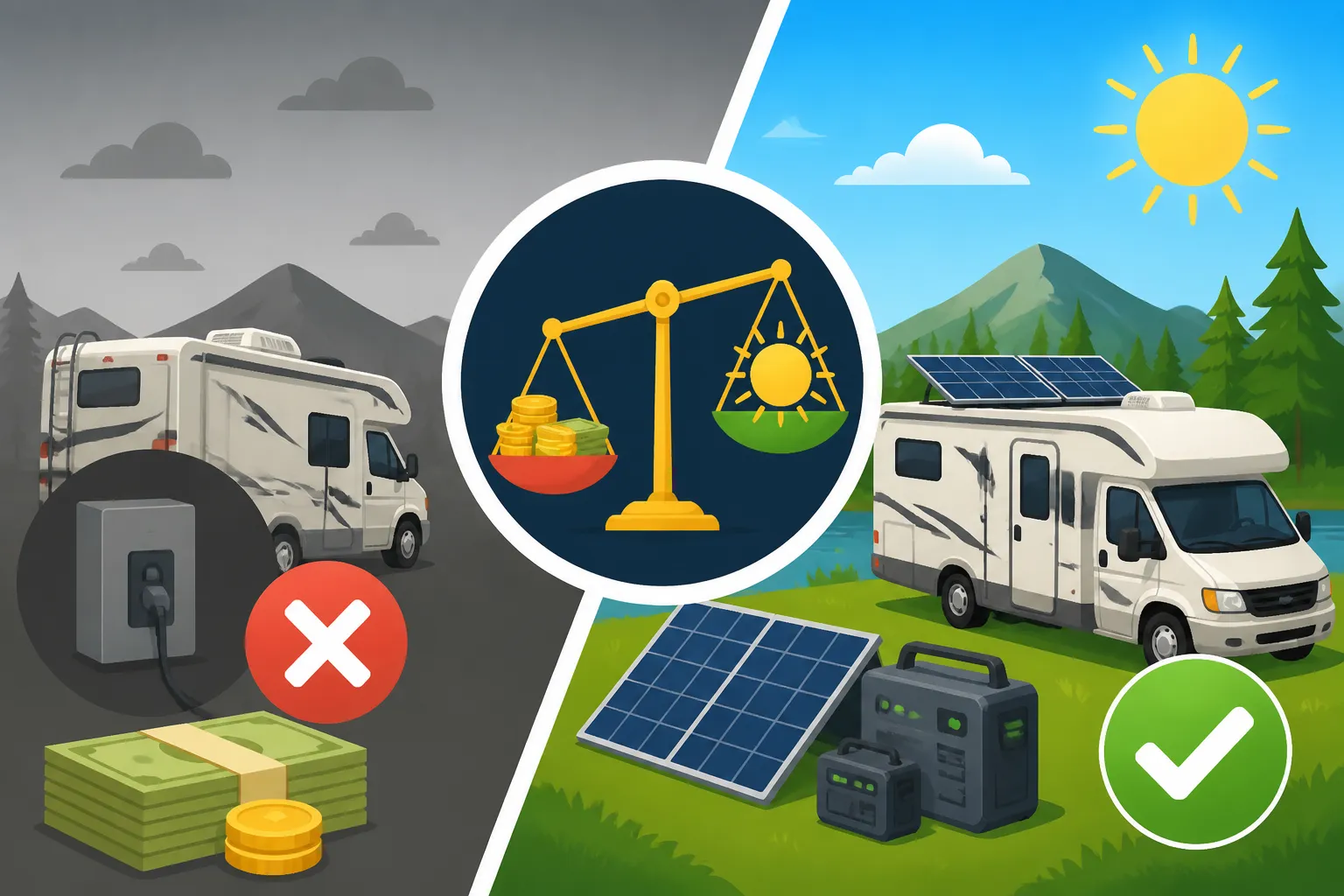
Is Off-Grid Solar Cost-Effective for a Rv
Oh, the dream of hitting the open road in your RV, unconstrained by campground hookups, venturing deep into nature without a care in the world! But then reality sets in: how on earth do you power everything? The idea of off-grid solar for your RV sounds amazing, but a nagging question often remains: is it truly cost-effective, or just a costly pipe dream? This guide is going to meticulously break down the real costs and tangible benefits, helping you understand if off-grid solar for your recreational vehicle makes financial sense for your adventure style.
The Allure of Off-Grid RV Living and Its Hidden Costs
There's a special kind of freedom that comes with knowing you're not tethered to an electrical pedestal. For many RV enthusiasts, the thought of parking wherever their heart desires, waking up to natural sounds instead of campground chatter, and truly escaping the daily grind is the ultimate goal. Off-grid solar promises this liberation, but it's important to approach it with eyes wide open to both the dream and the dollars involved.
Why RVers Dream of Going Off-Grid
Let's face it, the main draw of an RV is the freedom it represents. You want to explore national parks, find secluded spots by a lake, or even just avoid crowded RV parks that feel more like packed parking lots. Relying on shore power means you're limited to places with hookups, which often come with nightly fees that can really add up over time. Imagine pulling into a stunning, remote boondocking spot in Arizona, surrounded by saguaros and silence, knowing your lights, fridge, and even your coffee maker are all running smoothly thanks to the sun. That's the dream!
Beyond avoiding those sometimes hefty campground electrical fees, there's a strong desire for self-sufficiency. Being able to generate your own power means less worry about power outages, less reliance on noisy, fuel-guzzling generators, and a smaller environmental footprint. For many, it's about embracing a more sustainable and independent lifestyle on wheels. The appeal of being truly self-contained, with enough power to last for days or weeks in remote locations, is a powerful motivator for looking into solar.
The Initial Sticker Shock of Solar Components
Now, let's talk brass tacks: the upfront investment. This is often where the dream of off-grid RV solar bumps into the reality of a budget. Outfitting an RV with a robust solar system isn't like buying a new set of tires; it involves a significant initial outlay. You're looking at panels, batteries, an inverter, a charge controller, and a host of wiring and mounting hardware. For someone new to solar, these components and their associated costs can feel overwhelming, leading to the immediate question of whether it will ever pay for itself.
A basic setup, perhaps just enough to keep your phone charged and run a few LED lights, might start in the low hundreds of dollars. However, if you're aiming to power more substantial appliances like a microwave, an air conditioner, or even a robust refrigerator, the price tag quickly jumps into the thousands, often ranging from $2,000 to $10,000 or more for a comprehensive system. This initial investment is the biggest hurdle for many RV owners, and it's why understanding the long-term cost-effectiveness is so crucial. Don't let that initial number scare you away entirely, though; let's dig into what you're actually paying for.
Breaking Down the Costs: What Goes Into an RV Off-Grid Solar System?
To truly assess if off-grid solar is cost-effective for an RV, we need to peel back the layers and understand the major components and their individual contributions to the overall expense. It's not just one big lump sum; it's a collection of critical pieces working together to create your mobile power plant. Thinking about these elements individually helps you budget and prioritize.
Solar Panels: Your Energy Harvesters
The solar panels themselves are what capture the sun's energy, converting it into usable electricity. When it comes to RVs, you typically see two main types: rigid panels and flexible panels. Rigid panels, often made with monocrystalline cells, are the most efficient and durable, but they require a fixed mounting solution on your RV roof. Flexible panels, on the other hand, are lighter, can conform to curved surfaces, and are easier to install, but they often come with a slightly higher cost per watt and can degrade faster, especially if exposed to extreme heat directly on a roof.
The wattage of your panels will directly impact their cost, with most RV setups ranging from 200 watts to over 1000 watts, depending on your power needs. For instance, if you just want to keep your lights and laptop running, a few 100W panels might suffice. But if you're dreaming of running an air conditioner, you'll need a much larger array, potentially 600W to 1000W or more, which naturally drives up the Cost of Off-Grid Solar Panels. Portable solar panels, sometimes offered by brands like Jackery as part of their portable power stations, can also supplement your roof-mounted array or serve as a standalone solution for smaller needs, offering flexibility if you park in the shade but want to keep panels in the sun.
Batteries: The Heart of Your Off-Grid System
Without batteries, your solar system would only work when the sun is shining, which isn't very practical for continuous RV living. The battery bank stores the energy captured by your panels for use at night or on cloudy days. This is often the single most expensive component of an off-grid solar system for an RV, but also one of the most critical for consistent power.
When it comes to Off-Grid Solar Batteries, you'll primarily be looking at two technologies: lead-acid (specifically AGM or sealed lead-acid) and lithium iron phosphate (LiFePO4). Lead-acid batteries have a lower upfront cost, making them attractive for budget-conscious RVers. However, they are heavier, have a shorter lifespan (typically 2-5 years), and you can only safely discharge about 50% of their capacity without significantly shortening their life. LiFePO4 batteries, while having a higher initial price tag, offer a significantly longer lifespan (10-15+ years), are much lighter, can be discharged to 80-100% of their capacity, and perform better in various temperatures (though cold charging requires specific considerations). For many serious RVers, the long-term value and performance of LiFePO4 often outweigh the initial cost, making them surprisingly more cost-effective over the system's lifetime. Understanding the LiFePO4 vs Lead-Acid Battery Cost is paramount in your decision-making.
Inverters and Charge Controllers: The Brains of the Operation
These two components act as the intelligent managers of your solar power. The charge controller sits between your solar panels and your batteries, regulating the voltage and current coming from the panels to prevent overcharging and maximize battery life. MPPT (Maximum Power Point Tracking) charge controllers are generally more efficient, especially in varying light conditions, making them a popular choice for RV systems, though they cost more than simpler PWM (Pulse Width Modulation) controllers.
The inverter converts the DC (direct current) power stored in your batteries into AC (alternating current) power, which is what most of your household-style appliances in the RV use (like your microwave, TV, or standard outlets). For any sensitive electronics, you'll want a pure sine wave inverter, which provides clean, stable power, though these are more expensive than modified sine wave inverters. The size of your inverter, measured in watts, needs to match your peak power demands; if you plan to run an air conditioner, you'll need a much larger and more expensive inverter than if you're just charging a laptop and running lights. For a deep dive into matching components, you might want to read our guide on How to Size an Off-Grid Inverter.
Wiring, Mounting, and Installation
It's easy to overlook the smaller, yet essential, components that add up to the overall Off-Grid Solar Installation Cost. This includes the heavy-gauge wiring needed for safety and efficiency, fuses and circuit breakers to protect your system from electrical faults, and the mounting hardware to securely attach your panels to your RV's roof. These aren't just minor incidentals; they are critical for a safe, reliable, and compliant system.
Furthermore, you have to consider the labor. Are you going to tackle this as a DIY project, or will you hire a professional? Going the DIY route can save you thousands of dollars in labor costs, but it requires a solid understanding of electrical systems, safety protocols, and a significant time commitment. Many RVers, however, feel confident enough to install components purchased from online retailers like Amazon, as long as they do their research. If you're not comfortable with electrical work, hiring a certified RV solar installer or electrician is a wise investment, but it will certainly add to the total cost. Consider the trade-offs discussed in DIY vs Professional Off-Grid Solar Cost to make an informed decision.
The Long-Term Savings and Value of Off-Grid RV Solar
While the initial investment in an off-grid RV solar system can seem substantial, its cost-effectiveness truly shines when you consider the long-term savings and added value it brings to your RV lifestyle. It's not just about what you spend today, but what you don't spend tomorrow, and the enhanced experiences you gain.
Eliminating Shore Power Fees
This is one of the most direct and easily quantifiable savings. Many RV parks and campgrounds charge extra for electrical hookups, often ranging from an additional $10 to $30 per night, sometimes even more for 50-amp service in popular destinations. If you're a frequent traveler or a full-time RVer who stays at campgrounds for weeks at a time, these fees can quickly accumulate into hundreds or even thousands of dollars annually. With a properly sized off-grid solar system, you can effectively eliminate these charges.
Imagine a two-week trip where you would typically spend $20 per night on electricity alone. That's $280 saved on just one trip. Over several trips a year, or for a full-timer, these savings compound rapidly. The more you boondock and rely on your own solar power, the faster your system's initial investment will pay for itself. This shift from recurring utility payments to a one-time investment is a core part of its financial appeal for many.
The Cost of Fuel for Generators
For many RVers without solar, the alternative to shore power is a portable gasoline or propane generator. While generators offer a reliable source of power, they come with their own set of ongoing costs and inconveniences. Fuel isn't cheap, and if you're running a generator for several hours a day, those fuel costs can add up significantly. A typical 2000-watt inverter generator might consume around a gallon of gasoline every 4-8 hours, depending on the load. Over extended periods, this can easily equate to hundreds of dollars in fuel costs alone each season.
Beyond fuel, generators require regular maintenance—oil changes, spark plug replacements, air filter cleaning—which also adds to the operational expense. And let's not forget the noise and fumes! Solar offers a silent, emission-free power source that requires minimal maintenance (mostly just keeping panels clean). When you compare the Off-Grid Solar vs Generator Fuel Cost, solar often comes out ahead in the long run, especially if you plan to spend a lot of time away from established campgrounds.
Increased RV Resale Value and Lifestyle Benefits
An RV equipped with a well-designed and professionally installed off-grid solar system is a significant selling point in the used RV market. It immediately appeals to buyers looking for greater independence, lower operating costs, and the ability to explore more remote locations. While it's hard to put an exact number on the increased resale value, it's safe to say that a robust solar setup can make your RV stand out and potentially command a higher price, recouping some of your initial investment.
Beyond the financial aspects, the lifestyle benefits are immeasurable for many. The freedom to stay longer in breathtaking, undeveloped areas without worrying about power is priceless. Imagine camping by the ocean or deep in a forest, enjoying the peace and quiet without the hum of a generator or the worry of draining your batteries. This enhanced quality of life, greater flexibility in travel plans, and reduced environmental impact are significant, if intangible, returns on your investment. It truly changes the way you experience RV travel.
Is It "Worth It"? Defining Cost-Effectiveness for You
Ultimately, whether off-grid solar is "cost-effective" for your RV isn't a universal yes or no answer. It's deeply personal and depends heavily on your specific RVing habits, your power demands, and your willingness to invest upfront for long-term gains. It's about finding the sweet spot where the investment in convenience, freedom, and savings aligns with your personal values and budget.
Usage Patterns: Full-Time Boondocker vs. Weekend Warrior
Your RV usage patterns are arguably the most significant factor in determining solar's cost-effectiveness. If you're a full-time RVer who spends a substantial amount of time boondocking or dry camping—meaning you're frequently parked without electrical hookups—then an off-grid solar system will almost certainly prove to be incredibly cost-effective. You'll maximize your savings on campground fees and generator fuel, and the system will be generating power for you day in and day out. The system's Off-Grid Solar Payback Period Explained will be much shorter for someone who consistently relies on it.
On the flip side, if you're a "weekend warrior" who primarily stays at RV parks with full hookups, or only takes a few short trips a year, the return on investment will be much slower. While you'll still enjoy the benefits of independence and peace of mind, it will take considerably longer to recoup the initial cost through savings. For these users, a smaller, simpler solar setup (perhaps just a portable solar generator like a Jackery for occasional use) might be more "cost-effective" than a large, permanently installed system.
Your Power Needs: Basic Lights vs. AC and Microwave
Your daily energy consumption is another critical variable. A basic off-grid solar system designed to power essential 12V lights, charge your phone and laptop, and run a small RV refrigerator will be far less expensive to install than a system capable of running high-draw 120V appliances like an air conditioner, microwave, or electric water heater. Naturally, the Cost to Run An Air Conditioner on Off-Grid Solar is significantly higher than just keeping your lights on.
If your power needs are minimal and you're comfortable conserving energy, you can achieve off-grid capability with a relatively modest investment. However, if your idea of RV living includes all the comforts of home, your system will require more solar panels, a larger and more robust battery bank, and a higher-capacity inverter, all of which substantially increase the upfront cost. It's crucial to perform a thorough How to Calculate Off-Grid Solar Needs to understand what size system you truly require and then balance that against your budget.
DIY vs. Professional Installation
The installation method plays a huge role in the overall cost-effectiveness. If you have the skills, tools, and confidence to tackle a DIY installation, you can save a significant amount on labor costs, potentially reducing your total investment by 30-50%. Many RVers successfully install their own systems, often sourcing components from reputable online suppliers. However, if you're not comfortable with electrical wiring, working on an RV roof, or interpreting wiring diagrams, hiring a professional is a safer and often more reliable option, but it will increase your overall expenditure. The question of How Much Cheaper Is DIY Off-Grid Solar boils down to your personal expertise and willingness to learn.
To summarize, for RVers who spend a lot of time off-grid, seek true independence, and have moderate to high power needs, off-grid solar is highly cost-effective over the long term, paying for itself through savings and enhanced lifestyle. For occasional users with minimal needs, a smaller, more portable setup might be a better financial fit.
Here's a quick comparison of battery types often considered for RV solar, highlighting their impact on cost-effectiveness:
| Feature | Lead-Acid (AGM) Batteries | Lithium Iron Phosphate (LiFePO4) Batteries |
|---|---|---|
| Upfront Cost | Lower | Higher |
| Lifespan (Cycles) | 300-1000 cycles (2-5 years) | 3000-5000+ cycles (10-15+ years) |
| Usable Capacity | ~50% (to preserve lifespan) | 80-100% |
| Weight | Heavy | Much Lighter (approx. 1/3 the weight of AGM) |
| Maintenance | Some (e.g., checking terminals, charging) | Little to none |
| Charging Speed | Slower, less efficient charge acceptance | Very fast, highly efficient charge acceptance |
| Performance | Voltage sags under load, less cold tolerant | Consistent voltage, better cold tolerance (with BMS) |
| Overall Value | Good for budget, shorter-term use | Excellent long-term value, higher performance |
As you can see, while the initial Cost of an Off-Grid Solar Battery Bank for LiFePO4 is higher, its superior lifespan and performance often make it the more cost-effective choice over the entire life of your RV solar system. This is a critical point when you're looking to How to Budget for an Off-Grid Solar System.
So, is off-grid solar cost-effective for an RV? Yes, for the right RVer, it absolutely is. It provides freedom, substantial long-term savings, and enhances the overall RV experience in ways that paying for hookups or running a generator simply cannot. Just make sure to consider your specific needs and usage before diving in, and remember that resources like our comprehensive guide on How to Size an Off-Grid System for a Rv are always here to help.
Disclaimer
Please note that this guide provides general information and recommendations. Individual results and costs may vary based on specific equipment choices, installation methods, geographic location, and energy consumption habits. Always consult with qualified professionals for specific system design, installation, and safety considerations.