Off-Grid Solar Cost for a Tiny Home
Thinking about going off-grid with your tiny home but feeling completely overwhelmed by the potential costs? You're definitely not alone. It's tough to figure out what you really need without breaking the bank or ending up with a system that falls short. This comprehensive guide is here to demystify the expenses involved in powering a tiny home with solar, breaking down everything from essential components to installation considerations, so you can plan your budget with confidence and clarity.
Understanding the Unique Energy Needs of a Tiny Home
When you're talking about off-grid solar, tiny homes are a breed apart. They aren't traditional houses, nor are they as simple as an RV. Their specific characteristics mean a tailored approach to energy planning is crucial.
Why Tiny Homes Are Different
Tiny homes occupy a fascinating space between mobile living and permanent residence. Unlike an RV, which often has compact, low-power appliances and is designed for transient use, a tiny home might aim for a more permanent, comfortable lifestyle. This often means running things like a standard-sized refrigerator, a washing machine, or even a mini-split air conditioner – appliances that demand considerably more power than their RV counterparts. However, they're typically much smaller than a conventional house, meaning the overall energy footprint is still significantly reduced. This unique position requires a careful balance when designing an off-grid solar system; you need more robustness than a basic camper setup, but less sheer capacity than a full-sized house. It's about optimizing every watt.
The typical footprint of a tiny home, often ranging from 100 to 400 square feet, means you have limited roof space for solar panels, which is a major consideration. You might need to look into ground mounts or creative mounting solutions to get enough solar array to meet your needs. Additionally, the desire for self-sufficiency in a tiny home often means relying solely on solar, without the grid as a backup, making the sizing and reliability of your system even more critical.
Calculating Your Daily Energy Consumption
This is the absolute first, non-negotiable step in figuring out your off-grid solar cost. Without an accurate understanding of your daily energy usage, you're essentially guessing, and that can lead to either an undersized system that leaves you in the dark or an oversized one that costs you a fortune unnecessarily. Start by listing every single electrical appliance you plan to use in your tiny home. Don't forget the small things like phone chargers, LED lights, and even your coffee maker. For each item, note its wattage (usually found on a label) and estimate how many hours per day you'll use it.
Multiply the wattage by the hours of use to get your watt-hours per day for each appliance. For example, a 100-watt laptop used for 4 hours a day consumes 400 watt-hours. A 1200-watt microwave used for 10 minutes (0.17 hours) consumes 204 watt-hours. Add all these up, and you'll get your total estimated daily watt-hours. This number is your baseline. Remember, larger appliances like refrigerators (which cycle on and off) and heating/cooling units will be your biggest energy hogs, so pay close attention to their specific consumption patterns. You can find more details on how to calculate your daily energy usage in our extensive guide.
Seasonal Considerations for Tiny Home Power
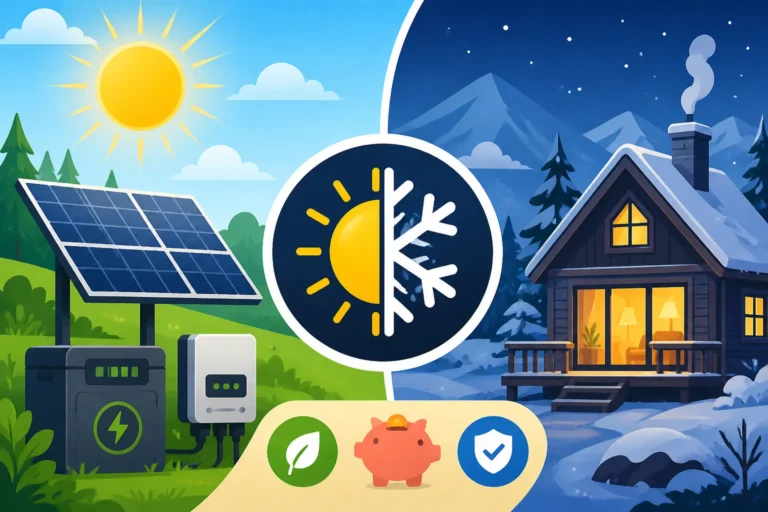
One crucial aspect many tiny home dwellers overlook in their initial planning is how significantly seasons impact energy needs and solar production. Your daily energy consumption might spike in winter if you rely on electric heaters or in summer for air conditioning, even if they're energy-efficient models like mini-splits. Simultaneously, solar panel output plummets in winter due to shorter daylight hours, lower sun angles, and often more cloudy days. This creates a challenging dynamic where demand is high, but supply is low.
To combat this, you'll need to account for what's known as "days of autonomy" – how many days your battery bank can power your home without any new solar input. For year-round living in a tiny home, especially in regions with distinct seasons, you might need to oversize your battery bank and solar array to handle those darker, colder periods. For instance, someone living in upstate New York will need a much more robust system to handle winter than someone in sunny Arizona, even for the same size tiny home. This often means increasing the number of solar panels or upgrading to higher-capacity batteries, directly affecting your overall Off-Grid Solar Cost by System Size.
Breakdown of Core Off-Grid Solar Components and Their Costs
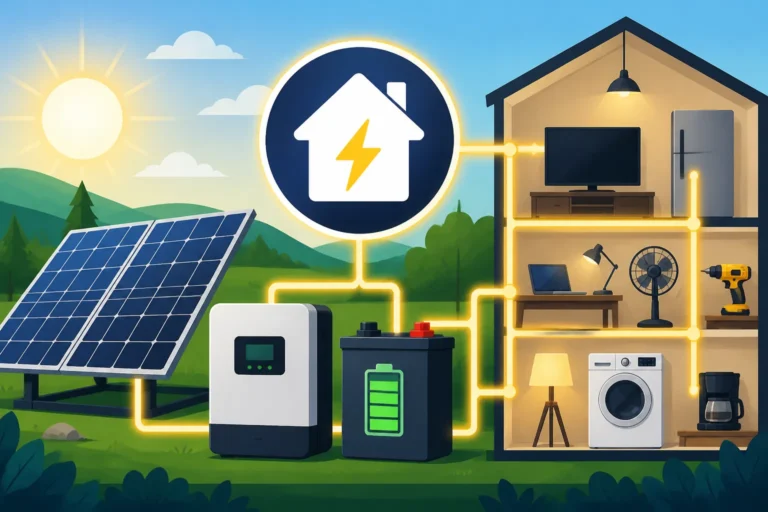
An off-grid solar system isn't just panels; it's a symphony of components working together. Understanding each piece and its cost is vital for budgeting.
Solar Panels: The Power Harvesters
The solar panels are what everyone thinks of first – those gleaming rectangles turning sunlight into electricity. Their cost is primarily determined by their wattage and efficiency. For a tiny home, you'll typically be looking at panels ranging from 100 watts up to 400 watts or more each. The higher the wattage, generally the more expensive the individual panel, but you might need fewer panels overall to hit your target power production, which can save on mounting and wiring costs. Monocrystalline panels are the most common choice today, offering good efficiency in a compact form factor, which is ideal when roof space is at a premium on a tiny home.
On average, solar panels for an off-grid system can cost anywhere from $0.70 to $1.50 per watt. So, if you need 1000 watts of solar capacity, you might be looking at $700 to $1,500 just for the panels. Prices have come down significantly over the years, making solar more accessible than ever. Brands like Renogy and Rich Solar offer reliable panels that are popular for tiny home and RV applications, often found on platforms like Amazon. When considering the Cost of Off-Grid Solar Panels, remember that it's an investment that will pay dividends in energy independence.
Batteries: The Heart of Your System
If solar panels are the muscles, batteries are the heart of your off-grid tiny home system, storing the energy gathered by your panels for use when the sun isn't shining. This is often the single most expensive component of an off-grid system, and for good reason – reliability and capacity are paramount. You have a few main types to choose from:
- Lead-Acid Batteries (Flooded, AGM, Gel): These are the traditional workhorses and are often the cheapest upfront. Flooded lead-acid batteries require maintenance (checking water levels), while AGM (Absorbed Glass Mat) and Gel batteries are sealed and maintenance-free. They are heavy, have a shorter lifespan (typically 2-5 years for deep cycle use), and can only be discharged to about 50% of their capacity without significantly reducing their lifespan. A small lead-acid bank for a tiny home might run from $500 to $2,000.
- Lithium Iron Phosphate (LiFePO4) Batteries: These are the gold standard for off-grid living, especially for tiny homes. While they have a higher upfront cost (often 2-4 times more than lead-acid), their benefits are enormous. They are much lighter, last significantly longer (10+ years, 3000-5000+ cycles), can be discharged to 80-100% of their capacity, and perform better in various temperatures. For a tiny home looking for long-term reliability and minimal maintenance, LiFePO4 batteries are often the better value in the long run, even if the initial investment for a suitable bank is $2,000 to $8,000 or more. Our guide on LiFePO4 vs Lead-Acid Battery Cost delves deeper into this comparison.
The overall cost of an off-grid solar battery bank will largely depend on your desired storage capacity, determined by your daily energy usage and your required days of autonomy. For many tiny homes, a battery bank providing 5-10 kWh of usable energy could range from $3,000 to $10,000 or more, depending on the chemistry and brand. Brands like Battle Born and EG4 are highly regarded in the LiFePO4 space. You can learn more in our detailed article on How Many Batteries for an Off-Grid System.
Inverters and Charge Controllers: The Brains of the Operation
These two components are absolutely critical for managing the flow of electricity in your off-grid system, converting and regulating power to make it usable for your appliances.
The Charge Controller: Protecting Your Batteries
The charge controller is the intermediary between your solar panels and your battery bank. Its main job is to regulate the voltage and current coming from the solar panels to prevent overcharging your batteries, which can severely damage them. There are two main types:
- PWM (Pulse Width Modulation) Controllers: These are simpler, less efficient, and generally cheaper. They effectively "clip" the voltage from the panels to match the battery voltage, meaning you lose some potential power, especially in colder weather. They are suitable for smaller, less critical systems.
- MPPT (Maximum Power Point Tracking) Controllers: These are more sophisticated and significantly more efficient, especially for larger systems and in varying weather conditions. An MPPT controller can optimize the power output from your panels, converting excess voltage into additional current to charge your batteries faster and more efficiently. For a tiny home with significant power needs, an MPPT controller is almost always recommended despite its higher cost.
A charge controller can range from $50 for a small PWM unit up to $500-$1500 for a robust MPPT controller designed for a larger tiny home system. Victron Energy and Renogy are popular brands known for their reliable MPPT charge controllers. Understanding the Cost of a Charge Controller is crucial for your overall budget.
The Inverter: Turning DC into AC
Most tiny home appliances run on AC (alternating current) power, just like in a traditional stick-built house. However, solar panels and batteries produce and store DC (direct current) power. This is where the inverter comes in. It takes the DC power from your batteries and converts it into usable AC power for your outlets. For off-grid applications, you absolutely need a pure sine wave inverter, which produces clean, stable power that is safe for sensitive electronics. Modified sine wave inverters are cheaper but can damage certain appliances and cause others to run inefficiently.
The size of your inverter (measured in watts) needs to be able to handle the sum of all the AC appliances you might run simultaneously, plus a surge capacity for motor-driven appliances like refrigerators or well pumps that draw extra power when starting up. A typical tiny home inverter might range from 2000 watts to 5000 watts, and can cost anywhere from $500 to $3,000 or more, depending on its capacity, features (like built-in transfer switches or charger capabilities), and brand. High-quality inverters from brands like Victron, Sol-Ark, or AIMS Power are an investment in your system's long-term stability. You can dive deeper into the Cost of an Off-Grid Solar Inverter to understand the options.
Wiring, Mounting, and Balance of System Components
While not as glamorous as panels or batteries, the "balance of system" (BOS) components are essential for a safe, efficient, and reliable off-grid solar setup in your tiny home. These include wiring, fuses, breakers, disconnect switches, and mounting hardware.
Wiring and Electrical Protection
You'll need appropriate gauge wiring for both your DC (panel to charge controller, charge controller to battery, battery to inverter) and AC (inverter to outlets/breaker panel) circuits. Incorrect wiring can lead to voltage drop, inefficiency, and, most importantly, fire hazards. Fuses and circuit breakers are non-negotiable safety devices that protect your components and prevent electrical fires in case of a fault or overload. DC disconnect switches allow you to safely isolate parts of your system for maintenance or in an emergency. The cost for all these electrical components, including conduit and junction boxes, can easily add up to several hundred to over a thousand dollars, depending on the complexity and size of your system. It's an area where cutting corners is simply not worth the risk.
Mounting Hardware
How you mount your solar panels will impact both performance and cost. For tiny homes, roof mounts are common but depend on available space and roof angle. Ground mounts offer more flexibility in aiming panels for optimal sun exposure and can be easier to install, but they require available land space. Tilt mounts, which allow you to adjust the panel angle seasonally, can significantly improve winter production. The cost for mounting hardware can range from a few hundred dollars for a basic roof mount kit to $1,000-$2,500 for a sturdy ground mount structure, especially if you opt for adjustable or heavy-duty racking.
Factors Influencing the Total Cost of a Tiny Home Off-Grid System
It's not just about buying the individual pieces; several overarching factors will dictate your final investment in an off-grid solar system for your tiny home.
System Size and Your Lifestyle Choices
This is perhaps the biggest determinant of your total cost. A tiny home with a minimalist lifestyle, using only LED lights, charging devices, and a small 12V refrigerator, will naturally cost far less to power than one aiming for a more conventional appliance suite. If you want to run a large refrigerator, a washing machine, a microwave, and especially an air conditioner or electric heater, your system size – and therefore your cost – will increase dramatically.
For example, a basic system for occasional use or very minimal power might be a 400W solar array with a 200Ah LiFePO4 battery, costing perhaps $2,500 – $5,000. This could power lights, charging, and a small fridge. On the other hand, a system designed for year-round comfort with typical home appliances might require a 2000W-3000W solar array and a 400-800Ah LiFePO4 battery bank, pushing the cost into the $10,000 – $25,000 range. It all comes back to that initial energy audit: the more power you need, the more robust (and expensive) your system will be. Our guide on How to Size an Off-Grid Solar System offers a detailed walkthrough of this process.
Component Quality and Brand Reputation
As with anything, you often get what you pay for in off-grid solar. Investing in higher-quality components from reputable brands generally means greater efficiency, longer lifespan, better warranties, and improved reliability. For critical components like inverters and batteries, going with established brands like Victron Energy, Sol-Ark, Battle Born, or EG4, even if they cost more upfront, can save you significant headaches and replacement costs down the line.
Cheaper, no-name components, often found on online marketplaces, might seem like a bargain, but they can be less efficient, have shorter lifespans, and offer poor customer support. For a tiny home that relies solely on its solar system, reliability is paramount. A cheap inverter failing during a cold spell or a battery bank degrading prematurely can be more than just an inconvenience; it can be a significant disruption to your entire lifestyle. It's a balance between budget and peace of mind, and for the core components, it's often wise to err on the side of quality.
DIY vs. Professional Installation Costs
How you choose to install your system can have a massive impact on the total cost.
The DIY Route
Many tiny home owners are hands-on by nature, and a DIY off-grid solar installation can save you a substantial amount of money on labor costs, often 10-30% of the total project. If you have electrical experience, are comfortable with tools, and are willing to invest the time in learning and executing the installation, this can be a very rewarding path. You'll be able to personally select each component, learn the intricacies of your system, and gain invaluable troubleshooting skills. However, DIY isn't for everyone. It requires careful planning, adherence to safety protocols, and a solid understanding of electrical principles. Mistakes can be costly, or worse, dangerous.
Many resources, including YouTube channels and online forums, can guide you, and you can source components from various online retailers, including through Amazon for many smaller items. Companies like Renogy and EcoFlow also offer Best Off-Grid Solar Kits for Beginners that simplify the process. Be honest with yourself about your skills and comfort level before committing to a DIY installation.
Professional Installation
If electrical work isn't your forte, or if you simply prefer the peace of mind that comes with expert installation, hiring a professional solar installer is the way to go. They will design the system, source components, handle all the wiring, ensure it meets electrical codes, and often offer warranties on their work. This expertise comes at a price, of course, adding anywhere from $2,000 to $10,000 or more to your total off-grid solar cost, depending on the complexity of your tiny home system and your location. While it's a significant expense, it ensures safety, compliance, and optimal performance, and can be well worth it for those who value their time or lack specialized skills. Our guide comparing DIY vs Professional Off-Grid Solar Cost breaks down this decision in more detail.
Real-World Cost Estimates for Tiny Home Off-Grid Solar Systems
Let's get down to some numbers. Keep in mind these are estimates, and actual costs can vary widely based on your specific needs, location, and component choices.
| System Type | Solar Array Size | Battery Capacity (usable) | Typical Appliances Powered | Estimated Cost Range |
|---|---|---|---|---|
| Basic Minimalist | 400-800 Watts | 2-4 kWh LiFePO4 | LED lights, phone charging, laptop, small 12V fridge, fan | $3,000 – $7,000 |
| Comfortable Living | 1000-2000 Watts | 5-10 kWh LiFePO4 | All above, plus standard fridge, microwave (occasional), TV, washing machine, basic tools | $8,000 – $18,000 |
| Full-Featured Home | 2500-4000+ Watts | 12-20+ kWh LiFePO4 | All above, plus mini-split AC, well pump, electric water heater (supplemental), power tools | $18,000 – $35,000+ |
Budget-Friendly Small Systems
For those just starting out, or with truly minimal energy demands in their tiny home, a budget-friendly system is absolutely achievable. This typically involves a smaller solar array (400-800 watts) and a modest lithium battery bank (2-4 kWh usable capacity). You'd focus on highly efficient DC appliances where possible and limit your AC loads. Think LED lighting, charging laptops and phones, maybe a small DC-powered refrigerator, and a fan. Heating and cooling would likely rely on propane or wood-burning stoves rather than electricity.
For such a setup, you might opt for a pre-packaged solar generator like a Jackery Explorer 2000 Pro or a Bluetti AC200L, paired with a couple of portable solar panels. These all-in-one units simplify installation and offer immediate power, often costing between $2,000 and $4,000. If you build a component-based system, you could aim for the lower end of the $3,000-$7,000 range. This approach is great for weekend use or for tiny homes in very mild climates where energy demands are consistently low. It’s also a good way to test the waters and perhaps expand later, phasing your investment over time.
Mid-Range Systems for Comfortable Living
Most tiny home dwellers looking for year-round off-grid living will likely fall into this category. A mid-range system aims to provide a comfortable level of power without having to constantly monitor every watt. This would typically involve a 1000-2000 watt solar array, a robust LiFePO4 battery bank of 5-10 kWh usable capacity, and a pure sine wave inverter capable of handling 2000-3000 watts. With this kind of system, you can comfortably run a standard-sized energy-efficient refrigerator, a microwave for quick meals (though you'd still be mindful of its high draw), a TV, a washing machine occasionally, and power most standard household electronics and tools.
The cost for such a system typically falls in the $8,000 to $18,000 range. This allows for higher-quality components, better efficiency, and more days of autonomy, meaning you're less likely to run out of power during cloudy stretches. It's a sweet spot for many, offering a good balance between cost and convenience. Brands like Victron Energy for inverters and charge controllers, combined with Battle Born or EG4 batteries, are popular choices in this segment, providing solid performance and longevity.
High-End, Fully Integrated Systems
For tiny home owners who refuse to compromise on modern conveniences – think central air conditioning (or a mini-split for year-round climate control), a well pump, an electric water heater (even if supplemental), a full suite of kitchen appliances, and extensive workshop tools – a high-end, fully integrated off-grid solar system is necessary. These systems mimic the power capabilities of a small conventional home. You're looking at a large solar array (2500-4000+ watts), a substantial LiFePO4 battery bank (12-20+ kWh usable capacity), and a high-capacity pure sine wave inverter (4000-8000+ watts).
Such systems can easily cost $18,000 to $35,000 or even more, especially if you include professional installation and premium components. This investment ensures maximum autonomy, superior reliability, and the ability to run energy-intensive appliances without constant worry. While the upfront cost is significant, it truly offers a "set it and forget it" level of comfort for off-grid living. It's akin to building a small power plant for your tiny home, ensuring that even during extended cloudy periods, your home remains powered and comfortable.
Saving Money and Maximizing Your Off-Grid Solar Investment
Going off-grid with a tiny home is a significant investment, but there are smart strategies to manage costs and ensure you get the most out of your solar power system.
Smart Appliance Choices and Energy Efficiency
Before you even think about buying solar panels, the most impactful way to reduce your off-grid solar cost is to minimize your energy demand. Every watt-hour you save means you need fewer solar panels, smaller batteries, and potentially a less powerful (and less expensive) inverter. This is the bedrock of efficient off-grid living.
- Go DC where possible: Many appliances, especially in RV and marine markets, are available in 12V or 24V DC versions. Running these directly from your battery bank (with appropriate fusing and wiring) bypasses the inverter, saving inverter energy losses and extending your battery life. Think DC refrigerators, fans, and LED lighting.
- Energy Star Appliances: Always choose the most energy-efficient appliances you can find. A modern Energy Star refrigerator, for instance, might use a third of the power of an older model. Look for appliances specifically designed for off-grid or RV use, as they are often engineered for efficiency.
- LED Lighting: This is a no-brainer. LEDs use a fraction of the power of incandescent or even CFL bulbs and last far longer.
- Propane for Heat and Cooking: Electric heating elements (for water heaters, space heaters, ovens, or stovetops) are massive energy consumers. Using propane for these purposes can drastically reduce your electrical load, allowing for a much smaller and more affordable solar system.
- Mindful Usage: Even with an efficient system, conscious usage goes a long way. Turn off lights when not needed, unplug chargers, and limit run times for high-draw appliances like microwaves or hair dryers. This daily mindfulness is a key part of how off-grid solar saves money long-term.
Phased Installation and Future Expansion
You don't have to build your dream off-grid system all at once. Many tiny home owners choose to phase their installation, starting with a basic setup and expanding as their budget allows or as their energy needs evolve. This can make the initial investment much more manageable. For example, you might start with:
- Phase 1: Essentials Only: A smaller solar array, a modest battery bank, and a basic inverter to power critical loads like lights, charging, and a small fridge. This gets you off-grid and functional.
- Phase 2: Adding Comforts: As funds become available, you can add more solar panels, expand your battery bank, or upgrade your inverter to handle appliances like a washing machine or TV.
- Phase 3: Full Integration: Finally, you might add more panels for optimal winter production, install a mini-split AC, or incorporate a more sophisticated battery monitoring system.
When designing your initial system, always plan for future expansion. This means choosing components that can integrate with additions later on. For instance, select a charge controller that can handle more solar input than your initial array provides, or an inverter that has room for more battery connections. This foresight will save you from having to replace components entirely later, which ultimately costs more. Our guide on Cost of Expanding an Off-Grid System offers further insights into this strategy.
Leveraging Tax Credits and Incentives
While federal and state incentives are often geared towards grid-tied systems, it's absolutely worth exploring what's available for off-grid solar, especially for a tiny home that might qualify as a primary residence.
- Federal Solar Tax Credit (ITC): The federal solar investment tax credit (ITC) allows you to deduct a percentage of the cost of installing a solar energy system from your federal taxes. Currently, this credit is 30% for systems placed in service through 2032. While there's often confusion, off-grid systems can qualify for the ITC if they meet certain criteria, particularly if the tiny home serves as a primary or secondary residence. It's crucial to consult with a tax professional to understand your eligibility. You can find more information about whether Does the Federal Tax Credit Apply to Off-Grid Solar in our dedicated article.
- State and Local Incentives: Beyond the federal credit, some states and even local municipalities offer their own incentives, rebates, or property tax exemptions for solar installations. These vary widely by location, so research what's available in the state or county where your tiny home will be located. Websites like the DSIRE (Database of State Incentives for Renewables & Efficiency) are excellent resources for finding this information. These incentives can significantly offset the upfront cost of your off-grid system, making it more financially attractive.
By combining smart energy choices, strategic phased upgrades, and taking advantage of available financial incentives, you can build a robust, reliable off-grid solar system for your tiny home without feeling like you're constantly draining your savings. The journey to off-grid independence is a marathon, not a sprint, and these strategies help make it sustainable.
Disclaimer
The information provided in this article is for general informational purposes only and does not constitute professional financial, electrical, or engineering advice. Off-grid solar system design and installation can be complex and potentially dangerous. Always consult with qualified professionals, such as certified electricians or solar installers, to ensure your system is safely and correctly designed and installed in compliance with all applicable codes and regulations. Costs are estimates and can vary significantly based on location, component choice, and market conditions.