Is Off-Grid Solar Cost-Effective for a Workshop
Setting up a workshop often comes with the nagging question of power, especially if your dream workspace is a little further from the beaten path, or if adding a new service from the utility company feels like you're signing away your firstborn. The high costs and complexities of extending grid power can be a massive headache, leaving many workshop enthusiasts wondering if there's a more independent, budget-friendly way to keep their tools humming. This guide will deep dive into whether an off-grid solar system is a genuinely cost-effective solution for powering your workshop, examining all the factors you need to consider.
Understanding Your Workshop's Energy Appetite
Before you even start looking at solar panels or batteries, the absolute first step is to get a crystal-clear picture of your workshop's power demands. Trying to size an off-grid solar system without this crucial information is like trying to build a custom cabinet without measuring your space – you're just asking for trouble, and probably a lot of wasted money.
Identifying Your Tools and Appliances
Think about every single item in your workshop that draws power. This isn't just the big, obvious tools like table saws or air compressors, but also the smaller things that run frequently, like lights, chargers, and even that trusty radio you listen to while you work. Each tool has a different power signature. Some have high starting watts (surge wattage) – that momentary spike in power they need to kick on, like a motor spinning up – and then settle into lower running watts. Others, like a simple LED light, have a consistent, low wattage draw.
For instance, a heavy-duty table saw might draw 1,800 running watts but spike to 5,000 watts or more for a split second when you hit the power switch. A smaller orbital sander might be a modest 250 watts. An air compressor, a common workshop workhorse, can be particularly demanding, with both high running and surge requirements as it cycles on and off. Don't forget any heating or cooling you might need, like a small space heater or a window AC unit, which can dramatically increase your overall energy consumption, especially in colder climates or during hot summers. Even a shop vacuum, seemingly innocuous, can pull a significant load. Knowing these numbers, and whether they have high surge demands, will directly influence the type and size of the inverter you need, as well as the overall capacity of your battery bank.
Calculating Daily and Peak Energy Needs
Once you have a list of all your powered items, you need to estimate how long each of them runs on a typical workday or during peak usage. This is where you calculate your daily watt-hours (Wh) or kilowatt-hours (kWh). For example, if your 250-watt orbital sander runs for 2 hours a day, that's 500 Wh (250W * 2h). Add up the total for all your tools and lights, and you'll get your average daily energy consumption.
But it's not just about the total energy. You also need to consider your peak power demand. This is the maximum amount of power your system needs to deliver at any given moment. If you're running your table saw, dust collector, and shop lights all at once, you need an inverter capable of handling that combined wattage, including the surge from the saw. Failing to account for peak demand means your system will trip or simply won't run your essential tools when you need them most. You might be interested in our guide on How to Calculate Off-Grid Solar Needs for a more detailed walkthrough of this process. It's often helpful to keep a log for a week or two, noting when you use tools and for how long, to get a truly realistic picture of your workshop's habits.
Here's a quick look at some common workshop tools and their estimated power consumption:
| Tool/Appliance | Running Watts (Avg.) | Surge Watts (Est.) | Daily Use (Hrs) | Daily Wh (Example) |
|---|---|---|---|---|
| LED Shop Lights | 50 | 0 | 8 | 400 |
| Table Saw (10") | 1800 | 5000 | 0.5 | 900 |
| Miter Saw (12") | 1500 | 4000 | 0.25 | 375 |
| Air Compressor (Small) | 1500 | 4500 | 1 | 1500 |
| Router (Handheld) | 800 | 2000 | 0.5 | 400 |
| Orbital Sander | 250 | 500 | 1 | 250 |
| Drill Press | 500 | 1500 | 0.25 | 125 |
| Shop Vacuum (Wet/Dry) | 1200 | 2500 | 0.5 | 600 |
| Battery Charger | 100 | 0 | 4 | 400 |
| Small Fan | 75 | 0 | 4 | 300 |
Note: These are average estimates. Always check the specific wattage ratings on your tools for precise calculations.
Breaking Down the Costs of an Off-Grid Solar System for a Workshop
Once you know your workshop's power needs, the next big hurdle is understanding the investment required for an off-grid solar setup. It’s not just about the panels; it’s a whole ecosystem of components, each with its own cost implications. Thinking about How Much Does an Off-Grid Solar System Cost for a workshop means looking at more than just the upfront price tag.
Key Components and Their Price Ranges
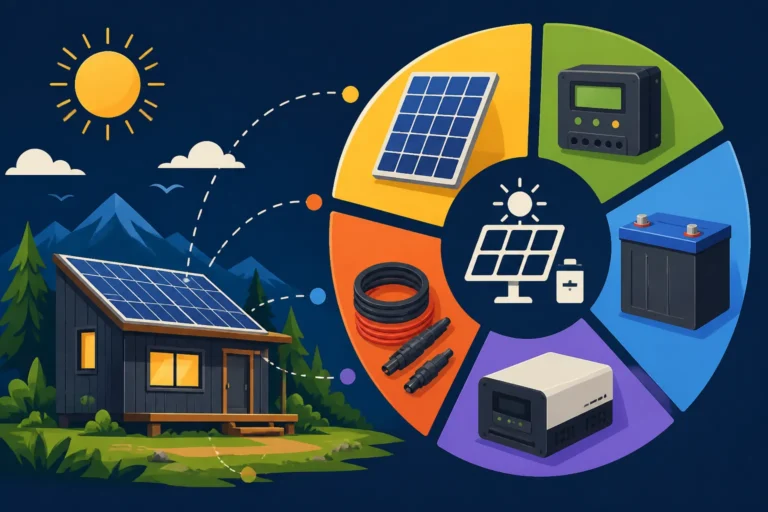
An off-grid solar system comprises several critical parts, and their quality and size will significantly impact your total expenditure.
First up, the solar panels themselves. Prices vary based on wattage, efficiency, and brand. Monocrystalline panels are generally more efficient and pricier per square foot, but they can be a great choice if you have limited roof space or want to maximize energy harvest. You can find panels ranging from $0.70 to $1.50 per watt. For a workshop needing, say, 2,000 watts of panels, you might be looking at $1,400 to $3,000 for the panels alone. Buying in bulk or finding deals on platforms like Amazon can sometimes help reduce this cost.
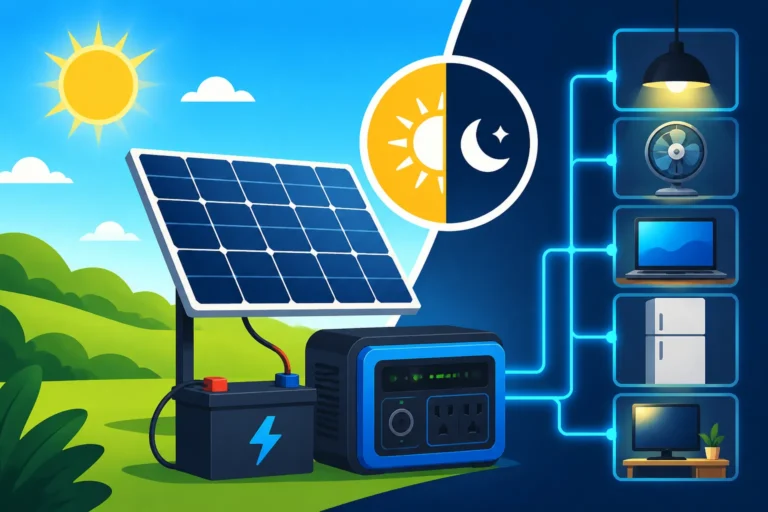
Next, and often the most expensive component, are the batteries. This is where most of your energy storage resides, allowing you to use power when the sun isn't shining. The choice between LiFePO4 (lithium iron phosphate) and lead-acid batteries is critical for an off-grid workshop. While lead-acid (like AGM or flooded lead-acid) might have a lower upfront cost, their shorter lifespan, lower usable capacity (you can only discharge them to 50% without damaging them), and maintenance requirements often make LiFePO4 batteries more cost-effective in the long run. LiFePO4 batteries offer a deeper discharge, faster charging, and a much longer cycle life, making them ideal for tools with high surge demands. A decent battery bank for a workshop could easily run anywhere from $2,000 to $10,000+, depending on the required capacity and battery chemistry. It's truly a component where How Batteries Drive Off-Grid Solar Cost becomes evident.
The inverter is what converts the DC power from your batteries into the AC power your standard tools use. For a workshop, a pure sine wave inverter is absolutely non-negotiable. Modified sine wave inverters can damage sensitive electronics and cause motors to run inefficiently or overheat, ruining your expensive power tools. You'll need an inverter sized not just for your continuous running watts but also for the momentary surge watts of your most demanding tool. A quality pure sine wave inverter for workshop use can range from $500 to $3,000+.
Then there's the charge controller, which manages the power flow from your solar panels to your batteries. MPPT (Maximum Power Point Tracking) controllers are more efficient than PWM (Pulse Width Modulation) controllers, especially in varying light conditions or with larger arrays. They are pricier but often worth the investment, particularly for year-round workshop use. Expect to pay $100 to $700+ for a good MPPT controller.
Finally, don't forget the Balance of System (BOS) components: mounting hardware (racks for your panels), wiring (correct gauge for safety and efficiency), fuses, breakers, disconnects, and possibly a subpanel for your workshop. These often overlooked items can add another $500 to $2,000+ to your total.
DIY vs. Professional Installation Costs
One of the biggest variables in the total cost equation is whether you decide to tackle the installation yourself or hire a professional. Many workshop owners are already handy, making a DIY installation an attractive option to save money. If you're comfortable with electrical wiring, measuring, and following detailed instructions, you can save thousands on labor costs. Companies like Renogy and EcoFlow offer comprehensive off-grid solar kits that come with most components and detailed wiring diagrams, making the DIY path more accessible. However, it's crucial to understand the complexities of wiring, proper grounding, and safety protocols. Mistakes can be dangerous and costly.
A professional installation, on the other hand, provides peace of mind. Licensed electricians and solar installers ensure your system is up to code, safe, and optimized for performance. They also handle permits and inspections, which can be a significant hurdle, especially for more permanent structures. While you might pay an additional 10-20% (or more) of the equipment cost in labor, this investment can be well worth it for larger, more complex systems or if you're simply not confident in your electrical skills. For a deeper dive into this decision, check out our article on DIY vs Professional Off-Grid Solar Cost.
When Off-Grid Solar Truly Shines for Your Workshop
Deciding if off-grid solar is cost-effective for your workshop isn't just about comparing raw numbers; it's about evaluating the alternatives and the long-term value it brings. There are specific scenarios where off-grid solar becomes not just a viable option, but often the best option.
Remote Locations and High Grid-Tie Costs
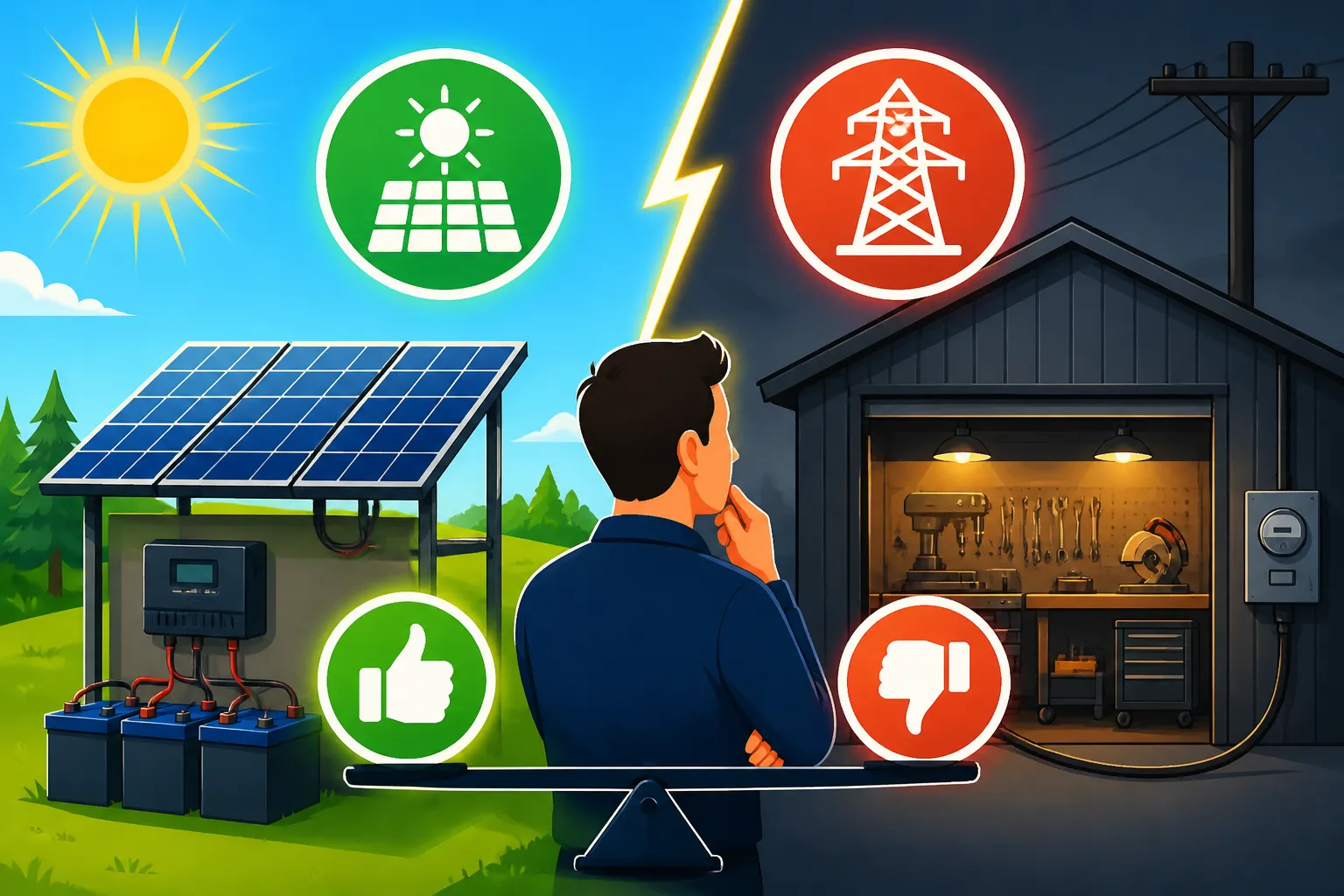
This is perhaps the most compelling argument for going off-grid. If your ideal workshop location is a detached garage, a shed at the back of your property, or a remote cabin miles from the nearest utility pole, the cost of extending grid power can be astronomical. Utility companies often charge per foot or per mile for new line extensions, which can quickly run into tens of thousands, or even hundreds of thousands of dollars. We're talking about figures that dwarf the cost of a comprehensive off-grid solar system.
Imagine you've got a fantastic piece of land for a workshop, but it's 500 feet from the nearest power connection. Depending on terrain, trenching, and local utility rates, extending power could cost $5,000 to $15,000 or more just for that relatively short distance, not including transformer upgrades or connection fees. If it's a few miles, the price becomes prohibitive for most. In these situations, investing in off-grid solar becomes unequivocally more cost-effective than biting the bullet on grid extension fees. Our piece on Off-Grid Solar vs Utility Extension Cost explores this in greater detail and can give you a better idea of what to expect.
Backup Power and Energy Independence
Beyond pure economics, the value of energy independence and reliable backup power cannot be overstated for a workshop. Imagine you're in the middle of a critical project, perhaps turning a delicate piece on your lathe or welding a structural component, and the grid goes down. For grid-tied workshops, this means an immediate halt to work, potential damage to sensitive equipment, and lost productivity.
With an off-grid solar system, your workshop continues to function seamlessly. You're insulated from blackouts, brownouts, and fluctuating utility rates. This level of reliability can be invaluable, especially if your workshop is a hobby that brings joy, or a small business that generates income. For intermittent needs or smaller, portable tools, even a robust solar generator like a Jackery Explorer 2000 Pro can provide excellent mobile power for tools and lights, offering a flexible and instant backup solution without the full investment of a permanent system. The peace of mind that comes with knowing your power supply is secure, no matter what the main grid is doing, is a significant, albeit intangible, benefit that often outweighs initial cost concerns for many.
Long-Term Savings and Environmental Benefits
While the initial investment in off-grid solar can seem substantial, it's crucial to consider the long-term savings. Unlike a grid-tied system where you still pay a monthly electric bill (even if it's reduced), an off-grid system effectively eliminates that bill entirely. Over the 25+ year lifespan of solar panels and the 10-15+ year lifespan of quality LiFePO4 batteries, these savings really add up.
Compare this to running a gasoline or diesel generator for your workshop, which can quickly become a money pit. Fuel costs are volatile, and maintenance for generators is ongoing and expensive. Our guide on Off-Grid Solar vs Generator Fuel Cost can show you just how quickly a generator's operating expenses can overtake initial solar investment. Furthermore, you're contributing positively to the environment by reducing your carbon footprint. Solar power is clean, renewable, and sustainable, aligning with a more self-sufficient and environmentally conscious lifestyle. The Off-Grid Solar Return on Investment for a workshop, especially in a remote setting, can be surprisingly quick when you factor in all these elements.
Practical Considerations and Making the Investment Decision
The decision to go off-grid with your workshop's power is a significant one, and it's built on a foundation of careful planning and realistic expectations. It's not just about buying components; it's about designing a system that works for your unique needs, today and tomorrow.
Sizing for Workshop Specifics
Getting the sizing right is paramount. As we discussed, you need to precisely calculate your daily energy usage and peak power requirements. Don't underestimate! Workshops often have tools with high surge demands, which means your inverter needs to be robust, and your battery bank needs sufficient capacity to handle these spikes without excessive voltage drop. It’s better to slightly oversize your system than to constantly deal with tripped breakers or tools that won't start. Think about future expansion too; will you add more tools later? Designing an expandable system from the start, perhaps by investing in an inverter that can handle more panels and batteries later, can save you money down the road. For instance, if you're only running basic lights and chargers now but plan to add a welder next year, factor that into your initial inverter choice.
Consider seasonal variations as well. If your workshop is in a region with long, dark winters, you’ll need a larger solar array and/or more battery capacity to compensate for fewer peak sun hours. This might mean having enough battery bank autonomy to power your workshop for several cloudy days. This careful upfront planning is crucial for system reliability and your long-term satisfaction.
Budgeting and Phasing Your System
The upfront cost of a comprehensive off-grid solar system can be a barrier for many. However, there are smart ways to approach your budget. One effective strategy is to How to Budget for an Off-Grid Solar System and then How to Phase an Off-Grid Solar Build to Spread Cost. You can start with a smaller, essential system that powers your lights and low-draw tools, and then expand it as your budget allows. For example, begin with a good inverter and a moderate battery bank, then add more solar panels a year later, and another battery bank the year after that.
Many components are available from various suppliers, including online retailers like Amazon, making it easier to acquire parts as funds become available. Look for reputable brands known for quality and reliability. While the federal solar tax credit (the Investment Tax Credit) primarily applies to grid-tied residential systems, certain off-grid components might qualify, so it's worth consulting with a tax professional. Some states might also offer incentives, but these are less common for purely off-grid setups.
Maintenance and Longevity
An off-grid solar system isn't a "set it and forget it" solution, but it’s remarkably low-maintenance compared to, say, a gas generator. Regular checks are important. Keep your solar panels clean to ensure maximum efficiency; dust, leaves, and snow can significantly reduce output. Inspect wiring connections periodically for corrosion or damage. Batteries, especially lead-acid types, require more attention (checking water levels, terminal cleaning). LiFePO4 batteries are largely maintenance-free, but it’s still good practice to monitor their performance.
Understanding Off-Grid Solar Maintenance Costs over the lifetime of your system is important. While these costs are typically low, eventual battery replacement is the most significant recurring expense. Quality LiFePO4 batteries can last 10-15 years or even longer, but their eventual Cost to Replace Off-Grid Solar Batteries will be a substantial outlay. However, when amortized over their lifespan, and considering the savings on utility bills or fuel, this cost becomes much more manageable. With proper care, your off-grid solar system for your workshop can provide reliable, cost-effective power for decades, offering true independence and satisfaction.
Disclaimer
The information provided in this article is for general informational purposes only and does not constitute professional advice. While we strive to provide accurate and up-to-date information, individual circumstances may vary. It is always recommended to consult with qualified professionals, such as electricians, solar installers, or financial advisors, before making any decisions related to off-grid solar systems or significant financial investments. Local regulations, permitting requirements, and specific product specifications should always be verified.