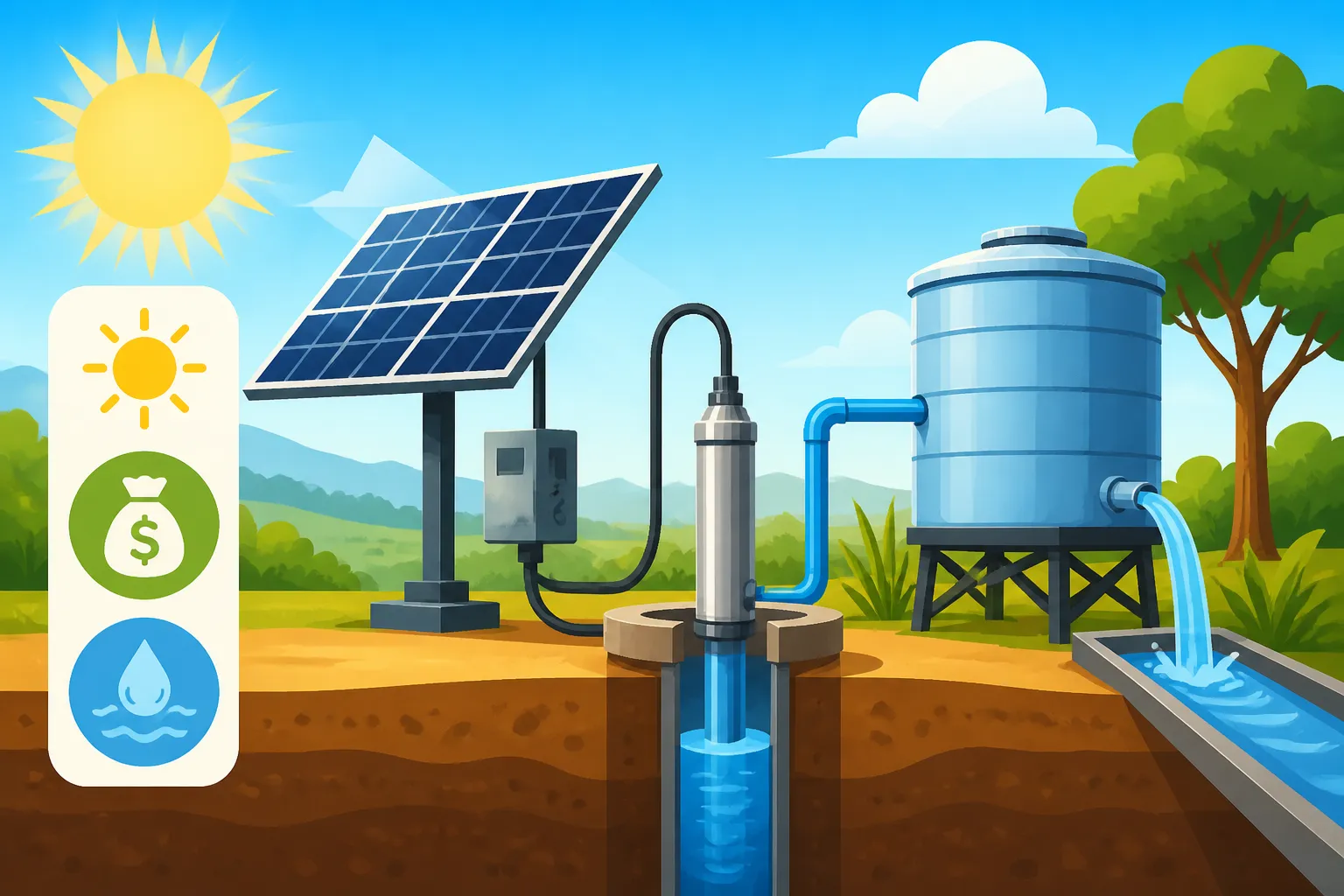
Off-Grid Solar Cost for a Well and Water System
If you've ever dreamt of living off-grid, or simply want reliable water at your remote cabin, the thought of powering a well and water system with solar can feel both incredibly liberating and, let's be honest, a little intimidating. One of the biggest hurdles people face is figuring out the actual cost involved. It's not just about the solar panels; it's a whole ecosystem of components working together to bring that precious water to your tap. This guide will meticulously break down the expenses associated with setting up an off-grid solar system specifically for your well and water needs, helping you understand where your money goes and how to budget effectively.
The Essentials: What Drives Costs for an Off-Grid Well System
When you're looking at powering a well and water system with solar, it's easy to get overwhelmed by all the different components. But before we even get to the hardware, the most crucial step is understanding your actual water demands. This isn't just about how much water you think you'll use; it's about a realistic assessment that will directly dictate the size and, consequently, the cost of your entire solar setup. Trying to cut corners here is a recipe for frustration and potential system failure down the line.
Pinpointing Your Water Usage and Pump Power Demands
Let's get real about water. Do you just need enough for a weekend cabin – a few showers, washing dishes, and flushing a toilet now and then? Or are you planning for a full-time homestead with a family, garden irrigation, and livestock? The difference in daily water consumption is monumental, and it directly translates to how much your well pump needs to run.
Think about every single water-using appliance and activity: washing machines, dishwashers, multiple showers, toilets, outdoor hoses, and even that refreshing glass of water from the tap. Each of these draws water, meaning your well pump kicks on. The more frequently or intensely it runs, the more energy it consumes. Understanding your total daily water consumption in gallons or liters will be your starting point for calculating the necessary power. This is a critical step in figuring out how to size an off-grid solar system for a well and water system, as it directly impacts both your solar array and battery bank requirements.
It’s also not just about how much water you use, but when you use it. If everyone showers and does laundry first thing in the morning, that creates a high surge demand. If you spread your water usage throughout the day, your system can handle it more gracefully. Mapping out your daily and peak water usage is fundamental for accurately calculating the kilowatt-hours (kWh) your well pump will consume daily, which then directly informs your total off-grid solar cost.
Understanding Different Well Pump Technologies and Their Energy Footprint
Not all well pumps are created equal, and their design can drastically impact your solar system's cost. You'll primarily encounter two types: submersible pumps and jet pumps, each with their own set of pros and cons for off-grid applications.
Submersible pumps, as the name suggests, sit down in the well water itself. They push water up, which can be more energy-efficient for deeper wells. Many modern submersible pumps are designed to be quite efficient, and some even come in DC (direct current) versions that can be connected almost directly to your solar panels or battery bank, potentially reducing the need for a large inverter. However, powerful AC (alternating current) submersible pumps, especially for very deep wells, can have significant "starting watts" or surge requirements – that initial burst of power needed to get the pump motor spinning – which demands a robust inverter.
Jet pumps, on the other hand, are located above ground, usually in a pump house or basement. They pull water up through a suction pipe. While often easier to access for maintenance, they are generally less efficient for deeper wells (typically limited to about 25 feet of lift) and can consume more power than their submersible counterparts for the same volume of water. They almost exclusively run on AC power, meaning you'll definitely need a well-sized inverter to convert the DC power from your solar batteries into usable AC power. The type of well pump you choose will heavily influence your overall system design and, subsequently, the total investment needed for your off-grid water system.
The Role of Water Storage in Your Solar System Design
Water storage is a game-changer for off-grid well systems and significantly impacts costs, often in a positive way. Instead of relying on your pump to fire up every single time you need a sip of water or flush a toilet, you can integrate a storage solution.
The most common form of storage is a pressure tank, which maintains household water pressure and reduces how often your pump cycles on and off. A larger pressure tank means the pump runs less frequently but for longer durations, which can be easier on your solar system than frequent short bursts. However, for true off-grid efficiency, many people opt for a larger cistern or holding tank. This allows the solar array to pump water whenever the sun is shining its brightest – making the most of available solar energy – and store it for use day or night, or during periods of low sun.
By using a large storage tank, you can often get away with a smaller solar array and battery bank because you're not trying to meet instantaneous high demands all the time. Instead, you're doing a "batch" pump, filling the tank when power is abundant. This strategic approach can lead to substantial savings on your overall solar components. The upfront cost of a cistern might seem high, but it can drastically reduce the need for an oversized solar system, thus affecting the true "Off-Grid Solar Cost for a Well and Water System."
Breaking Down the Costs: Core Components of a Solar-Powered Well
Now that we understand the drivers, let's dive into the actual components you'll need and what you can expect to pay. Building an off-grid solar system for your well is an investment, and like any good investment, it requires a clear understanding of where each dollar is going. The core components are standard across most off-grid systems, but their sizing and specifications will be heavily influenced by your specific well and water demands.
Solar Panels: Your Source of Renewable Power
Solar panels are the workhorses of your system, converting sunlight into electricity. The cost of off-grid solar panels has become incredibly accessible over the years, making solar a viable option for many. For a well and water system, you'll need enough panels to generate the daily energy required to run your pump, plus a bit extra to charge your batteries and account for less-than-ideal sun conditions.
Panel wattage typically ranges from 100W for smaller applications to 400W or more for larger residential panels. For a well, you're probably looking at multiple panels. A typical household well pump might need a 1000W to 3000W array or more, depending on its depth, flow rate, and your daily water consumption. For example, a small cabin with a shallow well might get by with 400-800 watts of solar, while a full-time homestead could easily require 2000-5000 watts. The number of panels and their combined wattage will be a significant portion of your initial "Off-Grid Solar Cost: Complete Breakdown."
When selecting panels, consider factors like efficiency, durability, and warranty. Monocrystalline panels are generally more efficient and durable, though slightly more expensive than polycrystalline. You can often find good deals on reliable brands online, with platforms like Amazon offering a wide selection. Don't forget the mounting hardware – roof mounts, ground mounts, or pole mounts – as these add to the overall expense and vary depending on your property's specifics and desired panel orientation.
Batteries: The Heartbeat of Your Water System
Batteries are arguably the most critical and often the most expensive single component in an off-grid solar system, especially when powering something as essential as a well pump. They store the energy generated by your solar panels so you can have water on demand, even when the sun isn't shining. The cost of an off-grid solar battery bank is directly tied to its capacity (measured in amp-hours or kilowatt-hours) and the battery chemistry you choose.
For off-grid well systems, deep-cycle batteries are a must. You'll typically be deciding between lead-acid (flooded or AGM) and lithium iron phosphate (LiFePO4) batteries. Lead-acid batteries have a lower upfront cost but shorter lifespan and require more maintenance. LiFePO4 vs Lead-Acid Battery Cost is a common dilemma; while lithium batteries have a higher initial price tag, their longer lifespan (often 10-20 years), deeper discharge cycles, and lack of maintenance often make them more cost-effective in the long run. For a well pump, which can draw significant power, the efficiency and performance of LiFePO4 batteries are often a worthwhile investment.
Sizing your battery bank correctly is paramount. You'll want enough capacity to run your pump and other essential loads for at least 2-3 days without any sun, known as "days of autonomy." This accounts for cloudy weather, heavy usage, or unexpected system issues. A small cabin with minimal water needs might get away with 200-400 Ah (amp-hours) at 12V, while a full-time residence might need 800-1200 Ah at 48V or even more. The sheer volume and capacity needed for a reliable water supply mean that batteries will represent a substantial portion of your total budget.
Inverters and Charge Controllers: Managing the Flow
These two components act as the brains and traffic cops of your off-grid solar system, ensuring that power is efficiently generated, stored, and delivered to your well pump and other appliances.
The charge controller regulates the voltage and current coming from your solar panels, preventing overcharging of your batteries and optimizing their lifespan. There are two main types: PWM (Pulse Width Modulation) and MPPT (Maximum Power Point Tracking). MPPT controllers are more efficient, especially in varying light conditions, and are generally recommended for larger systems, making them a key consideration for the cost of a charge controller. They can squeeze up to 30% more power from your panels compared to PWM, which translates to needing fewer panels or better performance during cloudy days.
The inverter is responsible for converting the DC (direct current) power stored in your batteries into AC (alternating current) power, which most standard well pumps and household appliances use. The cost of an off-grid solar inverter varies widely based on its wattage, surge capability, and features (like pure sine wave output, which is crucial for sensitive electronics and motors). Since well pumps often have high starting wattages, you'll need an inverter capable of handling those surges without tripping. For a typical well pump, you might need an inverter with a continuous output of 3000W to 8000W, and often with surge capabilities up to double that. Brands like Victron Energy and Sol-Ark offer robust inverter-chargers that combine the functions of an inverter and a charge controller, streamlining your system and often providing advanced monitoring capabilities.
Pump-Specific Electrical Components and Wiring
Beyond the main solar components, there are specific electrical parts crucial for safely and efficiently integrating your well pump into the off-grid system. These might seem like small details, but they are essential for performance and safety, and their costs add up.
You'll need appropriate wiring and cables that are correctly sized for the current and distance involved, both from your panels to your charge controller, from the charge controller to your battery bank, and from the inverter to your well pump. Undersized wiring can lead to voltage drop, inefficiency, and even fire hazards. You'll also need fuses and circuit breakers to protect your system from overcurrents and short circuits. For deep submersible pumps, a pump controller might be necessary to manage the pump's starting and stopping, often with built-in protections against dry running or over-current.
Some well pumps might benefit from a "soft starter" or a variable frequency drive (VFD). A soft starter gradually ramps up the pump motor, reducing the massive inrush current (starting watts) that can put a huge strain on your inverter and battery bank. A VFD goes a step further, allowing the pump to run at variable speeds, which can dramatically increase efficiency and reduce power consumption, especially if you don't always need maximum flow. While these components add to the upfront cost, they can significantly extend the life of your pump and make your solar system more efficient and reliable in the long run.
Estimating the Total Cost of an Off-Grid Solar Well System
Alright, let's talk numbers. Putting together an entire off-grid solar system for a well pump involves more than just buying the big components. There are variables that can significantly sway the final bill. Getting a realistic estimate means accounting for everything from the ground up, literally.
Comprehensive Cost Estimates for Various System Sizes
The overall cost of an off-grid solar system for a well and water system can range dramatically based on your specific needs. A bare-bones setup for a small, seasonal cabin with a shallow well might run you $3,000 to $7,000, while a robust system for a year-round family home with a deep well and substantial water usage could easily hit $15,000 to $30,000, or even more for very large demands. This is why understanding your "How Much Does an Off-Grid Solar System Cost" needs is so crucial.
Here’s a general breakdown, keeping in mind that these are rough estimates and can fluctuate based on brand, quality, location, and market conditions:
| Component Category | Small System (e.g., small cabin) | Medium System (e.g., moderate home) | Large System (e.g., homestead) |
|---|---|---|---|
| Well Pump | $300 – $800 | $800 – $2,500 | $1,500 – $4,000+ |
| Solar Panels (400W-2000W) | $400 – $1,500 | $1,500 – $4,000 | $4,000 – $10,000+ |
| Charge Controller (MPPT) | $150 – $400 | $400 – $1,000 | $800 – $2,500+ |
| Inverter (1500W-6000W) | $500 – $1,500 | $1,500 – $4,000 | $3,000 – $8,000+ |
| Batteries (LiFePO4, 100Ah-800Ah) | $1,000 – $3,000 | $3,000 – $10,000 | $8,000 – $25,000+ |
| Mounting Hardware | $200 – $500 | $500 – $1,500 | $1,000 – $3,000+ |
| Wiring, Fuses, Breakers, Disconnects | $200 – $600 | $500 – $1,500 | $1,000 – $3,000+ |
| Pressure Tank/Water Storage | $150 – $500 (pressure tank) | $300 – $1,000 (pressure tank) / $1,000-$3,000 (cistern) | $500 – $2,000 (pressure tank) / $2,000-$10,000+ (large cistern) |
| Subtotal (Components Only) | $2,900 – $8,800 | $8,500 – $25,500 | $20,800 – $58,500+ |
| Installation (DIY vs Pro) | $0 (DIY) – $2,000 (pro assist) | $2,000 – $7,000 | $5,000 – $15,000+ |
| Total Estimated Cost | $2,900 – $10,800 | $10,500 – $32,500 | $25,800 – $73,500+ |
Remember, these figures can vary wildly. Sometimes you can find a good all-in-one solar kit from brands like Renogy or BougeRV that might bundle many components together, offering a slight discount, especially for smaller systems on marketplaces like Amazon.
Beyond Components: Installation, Permitting, and Unexpected Expenses
The components are just one piece of the puzzle. The true "Off-Grid Solar Installation Cost" for a well system involves several other factors that often get overlooked but can significantly impact your final budget.
Firstly, installation. Are you planning a DIY off-grid solar build? If so, you'll save on labor costs, but you need to factor in your time, the cost of specialized tools, and the potential for mistakes. If you're hiring professionals, expect labor to be a substantial part of the cost, usually ranging from 10% to 30% or more of the equipment cost, depending on the complexity and location. The advantage is expert installation, adherence to codes, and often a warranty on the workmanship. For a deeper dive, check out DIY vs Professional Off-Grid Solar Cost.
Secondly, permits and inspections. While some remote off-grid locations might be more lenient, most jurisdictions require permits for electrical and plumbing work. Ignoring these can lead to fines, stop-work orders, or issues with property insurance. Off-Grid Solar Permitting Costs vary widely by county and state, but don't skip this step. It's not just about the permit fee; it's about ensuring your system is safe and up to code.
Lastly, unexpected expenses. These are the silent budget killers. Think about trenching costs for underground wires and water lines if your well is far from your power shed. What about the cost of renting equipment like a mini-excavator? What if your well pump needs a new wellhead seal, or the existing wiring to the pump isn't up to snuff? Always add a contingency fund, ideally 10-20% of your estimated budget, for these unforeseen circumstances. It's far better to have it and not need it than to be halfway through your installation and realize you're out of cash for a critical part.
Smart Strategies to Reduce and Manage Your Investment
Investing in an off-grid solar system for your well is a big commitment, but there are definitely ways to make it more manageable and cost-effective. It's about being strategic and prioritizing your needs.
One of the most impactful ways to reduce costs is by prioritizing efficient water usage and appliance choices. Installing low-flow showerheads, composting toilets (if feasible), and water-efficient washing machines can drastically reduce your daily water consumption, which in turn means your pump runs less, requiring a smaller solar array and battery bank. Consider DC-powered pumps if your well depth allows, as they can sometimes integrate more directly with your solar system, reducing inverter needs. Every gallon saved is energy saved.
Another smart move is a phased installation. Instead of trying to build the entire dream system upfront, you can start with a smaller, essential system and expand it over time. For instance, you could initially install enough solar and batteries for basic water needs, and later add more panels or expand your battery bank as your budget allows or your needs grow. This modular approach spreads the financial burden and allows you to learn from your initial setup. You can always add more panels or batteries later, making it easier to manage the cost of expanding an off-grid system.
Finally, while professional installation offers peace of mind, doing a significant portion of the work yourself can lead to substantial savings. If you're comfortable with electrical work and understand the principles of solar, taking on the DIY route for panel mounting, wiring, and component integration can cut labor costs. However, for critical tasks like wiring to the pump itself or connecting to your home's main electrical panel, it's often wise to consult or hire a qualified electrician, even if just for inspection and final connection. Many smaller, portable solar generators, like those offered by Jackery, can be found on Amazon and are an excellent plug-and-play solution for very light water use (e.g., a tiny pump for garden irrigation) or as a temporary backup while you build out a larger system.
Long-Term Value and Payback of Off-Grid Well Solar
While the initial cost of setting up an off-grid solar system for your well can seem daunting, it's essential to look at the bigger picture and consider the long-term value and payback. This isn't just an expense; it's an investment in independence, security, and often, significant savings over time.
Comparing to Alternative Water Solutions
Let's put the cost of solar for your well into perspective by comparing it to common alternatives. If you're in a truly remote location, your options might be limited. Hauling water in can be incredibly expensive and time-consuming, especially for regular household use. Even if it's "free" water from a spring, the fuel and maintenance for your vehicle, plus your time, quickly add up.
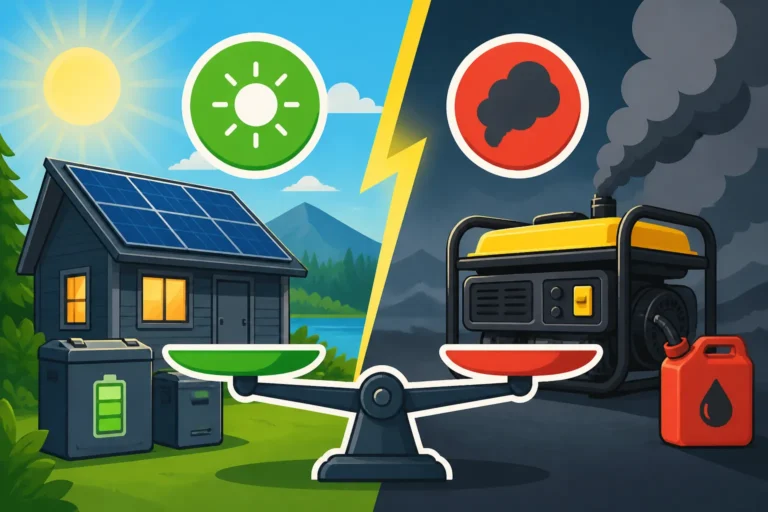
Another alternative is a fossil fuel generator. While a generator provides immediate power, the Off-Grid Solar vs Generator Fuel Cost comparison quickly shows solar's advantage. Generators consume gasoline or propane, which are volatile in price and require constant replenishment. A well pump, especially for a family, can run for hours each day, meaning significant fuel consumption. Over 10-20 years, the cost of generator fuel alone could easily surpass the initial investment in a solar system. Plus, there's the noise, exhaust fumes, and regular maintenance required for generators.
Then there's the option of extending power lines. If your property is more than a quarter-mile from the nearest utility pole, the cost to bring grid power can be astronomical, easily ranging from tens of thousands to over $100,000 for longer distances, making an Off-Grid Solar vs Utility Extension Cost comparison heavily favor solar. Utility companies charge per foot, and those feet add up quickly across rough terrain. When you consider these alternatives, the upfront cost of an off-grid solar well system often becomes the most economically sensible and environmentally friendly choice in the long run.
Maintenance and Longevity
One of the often-overlooked aspects when calculating costs is long-term maintenance and component longevity. A well-designed and properly installed off-grid solar system for your well requires relatively little ongoing maintenance, but it's not entirely hands-off.
Solar panels themselves are incredibly durable and require minimal maintenance, primarily just occasional cleaning to ensure optimal performance. They typically come with warranties lasting 20-25 years, guaranteeing a certain power output over that period. The most significant long-term expense will likely be battery replacement. Depending on the type, lead-acid batteries might need replacing every 3-7 years, while high-quality LiFePO4 batteries can last 10-15 years or even longer. Understanding the Cost to Replace Off-Grid Solar Batteries over the lifespan of your system is crucial for true financial planning. Inverters and charge controllers are generally robust, but like any electronic device, they have a lifespan, typically 10-15 years, and may eventually need replacement or repair.
Your well pump itself will also require maintenance over time, regardless of how it's powered. Components like seals, impellers, or even the motor might need attention. However, with a stable and consistent power supply from your solar system, and perhaps the use of a soft starter or VFD, you can actually extend the life of your pump by reducing wear and tear from constant on-off cycling and harsh power surges. Ultimately, while there are ongoing costs, the predictable nature and long lifespans of modern solar components make this a sustainable and cost-effective solution for reliable off-grid water.
Disclaimer
Please remember that the information provided in this article is for general informational purposes only and does not constitute professional advice. Off-grid solar system design and installation, particularly for essential services like water, can be complex and should ideally be done by or with consultation from certified professionals. Costs are estimates and can vary significantly based on location, specific product choices, market fluctuations, and individual site conditions. Always consult local regulations, building codes, and qualified experts before undertaking any solar or electrical work.