EcoFlow Delta 2 for Off-Grid: Specs and Review
Stepping into the world of off-grid living can feel like deciphering a whole new language, especially when it comes to power. Many folks, myself included, have stood in front of a bewildering array of portable power stations, wondering if these compact devices can truly stand up to the demands of living free from the grid. You're looking for honest answers about whether the EcoFlow Delta 2 can be that reliable partner for your off-grid adventures, and this guide is here to break down its specs, performance, and real-world suitability for powering your independent lifestyle.
Unpacking the EcoFlow Delta 2 for Off-Grid Lifestyles
When you're trying to figure out if a portable power station like the EcoFlow Delta 2 can truly serve your off-grid needs, it’s not enough to just glance at the pretty pictures. We need to dig deep into what makes it tick and how that translates to real-world power delivery when you’re miles from the nearest outlet. This unit isn't just a big battery; it's a sophisticated piece of equipment designed to bridge the gap between simple portable power and a more integrated off-grid setup. Understanding its core identity and how it fits into the broader off-grid solar ecosystem is the first crucial step.
What Exactly is the EcoFlow Delta 2?
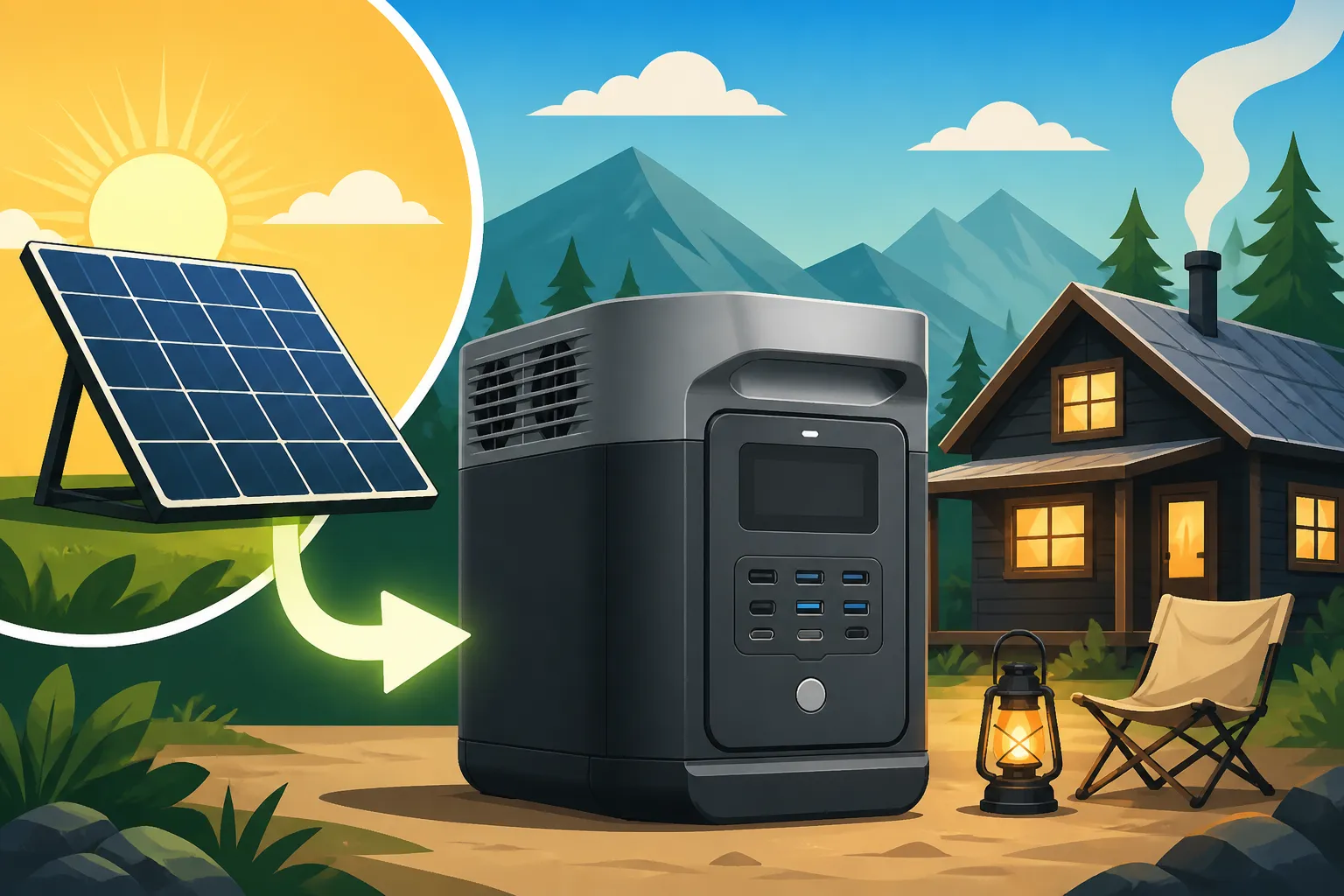
At its heart, the EcoFlow Delta 2 is a portable power station, but it's one that comes with a robust feature set aiming for more than just a weekend camping trip. Think of it as a powerhouse in a box, combining a high-capacity battery, an inverter to convert DC power to usable AC, and a charge controller all into one relatively compact unit. This integrated approach is a huge draw for off-gridders, particularly those in RVs, vans, cabins, or even tiny homes, who might not want to piece together individual components like you would with a traditional DIY system. The Delta 2 offers a significant 1024 Watt-hour (Wh) capacity, which means it can store a good amount of energy, and it boasts a 1800W AC output, with a surge capability that can briefly hit 2700W. This means it can handle a decent range of appliances, from charging your laptop and running lights to powering a small refrigerator or even some power tools for a short burst. It's built with LiFePO4 (Lithium Iron Phosphate) batteries, known for their longevity and safety, which is a big plus for sustained off-grid use compared to older battery chemistries. The unit itself is designed for ease of use, with multiple AC and DC outlets, USB ports, and fast charging capabilities that allow it to recharge quickly from solar panels, a car port, or a wall outlet. This flexibility is key for an off-grid setup where charging sources can vary greatly.
How It Compares to Traditional Off-Grid Systems
Now, let's talk about how the EcoFlow Delta 2 stacks up against a more traditional, component-based off-grid solar system. Imagine building a system from scratch: you'd select individual solar panels, a separate charge controller, a standalone inverter, and then wire up a bank of deep-cycle batteries. This approach, while offering ultimate customization and scalability, can be daunting for beginners. It involves a lot of technical know-how about sizing components, wiring, and safety protocols. The Delta 2 simplifies all of that. It’s an all-in-one solution that takes care of the complex integration for you. You simply plug in your solar panels, and it handles the rest.
However, this convenience comes with certain trade-offs. A traditional system, while requiring more upfront effort, often allows for greater expandability and specific component selection. For example, if you wanted to double your battery capacity in a traditional system, you could often just add more batteries of the same type. With the Delta 2, expansion is typically limited to specific EcoFlow add-on batteries. Similarly, if your inverter fails in a traditional setup, you can replace just the inverter. If the Delta 2’s inverter or charge controller fails, you might need to service or replace the entire unit. For smaller, more mobile setups like van life or a tiny hunting cabin, the Delta 2's portability and ease of use are huge advantages. For larger, permanent off-grid homes that demand significant, continuous power, a custom-built system often makes more sense due to its robustness, repairability, and long-term cost-effectiveness. The decision often boils down to how much power you need, how permanent your setup is, and how comfortable you are with the technical aspects of system design and installation. You can learn more about this by exploring resources on how to size an off-grid solar system or how to install an off-grid solar system.
Key Specifications and What They Mean for Off-Grid Living
Understanding the raw numbers and technical jargon associated with a power station like the EcoFlow Delta 2 is vital to assess its true potential for your off-grid setup. These aren't just arbitrary figures; they directly translate into how much power you'll have, what appliances you can run, and how long you can sustain your independence. Let's break down the most critical specs and demystify what they truly mean for life away from the grid.
Battery Capacity and Power Output
The heart of any portable power station is its battery, and for the EcoFlow Delta 2, that's a 1024 Watt-hour (Wh) LiFePO4 battery. Now, 1024Wh might sound like a lot, or very little, depending on your frame of reference. To put it in perspective, a typical full-sized residential refrigerator uses anywhere from 300 to 800 Wh per day. So, theoretically, the Delta 2 could run a very efficient fridge for more than a day. For smaller items, it's quite capable: you could charge a standard laptop around 10-12 times, or power an LED light for over 100 hours. This capacity makes it excellent for short-term power needs, as a backup, or for powering essential appliances in a small off-grid dwelling.
Beyond storage, the continuous power output is crucial. The Delta 2 offers 1800W of continuous AC output, with a surge capability up to 2700W. This is a pretty significant number for a portable unit. It means you can run most common household appliances, though perhaps not simultaneously or for extended periods if they are high-draw items. For instance, a coffee maker (around 800-1200W) or a microwave (600-1500W) would operate just fine. Even some smaller power tools that might have a high initial surge (like a circular saw) could theoretically start up within the 2700W surge limit. However, constantly running near the maximum continuous output will drain the battery quickly and put more strain on the inverter. It's always best to oversize your inverter slightly beyond your anticipated continuous load. You can dive deeper into this by looking at resources like what size inverter to run a refrigerator or how to size an off-grid inverter.
Charging Speeds and Solar Integration
One of the standout features of the EcoFlow Delta 2 is its incredibly fast charging. When plugged into a standard AC wall outlet, it can go from 0% to 80% in about 50 minutes and to 100% in just 80 minutes. This "X-Stream" charging technology is a game-changer if you have access to grid power occasionally or need to top up quickly. But for true off-grid living, solar charging is where it's at.
The Delta 2 supports up to 500W of solar input. This is a healthy amount for a portable unit and means you can connect a good number of solar panels to recharge it. If you're in a sunny location with optimal conditions (around 5-6 peak sun hours), 500W of solar could theoretically recharge the 1024Wh battery in roughly 2-3 hours. This makes it a very viable option for keeping your power station topped up daily. Imagine waking up in your cabin, using your morning power, and then letting the sun recharge your unit by early afternoon. It’s important to remember that real-world solar charging is affected by factors like cloud cover, panel angle, and time of day. While 500W input is strong, if you're powering a refrigerator or other continuous loads, you might need even more solar input or greater battery capacity to maintain autonomy through extended cloudy periods. Brands like Renogy offer a wide array of compatible solar panels you can purchase to maximize your solar input. Understanding how many watts of solar you need is crucial for effective off-grid planning.
Expandability and System Voltage
A crucial consideration for any off-grid system is its ability to grow with your needs. The EcoFlow Delta 2 offers expandability by allowing you to connect up to two extra Delta 2 batteries, or one Delta Max Smart Extra Battery, which boosts its total capacity to 2048Wh or even 3040Wh respectively. This modularity is a huge plus, as it means you don't have to overcommit to a massive system from day one. You can start with the base unit and add more capacity as your power needs increase or as your budget allows. This flexibility is what really pushes the Delta 2 beyond a simple portable charger into a more robust, albeit still contained, off-grid solution.
When we talk about system voltage, the Delta 2 operates internally at an optimal voltage for its integrated components. Unlike traditional off-grid systems where you might choose between 12V, 24V, or 48V based on the scale of your setup, the Delta 2 handles this internally. Your solar panels will connect to the unit, and it converts their voltage to efficiently charge its internal battery. For AC output, it provides standard 120V (or 230V in other regions). This simplifies things immensely for the end-user, as you don't need to worry about complex wiring configurations or matching component voltages, which can be a common point of confusion for those designing a DIY off-grid solar build. However, this also means you're generally limited to the voltage output it provides, though for most common AC and USB devices, this is perfectly adequate. For applications requiring specific DC voltages (like some specialized RV accessories), you'd use a DC-DC converter or find accessories compatible with its 12V DC car port output.
Real-World Performance and User Experience
Moving beyond the specifications, what does it actually feel like to rely on an EcoFlow Delta 2 when you're living off the grid? The theoretical numbers look great on paper, but the true test comes with daily use, unexpected challenges, and long-term reliability. Let's delve into how this unit performs in various off-grid scenarios and what users commonly report.
Running Essential Appliances and Tools
For anyone living off-grid, the ability to power essential appliances is non-negotiable. The EcoFlow Delta 2, with its 1024Wh capacity and 1800W output (2700W surge), handles a surprisingly wide range of devices. For basic needs like lights, charging phones, laptops, and even running a small TV, it's more than sufficient. You'll find it can power an energy-efficient mini-fridge for a day or even two, which is a game-changer for food preservation in a remote cabin or RV. For those who enjoy their morning brew, it can typically handle a drip coffee maker or an electric kettle for several cycles, provided you're mindful of the battery drain.
What about bigger power consumers? Many off-gridders need to run power tools for maintenance or projects. The Delta 2 can manage many corded power tools, such as drills, jigsaws, or even a small miter saw, for intermittent use thanks to its 2700W surge capacity. This capability is incredibly valuable when you're building or fixing things far from traditional power. However, it's crucial to understand that running high-wattage items will deplete the battery rapidly. You wouldn't want to rely on it to power a well pump for an entire day, for instance, unless you had significant solar input simultaneously. Users often pair it with several high-wattage solar panels to keep it charging while using power-hungry devices, essentially "drawing" directly from the sun rather than solely from the battery. This kind of flexibility and power output is what makes it a compelling choice for many off-grid scenarios, from a modest tiny home setup to providing temporary power on a remote job site.
Durability and Portability for Mobile Setups
When you're constantly on the move, or even just relocating your power source around a property, portability and durability are paramount. The EcoFlow Delta 2 weighs in at around 27 pounds, which is substantial enough to feel solid but still light enough for most adults to carry comfortably. It features robust handles, making it easy to move from your vehicle to a campsite, or from inside your cabin to an outdoor workstation. Its relatively compact footprint (roughly 15.7 x 8.3 x 11 inches) means it doesn't take up an excessive amount of space, which is critical in space-constrained environments like RVs, vans, or small cabins.
In terms of durability, the Delta 2 is built with a sturdy plastic casing. While it's not ruggedized to the same extent as some specialized outdoor gear, it's designed to withstand typical bumps and scrapes of daily use in an off-grid setting. It’s important to treat it with care, avoid dropping it, and keep it out of direct prolonged exposure to harsh weather elements like heavy rain or extreme dust, although it can handle some light outdoor use. Many users keep their Delta 2 secured inside a vehicle or cabin for protection, only bringing it out when actively using or charging it. Some even build custom enclosures for added protection and integration into their mobile setups. For those prioritizing mobility and ease of transport, this balance of power and manageable weight is a significant advantage. You might find similar portable solutions from brands like Anker or Bluetti, often available on Amazon, but EcoFlow tends to lead in charging speed and ecosystem integration.
User Feedback and Common Scenarios
Across various online forums and reviews, the EcoFlow Delta 2 generally receives positive feedback, particularly for its fast charging, robust build, and reliable performance for its size. Users frequently praise its ability to seamlessly power diverse electronics and small appliances, often highlighting its usefulness as a primary power source for weekend trips, remote work setups, or as a reliable backup during outages. Many van dwellers and tiny home owners specifically mention its ability to keep their refrigerators running and their essential electronics charged without extensive, complicated wiring.
However, no product is without its nuances. Some common feedback points to the display, which can be a bit reflective in direct sunlight, making it harder to read the detailed power input/output metrics. The fan, while efficient for cooling during heavy loads or fast charging, can be audible, which might be a minor concern for those who prioritize absolute silence in their living spaces. Another key learning from user experiences is the importance of properly sizing your solar array. While the Delta 2 accepts up to 500W of solar input, achieving that consistently requires good quality panels, optimal placement, and clear skies. Many users find that pairing it with portable solar panels from brands like Renogy or EcoFlow's own portable panels works well. For long-term off-grid living, especially through cloudy periods, some users wish for even greater battery capacity without having to purchase multiple expansion batteries. This leads back to the distinction between the Delta 2 as a robust portable solution versus a truly permanent, large-scale off-grid solar system. Ultimately, the Delta 2 excels as a high-performance, user-friendly option for smaller to medium off-grid power needs, or as a powerful supplement to an existing system. For anyone curious about longer-term sustainability, exploring topics like the lifetime cost of an off-grid solar system or how to budget for an off-grid solar system can be very insightful.
Is the EcoFlow Delta 2 Right for Your Off-Grid Needs?
Deciding whether a specific piece of equipment, no matter how highly rated, is the right fit for your unique off-grid journey is a deeply personal choice. It involves weighing your specific power demands, your lifestyle, and your budget against the capabilities and limitations of the EcoFlow Delta 2. Let's break down the scenarios where it shines and where you might need to consider alternatives.
Ideal Use Cases for the EcoFlow Delta 2
The EcoFlow Delta 2 is a fantastic fit for several distinct off-grid scenarios where its blend of portability, power, and simplicity truly stands out.
Firstly, for van life, RVers, and short-term camping, the Delta 2 is almost perfectly designed. Its all-in-one nature means minimal installation headaches. You don't need to be an electrician to get it up and running; just plug in your solar panels, and you're good to go. Its ability to run a mini-fridge, charge all your gadgets, and even power a small induction cooktop or coffee maker makes it incredibly convenient for life on the road. The fast charging capability is a huge boon here, allowing you to quickly top it up while driving, or at a friend's house if you visit town.
Secondly, for small cabins, sheds, or workshops that are used seasonally or intermittently, the Delta 2 offers a robust, easy-to-deploy power solution. If your cabin is a weekend retreat for hunting or fishing, or your shed is where you tackle occasional DIY projects, a permanent, complex solar installation might be overkill. The Delta 2 can provide ample power for lights, tools, and basic comfort without the extensive wiring and permitting often associated with larger systems. Its portability means you can store it securely when not in use, protecting it from theft or harsh weather.
Lastly, as a backup power solution for grid-tied homes in rural areas, it serves as an excellent emergency generator. If you frequently experience power outages due to weather or grid issues, the Delta 2 can keep essential appliances like a refrigerator, lights, and communication devices running for extended periods. When paired with solar panels, it can even sustain power indefinitely as long as the sun shines. This resilience offers significant peace of mind. You might also find other excellent portable power stations on Amazon if you're looking for different capacity options or brands.
Limitations and When to Consider Alternatives
While the EcoFlow Delta 2 is a powerful and versatile unit, it's not a one-size-fits-all solution. There are specific scenarios where its limitations might lead you to explore other options.
The primary limitation for truly dedicated, full-time off-grid homes or large homesteads is its inherent capacity. Even with expansion batteries, a maximum of 3040Wh (3 kWh) might not be sufficient to power a family home with multiple high-draw appliances (like electric water heaters, full-size air conditioners, or electric stoves) through several cloudy days, especially in winter. For these larger demands, a more robust, custom-designed system with a larger battery bank (often 10 kWh or more) and significantly more solar panel wattage is typically required. These larger systems often use higher voltages (like 48V) and dedicated components from brands like Victron or Outback, offering greater scalability and repairability. You can learn more about how many batteries for an off-grid system or how to design an off-grid solar system step by step for these larger setups.
Another consideration is cost-effectiveness for extreme long-term, high-power needs. While the Delta 2 is competitively priced for its features and convenience, buying multiple units or numerous expansion batteries to reach very high capacities can sometimes become more expensive than building a custom system with bulk components over the long run. If your goal is to power a large property for decades with minimal intervention and maximum self-sufficiency, the modular nature of a component-based system often provides more flexibility for upgrades and maintenance.
Finally, while the Delta 2 is durable, it's an integrated unit. If a major component like the inverter or charge controller fails, you're looking at servicing or replacing the entire unit rather than just swapping out a single part, which can be a drawback for those who value component-level repairability and long-term modularity. For those looking for maximum control and customization over every single aspect of their power system, investing in individual components and doing a DIY Off-Grid Solar Installation Step by Step might be a more appealing path.
Making Your Decision
Ultimately, the EcoFlow Delta 2 offers an excellent balance of power, portability, and ease of use, making it a compelling choice for a wide range of off-grid applications. It provides a straightforward path to reliable power for those who prioritize convenience and mobility over absolute maximum capacity or deep technical customization.
Consider your daily energy usage:
| Appliance | Typical Wattage | Est. Daily Use (Hours) | Daily Watt-hours (Wh) |
|---|---|---|---|
| LED Lights (5 bulbs) | 50W | 4 | 200Wh |
| Laptop | 60W | 6 | 360Wh |
| Mini Fridge (Energy Star) | 60W (run-time avg) | 8 | 480Wh |
| Phone Charging (2 phones) | 20W | 2 | 40Wh |
| Water Pump (intermittent) | 300W | 0.5 | 150Wh |
| Total Estimated Daily Usage | 1230Wh |
As you can see from this hypothetical table, a single EcoFlow Delta 2 with its 1024Wh capacity could run a tight setup, but adding an expansion battery would give you much more breathing room, especially on cloudy days. Factor in your peak power draw (e.g., if you run a microwave and a coffee maker simultaneously) to ensure the 1800W inverter can handle it. If your typical daily usage consistently exceeds 1000Wh, especially with variable solar input, you will almost certainly need to invest in the expansion batteries or consider a larger, more traditional system. The most important step is to perform a thorough load analysis to calculate daily energy usage to truly understand your needs.
Disclaimer
The information provided in this article is for general informational and educational purposes only and is not intended as professional advice. Off-grid solar system design and installation can be complex and involve electrical hazards. Always consult with qualified professionals and adhere to all local codes, regulations, and safety guidelines when planning, installing, or maintaining an off-grid solar system.