Best Solar Generator for Emergencies
Let's be real: there's nothing quite like the stomach-dropping feeling of a sudden power outage. One minute you're scrolling through social media or enjoying a hot meal, and the next, everything goes dark. It's not just an inconvenience; it can be truly unsettling, especially when it lasts for hours or even days. That's why having a reliable backup plan is so crucial, and for many of us, a solar generator has emerged as the ultimate peace-of-mind solution. This guide will walk you through everything you need to know to pick the best solar generator to keep your lights on and your essentials running when the grid inevitably fails.
Why a Solar Generator is Your Emergency Lifeline
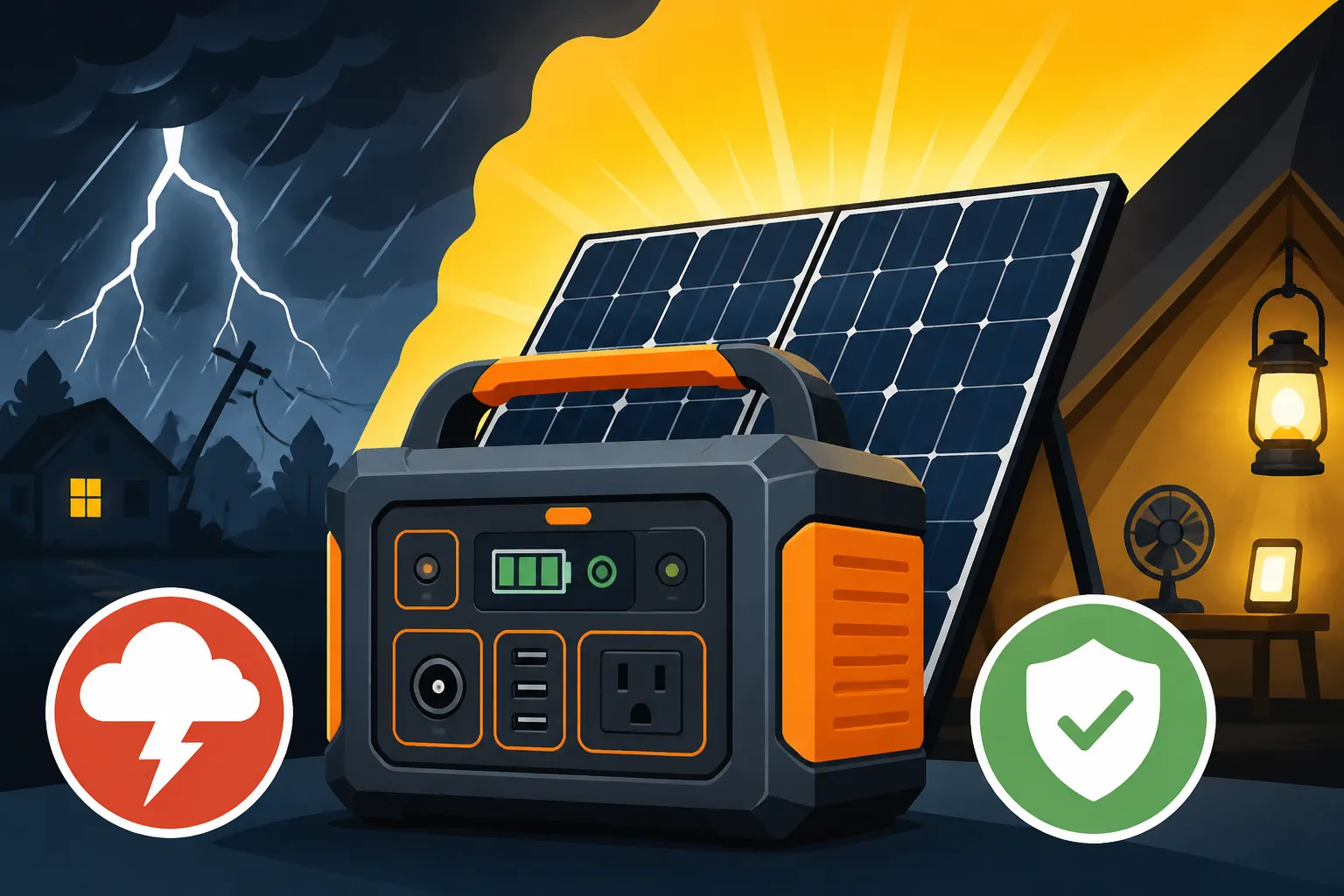
When the lights go out, whether it's due to a fierce winter storm, an unexpected grid failure, or even just planned maintenance in your area, the immediate reaction is often a scramble. Where are the flashlights? Is the refrigerator going to be okay? How long until the phone dies? It's a stressful situation that many of us have faced, and it truly highlights our dependence on a constant power supply.
The Frustration of Grid Dependence
Think back to the last major blackout you experienced. Perhaps it was during a summer heatwave, and your AC was out, making your home unbearably hot, or maybe a winter storm left you without heat, worrying about frozen pipes. In these moments, the silence of a dead refrigerator or the flickering of a single candle reminds you just how vulnerable we are. Traditional grid power, for all its convenience, is susceptible to so many external factors. Fallen trees, overloaded systems, even equipment failures at the local substation can plunge entire neighborhoods into darkness without warning. Relying solely on the grid means you're constantly at the mercy of circumstances beyond your control, leaving you feeling helpless when an emergency strikes. It’s this profound sense of vulnerability that drives many of us to seek independent power solutions.
What Makes Solar Generators Ideal for Emergencies
This is where solar generators truly shine, offering a stark contrast to the noisy, fuel-dependent traditional generators many people still rely on. First and foremost, they're clean. No noxious fumes, no carbon monoxide risks, which means you can safely use them indoors (though proper ventilation is always a good idea, especially with an inverter running). This is a game-changer when you need to power essential appliances inside your home without worrying about exhaust. Secondly, they're quiet. Imagine trying to sleep during a prolonged outage with a gasoline generator roaring outside your window. Solar generators operate almost silently, a gentle hum at most, allowing for a far more peaceful and less disruptive emergency experience.
Beyond the noise and fumes, solar generators offer incredible flexibility. They harness the sun's free energy, meaning as long as the sun shines, you have a potential source of power. This eliminates the frantic search for gasoline during a widespread outage when gas stations might be closed or lines are impossibly long. While they can also be charged from a wall outlet or a car's 12V port before an emergency, their ability to recharge indefinitely via solar panels gives them unparalleled autonomy. For more on how these systems compare, you might find our article on Solar Generator vs Off-Grid Solar System helpful.
Key Features to Look for in an Emergency Solar Generator
Choosing the right solar generator for emergencies isn't a one-size-fits-all decision. Your specific needs will dictate the features that matter most. It’s about balancing power requirements, portability, and how you plan to recharge it.
Battery Capacity and Output Power
This is probably the most critical specification to understand. Battery capacity is measured in Watt-hours (Wh) or Kilowatt-hours (kWh) and tells you how much energy the generator can store. A 1000Wh unit can, theoretically, power a 100-watt appliance for 10 hours. To figure out your needs, you'll want to do a quick inventory of what you absolutely must run during an emergency. Do you need to keep a full-size refrigerator running for a few hours a day? Charge phones and laptops? Power a CPAP machine overnight? Each appliance has a wattage draw, and multiplying that by the hours you need it to run will give you a good estimate of your daily Wh requirement. Our guide on How to Calculate Daily Energy Usage can walk you through the process in detail.
Output power, measured in Watts (W), refers to how much power the generator can deliver at any given moment. You'll typically see two figures: continuous wattage and surge wattage. Continuous wattage is the maximum power it can sustain, while surge wattage is a temporary peak it can handle, usually for a few seconds, when appliances with motors (like refrigerators or power tools) first start up. Make sure the continuous wattage meets the requirements of your most power-hungry appliance, and the surge wattage can handle those initial spikes. A unit with a 2000W continuous output and 4000W surge capability, for instance, is quite versatile for many household needs. When looking at options on platforms like Amazon, pay close attention to these specs in the product descriptions.
Portability and Durability
Emergencies can sometimes mean you need to move your power source, whether it's from the garage to the living room or even taking it with you if you need to evacuate. Portability, therefore, is a huge factor. How much does it weigh? Does it have sturdy handles, or even wheels, for easier transport? A smaller unit, say under 20 lbs, might be perfect for charging devices and running a few lights, making it easy to grab and go. Larger units with capacities upwards of 2kWh can weigh 50-100 lbs or more, making built-in wheels or a dedicated cart almost essential.
Durability is another key consideration. An emergency power source needs to be able to withstand some bumps and bruises. Look for generators with robust casings, often made from high-quality plastics or metals, and solid construction. If you plan to use it outdoors, even for charging, it should have some level of water and dust resistance, although most aren't designed to be left out in a downpour. Reading user reviews, especially on sites like Amazon, can give you real-world insights into how well a unit holds up over time and in various conditions.
Charging Flexibility and Speed
An emergency solar generator needs to be ready when you are, and that means efficient charging. Ideally, it should offer multiple ways to recharge:
- AC Wall Outlet: This is usually the fastest method and your primary way to keep it topped off before an emergency hits. Look for fast-charging technology that can get you to 80% or full in a few hours.
- Solar Panels: This is the "solar" part of the solar generator and crucial for sustained power during long outages. Check the maximum solar input wattage the generator can handle. The higher this number, the faster it can recharge from the sun. Many reputable brands, including Renogy, offer excellent portable solar panels that are specifically designed to pair with these generators. Knowing How to Choose an Off-Grid Solar Panel can help you maximize your charging efficiency.
- Car 12V Outlet: While slower, this can be a lifesaver if you need to recharge on the go or while your vehicle is running.
Consider how quickly the unit can go from depleted to fully charged via solar, especially on a cloudy day. Some advanced units have MPPT (Maximum Power Point Tracking) charge controllers built-in, which optimize solar charging efficiency, a feature definitely worth looking for.
Essential Ports and Outlets
What good is power if you can't plug in your devices? A good emergency solar generator will come equipped with a variety of output ports to handle all your essential gadgets:
- AC Outlets: These are your standard household wall outlets (120V in North America) and are vital for running appliances like mini-fridges, lamps, CPAP machines, and charging laptops. Look for pure sine wave inverters, which provide clean, stable power identical to grid power, safe for sensitive electronics. Our detailed article on Pure Sine Wave vs Modified Sine Wave Inverters can explain why this matters.
- USB-A and USB-C Ports: Absolutely essential for charging phones, tablets, smartwatches, and other small electronics. USB-C Power Delivery (PD) is a bonus, allowing for faster charging of compatible devices.
- 12V DC Car Port: Similar to what you find in your car, useful for powering 12V appliances like car fridges, air pumps, or other DC-powered devices.
- DC 5.5mm Ports: Sometimes included for smaller DC devices or to power LED lights directly.
The more variety and quantity of ports, the more versatile your generator will be during an emergency, allowing multiple family members to charge their devices simultaneously or run different essential appliances.
Top Picks for Emergency Solar Generators and What They Offer
The market for solar generators has exploded, offering a wide range of options from compact units to whole-home backup systems. When it comes to emergencies, reliability, ease of use, and sufficient power for your critical needs are paramount. We'll look at a few categories to help you narrow down your search.
Mid-Range Powerhouses for Everyday Emergencies
For most households, a mid-range solar generator strikes a great balance between capacity, output, and portability. These units are typically in the 1000Wh to 2000Wh range with continuous output from 1500W to 2200W. They can handle a significant load of essential devices, often enough to keep a refrigerator running intermittently, charge multiple devices, run lights, and power small medical equipment.
Brands like EcoFlow and Bluetti have really made a name for themselves in this space. For example, the EcoFlow Delta 2 (or the more robust Delta 2 Max) offers excellent charging speed and a good port selection. It's known for its X-Stream charging technology, which can take it from 0-80% in about 50 minutes from an AC outlet, and boasts a substantial solar input, making it highly adaptable for emergency scenarios. Similarly, the Bluetti AC200L (or the popular AC200Max) provides a similar level of power and versatility, often with modular battery options allowing you to expand its capacity over time. These units are perfect for situations where you might lose power for a day or two, or even longer if paired with sufficient solar panels. They're robust enough to power a small homestead or provide critical backup for a family home, offering a good balance of features and cost. You can often find great deals on these during seasonal sales on sites like Amazon, making them an accessible choice for many.
Heavy-Duty Options for Extended Outages
If you're looking for serious backup power for extended outages, perhaps for a remote cabin, a large RV, or even a smaller off-grid home, then you'll need to step up to a heavy-duty solar generator. These units boast capacities of 2kWh and upwards, often with expandable battery systems and high continuous power output (3000W+). They are designed to run more appliances, for longer periods, potentially even powering a well pump or a mini-split air conditioner.
Consider models like the Anker SOLIX F3800 or larger offerings from EcoFlow like the Delta Pro or Bluetti like the EP500. The Anker SOLIX F3800, for instance, offers a massive 3.84kWh capacity and 6000W AC output, with the ability to connect multiple battery packs for even more power. It’s essentially a whole-home backup solution in a portable package. These systems often come with integrated inverter-chargers, simplifying the setup, and are built to handle demanding loads. While they come with a higher price tag, the peace of mind and the level of power they provide for prolonged emergencies are unmatched. They are designed for those who truly want to minimize their reliance on the grid during any significant disruption and need to run more power-hungry devices. Understanding the Cost of an Off-Grid Solar Battery Bank will help you appreciate the investment in these larger units.
Budget-Friendly Choices for Basic Needs
Not everyone needs to power their entire home during an outage. Sometimes, you just need to keep your phones charged, a few LED lights on, and maybe run a small fan or a radio. For these basic, essential needs, there are excellent budget-friendly solar generators that offer tremendous value. These units typically range from 200Wh to 600Wh, with continuous outputs from 200W to 500W.
Brands like Jackery, Goal Zero, and even smaller models from Renogy often offer compact, portable, and affordable options. A Jackery Explorer 300 or Explorer 500, for example, is lightweight, incredibly easy to use, and perfect for charging laptops, phones, and running small electronics for hours. They are ideal for quick grab-and-go situations, emergency kits, or for simply keeping communication devices active. While they won't power a refrigerator for long, they are invaluable for preventing that disconnected, helpless feeling when the grid fails. Their smaller size also means they are easier to store and transport, making them great for apartments, small homes, or as a secondary backup. Many of these smaller units are readily available and highly reviewed on platforms like Amazon, making them an excellent entry point into emergency solar power. Our guide on Off-Grid Solar Kit Price Ranges can give you a broader perspective on costs.
| Solar Generator Model (Example) | Battery Capacity (Wh) | Continuous AC Output (W) | Expandable? | Key Features for Emergencies | Estimated Price Range |
|---|---|---|---|---|---|
| Jackery Explorer 500 | 518 | 500 | No | Lightweight, basic essentials | $400 – $600 |
| Renogy Phoenix 300 | 337 | 200 | No | Highly portable, entry-level | $300 – $450 |
| EcoFlow Delta 2 | 1024 (up to 3040) | 1800 (2700 surge) | Yes | Fast charging, versatile | $900 – $1200 |
| Bluetti AC200L | 2048 (up to 8192) | 2400 (3600 surge) | Yes | High capacity, robust, app control | $1600 – $2000 |
| Anker SOLIX F3800 | 3840 (up to 26880) | 6000 (9000 surge) | Yes | Whole-home backup, EV charging | $3500 – $4500 |
Note: Prices are approximate and can vary based on sales, retailers, and included accessories.
Setting Up and Maintaining Your Emergency Solar Generator
Getting a solar generator is just the first step. To ensure it's a truly reliable lifeline during an emergency, you need to set it up correctly and maintain it properly. There’s nothing worse than needing backup power only to find your system isn’t ready.
First Steps After Unboxing
Once your solar generator arrives, resist the urge to just stash it in a corner. The very first thing you should do is fully charge it using the included AC wall charger. This ensures the battery management system (BMS) is properly calibrated and the unit is ready for its initial use. A full charge also confirms that all the internal components are working as they should.
Next, familiarize yourself with all the ports and buttons. Read the user manual – yes, really! It contains vital information specific to your model, including safety warnings, charging specifications, and troubleshooting tips. Take some time to test it with a few of your critical appliances. Plug in your phone charger, a lamp, maybe even a small fan. This helps you understand its capabilities and limitations and builds confidence in its operation. If you purchased separate solar panels, like those from Renogy, connect them and ensure they are charging the unit effectively under direct sunlight. This initial setup and testing phase is crucial for ensuring that when you desperately need it, your solar generator won’t let you down. For a more general guide, check out DIY Off-Grid Solar Installation Step by Step, which offers foundational insights that apply to generators too.
Smart Storage and Regular Checks
An emergency solar generator is only as good as its readiness. Proper storage and routine checks are non-negotiable.
Storage: Store your solar generator in a cool, dry place, away from direct sunlight and extreme temperatures. High heat can degrade battery life over time, and extreme cold can reduce its efficiency. If you have a LiFePO4 (lithium iron phosphate) battery, which many modern solar generators use, they generally perform better in cold than older lead-acid chemistries, but still prefer a moderate climate. Many manufacturers recommend storing the unit at around 50-80% charge for optimal long-term battery health. Completely discharging or continuously keeping it at 100% can, over time, impact battery longevity.
Regular Checks: Make it a habit to check your solar generator every few months.
- Top Off Charge: Even when stored, batteries can slowly self-discharge. Plug it into a wall outlet to top it back up to your preferred storage level (or 100% if an emergency is predicted).
- Test Functionality: Once every six months or so, plug in a few appliances and let them run for a short period. This ensures all the ports are working, the inverter is functional, and the battery is holding a charge under load.
- Cleanliness: Keep the unit clean and free of dust, especially around air vents, to ensure proper cooling.
- Solar Panel Check: If you have portable solar panels, deploy them occasionally to ensure they are clean, the cables are in good condition, and they are still charging the generator. Our guide on How to Maintain Off-Grid Solar Panels provides excellent tips for keeping your panels in top shape.
- Firmware Updates: Some advanced units, particularly from brands like EcoFlow and Bluetti, offer firmware updates via an app. These can improve performance, add features, or fix bugs, so keep an eye out for them.
By integrating these practices into your routine, you transform your solar generator from a piece of equipment into a reliable, ready-to-deploy safety net for any emergency.
Disclaimer
Please note that the information provided in this guide is for general informational purposes only and does not constitute professional advice. Off-grid solar systems and emergency power solutions can be complex, and proper installation and usage are critical for safety and optimal performance. Always consult with qualified professionals for specific design, installation, and safety recommendations tailored to your unique situation. Local codes and regulations regarding electrical systems and battery storage may apply.