Goal Zero Yeti for Off-Grid: Specs and Review
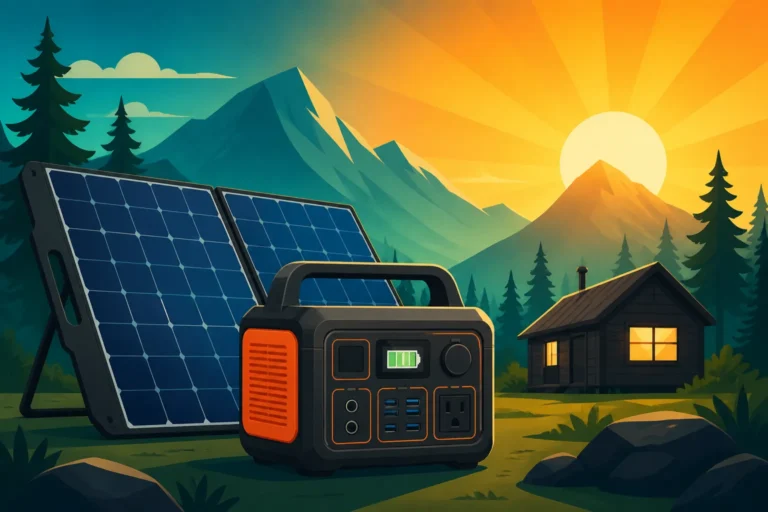
For those of us venturing into the beautiful, untamed world of off-grid living, whether it's for a weekend camping trip, remote cabin, or even full-time van life, reliable power is often the biggest headache. We crave independence from the grid, but losing power to essential devices can quickly turn idyllic freedom into a frustrating ordeal. This guide aims to pull back the curtain on the Goal Zero Yeti portable power station, diving deep into its specifications and real-world performance to help you decide if it’s the right companion for your off-grid adventures.
The Allure of Portable Power in Off-Grid Living
Let's face it, living off-grid, even temporarily, is about embracing a certain kind of freedom. But that freedom doesn't mean you want to give up all your creature comforts or essential tools. The sun provides an abundant energy source, but capturing and storing it efficiently, especially in a mobile setup, is where the challenge lies. Portable power stations, like the Goal Zero Yeti, promise to bridge that gap, offering a contained, relatively easy-to-use solution for your power needs.
Why Portability Matters for Solar Independence
When you’re thinking about powering your life away from traditional utility lines, flexibility is key. Imagine trying to power a remote cabin, then needing that same power setup for a weekend fishing trip, or even just moving your workstation to a different part of your property. A traditional, fixed off-grid solar system, while robust for a permanent dwelling, isn't going to cut it for these dynamic needs.
This is where the magic of portability truly shines. For RV dwellers, van lifers, or those with small cabins, a portable power station means you can charge up from your main solar array or even a wall outlet when available, then pack it up and take it wherever you need power most. If you're out in the wilderness, having a unit that can be easily moved to the sunniest spot to recharge via solar panels is invaluable. It’s also a fantastic option for emergency preparedness, offering a quick and easy way to keep vital electronics running during an unexpected power outage. You don't have to be a seasoned electrician to get these units up and running, which is a huge relief for many folks.
The Challenge of Balancing Power and Size
The eternal struggle with portable power solutions is always finding that sweet spot between sufficient power capacity and a manageable physical size. You need enough juice to run your chosen appliances, but you certainly don't want a behemoth that takes up all your precious space in a tiny home or RV. Many of us have been there, buying a small, seemingly convenient battery bank only to find it can barely power a laptop for a few hours, leaving us scrambling for alternative power sources.
Then there's the other end of the spectrum: massive, heavy units that require a forklift to move. The trick is to match your power needs to the right size of portable power station. Do you just need to charge phones and a small drone, or are you hoping to run a mini-fridge, lights, and a laptop for days on end? The answer to that question will heavily influence the size and capacity you ultimately need, and it’s a decision point where many people feel overwhelmed. This is why understanding the specific models and their capabilities, like those offered by Goal Zero, is so important. For example, understanding How Many Watt-Hours You Use Per Day is critical to making the right choice.
Goal Zero Yeti: A Deep Dive into Key Specifications
Goal Zero has been a prominent name in the portable power world for quite some time, and their Yeti line offers a range of options for various needs. From smaller units designed for charging phones and laptops to larger ones capable of running a cabin or an entire RV, there's usually a Yeti for the job. Let's break down what makes these units tick.
Capacity and Power Output: What Can It Really Handle?
When you’re looking at a Goal Zero Yeti, the first numbers you’ll often encounter are its capacity, measured in Watt-hours (Wh) or Kilowatt-hours (kWh), and its power output, measured in Watts (W) for AC and DC.
- Watt-hours (Wh): This tells you how much energy the battery can store. A higher Wh rating means it can run appliances for longer. For example, a Goal Zero Yeti 1500X has a 1516Wh capacity. If you have an appliance that draws 100 watts, theoretically, it could run for about 15 hours (1516 Wh / 100 W = 15.16 hours). Of course, real-world usage varies due to inverter efficiency losses and other factors. Different models offer varying capacities; for instance, the Yeti 200X might offer 200Wh, perfect for casual charging, while the mighty Yeti 6000X boasts 6071Wh, capable of powering more demanding setups for extended periods.
- Continuous Power Output (Watts): This specifies the maximum wattage the inverter can continuously supply. If your coffee maker needs 1200W, you need a Yeti with an inverter capable of at least that much continuous output. The Yeti 1500X, for example, offers 2000W continuous pure sine wave AC output, which is robust enough for most standard household appliances.
- Surge Power Output (Watts): Many appliances, especially those with motors like refrigerators or power tools, draw a much higher "starting" wattage for a brief moment before settling into their running wattage. This is called surge power. A good portable power station will have a higher surge rating than its continuous rating to accommodate these initial spikes. The Yeti 1500X's 3500W surge capability is a good example of this, allowing it to kickstart those power-hungry items without tripping. Understanding How to Size an Inverter for Surge Loads is crucial here.
It’s easy to get caught up in the big numbers, but it’s vital to perform an honest assessment of your daily energy consumption. For instance, if you're trying to run a full-size refrigerator, you'll need a much larger system than if you're just charging phones and powering some LED lights. Many people overestimate or underestimate their needs, leading to either an underpowered system or an unnecessarily expensive one.
Battery Chemistry and Longevity: LiFePO4 vs. Lithium-ion
The heart of any portable power station is its battery. Goal Zero has traditionally relied on Lithium-ion (NMC) batteries, but more recently, they've introduced models with Lithium Iron Phosphate (LiFePO4) batteries. Understanding the difference is key to long-term satisfaction.
- Lithium-ion (NMC): Many older or smaller Goal Zero Yeti models, and indeed many power stations on the market, use NMC (Nickel Manganese Cobalt) Lithium-ion batteries. These batteries are known for their high energy density, meaning they can store a lot of power in a relatively small and light package. They also tend to be cheaper to produce. However, their lifespan is generally shorter, typically rated for 500-800 cycles before capacity significantly degrades. They can also be more sensitive to extreme temperatures.
- Lithium Iron Phosphate (LiFePO4): Newer, more premium Goal Zero Yeti models, like some of the "Pro" series, are now featuring LiFePO4 batteries. These are rapidly becoming the gold standard for off-grid applications. Why? They offer a significantly longer cycle life—often 2,000 to 3,500+ cycles to 80% capacity—making them a much better long-term investment. They are also inherently safer, less prone to thermal runaway, and perform better in a wider range of temperatures. While they are a bit heavier and bulkier for the same energy capacity compared to NMC, their durability and longevity make them ideal for systems intended for frequent, deep cycling. If you are comparing LiFePO4 vs Lead-Acid Battery Cost, you'll quickly see the long-term benefits of LiFePO4.
When evaluating a Yeti model, check its battery chemistry. For intermittent use or smaller, lighter needs, NMC might be perfectly fine. But for sustained off-grid living, where you'll be cycling the battery regularly, a LiFePO4 model will likely offer much better value and peace of mind over its lifespan.
Input and Output Ports: Versatility for Every Device
A portable power station is only as good as its ability to connect to and power your devices. Goal Zero Yetis are generally very well-equipped in this regard, offering a variety of input and output ports.
- AC Outlets: These are your standard household plugs (typically 120V AC in North America). Most Yeti models offer multiple AC outlets, usually pure sine wave, which is crucial for sensitive electronics like laptops, medical devices (like a CPAP machine), and high-fidelity audio equipment. Modified sine wave inverters, found in some cheaper alternatives, can damage or reduce the lifespan of these devices.
- DC Ports: These include 12V car ports, 6mm ports, and sometimes Anderson Powerpole connectors. These are excellent for running DC-specific appliances directly, which can be more efficient as it bypasses the inverter loss associated with converting DC battery power to AC and then back to DC for charging some devices. For example, many portable refrigerators, fans, or LED light strips run directly on 12V DC.
- USB Ports: Modern living demands USB charging. Goal Zero Yetis typically include a mix of USB-A ports (both standard and fast-charging) and USB-C Power Delivery (PD) ports. USB-C PD is a game-changer for quickly charging laptops, tablets, and newer smartphones, often delivering 60W or even 100W of power.
- Input Ports: How do you charge the Yeti itself?
- Wall Charger: All Yetis come with a standard AC wall charger for plugging into a household outlet. This is typically the fastest way to charge from grid power.
- Solar Input: This is where the "solar" in solar generator comes in. Goal Zero uses proprietary input ports for their solar panels (often an 8mm port or their High Power Port, HPP). You can connect Goal Zero's own solar panels, or with the right adapters, you can use panels from other brands like Renogy or those commonly found on Amazon. The solar charging capability is one of the biggest draws for off-grid users, allowing true energy independence. Always check the maximum solar input wattage for your chosen Yeti to ensure you’re pairing it with appropriate panels. Some larger models can take up to 600W or even 1200W of solar input, drastically reducing recharge times on sunny days.
The sheer array of ports means you can power a wide range of devices simultaneously, which is a significant advantage in any off-grid setup.
Real-World Performance and User Experience Review
Having the specs laid out is one thing, but how does the Goal Zero Yeti actually perform when you’re out in the wild, far from a wall outlet? This is where the rubber meets the road, and user experience really tells the tale.
Practical Applications in Off-Grid Scenarios
The versatility of the Goal Zero Yeti makes it suitable for a multitude of off-grid applications. Let's look at some common scenarios:
- Van Life and RV Adventures: For many full-time or part-time nomads, the Yeti serves as the primary power hub. A Yeti 1500X or 3000X, paired with a few flexible solar panels mounted on the roof, can easily power an RV's necessities: a small 12V compressor fridge, LED lighting, laptops for remote work, and all your phone charging. Users appreciate the compact nature compared to building a full custom system, especially if space is at a premium. It’s also much quieter than a gas generator, a huge plus for campsite etiquette.
- Remote Cabins and Tiny Homes: For smaller structures or those used seasonally, a Yeti 3000X or 6000X can provide ample power. Imagine running lights, charging tools, powering a water pump for a few minutes a day, and even enjoying a movie night with a projector. While it might not run a full-sized electric water heater or central air conditioning, it excels at providing reliable power for core necessities. This kind of setup can significantly reduce the Cost to Power a Cabin with Solar.
- Emergency Preparedness and Blackout Backup: When the grid goes down, a fully charged Yeti becomes a lifeline. It can keep your refrigerator running for crucial hours, charge essential medical devices like a CPAP machine, power communication devices, and provide lighting. The grab-and-go nature means you don't need complex installation during a crisis; just plug in and power up.
- Outdoor Events and Workshops: Hosting an outdoor gathering? Need power for tools at a remote construction site? A Yeti can power blenders for smoothies, speakers for music, or even an impact driver and circular saw for a few hours. Its rugged design means it can handle some of the bumps and knocks of active use.
The simplicity of operation is often highlighted by users. There's no complex wiring diagram to figure out, no specialized tools needed for initial setup (beyond connecting solar panels). This makes it very approachable for beginners who might otherwise be intimidated by the idea of setting up an entire solar system.
Pros and Cons: Weighing the Good with the Not-So-Good
No product is perfect, and the Goal Zero Yeti has its strong points and areas where it might not be the best fit for everyone.
Pros:
- Ease of Use: This is perhaps the biggest advantage. It's truly plug-and-play. You don't need to be an electrical engineer to operate it.
- Portability: While the larger units are heavy, they are designed with integrated handles and are far more portable than a custom-built battery bank and inverter setup.
- Comprehensive Outlets: A wide array of AC, DC, and USB ports means you can power almost anything you need.
- Reliable Brand Reputation: Goal Zero generally has a good reputation for quality and customer support, and their products are widely available on platforms like Amazon.
- Pure Sine Wave Inverters: Crucial for sensitive electronics, ensuring clean and safe power.
- Expandability (with some models/accessories): Certain models can integrate with additional battery banks (like the Tank Expansion Battery) or be charged from multiple solar panels for faster recharging.
Cons:
- Cost: Goal Zero products tend to be on the pricier side compared to some competitors or DIY component builds. You're paying for convenience, design, and brand reputation. The Off-Grid Solar Kit Price Ranges can be quite broad, and Goal Zero often sits at the higher end.
- Weight (for larger units): While portable, a Yeti 6000X is a substantial piece of equipment (over 100 lbs) and not something you'd casually carry around. Even the 1500X is around 45 lbs.
- Proprietary Connectors: While they've made strides with standardizing, some Goal Zero connectors (like the 8mm solar input) require adapters if you want to use non-Goal Zero solar panels. This isn't a dealbreaker but can add to the initial cost or complexity.
- Battery Chemistry (older models): Older models using NMC Lithium-ion batteries have a shorter lifespan than the newer LiFePO4 variants, which can be a concern for long-term, heavy usage.
- Limited Customization: Unlike a DIY system where you can pick and choose every component (panels, charge controller, inverter, battery), the Yeti is an integrated unit, offering less flexibility for specific, highly customized power needs.
Expanding Your Yeti System: Integrations and Limitations
While the Yeti is an all-in-one unit, there are ways to extend its capabilities.
- Adding More Solar Panels: This is the most common and effective way to "expand" your system. If your Yeti has a maximum solar input of, say, 600W, and you're only using a 200W panel, you can add more panels (up to the unit's limit) to significantly reduce charging time. You can often connect multiple smaller panels in series or parallel, depending on the panel voltage and Yeti's input specifications. Brands like Renogy offer excellent portable and rigid solar panels that can be adapted for use with Goal Zero products. Learning How to Add Panels to an Existing System is a great skill for maximizing your solar harvest.
- External Batteries (select models): Some larger Yeti models offer a "Link" port or expansion capabilities that allow you to connect external 12V lead-acid batteries or even proprietary Goal Zero expansion batteries (like the Yeti Tank) to increase your total storage capacity. This is fantastic for those who find their single Yeti unit is just shy of their daily energy needs.
- Generator Backup: For ultimate resilience, you can always pair your Yeti with a gas or propane generator. If you have prolonged cloudy weather or high power demands, a generator can quickly recharge your Yeti, ensuring you never run out of power. This essentially becomes your Off-Grid Solar Generator Backup Cost.
However, the primary limitation is that you cannot generally swap out the internal inverter or battery with different brands or types. The Yeti is a closed system in that regard. If you outgrow its maximum AC output or desire a different type of battery, you'd likely need to upgrade to a different Yeti model or explore a custom-built off-grid solution.
Comparing Goal Zero Yeti to Other Off-Grid Portable Solutions
The Goal Zero Yeti isn't the only player in the portable power station game. Understanding how it stands up against other options can help clarify your decision.
How it Stacks Up Against DIY Builds
Many off-grid enthusiasts consider building their own solar power system. This usually involves purchasing individual components: solar panels, a charge controller, a battery bank, and an inverter.
DIY Build Advantages:
- Cost-Effectiveness: Often, a DIY system can be significantly cheaper per watt-hour than an integrated portable power station, especially if you're willing to source components and do the labor yourself.
- Customization: You have complete control over every component. Want a specific type of LiFePO4 battery? Need a super-powerful inverter? You can design it exactly to your needs. This is perfect for understanding How to Choose an Off-Grid Solar System from the ground up.
- Repairability/Upgradability: If one component fails, you can often replace just that part. You can also easily upgrade parts like your battery bank or inverter as your needs change.
Goal Zero Yeti Advantages over DIY:
- Simplicity and Convenience: This is the big one. No complex wiring, no sizing calculations (for individual components), no hunting for compatible parts. It's ready to go out of the box.
- Compactness: While large Yetis are heavy, they are designed as a single, relatively compact unit, often with a smaller footprint than a comparable DIY setup with multiple boxes and wires.
- Safety (Integrated BMS): The internal Battery Management System (BMS) in a Goal Zero Yeti is factory-integrated and optimized for its components, reducing the risk of wiring errors or battery issues.
For those who enjoy tinkering, have a good grasp of electrical systems, and want to save money while maximizing customization, a DIY approach might be more appealing. However, for those who value simplicity, reliability, and ease of use, and are willing to pay a premium for it, the Goal Zero Yeti is an excellent choice. You can learn more about DIY vs Professional Off-Grid Solar Cost to help weigh your options.
Alternatives in the Portable Power Station Market
The portable power station market has exploded in recent years, with many excellent brands offering compelling alternatives to Goal Zero. Some notable competitors include EcoFlow, Bluetti, and Jackery.
- EcoFlow: Known for their fast-charging technology (X-Stream) and modular designs, EcoFlow offers a range of power stations from small units to large, expandable systems like the Delta Pro. They often emphasize quick recharging and high power output for their size.
- Bluetti: Bluetti also provides a wide array of options, often featuring robust LiFePO4 batteries and powerful inverters. Their modular systems, like the AC300/AC500, allow users to build impressive home backup solutions.
- Jackery: Similar to Goal Zero, Jackery has a strong presence in the portable power space, offering well-designed, user-friendly power stations. They're often praised for their aesthetic and ease of use, particularly in smaller and mid-range capacities.
Each brand has its unique selling points, whether it's specific port configurations, faster charging speeds, different battery chemistries across their lineup, or competitive pricing. When considering a Goal Zero Yeti, it's always wise to compare specific models with comparable offerings from these other brands. For instance, comparing the EcoFlow Delta Pro for Off-Grid: Specs and Review with a high-end Yeti model can help clarify which feature set aligns best with your needs. Many of these alternatives, like Goal Zero, are readily available on Amazon, making research and purchase convenient.
Ultimately, the Goal Zero Yeti remains a strong contender in the portable off-grid power market. Its blend of user-friendliness, robust design, and a range of capacities make it a viable solution for many who seek independence from the grid without the complexity of a full-scale custom installation.
Goal Zero Yeti Model Comparison
To give you a clearer picture, here’s a comparison of some popular Goal Zero Yeti models, highlighting their key specifications for off-grid consideration. Please note that prices are approximate and can vary based on retailer and promotions.
| Feature / Model | Goal Zero Yeti 700 | Goal Zero Yeti 1500X | Goal Zero Yeti 3000X | Goal Zero Yeti 6000X |
|---|---|---|---|---|
| Capacity (Wh) | 676Wh | 1516Wh | 3032Wh | 6071Wh |
| Battery Chemistry | LiFePO4 | NMC Lithium-ion | NMC Lithium-ion | NMC Lithium-ion |
| Continuous AC Output | 800W (Surge 1600W) | 2000W (Surge 3500W) | 2000W (Surge 3500W) | 2000W (Surge 3500W) |
| Total Weight | 21 lbs (9.5 kg) | 45.6 lbs (20.7 kg) | 68 lbs (30.8 kg) | 104 lbs (47.2 kg) |
| Max Solar Input | 200W (8mm/HPP) | 600W (HPP) | 600W (HPP) | 600W (HPP) |
| USB-C PD Output | 1x 100W | 1x 60W | 1x 60W | 1x 60W |
| Typical Use Case | Camping, small electronics, short trips | Van life, RV, small cabin, emergency backup | Off-grid cabin, larger RV, home backup | Extended off-grid living, significant backup |
| Approx. Price Range | $700 – $800 | $1,600 – $1,800 | $2,900 – $3,200 | $5,000 – $5,500 |
Note: Goal Zero periodically updates its product line; always check the manufacturer's website for the most current specifications and pricing, especially regarding battery chemistry as LiFePO4 models become more prevalent.
Final Thoughts on the Goal Zero Yeti for Off-Grid Use
The journey to off-grid independence is a personal one, filled with unique challenges and requirements. For many, the Goal Zero Yeti provides a fantastic entry point or a reliable supplement to their existing setup. It delivers on the promise of portable, accessible power, cutting through the complexities that often deter people from embracing solar.
Whether you're looking for a simple solution to keep your devices charged while car camping, need a robust power source for your remote hunting cabin, or want a silent, clean alternative to a noisy generator for your RV, there's likely a Yeti model that fits the bill. Its integrated design, comprehensive output options, and ability to pair with solar panels make it a truly versatile tool for achieving energy freedom. Just remember to carefully assess your actual power needs to choose the right size and ensure it aligns with your budget and long-term expectations for battery longevity. This planning will save you headaches down the road and ensure you're truly prepared for whatever your off-grid life throws at you.
Disclaimer
The information provided in this article is for general informational purposes only and does not constitute professional advice. Off-grid solar system design and installation can be complex and involve electrical hazards. Always consult with qualified professionals and adhere to all local codes and regulations when planning or installing any solar power system.