How to Size an Inverter for Surge Loads
There's nothing quite like the feeling of getting your off-grid solar system all set up, flipping that switch, and having power flow! But then, a few days or weeks later, you plug in your well pump or microwave, and wham—your inverter trips, or worse, your whole system shuts down. It's incredibly frustrating when your hard-earned solar power seems to fail you right when you need it most, especially for appliances you thought your system could handle. This guide is going to walk you through exactly why this happens, focusing on those pesky "surge loads," and teach you how to properly size your inverter so you can confidently power all your essential off-grid appliances without the unwelcome interruptions.
Understanding the Beast: What Are Surge Loads?
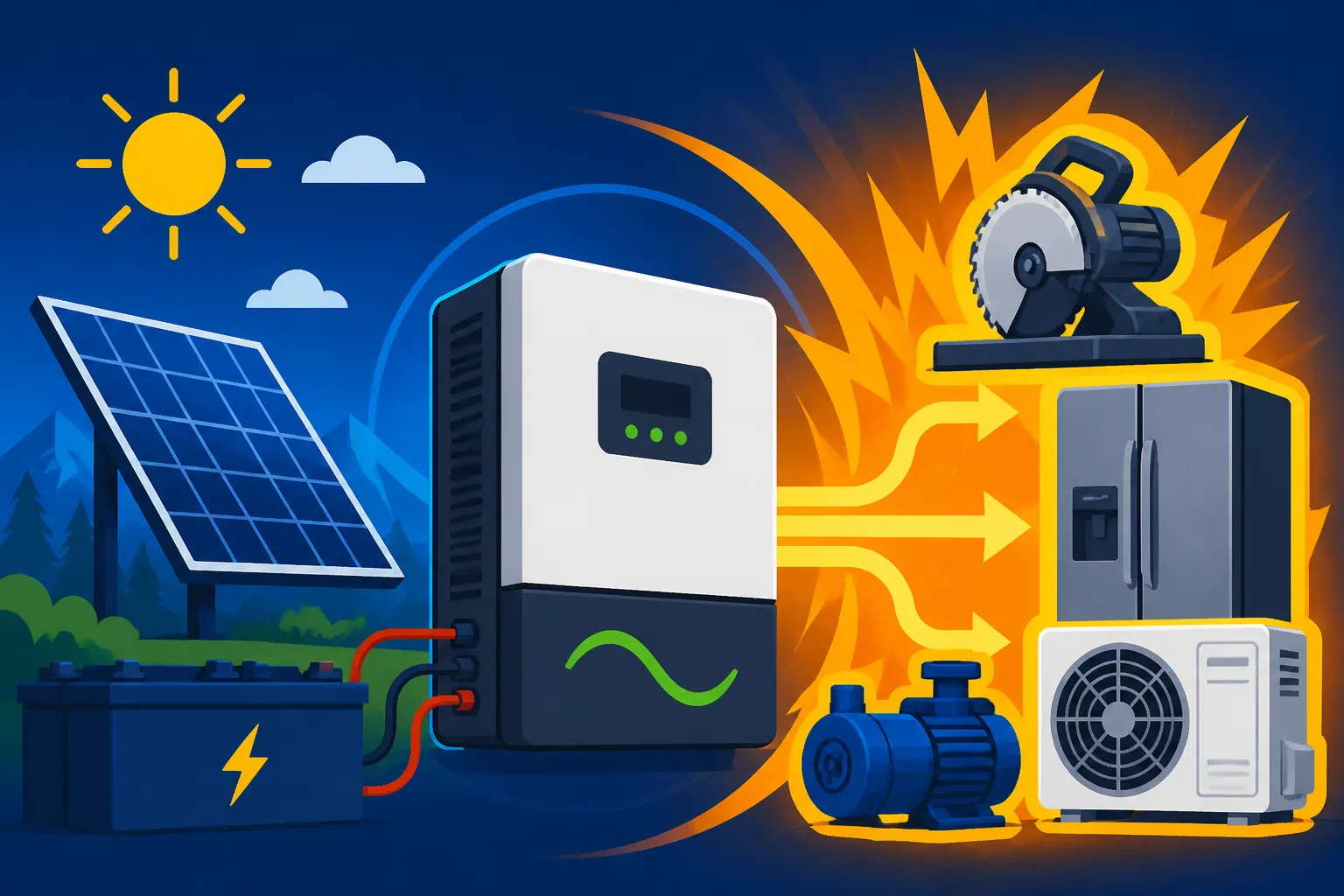
Before we dive into the numbers, let's get a real grip on what a "surge load" actually is and why it's such a critical factor in off-grid solar. Imagine trying to push a car from a dead stop versus keeping it rolling. That initial push requires a lot more effort, right? Appliances work similarly. Many electric motors and heating elements demand a burst of extra power, sometimes two, three, or even ten times their normal operating power, just for a brief moment to get going. This sudden, short-lived demand for power is what we call a surge load, also known as starting watts.
Starting Watts Versus Running Watts
This is the absolute cornerstone of understanding surge loads. Every electrical appliance has two main power ratings that matter to an off-grid system:
- Running Watts (or Continuous Watts): This is the power an appliance needs once it's up and running smoothly. It's the consistent power draw you see on most specification sheets, and it's what your inverter needs to be able to supply constantly. For example, a refrigerator might continuously draw 150 watts once its compressor is stable.
- Starting Watts (or Surge Watts): This is the significantly higher, but very brief, power spike an appliance needs at the moment it turns on. This is especially true for anything with a motor, compressor, or certain types of transformers. That same refrigerator might need 800-1200 watts for a fraction of a second to kick its compressor into action. If your inverter can't handle this momentary demand, it will simply shut down to protect itself and your system. This crucial difference is often overlooked, leading to those frustrating power failures. You can learn more about this by diving into How to Handle Starting Watts vs Running Watts.
Think about common household items. Your coffee maker, for instance, has a relatively stable running watt usage, mostly turning electrical energy directly into heat. There isn't much of a "startup" surge. But your freezer, your air conditioner, a vacuum cleaner, or even a well pump all have motors that need a significant jolt to overcome inertia and start moving. This is why you might be able to run several lights and charge your laptop with no problem, but the moment you try to use a power tool, everything goes dark.
Why Do Appliances Surge and What's Affected?
The physics behind these surges isn't overly complicated, but it's important to grasp the common culprits.
- Inductive Loads (Motors and Compressors): These are the biggest offenders. When you power up an electric motor, it acts like a temporary short circuit for a split second, drawing a massive amount of current to create the magnetic field needed to start spinning. This applies to refrigerators, freezers, air conditioners (especially mini-splits), well pumps, washing machines, vacuum cleaners, blenders, and most power tools. The surge can be anywhere from 2 to 10 times the running wattage.
- Capacitive Loads: While less common in typical household appliances compared to inductive loads, some electronics with large capacitors can also draw a brief surge as those capacitors charge up upon startup. However, their impact on overall inverter sizing for off-grid living is usually less significant than inductive loads.
- Resistive Loads: These are generally easy-going. Appliances like incandescent light bulbs, electric kettles, toasters, and basic space heaters convert almost all electrical energy into heat or light without a major surge. Their starting watts are usually very close to their running watts.
Understanding which of your appliances fall into the surge category is your first major step toward a stable off-grid system. It’s not just about what you run, but also what starts and how much power it demands in that crucial moment.
Calculating Your System's True Surge Needs
Now that we know what a surge is, let's get practical. Figuring out your actual surge requirements is less about complex math and more about diligent inventory and realistic expectations. This isn't just guesswork; a little planning here prevents a lot of headaches later.
Identifying Your Highest Surge Demand
The goal here is to pinpoint the single appliance or combination of appliances that will demand the most power at any given instant. This determines the minimum surge capacity your inverter must possess.
-
List All Your Appliances: Go through your home, RV, or cabin and make a comprehensive list of every electrical device you plan to power. Don't forget seasonal items like fans or heaters.
-
Find Running and Starting Watts: This is where the detective work comes in.
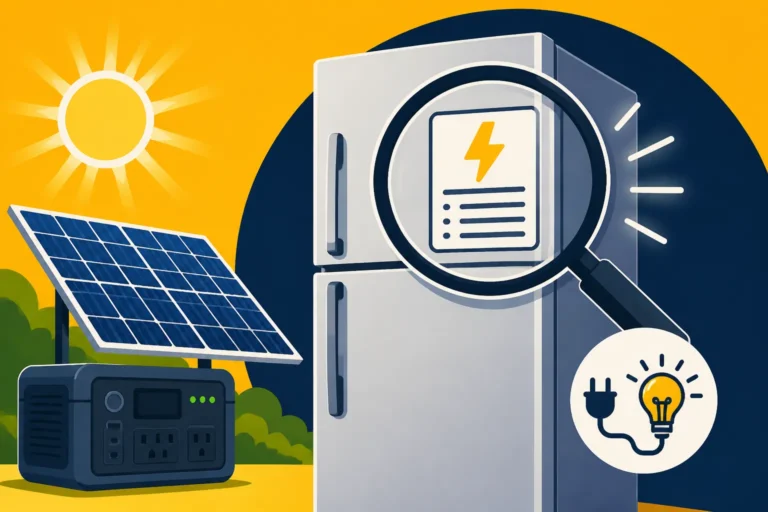
- Check Appliance Labels: Look for wattage ratings on the appliance itself, usually on a sticker on the back, bottom, or inside a door (like a refrigerator). Sometimes it lists amps and volts, in which case you can multiply them (Watts = Volts x Amps).
- Consult User Manuals/Manufacturer Websites: If you can't find it on the label, the manual or the manufacturer's product page online is your next best bet. Sometimes they will explicitly state "starting watts" or "peak power."
- Use a Kill-a-Watt Meter: For existing appliances, a Kill-a-Watt meter is an inexpensive tool that plugs into an outlet, and you plug the appliance into it. It can measure real-time wattage, including peak surge wattage on startup. This is the most accurate way to measure existing loads.
- Estimate for Common Appliances: If all else fails, you'll need to use general estimates. For many motor-driven appliances, a common rule of thumb is to assume starting watts are 3 to 7 times the running watts. A refrigerator might run at 150W but surge to 800-1200W. A well pump, especially a submersible one, could surge dramatically higher, perhaps 5-10 times its running wattage. This is why careful research for specific models is essential.
Here's a quick table of typical running and estimated starting watts for common off-grid appliances:
Appliance Typical Running Watts Estimated Starting Watts (Peak) Notes LED Light Bulb 5-15 W 5-15 W Mostly resistive, no significant surge. Laptop Charger 50-100 W 50-100 W Minor surge, almost equal to running. Refrigerator (Energy Star) 80-200 W 800-1500 W Compressor motor, significant brief surge. Microwave (1000W output) 1500-2000 W 1500-2000 W High resistive/transformer, minimal surge. Well Pump (1/2 HP) 750-1200 W 2500-6000 W Induction motor, very high surge. Coffee Maker 800-1500 W 800-1500 W Resistive heating element, no significant surge. Blender 300-600 W 600-1200 W Universal motor, moderate surge. Air Conditioner (10,000 BTU) 1000-1500 W 2000-4000 W Compressor motor, significant brief surge. Washing Machine 500-2000 W 1500-3000 W Motor and heating element, moderate to high surge. Hair Dryer 1200-1800 W 1200-1800 W Resistive heating, fan motor, minimal surge. Remember, these are estimates. Always try to find actual specifications for your specific appliances.
-
Determine Your Peak Simultaneous Surge: This is the crucial step. You need to consider which high-surge appliances might realistically turn on at the exact same time.
- Could your refrigerator compressor kick on while your well pump is starting? Probably not, but maybe.
- Is it likely you'd use a microwave and a power tool at the same instant? Less likely, but possible.
- Most people focus on the single largest surge load they might have, plus the running watts of everything else that's continuously operating. For instance, if your biggest surge is the well pump at 5000W, and your lights and fridge are running at a combined 300W, your inverter needs to handle that 5000W surge on top of the 300W continuous draw. Some people add 10-20% buffer to this.
This load analysis is paramount for sizing all your components, not just the inverter. This detailed work is part of what makes Off-Grid Solar Load Calculation Explained so important.
Factoring in Simultaneous Use
It's tempting to just add up all the worst-case surges, but that's often overkill and can lead to an unnecessarily expensive system. Instead, be realistic about what will actually be demanding power simultaneously.
- Prioritize: Identify your "critical" surge loads – the ones you absolutely need to run without interruption. For many, this might be a well pump or a refrigerator.
- Stagger Use: One of the benefits of off-grid living is learning to manage your power. You might decide you'll never run the microwave when the air conditioner's compressor is cycling on. This behavioral adjustment can significantly reduce your peak simultaneous surge requirement.
- The "Worst-Case Realistic Scenario": This is the combination of your highest single surge appliance (e.g., well pump starting) plus the running watts of all other appliances that would reasonably be on at that time (lights, TV, charging devices, refrigerator running its compressor). This total value represents the maximum surge your inverter must be able to deliver, even if only for milliseconds.
By carefully considering your lifestyle and appliance usage patterns, you can optimize your inverter size without going overboard. You'll thank yourself later when you understand How Many Batteries for an Off-Grid System or How Many Solar Panels for Off-Grid Living as well, as these are all interconnected.
Inverter Selection and Safeguards
Once you have a clear picture of your surge requirements, you can confidently choose an inverter that won't leave you in the dark. This is where the rubber meets the road, matching your calculated needs with the right equipment.
Key Inverter Specifications for Surge
When you're shopping for an off-grid inverter, don't just look at the continuous power rating. You need to scrutinize its surge capabilities.
- Continuous Power Rating (Rated Power): This is the wattage the inverter can deliver indefinitely, day in and day out. This should meet or exceed your total continuous running wattage for all appliances you expect to use simultaneously.
- Surge Power Rating (Peak Power/Starting Power): This is the maximum wattage the inverter can deliver for a very short duration, typically a few milliseconds up to a few seconds. This is the number that needs to match or exceed your highest calculated peak simultaneous surge demand.
- Surge Duration: A crucial, but often less prominently advertised, specification is how long the inverter can sustain its surge capacity. Some inverters can provide a massive surge for only 10 milliseconds, while others can hold a slightly lower surge for 5-10 seconds. For motor loads, a longer surge duration (even a second or two) is beneficial as some motors take a little longer to spin up. Always aim for an inverter where the surge rating is at least double its continuous rating, but preferably 3x or more for systems with heavy motor loads like well pumps or larger air conditioners. Brands like Victron Energy or Sol-Ark are known for their robust surge capabilities, allowing you to run demanding appliances with confidence. Even a solid option like a Renogy inverter will typically specify both continuous and surge ratings.
When reviewing Best Off-Grid Solar Inverters, pay close attention to these specs. Many reputable manufacturers provide detailed spec sheets online that break down these numbers.
The Role of Battery Banks and Wiring
It's easy to focus solely on the inverter, but remember, the inverter is just converting power. That power has to come from somewhere: your battery bank.
- Battery Bank's Ability to Deliver Current: A strong inverter needs a strong battery bank to back it up. If your batteries are too small or can't deliver enough current quickly, the inverter won't have the juice it needs to handle a surge, regardless of its own internal capabilities. High-quality lithium iron phosphate (LiFePO4) batteries are excellent at delivering high bursts of current, far better than traditional lead-acid batteries. The C-rating of your battery is key here—it indicates how quickly a battery can be discharged.
- Properly Sized Wiring: Just like the batteries, your wiring plays a vital role. If the cables connecting your battery bank to your inverter are too thin or too long, you'll experience significant voltage drop during a surge. This voltage drop means the inverter isn't getting the full voltage it needs, which can trigger low-voltage alarms or reduce its efficiency and surge capability. Always use appropriately sized, thick gauge cables for your battery-to-inverter connections, as specified by the inverter manufacturer or a wire sizing chart based on amperage and distance. This often involves looking at topics like How to Size Wire and Cables or How to Prevent Voltage Drop in Off-Grid Wiring.
Essentially, your entire electrical pathway from the batteries to the inverter needs to be able to handle that momentary rush of current without resistance or bottlenecking. Skimping on batteries or wiring will compromise even the best inverter's surge performance.
Real-World Examples and Common Mistakes
Learning the theory is one thing; applying it in the real world is another. Let's look at some practical scenarios and discuss pitfalls to avoid.
Scenarios for Different Off-Grid Setups
Different off-grid lifestyles come with different power demands and surge considerations.
- RV or Van Life: In a smaller mobile setup, space and weight are often constraints, so people tend to have fewer high-draw appliances. Your main surge culprits might be a small microwave, a robust coffee maker, or a blender. If you have an RV with a small rooftop AC unit, that compressor will be your biggest surge. For instance, a small 700-watt microwave typically pulls around 1200 watts continuous, but its brief surge can hit 1500-2000 watts. If your inverter is a 2000W continuous model, it might just handle that microwave, but it better have a robust surge rating of at least 3000-4000W for a brief period. You can find many guides on How to Size an Off-Grid System for a Rv or How to Size an Off-Grid System for a Van that delve into these specifics.
- Remote Cabin or Tiny Home: Here, you might have more "home-like" appliances. A full-sized refrigerator, a washing machine, or even a small well pump are common. The well pump is almost always the king of surge loads in a cabin. A typical 1/2 HP well pump might run at 1000 watts but demand 3000-5000 watts to start. This means your inverter needs a substantial surge capacity, even if your overall continuous load is fairly low. A 3000W continuous inverter with a 6000W surge capacity is a common choice for cabins with well pumps.
- Larger Off-Grid Homestead: For a full-fledged off-grid home, you're likely to have multiple significant surge loads: a full-size refrigerator, a freezer, a washing machine, perhaps a well pump, and maybe even a mini-split air conditioner. In these larger systems, you must not only account for the single largest surge but also the possibility of two or more medium-surge items (like a fridge and washing machine) kicking on close together. For a system with a well pump and a mini-split, a 5kW (5000W) continuous inverter with a 10-15kW surge rating might be necessary. This level of system complexity is why understanding How to Size an Off-Grid Solar System for a whole house is so important.
When looking for products, searching on platforms like Amazon for specific appliance wattage ratings can give you a better idea of what to expect, though always try to verify with the manufacturer.
Avoiding Common Sizing Pitfalls
Even with the best intentions, it's easy to make mistakes.
- Underestimating Surge Needs: This is by far the most common mistake. People look at a refrigerator's label and see "150 Watts" and assume any inverter over 200W will do. They forget the critical starting watts. Always over-estimate on the surge side rather than under-estimate.
- Ignoring Simultaneous Starts: While it's rare for every single motor to start at the exact same millisecond, ignoring the possibility of two high-surge items starting near-simultaneously can lead to issues. If your fridge cycles on just as you hit the power button on your well pump, you need your inverter to handle that combined peak. Many advanced inverters have "power assist" features that can momentarily pull more from batteries to help with surges, but they still have limits.
- Forgetting Future Expansion: What if you add a new appliance next year? Maybe an electric stove or a different type of well pump? Building in a little headroom (e.g., aiming for an inverter with 10-20% more surge capacity than your calculated immediate need) can save you from costly upgrades down the line. How to Design an Expandable System is a good read for this foresight.
- Not Accounting for Cold Climates: In colder temperatures, appliance motors can be stiffer and require slightly more power to start. While not a huge factor for every appliance, it's worth noting if you live in a very cold region and rely on motor-driven systems like well pumps.
- Relying Solely on Inverter Specs Without Considering Batteries: As mentioned, a fantastic inverter is only as good as the battery bank feeding it. If your batteries are weak or undersized, the inverter won't perform to its full surge potential. Ensure your battery bank has the instantaneous discharge capability to support your inverter's surge demands. Check out How Batteries Drive Off-Grid Solar Cost and How to Choose an Off-Grid Battery Bank for more insight.
By diligently working through your load analysis, being realistic about simultaneous use, and adding a little buffer for the future, you can select an inverter that will reliably power your off-grid dreams, without the frustrating shutdowns.
Disclaimer
The information provided in this guide is for educational and informational purposes only and does not constitute professional advice. Off-grid solar system design and installation can be complex and involve significant electrical risks. Always consult with a qualified electrician or solar professional before designing or installing any off-grid solar power system. Improper installation or sizing can lead to property damage, injury, or even death.