How to Handle Starting Watts vs Running Watts
One of the most common headaches new off-grid adventurers face is the bewildering power demands of their appliances. You painstakingly calculate your daily energy use, only to find your inverter tripping every time the refrigerator kicks on or you fire up a power drill. This frustrating cycle often comes down to a critical misunderstanding: the difference between starting watts and running watts. This guide will demystify these two essential terms, helping you design a robust off-grid solar system that handles all your power needs without a hiccup.
Understanding the Power Surge: What are Starting Watts?
Before you can truly master your off-grid power, you’ve got to get cozy with the concept of starting watts, often called "surge watts" or "peak watts." It’s the initial, brief burst of power an appliance demands when it first switches on. Think of it like a sprint versus a marathon.
The Initial Burst: Why Appliances Demand More
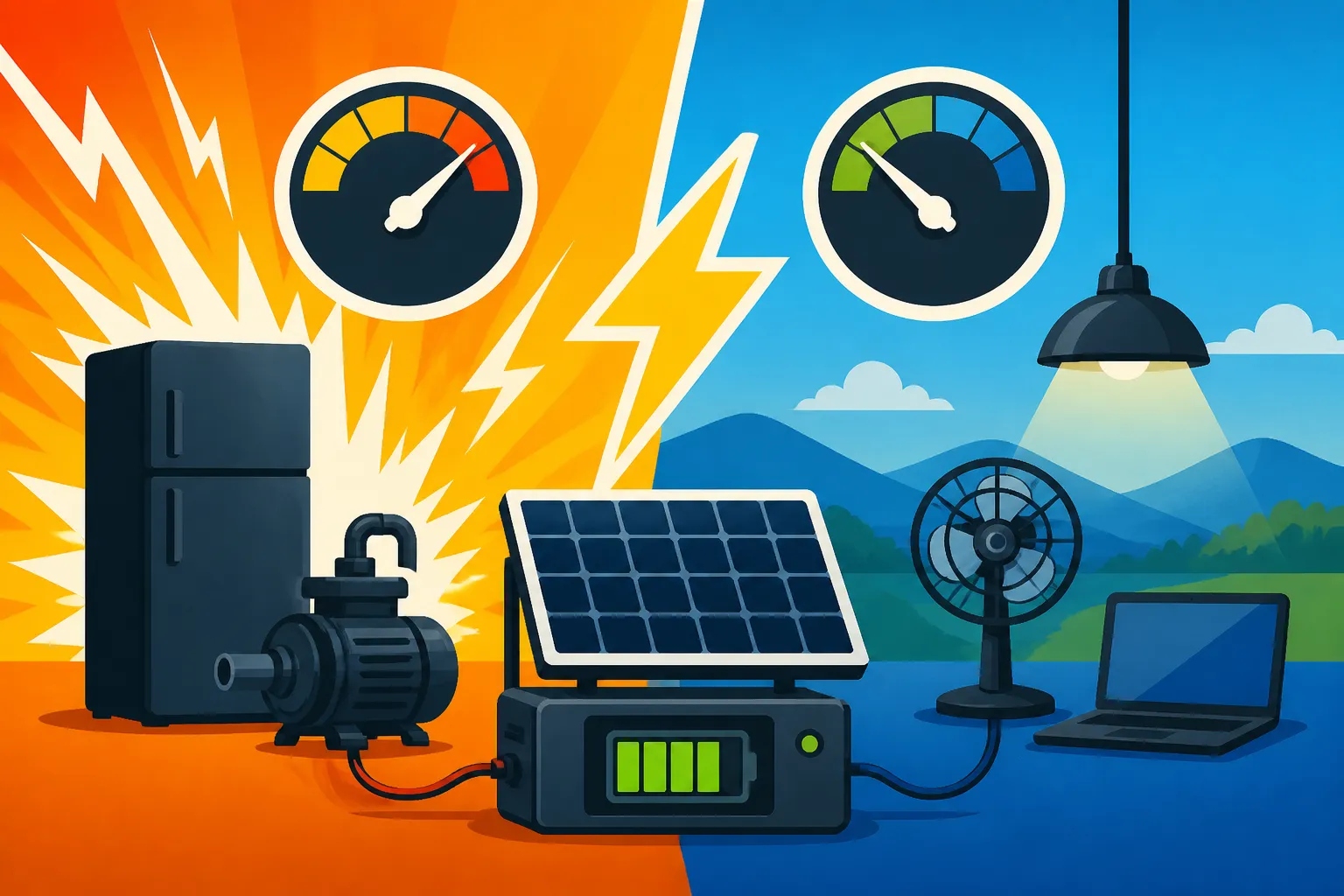
Imagine trying to push a heavy cart from a standstill. It takes a lot more effort to get it moving than it does to keep it rolling once it’s in motion, right? The same principle applies to many electrical devices, especially those with motors. When a motor-driven appliance, like a refrigerator compressor, a well pump, or a table saw, first starts, it needs a significant jolt of energy to overcome inertia and establish its electromagnetic field. This initial electrical "kick" can be several times higher than its continuous operating power draw.
For example, a typical refrigerator might only consume 150-200 watts while it's actually running and cooling. But when its compressor cycles on, it might briefly pull 800 to 1200 watts. This surge lasts only for a fraction of a second, or perhaps a few seconds, but it's enough to trip an undersized inverter or cause a momentary dip in your system voltage if not accounted for. This isn't an issue for simple resistive loads like incandescent light bulbs, toasters, or electric heaters, which consume a consistent amount of power from the moment they're switched on. Their starting watts are essentially the same as their running watts.
Identifying Surge Appliances in Your Home
It's crucial to identify the appliances in your off-grid setup that will demand a high starting wattage. Generally, anything with an electric motor is a prime suspect. Here's a quick list of common culprits:
- Refrigerators and Freezers: Their compressors are notorious for significant starting surges.
- Air Conditioners: Especially larger units, these can have some of the highest starting wattages.
- Well Pumps: These often involve powerful motors to move water, requiring a substantial initial surge.
- Washing Machines: The motor that spins the drum will have a surge.
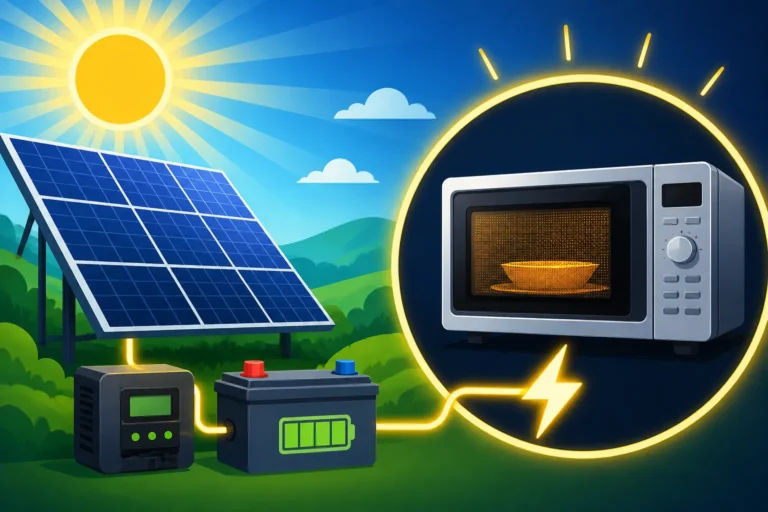
- Microwaves: While they don't have a motor in the traditional sense, their magnetron can draw a high peak power when first activated, similar to a surge.
- Power Tools: Drills, circular saws, air compressors, and other workshop tools are definite surge culprits.
- Vacuum Cleaners: The motor for suction and brushes will demand more at startup.
- Blenders and Food Processors: Smaller motors, but still capable of a noticeable kick.
To get a precise understanding, you can often find both starting and running wattages listed in your appliance manual or sometimes on a label on the device itself. For existing appliances, a simple plug-in watt meter (available on sites like Amazon) can give you real-time readings, letting you see that brief spike in action. It's an invaluable tool for any off-grid homeowner trying to understand their actual power consumption.
The Steady State: What are Running Watts?
Once an appliance successfully navigates its initial power surge, it settles into a more predictable and consistent power draw. This is where running watts come into play.
Consistent Power Needs for Ongoing Operation
Running watts, or continuous watts, are the amount of power an appliance uses once it's operating normally and steadily. This is the number most people think about when they're calculating their total daily energy consumption for an off-grid system. For example, if your coffee maker is rated at 1000 watts, that's typically its running wattage while it's actively brewing. Similarly, a string of LED lights might consistently draw 50 watts.
These running wattages, when multiplied by the hours you use an appliance, give you the total watt-hours (Wh) or kilowatt-hours (kWh) of energy consumed. This cumulative energy consumption is what dictates the overall capacity of your battery bank and the size of your solar array, as detailed in guides like How to Calculate Daily Energy Usage and Off-Grid Solar Load Calculation Explained.
Why Both Numbers Matter for Off-Grid Design
Ignoring either starting watts or running watts in your off-grid solar design is like trying to build a house without considering both its foundation and its roof – you're setting yourself up for problems.
If you only size your system based on running watts, you'll likely undersize your inverter. The first time your well pump tries to kick on, your inverter, unable to handle the momentary surge, will likely trip and shut down, leaving you without power. This isn't just an inconvenience; it can be incredibly frustrating and potentially damaging to your equipment over time.
On the flip side, while it might seem safer to just massively oversize your inverter to handle any possible surge, this can lead to unnecessary expense. A larger inverter than you truly need will cost more upfront and might even have higher idle power consumption, slightly draining your battery bank even when no loads are running. The goal is a balanced system, and understanding both starting and running watts helps you achieve that sweet spot. It's about ensuring your system can handle the sudden demands without wasting resources, ultimately leading to a more reliable and cost-effective setup for living off the grid.
Practical Strategies for Managing Starting and Running Watts in Off-Grid Systems
Navigating the world of starting and running watts in an off-grid setup can feel like a high-stakes balancing act. But with the right strategies, you can design a system that gracefully handles both the brief surges and the continuous draws, ensuring your lights stay on and your appliances keep humming.
Sizing Your Inverter for the Peak Surge
This is perhaps the most critical component when dealing with starting watts. Your inverter is the brain that converts your battery's DC power into usable AC power for your appliances. It needs to be robust enough to handle the instantaneous power spike of your largest surge appliance, even if that spike lasts only a second.
Every inverter has a continuous power rating and a surge power rating. For example, an inverter might be rated for 3000 watts continuous and 6000 watts surge for a few seconds. This means it can comfortably supply 3000 watts all day long, but it can also momentarily provide up to 6000 watts to get a motor spinning. When you're designing your system, you need to identify the single appliance with the highest starting wattage and ensure your inverter's surge rating can meet or exceed it. If you plan to run multiple surge appliances simultaneously (though this is generally advised against for smaller systems), you'd need to add their potential simultaneous surges, which often means a much larger and more expensive inverter.
For reliable performance, many off-grid enthusiasts gravitate towards brands known for their robust inverters and excellent surge capabilities, such as Victron Energy or Sol-Ark. These companies design their inverters with off-grid life in mind, offering features that manage tricky loads effectively. You can dive deeper into selecting the right one with resources like How to Size an Off-Grid Inverter or Best Off-Grid Solar Inverters.
Calculating Your Battery Bank for Continuous Draw
While your inverter handles the immediate power delivery, your battery bank is the heart of your off-grid system, storing the energy for sustained use. The size of your battery bank is primarily determined by your total daily energy consumption (watt-hours), which is largely made up of the running watts of all your appliances over time, plus a buffer for cloudy days.
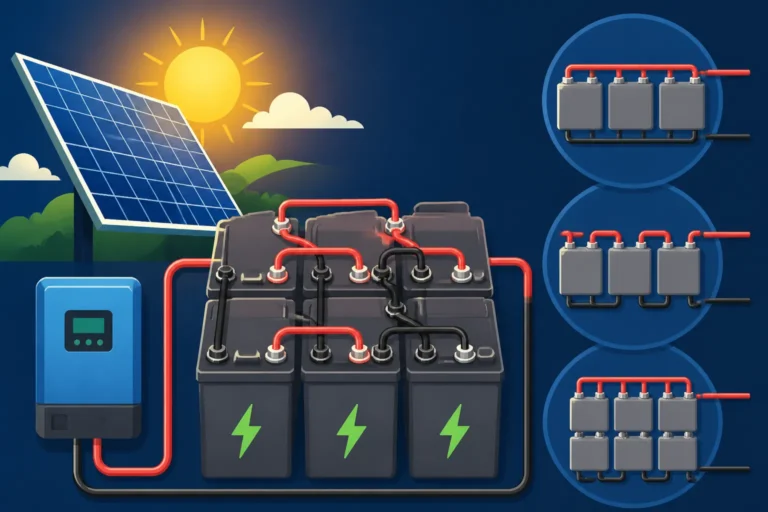
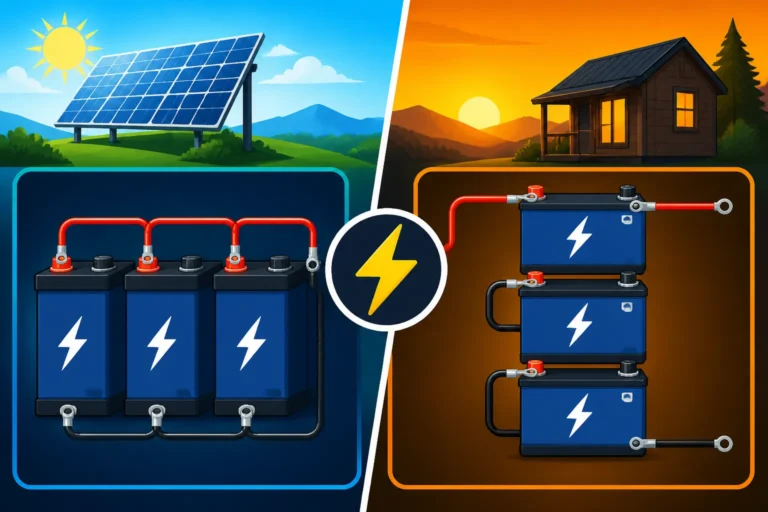
The battery bank isn't directly responsible for providing the peak starting watts in the same way an inverter is. Instead, it needs to be large enough to handle the cumulative energy demanded by those starting events and the sustained running of appliances throughout the day. A well-sized battery bank prevents excessive voltage sag during surges, which could otherwise cause your inverter to trip or appliances to perform poorly. If your battery bank is consistently being drawn down too quickly, or if its voltage drops significantly during a surge, it indicates you might need to reconsider How to Size an Off-Grid Battery Bank or potentially even your system voltage (e.g., upgrading from 12V to 24V or 48V for larger systems).
Solar Panels for Recharging and Sustained Power
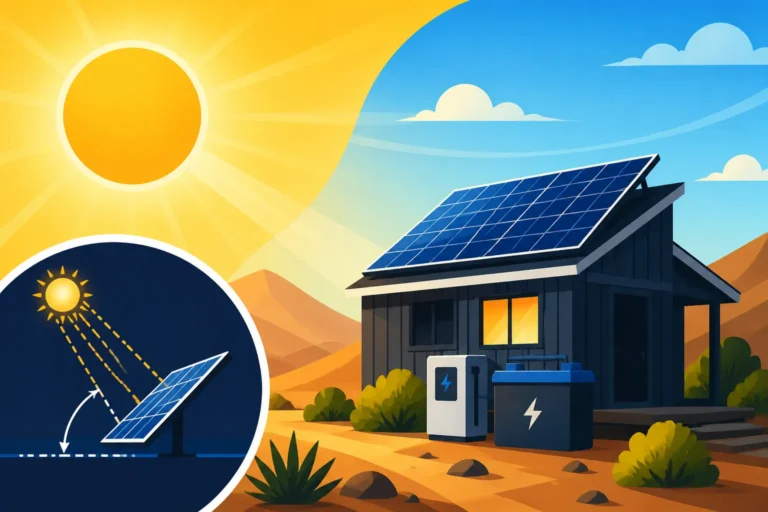
Your solar panels are the workhorses that replenish your battery bank. Their sizing is based on your average daily energy consumption (your running watts accumulated over 24 hours) and the available "peak sun hours" in your location. Panels generate power continuously during daylight hours, feeding it into your charge controller and then into your batteries.
The panels don't directly contribute to the instantaneous surge capacity of your inverter; that's the inverter's job, backed by the battery bank's ability to discharge rapidly. However, a sufficiently large solar array ensures your batteries are consistently topped up, ready to meet all demands, including the energy-intensive starting phases of appliances. You can explore How Many Solar Panels for Off-Grid Living to learn more about matching your panel array to your daily energy needs. For example, a Renogy 400W solar panel kit can be a great starting point for smaller systems, providing a solid foundation for recharging batteries that will then handle both starting and running loads.
The Role of Soft Starters and Energy-Efficient Appliances
Beyond correctly sizing your components, there are other smart ways to manage those tricky power dynamics:
- Soft Starters: These devices, either built into modern appliances or available as add-on modules, gradually ramp up the power supplied to a motor, effectively reducing the initial surge. This can be a game-changer for high-draw appliances like well pumps or larger air conditioners, allowing you to use a slightly smaller inverter than would otherwise be required.
- Energy-Efficient Appliances: This is a no-brainer for off-grid living. Choosing appliances with Energy Star ratings or, even better, those designed for DC operation (like 12V or 24V refrigerators) can drastically reduce both running watts and, by extension, your battery and solar panel requirements. A DC fridge, for instance, eliminates the inverter conversion losses and often has a much smoother power draw. Always check appliance labels carefully; every watt saved contributes to a more sustainable and less costly off-grid system.
Real-World Scenarios and Common Pitfalls
Understanding the theory is one thing, but applying it in the rugged reality of off-grid living is where the rubber meets the road. Let's look at some real-world examples and the common mistakes people make.
The Refrigerator Conundrum
This is probably the most frequent culprit for off-grid power frustrations. You've got a standard residential refrigerator, maybe it's 10 years old, and you look at its label. It proudly states "1.5 Amps" at 120V AC, which translates to a running wattage of about 180 watts (1.5A * 120V = 180W). "Great!" you think, "my 2000-watt inverter can handle that easily."
Then, you plug it in, it hums along for a bit, and suddenly, you hear a click, and everything goes dark. Your inverter has tripped. What happened? That refrigerator compressor, when it first engages, might actually draw anywhere from 800 to 1200 watts for a split second, sometimes even more for older, less efficient models. If your 2000-watt inverter's surge rating is only 1500 watts, it simply can't handle that initial kick. Even if the inverter itself has a decent surge, if your battery cables are too thin or your battery bank is too small to deliver that instantaneous current, the voltage can dip, causing the inverter to shut down as a protective measure. It's a common, infuriating lesson learned the hard way.
Avoiding Inverter Overload: Staggering Your Loads
One of the most practical and budget-friendly strategies for dealing with starting watts, especially in smaller or moderately sized off-grid systems, is load staggering. This simply means being mindful of what you turn on when.
Let's say you have a 3000-watt inverter with a 6000-watt surge capability, and your largest surge appliance is a well pump that can peak at 4000 watts. You also have a microwave that peaks at 1500 watts. If you turn on the well pump and then immediately try to heat something in the microwave, you could be asking your inverter to handle a combined surge of 5500 watts. While within its surge rating, it's pushing it, and if other things are running, it could easily trip.
The solution? Don't run them at the same time. Finish pumping your water, then run the microwave. Or, if you're using heavy power tools, make sure your water heater isn't trying to kick on. This requires a bit of discipline and planning, but it's an effective way to stay within your system's capabilities without having to drastically oversize your equipment. For larger systems, you might consider an inverter-charger setup that integrates seamlessly with a generator. For example, some Victron MultiPlus or Sol-Ark units can even "assist" a generator with surge loads, pulling power from the batteries momentarily to cover the surge before the generator fully spins up. This smart management can make a huge difference in system reliability. Understanding How to Size an Off-Grid Solar System comprehensively will always be your best defense against these issues.
DIY vs. Professional Sizing
For many, the appeal of off-grid living is the hands-on, DIY aspect. Building your own system, component by component, can be incredibly rewarding. However, accurately calculating starting and running watts, and then translating those into appropriately sized components, requires a solid understanding of electrical principles and real-world appliance behavior. It's not just about adding numbers; it's about understanding how components interact under dynamic load conditions.
Many online calculators can give you a rough estimate, but they often don't fully account for real-world surge demands or specific inverter characteristics. If you're building a substantial system for a whole home, or if you're feeling overwhelmed by the technical details, consulting with a professional off-grid solar designer can be a wise investment. They can use specialized software and their experience to ensure your inverter, battery bank, and solar array are perfectly matched to your unique load profile, factoring in those crucial starting watts. While there's an upfront cost, it can prevent expensive mistakes and ensure a truly reliable system. Consider reading DIY vs Professional Off-Grid Solar Cost to weigh your options. Even if you plan to DIY, investing in a professional load analysis can save you a lot of grief.
| Appliance (Common Examples) | Typical Running Watts (Approx.) | Typical Starting/Surge Watts (Approx.) | Notes |
|---|---|---|---|
| Refrigerator (full size) | 150 – 200 | 800 – 1200 | Older models often have higher surges. |
| Well Pump (1/2 HP) | 800 – 1200 | 2000 – 3000 | Critical load, needs robust inverter. |
| Microwave (1000W output) | 1500 – 1800 | 2000 – 2500 | Often peaks quickly, then settles. |
| Washing Machine | 500 – 1000 | 1500 – 2500 | Motor for agitation/spin. |
| Air Conditioner (small) | 1000 – 1500 | 2000 – 4000 | Mini-splits can be more efficient/have soft starts. |
| Circular Saw | 1200 – 1800 | 2500 – 3500 | Power tools are high surge. |
| Blender | 300 – 500 | 600 – 1000 | Brief surge. |
| Coffee Maker | 800 – 1200 | 800 – 1200 | Resistive load, generally no surge. |
| LED Lights | 5 – 100 (per fixture/string) | 5 – 100 | Resistive/electronic load, virtually no surge. |
| Laptop Charger | 50 – 100 | 50 – 100 | Small electronic load, no surge. |
Note: These are approximate values and can vary significantly based on the specific appliance, its age, and efficiency. Always check your appliance's actual specifications or use a watt meter for precise measurements.
Disclaimer
The information provided in this guide is for general informational purposes only. While we strive to offer accurate and up-to-date advice for off-grid solar systems, specific circumstances can vary greatly. Solar system design and electrical work involve inherent risks and should be undertaken with caution. Always consult with qualified professionals and adhere to all local codes and regulations when designing, installing, or modifying an off-grid solar system. We are not liable for any losses, injuries, or damages resulting from the use or misuse of this information.