Off-Grid Solar Cost for a Garage
Trying to figure out how much it's actually going to cost to get your garage powered up with off-grid solar can feel like peering into a black hole. You've got dreams of running your tools, keeping the lights on, or simply having a reliable power source for your remote workshop, but the price tag can be a huge mystery. It's frustrating to just want a straight answer and instead get a bunch of vague estimates. This comprehensive guide is here to pull back the curtain, breaking down the real costs involved in setting up an off-grid solar system for your garage, from the smallest utility shed to a full-blown workshop.
Understanding Your Garage's Unique Power Needs
Before you can even begin to tally up costs, you absolutely have to know what you're trying to power. A small storage shed that just needs a couple of LED lights and an occasional phone charger is going to be wildly different from a bustling woodworking shop with power tools, air compressors, and a mini-split AC unit. Skipping this step is like trying to bake a cake without knowing what ingredients you need – you’re bound to get it wrong.
Identifying Your Essential Appliances and Tools
Think about everything you currently use or plan to use in your garage. Grab a pen and paper, or open a spreadsheet, and make a list. Don't forget the small stuff! Are we talking about basic lighting, maybe a radio, and a battery charger for your cordless drills? Or are you dreaming of a full-fledged workshop where you'll run a table saw, a dust collector, a welder, and maybe even a small refrigerator for cold drinks during long projects? Each appliance, no matter how small, has a power draw, and these numbers add up quickly.
For instance, a standard LED shop light might only draw 20-40 watts, while a heavy-duty air compressor for automotive work could surge to several thousand watts upon startup and run at 1,500-2,000 watts. Your laptop charger is probably only 60 watts, but that little space heater you rely on in winter could be a whopping 1,500 watts. This isn't just about what's running right now, but what could run, and for how long. Being honest and thorough here will save you a world of headaches and unexpected expenses down the line.
Calculating Daily Watt-Hours for a Realistic Assessment
Once you have your list, the next crucial step is to calculate how many watt-hours (Wh) each item consumes in a typical day. This is your total energy demand, and it's the foundation for sizing your entire off-grid system. For each appliance, you'll need to find its wattage (usually on a label or in the owner's manual) and estimate how many hours a day it will be used.
Let's say you have two 30-watt LED shop lights that run for 4 hours a day. That's (2 lights * 30 watts/light * 4 hours/day) = 240 Wh per day just for lighting. If you run a 100-watt fan for 6 hours, that's 600 Wh. A drill battery charger might be 50 watts and run for 2 hours, adding another 100 Wh. Power tools are trickier because they often have high starting watts (the surge when they kick on) and lower running watts. You need to account for both. A miter saw might need 1,800 watts to start but only 1,200 watts while cutting. If you use it intermittently for an hour total, you'd calculate based on running watts, but ensure your inverter can handle the starting surge.
Summing up all these individual daily watt-hour figures gives you your total average daily energy consumption. This number is your golden ticket for determining how many solar panels and how much battery storage you'll need. You can find more detailed guidance on this process in our guide, How to Calculate Daily Energy Usage. Remember, it's always better to slightly overestimate than to undersize and constantly run out of power.
Key Components Driving Off-Grid Solar Cost for a Garage
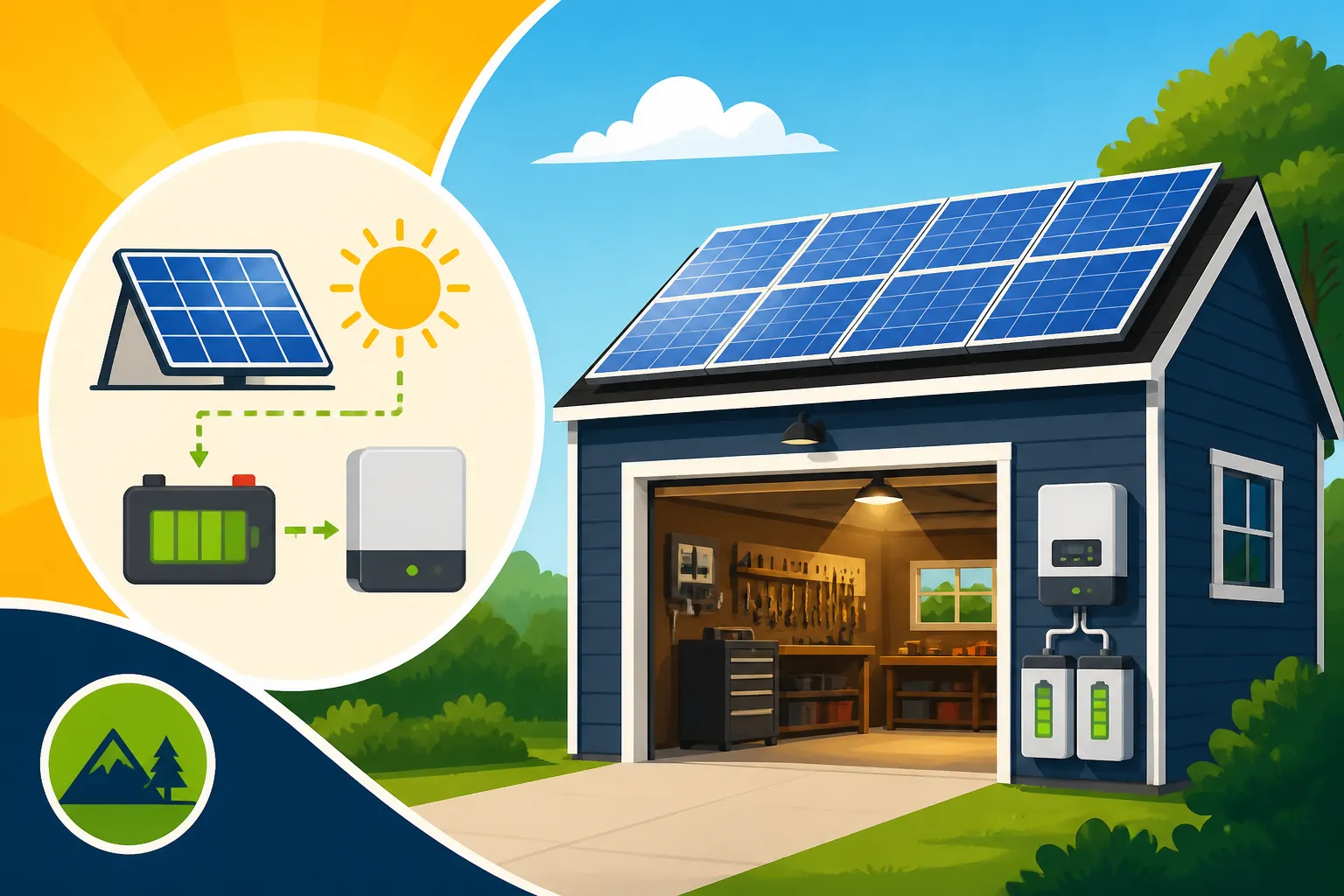
An off-grid solar system isn't just a single item; it's an assembly of specialized components, each with its own price tag and critical role to play. Understanding these pieces will demystify the overall cost and help you prioritize your budget.
Solar Panels: The Power Collectors
The panels are what convert sunlight into electricity, and their cost is directly related to their wattage and efficiency. For a garage, you might opt for rigid, framed panels mounted on the roof or a ground mount. Prices for solar panels have come down significantly over the years, but you're still looking at anywhere from $0.70 to $1.50 per watt, sometimes more for premium or specialized panels.
If your garage needs are minimal – say, just a few lights and charging small electronics – a couple of 100-watt or 200-watt panels might suffice, costing a few hundred dollars. But for a full workshop requiring several kilowatts of power daily, you could need anywhere from eight to twenty 300-watt to 400-watt panels. This could easily put your panel array cost into the thousands of dollars. Factors like panel efficiency, brand reputation, and warranty also play a role. You can explore the specifics of what influences the price tag in our article on the Cost of Off-Grid Solar Panels.
Battery Bank: Your Energy Reservoir
This is often the most significant single expense in an off-grid solar system, especially for a garage where you might need to run things after dark or on cloudy days. The battery bank stores the excess energy generated by your panels so you can use it whenever you need it. There are two main types to consider:
- Lead-Acid Batteries: These are the traditional, more budget-friendly option upfront. Think deep-cycle flooded lead-acid (FLA) or sealed AGM (Absorbed Glass Mat) batteries. FLA batteries require regular maintenance (checking water levels), while AGM are maintenance-free. Both are heavier and have a shorter cycle life (how many times they can be charged and discharged) compared to lithium. They also have a more limited depth of discharge (DOD), meaning you typically shouldn't use more than 50% of their capacity to prolong their life. A small 12V 100Ah AGM battery might cost $200-$300, but you'll likely need several of these in series/parallel for a meaningful garage system.
- Lithium Iron Phosphate (LiFePO4) Batteries: These are the modern, premium choice. They have a much longer cycle life (often 10+ years), are lighter, more compact, and can be discharged much deeper (80-100% DOD) without damage. While their upfront cost is higher – a 12V 100Ah LiFePO4 battery can easily run $400-$700 or more – their superior performance and longevity often make them more cost-effective over the system's lifetime. For a serious workshop, you might invest several thousand dollars in a robust LiFePO4 bank. The cost of an off-grid solar battery bank can vary wildly depending on your chosen chemistry and capacity. Understanding How Batteries Drive Off-Grid Solar Cost is key to budgeting.
Inverter and Charge Controller: The System Brains
These two components are absolutely vital for a functioning system:
- Charge Controller: This device regulates the voltage and current coming from your solar panels to charge your batteries safely and efficiently. There are two main types: PWM (Pulse Width Modulation) and MPPT (Maximum Power Point Tracking). MPPT controllers are more efficient, especially in varying light conditions, and are generally recommended for larger systems, though they come at a higher price. A good MPPT charge controller can range from $150 to $500+, depending on its size and features. You can learn more about the Cost of a Charge Controller to help make your decision.
- Inverter: Your panels and batteries produce DC (Direct Current) power, but most standard garage tools and appliances run on AC (Alternating Current). The inverter converts DC power to AC power. For delicate electronics and power tools, you'll want a pure sine wave inverter, which provides clean power similar to what you get from the grid. Modified sine wave inverters are cheaper but can damage sensitive electronics and run motors less efficiently. The size (wattage) of your inverter needs to match your highest expected AC load, including surge power for tools. A quality pure sine wave inverter can range from $300 for a small 1,000-watt unit to $1,500 or more for a powerful 5,000-watt model. Our article on the Cost of an Off-Grid Solar Inverter delves deeper into these price variations.
Many modern systems now use "inverter-chargers," which combine the functions of an inverter, a battery charger (if you want to charge from a generator), and sometimes even a charge controller into one unit. Brands like Victron Energy or Renogy offer these all-in-one solutions that simplify wiring and often provide advanced monitoring capabilities.
Balance of System: The Unsung Heroes
These are all the other bits and bobs that make the system safe and functional. While individually less expensive than panels or batteries, they add up:
- Wiring and Cabling: You'll need appropriate gauge wiring for both your DC (panel to charge controller, charge controller to batteries) and AC (inverter to outlets/subpanel) circuits. Using undersized wire can lead to voltage drop and fire hazards.
- Fuses and Circuit Breakers: Essential safety devices to protect your components and prevent overloads. These are required by code and good practice.
- Mounting Hardware: Racks and mounts for your solar panels, whether on the roof of your garage or on a ground-mount structure. Ground mounts tend to be more expensive due to more material and potentially concrete work, but offer better adjustability for seasonal tilt.
- Disconnect Switches: Safety switches to quickly de-energize your system for maintenance or emergencies.
- Conduit and Junction Boxes: To protect wiring from weather and physical damage.
- Monitoring Equipment: Battery monitors, remote displays, or Bluetooth modules (like those from Victron or Renogy) allow you to keep an eye on your system's performance, battery state of charge, and power consumption. These can be crucial for ensuring reliability.
These "balance of system" components can collectively add anywhere from a few hundred dollars to well over a thousand, depending on the complexity and scale of your garage setup. Don't skimp on these; they are vital for safety and long-term reliability.
Budgeting for Your Off-Grid Garage Solar System
Now that we've covered the individual components, let's talk about putting it all together into a realistic budget. This isn't just about the initial purchase; it's about understanding the full financial picture.
Initial Investment Breakdown
To give you a clearer picture, here's a general cost breakdown. Keep in mind these are broad ranges, and your specific needs, chosen component quality, and local market prices will cause fluctuations. This table illustrates what you might expect for a small garage (basic lighting, occasional tool charging) versus a medium to large workshop (frequent power tool use, more extensive lighting, maybe a small AC unit or well pump).
| Component | Small Garage (Basic Use) – Est. Cost | Medium/Large Garage (Workshop) – Est. Cost |
|---|---|---|
| Solar Panels (Watts) | 200W – 600W ($200 – $800) | 1000W – 4000W ($1,000 – $5,000) |
| Battery Bank (Wh) | 1000Wh – 2000Wh ($400 – $1,000) | 5000Wh – 20000Wh ($2,000 – $8,000) |
| Charge Controller | MPPT 20-30A ($100 – $250) | MPPT 40-80A ($250 – $700) |
| Inverter | 600W – 1000W PSW ($150 – $350) | 2000W – 5000W PSW ($500 – $2,000) |
| Mounting Hardware | $50 – $200 | $200 – $800 |
| Wiring, Fuses, Disconnects | $100 – $300 | $300 – $800 |
| DIY Total (Est.) | $1,000 – $2,900 | $4,250 – $17,300 |
| Professional Installation (Add 15-30%) | $150 – $870 (additional) | $630 – $5,190 (additional) |
| Total (DIY/Professional) | $1,000 – $3,770 | $4,250 – $22,490 |
As you can see, the range is vast. A simple setup for minimal power in a small shed might come in under $1,000, especially if you snag deals on Amazon for components or a portable power station like a Jackery Explorer for occasional use. However, a robust system designed for year-round workshop use with heavy machinery can easily reach $10,000 or even $20,000+. It truly underscores the importance of accurately assessing your power needs upfront. Our comprehensive guide, How to Budget for an Off-Grid Solar System, offers more strategies for managing these costs.
Long-Term Considerations and Hidden Costs
Beyond the initial purchase, it's wise to factor in the long-term costs that can impact your off-grid garage setup. No system is truly "set it and forget it" if you want it to last.
- Maintenance: While solar panels themselves require minimal maintenance (mostly cleaning off dirt and snow), batteries do need attention. Lead-acid batteries require periodic topping off with distilled water and terminal cleaning. Lithium batteries are lower maintenance but still benefit from occasional checks. You'll also want to inspect wiring, connections, and mounting hardware regularly. These are mostly time costs, but sometimes a replacement part or professional check-up might be needed. Our article on Off-Grid Solar Maintenance Costs provides further insight into keeping your system running smoothly.
- Battery Replacement: This is the big one. Batteries, especially lead-acid, have a finite lifespan. Lead-acid typically lasts 3-7 years, while LiFePO4 can last 10-15+ years. When they wear out, replacing them is a significant expense, often rivaling the initial battery cost. Factoring in future battery replacement every 5-10 years is critical for understanding the Lifetime Cost of an Off-Grid Solar System.
- System Expansion: What if your needs grow? Maybe you start with just lights, then add a new power tool, then a small heater. If you didn't plan for expansion from the start, adding more panels, batteries, or a larger inverter can incur additional costs for components and potentially re-wiring.
- Unexpected Repairs: Like any electrical system, components can fail. While warranties cover some issues, diagnosing and replacing a failed inverter or charge controller can be an unplanned expense.
- Fuel for Backup Generator: While the goal is to be fully solar, many off-grid garage setups include a small backup generator for extended cloudy periods or heavy usage. This means budgeting for gasoline or propane.
These Hidden Costs of Going Off-Grid can surprise new users, so a realistic long-term view is essential for your financial planning.
DIY vs. Professional Off-Grid Solar Installation for Your Garage
When it comes to putting your off-grid garage solar system together, you generally have two paths: do it yourself (DIY) or hire a professional. Each has its own cost implications and challenges.
The Allure of DIY: Savings and Self-Reliance
For many going off-grid, the DIY route is incredibly appealing. The most obvious benefit is the significant cost savings on labor. Professional installation can add anywhere from 15% to 30% (or more) to the total project cost. If you have a knack for electrical work, are comfortable following detailed instructions, and are patient enough to learn, installing your own system can be a deeply rewarding experience. Many online resources and communities offer extensive support for DIYers.
Smaller garage setups, especially those using pre-wired kits or portable power stations like those from Jackery or EcoFlow, are often very amenable to DIY installation. You can purchase individual components from reputable online retailers on platforms like Amazon, allowing you to shop around for the best prices. The process involves mounting panels, running wires through conduit, connecting to a charge controller, then to batteries, and finally to an inverter. For simpler systems with minimal AC loads, this can be quite straightforward. However, it requires careful attention to detail, adherence to safety protocols, and a good understanding of electrical principles to avoid costly mistakes or, worse, safety hazards. Our article on How Much Cheaper Is DIY Off-Grid Solar delves deeper into potential savings.
When to Hire a Professional: Safety and Expertise
While DIY can save money, it's not for everyone, especially for larger, more complex garage systems. There are several compelling reasons to consider hiring a licensed electrician or solar installer:
- Complexity: If your garage system involves high-voltage components, multiple battery strings, a large inverter, or integration with an existing subpanel, the complexity ramps up quickly. Professionals have the training and experience to design and install these systems correctly and efficiently.
- Safety: Working with electricity, especially high-amperage DC power from battery banks, can be dangerous. Incorrect wiring can lead to short circuits, fires, or electrocution. Professionals are trained in electrical safety and proper grounding techniques, which are critical for preventing accidents.
- Permitting and Code Compliance: Depending on your local jurisdiction and the scale of your system, you might need permits and inspections. Professionals are familiar with local electrical codes (like the National Electrical Code, or NEC, in the US) and can ensure your installation meets all regulatory requirements, saving you headaches and potential fines. This is a common aspect of Off-Grid Solar Installation Cost that DIYers might overlook.
- Warranty and Insurance: Many manufacturers' warranties on solar equipment require professional installation. Furthermore, a professionally installed system may be easier to insure and could even add value to your property.
- Peace of Mind: Knowing that your system was designed and installed by experts offers a significant level of assurance that it will operate safely and efficiently for years to come. For larger investments, this peace of mind can be invaluable.
Ultimately, the decision between DIY and professional installation for your off-grid garage solar system boils down to your comfort level with electrical work, the complexity of your power needs, and your budget. It's often a balance between saving money upfront and ensuring long-term reliability and safety. If you're unsure, even consulting with a professional for a design review or critical connections can be a worthwhile investment.
Disclaimer
The information provided in this guide is for general informational purposes only and does not constitute professional advice. Off-grid solar system design and installation involve electrical work that can be dangerous if not performed correctly. Always consult with qualified professionals and adhere to all local codes, regulations, and safety guidelines when planning or installing an off-grid solar system. The costs and recommendations mentioned are estimates and can vary widely based on location, component choices, market conditions, and individual needs.