Is Off-Grid Solar Cost-Effective for a Tiny Home
The dream of living in a tiny home often comes with visions of ultimate freedom and self-sufficiency, but powering that dream can quickly become a headache. Many aspiring tiny home dwellers wonder if cutting the cord from the utility company is truly feasible and, more importantly, affordable. This guide dives deep into the cost-effectiveness of off-grid solar for a tiny home, helping you understand the real investment and long-term savings involved.
Understanding the Allure of Tiny Home Living and Off-Grid Solar
There's something incredibly appealing about a tiny home, isn't there? It's not just about downsizing your physical footprint; it's often about simplifying life, reducing expenses, and gaining a sense of independence that traditional housing can't offer. For many, that independence extends to their utilities, making off-grid solar a natural fit.
The Dream of Self-Sufficiency
Imagine a life where your power bill is a thing of the past, where you're not beholden to fluctuating electricity rates or worried about blackouts caused by an overloaded grid. That's the core of the self-sufficiency dream that draws so many to tiny home living, especially when paired with off-grid solar. It’s about more than just saving money; it’s about having control over your essential services. You generate your own electricity, store it for when the sun isn't shining, and consume it on your own terms. This level of autonomy can feel incredibly empowering, a true escape from the rat race of monthly bills and utility company rules.
The romance of providing your own power, knowing every electron comes from your own panels, can be a powerful motivator. People often move into tiny homes because they want to break free from the constraints of conventional living, and being tied to the grid can feel like just another constraint. Whether your tiny home is parked in a remote, sunny spot in Arizona or nestled among the trees in a rural part of Vermont, the ability to power it entirely from the sun is a huge draw. It speaks to a pioneering spirit, a desire to live lightly on the earth and demonstrate a tangible commitment to sustainable living.
Initial Cost vs. Long-Term Value Proposition
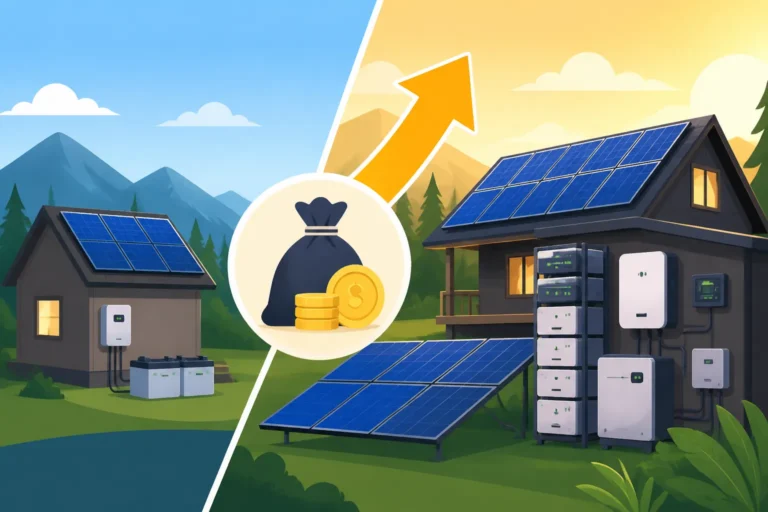
Here's where reality often bumps up against the dream. While the idea of ditching monthly utility bills forever sounds amazing, the upfront cost of setting up a robust off-grid solar system for a tiny home can be a significant hurdle. It’s not simply a matter of buying a few solar panels; you need a complete system capable of meeting all your energy demands reliably, even during cloudy stretches. This initial investment can often be thousands of dollars, depending on your energy needs and chosen components.
However, it's crucial to look beyond that initial sticker shock and consider the long-term value. Think of it like buying a quality tool: you might pay more upfront, but it lasts longer and performs better, saving you money on replacements and repairs down the line. An off-grid solar system for your tiny home is an investment in energy independence, and over time, it can lead to substantial savings by eliminating those recurring utility payments. When you factor in the rising cost of electricity and the potential for increased grid connection fees, the initial investment starts to look more like a strategic financial move rather than just an expense. We'll delve into the specifics of how this long-term saving works as we explore the components and calculations.
Breaking Down the Costs of Off-Grid Solar for a Tiny Home
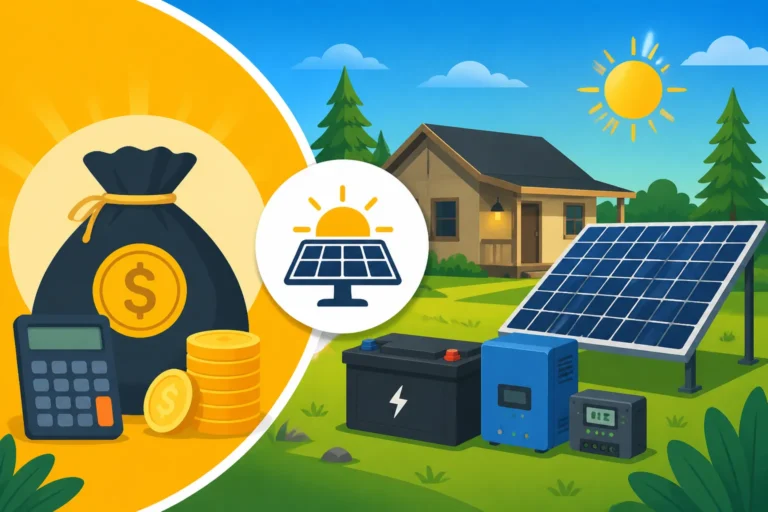
So, what exactly goes into the price tag of an off-grid solar system for your tiny home? It's not just one big number; it's a sum of several critical components, installation considerations, and a few "hidden" costs you absolutely need to factor in. Understanding each piece of the puzzle is key to budgeting effectively and determining if off-grid solar is truly cost-effective for your specific tiny home setup.
Essential Components and Their Price Tags
An off-grid solar system is a bit like a team of specialized players, each with a vital role. You can't just have one without the others, and the quality and capacity of each component directly impact the overall cost.
-
Solar Panels: These are your energy collectors. Prices for solar panels have come down significantly over the years, making them more accessible than ever. For a tiny home, you might need anywhere from 300 watts to several kilowatts, depending on your daily usage. High-efficiency monocrystalline panels tend to be more expensive but take up less space, which is often a premium on a tiny home roof. You can find individual panels ranging from around $100 for a small 100W panel up to $400-$600 for a larger 400W panel. When considering the total "Cost of Off-Grid Solar Panels", remember to factor in mounting hardware too. Many popular brands like Renogy or Rich Solar offer various panel sizes suitable for tiny homes.
-
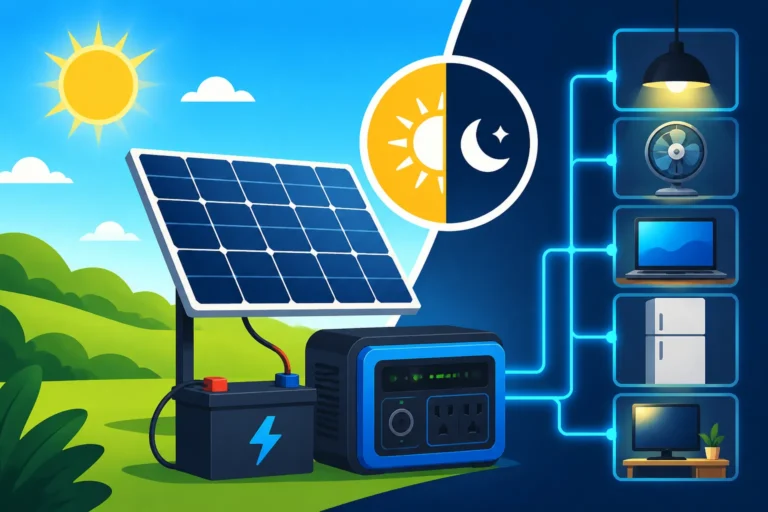
Batteries: This is arguably the most critical and often the most expensive part of an off-grid system, especially for a tiny home that relies entirely on stored energy. Batteries store the electricity generated by your panels so you have power when the sun isn't shining. The two main types for off-grid are lead-acid (cheaper upfront, shorter lifespan, less efficient) and lithium iron phosphate (LiFePO4) (more expensive upfront, much longer lifespan, deeper discharge, more efficient). A decent "Cost of an Off-Grid Solar Battery Bank" for a tiny home could range from $1,000 for a small lead-acid bank to $5,000-$15,000+ for a robust LiFePO4 bank, like those from Battle Born or EG4. Your battery capacity will be determined by how many days you want to go without sun (known as "days of autonomy").
-
Inverter: The inverter's job is to convert the direct current (DC) electricity from your batteries into alternating current (AC) that your household appliances use. For a tiny home, you'll almost certainly need a pure sine wave inverter to run sensitive electronics without damage. Inverters come in various wattage capacities, from 1,000W up to 5,000W or more for larger tiny home needs. The "Cost of an Off-Grid Solar Inverter" can range from a few hundred dollars for a basic unit to several thousand for a high-quality, high-capacity inverter-charger combination from brands like Victron Energy or Sol-Ark.
-
Charge Controller: This device acts as the brain between your solar panels and batteries, regulating the voltage and current coming from the panels to prevent overcharging and extend battery life. There are two main types: PWM (Pulse Width Modulation) and MPPT (Maximum Power Point Tracking). MPPT controllers are more efficient, especially in varying light conditions, and are generally recommended for larger or more critical systems, though they cost more. A "Cost of a Charge Controller" can be anywhere from $50 for a small PWM to $500+ for a powerful MPPT unit.
-
Wiring, Fuses, Breakers, and Mounting Hardware: Don't overlook these crucial accessories! Quality wiring, appropriate fuses, and breakers are essential for safety and system efficiency. Mounting hardware will depend on whether your panels are roof-mounted, ground-mounted, or on a trailer. These items can easily add several hundred to over a thousand dollars to your total bill, but they are non-negotiable for a safe and reliable system.
Installation Considerations and Costs
Once you have all your shiny new components, the next step is putting them all together. This is where many tiny home owners face a fork in the road: Do it yourself or hire a pro? Each path has its own cost implications.
-
DIY Installation: For many tiny home dwellers, the DIY route is an appealing option. It aligns with the self-sufficiency mindset and can significantly reduce upfront costs. If you're handy with tools, comfortable with electrical work, and willing to put in the research and time, you can save thousands on labor. There are tons of resources online, and many off-grid solar kits, particularly those designed for RVs or small cabins, come with detailed instructions. You might buy a comprehensive kit from a vendor like Renogy or search for individual components on Amazon. However, even DIY isn't free. You'll need specialized tools, safety gear, and potentially a lot of trial and error. Remember to research "DIY vs Professional Off-Grid Solar Cost" thoroughly to understand what you're truly saving versus what you're sacrificing in time and potential mistakes.
-
Professional Installation: If electrical work isn't your forte, or you simply prefer peace of mind, hiring a professional installer is the way to go. This will add a substantial cost, often 10-20% of the total system cost, but it ensures the system is installed correctly, safely, and up to code. For stationary tiny homes, especially those in more populated areas, local regulations may even require professional installation and permits. An experienced installer can also help with system design, maximizing efficiency for your specific climate and usage patterns. They'll also handle the tricky bits like grounding and electrical connections that can be intimidating for novices.
-
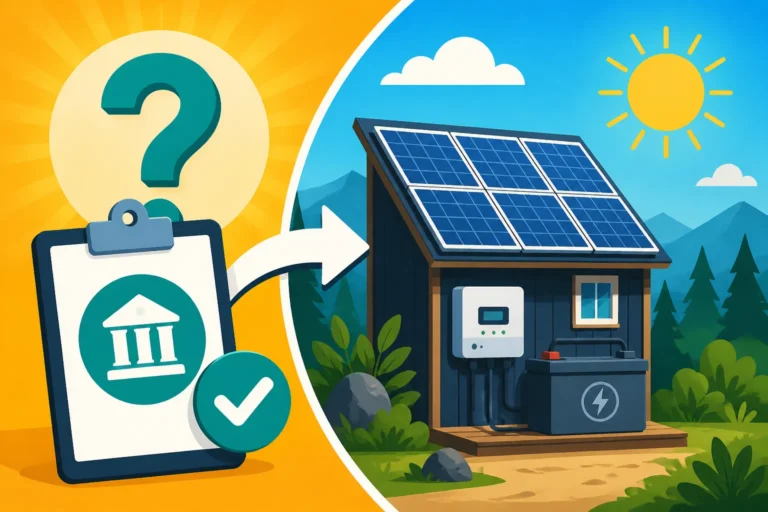
Permitting and Inspections: This is a detail that often surprises tiny home owners. While many envision their off-grid setup as "outside the system," local building codes and electrical regulations often apply, especially if your tiny home is on a permanent foundation or in a designated residential area. Even mobile tiny homes might face regulations when parked for extended periods. The cost for permits and inspections can vary widely by location, from a few hundred dollars to over a thousand, and failing to secure them can lead to fines or forced system modifications. Always check with your local authority having jurisdiction (AHJ) before you start building your system.
Hidden Costs and Ongoing Maintenance
The upfront costs are just one part of the equation. Like any complex system, an off-grid solar setup for your tiny home will have ongoing expenses. Ignoring these can lead to unpleasant surprises down the road, making your system seem less cost-effective than you initially planned.
-
Maintenance: While solar panels are largely maintenance-free (aside from occasional cleaning), batteries and other components require some attention. Lead-acid batteries need regular watering and voltage checks, while even maintenance-free lithium batteries benefit from monitoring. Inverters can accumulate dust and need to be kept cool. Regular inspections of wiring and connections are also critical to prevent issues. These small tasks take time, and if you hire someone to do them, it's an added cost. Don't forget to factor in "Off-Grid Solar Maintenance Costs" into your long-term budget.
-
Replacements: Nothing lasts forever, and your off-grid components will eventually need replacing. Batteries are the most common and expensive replacement item. Lead-acid batteries typically last 3-7 years, while LiFePO4 batteries can last 10-15 years or even longer. Replacing an entire battery bank can be a significant expense, easily running into thousands of dollars. Inverters and charge controllers typically have longer lifespans (10-15 years), while solar panels are usually warrantied for 20-25 years. Understanding the "Cost to Replace Off-Grid Solar Batteries" is vital for long-term financial planning.
-
System Expansion or Upgrades: As your tiny home lifestyle evolves, so might your energy needs. Perhaps you add a new appliance, or your family grows. Upgrading your system to accommodate higher loads can incur additional costs for more panels, batteries, or a larger inverter. Many people initially undersize their systems to save money, only to find themselves needing to expand within a few years. Planning for potential expansion upfront, even if it's just leaving room for more panels or wiring for an additional battery, can save you headaches and money later on.
-
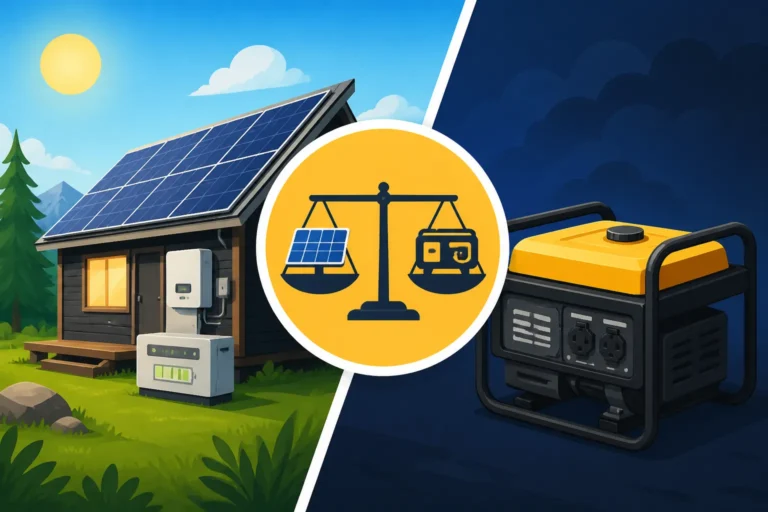
Backup Generator: While the goal is 100% solar, a small backup generator (gasoline, propane, or diesel) can be a wise investment for extended periods of bad weather or unexpected high energy consumption. It provides peace of mind and ensures you never run completely out of power. The generator itself, plus the cost of fuel, adds another layer to your "Hidden Costs of Going Off-Grid". Even a portable solar generator like a Jackery Explorer can serve as a small backup for critical loads.
Calculating Your Tiny Home's Energy Needs for Cost-Effectiveness
One of the biggest mistakes tiny home owners make when considering off-grid solar is guessing their energy usage. This often leads to either an undersized system that leaves you in the dark or an oversized one that costs far more than necessary. Accurate calculation is the bedrock of a truly cost-effective system.
Performing a Load Analysis
Before you even think about buying a single solar panel or battery, you absolutely must know how much electricity you're going to use. This isn't a suggestion; it's a non-negotiable step. A "load analysis" involves listing every single electrical appliance and device you plan to use in your tiny home, how many watts it consumes, and for how many hours a day.
Let's break it down. Grab a piece of paper or a spreadsheet. List items like your tiny refrigerator, LED lights, laptop, phone chargers, water pump, small induction cooktop, and any heating/cooling appliances. For each item, find its wattage (often on the label or in the user manual). Then, estimate how many hours per day you'll use it. For instance, a small energy-efficient mini-fridge might use 50 watts but run for 8 hours a day (though not continuously, it cycles on and off). So, 50W x 8h = 400 Watt-hours (Wh) per day. Your laptop might draw 60W for 4 hours, equaling 240 Wh. Add all these up, and you'll get your total daily "How to Calculate Daily Energy Usage" in Watt-hours. Don't forget to account for surge wattage for things like starting a well pump, as that dictates your inverter size. This detailed list is what we call an "Off-Grid Solar Load Calculation Explained". It might seem tedious, but it's the only way to get a realistic picture.
Sizing Your System for Real-World Demands
Once you have your total daily Watt-hour usage, you can start to size your system components properly. This is where you determine "How to Size an Off-Grid Solar System" to actually meet those needs.
-
Solar Panel Array Sizing: Your total daily Watt-hour usage, combined with the average "peak sun hours" for your location (the equivalent hours of full sun exposure per day, which varies by season and geography), will dictate how many watts of solar panels you need. If you need 2000 Wh per day and get 5 peak sun hours, you need a 400W solar array (2000 Wh / 5 hours = 400W). It's generally wise to add a buffer, perhaps 20-30% more panels, especially if you live in an area with frequent cloudy days or plan to live off-grid year-round. This buffer is crucial for system reliability and means you won't be constantly stressing your batteries.
-
Battery Bank Sizing: This is critical for keeping the lights on after dark or during bad weather. Your battery bank needs to store enough energy to cover your daily usage for a certain number of "days of autonomy" – how many days you want to be able to run your tiny home without any sun charging. For a tiny home, aiming for 2-3 days of autonomy is common, especially if you have a backup generator. To calculate "How Many Batteries for an Off-Grid System", you'll multiply your daily Watt-hour usage by your desired days of autonomy, and then divide by the battery voltage and depth of discharge. For instance, if you use 2000 Wh/day and want 3 days of autonomy with a 48V LiFePO4 battery bank (which can safely discharge to 80-90%), the calculation becomes quite specific. This accounts for "How to Account for Cloudy Days" and ensures you have a reliable power supply even when the sun isn't cooperating.
The Impact of Efficiency and Lifestyle Choices
Let's be real: living in a tiny home off-grid often means making conscious choices about energy consumption. This isn't necessarily a sacrifice; it's a smart way to maximize the cost-effectiveness of your solar system. Every watt-hour you save means you can potentially buy fewer panels or smaller batteries, directly translating into lower upfront costs.
-
Energy-Efficient Appliances: This is huge. Swapping out a standard refrigerator for an energy-star rated or 12V DC model designed for RVs can slash its energy consumption by half or more. Opting for LED lighting instead of incandescent bulbs is a no-brainer. Choosing a propane stovetop over an electric one significantly reduces inverter demands. Every appliance you select with efficiency in mind directly reduces the overall size and cost of your solar system. Many tiny homes prioritize DC appliances, which can further reduce energy loss by bypassing the inverter for certain loads.
-
Mindful Usage: Beyond efficient appliances, your daily habits play a massive role. Do you really need to run the washing machine every day? Can you air dry clothes? Can you use a laptop charger for a few hours in the afternoon when the sun is strong, rather than at night? Taking shorter showers (if you have an electric water heater), unplugging phantom loads, and being aware of peak usage times can drastically impact your daily energy footprint. For example, if you typically charge your electric vehicle or run heavy power tools, doing so when the sun is at its brightest directly from the solar array, rather than drawing from batteries, will be far more efficient and prolong battery life. This isn't about deprivation; it's about smart energy management that puts money back in your pocket.
The Long-Term Financial Picture: Is It Worth It?
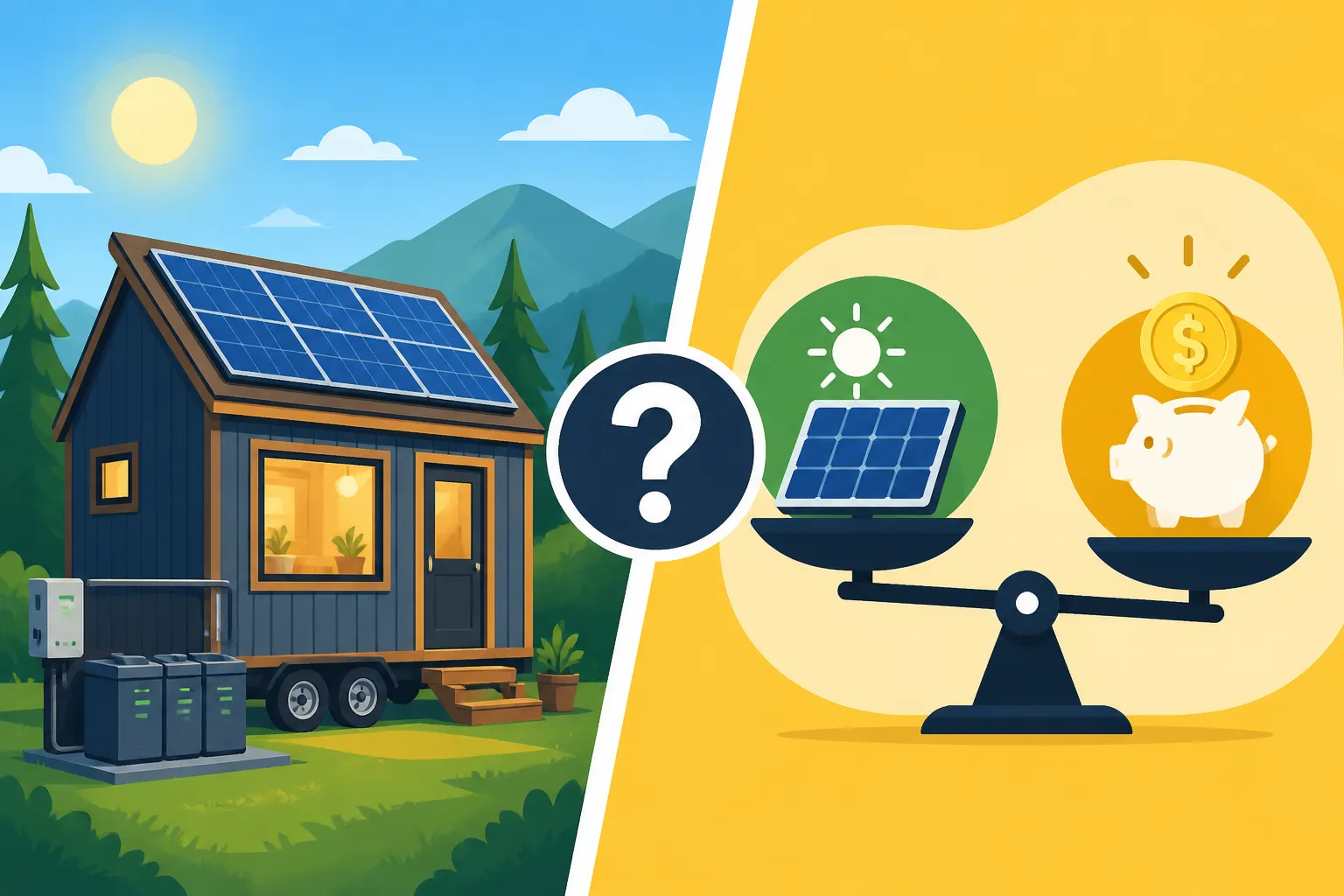
So, after all these calculations and component considerations, is off-grid solar truly cost-effective for a tiny home? The answer, like most things in life, is "it depends." However, by looking at the long-term financial picture, including potential savings and intangible benefits, you can make a well-informed decision.
Comparing Off-Grid to Grid Connection Fees
One of the most compelling arguments for off-grid solar, especially for tiny homes in remote locations, is the exorbitant cost of extending utility lines. If your tiny home is situated far from existing power infrastructure, getting grid access can be astronomically expensive. Utility companies often charge per foot or per mile to run new lines, and these costs can easily range from tens of thousands to well over $100,000, depending on the terrain and distance.
In these scenarios, the initial investment in an off-grid solar system almost immediately becomes the more cost-effective choice. If you're looking at a $30,000 bill to bring in grid power versus a $15,000-$25,000 off-grid solar system, the choice is clear. Even with maintenance and eventual battery replacements factored in, the off-grid system will likely pay for itself much faster. This is where the "Off-Grid Solar vs Utility Extension Cost" comparison really shines, making independence not just a lifestyle choice, but a financially savvy one.
Potential Savings and Return on Investment
For tiny home owners already off-grid, or those where grid extension isn't a factor, the primary financial benefit comes from eliminating monthly utility bills. Over the lifespan of your solar system, those avoided costs add up significantly. Let's say your grid electricity bill would typically be $50-$100 a month (even for a tiny home, depending on your usage). Over 20 years, that's $12,000-$24,000 you don't spend on electricity. When you consider that a quality off-grid solar system, once installed, has very low operating costs, it becomes clear why many see it as a wise investment.
The "Off-Grid Solar Return on Investment" might not be as quick as a grid-tied system with net metering, but the consistent savings are tangible. Think of it as prepaying for your electricity for the next decade or two. While you won't be selling excess power back to the grid, you'll also never face rate hikes or demand charges. The money saved on monthly bills can be redirected towards other aspects of tiny home living, like property taxes, water systems, or simply building your emergency fund. This long-term perspective clearly demonstrates "How Off-Grid Solar Saves Money Long-Term".
Intangible Benefits Beyond Money
While the financial aspect is crucial, it's not the only measure of cost-effectiveness. For many tiny home dwellers, the intangible benefits of off-grid solar are priceless.
- Energy Independence: This is the big one. Knowing you're generating your own power, free from utility companies, grid failures, or political instability, brings an immense sense of security and peace of mind. You control your energy destiny.
- Environmental Impact: Living off-grid with solar power significantly reduces your carbon footprint. You're using a clean, renewable energy source, contributing positively to the environment – a core value for many tiny home enthusiasts.
- Resilience: When storms hit or the grid goes down, off-grid tiny homes keep humming along. This resilience is a huge advantage, especially in areas prone to natural disasters or unreliable infrastructure. You won't be scrambling for flashlights or worrying about your refrigerator food spoiling.
- Location Flexibility: An off-grid solar system frees you from the constraints of having to park or build your tiny home where grid access is readily available. You can choose truly remote, beautiful locations that would otherwise be impractical or prohibitively expensive to power. This opens up a world of possibilities for where you can establish your tiny haven.
When Off-Grid Might Not Be as Cost-Effective
It's important to be realistic. While off-grid solar offers tremendous benefits, there are scenarios where it might not be the most cost-effective choice for a tiny home:
- Very Low Energy Needs: If your tiny home is truly minimalist, with minimal electrical appliances and very low power consumption (e.g., just a few lights and phone charging), a small portable solar generator like a Jackery or a very basic solar setup might suffice for occasional use, making a full off-grid system overkill.
- Existing Grid Connection is Cheap: If your tiny home is in a location with readily available and inexpensive grid power, the payback period for an off-grid system might be significantly longer. In such cases, the financial incentive to go off-grid might be less compelling than the desire for independence.
- Temporary or Infrequent Use: If your tiny home is only used seasonally or for a few weekends a year, a full off-grid solar system designed for continuous use might be over-engineered and, thus, not cost-effective. A smaller, more portable setup or a solar generator could be a better fit.
- Budget Constraints: The upfront cost of a reliable off-grid system can be a barrier. If your budget is extremely tight, starting with a smaller, expandable system and gradually adding components as funds allow (phasing your build) might be a more realistic approach than trying to fund a complete system all at once.
| Component Category | Estimated Cost Range (USD) | Key Factors Influencing Cost |
|---|---|---|
| Solar Panels | $500 – $3,000 | Wattage, efficiency, brand, number of panels |
| Batteries | $1,000 – $15,000+ | Capacity (Ah/kWh), chemistry (lead-acid vs. LiFePO4), brand |
| Inverter | $300 – $3,000+ | Wattage, pure sine wave vs. modified sine, brand, inverter-charger combo |
| Charge Controller | $50 – $600 | Type (PWM vs. MPPT), amperage rating, brand |
| Wiring, Fuses, Disconnects | $200 – $800 | System voltage, cable length, component quality, safety features |
| Mounting Hardware | $100 – $500 | Roof mount vs. ground mount, adjustability, material |
| Installation (Pro) | $1,000 – $5,000+ | System complexity, labor rates, permits, location |
| Total Estimated Range | $3,150 – $28,000+ | Tiny home size, energy demand, chosen components, DIY vs. Pro |
Note: These are general estimates and can vary significantly based on specific product choices, regional pricing, and individual tiny home energy requirements.
Disclaimer
The information provided in this article is for general informational purposes only and does not constitute professional advice. Off-grid solar system design and installation can be complex and involve electrical hazards. Always consult with qualified professionals and adhere to all local codes and regulations before installing any solar power system.