How Off-Grid Solar Saves Money Long-Term
Many aspiring off-gridders or remote property owners often feel overwhelmed by the initial investment required for a solar power system, wondering if it's truly a financially sound decision. The truth is, while the upfront cost might seem substantial, off-grid solar offers significant, often overlooked, long-term savings that can make it a remarkably cost-effective choice. This guide will meticulously break down how embracing solar independence can protect your wallet and provide lasting financial benefits.
The Initial Sticker Shock Versus Long-Term Value
It's completely understandable to look at the price tag of a comprehensive off-grid solar system and feel a jolt. We've been conditioned to think about utilities as a monthly bill, not a single large purchase. However, this perspective often misses the bigger picture, equating a foundational investment with an ongoing expense. Think of it less like buying groceries every week and more like buying a house instead of renting – a higher upfront cost, but one that builds equity and eliminates recurring landlord payments.
Understanding Upfront Costs: What You're Really Paying For
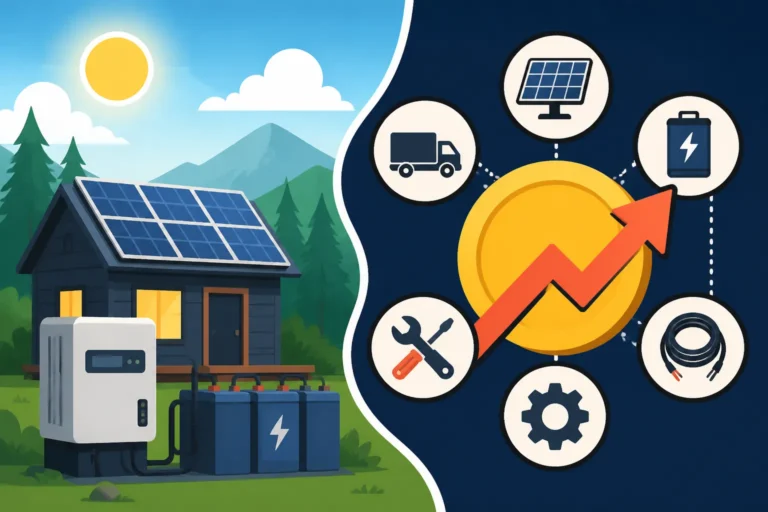
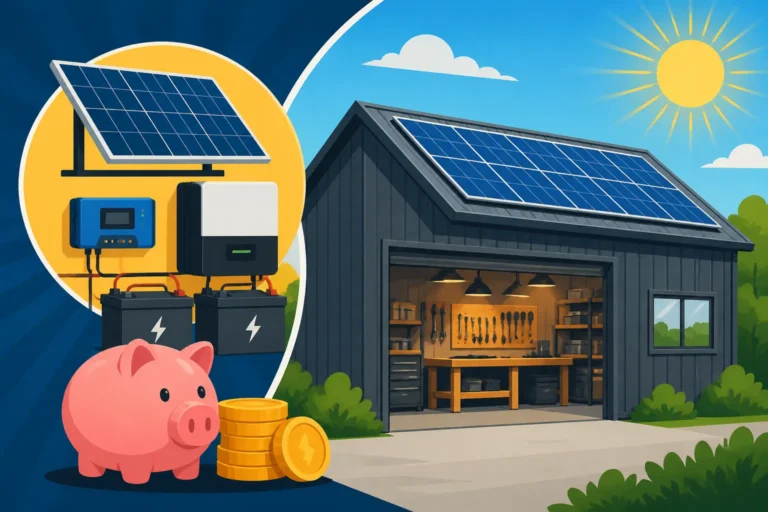
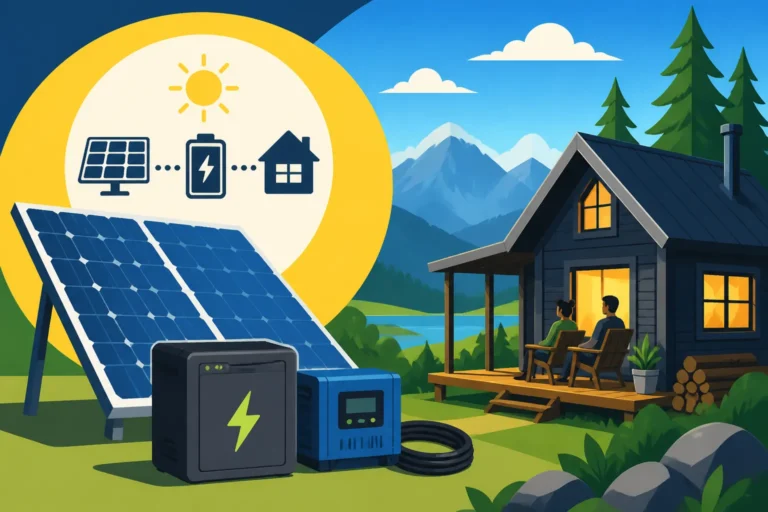
When you're looking at the total cost of an off-grid solar system, whether you're considering a smaller setup for a cabin or a robust system for a full-time homestead, you're investing in several key components. This includes the solar panels themselves, which convert sunlight into electricity; a charge controller to regulate that power flow; a battery bank to store energy for when the sun isn't shining; and an inverter to convert the stored DC power into usable AC power for your appliances. You also have wiring, mounting hardware, safety disconnects, and potentially a backup generator.
While the sum of these parts can indeed be significant, especially for larger systems, it's crucial to understand that these are durable goods designed to last for decades. Modern solar panels typically come with 25-year performance warranties, meaning they're expected to produce power efficiently for a very long time. High-quality lithium iron phosphate (LiFePO4) batteries can last 10-15 years or more, especially when properly maintained. When you weigh this against 25 years of electricity bills, the equation starts to shift dramatically. The investment isn't just in equipment; it's in future energy freedom. For a deeper look into this, consider checking out our guide on how much an off-grid solar system costs.
The Hidden Costs of Grid Dependency
Many people don't fully calculate the true cost of being tied to the utility grid. It's not just the kilowatt-hour rate you see on your bill. There are often fixed service charges, transmission fees, and taxes that add up regardless of how much electricity you consume. Moreover, grid electricity prices are notorious for their unpredictable fluctuations. Geopolitical events, fuel costs, infrastructure upgrades, and even local weather patterns can cause rates to spike, leaving you vulnerable to ever-increasing monthly expenses.
Beyond the monetary cost, there's also the inconvenience and potential financial impact of power outages. If you live in an area prone to severe weather, a grid outage can mean spoiled food, lost work, or the discomfort of no heating or cooling – all of which can lead to unexpected expenses. For remote properties, the cost of extending utility lines can be astronomical, sometimes running into tens of thousands of dollars per mile, making off-grid solar a far more economical choice from day one. When comparing options, our article on Off-Grid Solar vs Grid-Tied Cost Comparison offers valuable insights.
Eliminating Monthly Utility Bills
One of the most immediate and tangible ways off-grid solar saves you money long-term is by liberating you from the shackles of monthly utility bills. Imagine a future where you never have to dread opening that envelope from the power company again. This isn't just a psychological relief; it's a very real and substantial financial benefit that compounds over time.
Saying Goodbye to Variable Rates and Surges
For grid-tied homeowners, watching utility rates creep up year after year is a frustrating reality. Over the last decade, electricity rates across the United States have consistently risen, driven by factors like aging infrastructure, increased demand, and fluctuating fuel prices for power plants. When you're off-grid, you become your own power company. Once your system is installed, your "fuel" — sunlight — is absolutely free. You're no longer subject to the whims of the energy market or your local utility provider.
This stability allows for much better financial planning. You know your energy costs are fixed (primarily the initial investment), rather than an unpredictable variable. This is particularly appealing for those running energy-intensive operations, like a workshop with power tools or a remote business. No more "peak hour" charges or sudden rate hikes eating into your budget. The freedom from these variable rates provides a peace of mind that's truly invaluable, creating a predictable cost structure for decades to come.
The Power of Energy Independence
Energy independence is more than just a buzzword; it's a powerful financial lever. When you generate your own power, you're not just saving money; you're creating a resilient energy infrastructure that protects you from external shocks. Think about areas susceptible to natural disasters, where grid infrastructure can be severely damaged, leading to prolonged outages and reliance on expensive, noisy, and fuel-guzzling generators. With a well-designed off-grid solar system, you maintain your power supply regardless of what's happening on the grid.
This self-sufficiency also means you have direct control over your energy consumption and production. You can optimize your usage during peak solar hours, manage your loads efficiently, and even expand your system as your needs grow. This level of control translates directly into long-term savings by fostering mindful energy habits and eliminating wasted power. It’s an investment in your autonomy and security, ensuring that essential services like refrigeration, lighting, and communication remain operational, preventing costly disruptions and providing invaluable security.
Reduced Maintenance and Fuel Costs Compared to Alternatives
When people consider off-grid living, sometimes they might weigh solar against alternatives like relying solely on generators. While generators have their place as a backup, depending on them as a primary power source for the long term will quickly eat away at any perceived upfront savings. Off-grid solar, especially with modern components, shines in its low operational costs.
Generators and Their Perpetual Thirst
Generators are fantastic for emergencies or for supplementing an off-grid system during prolonged periods of low sun. However, using them as your primary power source for daily living is a relentless drain on your finances. The most obvious cost is fuel – gasoline, diesel, or propane. These prices fluctuate, and constantly buying, transporting, and storing fuel becomes a significant recurring expense. A typical 5,000-watt generator running at 50% load might consume around 0.5 to 1 gallon of gasoline per hour. If you run it 8 hours a day, that's 4-8 gallons daily, which quickly adds up to hundreds of dollars a month, or thousands per year.
Beyond fuel, generators require regular maintenance: oil changes, spark plug replacements, air filter cleaning, and occasional carburetor work. These maintenance tasks are crucial to keep them running, and neglecting them leads to costly repairs or premature replacement. A generator might last 2,000-5,000 hours before needing a major overhaul or replacement, while a solar array can last 25 years or more with minimal upkeep. When you factor in the cumulative cost of fuel and maintenance over years, the initial investment in solar looks incredibly smart compared to the "perpetual thirst" of a generator.
Longevity of Modern Solar Components
Modern off-grid solar systems are built for endurance, which directly translates to long-term savings. As mentioned, solar panels are designed to last for a quarter-century or more, with most manufacturers offering extensive performance warranties. Their robust construction means they can withstand harsh weather conditions, from heavy snow to high winds, with very little degradation. The maintenance required is minimal, typically just an occasional cleaning to remove dirt, dust, or leaves that might obstruct sunlight.
The other major component, batteries, has also seen incredible advancements. While traditional lead-acid batteries required diligent maintenance (checking water levels, equalizing charges) and typically lasted 5-7 years, newer lithium iron phosphate (LiFePO4) batteries are largely maintenance-free and boast lifespans of 10-15 years, sometimes even longer with careful use. Brands like Battle Born and EG4 are known for their robust, long-lasting lithium battery solutions. Though they have a higher initial cost, their extended lifespan and efficiency make them a far more economical choice over the system's lifetime, reducing the frequency and cost of battery replacements. Our article on Off-Grid Solar Maintenance Costs provides a detailed breakdown of what to expect.
Leveraging Incentives and Increasing Property Value
Another avenue for long-term savings with off-grid solar comes from financial incentives and the inherent value it adds to your property. These benefits might not be immediately apparent, but they can significantly offset costs and provide a return on investment that continues to grow.
Exploring Tax Credits and Rebates
One of the most significant financial boosts for solar adoption is the federal solar tax credit, officially known as the Investment Tax Credit (ITC). This credit allows you to deduct a percentage of your solar system's cost from your federal income taxes. While the exact percentage can vary over time, it has consistently offered substantial savings. It's crucial to understand how this applies to off-grid systems, as eligibility often depends on how the system is used. Typically, if the off-grid system powers a primary residence, it qualifies. Even for remote cabins or vacation homes, there can be pathways to eligibility, especially if the property is considered a second home.
Beyond federal incentives, many states and even local municipalities offer their own rebates, grants, or property tax exemptions for solar installations. These can further reduce your net cost, making the transition to off-grid more accessible. For example, some states might have programs specifically for renewable energy development in rural areas. It's always worth researching what's available in your specific location. These incentives are designed to encourage renewable energy adoption and can dramatically improve the overall financial viability of your system over its lifetime. To learn more about this, check out our resource on the 2026 Solar Tax Credit and Off-Grid Systems.
Boosting Home Value with Sustainable Living
In today's market, properties with sustainable features, especially solar power, are increasingly attractive to buyers. An off-grid solar system essentially provides a home with its own independent, free power source, which is a massive selling point. For remote properties where grid extension costs are prohibitive, an existing off-grid solar system can significantly increase the property's value, making it marketable to a much wider audience. Imagine a hunting cabin in the mountains or a tiny home tucked away from civilization – if it already has reliable, self-sufficient power, it becomes a much more desirable asset.
Furthermore, the appeal isn't just about financial savings; it's also about lifestyle and environmental impact. Buyers are often willing to pay a premium for homes that offer energy independence, lower carbon footprints, and protection from utility outages. An off-grid system effectively "future-proofs" your home against rising energy costs and grid instability, adding a layer of security and desirability that conventional homes simply can't match. This makes your solar investment not just an expense, but a tangible improvement that enhances your property's market appeal and resale value.
Strategic System Sizing and Component Choices for Savings
The initial design choices you make for your off-grid solar system have a profound impact on its long-term cost-effectiveness. It's not just about buying the biggest or cheapest components; it's about smart, efficient planning tailored to your actual needs. Getting this right from the start can prevent costly overhauls or expansions down the road.
The Impact of Efficient Appliances and Load Management
One of the biggest misconceptions in off-grid solar is thinking you need a massive system to power everything just like a grid-tied home. The truth is, efficiency is your best friend when it comes to saving money. Every watt-hour you don't consume is a watt-hour you don't need to generate or store, which directly translates to needing fewer solar panels and smaller battery banks. Swapping out old, inefficient appliances for ENERGY STAR rated models can drastically reduce your power consumption. For example, a modern, highly efficient refrigerator can use significantly less power than one from a decade ago. LED lighting is a must, consuming a fraction of the power of incandescent bulbs.
Beyond efficient appliances, smart load management is key. This means understanding when and how you use power. Can you run your washing machine during peak sun hours? Can you cook with propane or wood instead of electric appliances? Do you truly need that always-on entertainment system? By being mindful of your power usage and shifting high-draw activities to times when your panels are producing abundantly, you can optimize your system and keep its overall size, and therefore its cost, in check. This proactive approach to energy consumption directly impacts your wallet in the long run. Our comprehensive guide on How to Size an Off-Grid Solar System is an excellent starting point for this planning.
Smart Battery and Panel Selection for Durability and ROI
Choosing the right solar panels and battery chemistry for your specific needs is another critical factor in maximizing long-term savings. While it might be tempting to opt for the cheapest panels or batteries, this can often lead to higher replacement costs and lower efficiency over time. Investing in reputable brands with good warranties, even if slightly more expensive initially, tends to pay off.
For example, when it comes to batteries, as discussed earlier, LiFePO4 batteries, while having a higher upfront cost than lead-acid, offer significantly longer lifespans (often 10-15+ years vs. 5-7 years), deeper discharge cycles, and are virtually maintenance-free. Over the lifetime of your system, you might replace lead-acid batteries two or three times for every one set of lithium batteries, making lithium the more cost-effective choice in the long run. Similarly, high-quality monocrystalline solar panels from established manufacturers like Renogy or Rich Solar offer better efficiency and degradation rates, ensuring consistent power production for decades. Buying from trusted online retailers like Amazon can also help in comparing prices and reading reviews for different brands. For an in-depth comparison, consider reading about LiFePO4 vs Lead-Acid Battery Cost.
Long-Term Financial Projections and Payback Periods
Understanding the financial trajectory of your off-grid solar system involves looking beyond the initial purchase and calculating when your investment truly starts paying for itself. This concept, known as the payback period, is where the long-term savings really become clear.
Calculating Your Off-Grid Solar ROI
Return on investment (ROI) for off-grid solar isn't always as straightforward as a simple stock market calculation, but it's equally important. Essentially, you're looking at how the money saved on utility bills and generator fuel compares to the initial cost of your system. To calculate a rough ROI, you'd subtract the total cost of your system (including installation, if applicable) from the total amount of money you expect to save over its lifetime. Then, divide that by the total system cost and multiply by 100 to get a percentage.
For instance, if you spent $20,000 on an off-grid system and estimate you would have spent $1,500 per year on grid electricity and generator fuel, your system could save you $30,000 over 20 years. That's a $10,000 net gain over the lifetime of the system. While this is a simplified example, detailed calculations should account for potential future rate increases (which makes solar look even better), maintenance costs, and component replacement. Many off-grid homeowners find that their system pays for itself within 7-15 years, and everything after that is pure savings. Our article on Off-Grid Solar Payback Period Explained offers more detailed methodologies.
Scenarios for Different Off-Grid Setups
The payback period and overall savings can vary significantly depending on the scale and application of your off-grid system.
For a small cabin or RV: A modest system, perhaps a 400W solar setup with a Jackery power station and a couple of deep-cycle batteries, might cost $2,000-$5,000. If this eliminates the need for campground hookups (saving $30-$70/night) or constant generator use, the payback can be incredibly fast, sometimes just a few years of regular use. The convenience and self-sufficiency often outweigh the initial cost even quicker.
For a full-time tiny home or remote homestead: A larger system capable of powering a refrigerator, lights, water pump, and essential electronics could range from $15,000 to $30,000. If this system completely replaces what would be a $150-$300 monthly utility bill, plus significant generator fuel costs, the annual savings could be $1,800-$3,600. In this scenario, the payback could be in the 8-15 year range. After that, it's essentially free electricity for another 10-15+ years of the system's life. This is especially true if the alternative was paying tens of thousands to extend power lines, making off-grid solar the cheaper upfront option in many cases.
Here's a simplified look at how costs can compare over 20 years for a moderate off-grid home versus a grid-tied home, assuming a similar average daily energy consumption of 15 kWh:
| Category | Grid-Tied Home (20-year estimate) | Off-Grid Solar Home (20-year estimate) |
|---|---|---|
| Initial Setup Cost | Utility connection fee: $0 – $500 | Solar System: $15,000 – $35,000 |
| (Excluding home construction costs) | (Includes panels, batteries, inverter, etc.) | |
| Monthly Utility Bills | Avg. $200/month (increasing over time) | $0 |
| Annual Electricity Cost | $2,400 (Avg.) | $0 |
| 20-Year Electricity Cost | $48,000 – $70,000 (with rate increases) | $0 |
| Maintenance/Replacement | Minimal (for homeowner) | Battery replacement (1-2 times): $5,000 – $15,000 |
| Inverter/component replacement: $1,000 – $3,000 | ||
| Generator Backup | May need for outages: $1000 + fuel | Occasional use: $500 + minimal fuel (optional) |
| Total Estimated 20-Year Cost | $49,000 – $71,500+ | $21,500 – $53,500 |
| Property Value Impact | Standard | Potentially +$5,000 – $30,000 (adds value) |
Disclaimer: These figures are estimates and can vary widely based on location, energy usage, system size, component choices, and electricity rate changes. Tax credits and incentives are not factored into the total off-grid cost here but would further reduce it.
As you can see, over the long haul, the numbers strongly favor off-grid solar. The more you use your system, and the longer it lasts, the more significant your savings become. It’s a powerful testament to the financial wisdom of going solar, offering not just independence but also a robust return on your investment. Learning How Off-Grid Solar Saves Money Long-Term really shows the big picture.
Disclaimer
Please be aware that while this article provides comprehensive information on off-grid solar systems, it is intended for educational purposes only. The information shared here does not constitute professional financial, electrical, or construction advice. Always consult with qualified professionals, such as certified electricians, solar installers, and financial advisors, before making any decisions about designing, purchasing, installing, or financing an off-grid solar system. Local regulations, permits, and codes vary, and it is your responsibility to ensure compliance.