How to Set Up Generator Backup
Living off-grid is a dream for many, a testament to independence and self-reliance. But let's be honest, the romance can quickly fade when a string of cloudy days leaves your batteries drained and your home without power. That sinking feeling of watching your battery monitor dip lower and lower, knowing your solar panels just aren't cutting it, is a frustration many of us have faced. This comprehensive guide will walk you through the essential steps to integrate a reliable generator into your off-grid solar system, ensuring you never have to sit in the dark again, no matter what Mother Nature throws your way.
Why a Generator is Your Off-Grid Solar System's Best Friend
Even the most robust off-grid solar setup has its limitations. Relying solely on the sun means your power supply is inherently tied to weather patterns, season changes, and even the occasional dust-up on your panels. Thinking of a generator as a backup isn't a sign of failure; it's a smart, realistic approach to true energy independence and peace of mind. It's about building a resilient system that can handle anything.
The Unpredictable Nature of Off-Grid Living
Imagine you're tucked away in your remote cabin in the Pacific Northwest, enjoying the quiet hum of your appliances, powered by your beautiful solar array. Then, a week of relentless rain and heavy clouds rolls in, obscuring the sun and drastically reducing your solar production. Suddenly, your carefully calculated "days of autonomy" for your battery bank start to look less generous. Your refrigerator is still running, but the thought of trying to power a well pump or run a washing machine feels like a risky gamble. Or perhaps it's winter, the days are shorter, the sun is lower, and the cold weather is impacting your battery's efficiency, making every watt count. These are real scenarios where even a well-designed solar system can struggle to meet demand. You might have sized your system to handle most situations, but unforeseen spikes in usage, like having guests or needing to run power tools for a project, can also push it past its limits.
Bridging the Power Gap
This is precisely where a generator steps in as the hero. When your solar input is low or your demand is unusually high, a generator can seamlessly kick in to supplement your power needs. It doesn't just keep the lights on; it ensures your critical appliances remain operational, and most importantly, it can charge your battery bank back up to a healthy state, preserving its lifespan. Think of it as an insurance policy for your energy independence. For those wondering, the overall Cost of Adding a Generator to Off-Grid Solar is often well worth the investment for the peace of mind it provides. Different fuel types offer various advantages too; gasoline is readily available but has a shorter shelf life, propane burns cleaner and can be stored longer in larger tanks, while diesel is efficient and durable, often preferred for heavy-duty, continuous use.
Choosing the Right Generator for Your Off-Grid Solar Setup
Selecting the appropriate generator isn't a "one size fits all" decision. It needs to align with your energy needs, budget, and the specifics of your off-grid solar system. You'll want to consider everything from power output to fuel type and how it integrates with your existing equipment.
Generator Sizing and Fuel Types
The first step is understanding your power needs, particularly your surge and continuous loads. Your generator should be capable of handling the highest surge demand from your appliances, like a well pump or a power tool, while also providing enough continuous power to run your essentials and charge your batteries. You can refer to guides like How to Calculate Daily Energy Usage to get a better handle on your load analysis. A 5,000-watt generator might suffice for a small cabin with intermittent use, while a larger homestead might require a 10,000-watt or even 15,000-watt unit.
When it comes to fuel, each type has its pros and cons for off-grid living:
- Gasoline: Widely available, good for intermittent use. However, gasoline has a relatively short shelf life, making long-term storage challenging, and it's less fuel-efficient than other options. Brands like Champion or Honda offer reliable gasoline generators.
- Propane (LPG): Burns cleaner, can be stored indefinitely in tanks, and is often more convenient for remote locations where large tanks can be refilled. Propane generators generally have a slightly lower power output compared to similarly sized gasoline units and can be less efficient in very cold temperatures.
- Diesel: Highly fuel-efficient, durable, and suitable for continuous, heavy-duty operation. Diesel generators tend to be more expensive upfront and are generally louder and require more maintenance.
- Natural Gas: Only an option if you have a natural gas line on your property, which is rare for truly off-grid setups. It offers unlimited run time but isn't portable.
Here's a quick comparison of common fuel types:
| Fuel Type | Pros | Cons | Best Use Case |
|---|---|---|---|
| Gasoline | Easy to find, relatively inexpensive generators | Short shelf life, less efficient, louder | Short-term backup, emergency power, portable needs |
| Propane | Clean burning, long storage life, versatile | Lower power output, less efficient in cold | Longer-term backup, eco-conscious, remote cabins |
| Diesel | Highly efficient, durable, long lifespan | Higher upfront cost, noisier, more maintenance | Heavy-duty, continuous use, large off-grid homes |
Manual vs. Automatic Start Generators
The decision between a manual start and an automatic start generator (ASG or AGS) significantly impacts convenience and integration.
- Manual Start Generators: These are typically less expensive and require you to physically go to the generator and start it when power is needed. You then have to monitor your battery bank and turn it off once charging is complete. This option works well for smaller, simpler systems where power outages are infrequent or your power demands are modest. It's a hands-on approach that some off-gridders prefer, but it lacks the seamless integration of an automatic system.
- Automatic Start Generators (ASG): These generators integrate directly with your off-grid inverter-charger system and can be programmed to start automatically based on specific triggers, such as low battery voltage, a preset state of charge, or even time of day. This is the ultimate in convenience, ensuring your batteries are always topped up without you having to lift a finger. It allows for a truly "set it and forget it" backup solution, crucial for busy individuals or those who are away from their off-grid property for extended periods. While the upfront cost is higher for both the generator and the necessary integration components, the peace of mind and automation are often invaluable.
Integrating Your Generator with Your Off-Grid Solar System
Once you've chosen your generator, the next critical step is to integrate it safely and effectively with your existing solar setup. This involves making the right electrical connections and ensuring your inverter-charger can intelligently manage the power flow.
The Inverter-Charger Connection
The modern off-grid inverter-charger is the brain of your independent power system. Unlike basic inverters that just convert DC to AC, an inverter-charger, like the robust models from Victron Energy or the versatile offerings from Renogy, can also take AC input from a generator or grid connection (if you have a hybrid setup) and use it to charge your batteries. This is where the magic happens for generator backup.
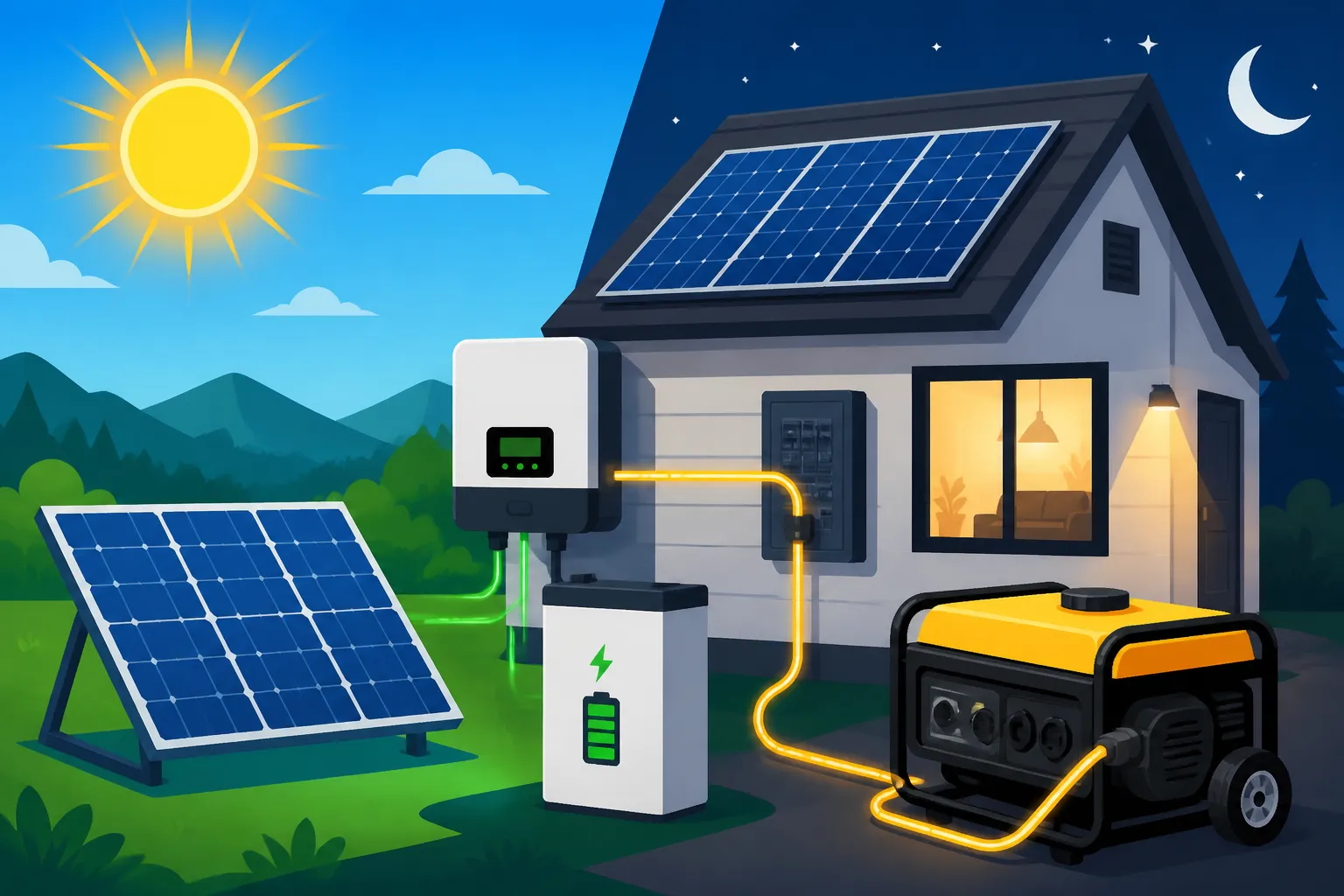
When connecting your generator, its AC output plugs into the AC input terminals of your inverter-charger. The inverter-charger then intelligently detects the generator's presence and, depending on its programming, can perform several functions:
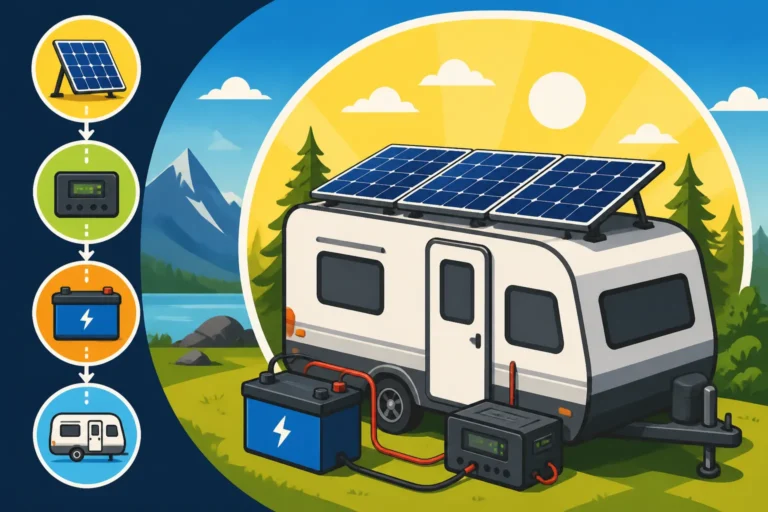
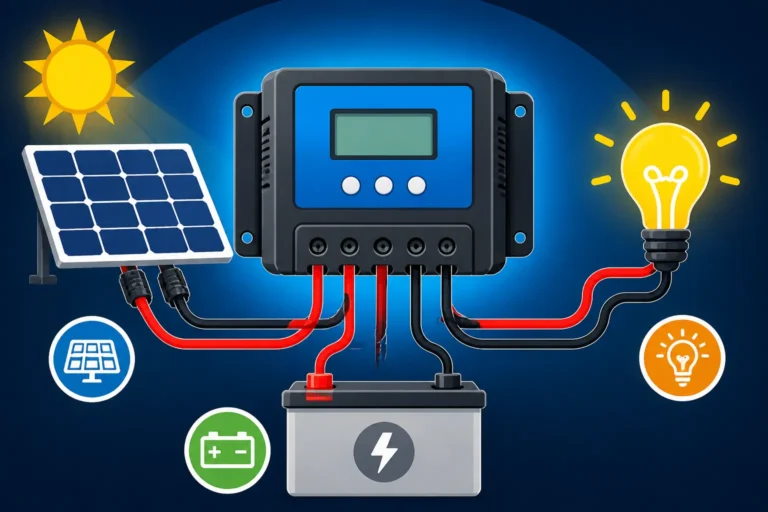
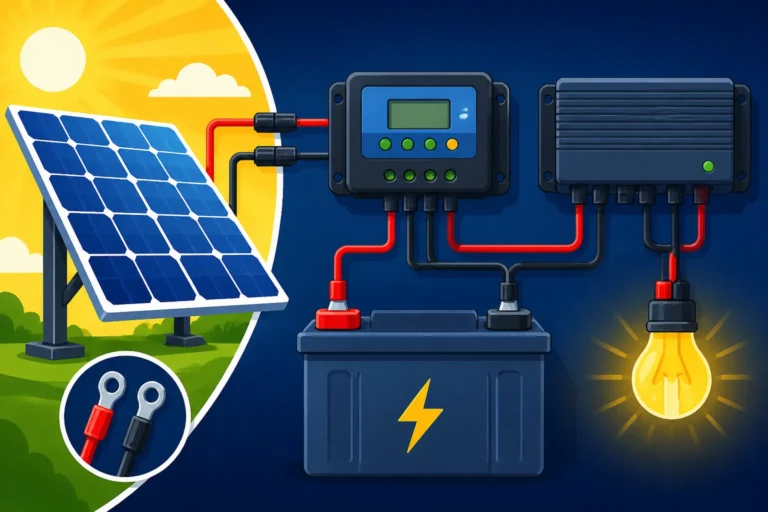
- Battery Charging: The primary role. The inverter-charger uses the generator's power to rapidly recharge your depleted battery bank. It will regulate the charging current and voltage to protect your batteries, similar to how a solar charge controller manages solar input. This is vital for maintaining battery health and extending their lifespan. For comprehensive details, you might want to look into How to Connect Batteries, Inverter, and Panels.
- AC Passthrough/Supplementation: If your home's AC loads exceed what your inverter can supply from the batteries, the inverter-charger can either pass the generator's power directly to your AC loads (bypassing the inverter's DC-to-AC conversion) or supplement the battery power with generator power. This is incredibly useful for running heavy loads like an air conditioner or a workshop full of power tools that might otherwise strain your battery bank and inverter.
- Generator Control: Many inverter-chargers, especially those designed for advanced off-grid systems, include a relay output for Automatic Generator Start (AGS). This relay can be wired directly to your generator's start circuit, allowing the inverter to automatically start and stop the generator based on predefined conditions. This seamless operation is a game-changer for convenience and system reliability.
Essential Wiring and Safety Considerations
Proper wiring is paramount for both performance and safety. Incorrect wiring can lead to equipment damage, fire hazards, or serious injury.
- Transfer Switch: A transfer switch is a non-negotiable safety component. It isolates your off-grid system from the generator, preventing dangerous backfeeding of power to the generator (or grid, if applicable) when the generator is running. This protects utility workers and prevents damage to your equipment. For manually started generators, you'll need a manual transfer switch. For automatic systems, an automatic transfer switch is often integrated into the inverter-charger or as a separate component that automatically switches between solar/battery power and generator power.
- Appropriate Wire Gauges: Just like with your solar array, sizing your wires correctly for your generator's output is crucial to prevent overheating and voltage drop. Consult your generator and inverter-charger manuals for recommended wire gauges.
- Grounding: Proper grounding of your generator and your entire off-grid system is essential for safety. This protects against electrical shock and ensures that fault currents have a safe path to the earth. If you're unsure about grounding procedures, it's always best to consult a qualified electrician or refer to detailed guides on Off-Grid Solar Safety and Grounding.
- Fuses and Breakers: Install appropriate circuit breakers and fuses in line with your generator's output and your inverter-charger's input to protect against overcurrents and short circuits. These are critical components that act as safety valves for your electrical system. You can often find a good selection of necessary electrical components and wiring on Amazon.
- Ventilation: Generators produce carbon monoxide, a colorless, odorless, and deadly gas. Always operate your generator in a well-ventilated outdoor area, far away from windows, doors, and air intakes to your home. Never run a generator indoors.
If DIY isn't your strong suit for this kind of electrical work, consider hiring a licensed electrician or an experienced off-grid installer to ensure everything is connected safely and according to local codes.
Setting Up Automatic Generator Start for Seamless Power
This is where the magic of a truly integrated off-grid system comes to life. Automatic Generator Start (AGS) functionality transforms your generator from a manual chore into a silent, reliable partner for your solar setup.
Understanding AGS Triggers and Settings
AGS allows your inverter-charger to communicate directly with your generator, telling it when to start and when to shut down. This intelligent automation takes the guesswork and manual effort out of generator operation. The most common triggers for AGS are:
- Low Battery Voltage: This is perhaps the most critical trigger. When your battery bank's voltage drops below a certain programmable threshold (e.g., 48V system dropping to 45V), the inverter-charger will signal the generator to start. This prevents your batteries from deep cycling too often, which can significantly reduce their lifespan.
- Low State of Charge (SOC): For systems with battery monitors that can accurately track State of Charge (like many modern LiFePO4 batteries or systems with a robust shunt monitor), you can program the generator to start when the SOC drops to a certain percentage (e.g., 30%). This is generally a more precise way to manage battery health than just voltage.
- Time of Day: You might program the generator to only run during certain hours (e.g., 10 AM to 6 PM) to avoid disturbing neighbors or to take advantage of specific off-peak fuel rates if you were topping up from the grid. This also allows you to avoid running the generator overnight if preferred.
- High AC Load Demand: Some advanced inverter-chargers can be programmed to start the generator if the sustained AC load exceeds the inverter's capacity for a certain period, preventing an overload shutdown.
- Temperature: In very cold climates, some batteries (especially lead-acid) perform poorly or cannot be charged when temperatures drop too low. An AGS system can be programmed to start the generator to provide heat or to simply charge the batteries before they reach a critical temperature.
The ability to customize these settings allows you to fine-tune your system for maximum efficiency, battery longevity, and convenience. Getting a firm grasp on How Many Batteries for an Off-Grid System and your actual usage patterns will inform optimal trigger settings.
Step-by-Step AGS Setup
While specific steps vary slightly between inverter-charger brands (e.g., Victron, Outback, Sol-Ark, Renogy), the general process for setting up AGS involves these key stages:
- Verify Compatibility: Ensure both your inverter-charger and your generator are "generator ready" or "AGS compatible." Most modern off-grid inverter-chargers have a dedicated relay output for generator start, and many generators (especially those marketed for RVs or off-grid use) have a remote start input. If your generator doesn't have a remote start input, you might need to install an aftermarket remote start kit.
- Physical Connection:
- Generator to Inverter-Charger AC Input: Connect the AC output of your generator to the designated AC input terminals on your inverter-charger via a transfer switch, as discussed in the previous section. This allows the generator to supply power to your home and charge your batteries.
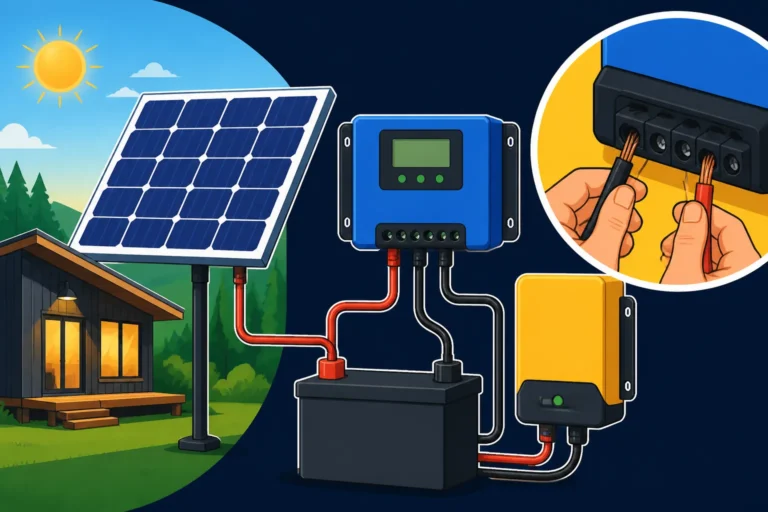
- AGS Control Wiring: Locate the AGS relay output terminals on your inverter-charger. These are typically low-voltage, dry contact relays. Run a pair of low-voltage control wires from these terminals to the remote start input terminals on your generator. The generator's manual will specify which terminals to use. These wires simply act as a switch, telling the generator's control board to start or stop.
- Inverter-Charger Configuration: This is where you program the "brain" of the operation.
- Access Settings: Access your inverter-charger's settings menu, typically through a dedicated display panel, a remote monitoring device, or a computer application (like Victron's VE.Configure software or Renogy's DC Home app).
- Enable AGS: Find the "Generator Start/Stop" or "AGS" section within the settings. Enable the automatic start function.
- Set Triggers: Program your desired start and stop conditions. For example, you might set the generator to start when the battery voltage drops to 45V (for a 48V system) and stop when it reaches 52V. Or, based on SOC, start at 30% and stop at 85%.
- Generator Run Time: Set a minimum run time for the generator (e.g., 1 hour). This prevents short-cycling, which can be hard on the generator engine.
- Quiet Hours: If your inverter-charger supports it, set "quiet hours" during which the generator will not start automatically, even if a trigger condition is met. This is great for preventing early morning or late-night noise.
- Test Sequence: Many systems allow you to set a periodic "test sequence" where the generator will automatically start and run for a short period (e.g., 15 minutes once a month) to keep the engine lubricated and ensure it's ready when needed.
- Test the System: Once everything is wired and programmed, it's crucial to test your AGS setup.
- Manually lower your battery voltage (e.g., by running heavy loads) or simulate a low SOC to trigger the generator.
- Observe if the generator starts, charges the batteries, and then shuts down as programmed.
- Check for any error messages on your inverter or generator.
- Repeat the test multiple times to ensure reliability.
Setting up a generator backup system provides an unparalleled level of confidence in your off-grid lifestyle. It's a key component in a truly resilient and dependable independent power solution.
Disclaimer
The information provided in this guide is for general informational purposes only and does not constitute professional electrical advice. Working with electricity can be dangerous. Always consult with a qualified and licensed electrician or solar professional before installing or modifying any electrical system, including off-grid solar and generator backup systems. Ensure all installations comply with local electrical codes and safety regulations. The author and publisher are not liable for any injury, damage, or loss resulting from the use or misuse of this information.